
Make a label for the Blind
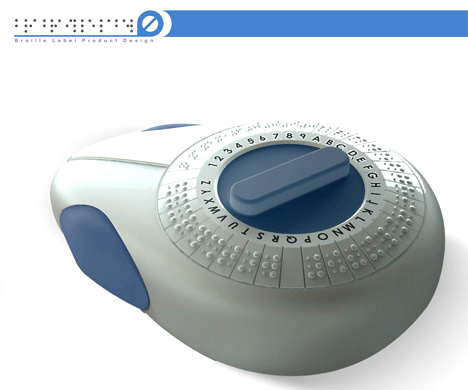
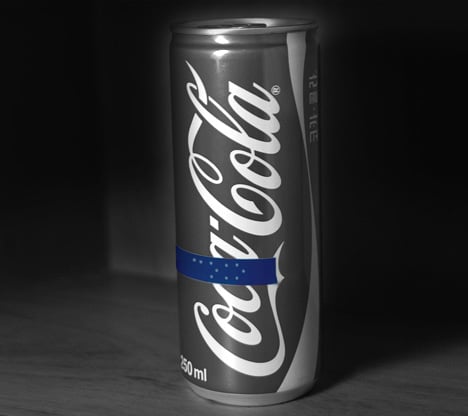
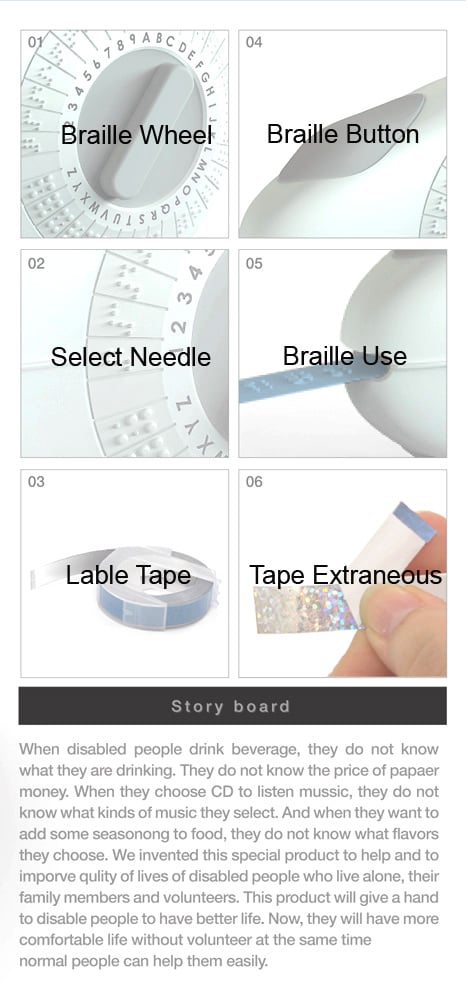
Sighted friends, you have the advantage of picking Coke over Pepsi simply by picking red over blue. What will my sight-impaired friends do? Nothing much, but ask you to help out picking the preferred soda pop. However wouldn’t it be convenient for both if there was a label in Braille stuck to the can? Yup, that would be convenient!
Designers: Soonkyu Jang, Jieun Seo & Seung-un Kim





47 Comments »
Silenzo says
this is just great!
quarktasche says
I’d be worried about sticking it on a CD
Television Voyeur says
my sentiments exactly.
Me says
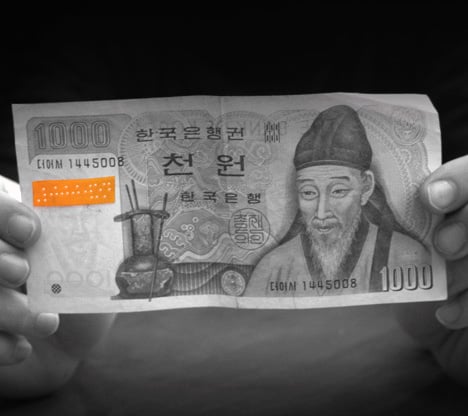
It’s on the CD case, not CD directly. I’d be more worried about money – what if you stick the 100$ label on the 1$ bill?
Carl says
great if you have not seen it before. Think how many songs get re released to the kids of today and they think its all so new.
im not being cynical, just wanting to preserve the originality. same principle here. Should designers do more research, if so how, esp as design is very very global. perhaps use a global design scratching post like err yanko. ill stop typing now..
rayelle says
This is a good idea simple and effective well done
dd says
Sorry but I thought it one year ago,
and I found it on the internet.
MadCow says
just because its already out does not mean we cannot improve upon it… y do you think there are so many different types of cars, phones, tvs… and god forbid mp3 players… etc…
since you already have one, y not discuss the good, the bad, and the ugly…
aa says
this is true madcow, although you are forgetting that nothing is really improved here (which is the main difference).
like I stated below, if there would have been something more technologically advanced using maybe a scanner to read it out or who knows shape the text somehow – now that is something “improved”
Carl says
post a link if you can.
Me says
where can i buy this?
aa says
the only thing that still is not solved is the fact that someone has to type in all the letters, print it out, tape it on to something and then give it to the disabled person.. nice thought, although in reality not many people would do this (”very time consuming” in our hectic world)
So, if this was presented in the 90s it would have been a “wow, thats nice”, but for now i think its a total flop.. not well researched enough (considering there exists a lot of similar devices already).
Research it more, and go more on what technology has to offer and will offer in the future, and for gods sake IMPLEMENT IT! I am sure you can solve the problem of disabled people not being able to read a printed text with a futuristic and technological advanced device, rather then reliyng on people pasting these stickery notes (and typing them) on each individual object.. imagine the amount of waste just there..
derf says
hummm…
it’s already exist since 20 years:
http://www.girpehtech.org/catalogue/guide_technique/handicap_visuel_nv/impressionbraille_fichiers/image002.jpg
minhloc says
i remember those label makers, they were marketed for office use, they didnt print in braille.
what if the label was misplaced ?
the weak point in this design is that the label can only be read by people who know the braille alphabet.
it would be more interesting if it was printing a dual label: standard letters and braille letters
so it could be read by everyone
derf says
it’s not the label makers that you knows, it’s braille one.
with this model, you have the letter and the Braille on the device…
so you can print braille label without knowing the braille.
kimberlysue says
most people who don’t know braille can see. they wouldn’t need the labels to see what they’re using…
Waldobaby says
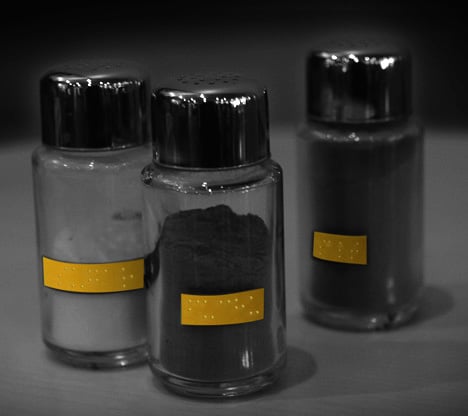
Dymo has their Braille wheel to fit any of their manual label makers. The problem with this piece of work is that it puts out terrible Braille. Look at the label on the paper money, for instance. All the characters run together with no spaces. Braille is (generally) structures as a set of six possible dots to a cell, three dots high and three dots wide. Wait. Don’t correct me. That third column of “possible dots” is the requires spacing between the cell’s two columns. Without that regular recurring space, the Braille texture is unreadable. This is a poor product.
Andri says
the idea is not bad, but…
I put myself in blind man’s shoes and imagine how hard it would be to find something in the mall (all you have to do is take everything in your hands and read, and considering the range of products in at least small stores it can take the whole day to find what you need).
although there can be some kind of string across the shelve not only with written name and price of certain product, but also with Braille code on it.
so that way you can just put your fingers on this string and read walking across the roduct rows.
don’t know if that exists, but I believe it would be useful.
derf says
there is an easiest way: online shopping
Waldobaby says
There is a speaking hand held bar code reader with a fairly enormous code library. Ours will read one certain product, for example and say “Campbell soup tomato”. Good at home for sane people who are NOT going to label every thing there is.
andrii says
2 derf: and you believe that all blind people have computer and internet access. and obviously they don’t go to stores much.
MadCow says
well, i can’t comment on social use of this by blind people since i really don’t know their habits… but i can comment on the usability… mainly on the ergonomics…
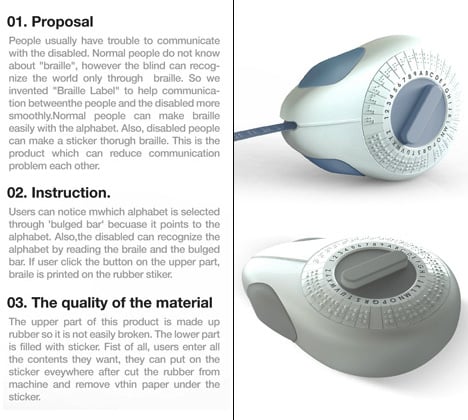
it doesn’t seem very intuitive to use… the knob does not point specifically towards a certain letter… even for the seeing, i don’t know which letter im pointing at… does not seem comfortable to hold and squeeze “2″ points to print one letter… why not just 1 button?… i would assume for the blind they would like direct feedback after printing one letter… meaning they would like to know exactly what the just printed letter for letter, so no mistakes would be made… it really doesn’t make it easy… tape may not be the best way to go… even for the seeing they are a bitch to take off…
There seems to be a lot of usability issues… especially for a design that seems to be in the refined stages… design process out the door? it seems more and more of that these days…
Waldobaby says
It is easier for the most part to make Brailled tape labels on a Perkins Brailler, an embossing 6-key chording “typewriter”. You can use any different width tapes and even aluminum “tape” for permanence.
John Davis says
Wow that is soo cool, why did it take so long for this to come out?
RT
http://www.privacy.at.tc
gd says
once again : it’s already exist since 20 years:
Person says
So does no-one who is blind need to read a word that contains a “Q”?
Waldobaby says
No. It’s too dangerous a letter.
R. Parson says
The majority of this post is in image format with no alt text- and thus unreadable for blind people browsing by use of JAWS or other screenreading programs.
Way to make your product’s advertisement inaccessible to its target demographic, guys.
Kevin says
Not knocking the idea – I think it’s great!
But when it comes to examples to show on the website, you might not want to use spices as one. Unless your market are blind people who cannot smell either.
Last I checked most blind people are able to smell the spices they’re cooking with.
Azabat says
First, I cringe when I hear people talk about “the blind”, “the disabled” and “normal people”. It is incredibly offensive to characterise people in this way.
Second, very few visually impaired people can read Braille. It takes a long time and an aweful lot of practice – not to mention very sensitive fingertips – to develop this skill. From the description you would think that blind people automatically learn Braille instantly and that all blind people use this method to communicate.
Third, these machines and many more like them are widely available from a number of sources – and have been for donkeys’years. There’s nothing new or innovative here.
ED says
I agree totally with Azabat – you might want to amend your blurb to be less offensive… visually impaired people are only different from sighted people because of a visual impairment, it’s nothing to do with normality!!!
Also, you should research your demographic more effectively, as you make many assumptions about the skills of visually impaired people… my father has had no sight for 25 years but can easily identify bank notes and spices and he and I can communicate perfectly adequately without such a device… my dad owns a device like this and rarely uses it and as a sighted person I have never needed to use this in order to communicate with him, as your description seems to suggest I would!
It has its uses for identifying CDs etc for those who can read braille, but it’s certainly not revolutionary!!!
P.S. Well said R. Parsons!
Erik says
Kevin says
Not knocking the idea – I think it’s great!
But when it comes to examples to show on the website, you might not want to use spices as one. Unless your market are blind people who cannot smell either.
Last I checked most blind people are able to smell the spices they’re cooking with.
Waldobaby says
ALSO, to whomever posted this thing originally: Please note that the top lids of soda cans are already embossed. It would be trivial for the soda manufacturers to place tactile indicators there concerning what the product contained within is. Two or three letters would be sufficient. Soda cup lid makers already do this in a way.
It would cost them NOTHING. It would garner the first such manufacturer some publicity and advertising chops. They most pointedly do not do this. Who knows why…
Trackbacks