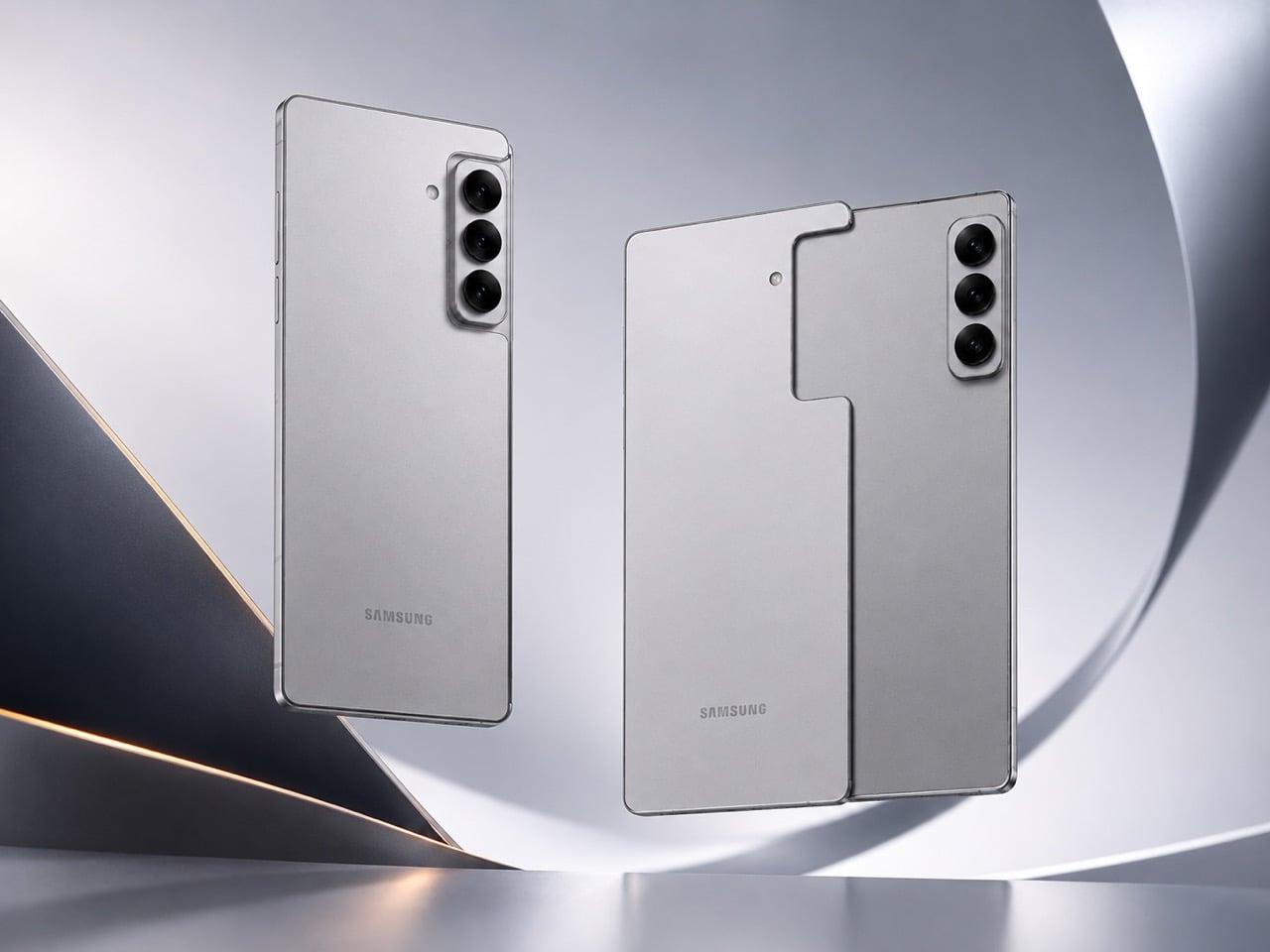
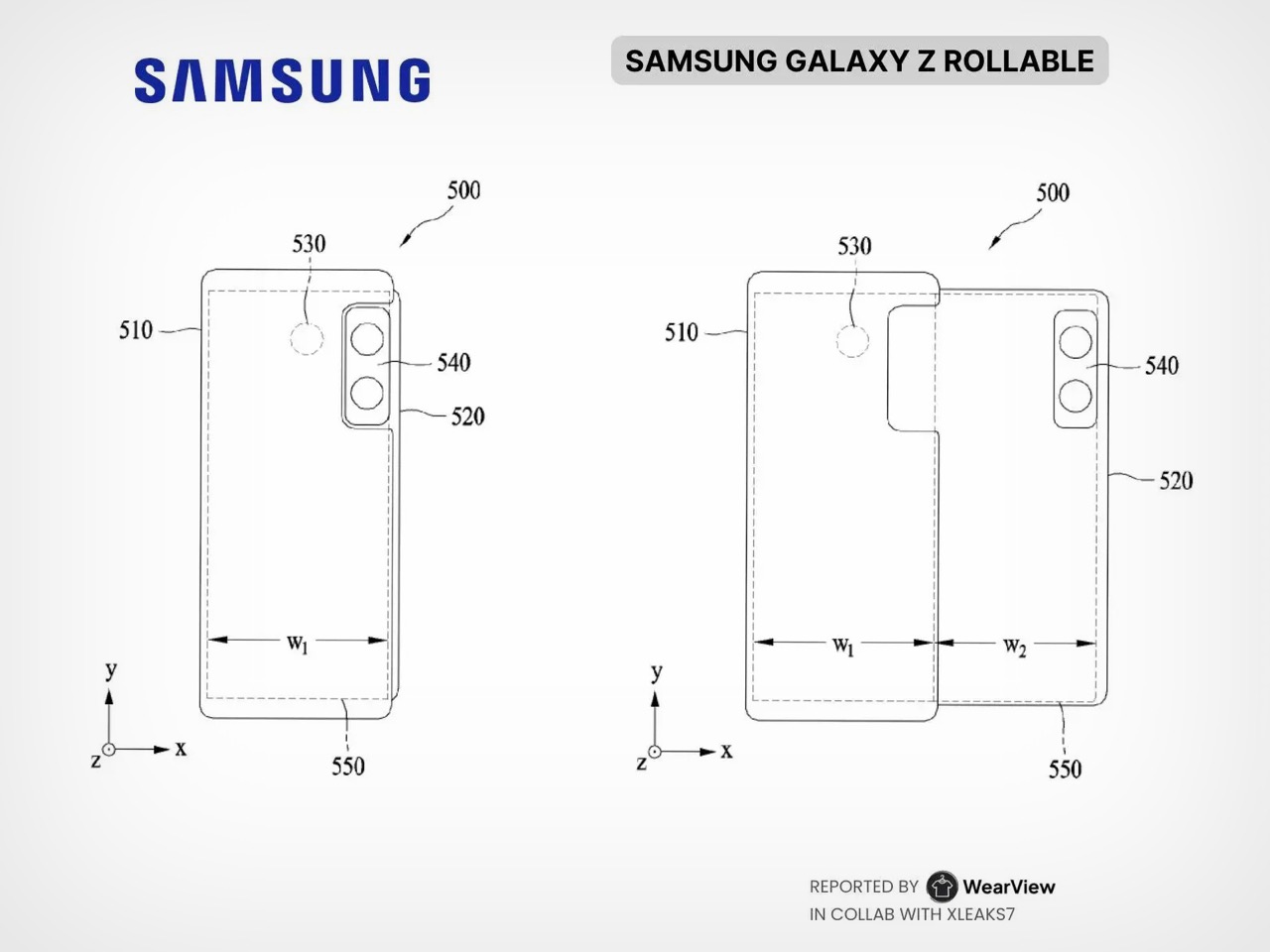
Samsung’s product roadmap for this year lists the TriFold and the Galaxy S26, with no rollable phone anywhere on it. A patent the company filed in May (uncovered by WearView) tells a different story about where its engineers are looking. The filing describes a Galaxy that slides open sideways, expanding from an S26-sized slab into a Fold-class canvas without a hinge or a crease. Its sharpest idea sits on the back, where the rear camera module rides the moving half of the chassis and travels outward as the screen grows, then slots into a frame cutout when the phone retracts. That keeps the body thin, solving the bulk that usually plagues rollable hardware.
The gap between that patent and a shipping phone runs through Samsung’s own walls. Samsung Display keeps demoing slidable and rollable panels at CES and MWC, while Samsung’s phone division quietly ships foldables and leaves the concepts on the show floor. The patent matters because it hints at the two tracks finally converging. It also lands at a pointed moment, with Apple about to release its first folding iPhone this September after a decade of chasing the perfect crease. Samsung appears to be drawing up the shape that makes that crease irrelevant.
Designers: xLeaks7 & WearView
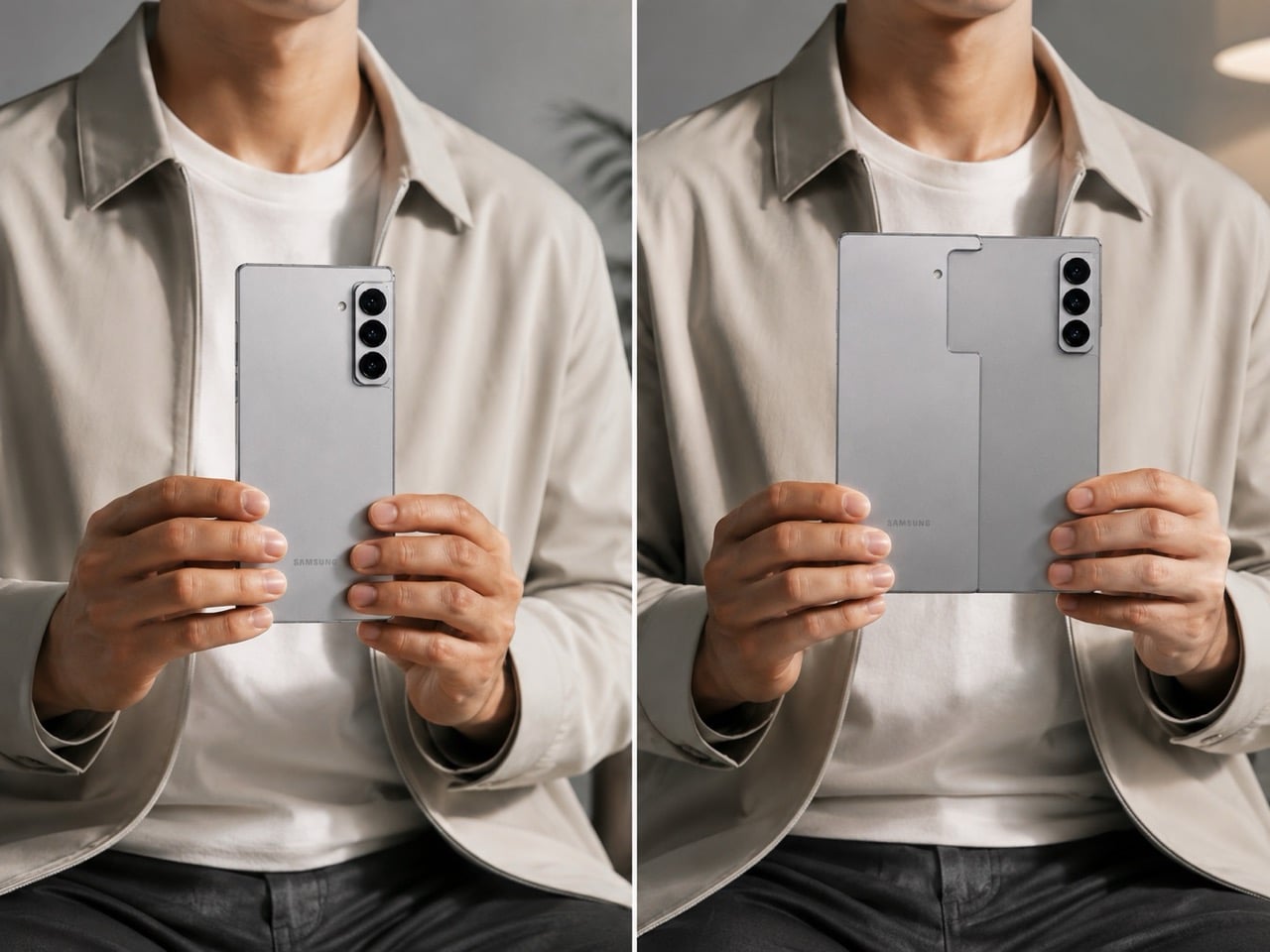
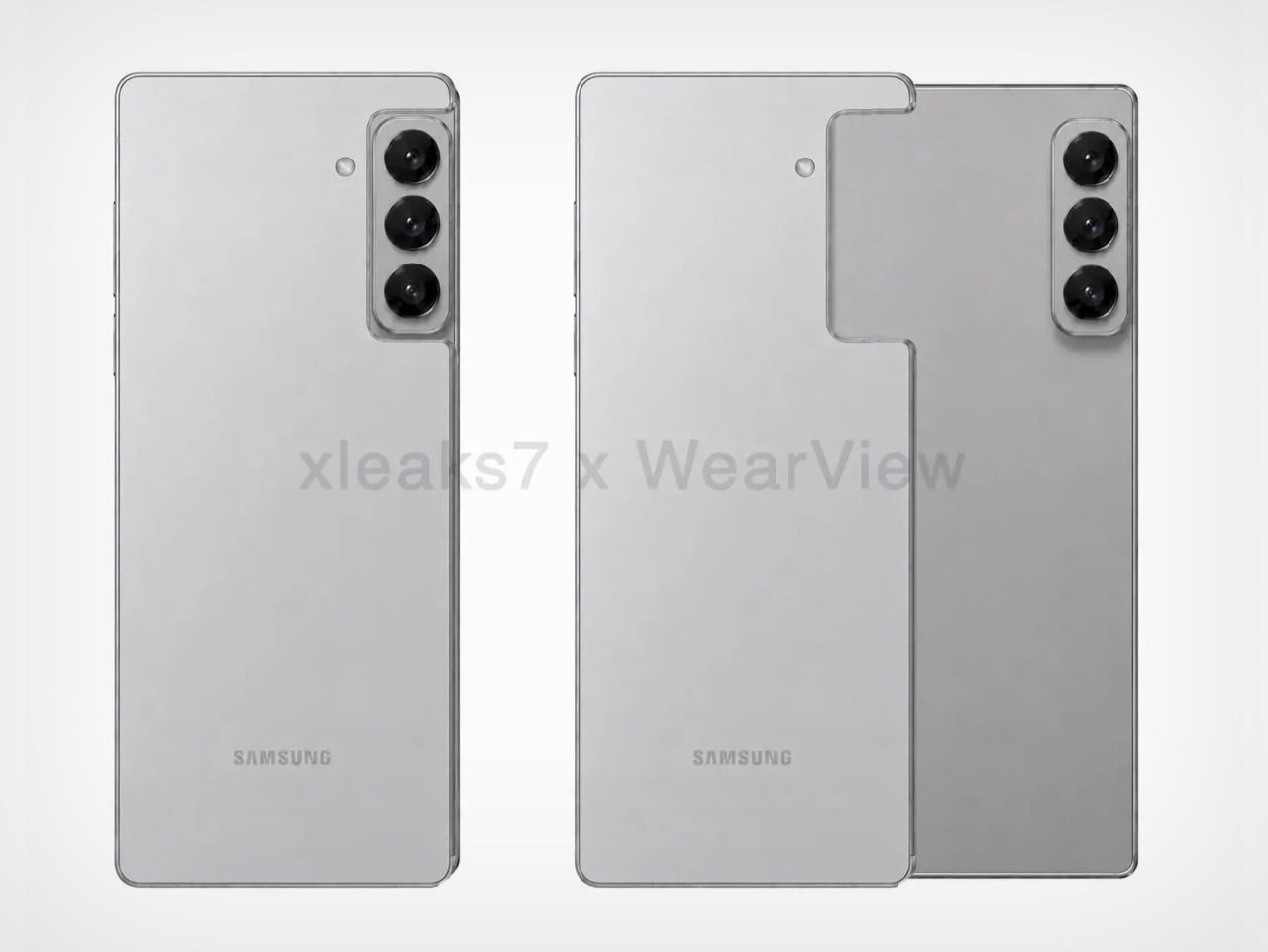
Mounting the camera on the sliding section answers a packaging problem that has no clean solution otherwise. Rollables grow by pulling a flexible screen out of the chassis, which leaves the camera array nowhere comfortable to sit. Park it on the stationary side and the phone thickens, ride it on the moving side and it stays slim across both states. Samsung pairs the moving module with sensors that track how the housing shifts, keeping the lenses aligned and AR tracking accurate as the geometry changes mid-use. The compact form reads like a Galaxy S26, the expanded version approaches Z Fold 7 width, and the camera quietly travels the whole distance.
Rollables promise to erase the two things people complain about most on foldables, the crease down the middle and the doubled thickness when shut. They pay for that promise with motors, geared rails, and moving internal trays, a fresh set of failure points that hinges avoid. LG built a working rollable, showed it at CES 2021, then shelved it when it abandoned phones, and a teardown that went viral this spring exposed dual motors and spring-loaded arms looping a screen around the back. Oppo, Motorola, and Tecno each ran the same play and shipped nothing, the ghost hanging over Samsung’s filing. We flagged TCL’s Fold ‘n’ Roll as one of the rollable concepts still worth chasing earlier this year, so the appetite clearly exists even when the hardware refuses to leave the booth.

Samsung Display has been rehearsing this in public for years, which separates the patent from pure fantasy. The division showed the Slidable Flex Duet at CES 2025, a panel stretching from 8.1 inches to 12.4, and brought a vertical Mobile Slidable to MWC 2026 that grew from 5.1 inches to 6.7. One of those rollable panels already ships inside Lenovo’s ThinkBook Plus, proving the mechanism survives a real product when the price target allows. The patent’s specifics stay slippery, with the filing describing a modest side-slide while WearView’s renders imagine a far wider Fold-class spread. Apple, for its part, sources the inner display of its incoming foldable from Samsung, so Cupertino’s first fold literally runs on the glass of the rival now sketching past the fold.
What turns this from a filing into a product would show up in the signals, and none of them have flipped yet. Samsung’s phone division still sells hinges, the TriFold remains the stated frontier, and rollables live on a research track that hasn’t crossed onto the roadmap. The day patents start specifying durability ratings instead of clever geometry, and the day Samsung MX teases a rollable instead of Samsung Display demoing one, the math will have changed. For now this is a sketch, an elegant one, of where the company thinks the phone goes once everyone finishes copying the fold. I want Samsung to build it, if only because a camera that moves with the screen is the rare hardware flourish that earns its own complexity.