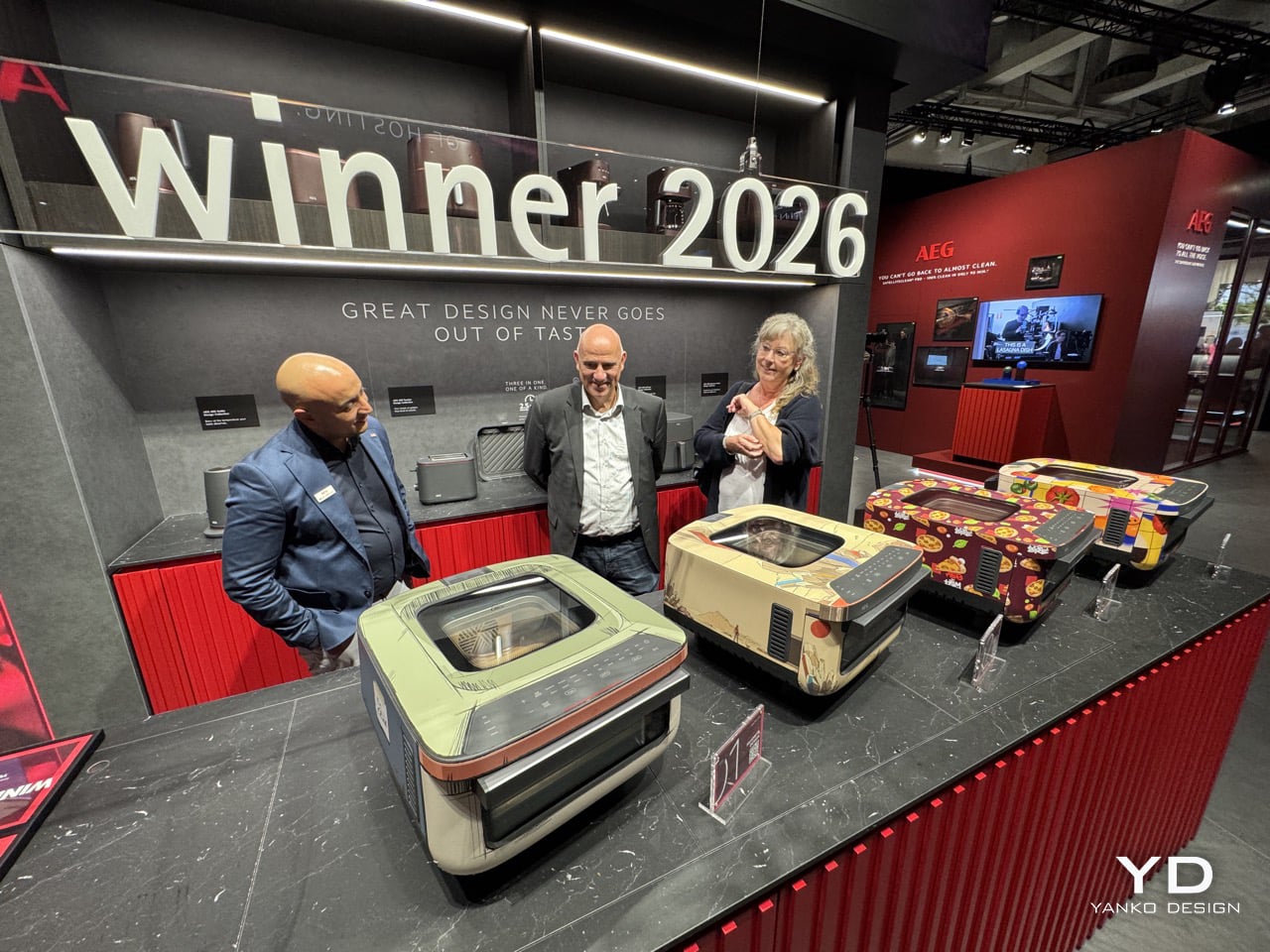
Ask four designers what Bauhaus means and you will get six or seven answers, depending on how passionate the designers are. AEG leaned into exactly that. The brand gave its new 3in1 oven to four artists, asked them to interpret the movement through their own lens, and then invited a jury to sit at IFA Berlin and pick a winner in front of a live audience. Low stakes for the oven. Slightly higher stakes for everyone holding a scorecard.
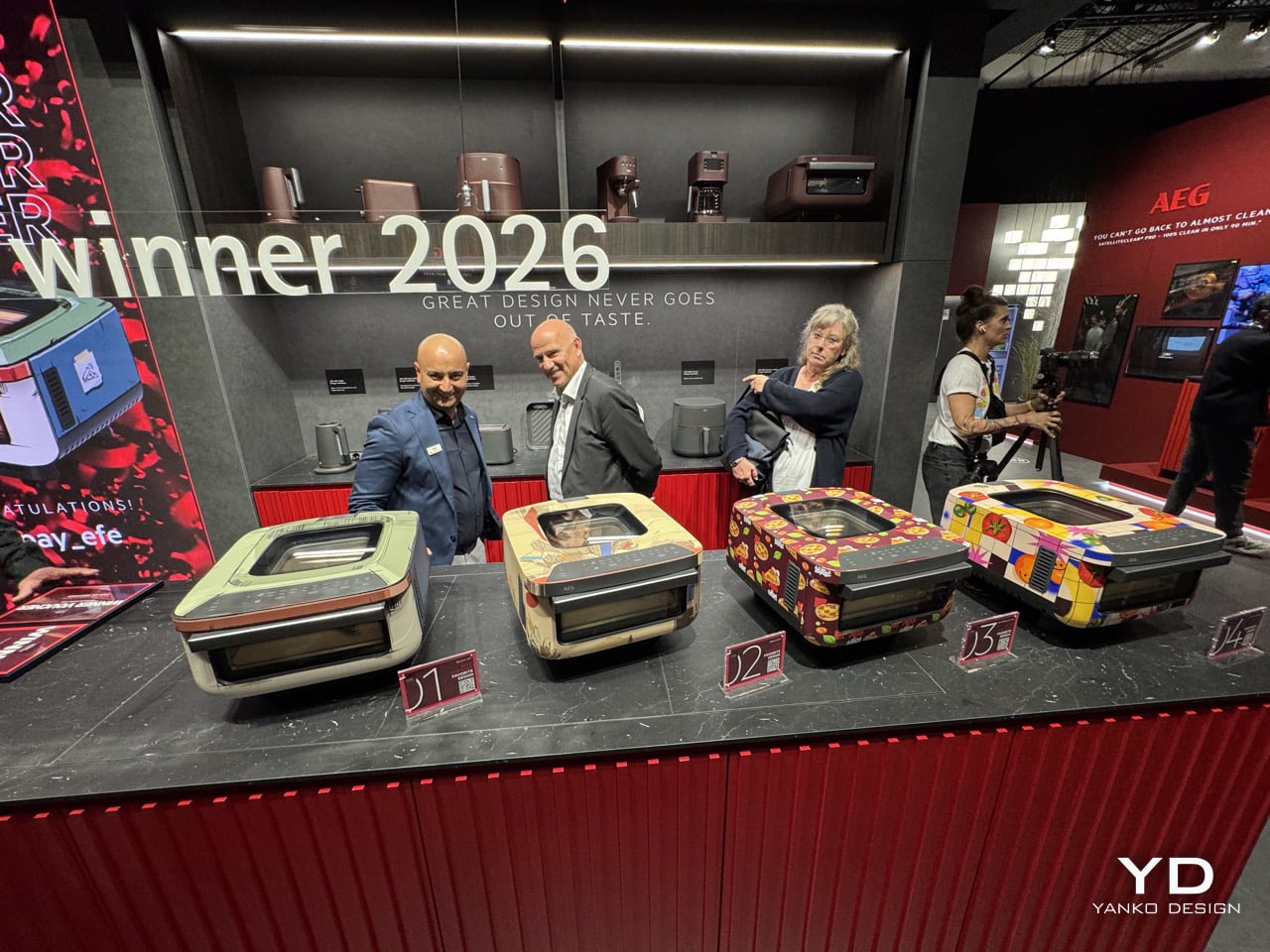
What makes the lineup fun is how little the four entries agree with each other. One goes flat and quiet. One paints a desert. One wraps the whole thing in pizza slices. One builds a grid and fills it with tomatoes and suns. All entries made their way to IFA, where a jury panel of four industry elites convened to vote for their favorite design. Here’s a look at all the four entries.
Alpay Efe (Winner)
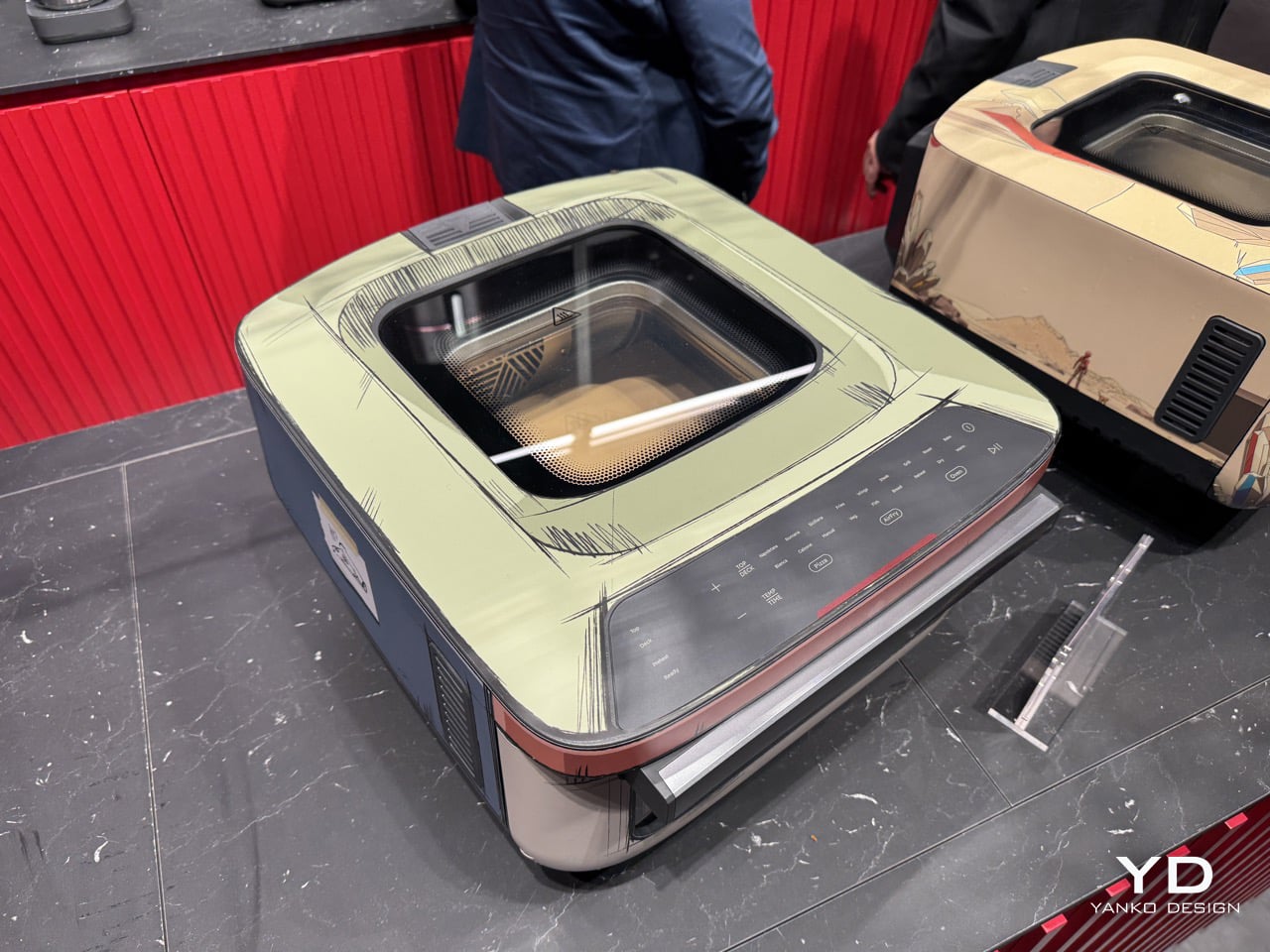
Alpay Efe painted an oven that pretends to be a drawing of an oven. Flat sage green across the top, warm cream through the body, slate blue at the base, with a copper line running the edge of the door like somebody inked it in. Look at it in a photo and your brain files it as a concept sketch or a 3D render with the shading turned off. Then you remember it is a physical appliance sitting on a physical table, and the whole thing goes slightly sideways. He essentially took the flatness of 2D animation and wrapped it around a real object, letting the panel seams do the work that outlines do on a cel.
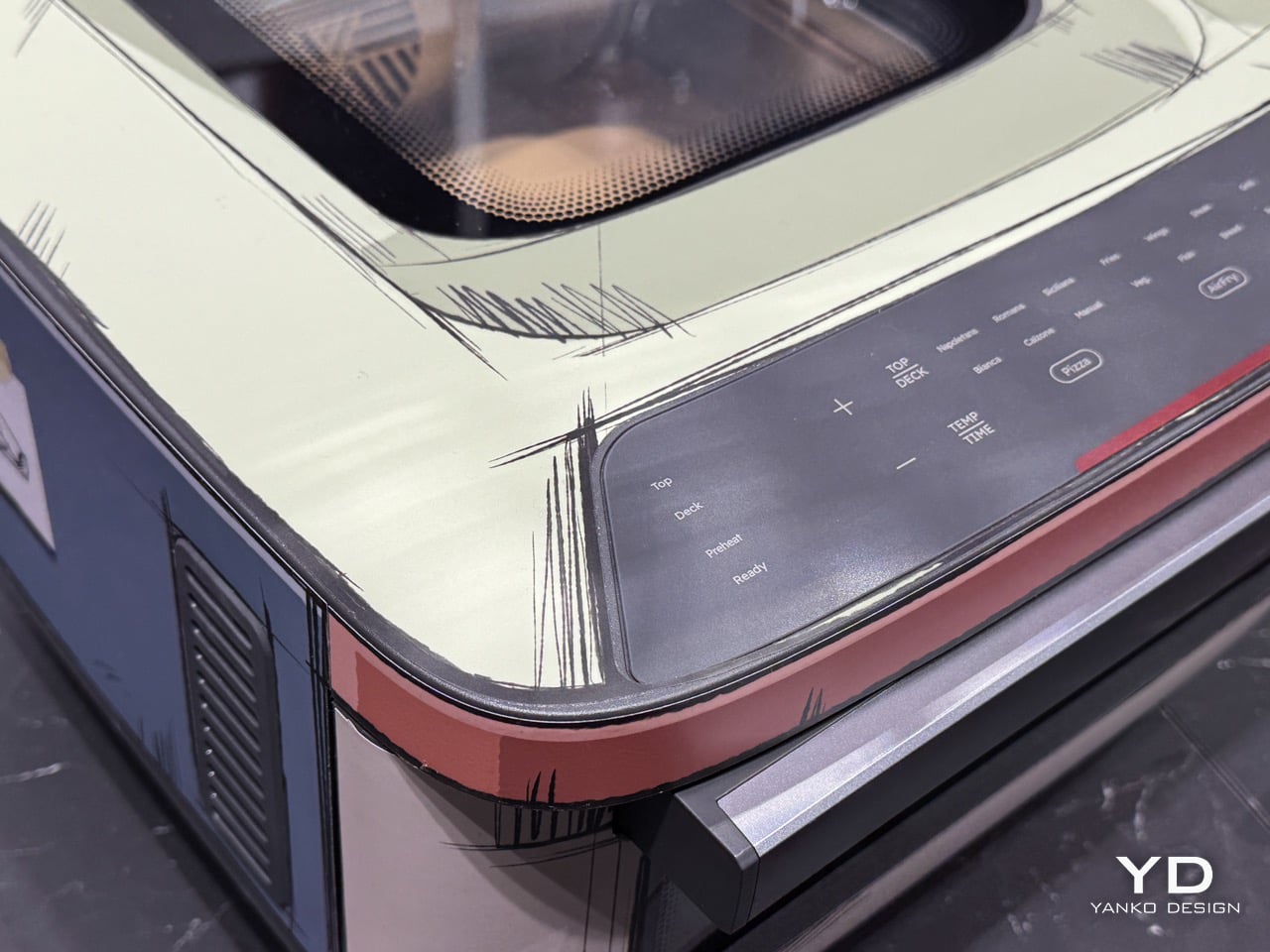
That illusion has a history behind it. Efe was born in Oberhausen in 1987, studied at the Düsseldorf Academy of Fine Arts, and has spent his career painting portraits that sit somewhere between realism and abstraction. One of his early solo shows was literally called “Illusions of Reality.” So a painter who normally builds depth on a flat canvas here spent his time flattening depth on a solid one, which is a neat inversion of his day job. It also happens to be the most orthodox Bauhaus entry of the four. Reduction, geometry, no ornament anywhere, and every choice doing something perceptual rather than decorative.
Darius “Baka Arts”
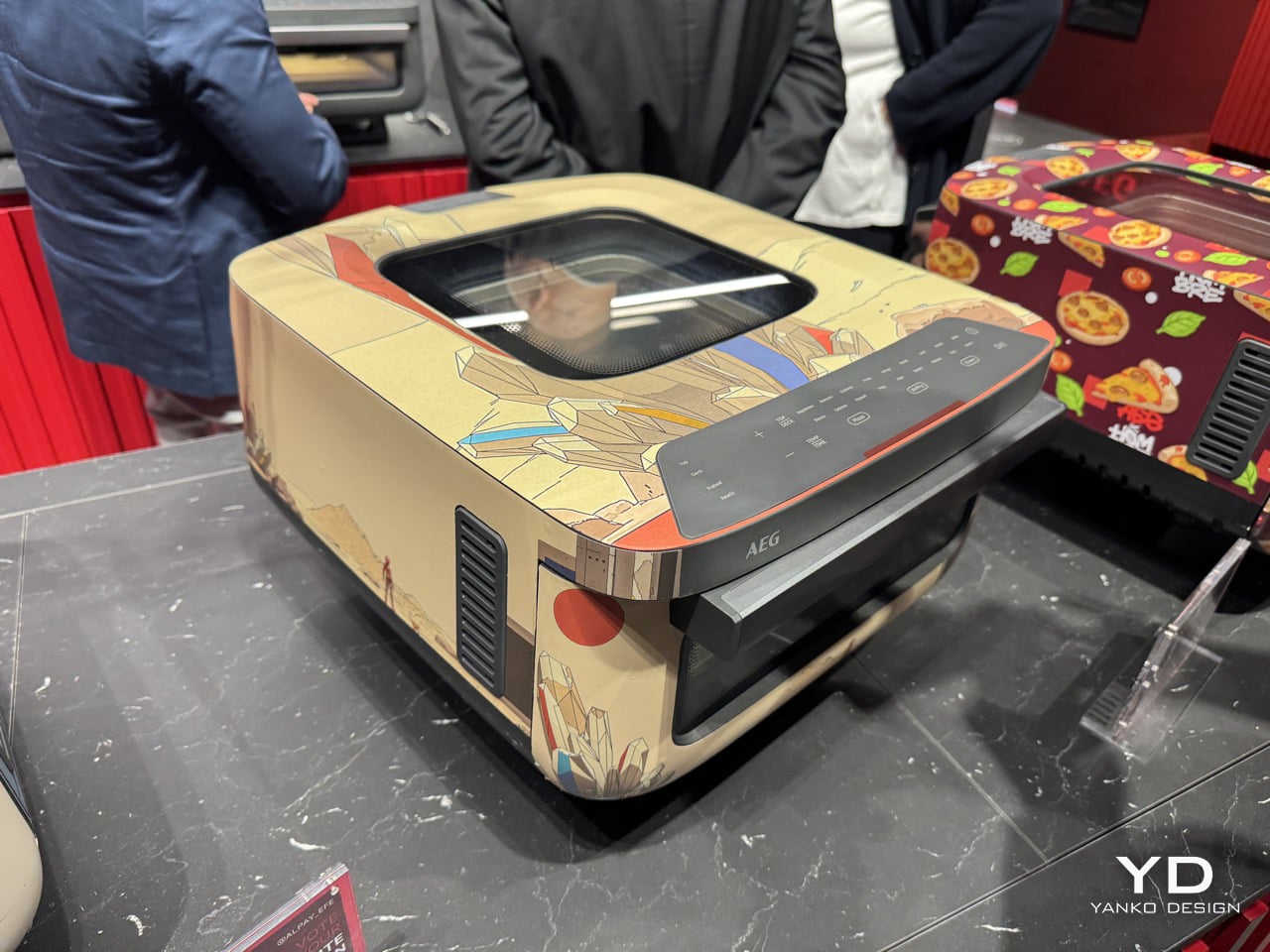
Darius Puia, working as Baka Arts, went the opposite direction from everyone else in the room. His oven is a desert. Sand and bone-cream across the whole body, a low horizon line, a single tiny figure standing out there in all that empty space, with small hits of red and yellow doing the work of a sun. The scene runs across the panels as one continuous landscape, so the object stops behaving like a box with four sides and starts behaving like a canvas that happens to have corners. It is the calmest thing in the lineup by a wide margin, and in a contest where two entries are covered in food, calm reads as a strategy.
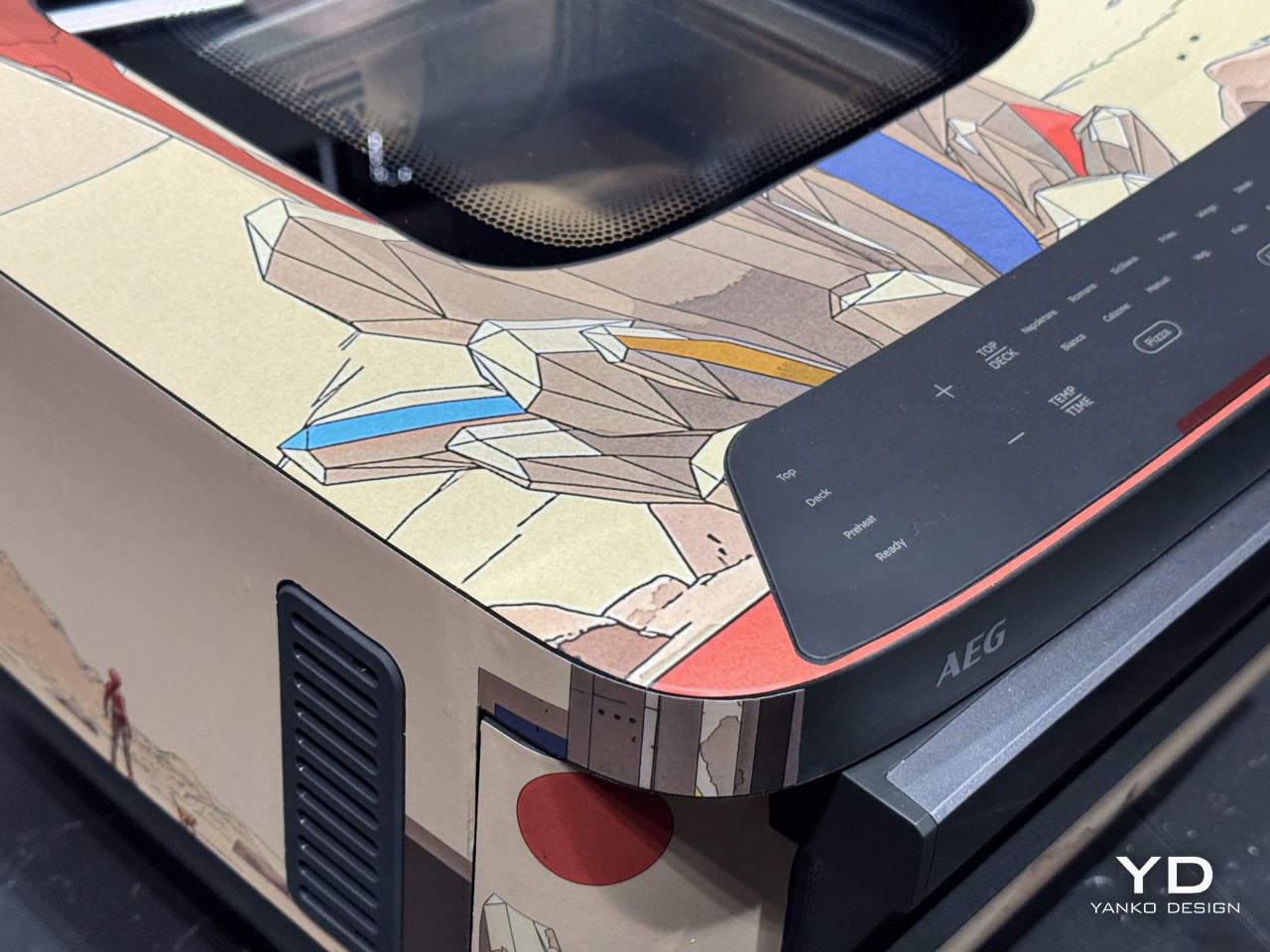
The surprise is that this comes from an artist known for the loudest possible palette. Puia is a German digital designer who has spent well over a decade on cyberpunk and sci-fi work, all neon, dystopian cities and retro anime energy, with a healthy stack of surreal 3D pieces behind him. Trading that in for a quiet stretch of sand and one lonely figure is a real gear change. There is a Bauhaus argument in it too, since the entire composition rests on reduction, negative space and restraint, which is roughly what the school spent its whole existence preaching.
Hombre SUK
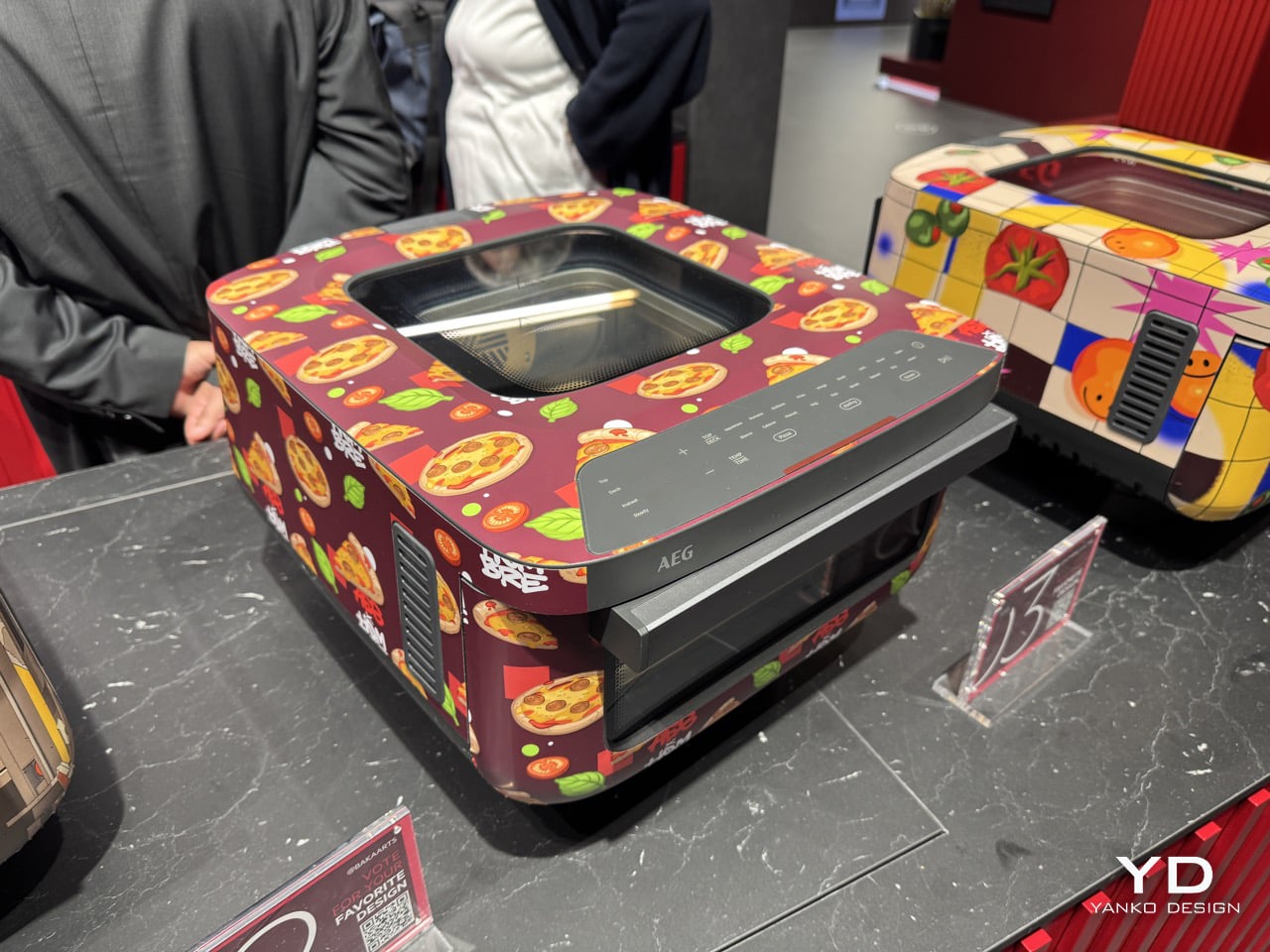
Pablo Fontagnier committed to the bit harder than anyone. His oven is wrapped in a deep burgundy field packed with repeating pizza slices, basil leaves and tomatoes, with graffiti lettering tucked into the pattern so it reads as wallpaper from across the room and as street art up close. Every surface is covered. The top, the sides, the panels around the door, all of it running as one continuous repeat that ignores where the box stops and starts. Given that the appliance has a dedicated pizza mode, wrapping it in pizza is either the most obvious move available or the boldest, and honestly the confidence is what sells it.
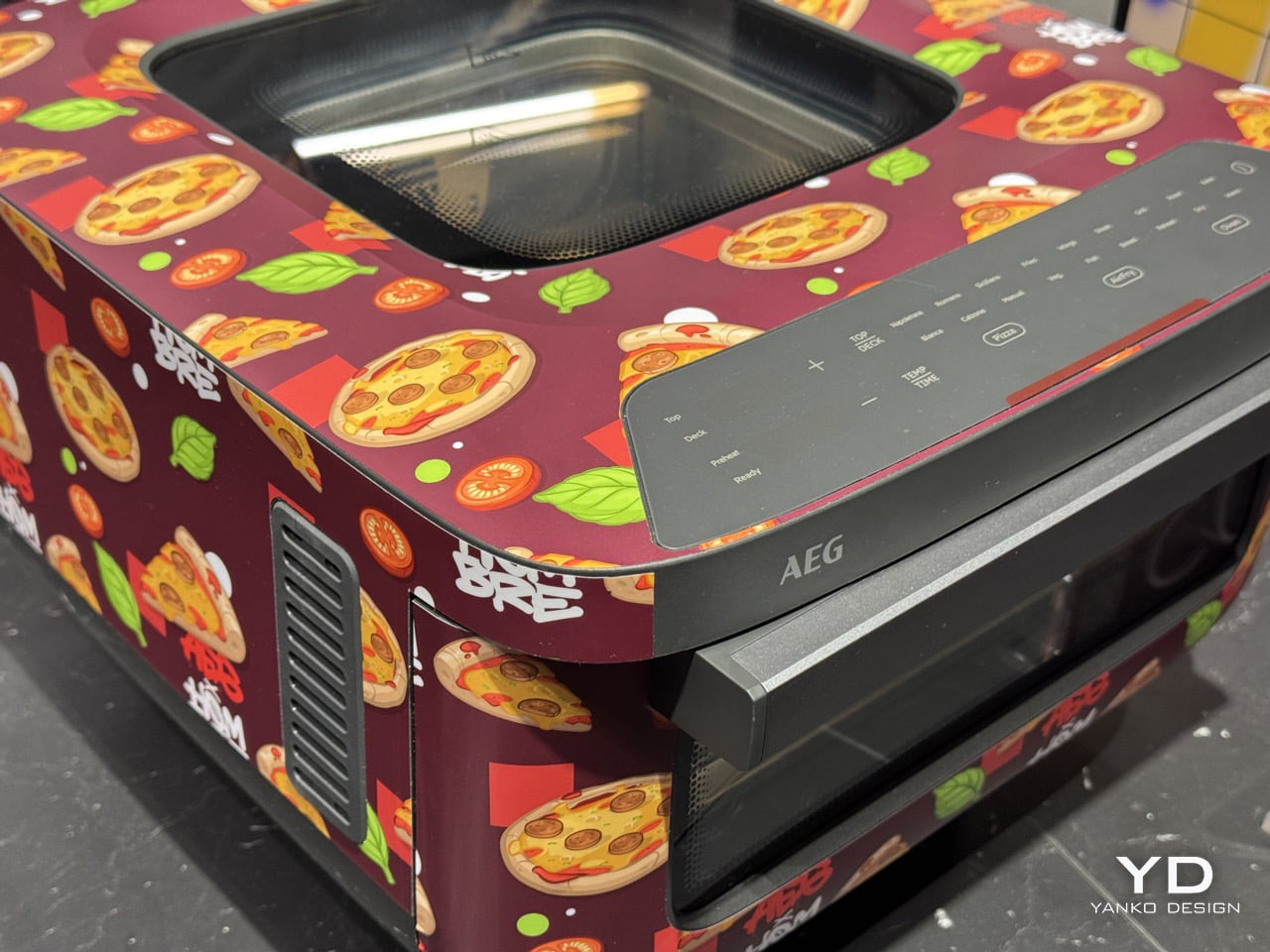
He has the CV to back the swagger. Born in Mannheim in 1981, trained as a graphic designer at the Academy of Communication there, and working out of Nuremberg since 2013, where he is enough of a local fixture that the city library put one of his designs on a rolling bookbus and the castle hosted his projections during Blaue Nacht in 2023. He has painted for Disney Germany, Eastpak, Casio and O2, and shown work everywhere from Shanghai to Moscow. His style leans on clean shapes, hard edges and old-school light-and-shadow work, which is where the Bauhaus link quietly lives. Strip the pizza away and the underlying grammar is all repetition and structure.
Josephine Rais
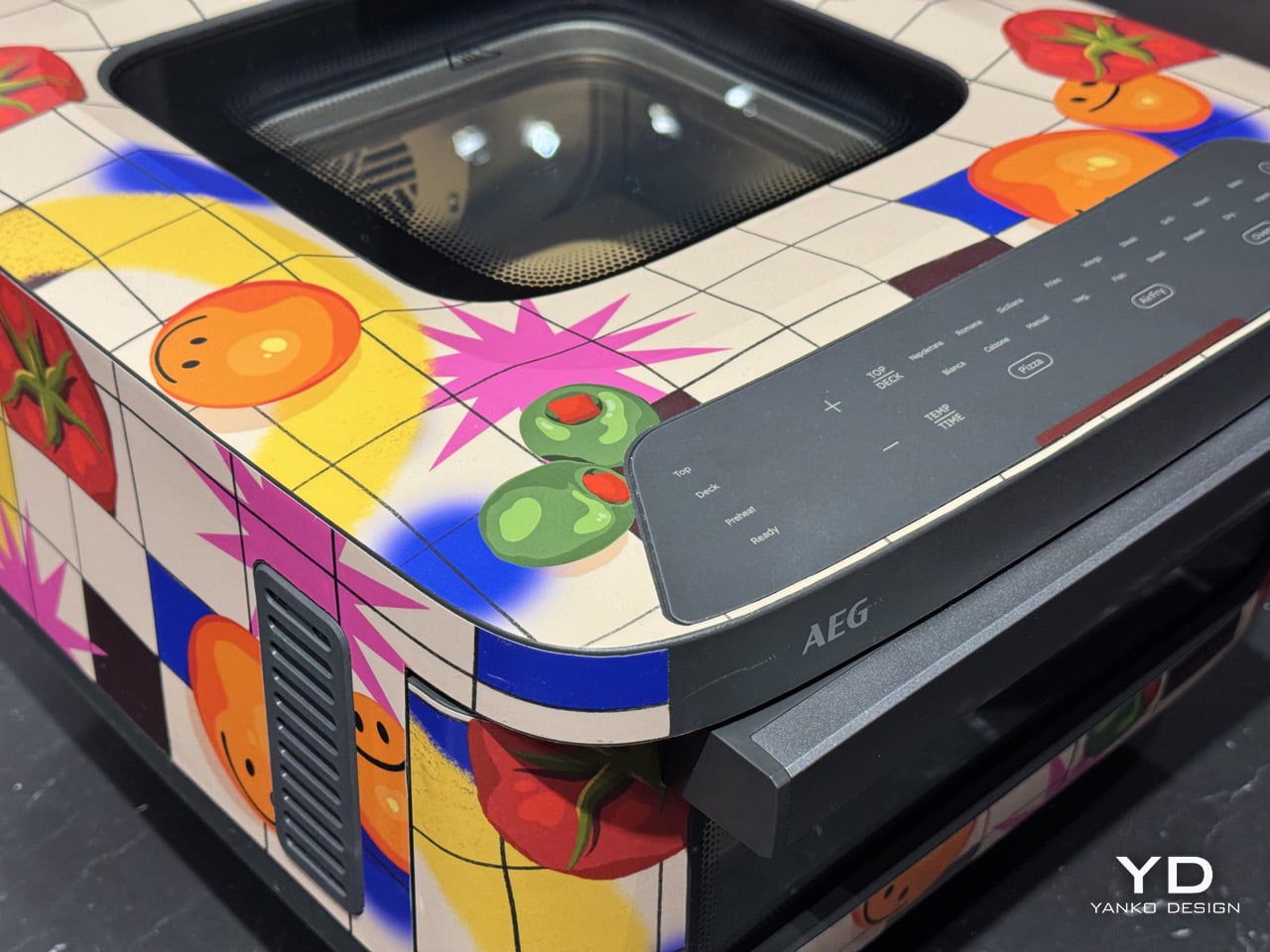
Josephine Rais built a grid and then refused to behave inside it. Her oven is divided into squares of yellow, blue, red, cream and black, laid out with the kind of rigid geometry that would make a Mondrian fan nod approvingly, except each square is filled with tomatoes, suns, aubergines and flowers in full bloom. The structure is strict. The content is having a party. That tension is the smartest Bauhaus reading in the group, because the school always argued that order was a framework for expression rather than a cage, and this is what that idea looks like when somebody actually tests it on a countertop appliance.
Rais is the one with an industrial design background, which explains a lot about how confidently she handled a three-dimensional product. She studied Fine Arts early on, took a bachelor’s in product design and a master’s in strategic design, then landed in Berlin as a freelance illustrator, where her bright, joyful, food-and-people-heavy style has pulled in clients like Adidas, Apple, Adobe, Nike, TikTok, Coca-Cola and Xbox. She has described her work as her version of a colourful, happy pop utopia, and the oven is exactly that, boxed neatly into a grid and still managing to look like it wants to feed you.