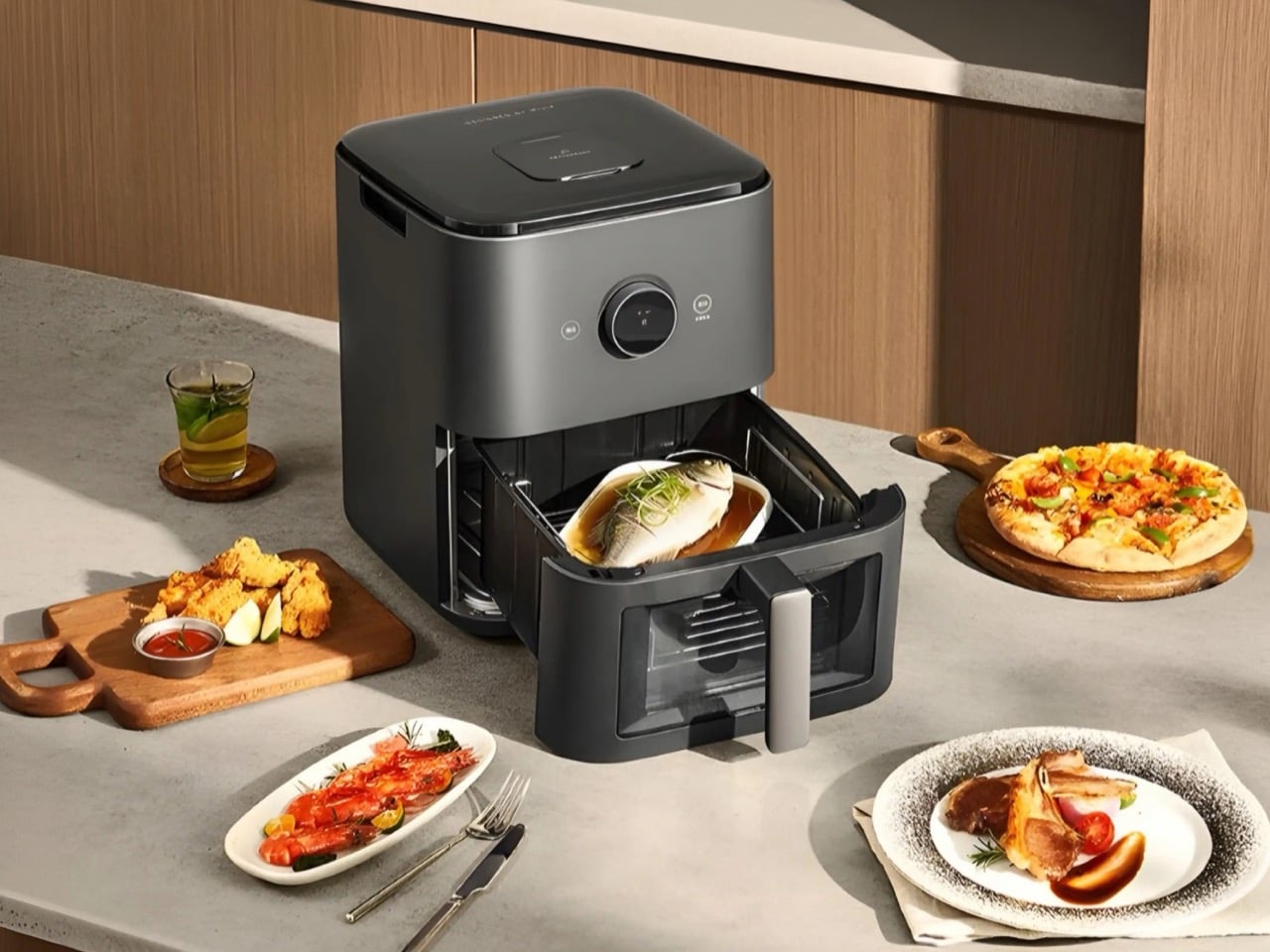
There is a reason professional bakers spray water into their ovens right before a loaf goes in. Steam in the early stages of baking keeps the crust elastic long enough for the bread to fully rise before it sets, and then as the moisture burns off, the outside crisps up hard and crackly while the inside stays open and soft. Xiaomi applied that same principle to an air fryer, which sounds obvious in hindsight but somehow took the entire appliance industry a decade to get around to trying. The result is the Mijia Smart Air Fryer Pro Steam and Bake Edition, a 6.5-liter machine that launched on Youpin in March for around $80.
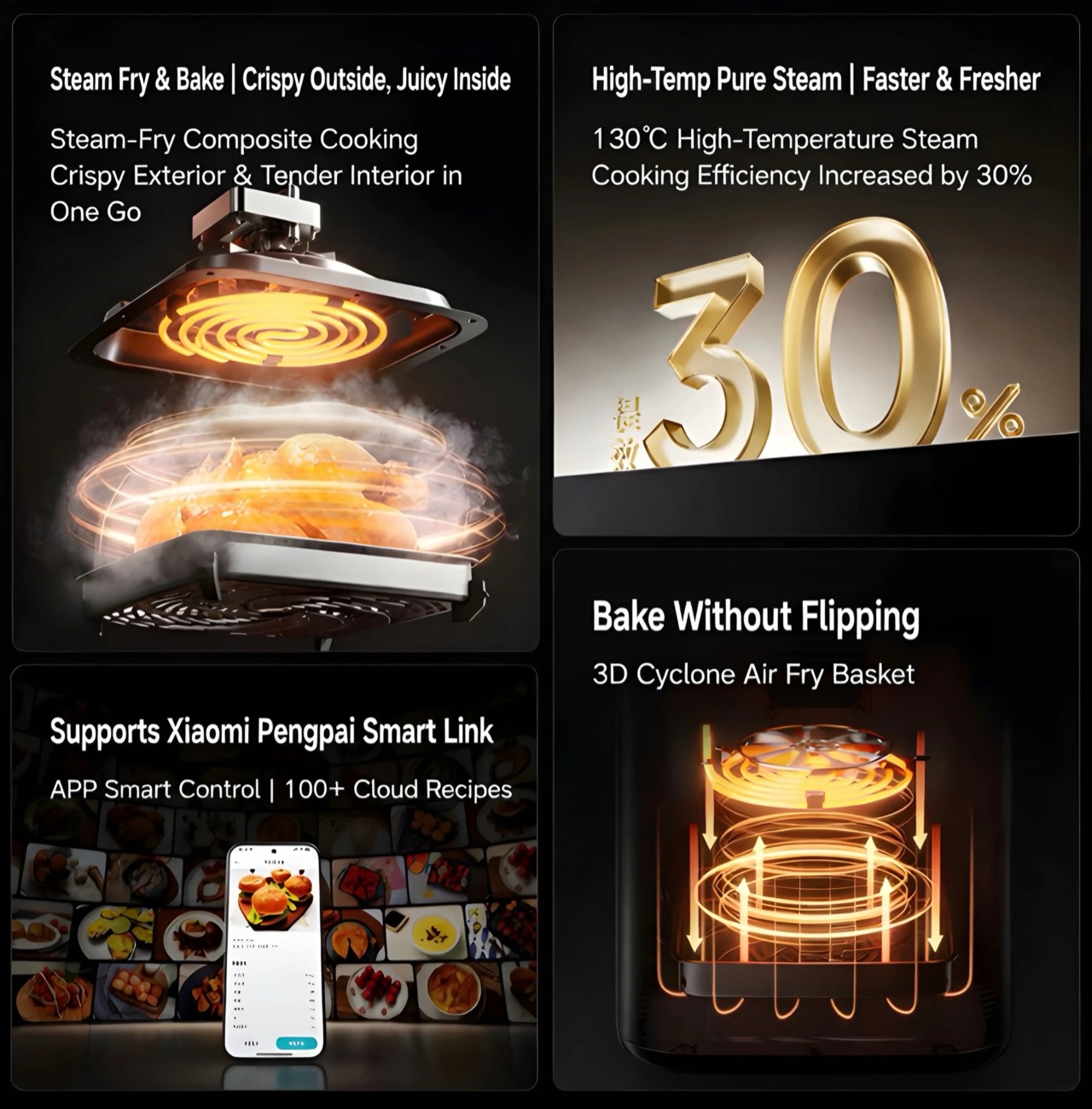
We covered Smeg’s steam-equipped air fryer concept out of Milan Design Week back in April, and the reaction told us something useful: people are genuinely ready for this idea. The hardware behind Xiaomi’s take is straightforward but well thought out. A 1.5-liter water tank sits on top of the unit and feeds a 900W steam generator capable of reaching 130 degrees Celsius, with enough output to run seven continuous dishes before needing a refill. Combined with a conventional 1,850W heating element and a 360-degree hot air circulation system, you get a machine that can switch between dry heat and humid heat within the same cooking cycle. The 304 stainless steel interior handles the moisture without corroding, and the fluorine-free non-stick basket makes cleanup considerably less painful than you might expect from something that gets regularly steamed.
Designer: Xiaomi
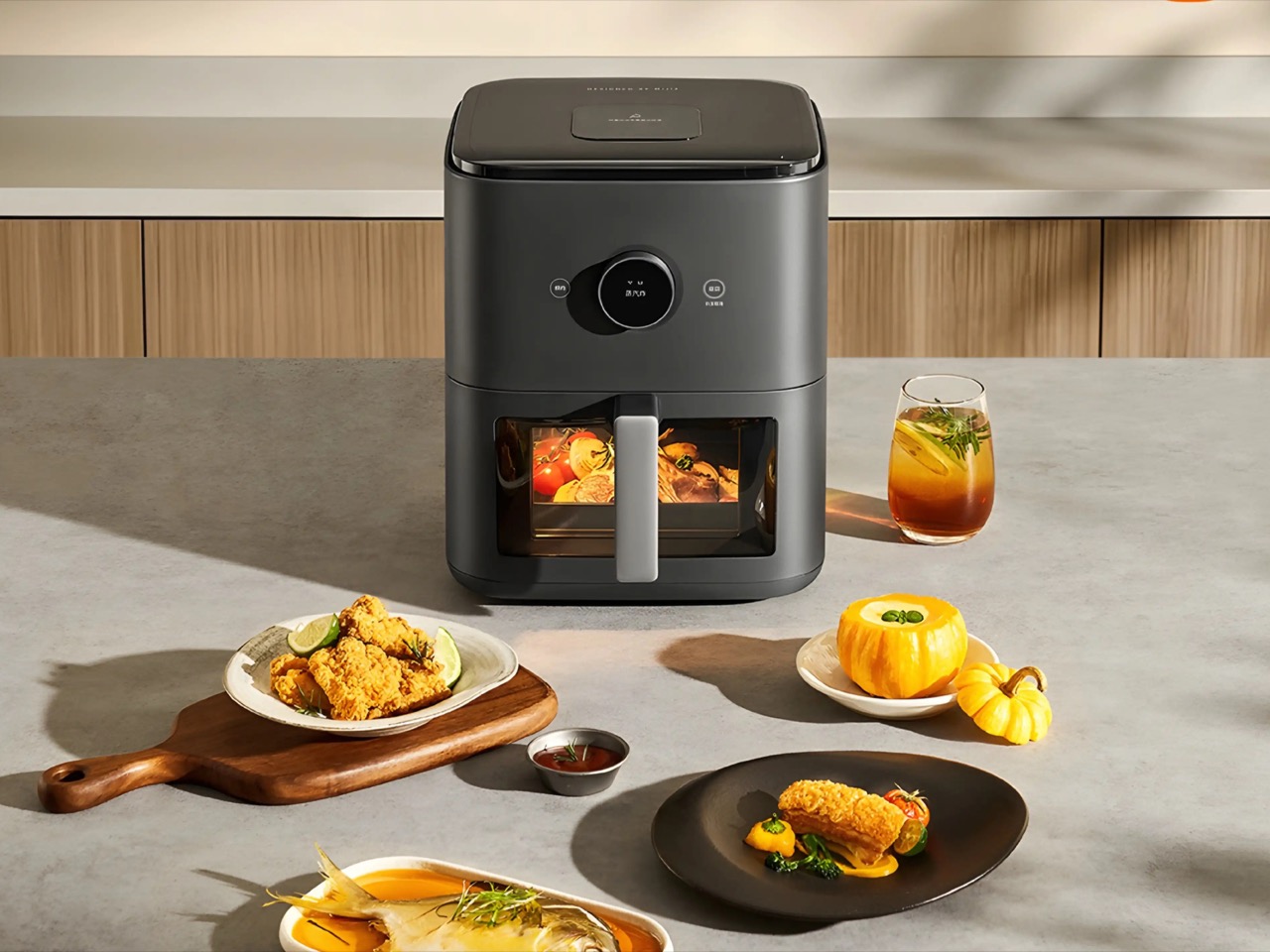
Steam-fry and sous vide are the two modes that actually push past what any conventional air fryer can do, rather than just relabeling the same hot-air cycle with a fancier name. Steam-fry layers humid and dry heat in sequence, holding just enough moisture in the chamber to slow surface dehydration while the heat pushes deeper into the food, which is exactly how you get chicken wings that crack rather than just brown. The sous vide mode holds a low, stable temperature over a long period using the water tank as its medium, something a dry-heat machine physically cannot fake its way through. The full temperature range runs from 30 to 230 degrees Celsius with NTC precise control, which in practice means the same machine handles yogurt fermentation at the low end and a proper sear at the high end, a spread that no single-mode appliance on its own can match.
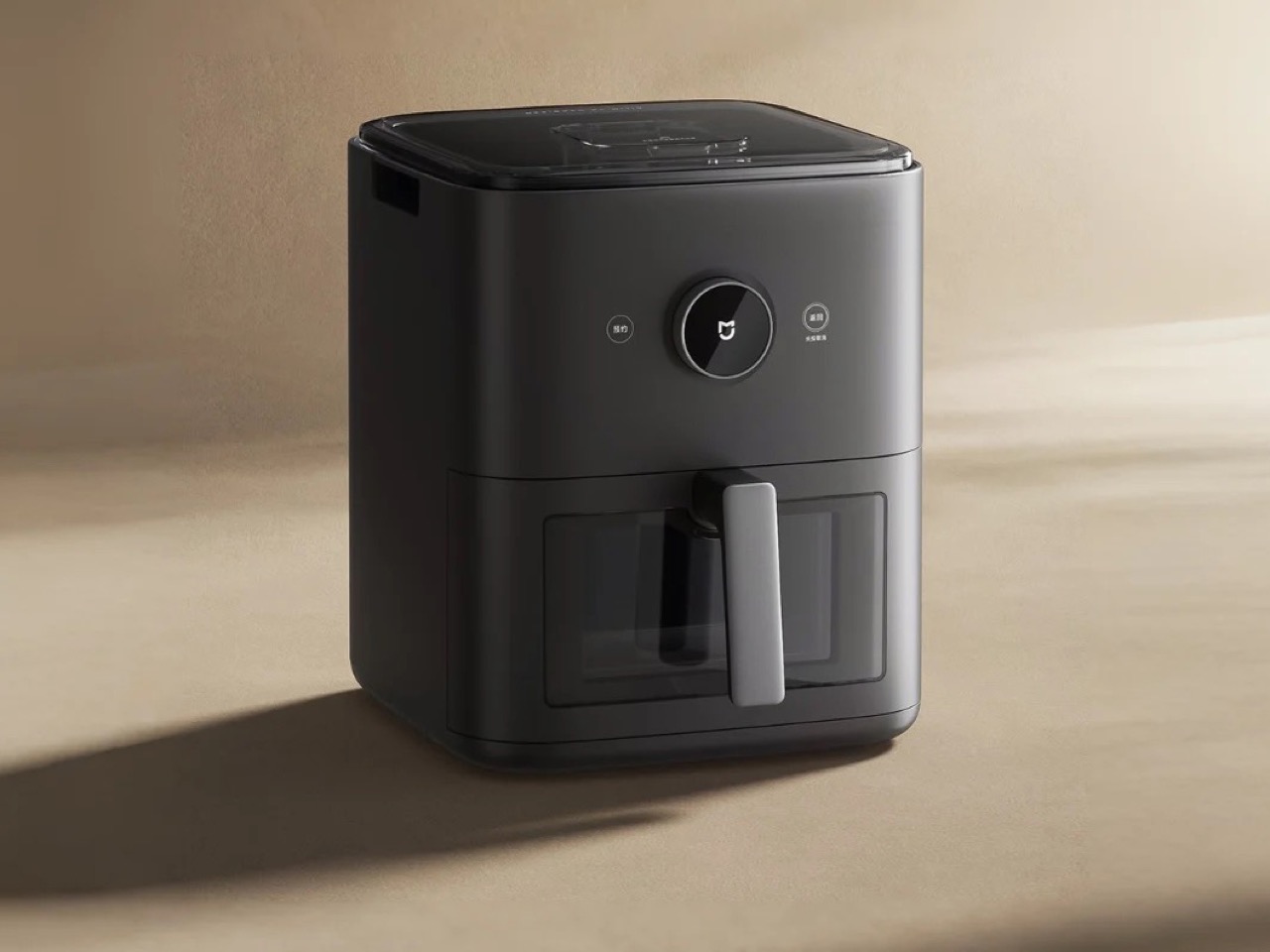
A 234mm horizontal interior sounds like a spec sheet abstraction until you realize it fits a whole chicken, 24 wings, or nine steamed buns in a single load, and the dual-layer rack splits that cavity between two dishes cooking simultaneously at different heights without either one stealing heat from the other. The 1,850W heating element drives the hot air side of things hard enough to cut sausage cooking time to eight minutes versus the twenty-odd you’d wait in a conventional oven, and the 360-degree circulation keeps that heat moving evenly rather than pooling at one side of the basket. Scheduling a cook 24 hours out through Mi Home, or pulling from a library of over 100 cloud recipes, means dinner can be running before you’ve even thought about what you want to eat. The OLED interactive knob handles everything manually for anyone who’d rather just twist a dial than pull out a phone, which is the kind of small considered detail that keeps a smart appliance from feeling like a chore.
The Mijia Pro is crowdfunding in China at 559 yuan, around $81, with a planned retail price of 749 yuan, roughly $109. Smeg’s steam air fryer, by contrast, is a concept with no confirmed price and a launch window no earlier than late 2026. Dreame’s Feast DS50, which takes a different approach to the same problem through dual-zone independent airflow rather than steam, is priced at $229 for its North American launch. Xiaomi is delivering a technically comparable answer to the same cooking challenge at a fraction of that price, in a machine that is already shipping in China and building toward a global rollout. The steam air fryer category is real, it has momentum, and the most affordable entry point currently has a Xiaomi logo on it