Before the mid-1950s, vacuum cleaners weren’t in many Japanese homes because dusters, brooms, and floor cloths were considered adequate for cleaning traditional Japanese homes. But through extensive marketing efforts by manufacturers, Japanese-made vacuum cleaners gradually became household necessities by the 1960s – with the MC-1000 top of the list.
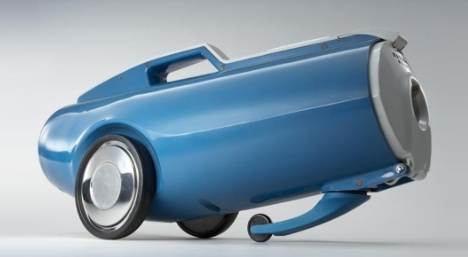
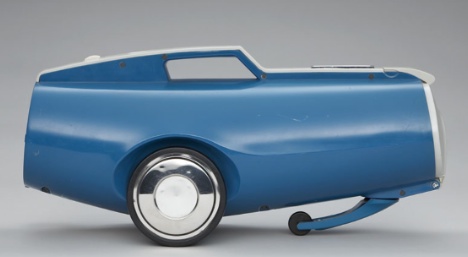
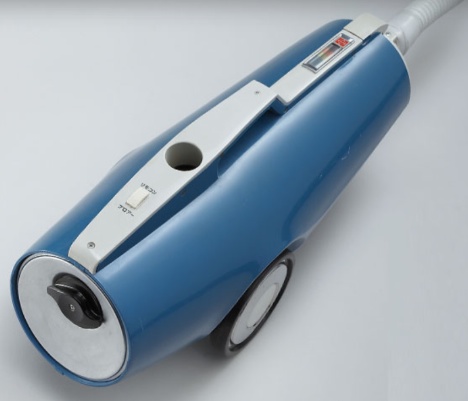
Using the material of the moment – plastic – the MC-1000 was a world away from the typical, functional-looking cylindrical vacuum cleaners made from metal sheeting. Making the most of plastic’s versatile shaping potential, its elegantly flowing, curved surfaces define the aesthetics of plastic. Plastic was responsible for more than just its good looks, though – unlike vacuum cleaners constructed of sheet metal, whose machine parts had to be inserted in predetermined order, the MC-1000’s body was made of left and right pieces that simply screwed into place. Productivity was greatly increased as a result of this method, made possible by its pioneering use of plastic.
This elegant, streamlined vacuum cleaner won awards, made vacuuming easier than ever before, and ushered in the new plastic era. The first plastic-bodied vacuum cleaner, its unique front wheel gave it effortless manoeuvrability, making vacuuming less stressful than ever before. This bold, modern product heralded the era of plastic and set a record for vacuum cleaner production, with an astonishing 630,000 units manufactured.
Designer: Panasonic circa 1965