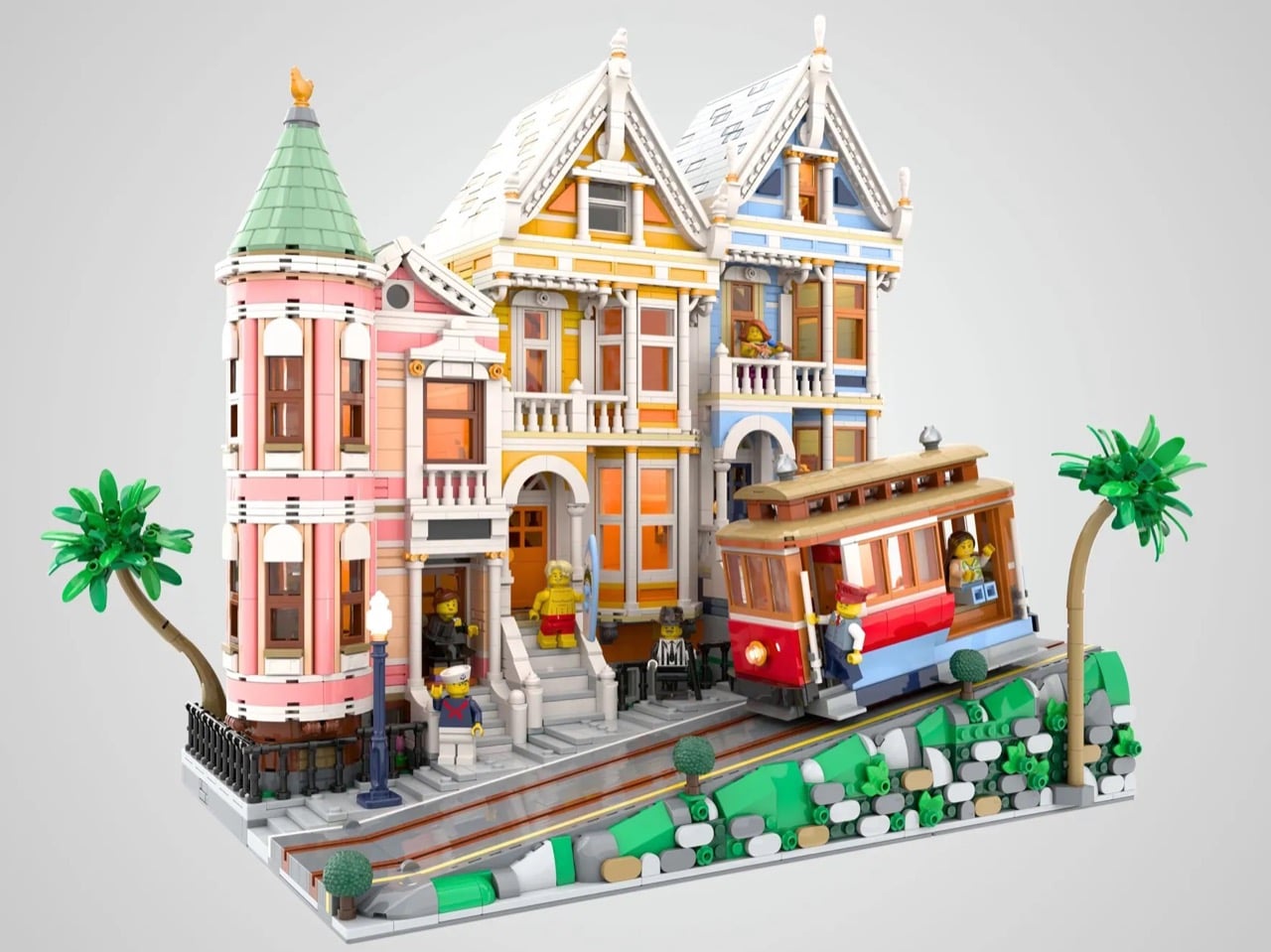

Every city has one view that ends up on the fridge magnets, and San Francisco settled that argument a long time ago. It’s the row of Victorians on Steiner Street facing Alamo Square, seven Queen Anne houses put up between 1892 and 1896 by a developer named Matthew Kavanaugh, who liked them enough to move in next door. They’ve since appeared in roughly 70 movies, shows and ads, most famously as the establishing shot of Full House, a sitcom whose cast never actually lived there. The houses have a nickname (Postcard Row), a backup nickname (the Seven Sisters), and a level of fame most buildings would commit crimes for.
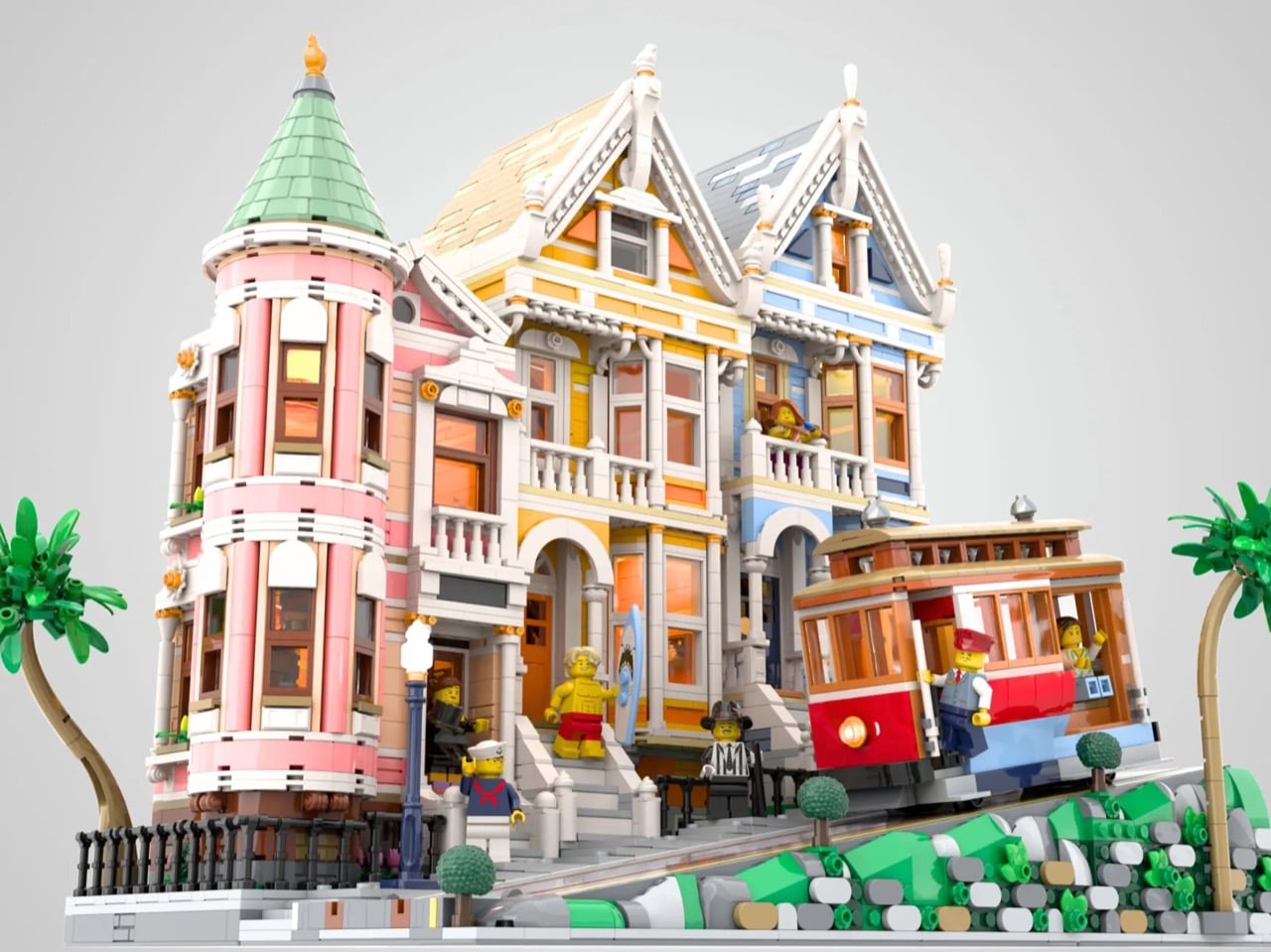
Wonderbrick_design went to California a few months ago, came home charmed, and built the whole street. The San Francisco Street runs to roughly 4,200 pieces and stretches 50cm across, with three Victorian facades on a sloping baseplate and a cable car climbing the hill beside them. Each house opens from the back like a dollhouse, the roofs lift off, and there’s a jazz dance academy, a surfer’s place and an artist’s home waiting inside. He built it with his sister, who teaches modern jazz, so one of those houses is hers. It’s a Staff Pick already sitting at 6,491 supporters.
Designer: Wonderbrick_design
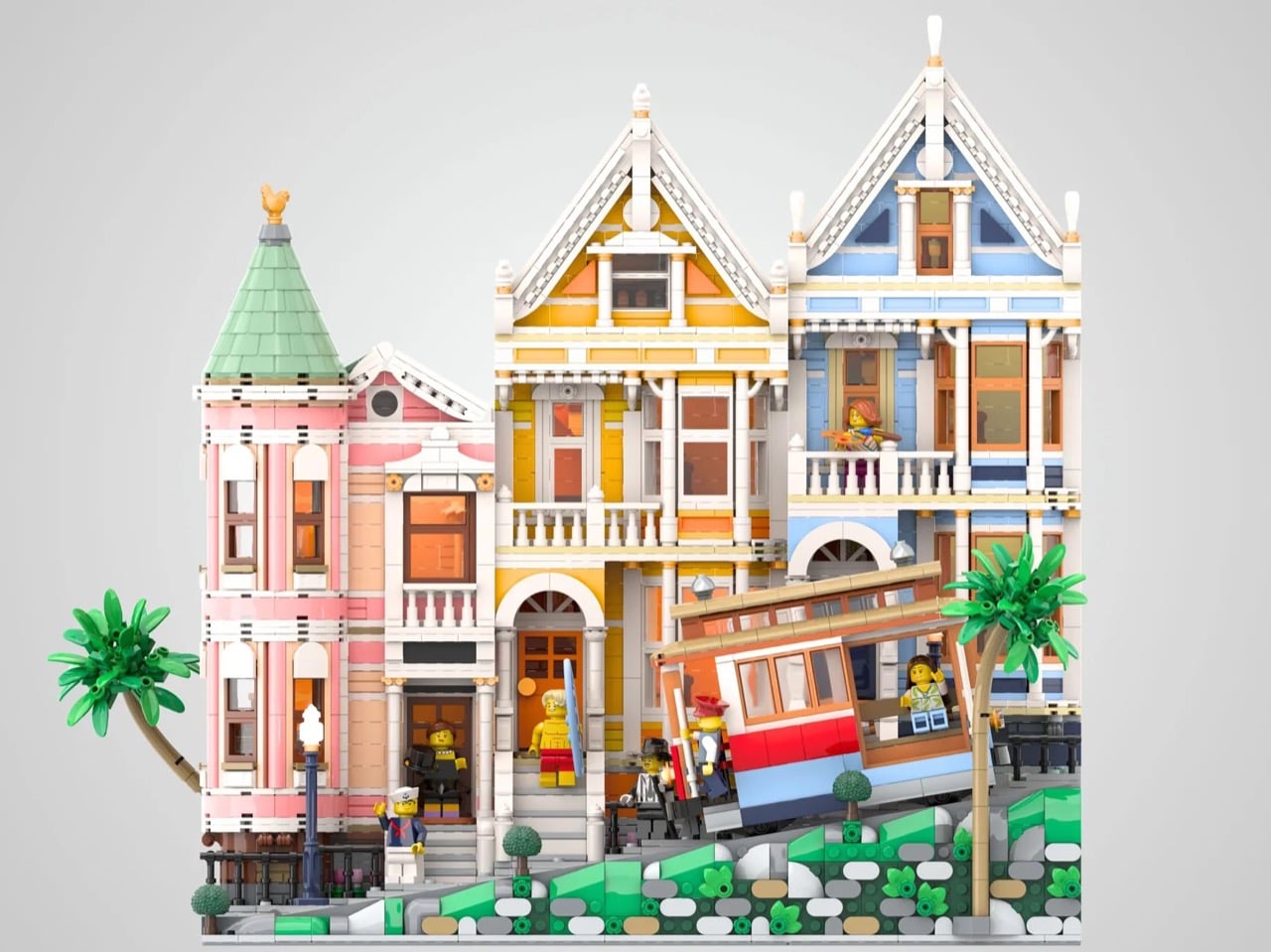
Worth knowing before you look too closely at the colours: they’re a 1960s remix. The architecture is 1890s Queen Anne, all gingerbread trim and bay windows and Victorian restraint. Then in 1963 a local artist called Butch Kardum started repainting grey facades in lime, vermilion, gold and turquoise, other colourists piled in, and the city quietly redecorated itself. The term “Painted Ladies” only arrived in 1978, via a book. So the most photographed houses in America are a century-old building wearing a sixty-year-old outfit, and this MOC (My Own Creation) nails the outfit. Salmon pink, curry yellow and sand blue, white trim on everything, with a sand-green conical turret capped by a tiny gold finial.
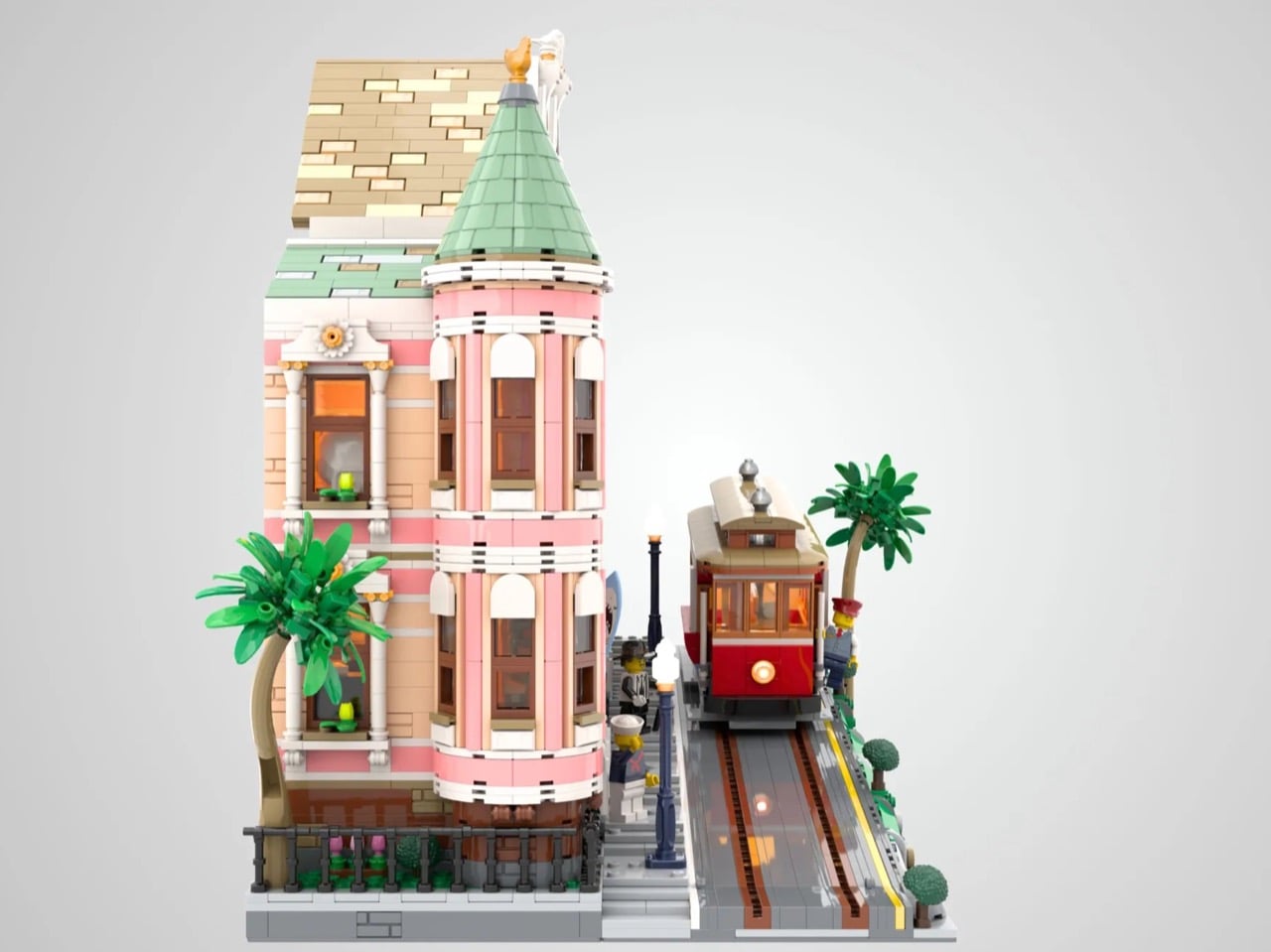
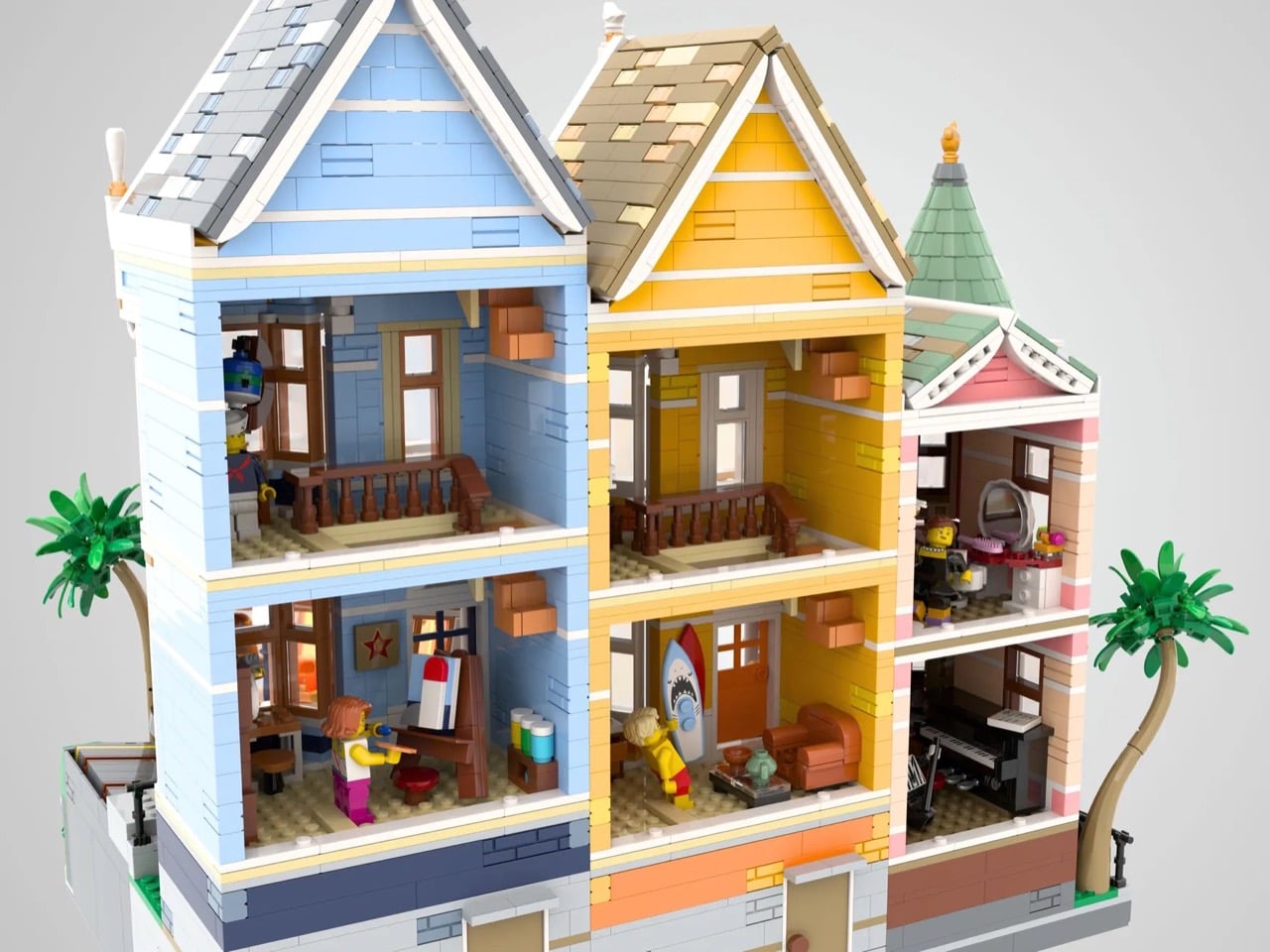

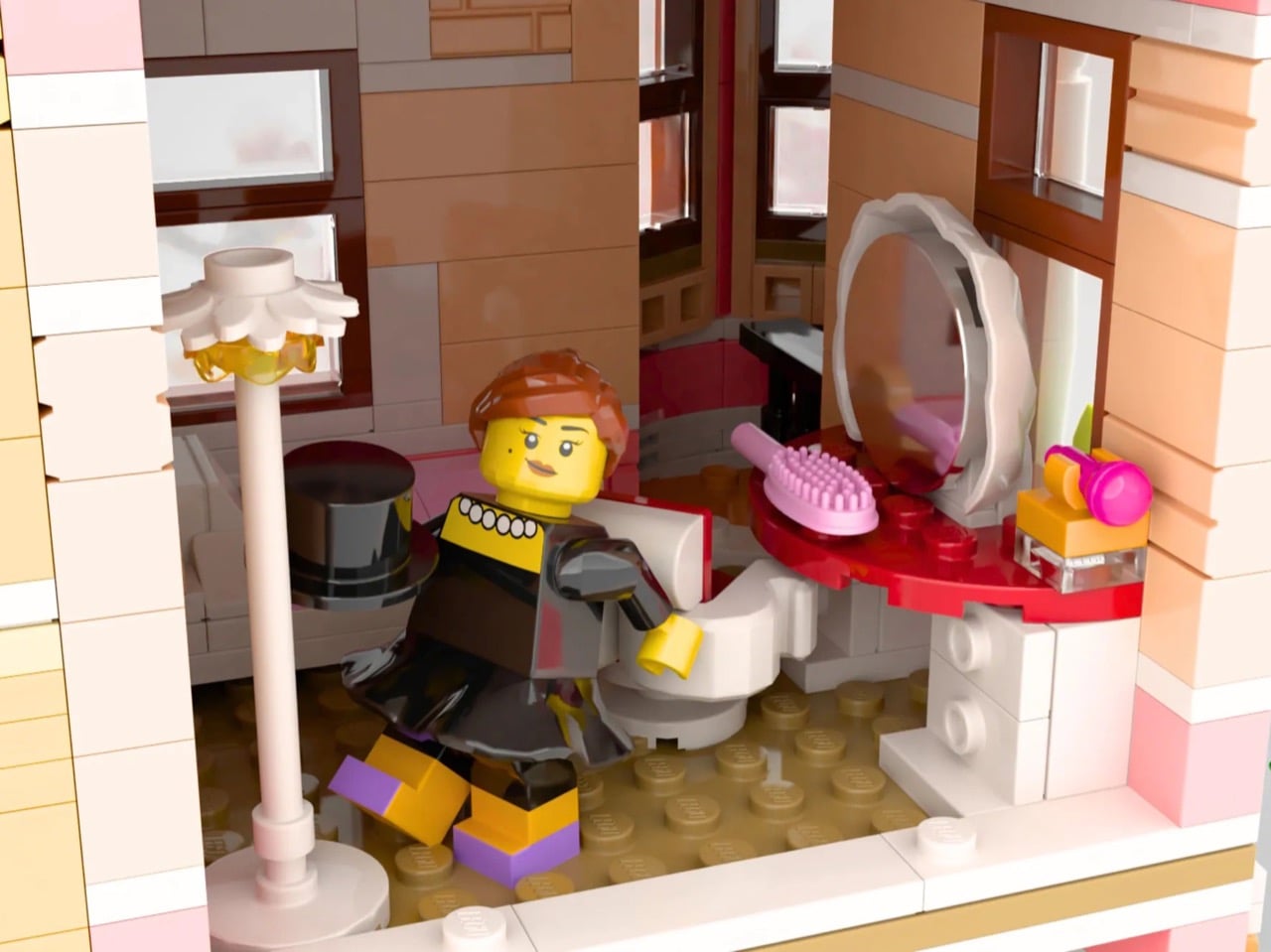
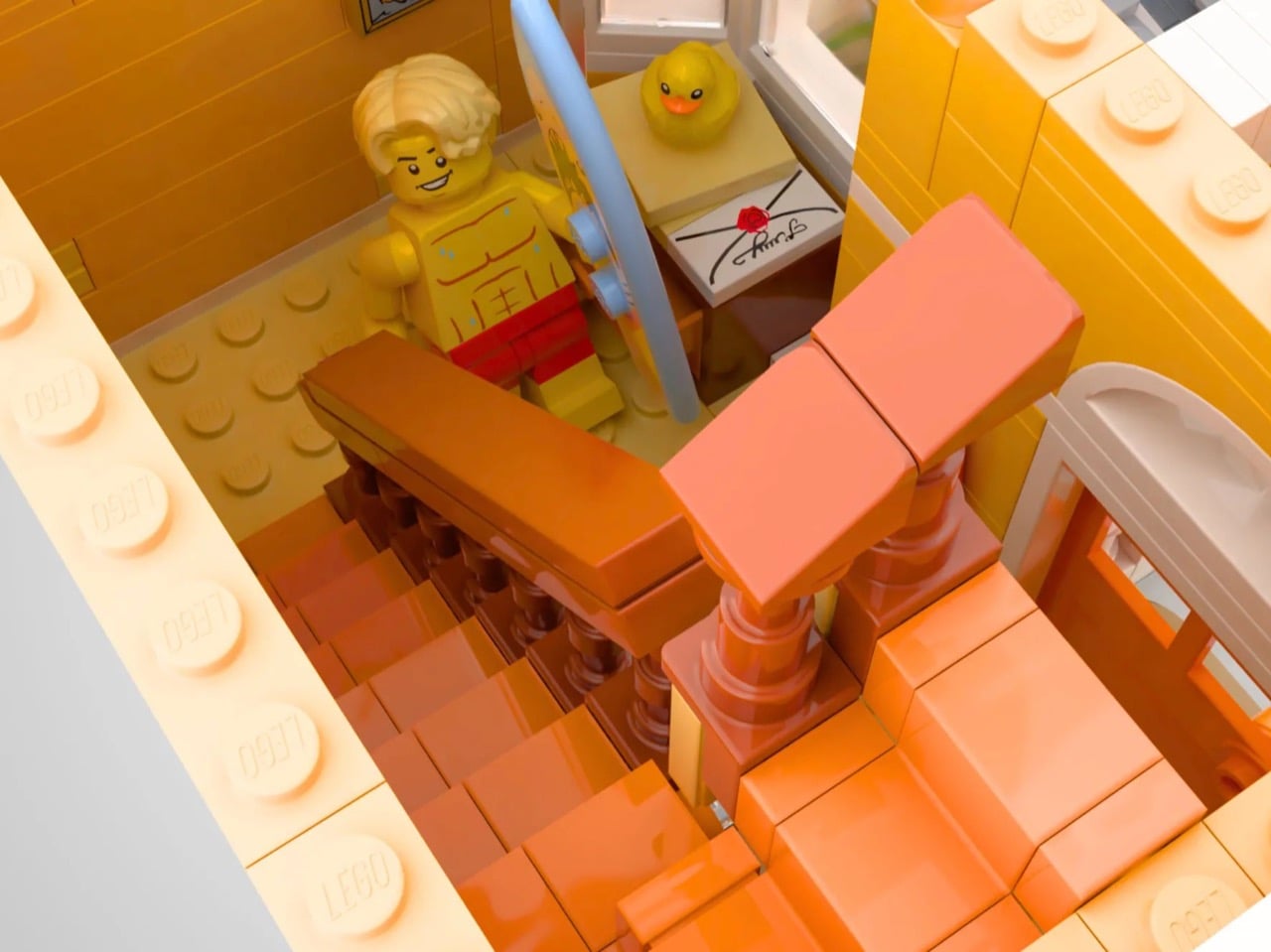
That turret is my favorite thing here. Cones are miserable to build in LEGO because the system hates anything that tapers, and Wonderbrick_design has shingled the whole thing, stacked three storeys of bay windows underneath it, and then still found room for a wrought-iron fence over the basement level. Behind it, the dance academy occupies the ground floor with a black upright piano and a mirror upstairs, the yellow house holds a surfboard with a shark mouth painted on it leaning against an armchair, and the blue house has an artist at work with an easel, canvases and paint tins.
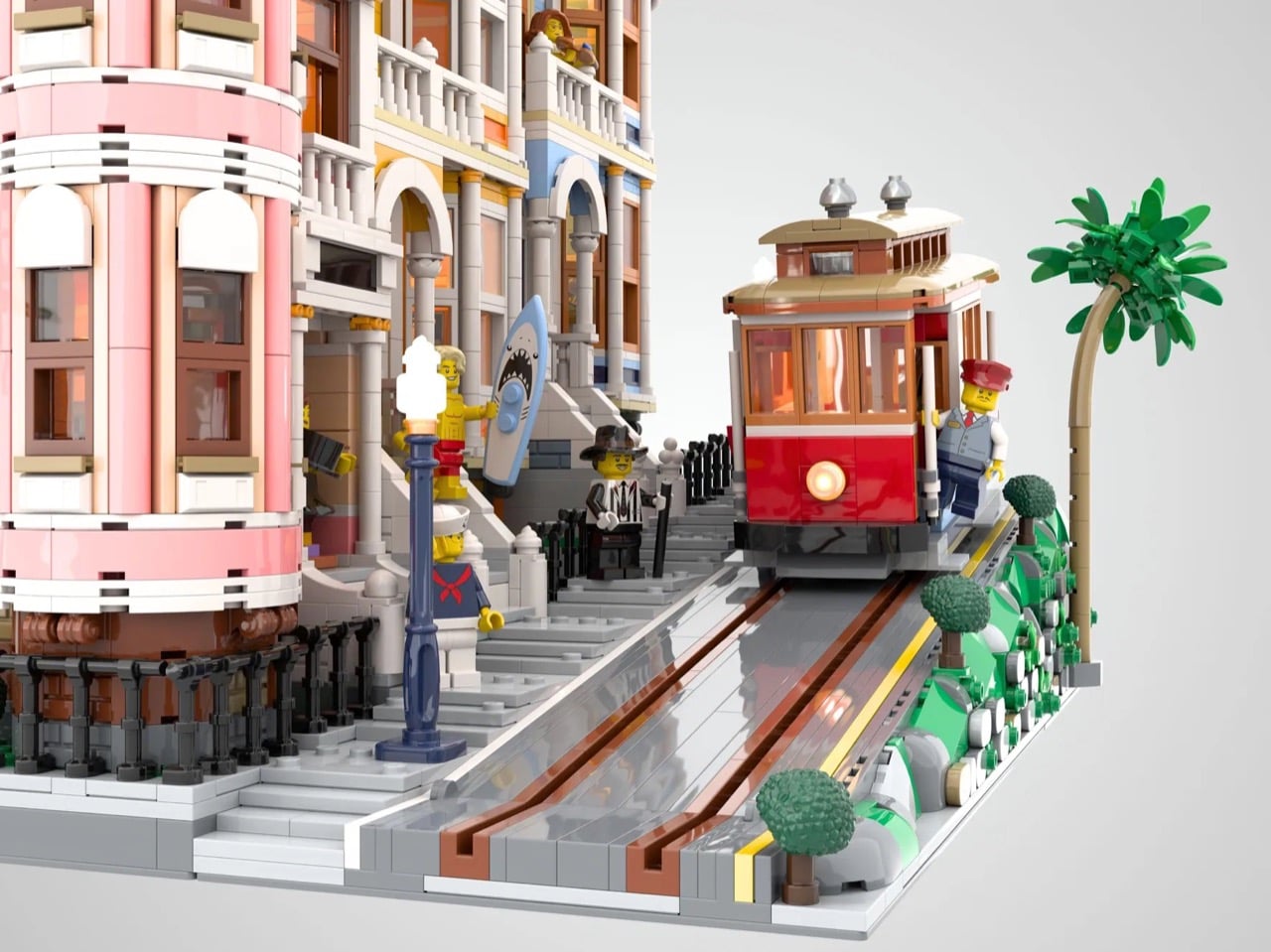
The whole baseplate is pitched, so the sidewalk, the stone retaining wall, the curb tiles and the track all descend together, and the cable car sits at a genuine angle rather than parked on a flat road pretending. Look at the rails and there’s a slot running down the middle, which is exactly how the real thing works. San Francisco cable cars carry no engine. A steel rope moves under the street at a constant 9.5 mph, powered from a building on Mason Street, and the gripman works a lever that clamps onto it. Andrew Hallidie got the system running in September 1873, and it survives today as the only moving National Historic Landmark in America.
LEGO has flirted with this material before, tucking a microscale Postcard Row into the 2019 Architecture skyline set, and builders keep proving the appetite is real. Peter_Designs pitched a 2,997-piece Ascensor da Bica at 20.5 degrees to match Lisbon’s hills a couple of years back. Minifig-scale San Francisco remains unclaimed territory.

With 766 days on the clock and 6,491 supporters banked, the climb to 10,000 looks very doable. You can head to the LEGO Ideas page and cast your vote here. The only thing missing is a string and a winch to pull that cable car up the hill for real.

