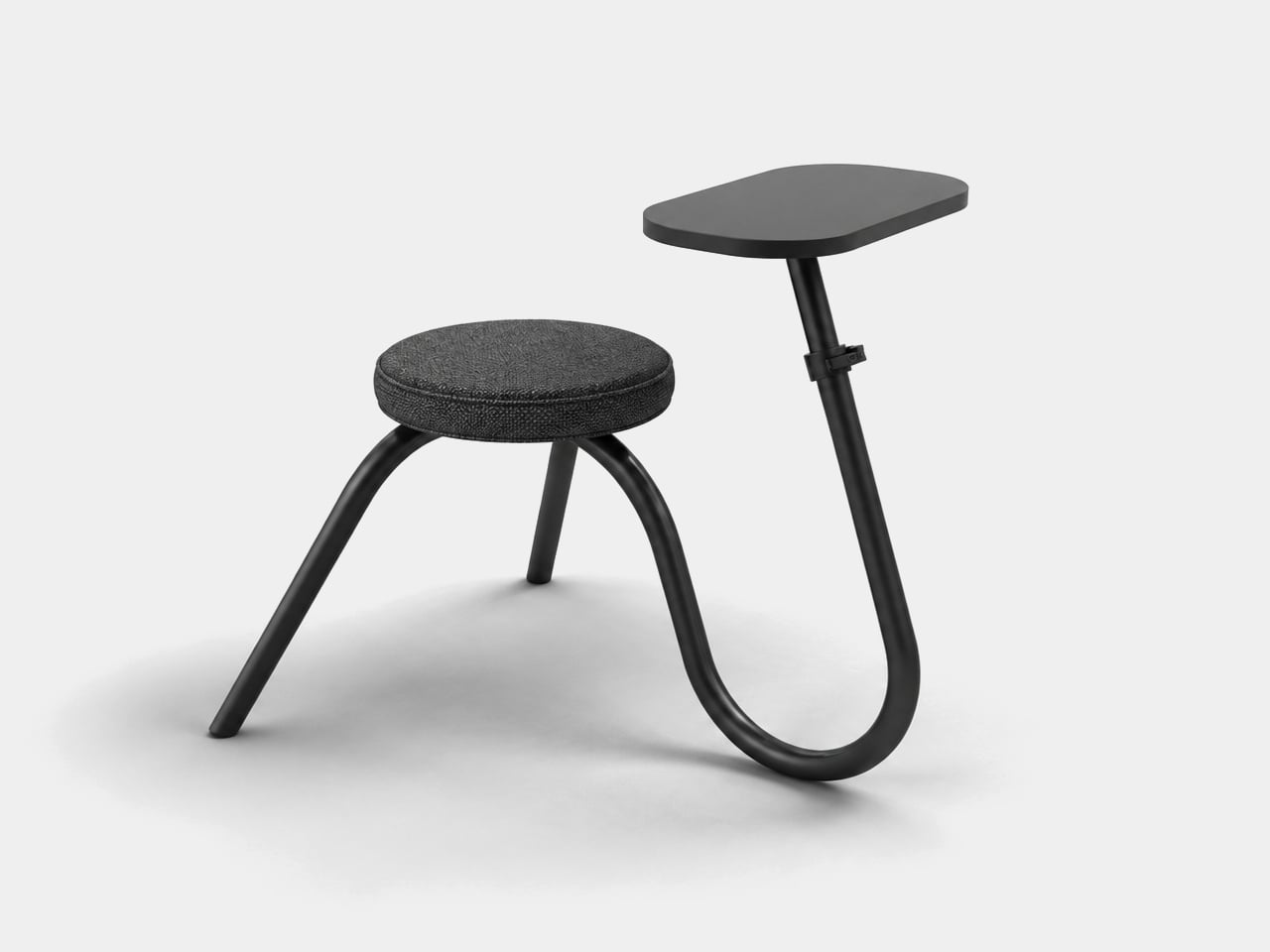
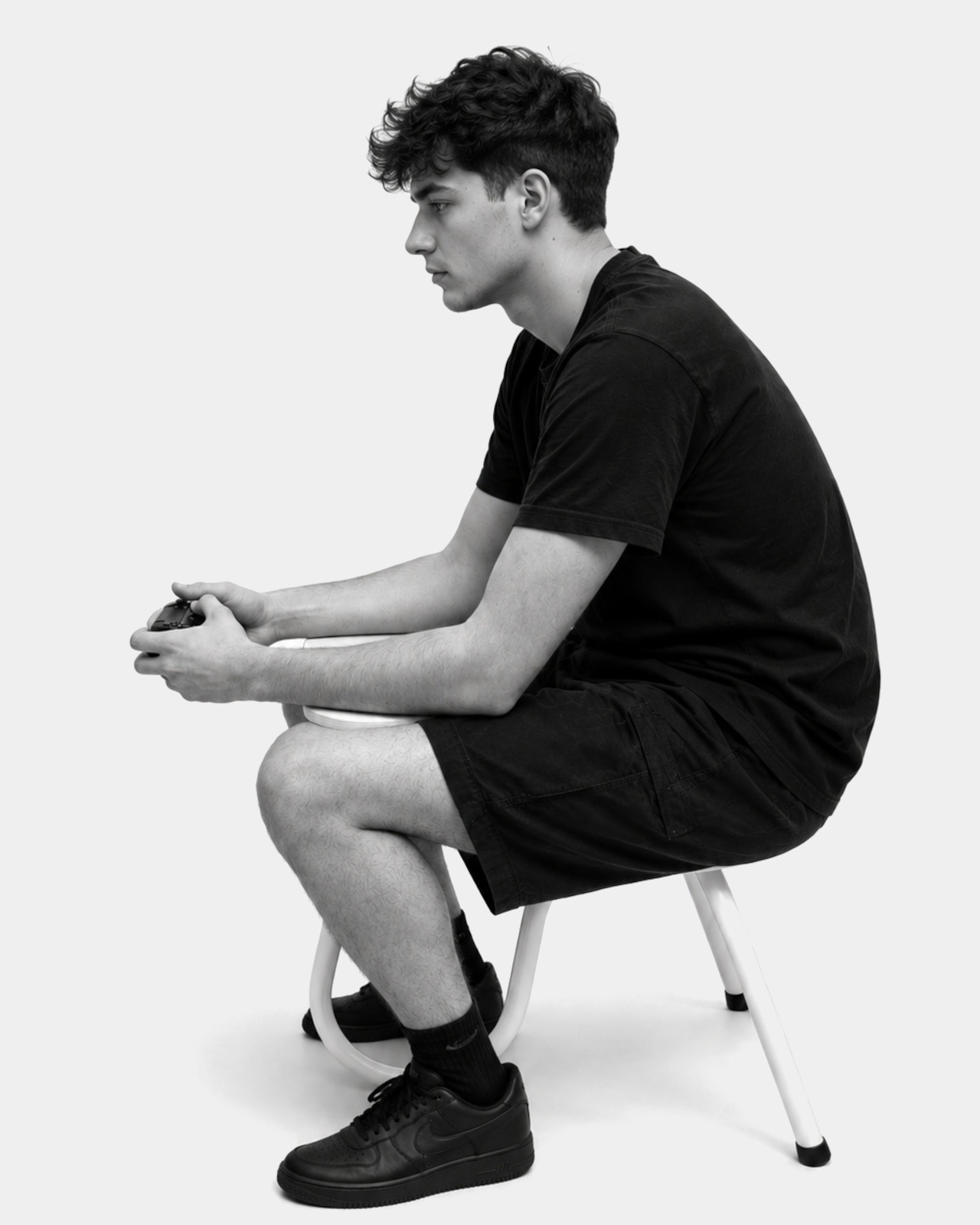
Anyone who’s spent a tense hour of competitive gaming knows the posture without ever naming it: leaning forward, elbows braced against the thighs, spine curved toward the screen like the controller demands it. Uplay starts from that exact unconscious habit rather than fighting it. Instead of asking players to sit properly, it builds a stool specifically shaped around the slouch competitive gaming already produces on its own.
Most gaming chairs still borrow their DNA from office seating or racing simulator rigs, neither of which was ever built around a controller-holding body. Uplay skips that inherited logic entirely, starting instead from actual hand position, actual posture, and how a player’s body relates to a screen a few feet away. That’s a narrower, more specific starting point than most furniture in this category bothers to consider.
Designer: Ilya Lazukin
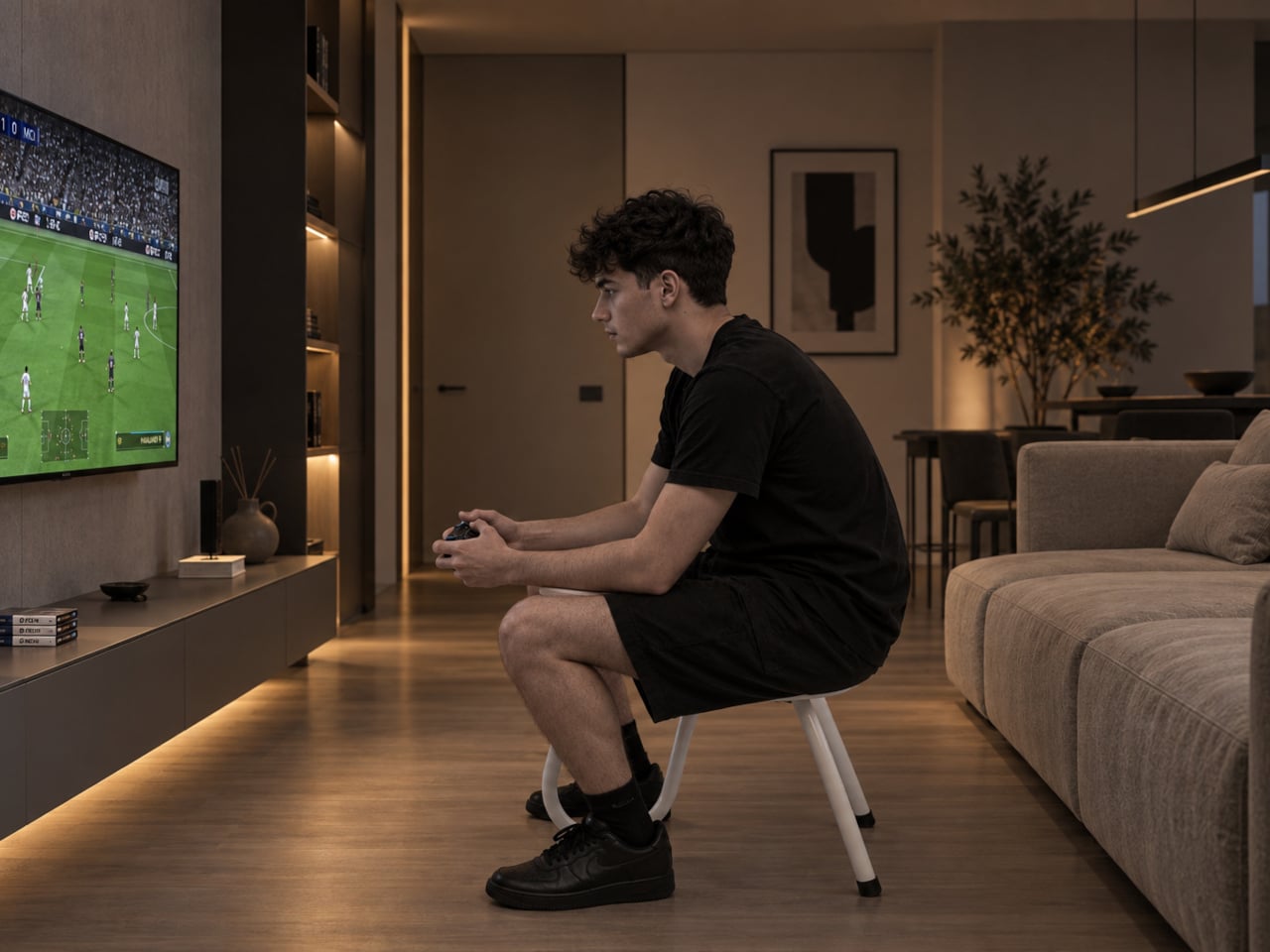
That posture came with a real cost before Uplay existed. Hours spent bracing elbows against legs leave pressure marks and genuine discomfort, the kind that quietly ends a gaming session before the match does. A search across furniture retailers and marketplaces turned up nothing built to solve that specific problem, which is what pushed this concept from personal annoyance into an actual design brief worth pursuing.
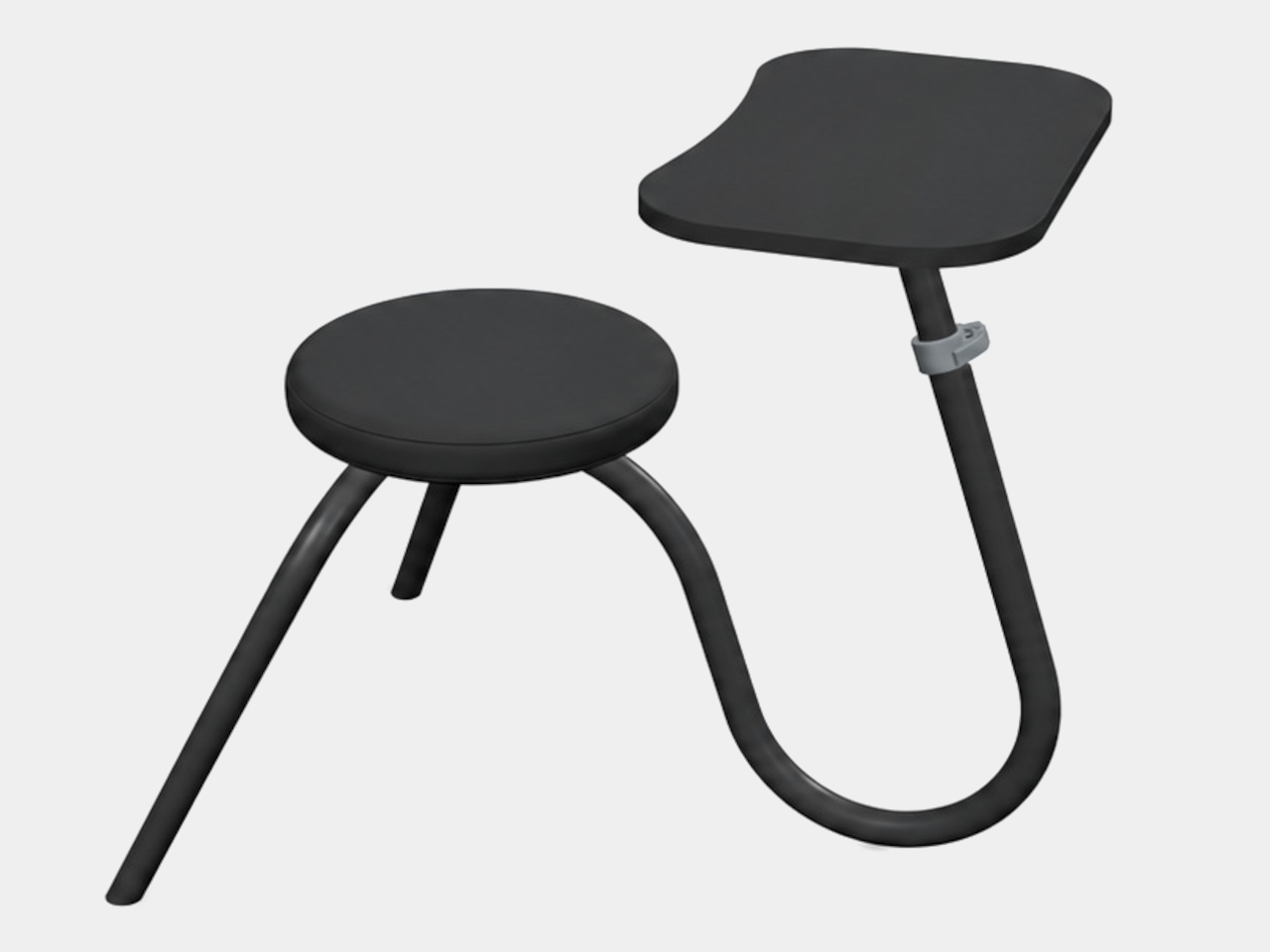
The solution reads deceptively simple: a round seat, a tubular frame, and a tabletop positioned just ahead of the sitter. What makes it work is that both surfaces share one continuous bent tube rather than existing as separate pieces bolted together. That single curve carries weight from the tripod legs up into the armrest’s support column, turning what looks like two objects into one structurally unified piece of furniture.
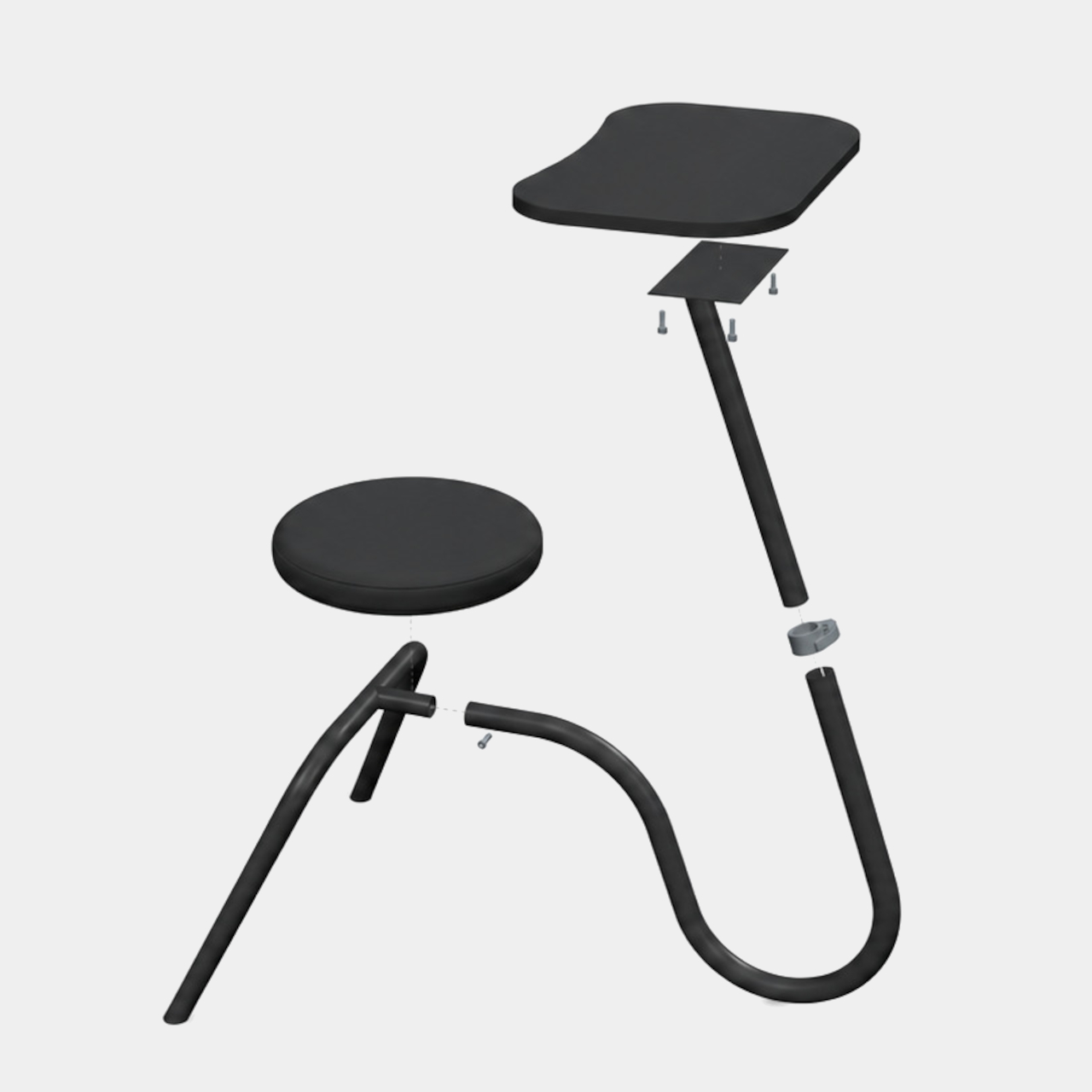
Height adjustment borrows hardware from an entirely different category of design. An eccentric clamp, the same mechanical principle used to secure a bicycle seat post, lets a lever release the tabletop’s support column, slide it to a new height, and lock it back down. That borrowed mechanism means the armrest can sit exactly where a specific body and a specific controller grip actually need it, rather than settling for one fixed compromise height.
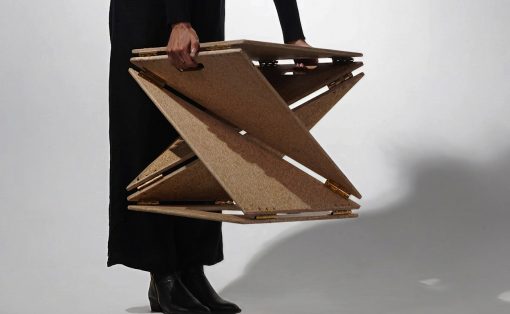
Nothing about Uplay stays permanently assembled either. The seat, the tabletop, and the frame elements all separate into individual components by design, not as an afterthought for shipping. That knock-down structure means a gaming setup that lives in a corner during a match can collapse down small enough to slide under a bed or into a closet once the session ends, a detail that matters more in small apartments than any spec sheet suggests.
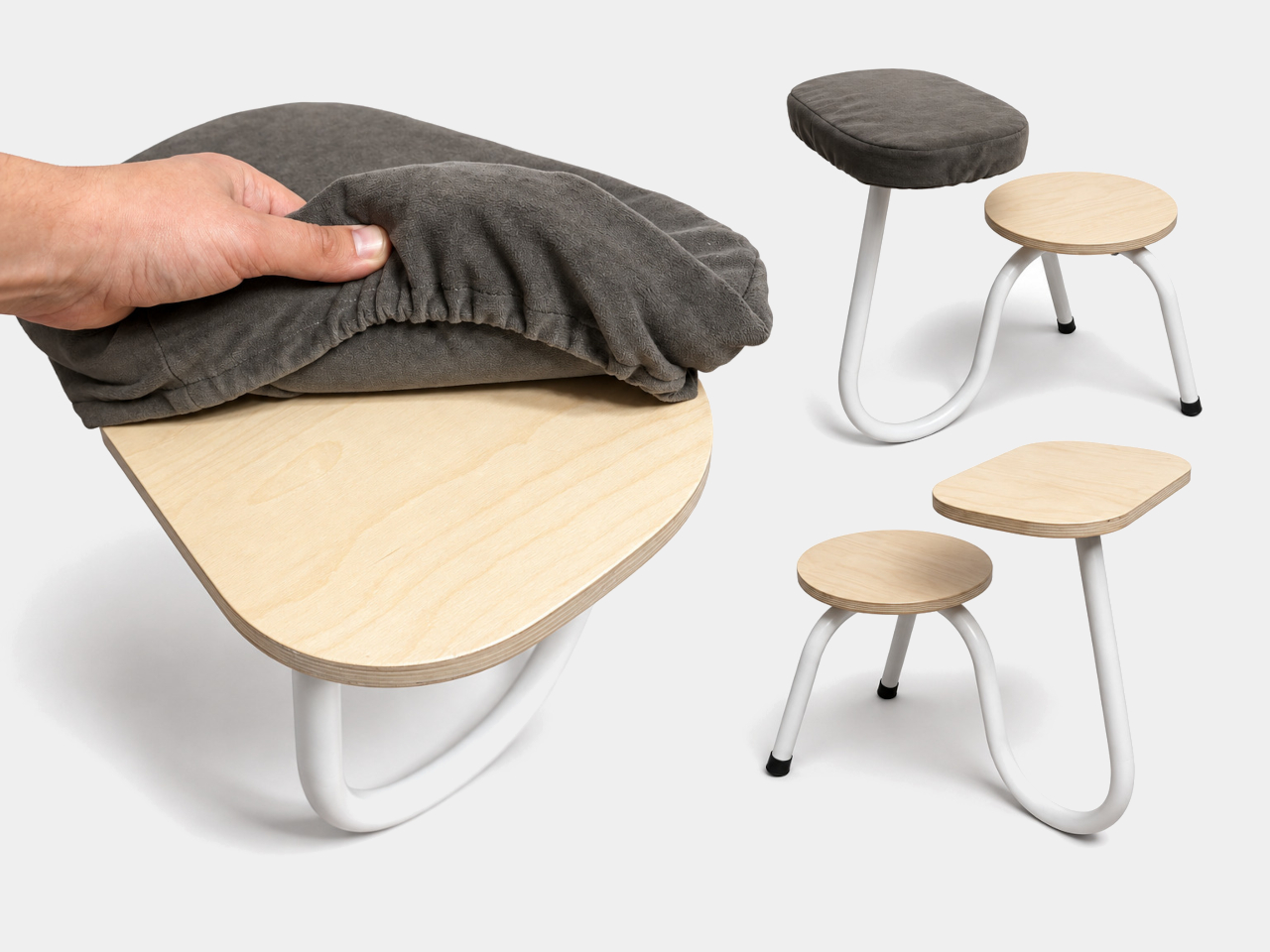
Materials extend beyond a single fixed look. Some versions pair painted steel tubing with a plain plywood tabletop and seat, left exposed in a natural wood tone. Others wrap that same plywood in a soft, removable fabric slipcover, turning a utilitarian frame into something that can match a couch instead of looking bolted on from a hardware store. Either way, the underlying structure and adjustment mechanism stay identical.
Sit on it without touching the tabletop at all, and Uplay works as an ordinary low stool; nothing about its shape forces the armrest into use. That flexibility matters because a gaming session rarely stays static for hours straight. A player might brace forward through a tense match, then lean back and set the controller down entirely, all without needing to swap furniture or leave the room to find a different chair.
SHARE