EV charging infrastructure has grown considerably in recent years, but the experience of actually using it rarely gives people much to think about. Most stations are indistinguishable from the utilities they resemble, built for function with little thought for the space they occupy. That’s a missed opportunity in a technology that already asks drivers to rethink a habit as ingrained as stopping for gas.
A series of five conceptual EV charging station designs takes a different view of what that infrastructure could look like. Rather than treating the wait as dead time to get through, they propose something closer to a destination, structures that generate solar and wind energy while also giving people a reason to look twice, and maybe start a conversation about why they’re there.
Designer: Michael Jantzen
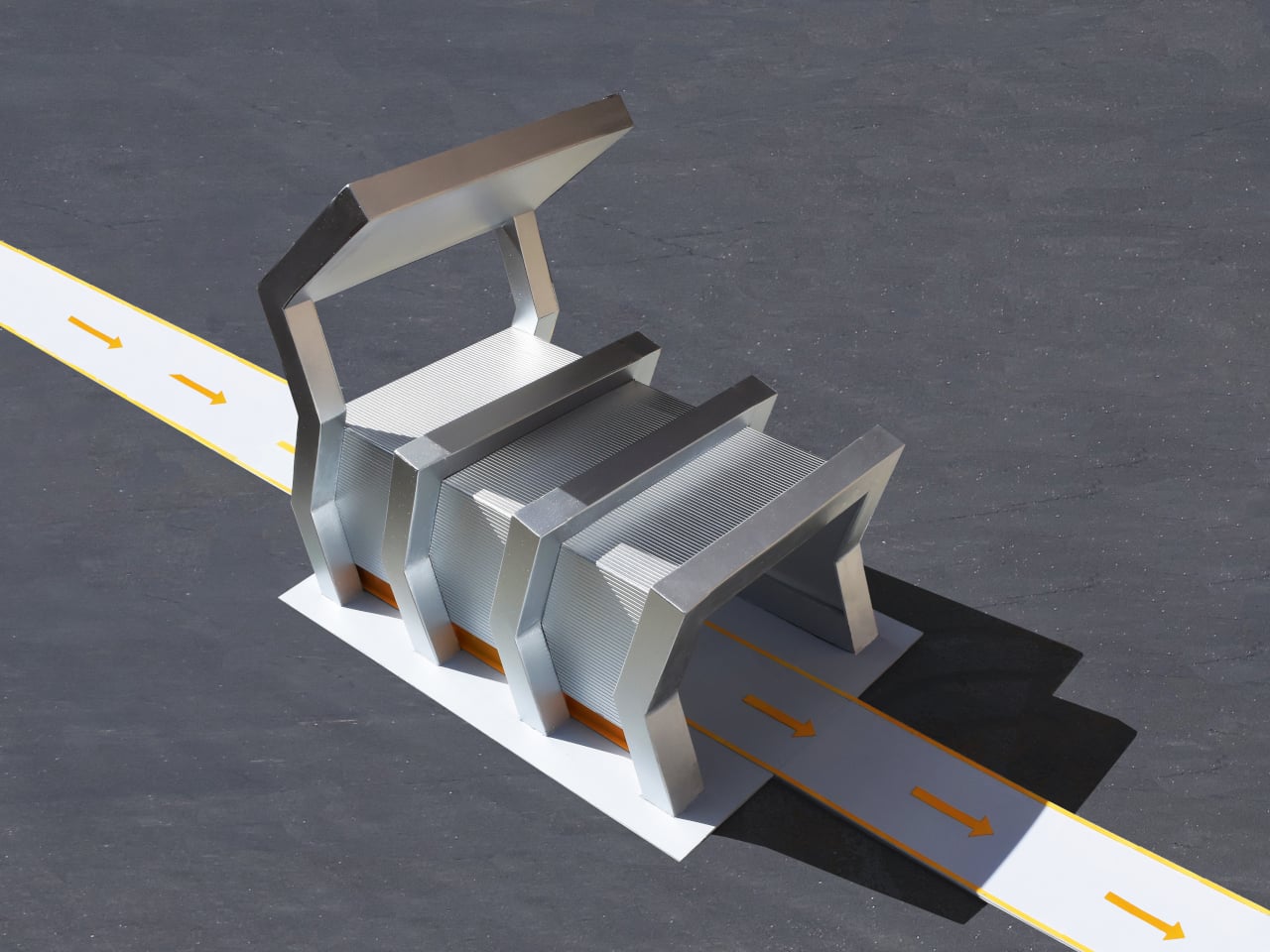
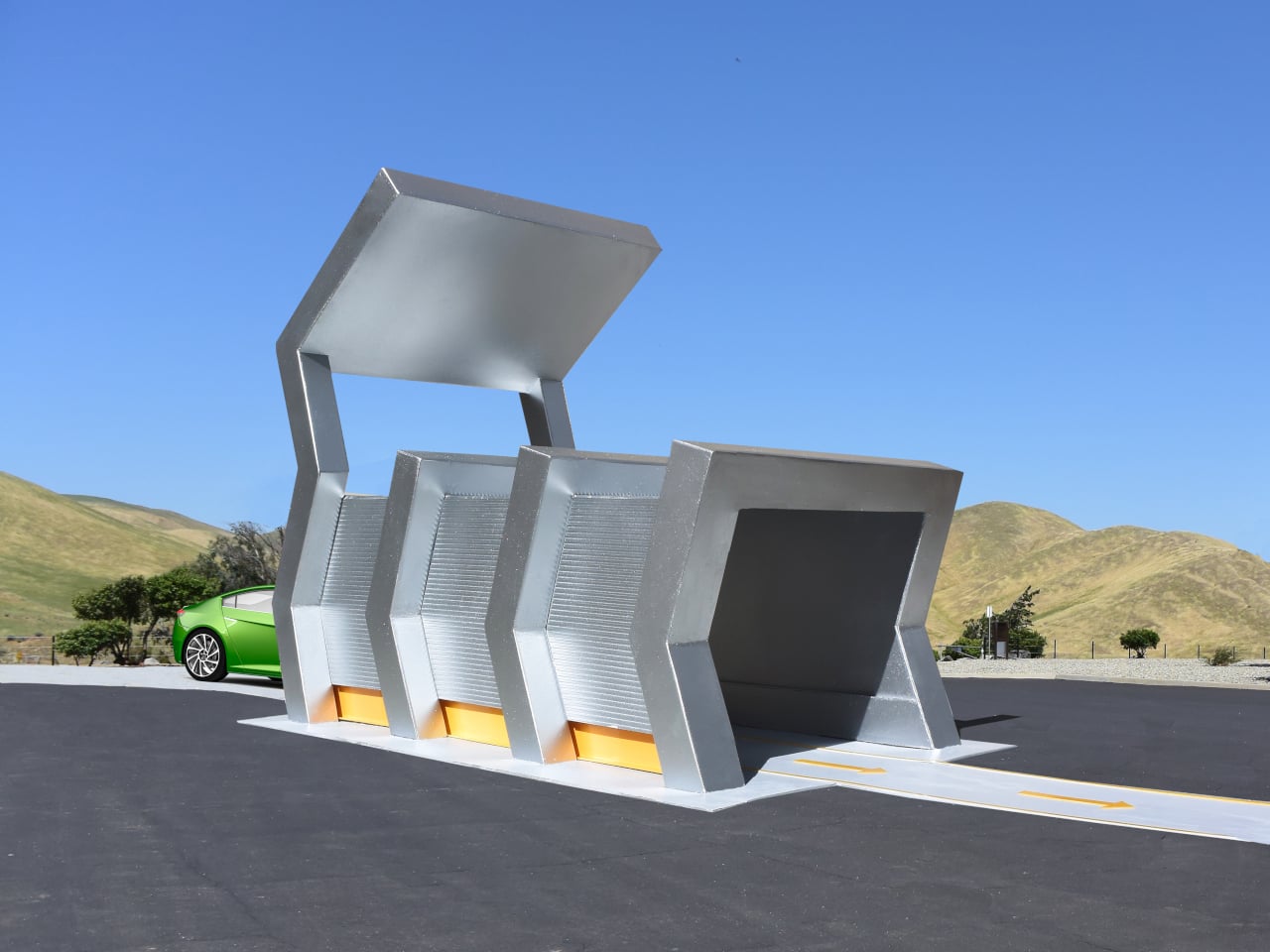
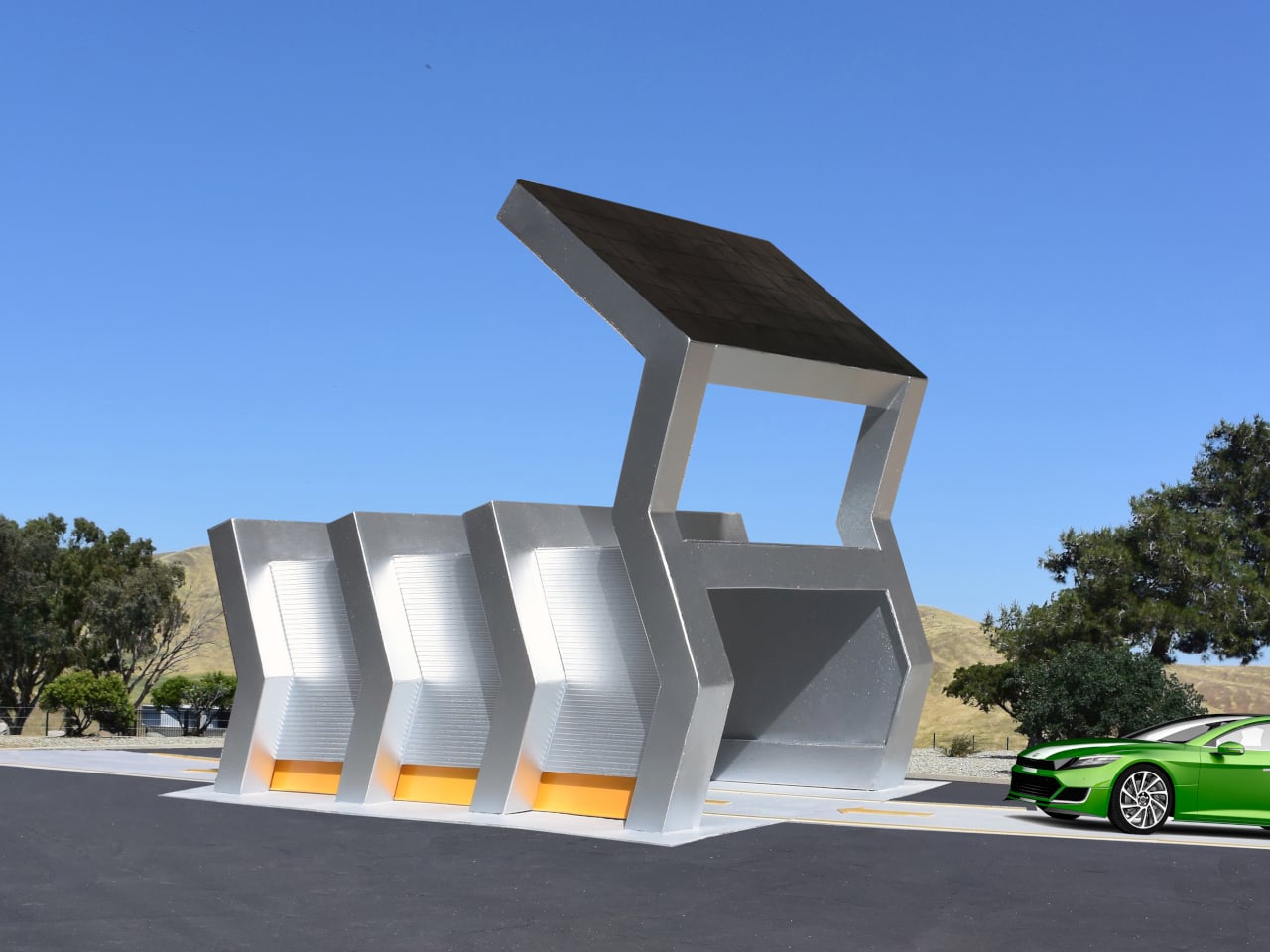
The Silver Solar Charging Station rises as a steel structure with a large photovoltaic panel angled overhead on a tall vertical arm. Drivers pull inside to access the charging connections, sheltered from the weather while the panel converts sunlight into electricity stored directly in connected batteries. The charging bay is practical, though the frame around it looks nothing like anything built with that purpose in mind.
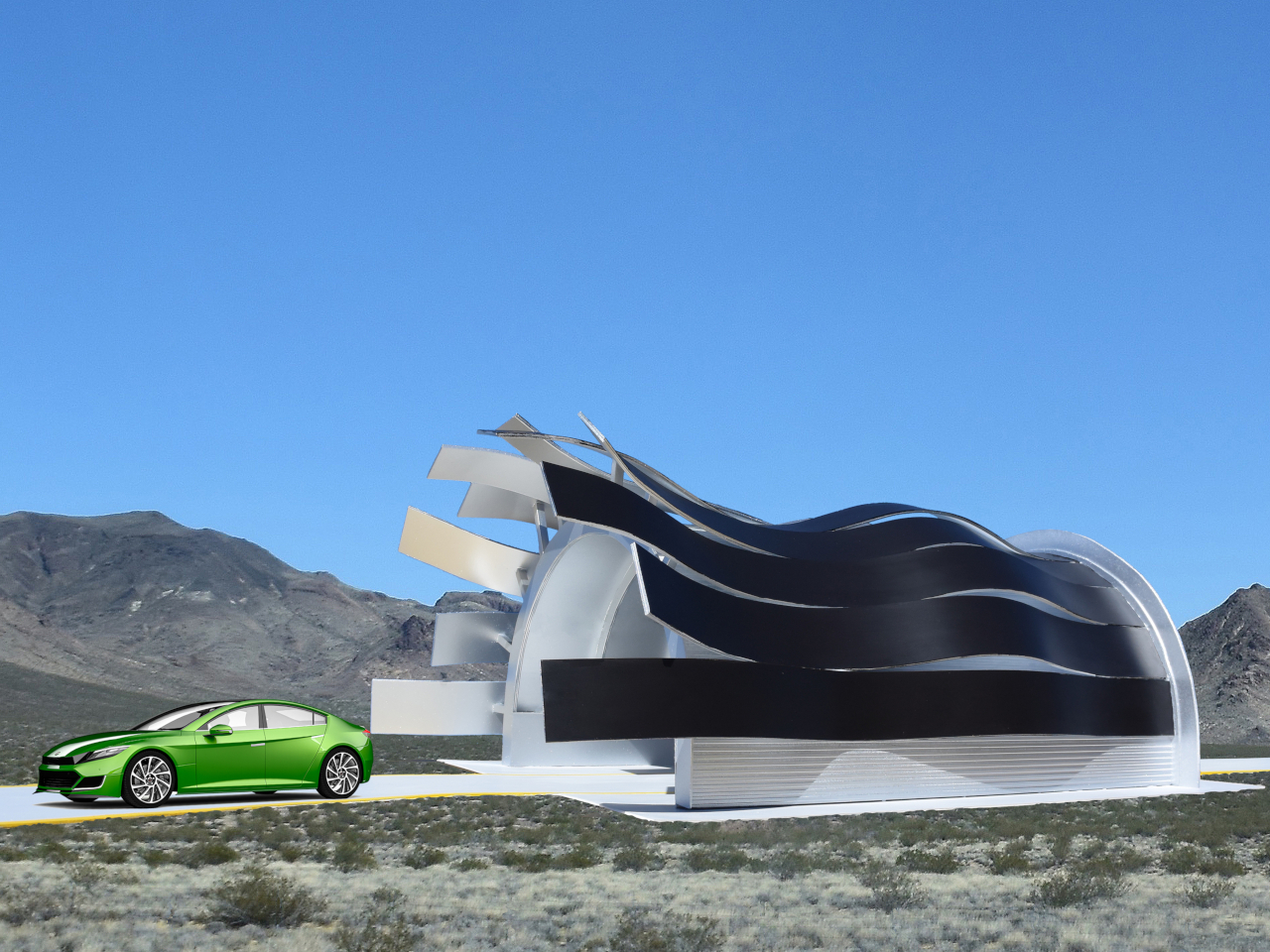
The Black Waves Solar Charging Station shares the drive-in shelter principle but trades angular geometry for something far more fluid. Ribbon-like steel sections curve and undulate overhead, each covered in photovoltaic panels. The design functions exactly like the others, but the wave-like form overhead gives drivers something to look at while they wait, the kind of structure that prompts questions before it answers them.
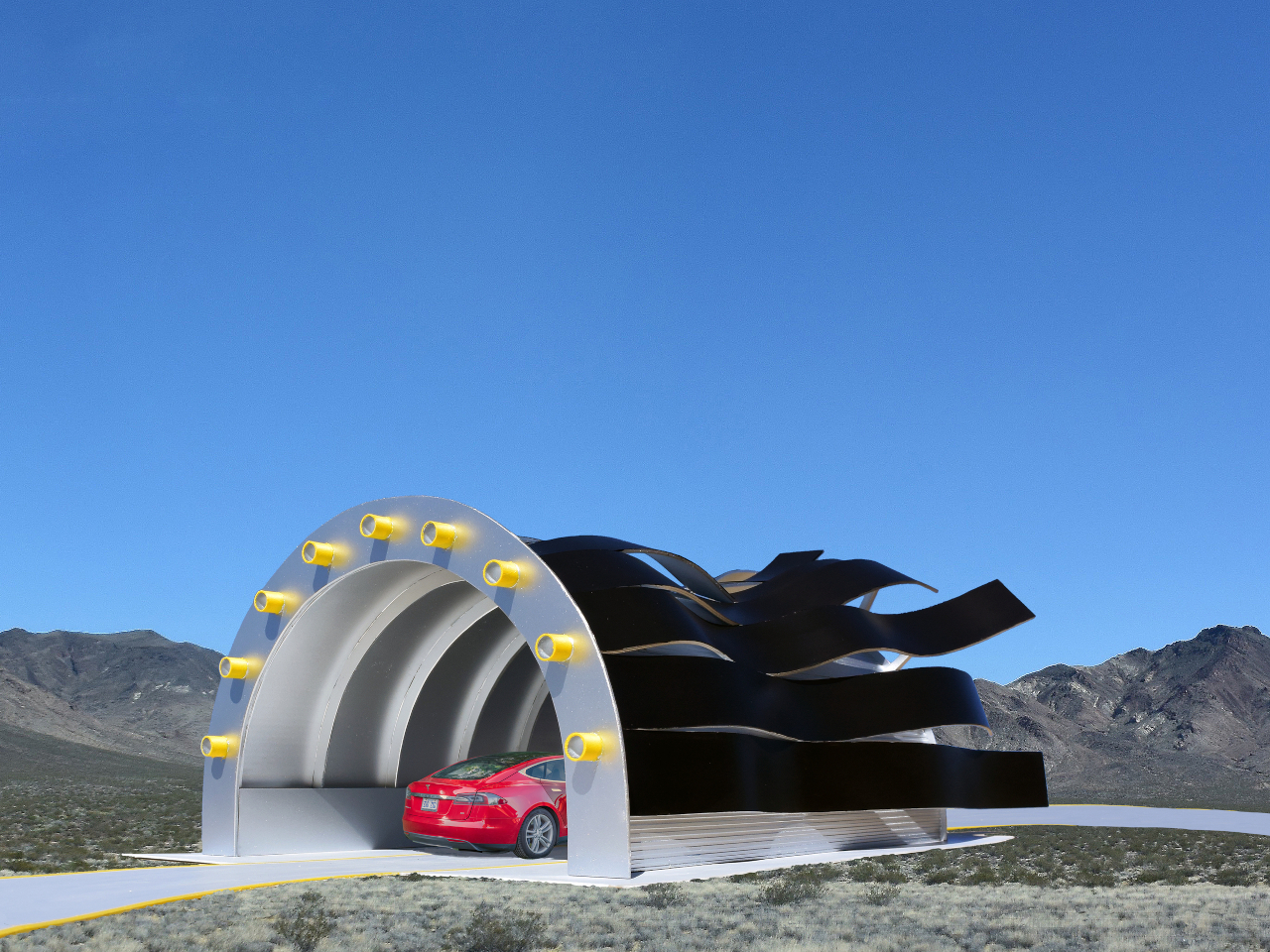
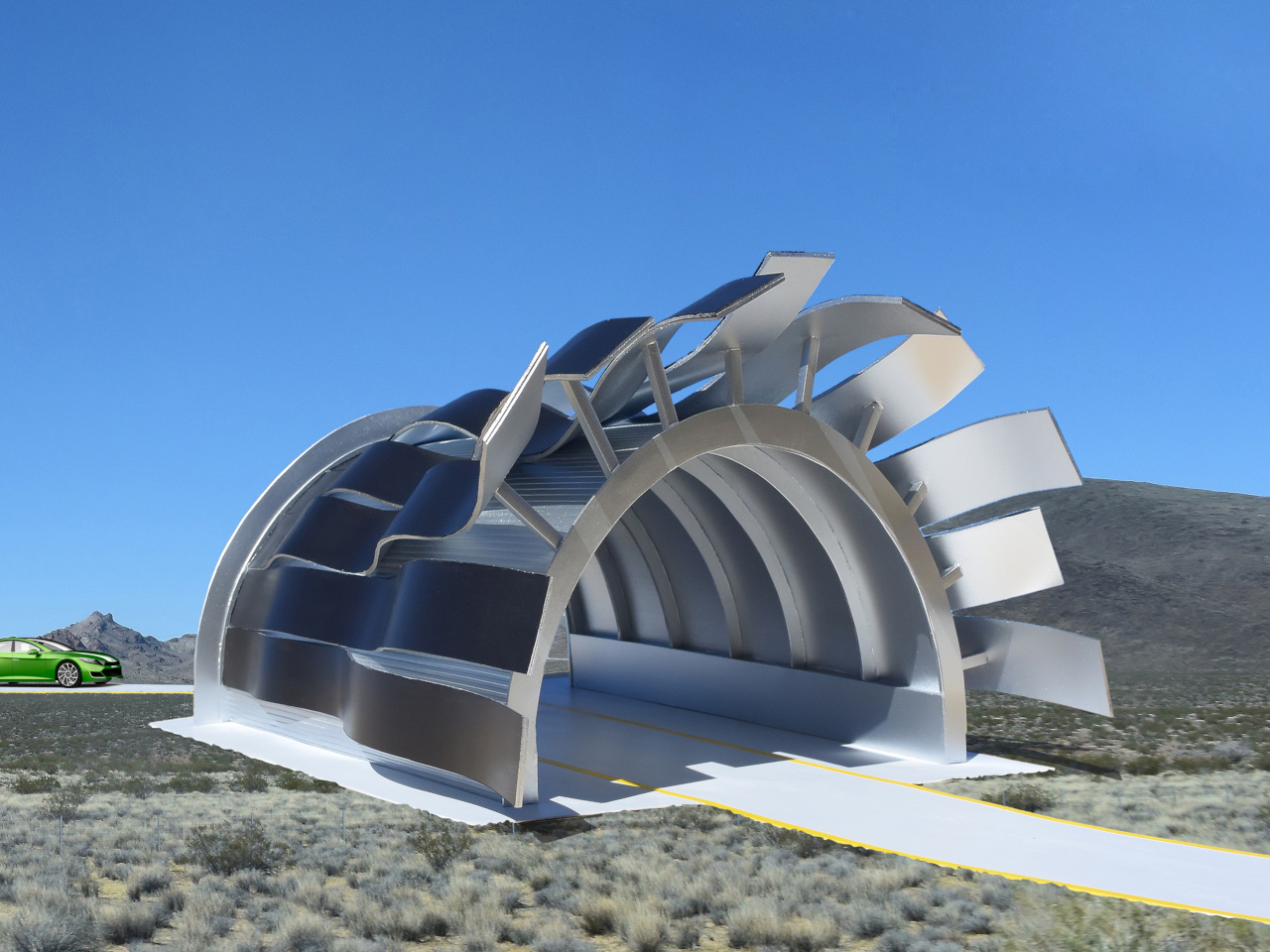
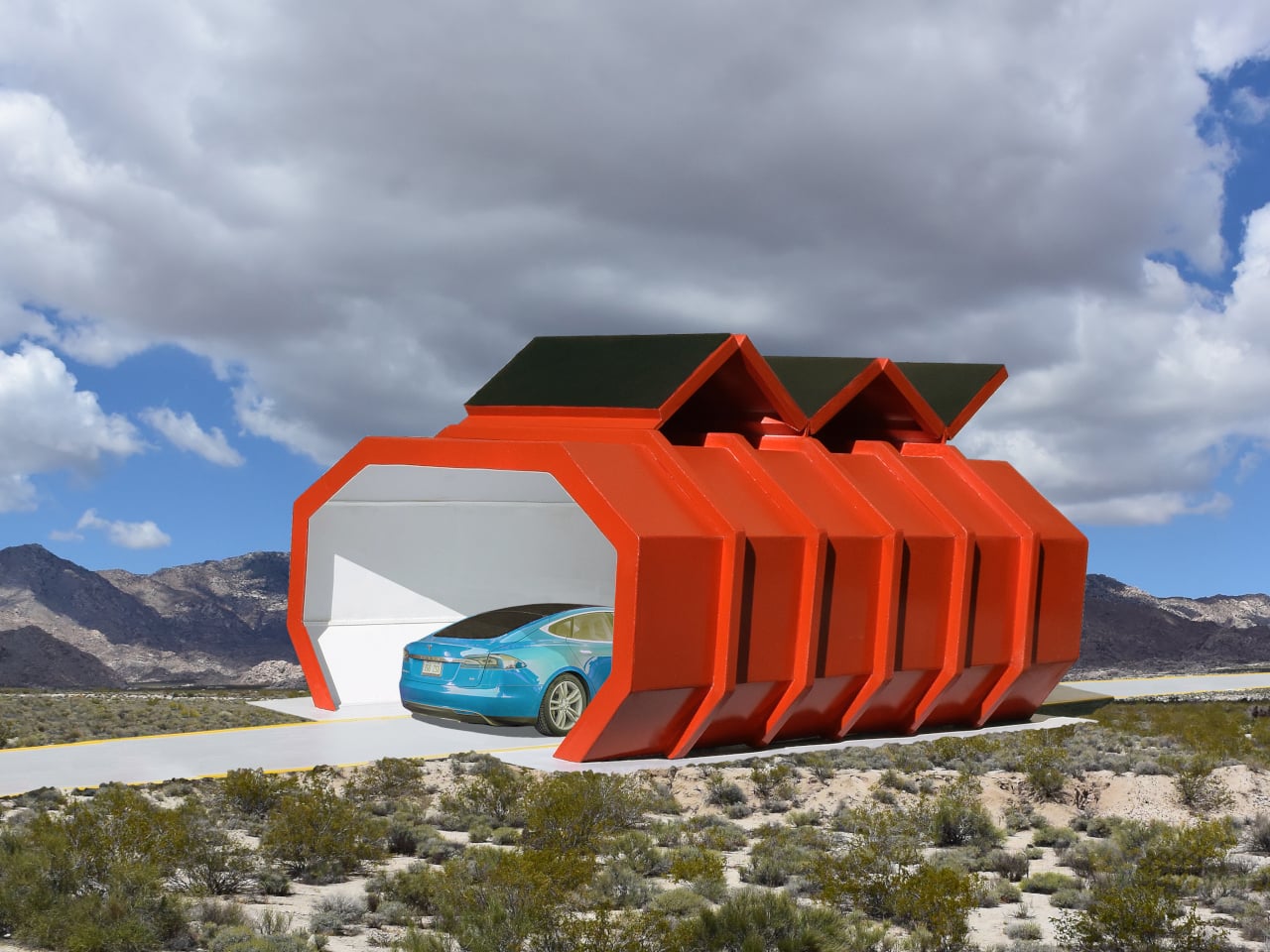
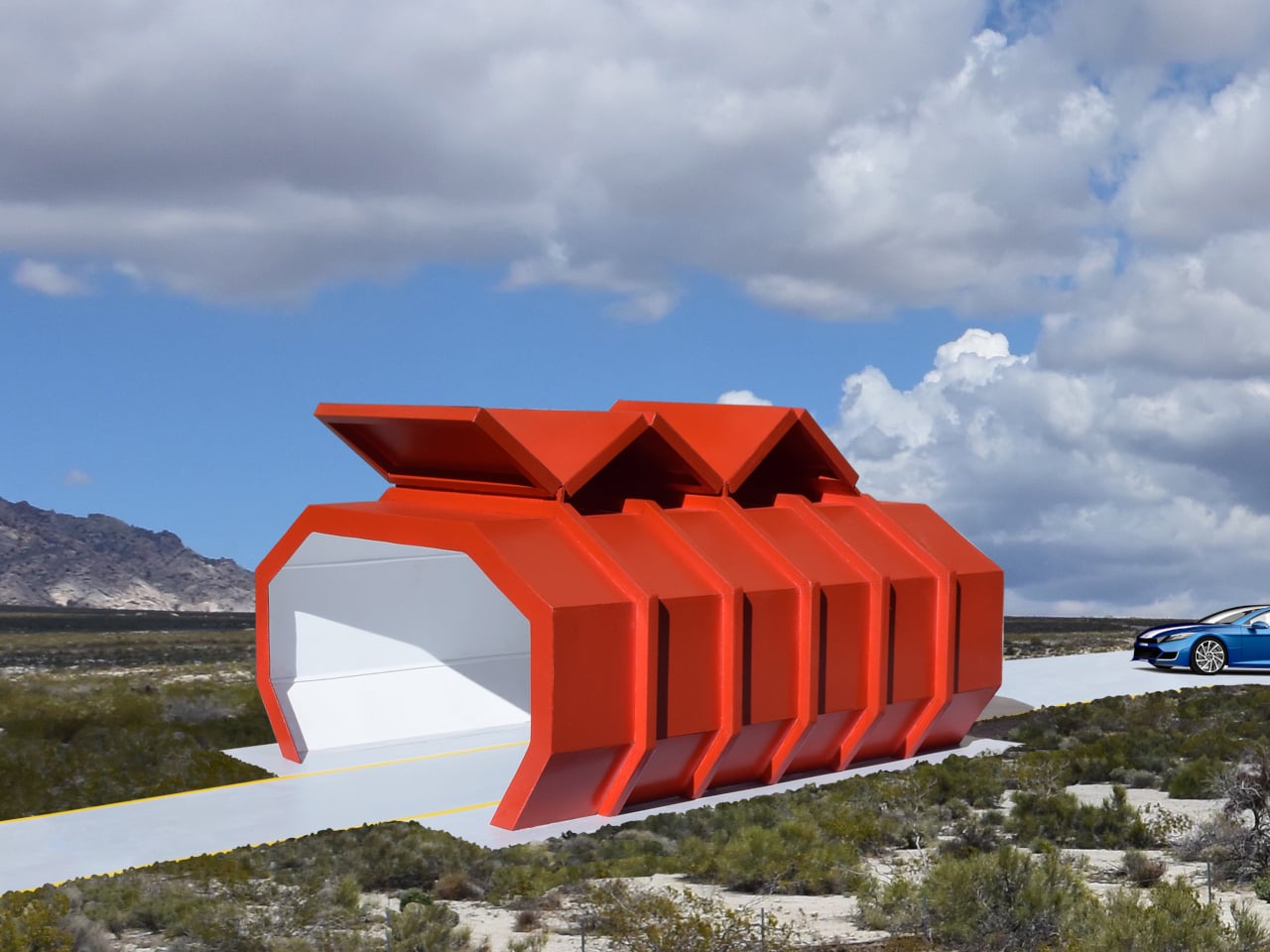
The Red Solar Charging Station doesn’t try to blend in. Its vivid color marks it on the horizon well before you reach it, and the zig-zag arrangement of solar panels on top gives the structure a jagged, almost aggressive silhouette that contrasts with the smooth drive-through tunnel below. The photovoltaic cells are fully functional, drawing power from sunlight to feed the charging points inside.
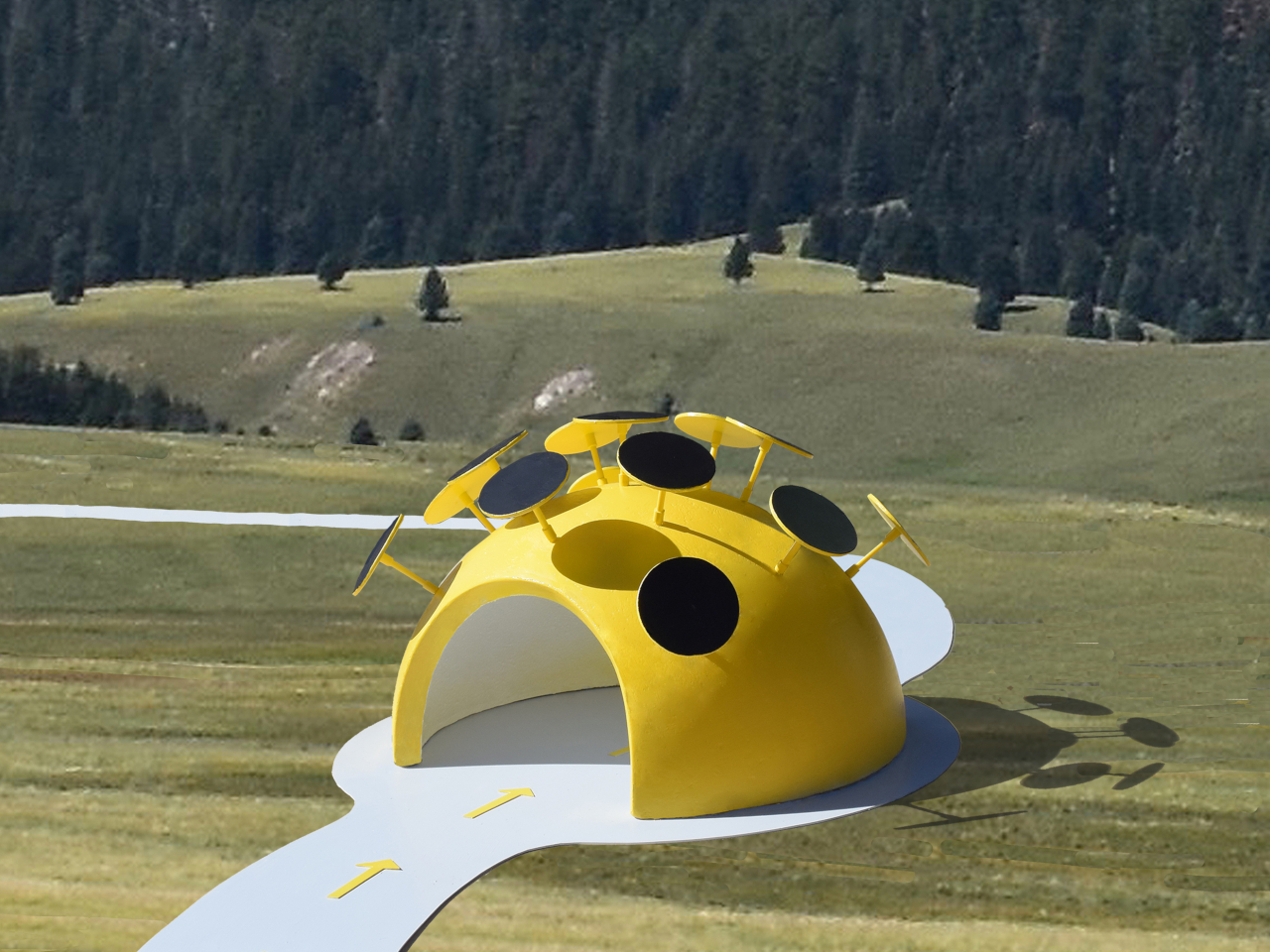
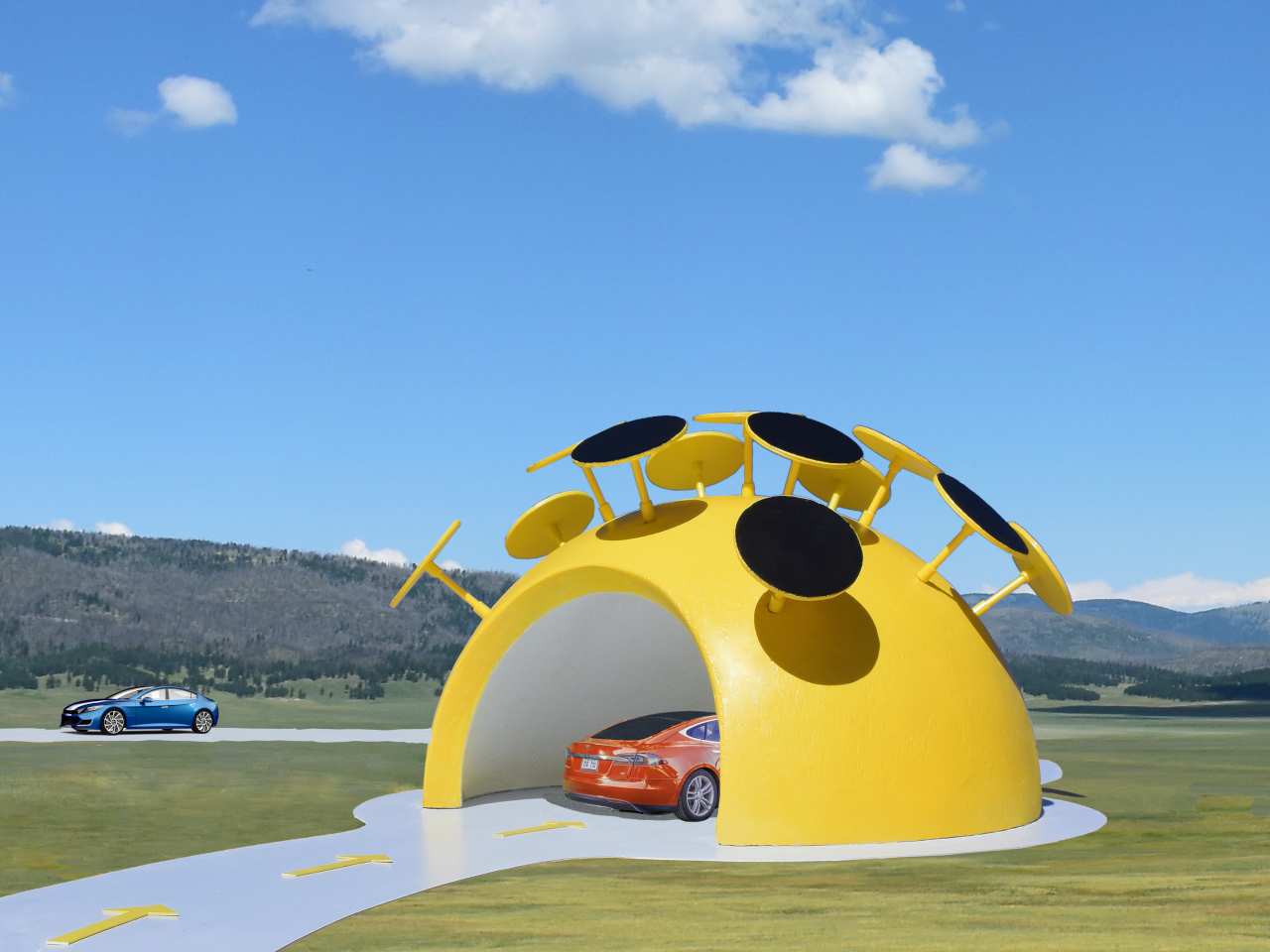
The Yellow Solar Charging Station takes a completely different approach to form. An arched dome made from eco-friendly concrete composite curves over the charging bay, painted in the kind of yellow that reads clearly from across an open field. Circular disc-shaped photovoltaic panels are mounted in a ring around the crown of the dome, turning the roof into something that looks as deliberate as the structure below.
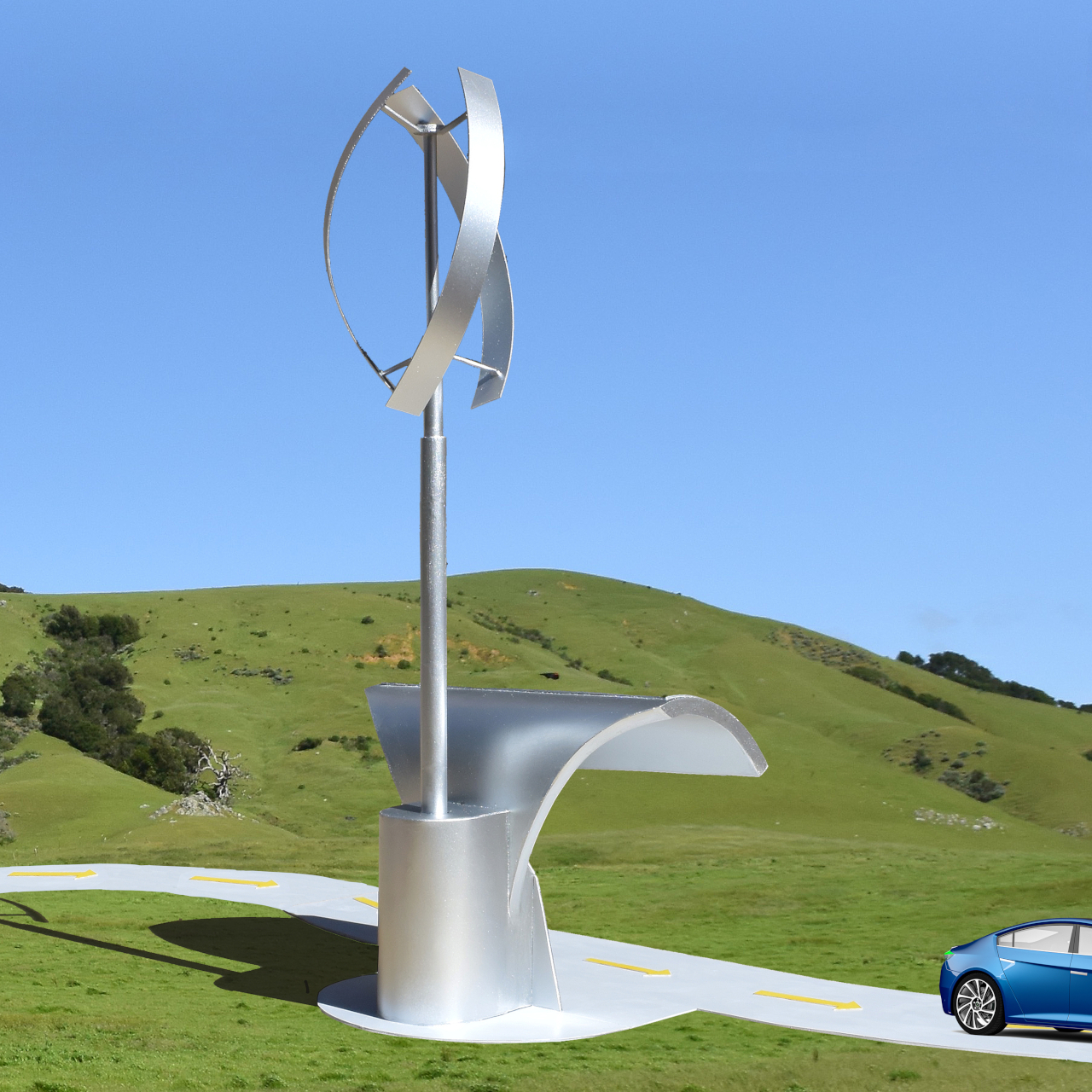
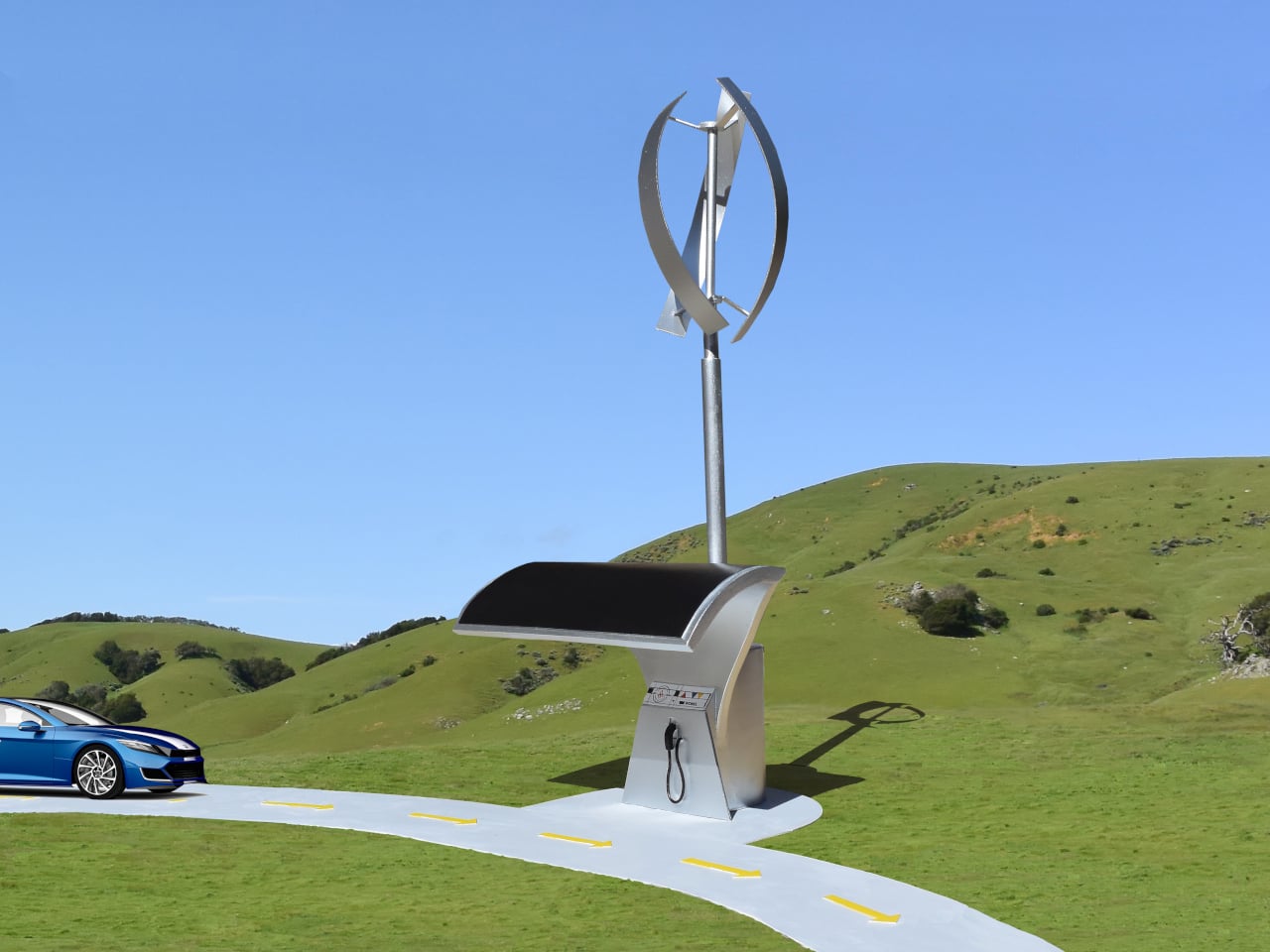
The Solar Wind Charging Station breaks from the others in one important way: it isn’t designed to be driven into. Cars pull alongside it to access the charging points while the station itself stands as a tall sculptural object, a curved photovoltaic panel at its base and a vertical-axis wind turbine rising above. It draws from both sun and wind, storing electricity in batteries for continuous output.
All five sit somewhere between infrastructure concept and large-scale sculpture. The thinking behind them is that a charging station people actually stop to look at can do something a plain utility box never could. It places the shift from gasoline to electric into visible, physical form, turning an ordinarily forgettable errand into a small but deliberate presence in public space.