Aerise is a seating concept that reimagines how structure, support, and movement can coexist within furniture design. Seating has long followed rigid forms and familiar construction systems, where stability is often achieved through heavy frames and static surfaces. Aerise challenges this conventional approach by introducing segmentation as a more fluid and adaptive method of support. Instead of treating seating as a singular fixed structure, the project explores how interconnected elements can work together to create a system that feels lighter, more responsive, and visually dynamic while still maintaining ergonomic comfort and stability.
The project began with an exploration into the relationship between structure and the human body. Seating is one of the most familiar objects in everyday life, yet its design is deeply influenced by posture, proportion, material behavior, and the way the body interacts with support systems over extended periods of time. Aerise investigates what happens when structure is no longer viewed as a rigid shell, but rather as a collection of coordinated parts working together in balance. This shift transforms the chair from a static object into a more fluid system that adapts visually and functionally to the body’s natural posture.
Designer: Dhruvisha Shah
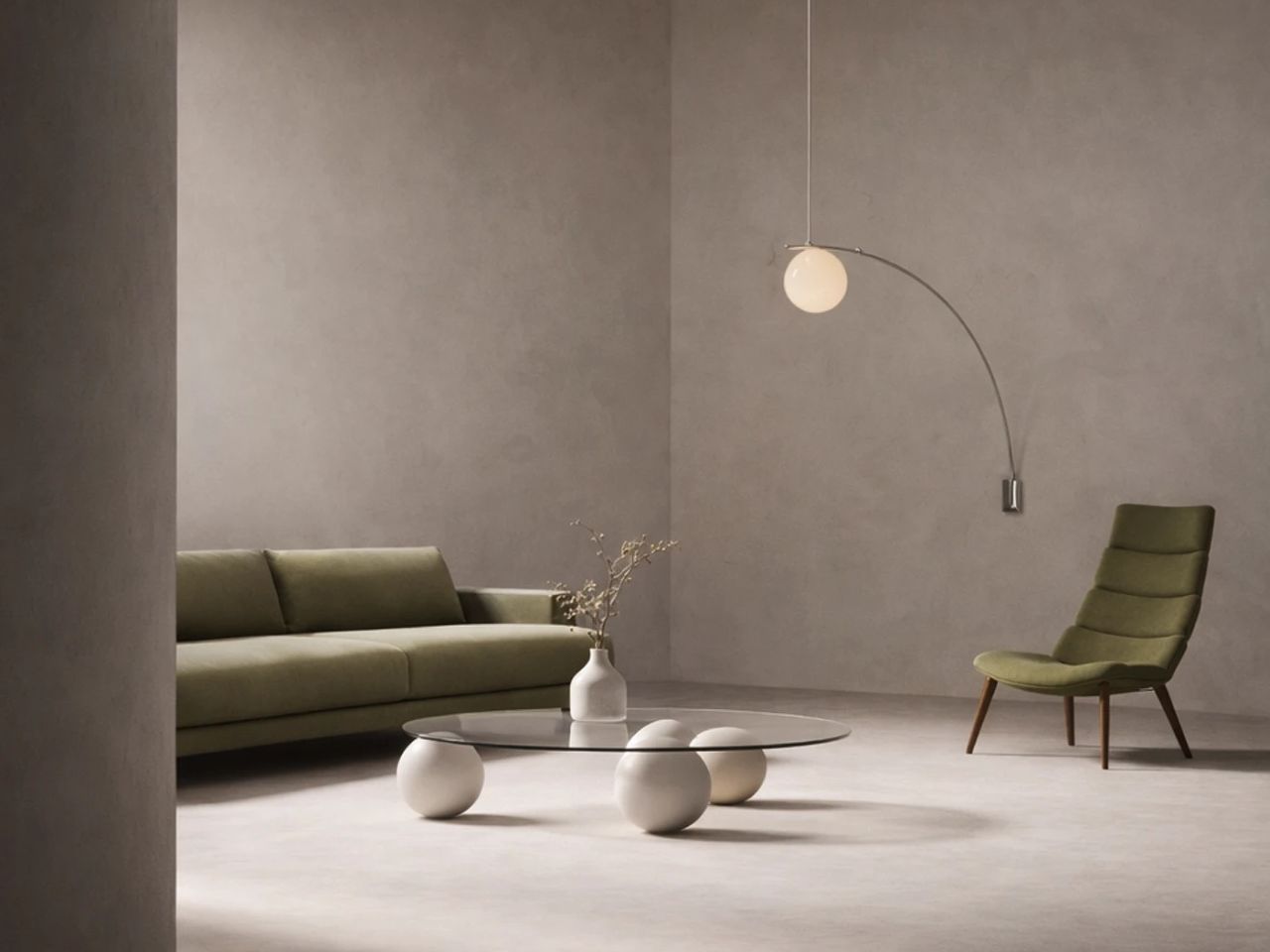
The primary inspiration for the project came from the dragonfly and the unique characteristics of its segmented exoskeleton. Despite its lightweight form, the dragonfly demonstrates exceptional control, precision, and agility in movement. Its body is composed of interconnected sections that provide both strength and flexibility simultaneously, allowing the insect to move with remarkable balance and efficiency. Aerise draws from these principles and translates them into a seating system that embodies similar qualities of controlled support and visual lightness.
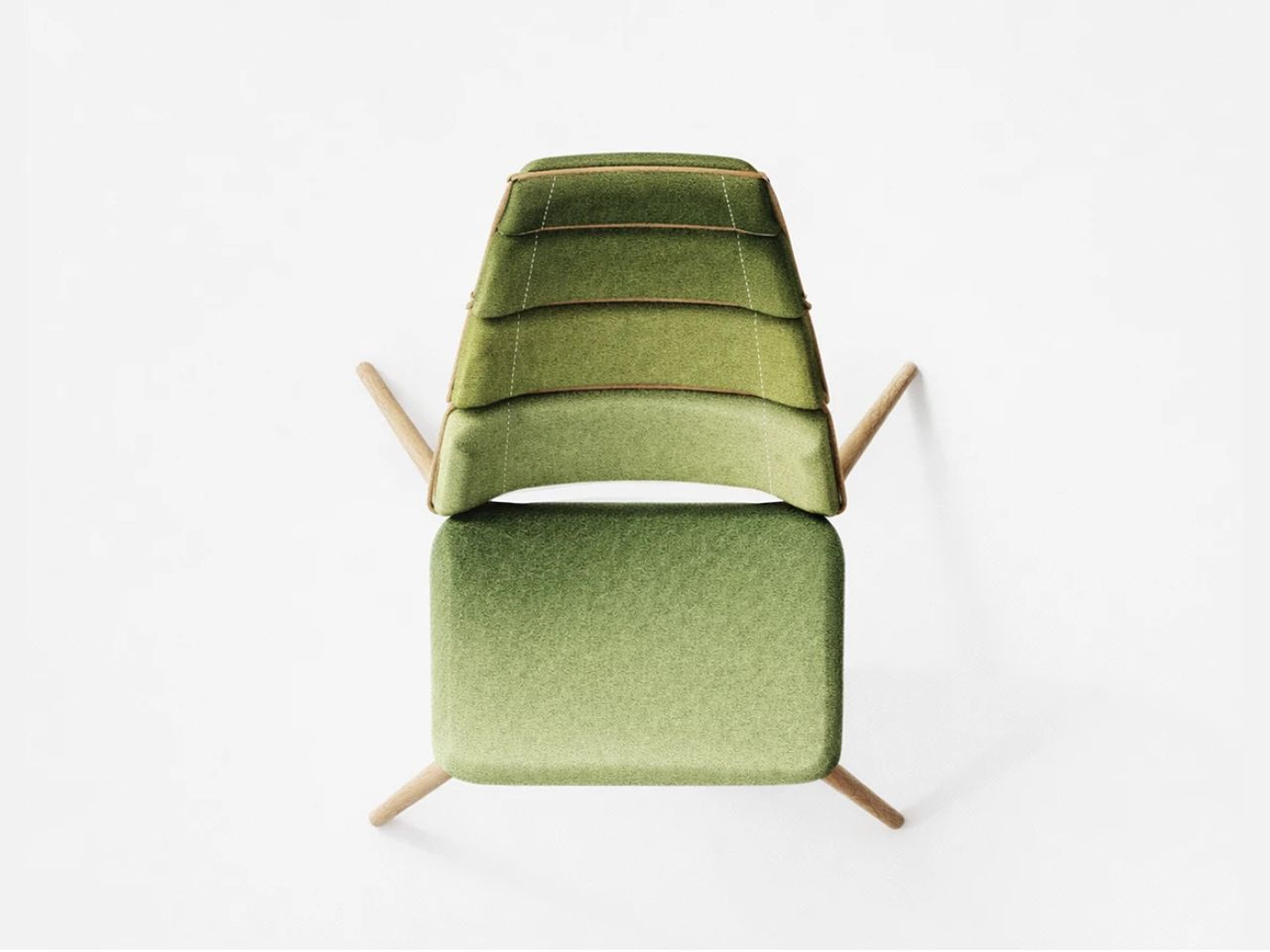
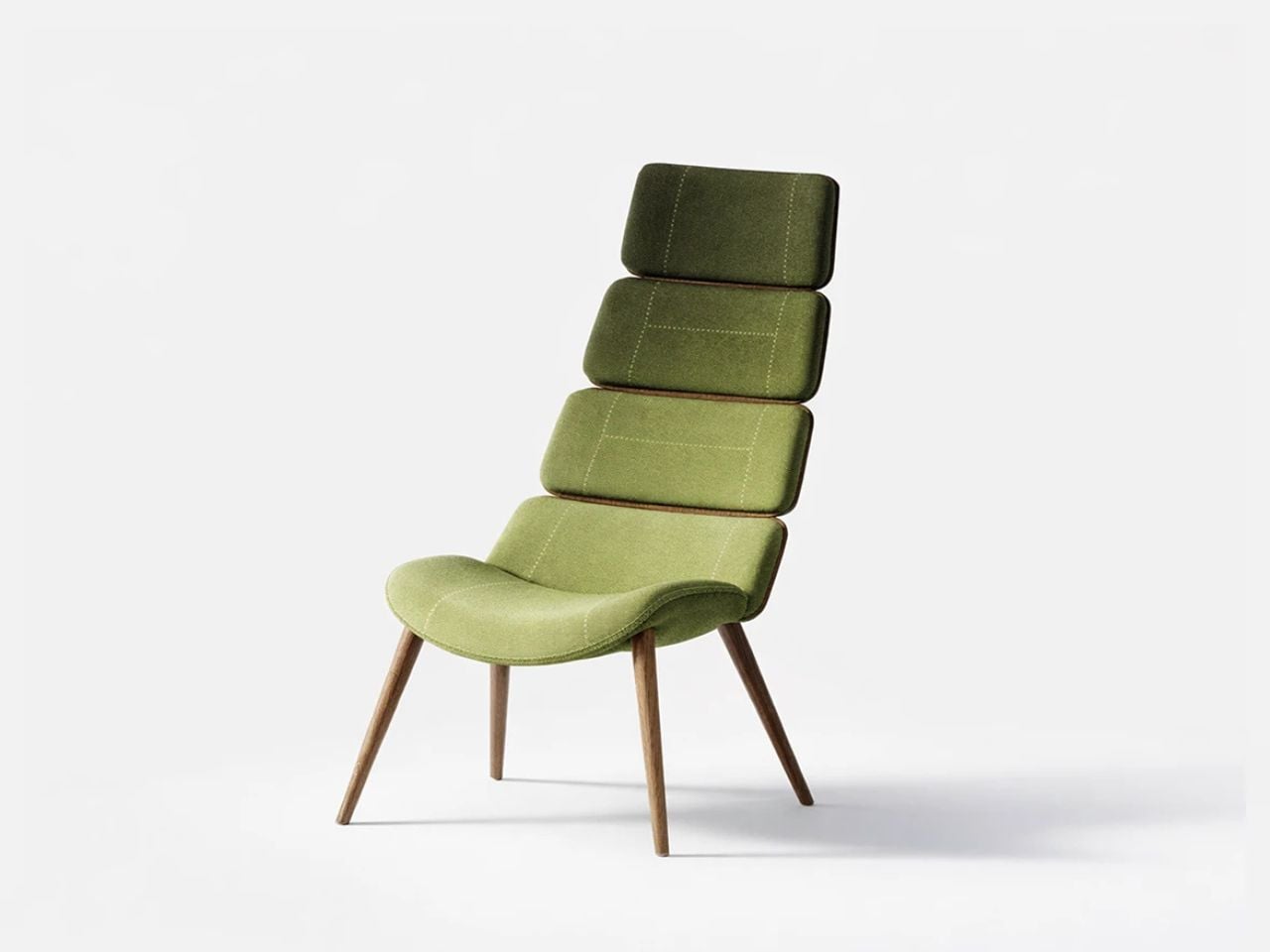
This inspiration is most clearly reflected in the chair’s segmented backrest. Rather than relying on a continuous solid surface, the backrest is divided into repeated modular elements that function together as a cohesive support system. Each segment corresponds to different zones of the spine, creating targeted areas of support while collectively forming a fluid and uninterrupted silhouette. This modular arrangement introduces a rhythmic visual language that echoes the structure of the dragonfly’s body while also enhancing ergonomic responsiveness.
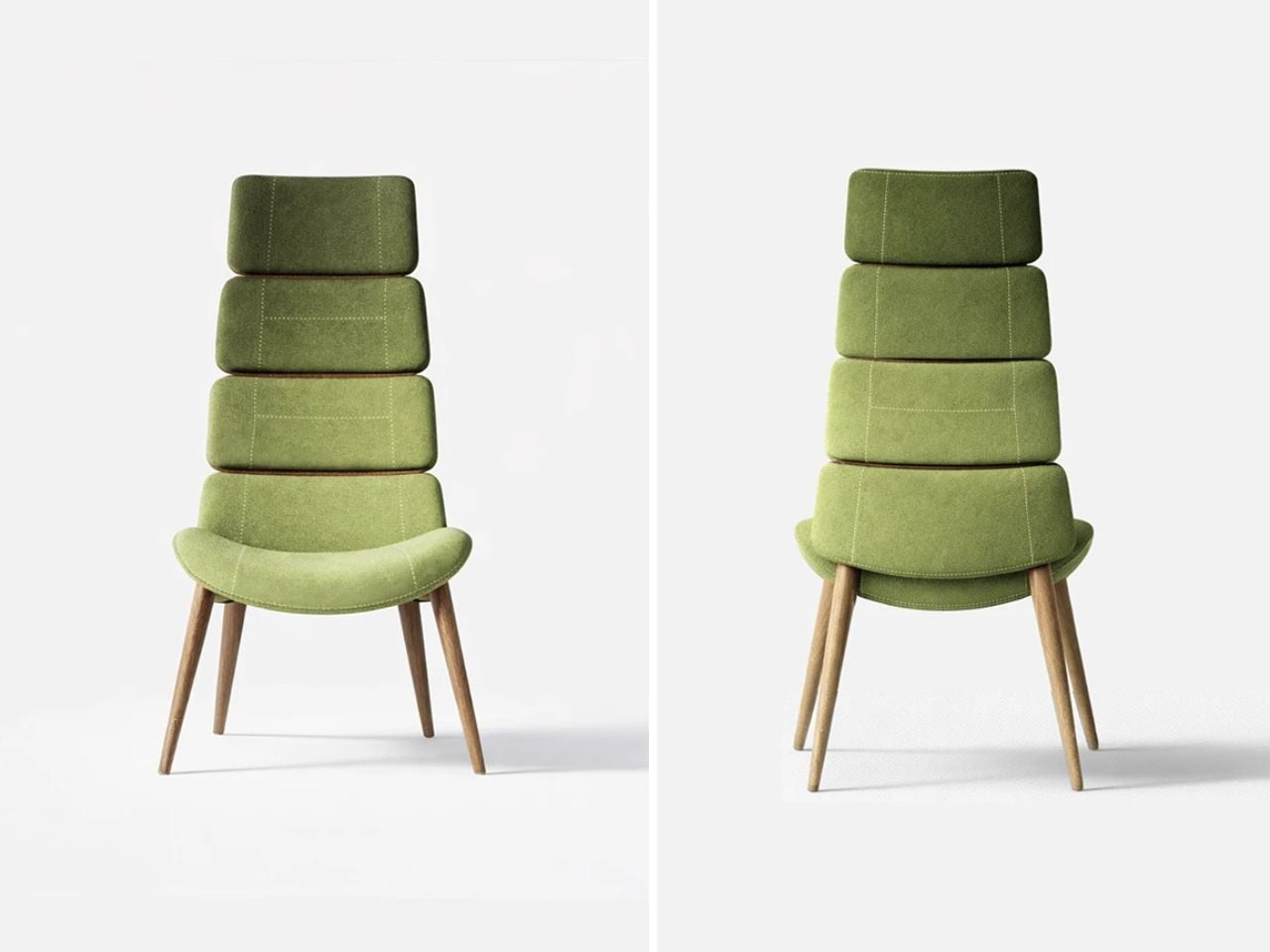
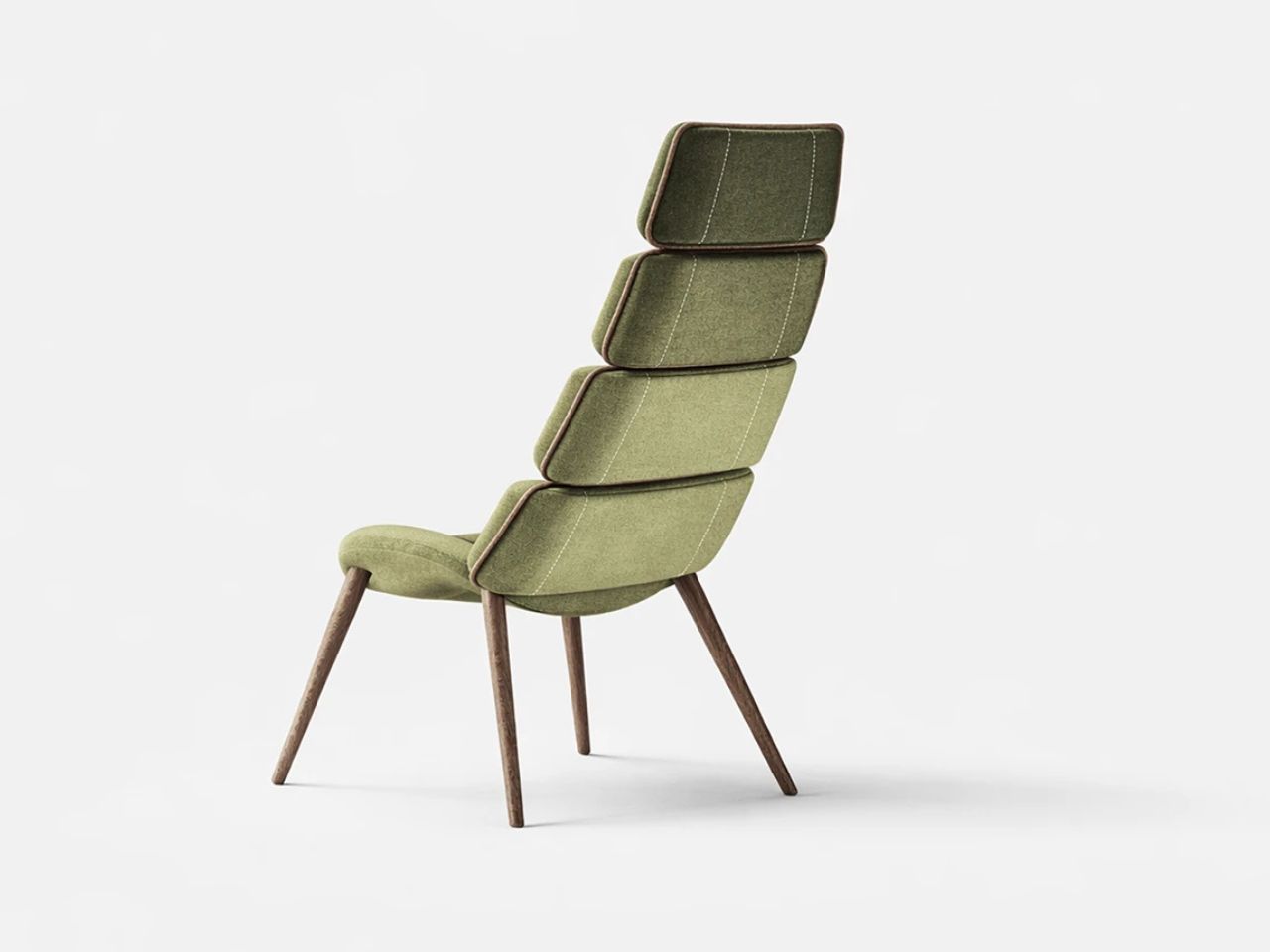
The flowing geometry of the chair further reinforces this sense of continuity and movement. Soft curves guide the body naturally into a reclined posture, allowing the seating experience to feel intuitive and relaxed rather than forced or rigid. The reclined angle was carefully considered to balance comfort with structural integrity, ensuring that the chair maintains a stable presence while still appearing visually lightweight. This sense of suspension is amplified by the minimal framework and elevated form, giving the chair an almost floating quality despite its structural strength.
The leg positioning also plays an important role in translating the dragonfly’s balanced alignment into furniture form. Angled supports create stability while maintaining a sense of openness beneath the chair, preventing the structure from appearing heavy or grounded. These subtle details contribute to the overall perception of lightness and precision that defines Aerise as a concept.
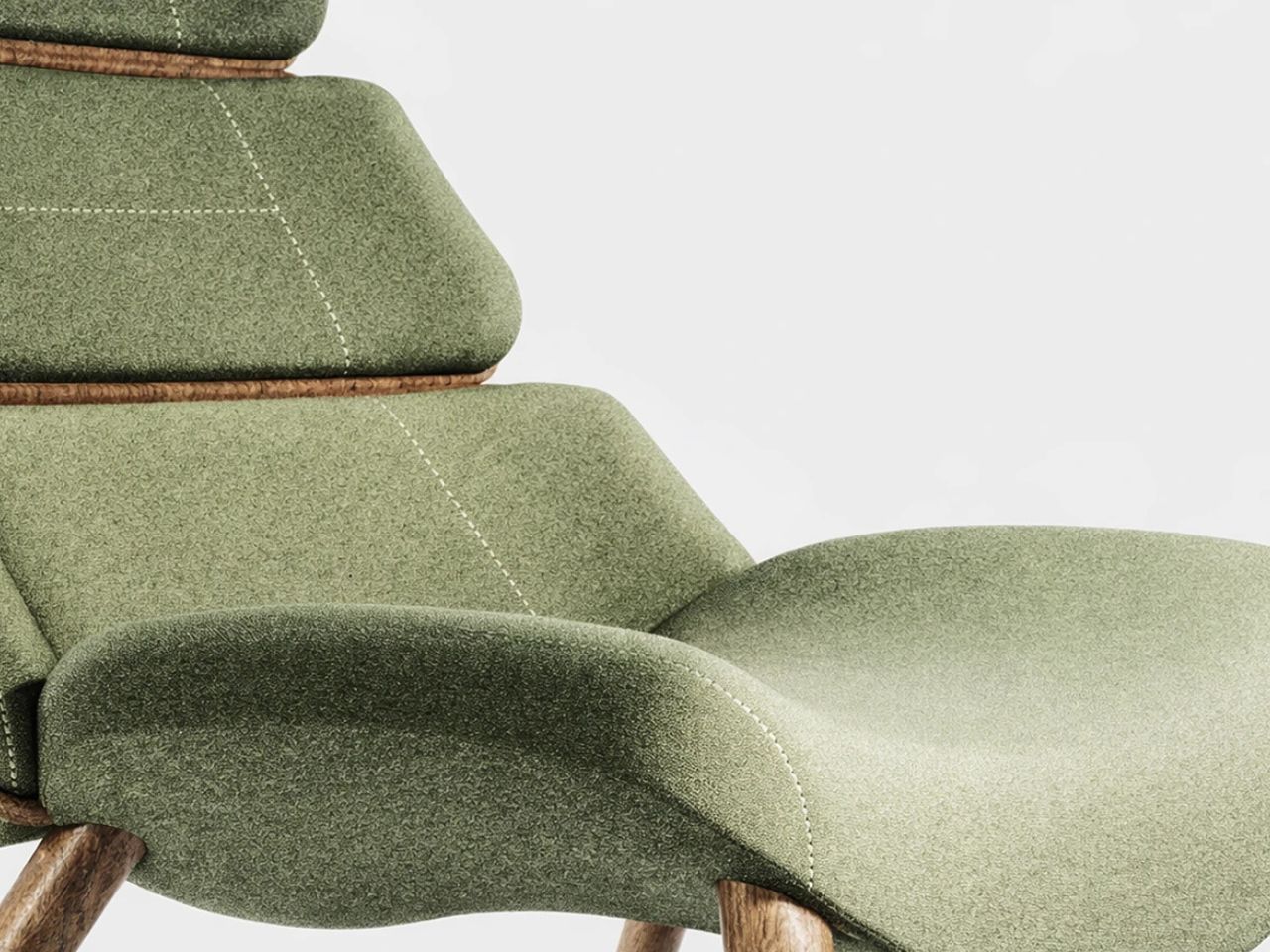
At its core, Aerise explores segmentation not simply as an aesthetic gesture, but as a functional support strategy. Each individual element contributes independently to the user’s comfort while simultaneously operating as part of a larger interconnected system. The chair demonstrates how fragmented structures can still create cohesion, and how flexibility and stability do not need to exist in opposition. Through this approach, Aerise proposes a new perspective on seating design, one where support is adaptive, structure feels fluid, and visual lightness becomes an integral part of the experience rather than just a stylistic choice.
By drawing from the natural intelligence of biological systems, Aerise transforms the principles of segmentation, balance, and exoskeletal construction into a refined seating concept that feels both contemporary and intuitive. It is an exploration of how nature-inspired structures can influence not only the appearance of furniture, but also the way it supports and interacts with the human body.