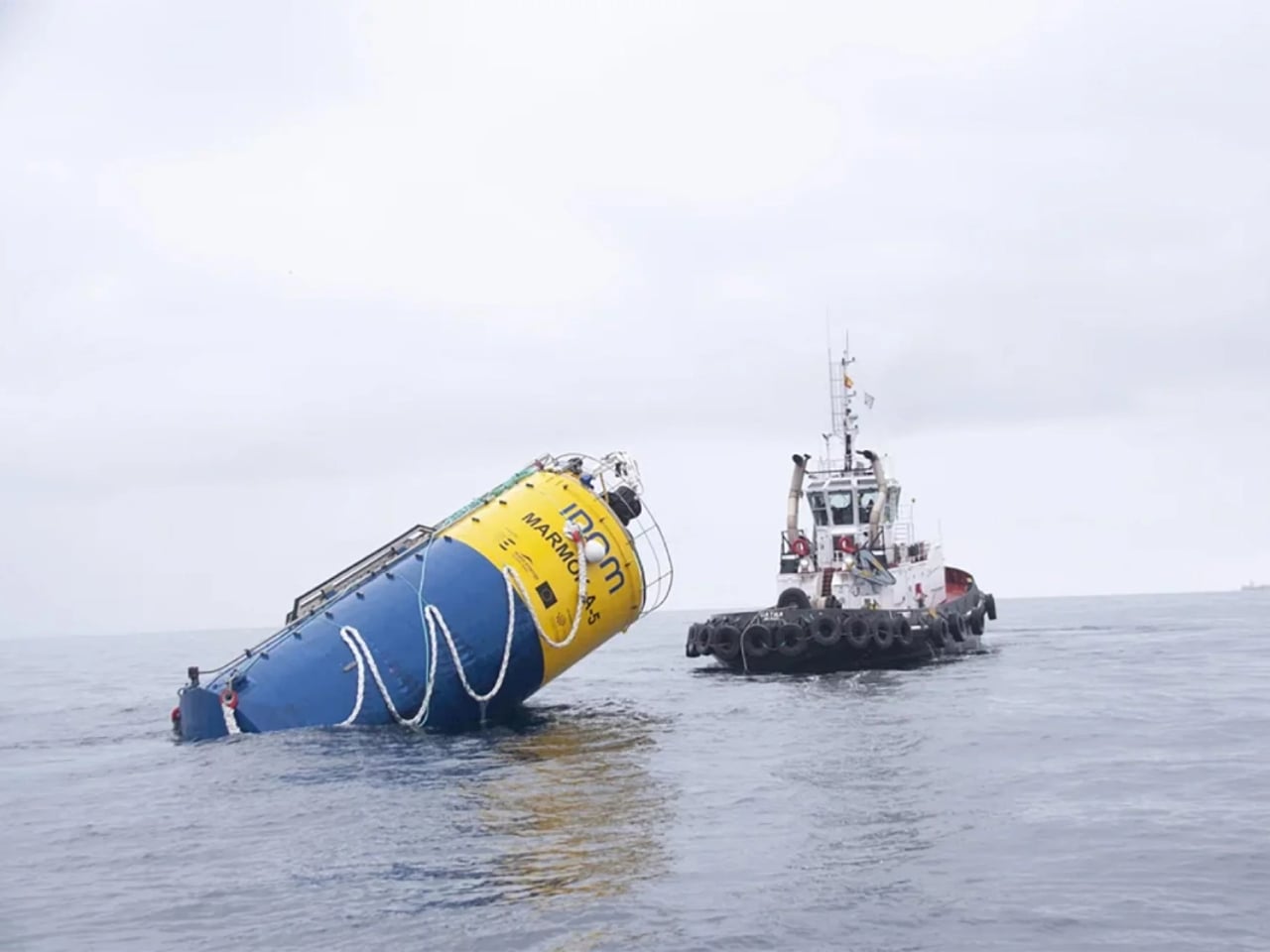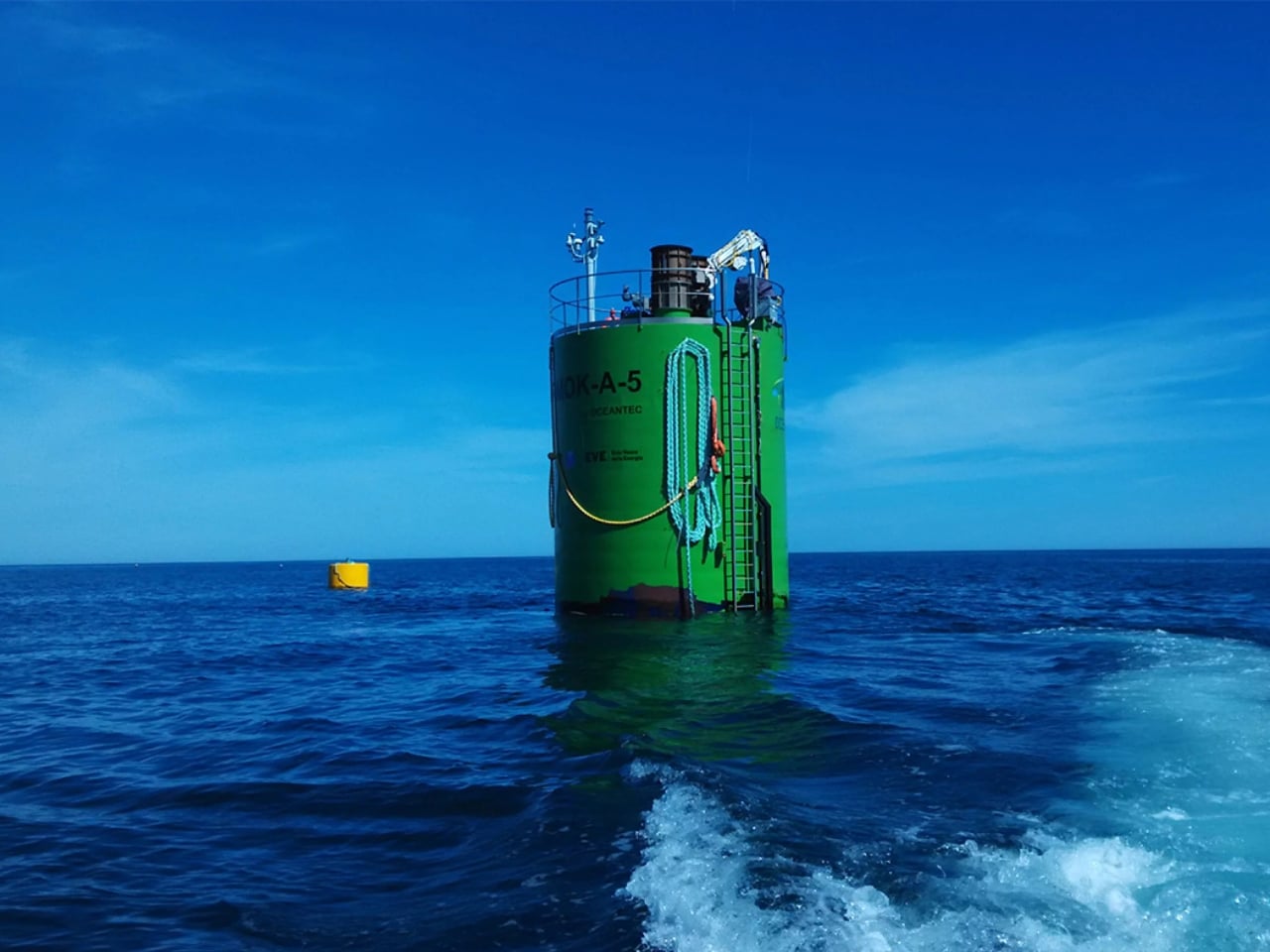
Off the rugged coast of Bilbao, quietly bobbing in the Bay of Biscay, is a 42-meter steel buoy most people have never heard of. It has no viral launch campaign, no sleek consumer interface, and no celebrity endorsement attached to it. But the MARMOK-A-5, designed by Spanish engineering firm IDOM, just did something that deserves far more attention than it’s getting. It may be one of the more quietly significant design stories of the year.
In May 2026, an updated version of the MARMOK-A-5 was successfully deployed at the Biscay Marine Energy Platform (BiMEP), off the coast of Bilbao, as part of the EuropeWave Pre-Commercial Procurement program. IDOM is one of three finalists competing for a share of a €13.4 million budget to develop and test next-generation wave energy technology. And unlike a lot of clean energy news that tends to stay in the realm of promises and projections, this one is already in the water, already connected to the grid, and already generating real-world data.
Designer: IDOM
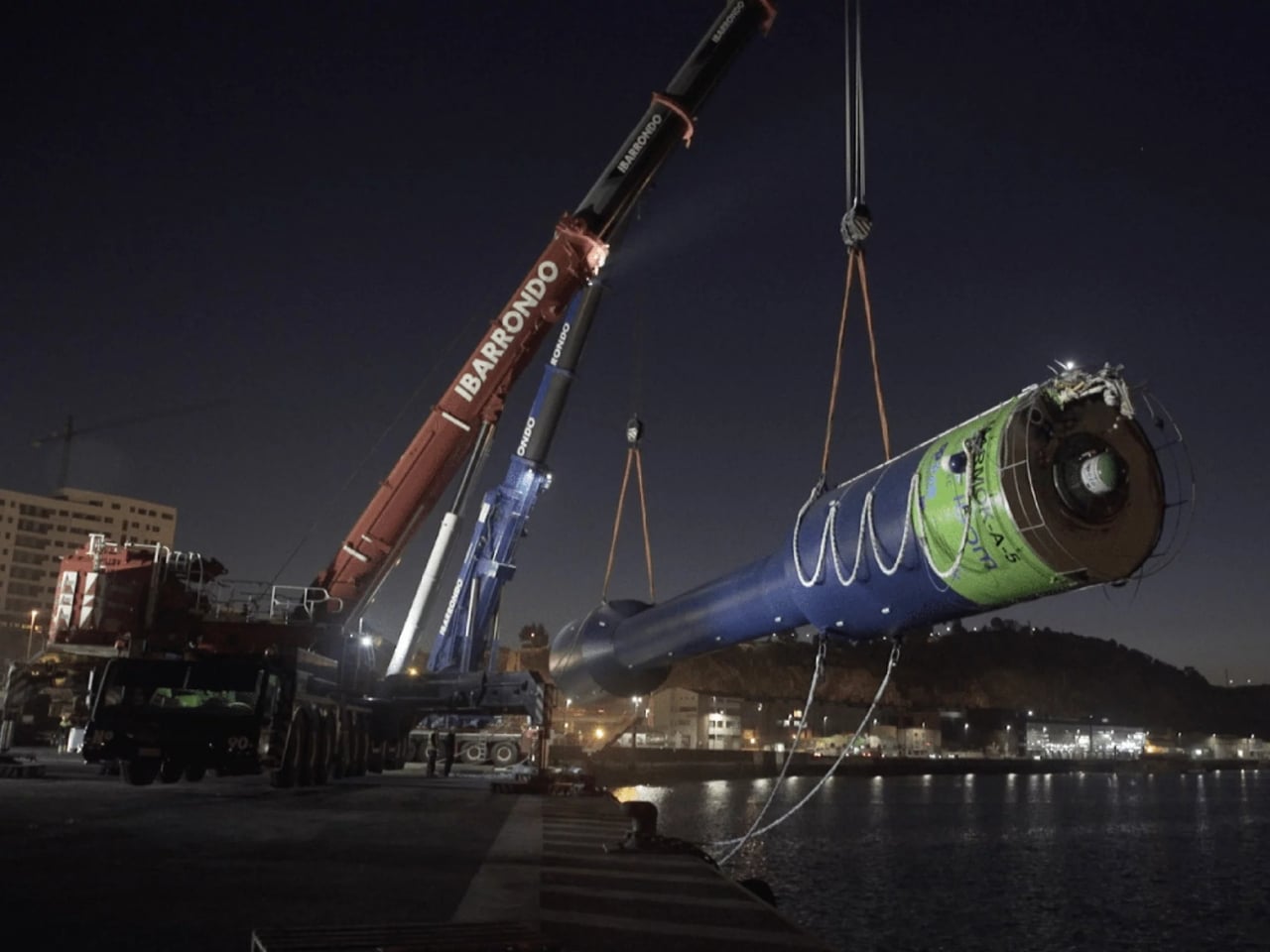
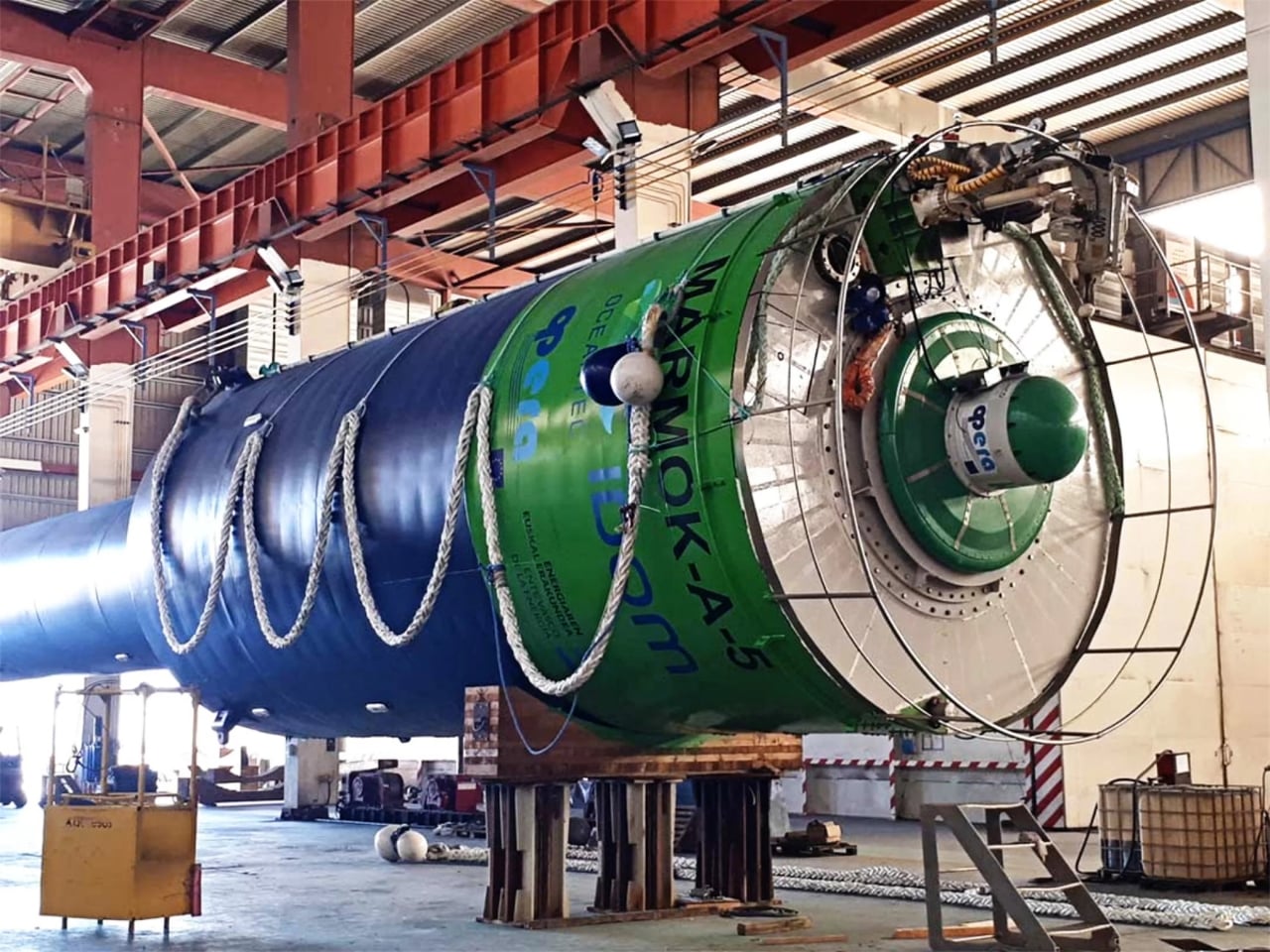
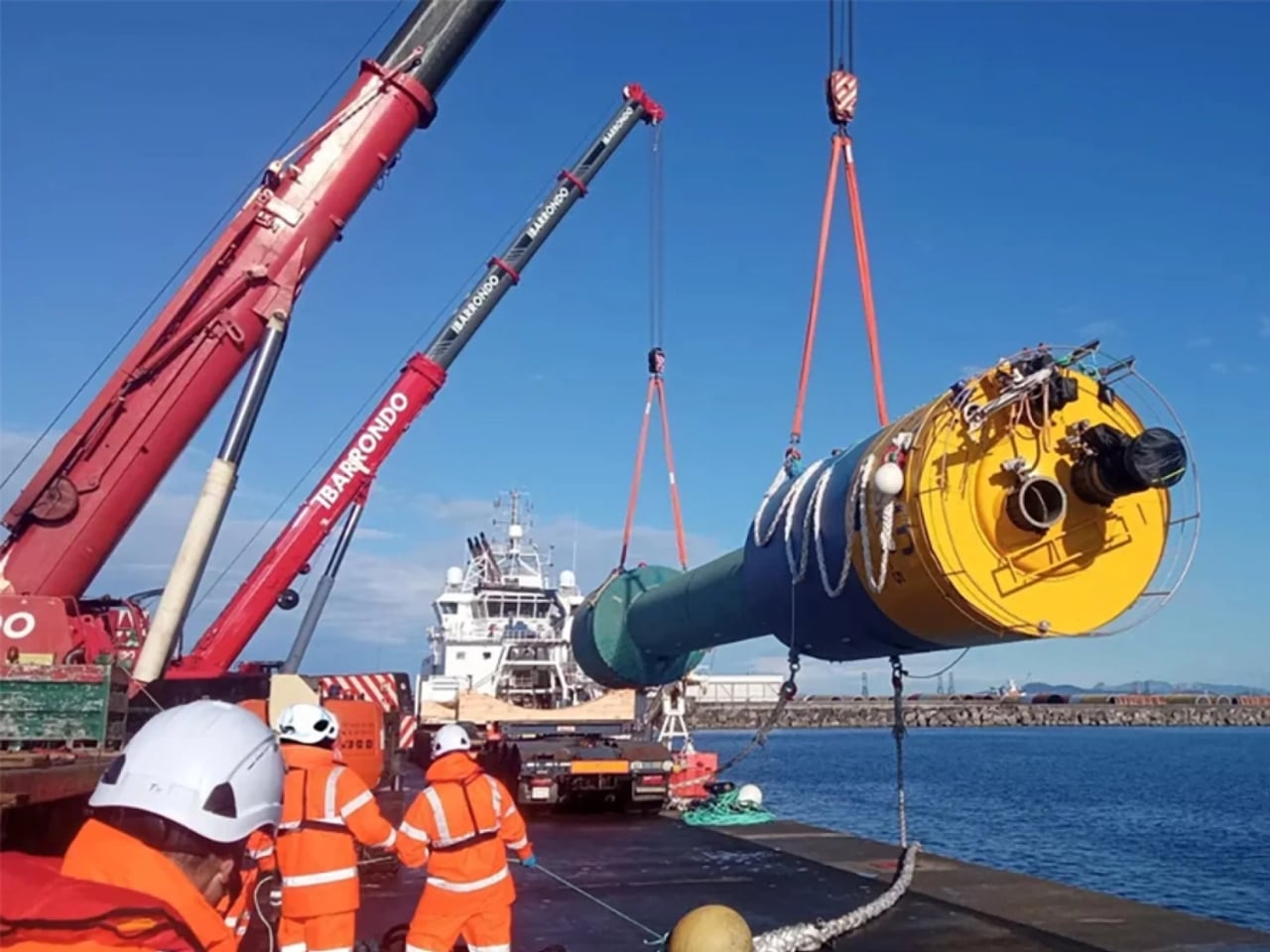
The MARMOK-A-5 is a wave energy converter, and it works on a principle that’s almost elegant in its simplicity. The main structure is a floating spar buoy, 5 meters in diameter and weighing 162 tons. Inside it sits a cylindrical water column. As ocean waves pass through, the water inside rises and falls like a piston. That motion compresses and expands an air chamber at the top of the buoy, and the resulting rush of air spins a turbine. That turbine generates electricity, which travels to shore through a subsea cable. No burning, no drilling, no fuel. Just water moving the way it always has.
The technology has been in development for years. IDOM first deployed the original MARMOK-A-5 at BiMEP back in 2016, making it the first wave energy converter ever connected to the Spanish state electricity grid. That alone was historic. The version now in the water is significantly upgraded, featuring a newly developed power take-off system, controllable turbine blades, onboard batteries, and intelligent control systems built to optimize performance in real, unpredictable high-seas conditions.
What strikes me about this project is how deliberately it was built. Every iteration, every sea campaign, fed into a deeper understanding of how ocean energy behaves at scale. IDOM didn’t rush to market. They observed, adjusted, and came back smarter. The redesigned system focuses on improving power performance while keeping the one quality that sea deployments demand above all else: reliability. A beautiful machine that can’t survive the North Atlantic is just expensive wreckage.
Among the milestones from this latest deployment, one is worth calling out: the MARMOK-A-5 is now the first WEC to connect electrically to the grid through the HarshLab buoy at BiMEP. It sounds like a technical footnote, but it’s a meaningful shift in how ocean energy infrastructure can be tested and eventually scaled. The ability to gather live, grid-connected data from a genuinely harsh marine environment is exactly the kind of proof point that moves wave energy from “promising concept” to “serious contender.”
Wave energy has long sat in the shadow of wind and solar. It’s messier to engineer, harder to deploy, and slower to scale. But it has one clear advantage that doesn’t get discussed enough: oceans are predictable. Waves don’t stop at night and don’t pause on cloudy days, and the world’s coastlines happen to overlap heavily with its most energy-hungry regions. The ocean covers more than two-thirds of the planet’s surface, and most of that constant motion still goes completely untapped. The MARMOK-A-5 is still a prototype, rated at just 30 kilowatts. But prototypes are how industries start.
I keep thinking about how much of what will eventually power our lives is currently sitting, mostly unnoticed, off some coast. Not announced with a keynote. Not trending. Just quietly working, enduring salt and storm, sending electricity down a cable while the rest of us scroll past. The MARMOK-A-5 might be one of the least glamorous objects in clean energy right now. But it might also be one of the most important.