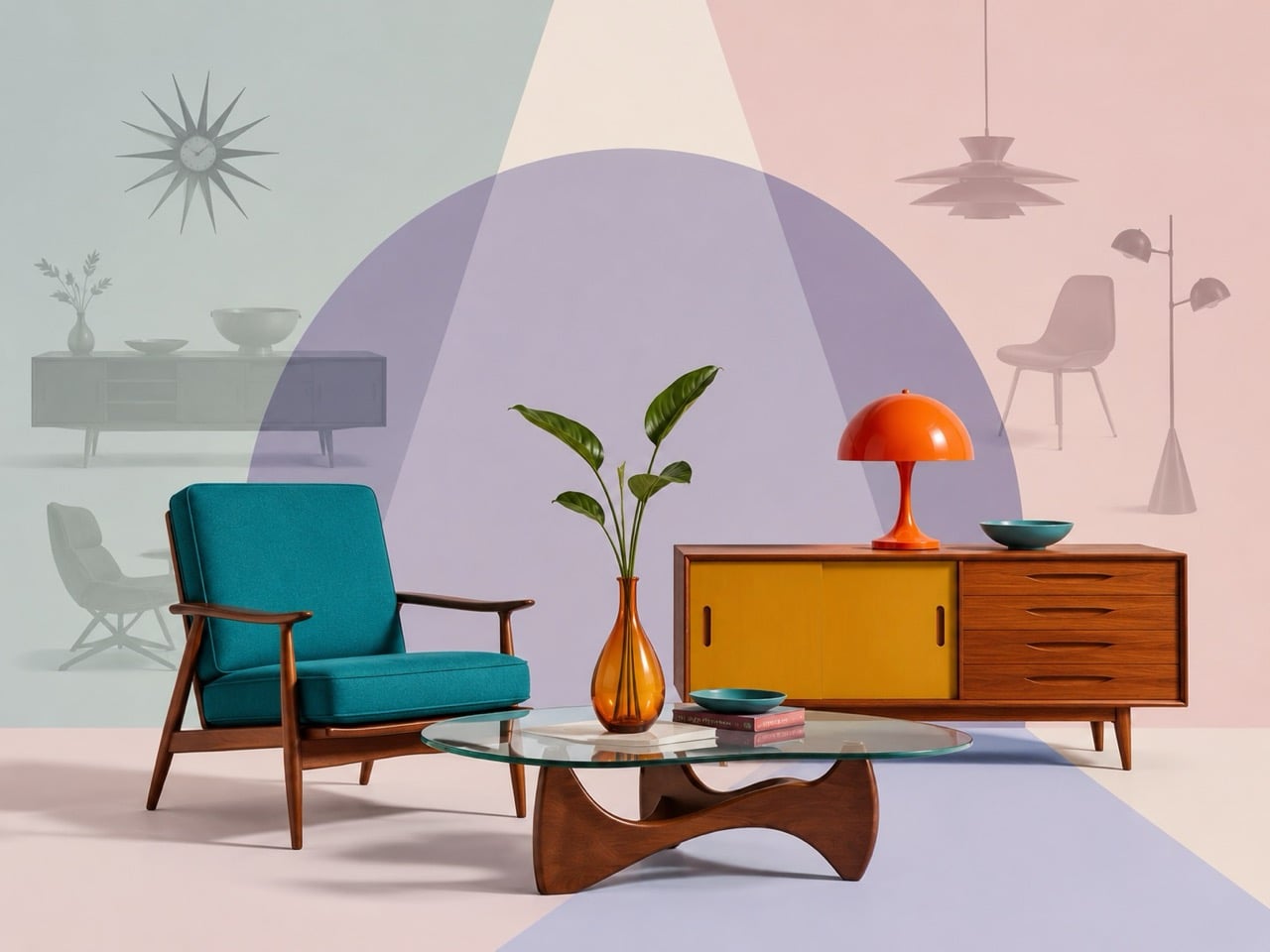
Seventy years on, Midcentury Modern still holds the room. Few design languages have remained so instantly legible across generations, continents, and price brackets. A teak sideboard, a low lounge chair, a softly tapered leg, these forms keep resurfacing as if they belong to the present tense. Trends have come and gone, each promising a cleaner future, a stranger future, a smarter future. Yet when people picture a beautiful modern interior, they keep circling back here.
Part of that grip comes from how effortlessly the style moves through culture. It lives comfortably in architect homes, boutique hotels, prestige dramas, real estate listings, and algorithm-fed moodboards. It carries polish without stiffness and warmth without clutter. Midcentury Modern feels calm under the camera and persuasive in real life, which may be why it has outlasted both the severe ideals that came before it and the restless experimentation that followed.
Before Midcentury, Modernism Was Kind of a Lecture
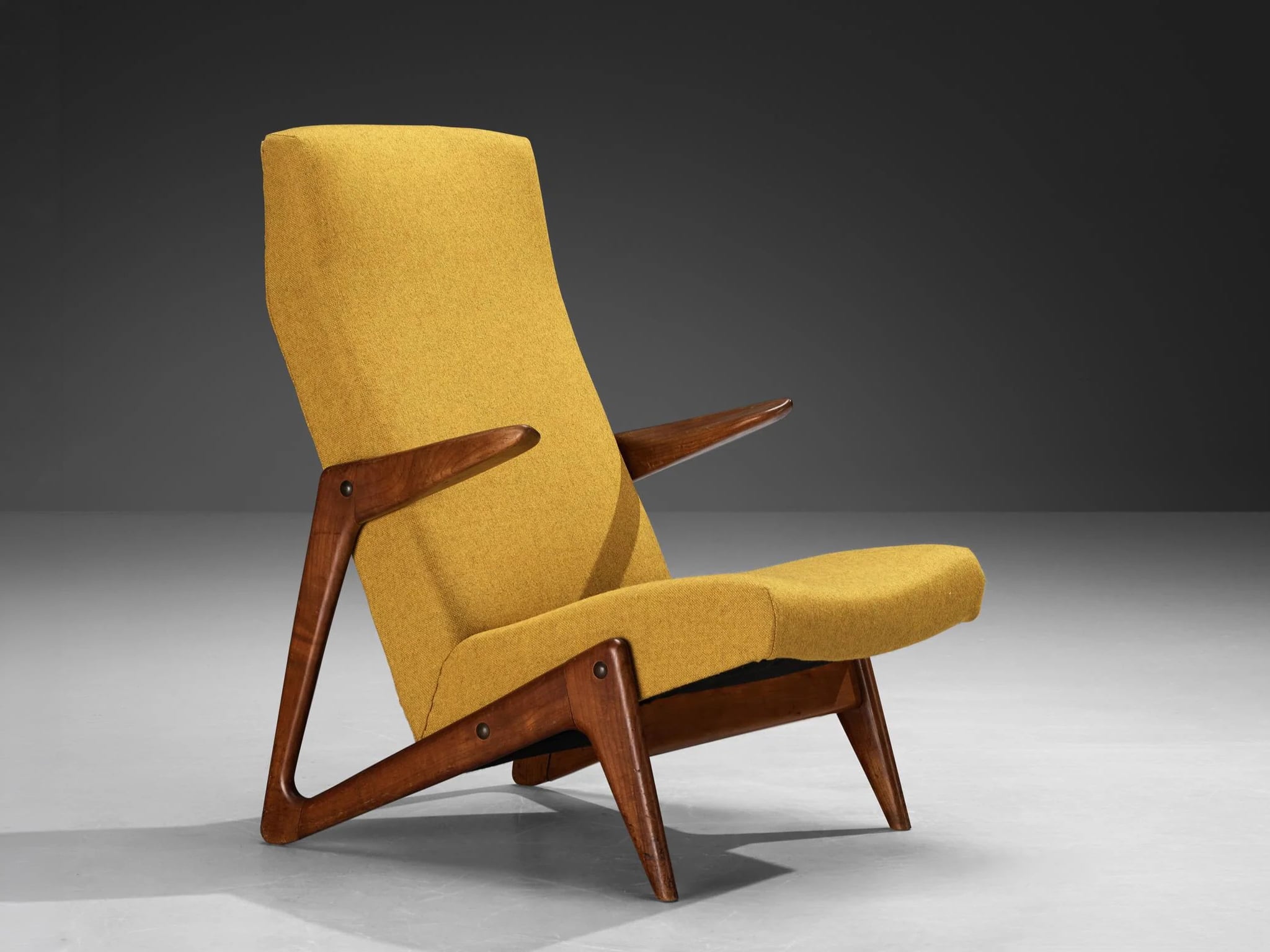
Early modernism had strong opinions about how you should live. The Bauhaus movement, Le Corbusier’s machine-for-living philosophy, the International Style, all of them carried an ideological backbone that made the furniture feel like it was making a point. Admirable in a design school context. In an actual living room at seven in the evening, it gets exhausting fast.
Midcentury absorbed those ideas and quietly softened them. The clean lines stayed. The rejection of unnecessary ornament stayed. But warmth came back, through teak, walnut, and oak, through gently curved backrests and tapered legs that gave furniture a sense of posture rather than rigidity. Charles and Ray Eames captured this balance better than almost anyone. Their lounge chair, produced by Herman Miller, managed to feel both rigorously designed and deeply comfortable, which sounds obvious until you realise how rarely furniture achieves both at once. It kept the intelligence of modernism and dropped the sermon. That pivot sounds small. Culturally, it was enormous.
By the 1950s, the style had embedded itself into the everyday image of modern living in a way that earlier movements simply had not. Suburban homes, corporate lobbies, university campuses, and government buildings were all speaking the same visual language. Knoll helped make that language feel authoritative on the institutional side, supplying the clean, composed modernism that filled executive offices and architecture firm interiors. Herman Miller did the same for domestic and workplace culture, with the Eames studio and George Nelson shaping much of what the brand put into the world. These were not just furniture companies. They were the infrastructure through which a whole visual culture got distributed.
Unfairly Photogenic
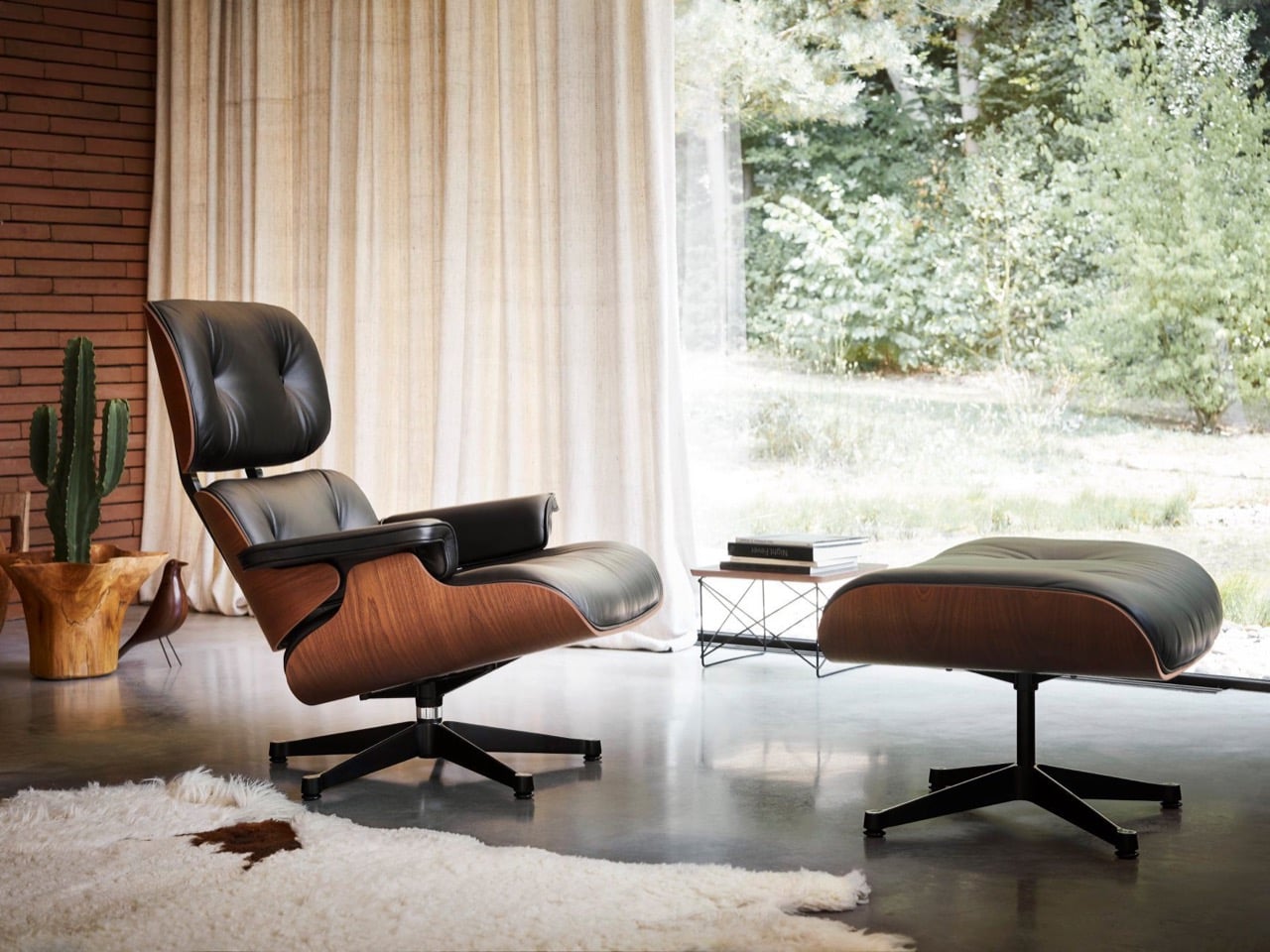
Some styles are powerful in person and flat in images. Midcentury is the opposite. Its silhouettes are confident and legible at almost any scale. The materials, warm wood grains, moulded fiberglass, black hairpin metal, register beautifully on camera. Rooms furnished in this style look intentional without looking curated to the point of anxiety, which is a harder balance to achieve than it sounds.
That quality has given Midcentury Modern an extraordinary run through every era of image culture. It looked great in the shelter magazines of the 1950s and 60s. It looked great in prestige cinema. It looked great when Pinterest arrived and people started building moodboards obsessively. Arne Jacobsen’s Egg chair, originally designed for the SAS Royal Hotel in Copenhagen, became one of the most reproduced images in design media precisely because it photographs with such force. It looks great in today’s real estate listings, hotel photography, and the kind of Instagram interior accounts that collectively function as a global taste barometer. The style has never once struggled to reproduce well, and in a world where visual culture drives purchasing decisions and lifestyle aspirations, that is a staggering advantage.
What Came Next, and Why It Didn’t Stick
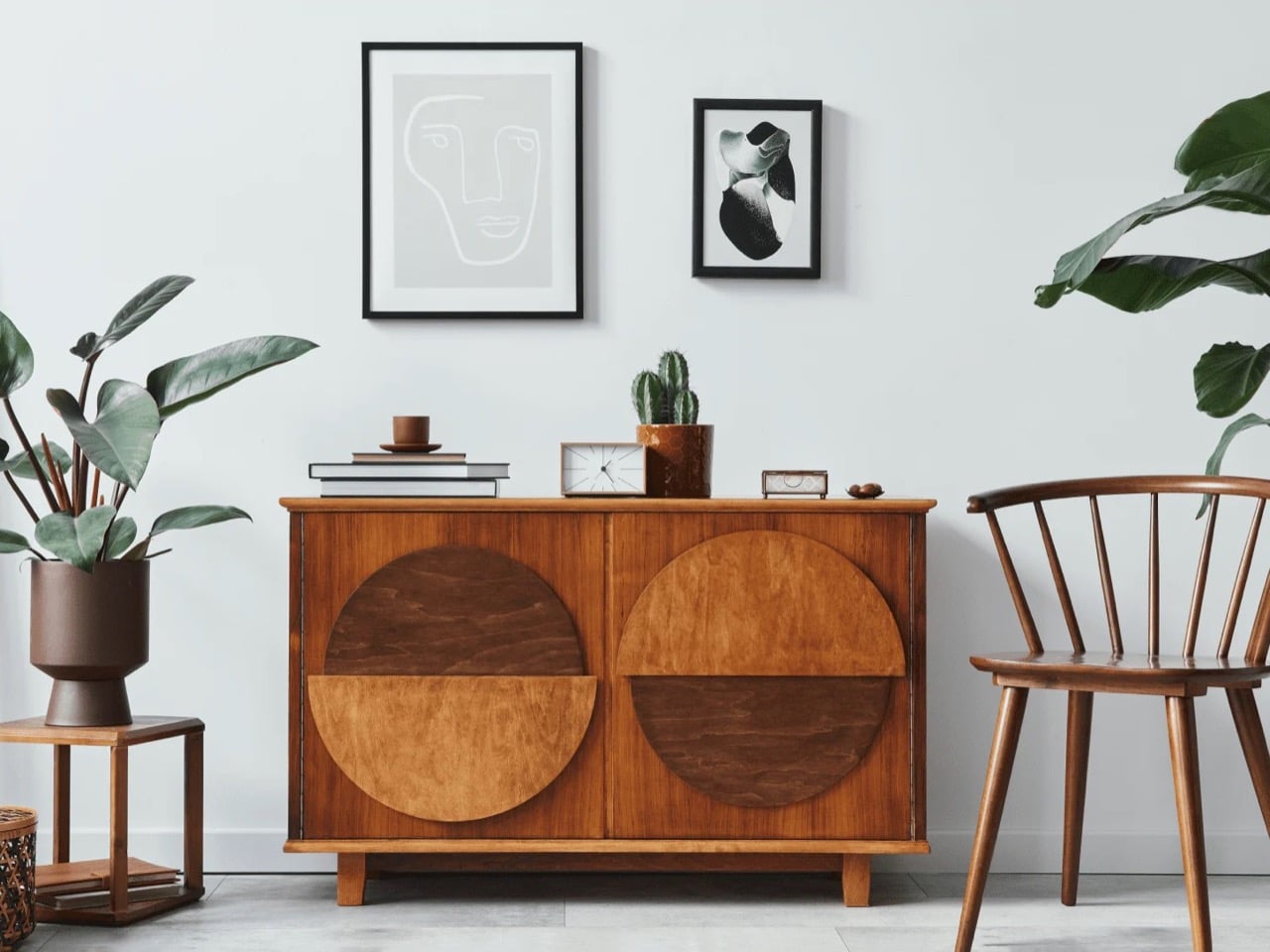
Midcentury’s successors have genuine merit. Minimalism has had deep, lasting influence on architecture, product design, fashion, and branding. Postmodern furniture produced some genuinely memorable objects. The blobject era, all soft digital curves and translucent plastics, captured a very specific early-internet optimism in physical form. High-tech design made functionality feel heroic. All of these movements mattered.
But none of them achieved the same spread across class, geography, and function. Minimalism in its purest form is a discipline, and most people cannot sustain it in a home where actual life happens. Postmodernism’s irony and visual noise made it polarising by design, which kept it from becoming a universal default. Blobject dated quickly because it was so tightly tied to a specific technological moment. The Y2K-era iMac is a fascinating cultural artifact. Nobody is furnishing their living room around that aesthetic today.
Midcentury, by contrast, stayed loose enough to absorb reinterpretation across decades. The Danish side of the movement, Hans Wegner’s chairs through Carl Hansen and PP Møbler, Jacobsen’s work through Fritz Hansen, gave the style a warmth and craft sensibility that kept it from ever feeling purely industrial. The American side, Herman Miller, Knoll, the Eames studio, gave it scale, authority, and mass-market reach. Together those two currents covered enormous stylistic ground. The result could lean warm and Scandinavian, or sharp and American corporate. It could feel bohemian or academic, casual or polished, urban or suburban. That range has made it one of the most resilient stylistic platforms in the history of designed objects, because it never got locked inside a single cultural context.
When a Trend turns into an Institution
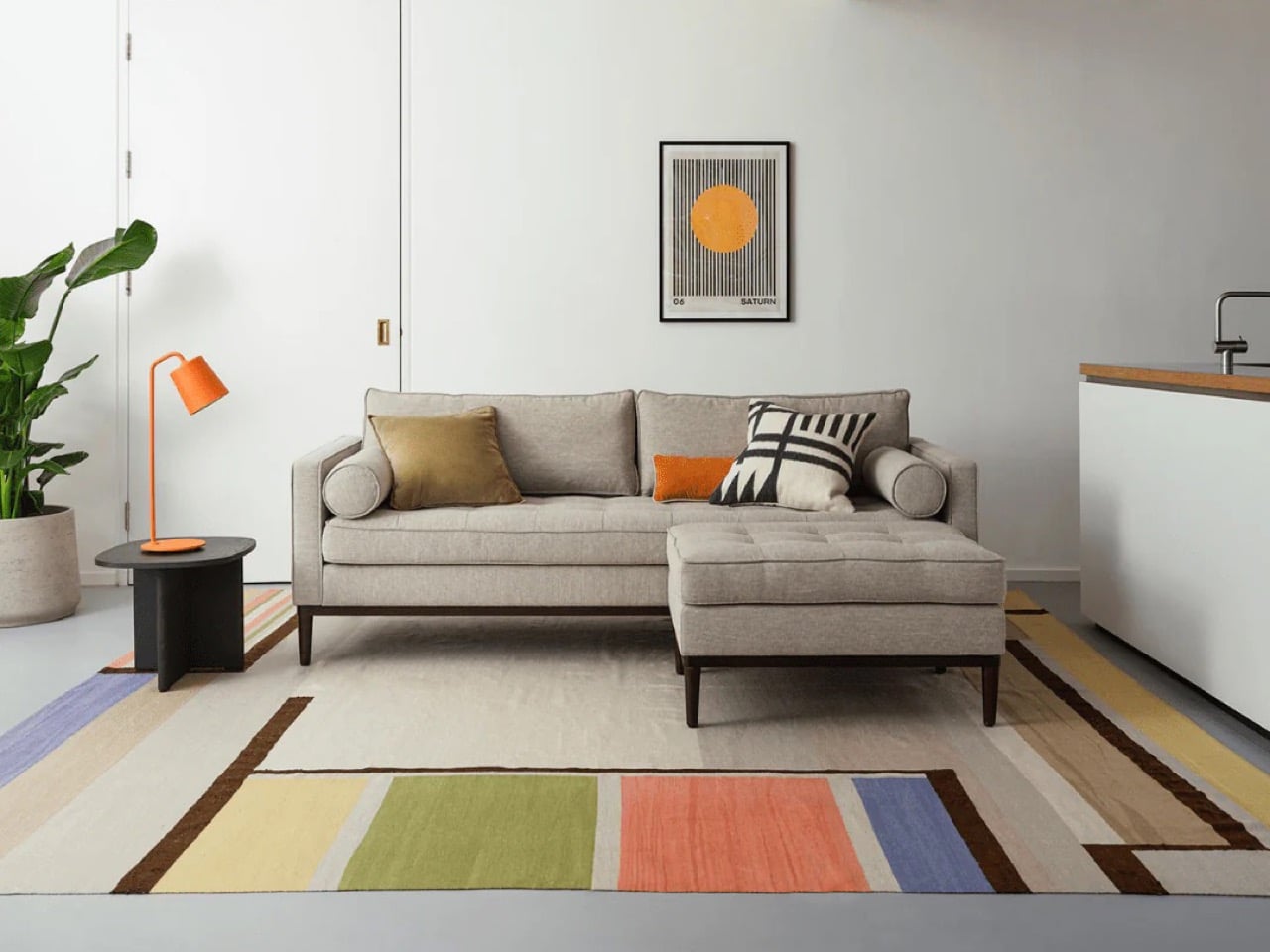
Somewhere in the 1980s and 90s, Midcentury stopped being a style and became an institution. Museums started collecting it seriously. Design schools started teaching it as a benchmark. Auction houses started generating headlines around individual pieces. Publishers built entire catalogues around it. Manufacturers holding original licenses, Herman Miller, Knoll, Fritz Hansen, Vitra, started reissuing classic designs to meet a demand that showed no sign of cooling. Vitra in particular became a kind of European custodian of the canon, producing and circulating Eames designs across a global market that had no shortage of appetite for them.
Once a style enters that feedback loop, it gains a structural advantage over everything newer. It becomes the standard against which other furniture is implicitly measured. When a new lounge chair launches today and reviewers reach for comparisons, the Eames lounge comes up within the first paragraph. When a Scandinavian furniture brand wants to signal craft heritage, Wegner is the reference point. The style became the currency the whole conversation uses.
That canonisation also shapes how ordinary people absorb taste. Design journalism, interior styling, boutique hospitality, and eventually social media have all spent decades reinforcing the idea that this is what enduring design looks like. People often think they are discovering it for themselves. In many cases, they are responding to an incredibly sophisticated, decades-long process of cultural reinforcement working quietly in the background.
Still the Default Setting
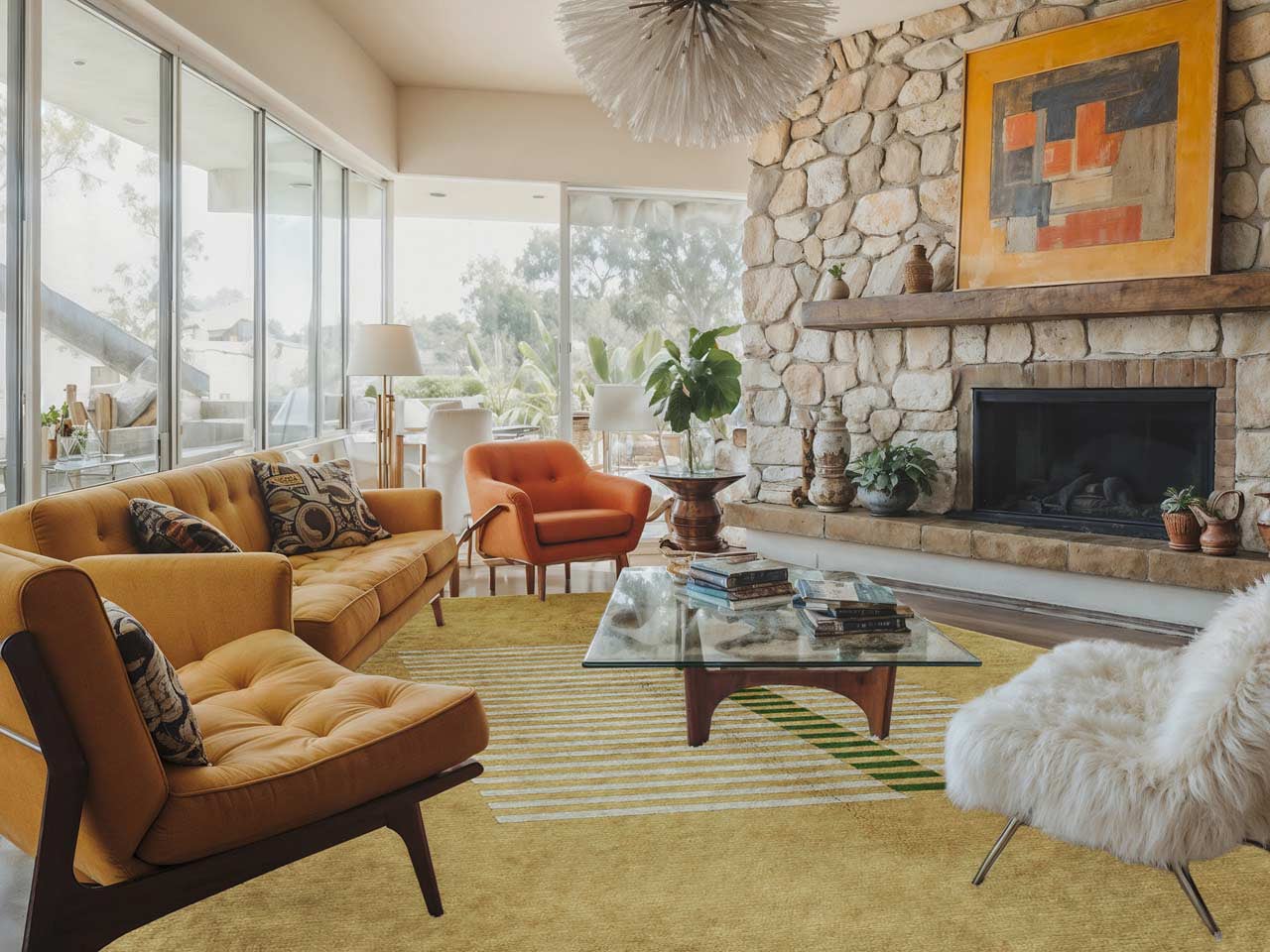
Walk into a newly opened boutique hotel. Browse the staging on a premium real estate listing. Watch the set design in any prestige television drama set inside a contemporary home. The visual evidence keeps pointing in the same direction. Midcentury Modern remains the go-to shorthand for cultivated modern taste, deployed by professionals who understand exactly what these forms communicate without a single word of explanation.
That staying power is active, not passive. Herman Miller and Knoll still manufacture and market these designs because demand remains strong. Fritz Hansen still sells Jacobsen’s chairs to hotels, offices, and homes across the world, decades after they were drawn. Vitra’s design museum is still a pilgrimage spot for designers looking to revere icons and gather inspiration. The market for original vintage pieces has grown, not contracted, over time. Heck, some pieces even managed to wiggle their way into sci-fi series like Severance, showing how midcentury integrates well into a dystopian hellscape! These are not heritage brands coasting on legacy. They are active commercial operations sustained by genuine, continuing desire.
Seventy years is a long time for anything in design to hold cultural authority. To still be the dominant visual reference for modern living after seven decades, despite being succeeded by multiple complete aesthetic movements, suggests something beyond ordinary trend mechanics. Midcentury Modern found the frequency at which human beings broadly want their surroundings to feel. Clean without coldness. Modern without alienation. Beautiful without visible effort. Until another style finds that same frequency, the room still belongs to Midcentury Modern.