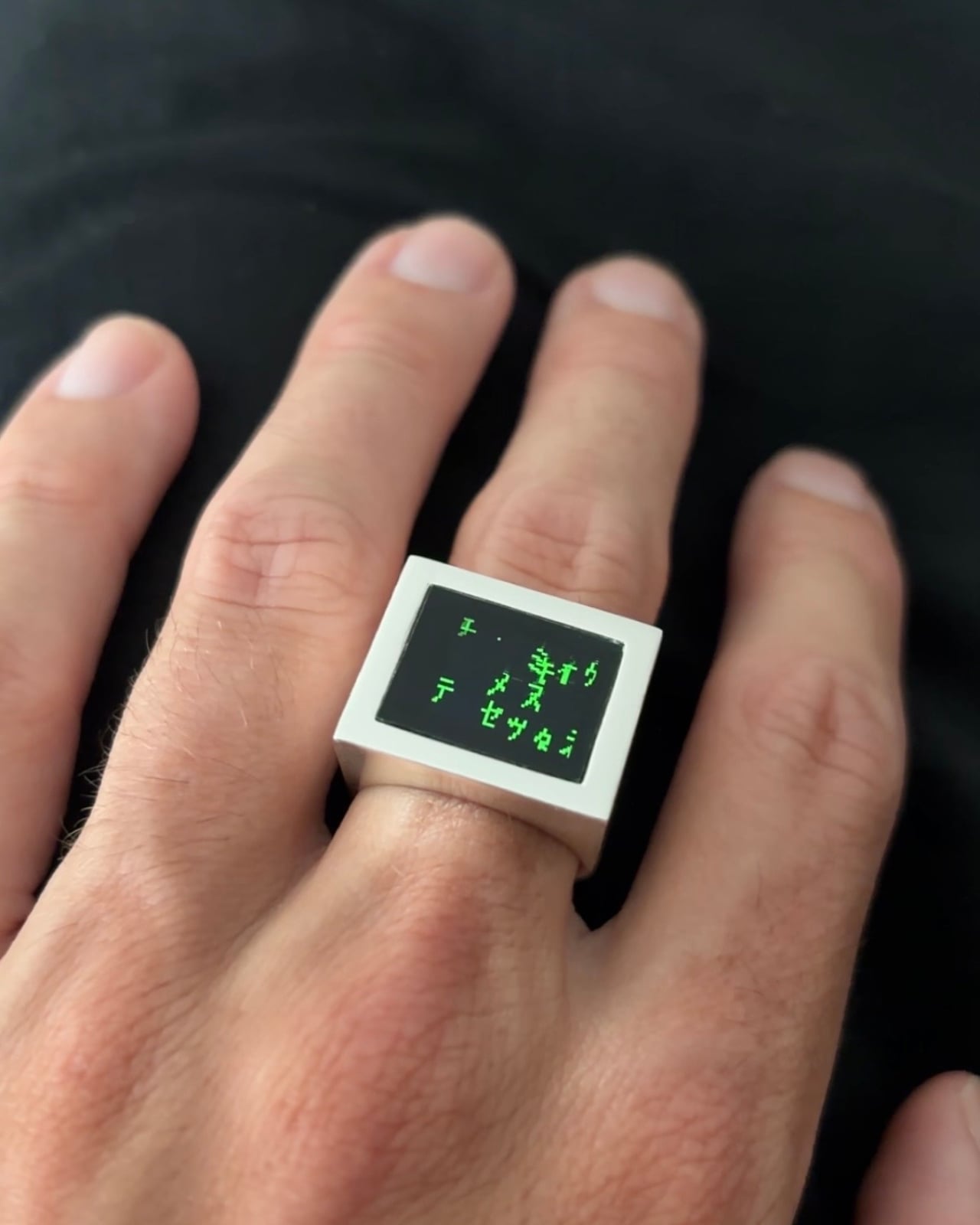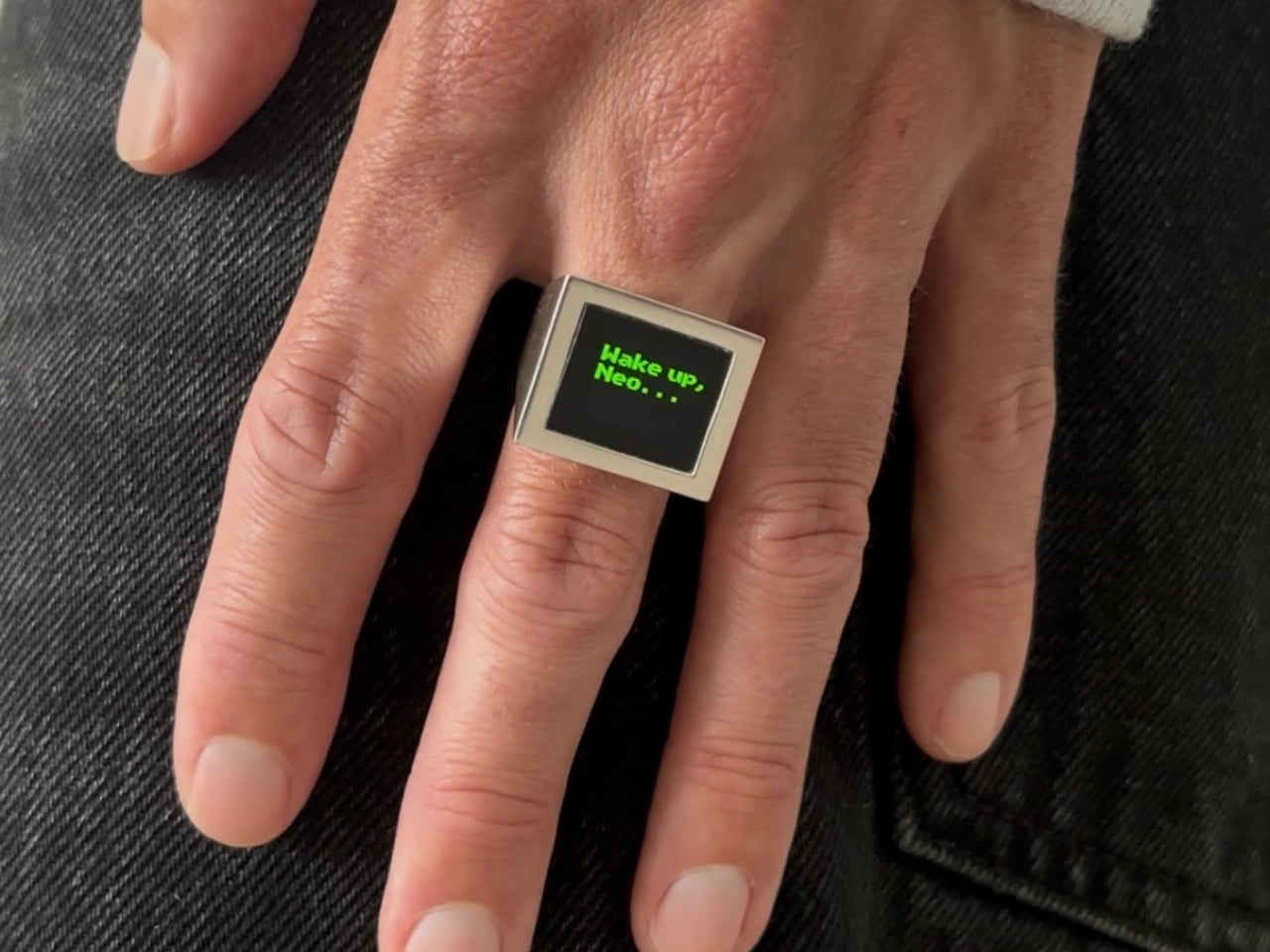
Look at the Digital Rain Ring when the screen is off, and you might not immediately clock what you’re looking at. A clean silver bezel. A flat black face. Bold, architectural proportions that sit somewhere between a modern signet ring and a minimalist sculpture. It reads as jewelry, completely and confidently. Then the animation starts.
That double life is arguably the most deliberate design decision Daniel Idle made. The OLED display, sitting recessed behind a polished silver frame, does something that most tech-forward jewelry fails to pull off: it disappears when it’s not in use. The black glass of the screen at rest looks remarkably close to a dark stone setting, the kind of graphic, monochromatic face you’d expect on a considered piece of contemporary jewelry. It’s only when the Matrix rain animation loops across it that the object reveals its other identity.
Designer: Daniel Idle
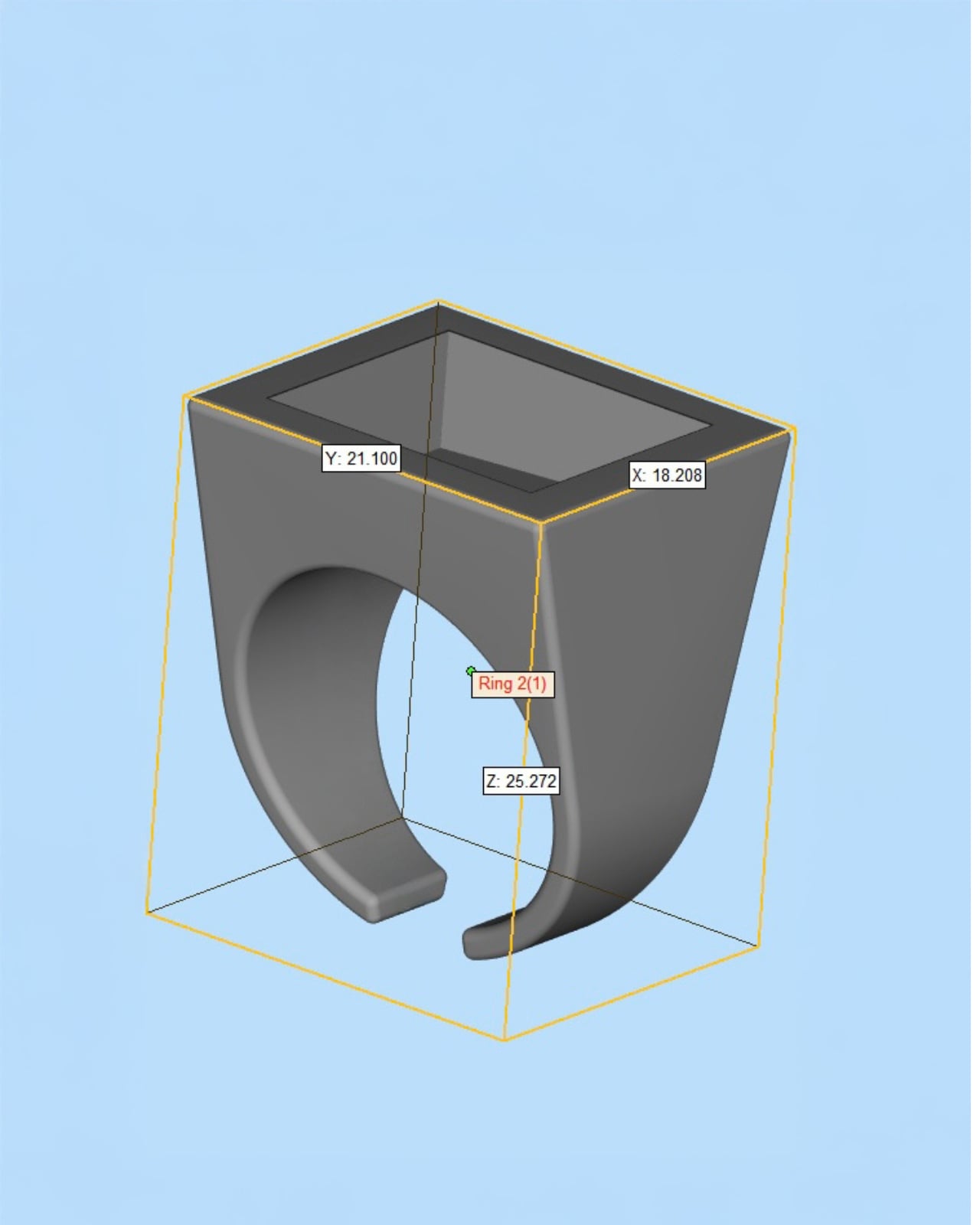
The physical form took real thinking to get right. Looking at the CAD model, the ring measures approximately 21mm by 18mm across the face, with a total height of just over 25mm. Those proportions matter. The face is large enough to hold the display at a readable scale, but the tapered body connecting it to the band keeps the overall silhouette from reading as clunky. The geometry is almost architectural, widening from the band up toward the face in a way that gives the piece visual weight without making it feel like you’re wearing a small appliance on your finger.
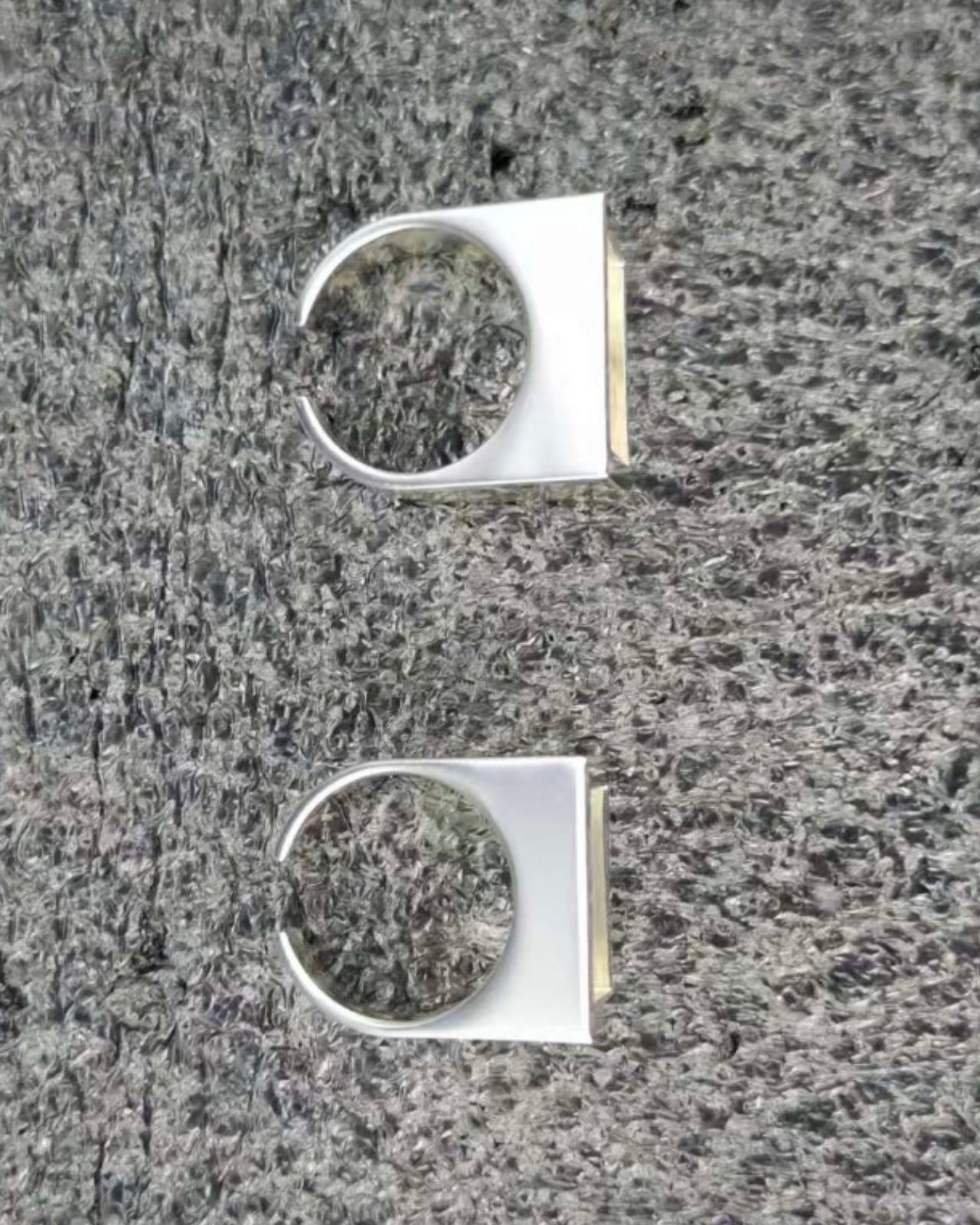
The band itself is an open C-shape rather than a fully closed ring. It’s a practical call given the electronics that need to live inside the body, but it also lands well aesthetically, softening what is otherwise a very hard-edged, geometric form. From the side, the two components sit in good proportion to each other. Nothing feels like an afterthought.
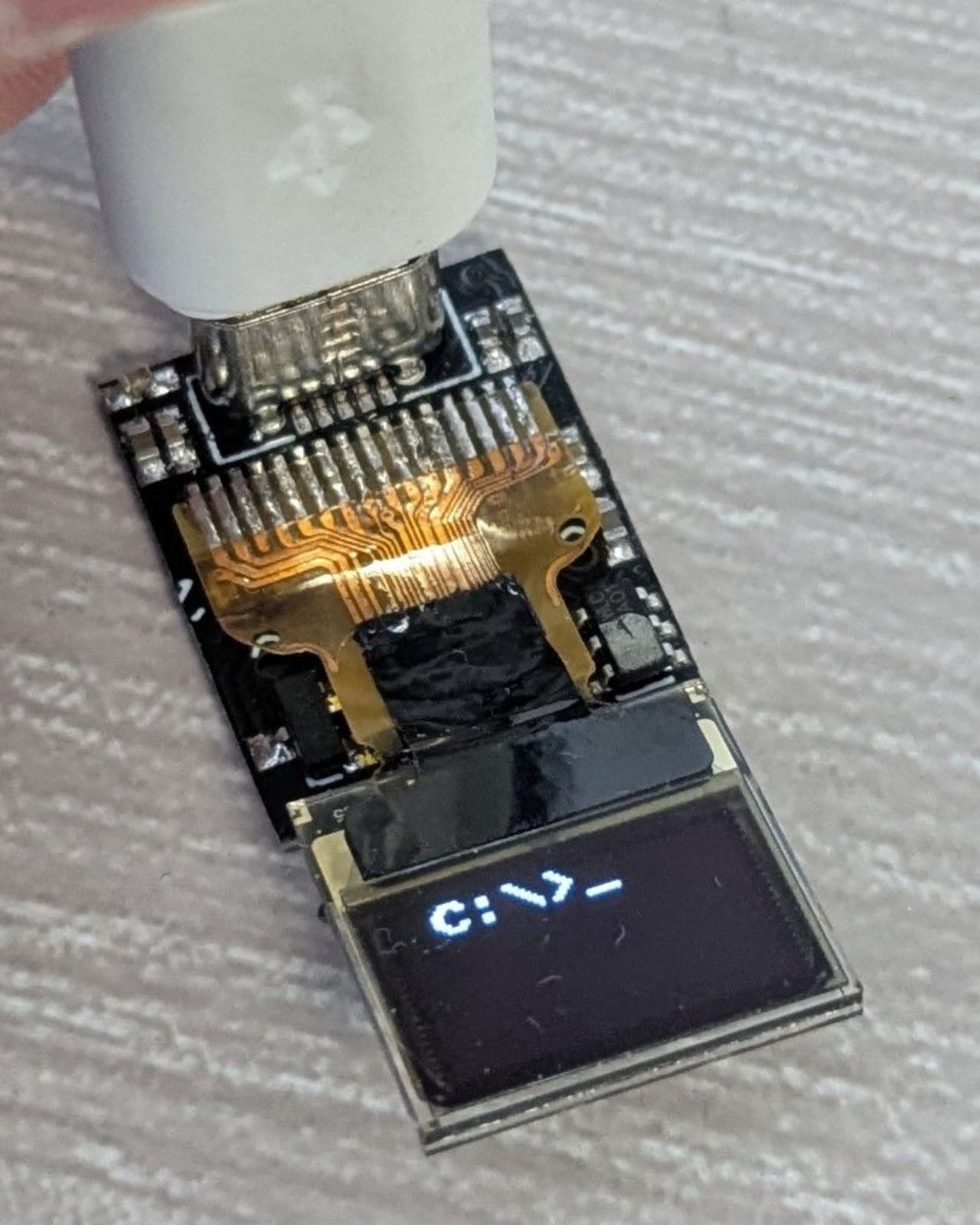
The custom PCB is worth pausing on. It’s tiny, densely packed, and clearly built to exact dimensions to fit within the ring body. A flexible ribbon cable connects the board to the OLED display, and a USB-C port is integrated for charging. The fact that all of this infrastructure lives inside something you wear on your finger is genuinely impressive engineering, but Idle’s judgment was to make sure none of it is visible in the finished piece. That restraint is what separates this from a hobbyist build.
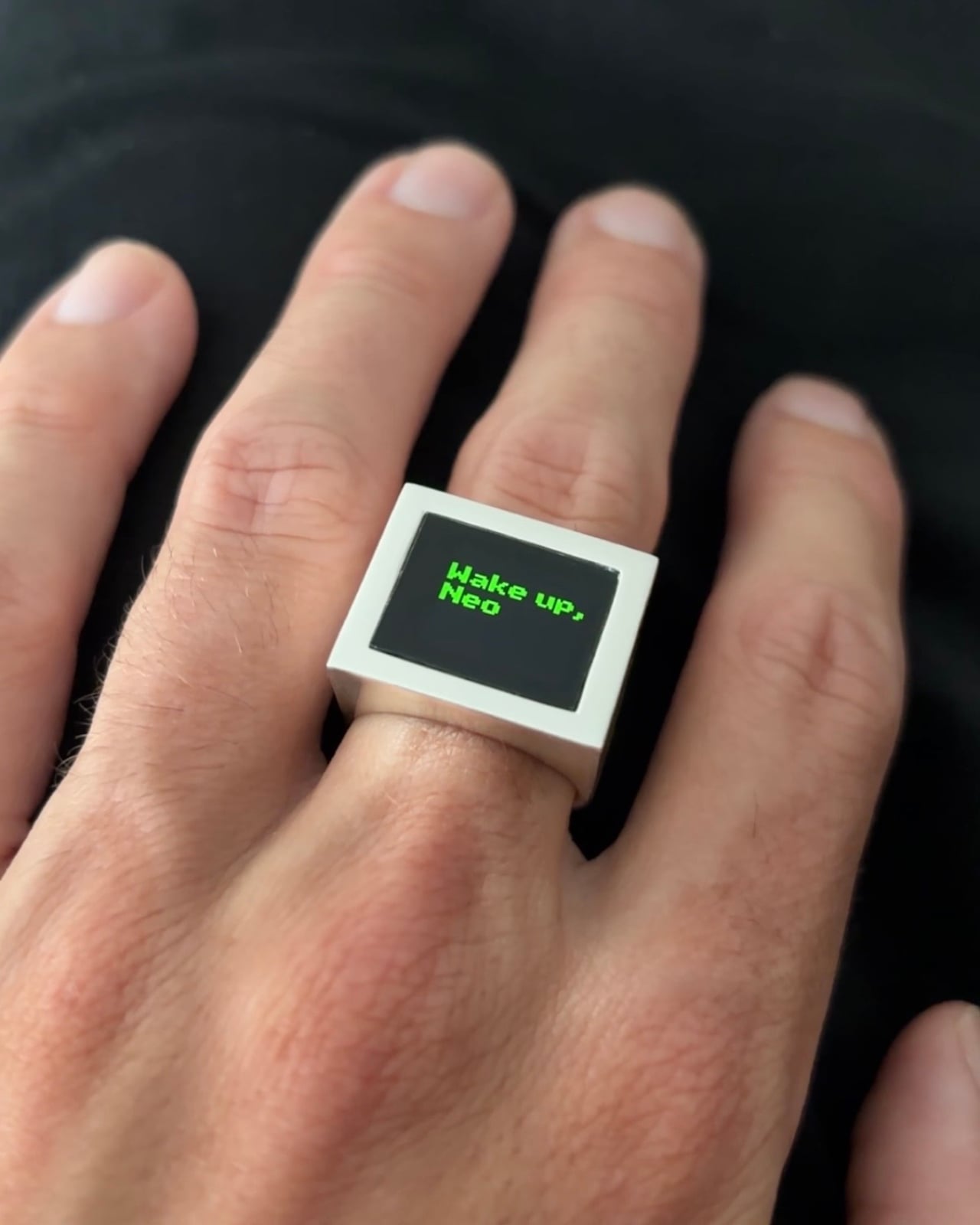
The prototype stage used a white resin body, which actually shows the concept quite clearly in a raw, honest way. You can see the display sitting flush with the face, the green animation already doing its work against the matte surface. But the shift to polished silver for the finished version was the right call. Silver gives the piece the visual language of jewelry rather than a prototype, and the contrast between the warm metal bezel and the deep black of the OLED screen is genuinely considered. It has the graphic confidence of a piece that was thought about as an object first and a technology project second.
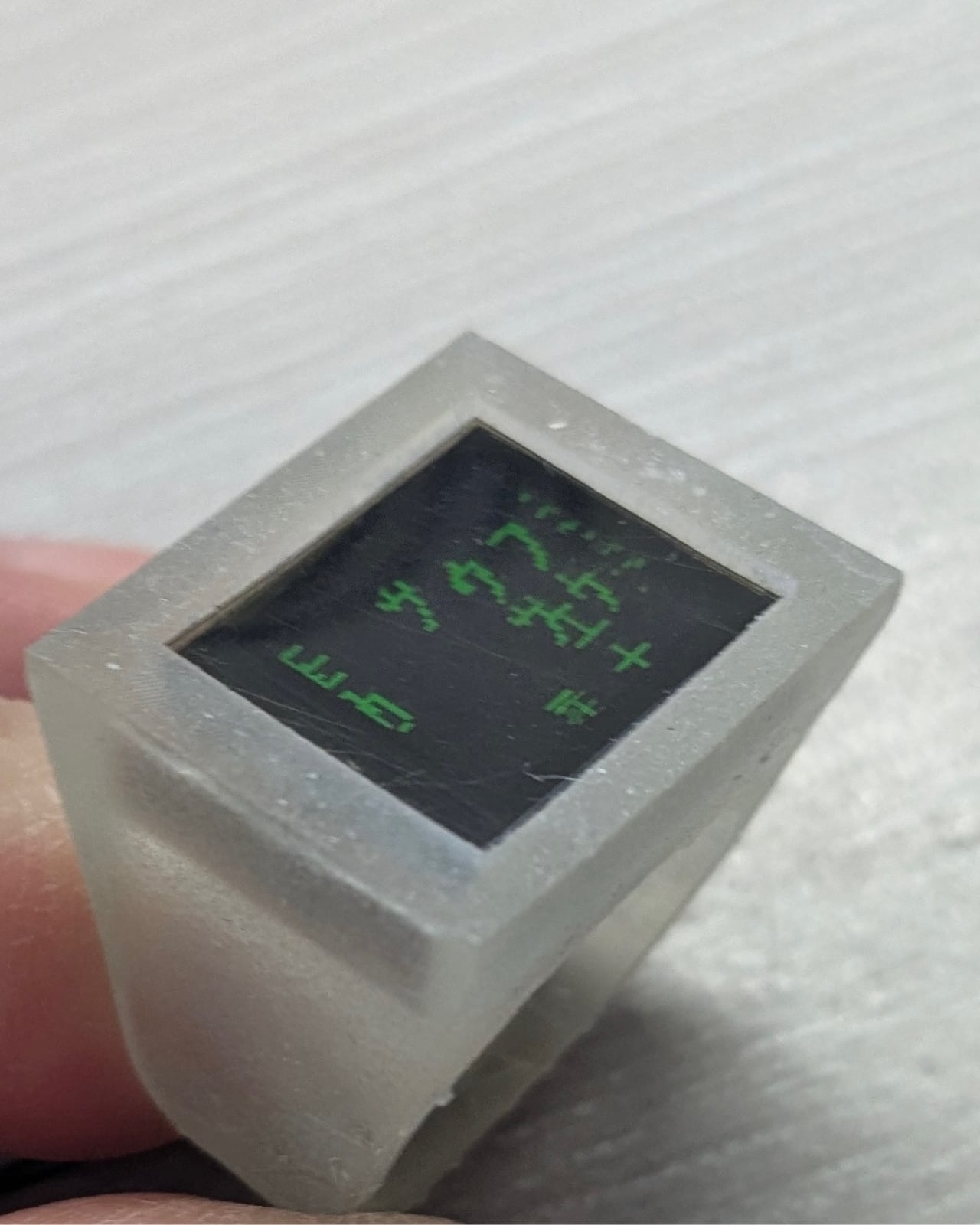
The animation choice suits the form well too. The Matrix rain, those cascading columns of green katakana-inspired characters, fills a small square display naturally. It loops cleanly, it doesn’t demand to be read in detail, and its cultural weight does a lot of communicative work in a very compact space. “Wake up, Neo” appearing in green pixels on a silver ring is a complete sentence in the language of pop culture, and Idle clearly knows that.
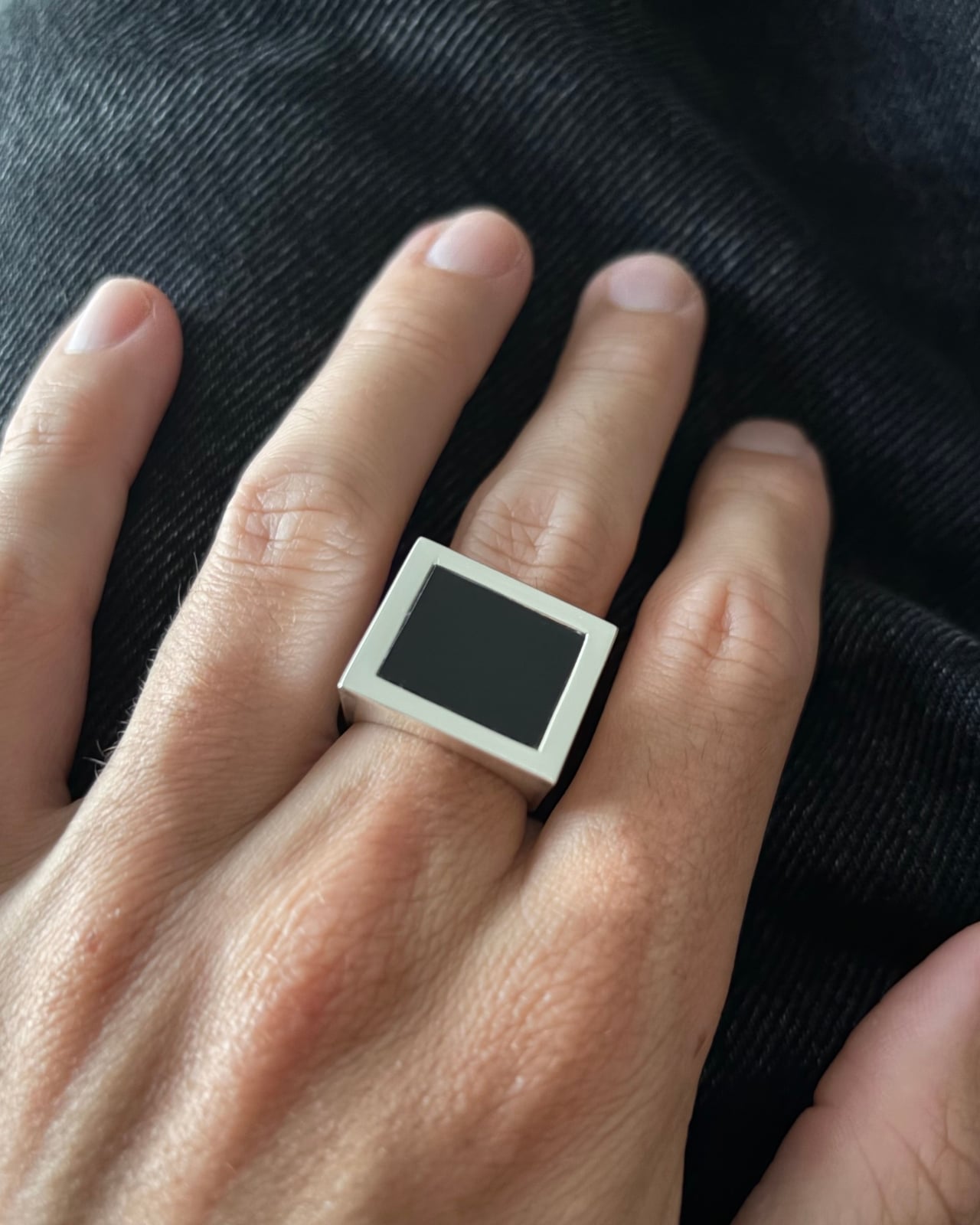
What makes the Digital Rain Ring worth paying attention to is not the novelty of putting a screen on a ring. It’s the evidence that someone thought through the design consequences of doing so. The proportions hold up. The material choices are intentional. The off-state is as considered as the on-state. Most tech jewelry gets the technology right and the jewelry part wrong. This one seems to have gone in the other direction, starting with the object and working inward from there. That’s a harder problem to solve, and it’s the one that actually matters.