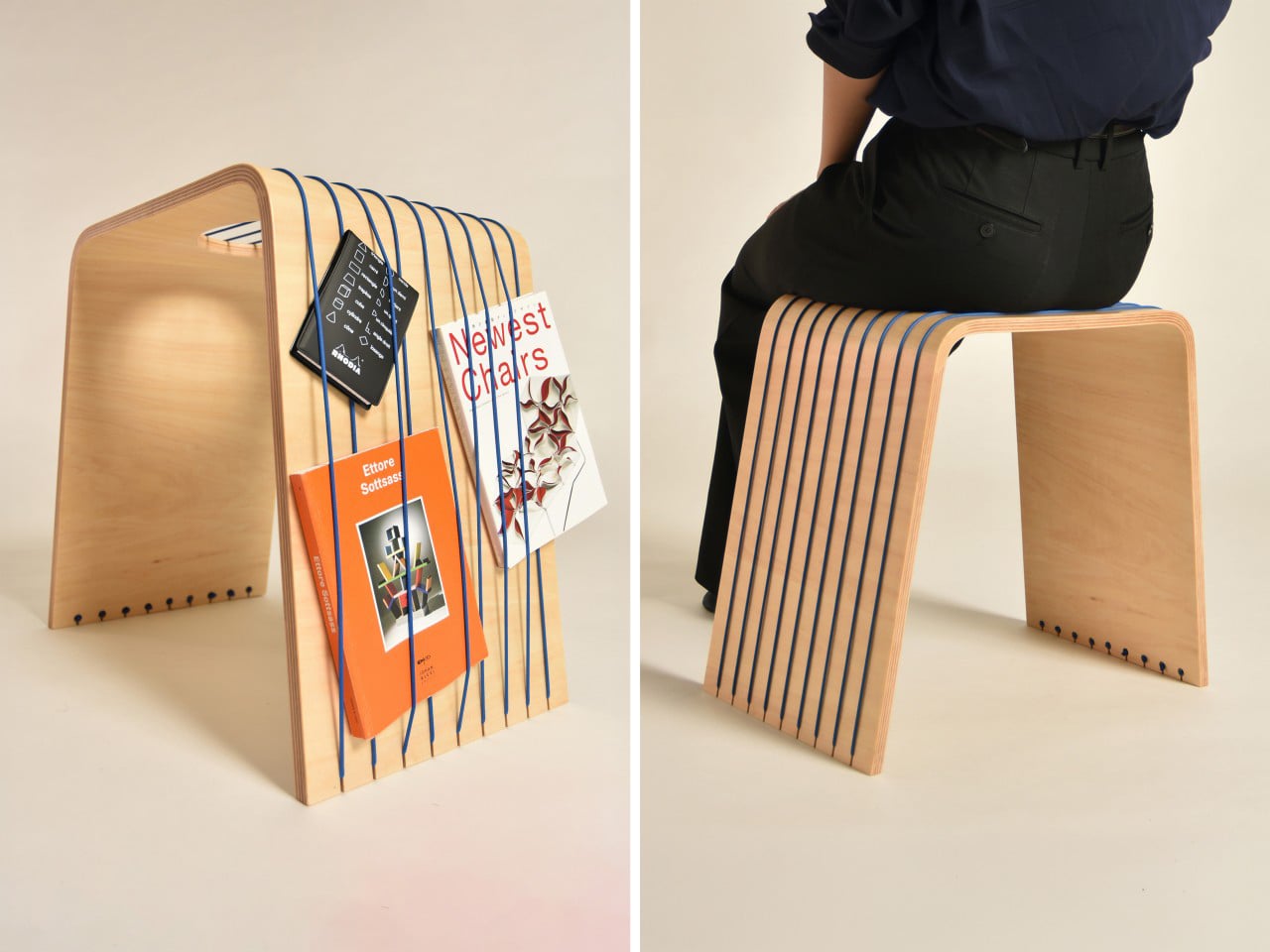
Every stool I’ve ever owned has ended up doing three jobs it was never designed for. Phone stand. Laundry rack. Temporary table for the cup of tea I told myself I’d finish before it went cold. Furniture absorbs the chaos of daily life whether designers plan for it or not, so the smarter move is to plan for it. Yamashiro did exactly that, and she did it in Okinawa, designing from a culture that has always understood objects as participants in daily life rather than background props.
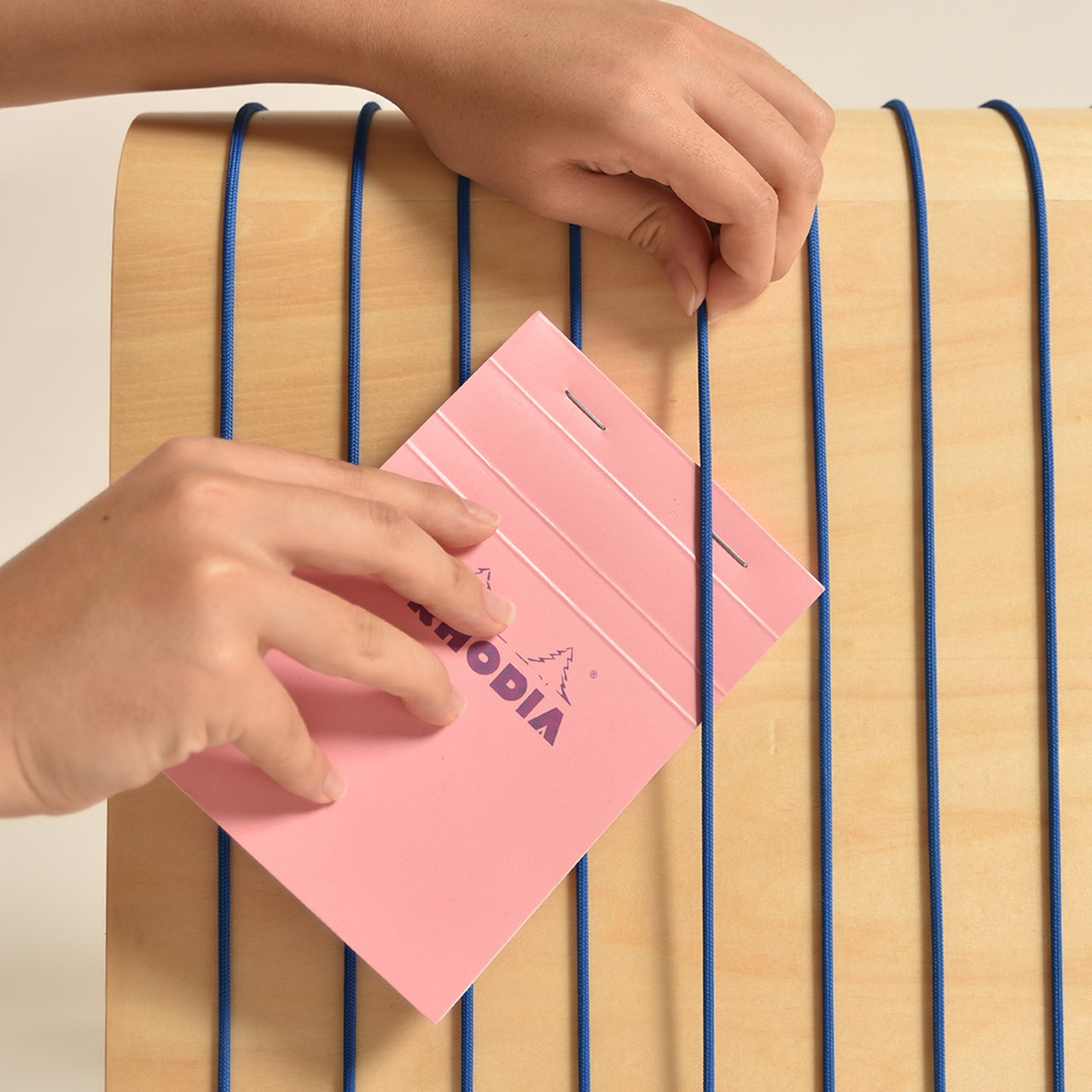
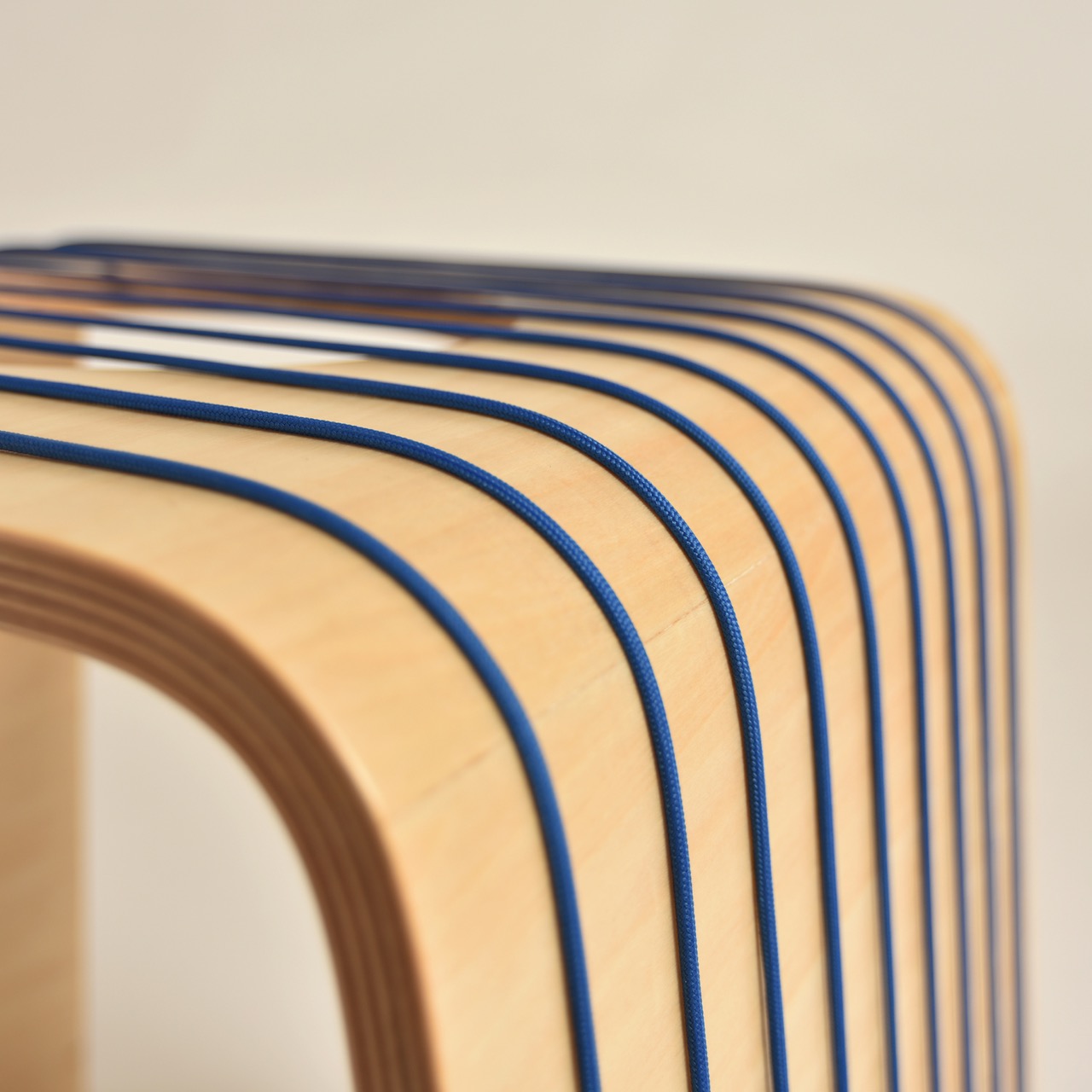
The Strings Stool won an A’ Design Award in the Furniture Design category, and looking at it, you understand why immediately. Blue cords run in parallel grooves down the face of a molded plywood form, taut like the strings of a sanshin, Okinawa’s traditional three-stringed instrument. Slip a book between them. Slip a notebook. The stool holds them without complaint, the same way it holds you.
Designer: Yuna Yamashiro
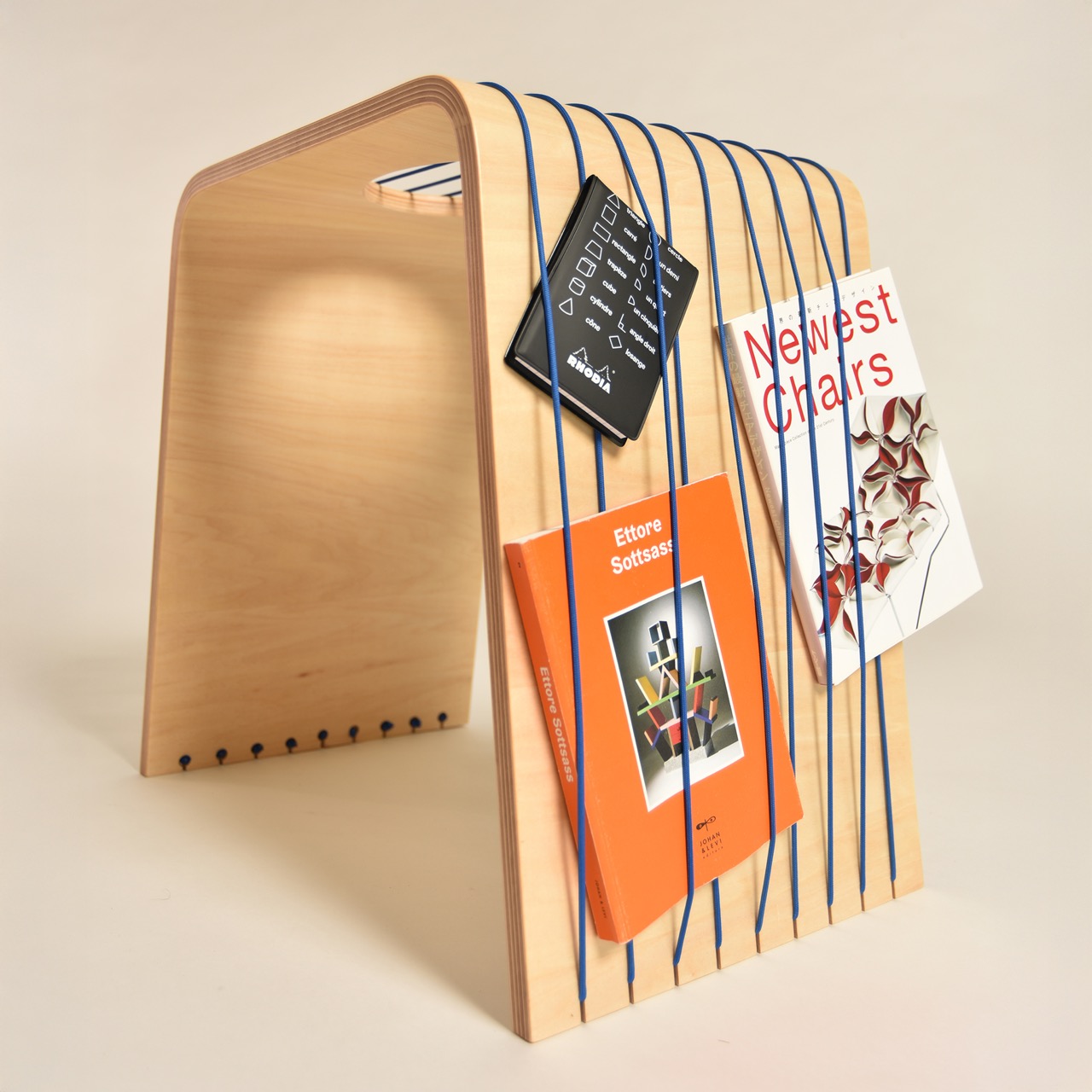
The sanshin has been part of everyday Okinawan life for so long that it stopped being a cultural artifact and became furniture in its own right, something you pick up, put down, lean against a wall, live around. Yamashiro’s design carries that same quality of unassuming presence. The Strings Stool doesn’t announce itself as a design object. It sits in a room and waits to be useful, which is a harder thing to design than it sounds. The A’ Design Award jury clearly recognized that the stool operates on two registers simultaneously, as a cultural translation and as a genuinely functional piece of furniture, and rewarded it accordingly.
Yamashiro built a mold and applied pressure to bend multi-layered plywood into a continuous arc, a single curved form that flows from one leg face up and over the seat and back down the other side. Getting wood to adhere cleanly to a mold under pressure without losing its shape is genuinely difficult work, and the finished piece shows no evidence of that struggle. The layers visible at the edges give the form its graphic quality, a subtle striation that rhymes with the cord spacing running down the face. At 500mm wide, 300mm deep, and 450mm tall, it occupies a room without dominating it. The legs splay outward in a trapezoid stance, which does two things at once: it makes the seat more comfortable to straddle, and it lets the stools nest and stack cleanly, a practical consideration that most furniture designers treat as an afterthought but Yamashiro baked in from the start.
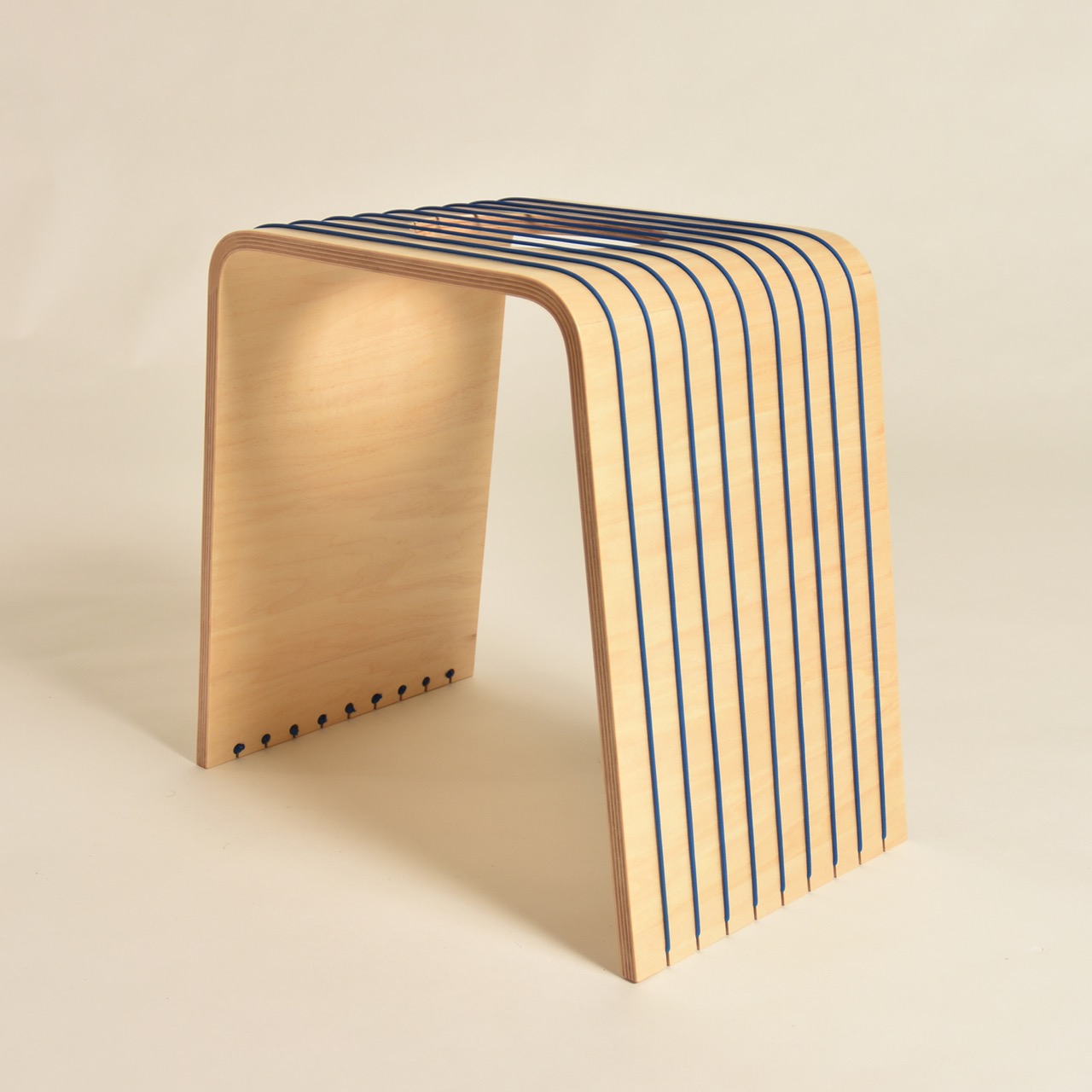
Most keen-eyed enthusiasts will remember a similar organizer format in Cocoon’s GRID-IT, elastic cords stretched across a rigid panel holding gear in place through tension alone. Yamashiro scales that mechanic up to furniture size, anchors the cords at the base with visible knotted eyelets, and makes them user-replaceable, so you can swap colors to match a room or replace worn cords without retiring the whole piece. That replaceability is the kind of decision that separates designers who think about ownership from designers who think about photography.
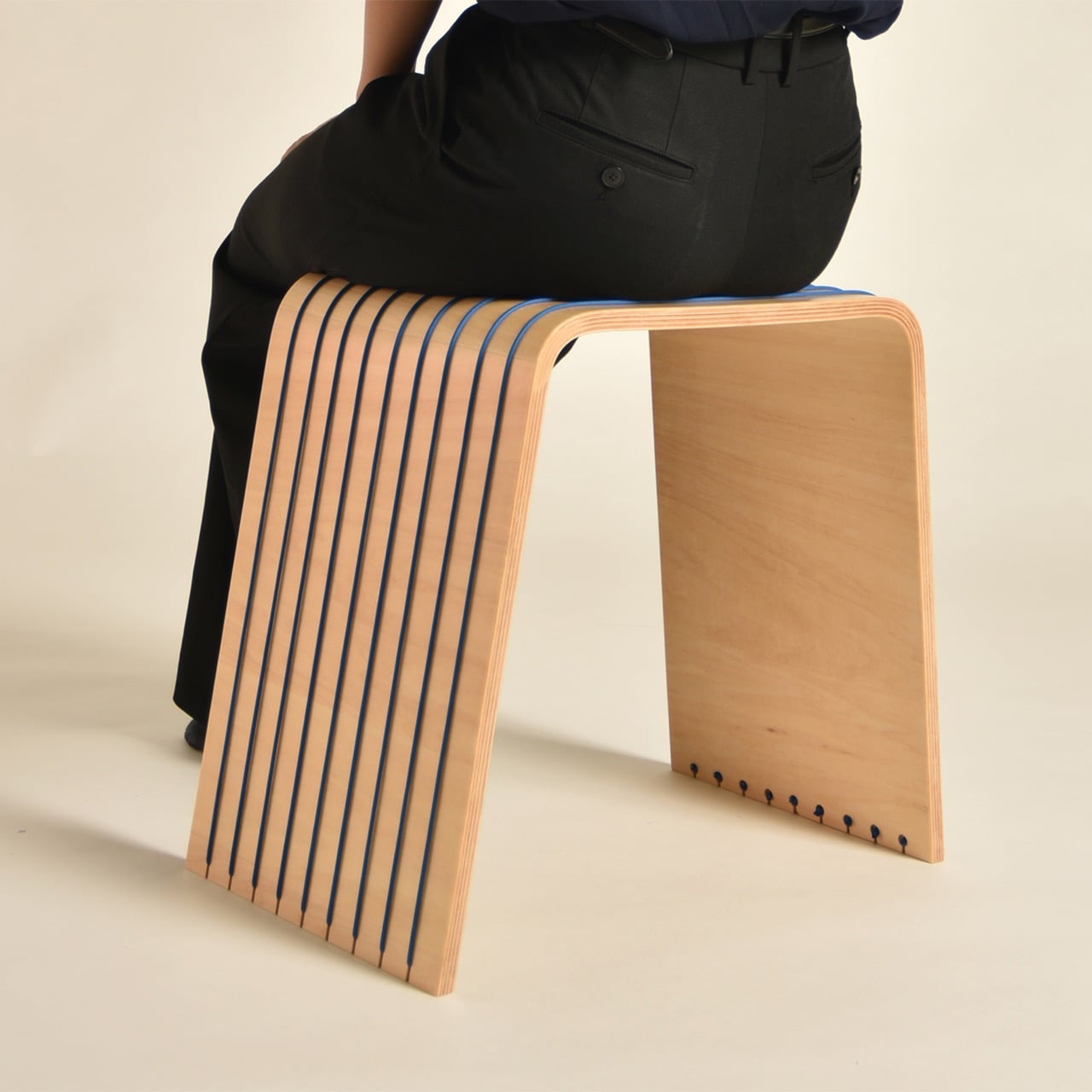
The one honest caveat is that those same cords, running across the seat surface, will make themselves known after a few minutes without a cushion. Yamashiro designed a central opening into the seat to improve comfort, and it helps, but anyone planning to use this as their primary work perch rather than an occasional seat should factor a thin cushion into the equation. That’s a small asterisk on an otherwise cohesive and quietly impressive debut.
SHARE