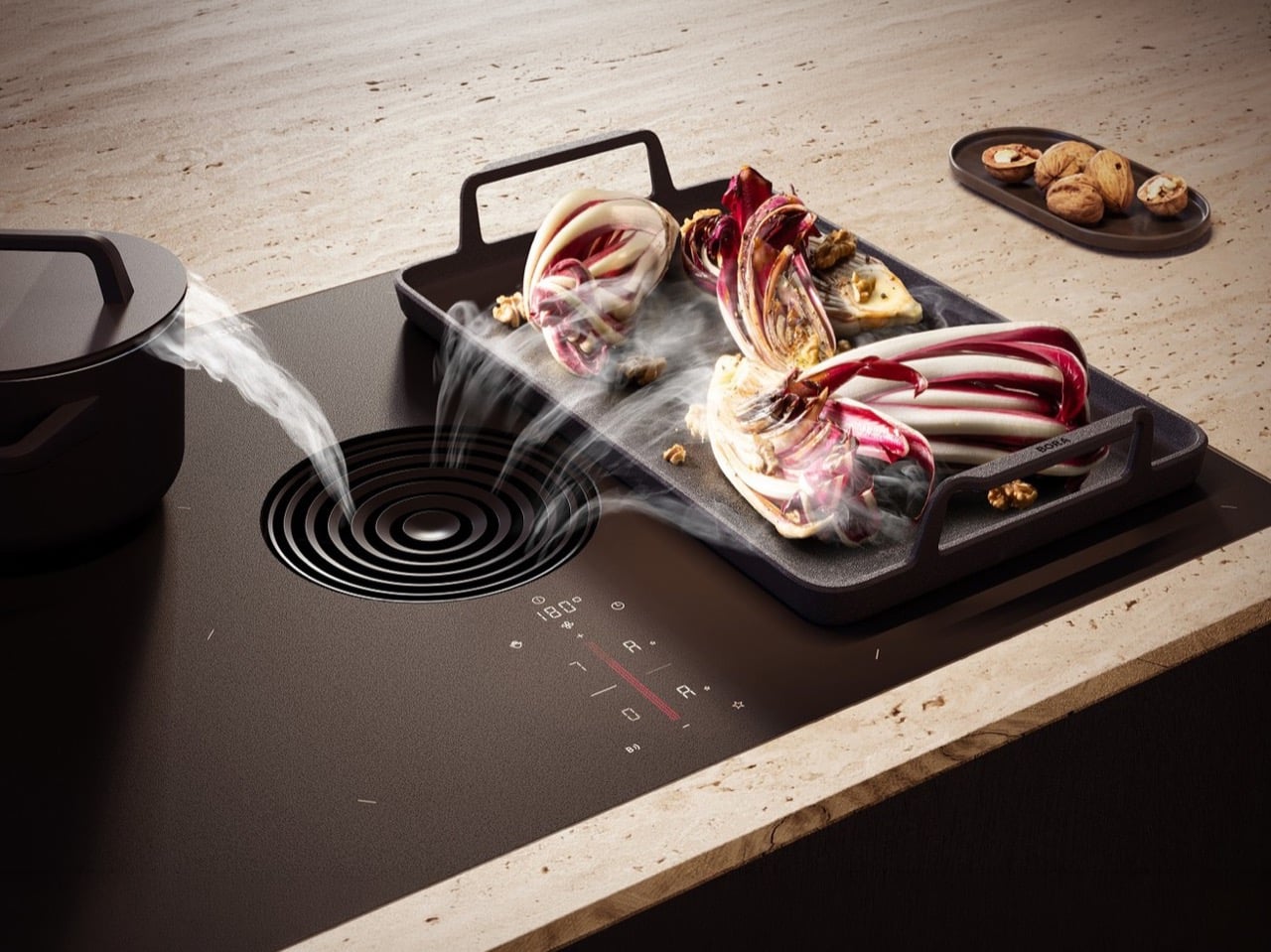
Steam rises at roughly one metre per second. A range hood, mounted anywhere from 60 to 90 centimetres above the cooktop, is waiting near the ceiling while a meaningful portion of what just came off the pan has already drifted sideways into the room. This is the physics problem BORA has been solving since 2007, when founder Willi Bruckbauer first patented a cooktop that captures vapors at the surface itself, before they get the chance to travel anywhere at all.
Four compact cooktop-extractor systems, each integrating induction cooking and extraction into a single unit under 20 centimetres tall, make up the newly refreshed BORA Pure Family. Sizes run from 58cm to 83cm wide, slotting into standard kitchen cabinetry without the ductwork, ceiling clearance, or fixed positioning that a range hood demands. Every kitchen designed around an overhead hood has been quietly shaped by that hood’s constraints, often without the homeowner ever realising it.
Designer: BORA
1. It Physically Blocks the One View That Actually Matters
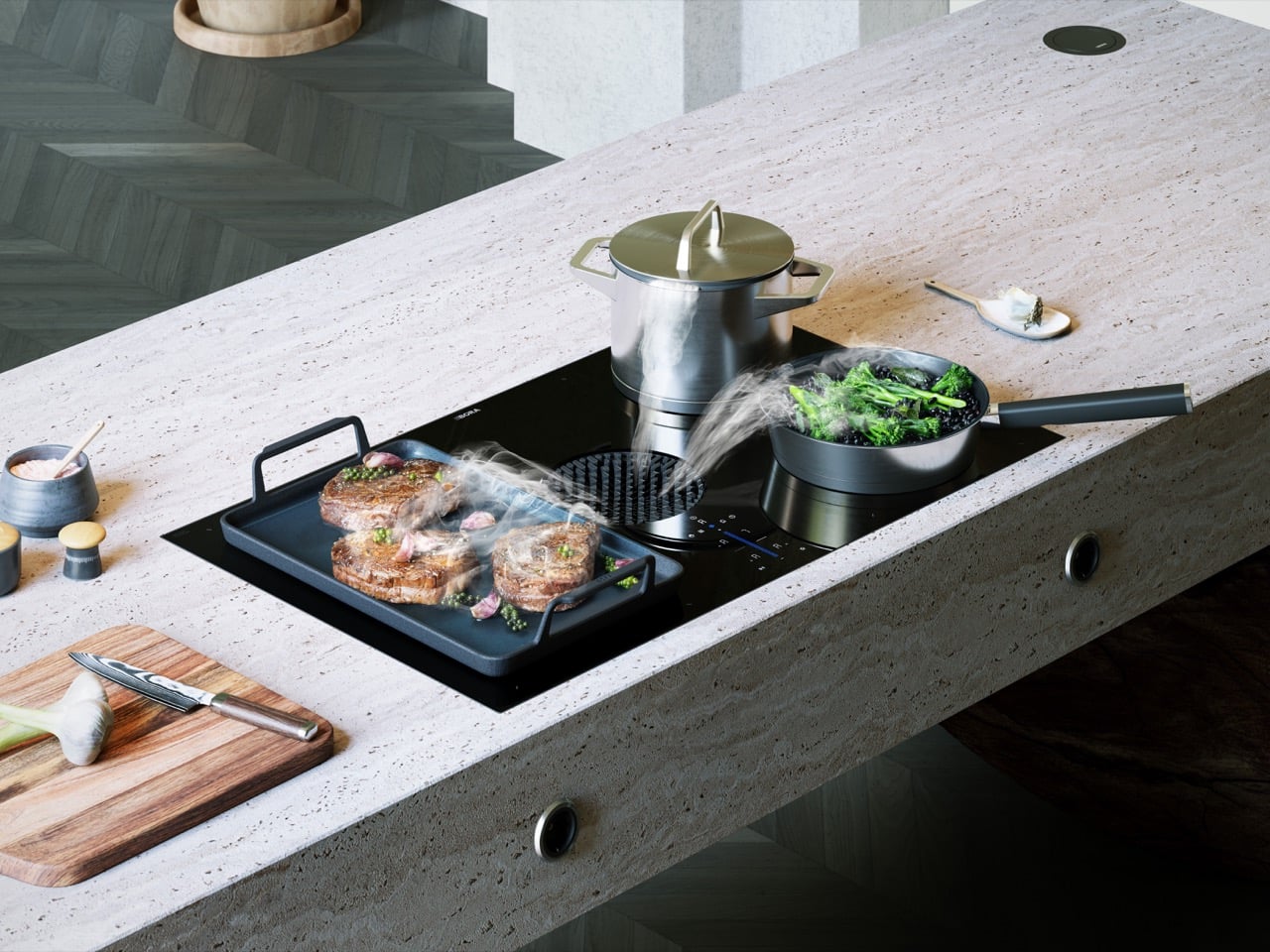
The kitchen island took decades to become the centrepiece of domestic architecture. Open-plan layouts exist specifically to dissolve the walls between cooking, dining, and living, creating one continuous space where the cook faces the room rather than a wall. Hanging a ventilation canopy above the island’s cooktop puts a ceiling-mounted object directly back into the sightline the entire layout was designed to keep clear. The hood wins. The open plan loses.
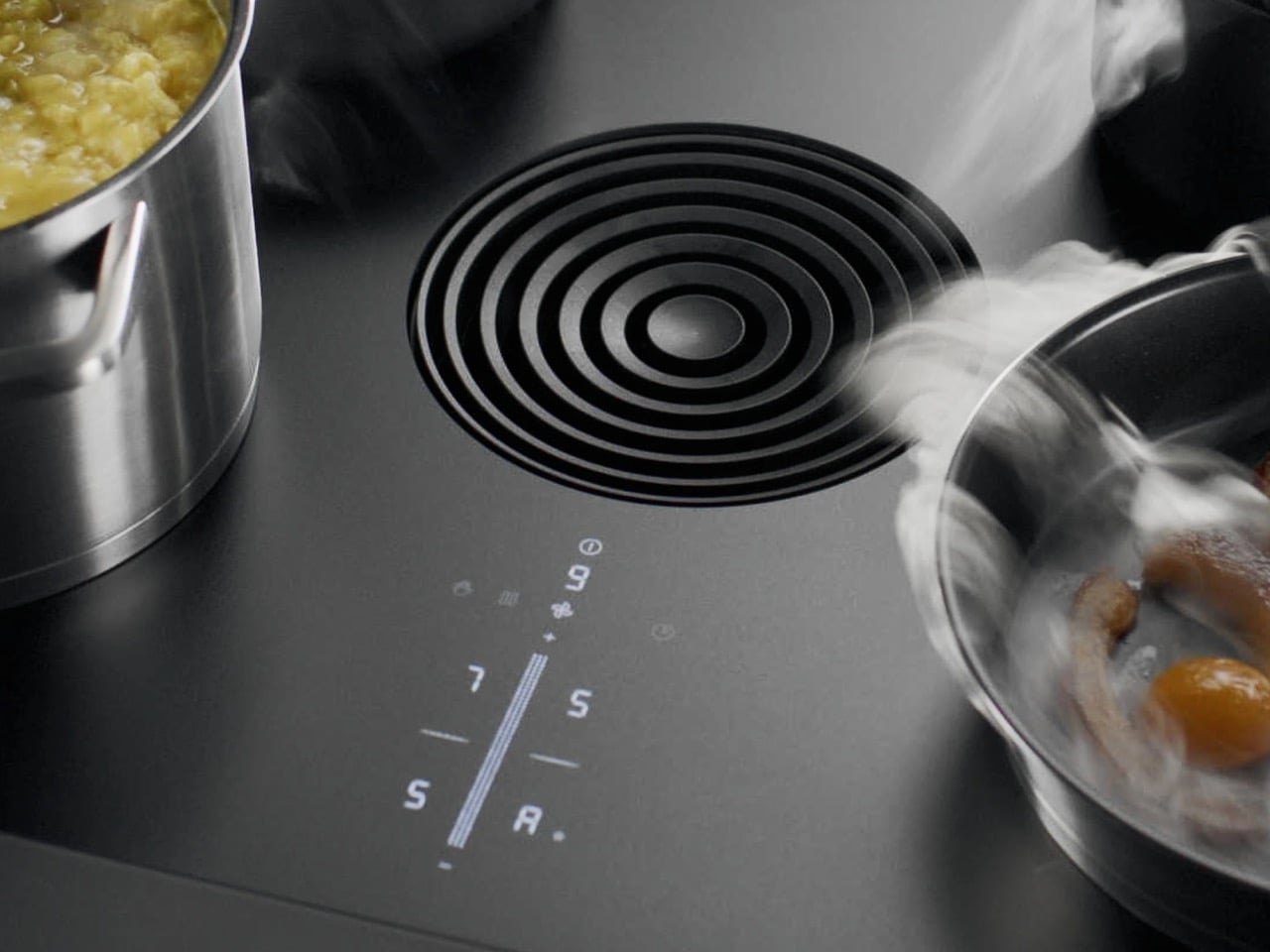
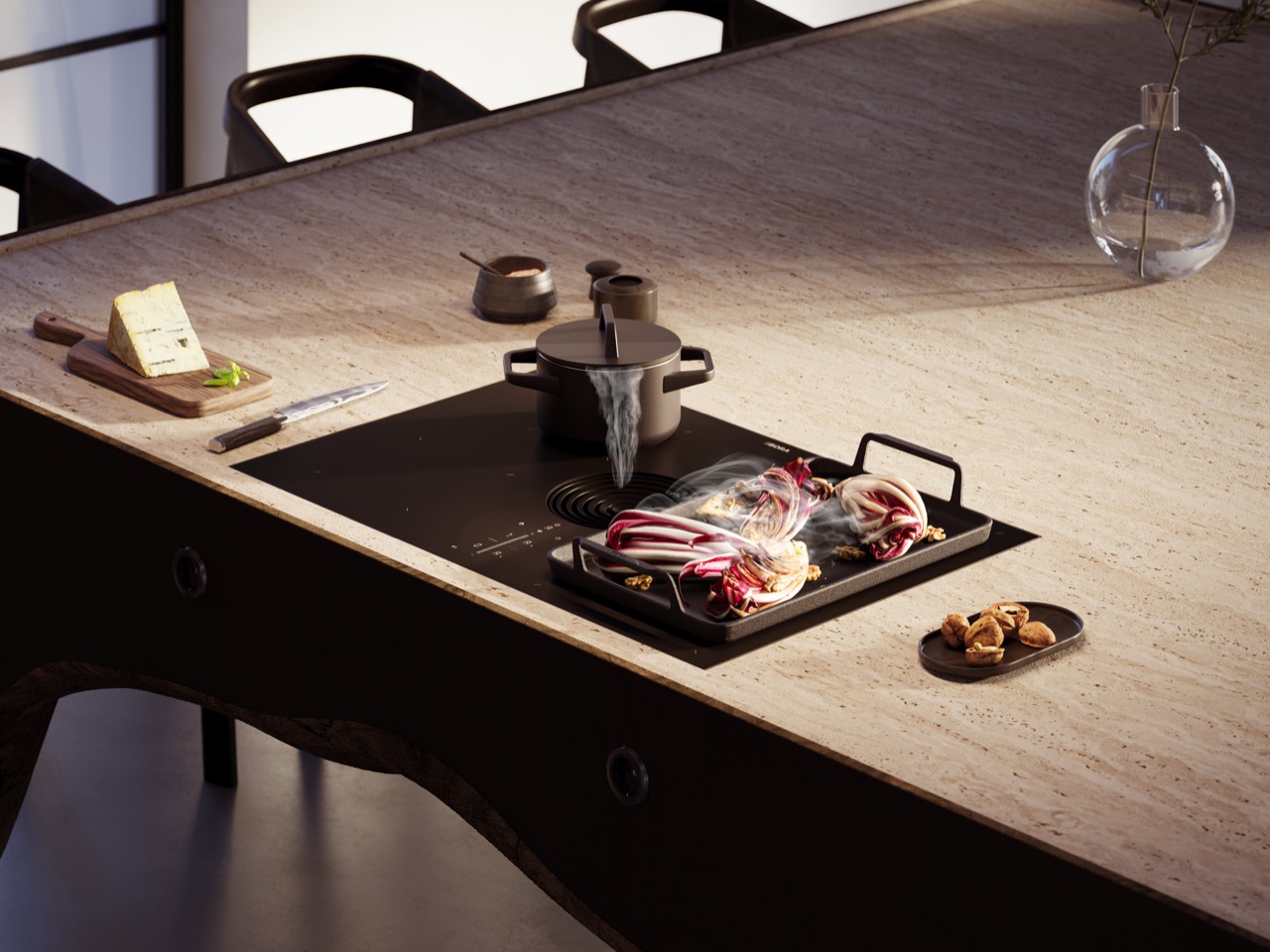
Flush-mounted extraction at the cooktop level removes that object from the equation entirely. With the BORA Pure Family, the air inlet nozzle sits within the cooktop surface itself and the motor lives below the counter, leaving the space above the island completely uninterrupted. For island configurations especially, this means pendant lighting can hang lower, shelving can extend further, and in some cases structural changes like skylights become viable above the cooking zone. None of those options exist when a ventilation canopy is holding the ceiling space hostage.
2. That Noise Level Has Never Been Acceptable

The average range hood operates at over 70 decibels at head height, approximately the noise level of a vacuum cleaner running in the same room. For kitchens that share acoustic space with dining tables, living areas, and the general flow of a household evening, that is a sustained intrusion people have simply learned to work around rather than question. Raising your voice over the extractor fan has become so normal that most homeowners stopped registering it as a problem worth solving.
Sitting below the counter rather than above the stove, BORA’s extraction motor is integrated into the unit and acoustically separated from the living space. The result is a noticeably quieter operation during cooking, which matters considerably more in open-plan homes where kitchen noise carries into every adjacent room. Everyday sounds during a cooking session, pots simmering, oil spitting, water coming to the boil, register louder than the extraction itself under normal BORA operation. For a kitchen that is also supposed to function as a social and living space, that is a fundamental shift in how the room behaves acoustically.
3. Overhead Suction Is Chasing Vapors That Have Already Escaped
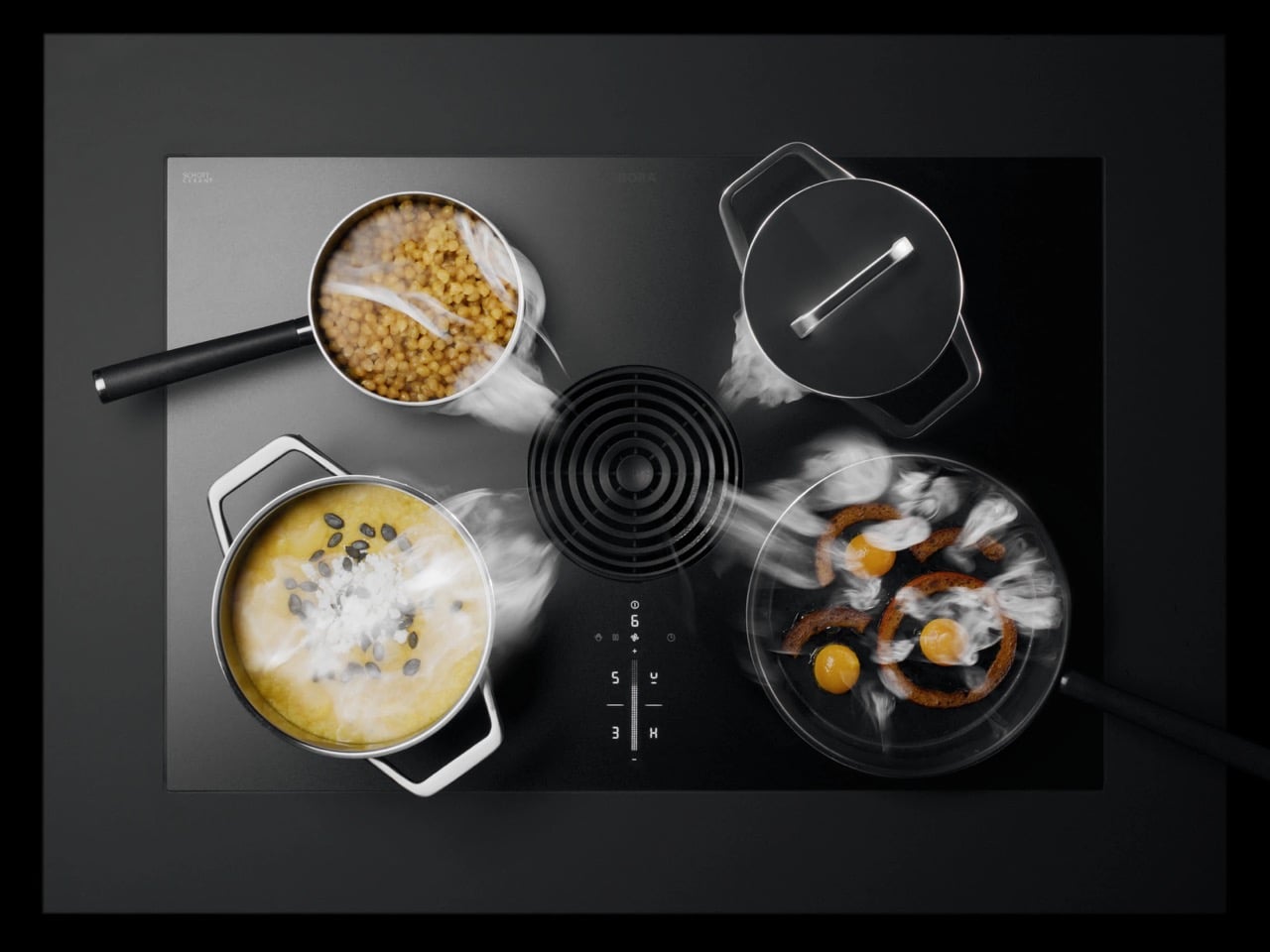
Cooking vapors and steam don’t travel in a tidy vertical column straight into a ceiling-mounted filter. They rise from the pan, spread laterally as they cool, and disperse into the room well before reaching the extraction point of a hood mounted 70 to 90 centimetres above the cooking surface. Research cited by BORA puts that lateral escape figure at around 30 percent with a standard updraft extractor, which is roughly the share ending up in curtains, on cabinet finishes, and circulating through the living areas of an open-plan home before the hood ever sees it.
Working at the source rather than above it, BORA’s cross-flow suction draws vapors downward through the air inlet nozzle before they have the opportunity to rise and spread at all. The extraction speed exceeds the one-metre-per-second rise rate of cooking vapors, meaning the system is actively outrunning the physics rather than reacting to them. The refreshed Pure Family pairs that extraction mechanism with the new eSwap Plus activated charcoal odour filter, monitored automatically by the cooktop itself, which signals replacement after 150 operating hours by displaying an “F” on the control panel. At approximately one year of regular cooking use per filter, the guesswork is removed from the maintenance cycle entirely.
4. Cleaning a Range Hood Is a Design Problem Disguised as a Maintenance Chore
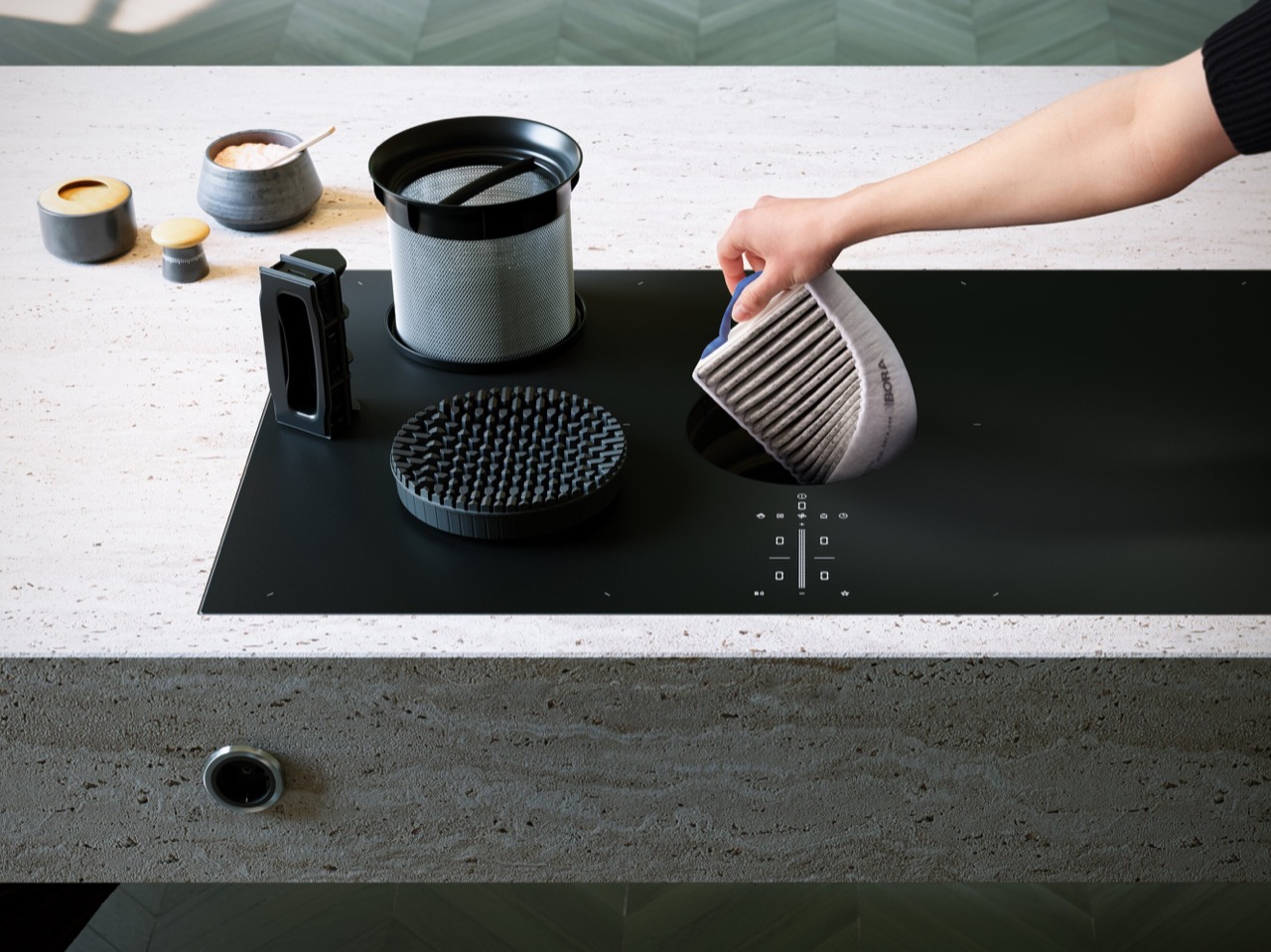
Grease does not stay at the filter. It coats the underside of the hood casing, migrates into the seams between panels, and accumulates on the surface of any overhead cabinetry nearby. Cleaning a standard range hood involves removing filters that are often above head height, wiping surfaces that collect heat residue in corners and crevices, and occasionally dismantling panel sections to reach the parts that see the most buildup. The frequency at which this actually gets done in most kitchens is considerably lower than the frequency at which it should.
Maintenance on the Pure Family starts from a different premise entirely. The grease filters and air collection trays are dishwasher-safe and accessed from above the cooktop surface, without removing drawers, cabinets, or plinth panels below. The eSwap Plus activated charcoal filter swaps out through the air inlet nozzle using a grip strap and printed directional symbols on the unit itself, with no tools required. The new matt Schott glass finish available across the Pure Family adds another layer of practical intelligence here: the velvety surface texture resists fingerprint marks and minor scratches passively, keeping the cooktop looking clean between sessions without any additional intervention.
5. It Has Been Dictating Your Kitchen Layout This Entire Time
Ductwork is the invisible constraint that determines where cooktops are allowed to go. A range hood requires a duct run to the exterior of the building, travelling through cabinetry, walls, or ceiling cavities, starting at a fixed point above the stove and ending wherever an exterior wall or roof penetration is feasible. Every additional metre of that run introduces bends, friction, and measurable performance loss. In practice, the cooktop position is routinely chosen to suit the ductwork rather than the kitchen design, which is a significant inversion of how layout decisions should work.
Recirculating extraction in a BORA system requires no external duct run at all. The Pure Family models fit into standard kitchen base cabinets between 60 and 90 centimetres wide at an installation height of under 20 centimetres, meaning the cooktop-extractor combination goes wherever the cabinetry goes. The BORA S Pure, the most compact model at 580 x 515 x 199mm, is built specifically for kitchens where space is the primary constraint, sitting in the same 60cm footprint as a standard single base unit. Kitchens previously limited to wall-mounted cooktops by the absence of viable overhead ductwork become island-capable. The cooktop serves the layout. The layout no longer serves the hood.
Willi Bruckbauer filed his first patent in 2006 and opened BORA the following year with a stated aim that has never changed: the end of the extractor hood. The five reasons above are not new discoveries. The physics of overhead extraction, the noise levels, the grease dispersal, the cleaning friction, and the layout constraints have been present in every range hood installed over the past 70 years. The BORA Pure Family, with its updated matt Schott glass, tri-colour sControl+ touch interface, smartphone-connected Assist cooking functions, and four size configurations from 58cm to 83cm, is the most complete argument yet that none of those trade-offs were ever necessary to accept.