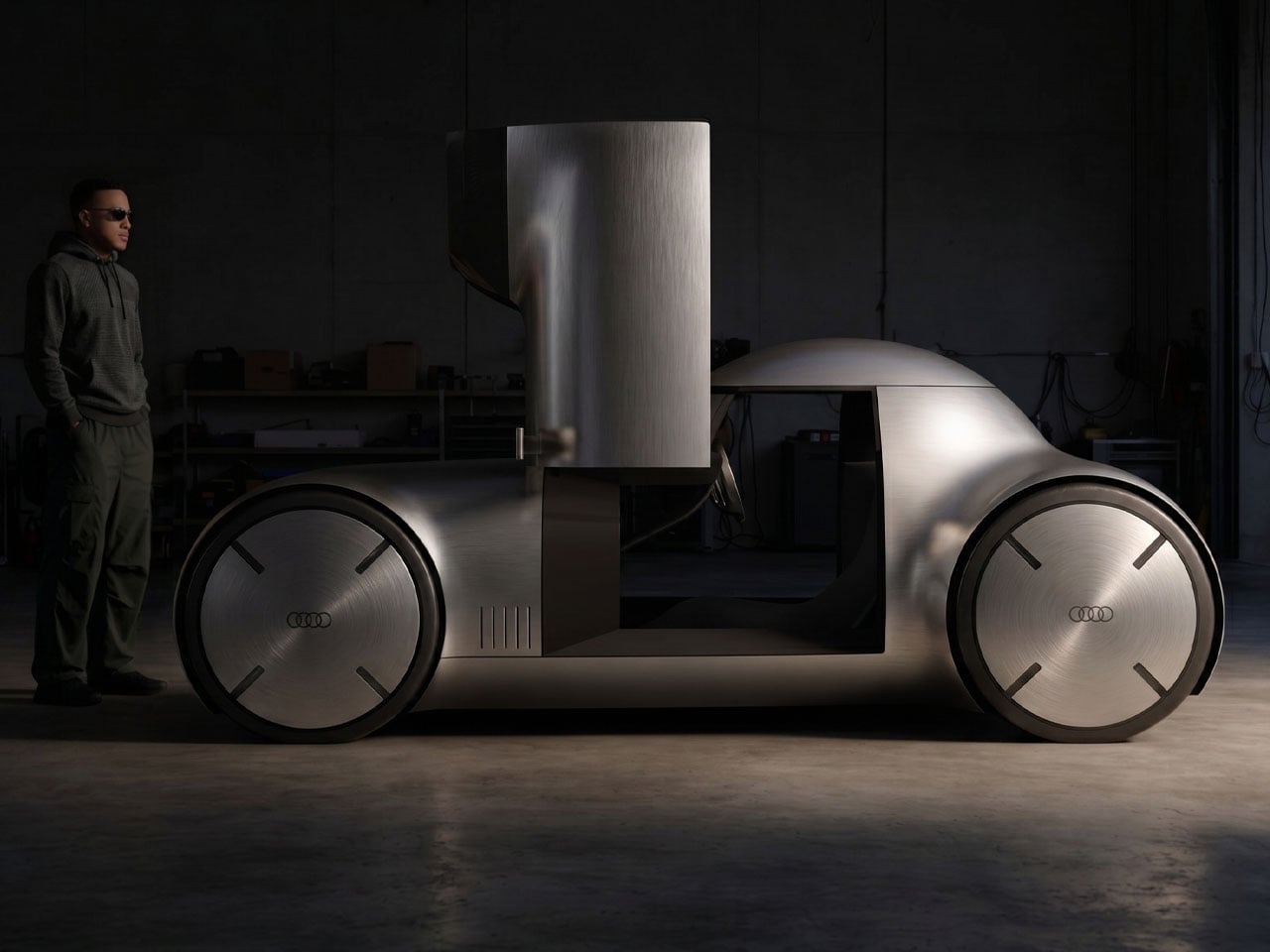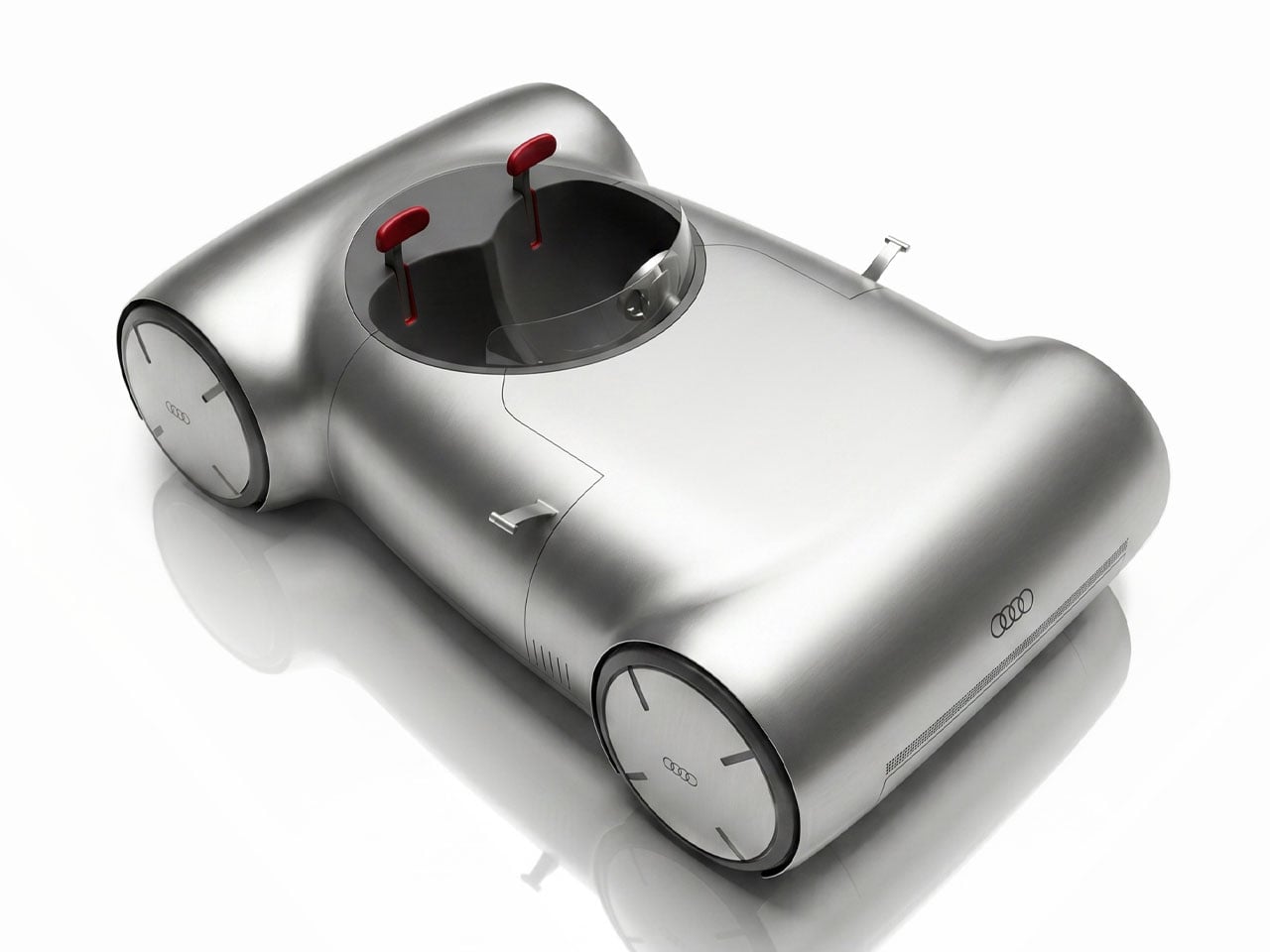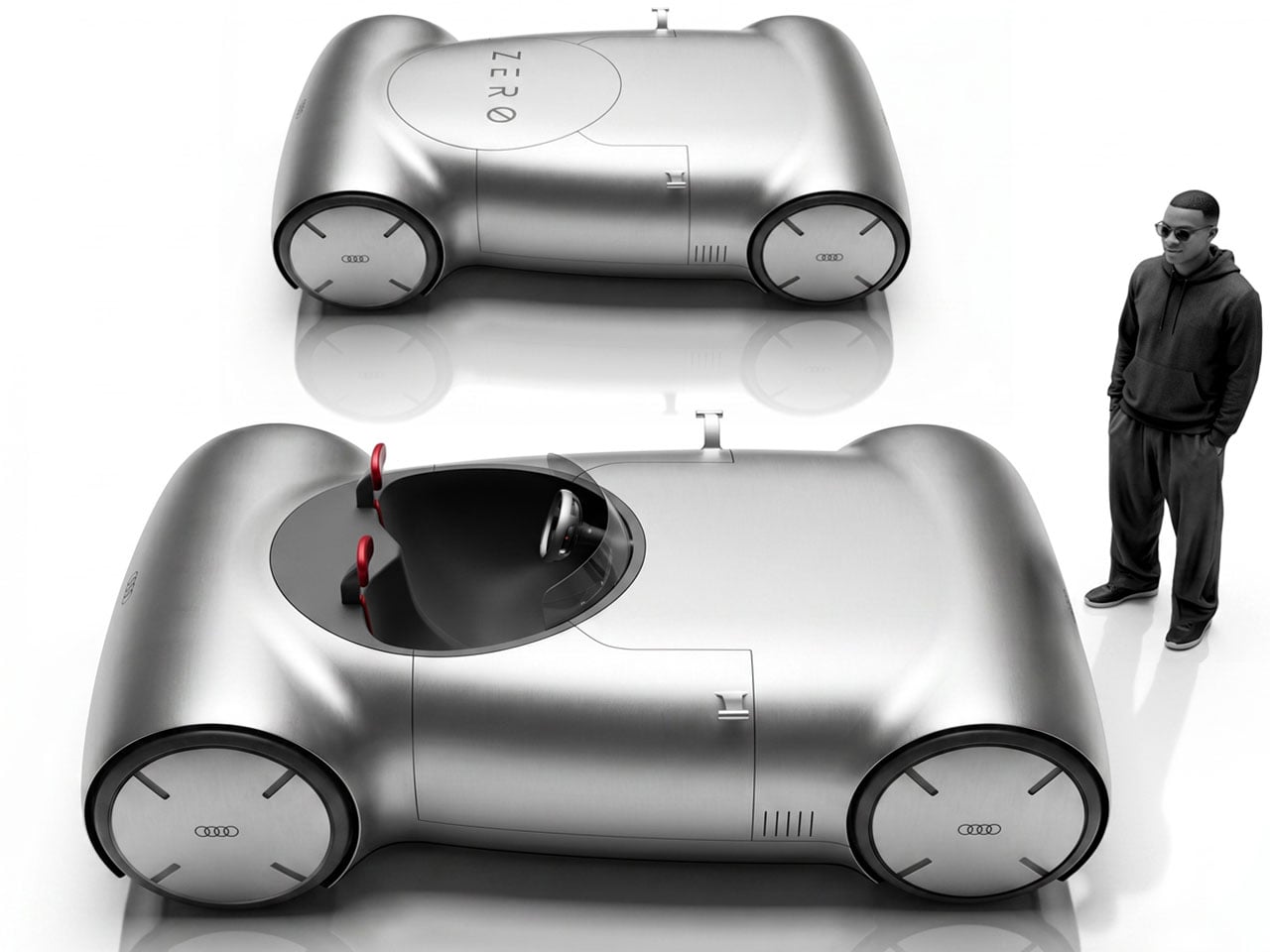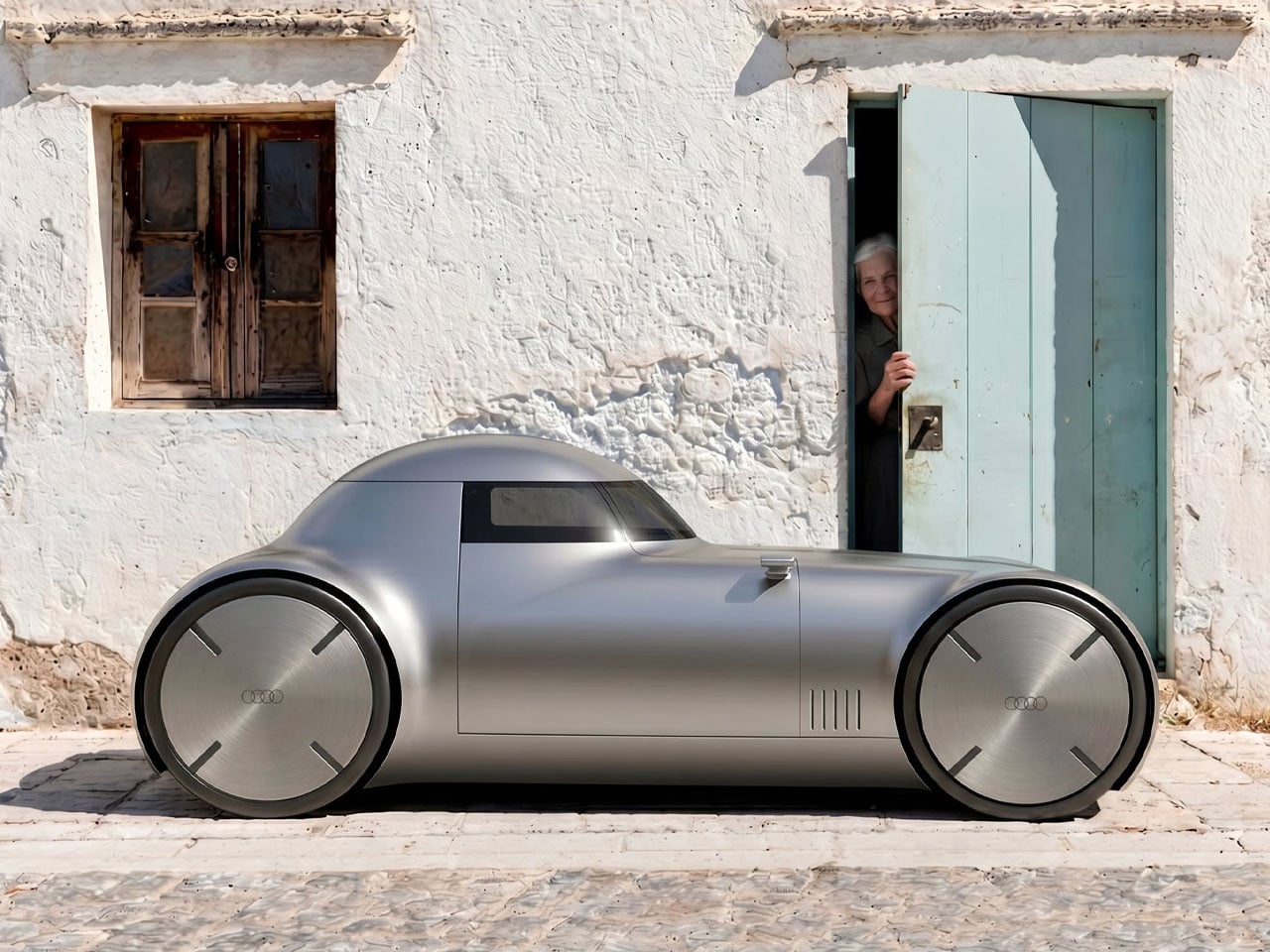
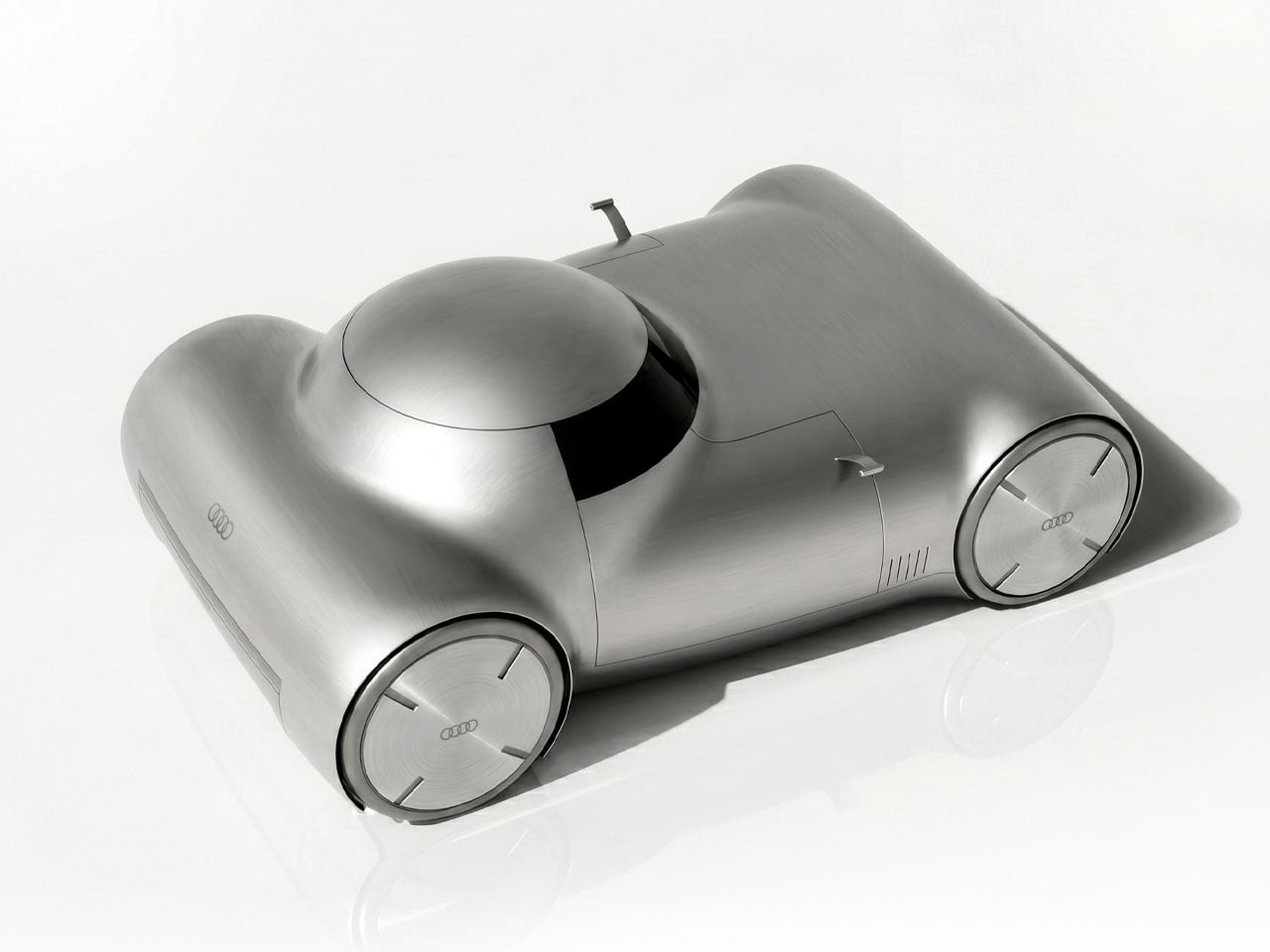
Audi’s futuristic concept vehicles have often pushed the boundaries of automotive design, but independent designer Wini Camacho takes that philosophy even further with the Zero One Sphere. Created as a speculative vision rather than an official Audi project, the electric concept abandons conventional body construction in favor of an eye-catching geometric framework made from four exposed cylindrical tubes. This is an interesting take on what an electric vehicle could look like if designers prioritized structural expression over traditional styling.
Instead of relying on a solid body shell, the Zero One Sphere uses four large tubular elements that define its overall silhouette while appearing to support the vehicle’s key components. This radical approach creates an open, skeletal form that emphasizes lightness and simplicity. The tubes visually connect the front and rear sections, giving the concept an architectural quality that makes it resemble a rolling piece of industrial design rather than a conventional automobile. The exposed structure also leaves much of the mechanical layout visible, reinforcing the idea of honesty in design.
Designer: Wini Camacho
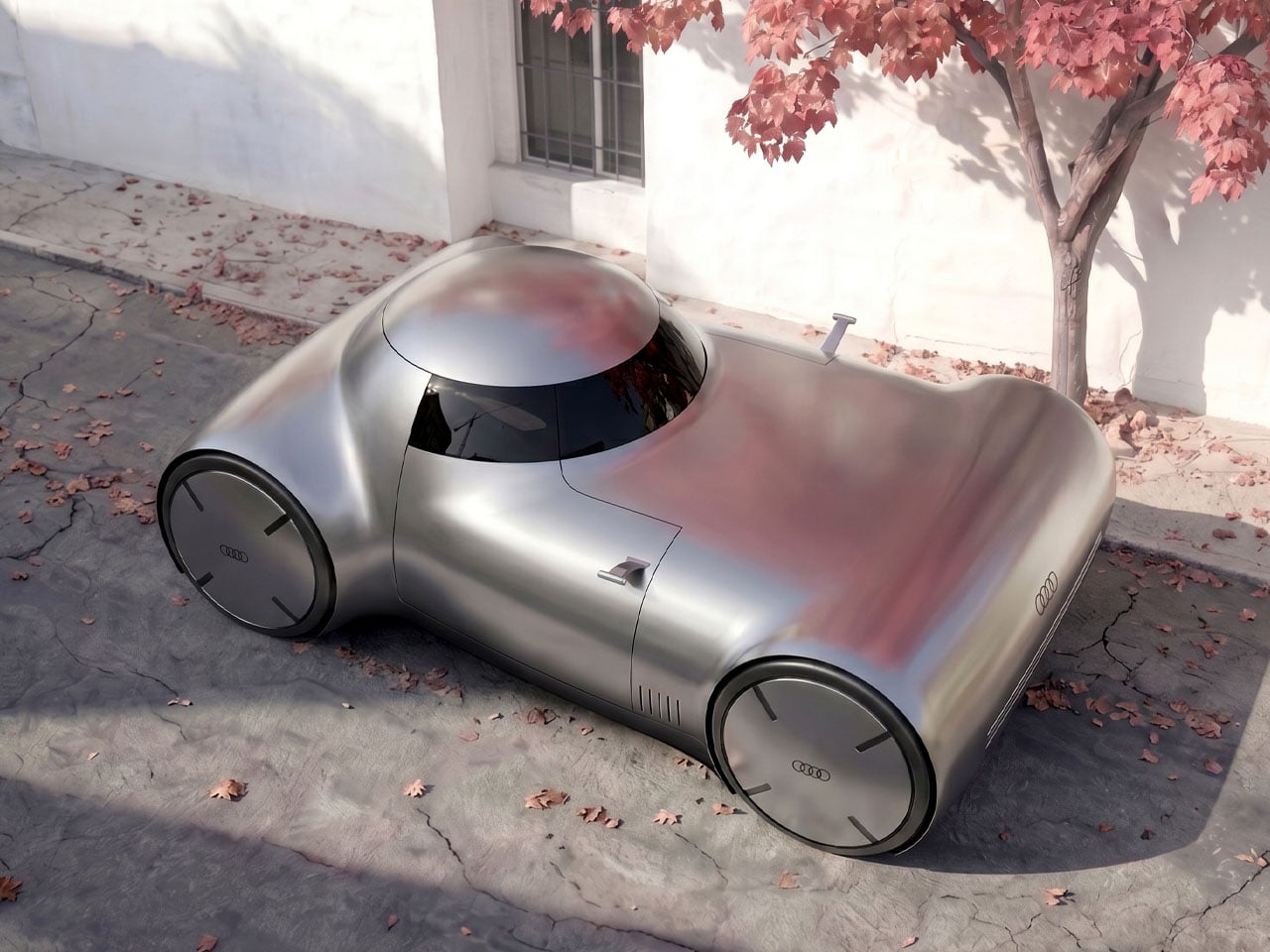
The concept follows Audi’s recent emphasis on geometric purity and minimalist forms, but interprets those themes in a far more experimental manner. Sharp lines and clean proportions replace the layered surfaces typically seen on production vehicles. The signature Audi lighting elements remain recognizable, ensuring the concept retains a connection to the brand despite its unconventional appearance. Thin LED lighting at both ends, a simplified front fascia, and oversized wheels contribute to a futuristic stance while maintaining visual balance.
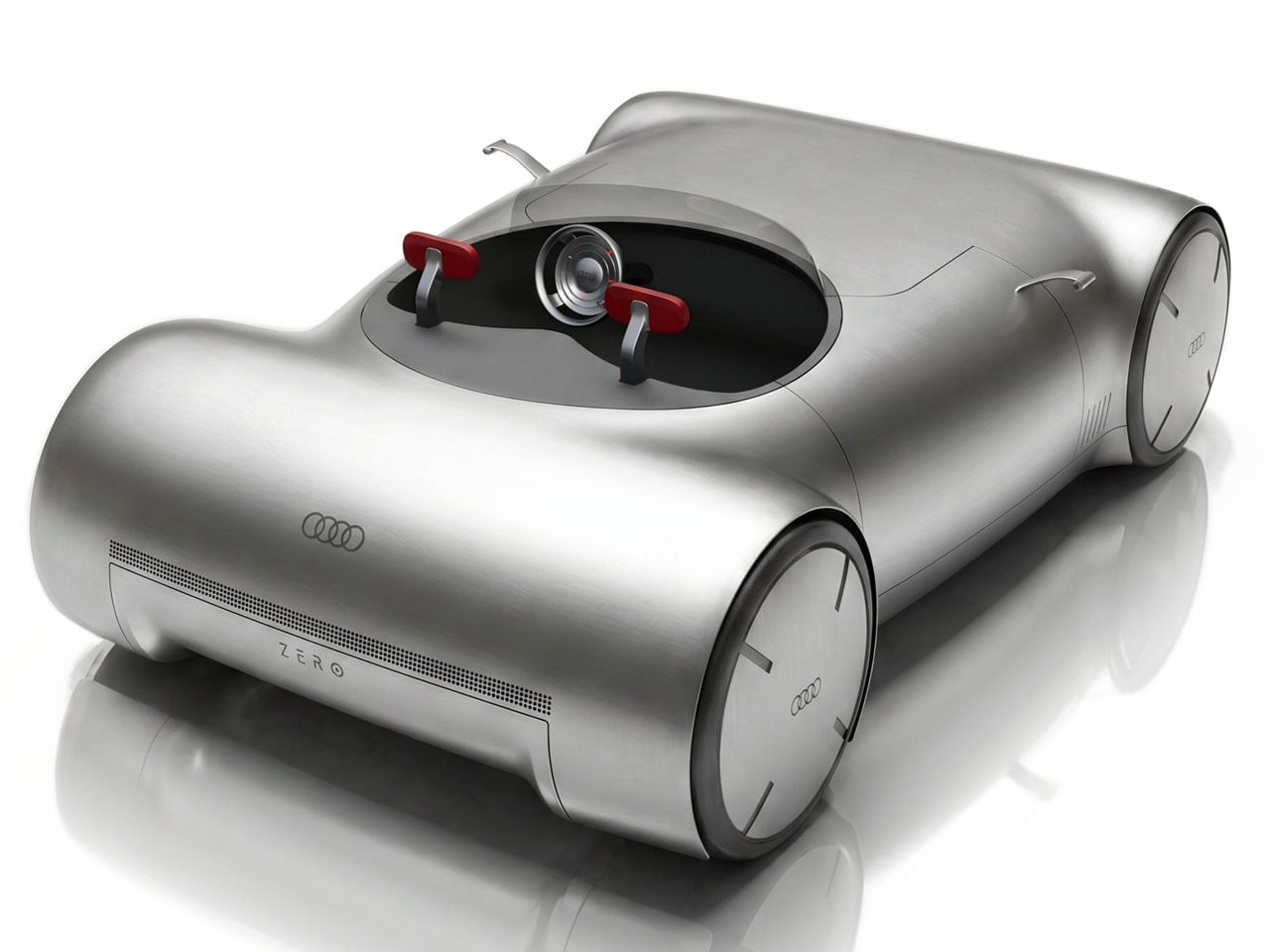
As an electric vehicle concept, the Zero One Sphere benefits from the flexibility offered by battery-powered platforms, which eliminate the need for a large combustion engine and its associated packaging constraints. This freedom allows the design to focus on proportions and structural creativity rather than on accommodating traditional mechanical components. Although technical specifications have not been revealed, the concept serves primarily as a design exercise exploring how future electric vehicles could rethink both form and function.
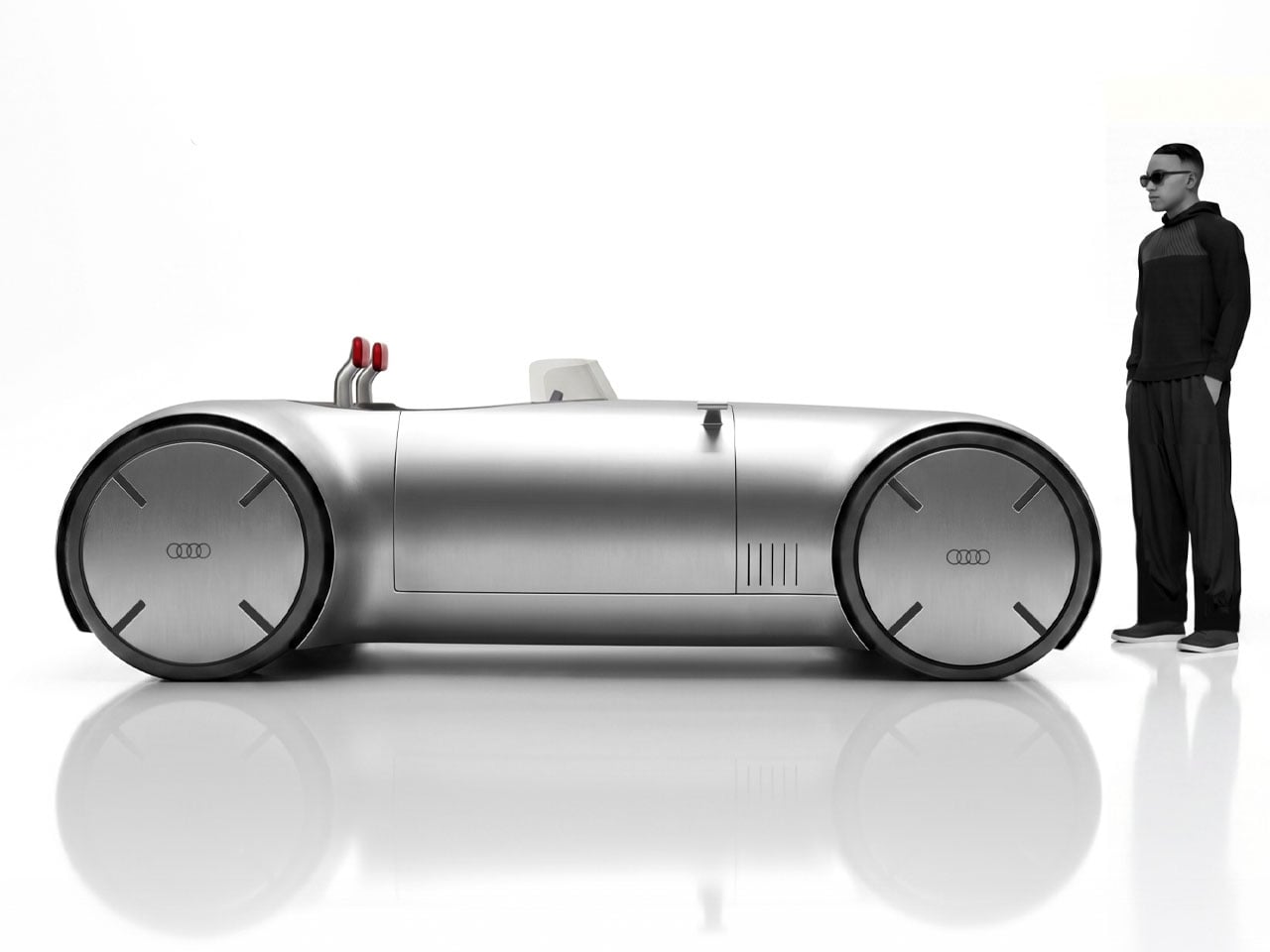
The open architecture also suggests opportunities for modularity and customization. Its visible framework could theoretically allow different body panels, seating layouts, or cargo solutions to be attached without fundamentally changing the underlying structure. While these ideas remain conceptual, they reflect a growing interest in adaptable vehicle platforms that can evolve alongside changing user needs.
Beyond its unconventional construction, the Zero One Sphere raises broader questions about the future direction of automotive design. As electric powertrains continue to reshape vehicle engineering, designers are increasingly free to experiment with new materials and structural concepts. Wini Camacho’s proposal illustrates how this creative freedom can produce designs that challenge long-standing expectations of what a car should look like. Whether such an exposed tubular structure could ever become practical for production is uncertain, but practicality is not the concept’s primary goal!