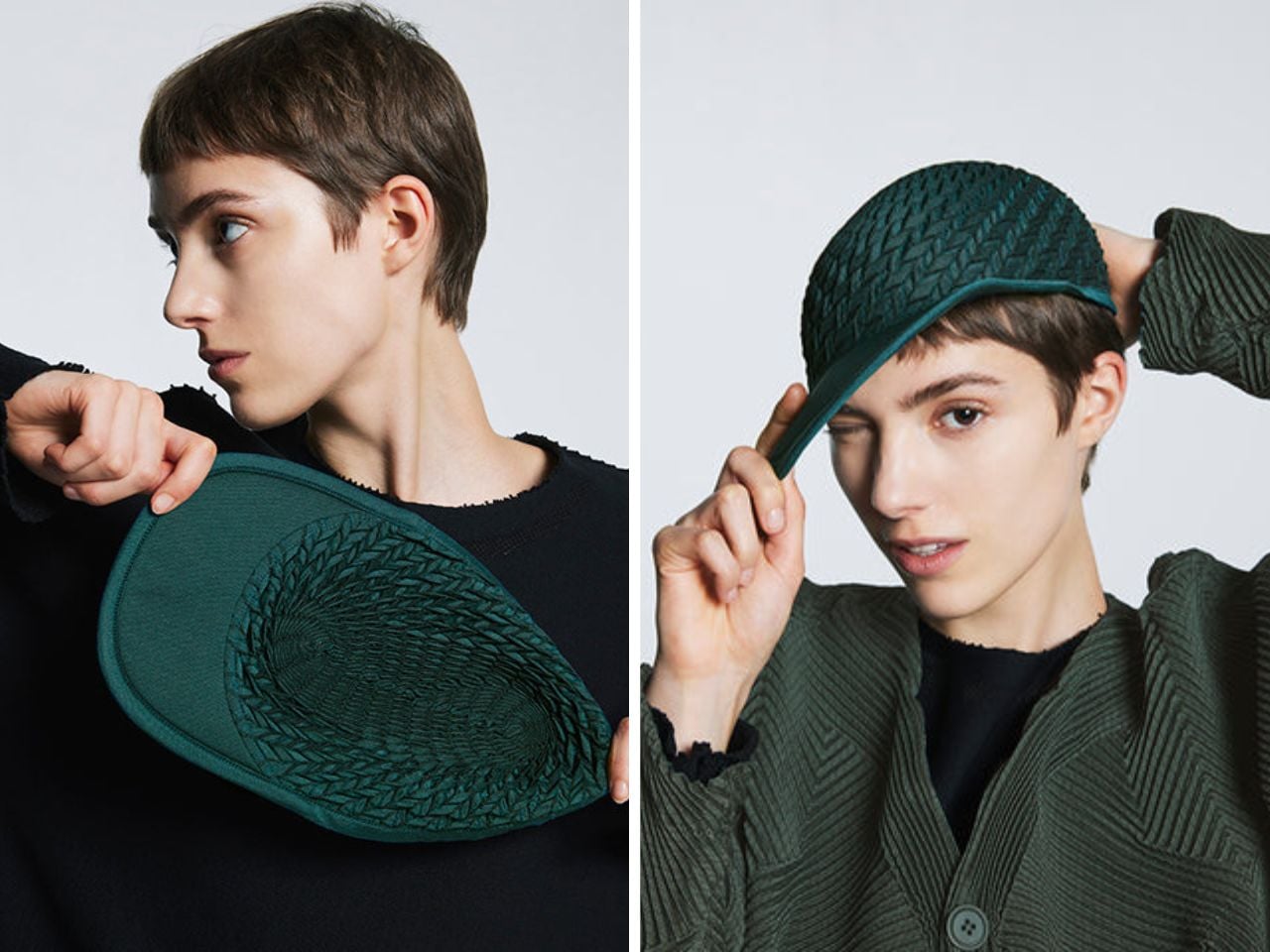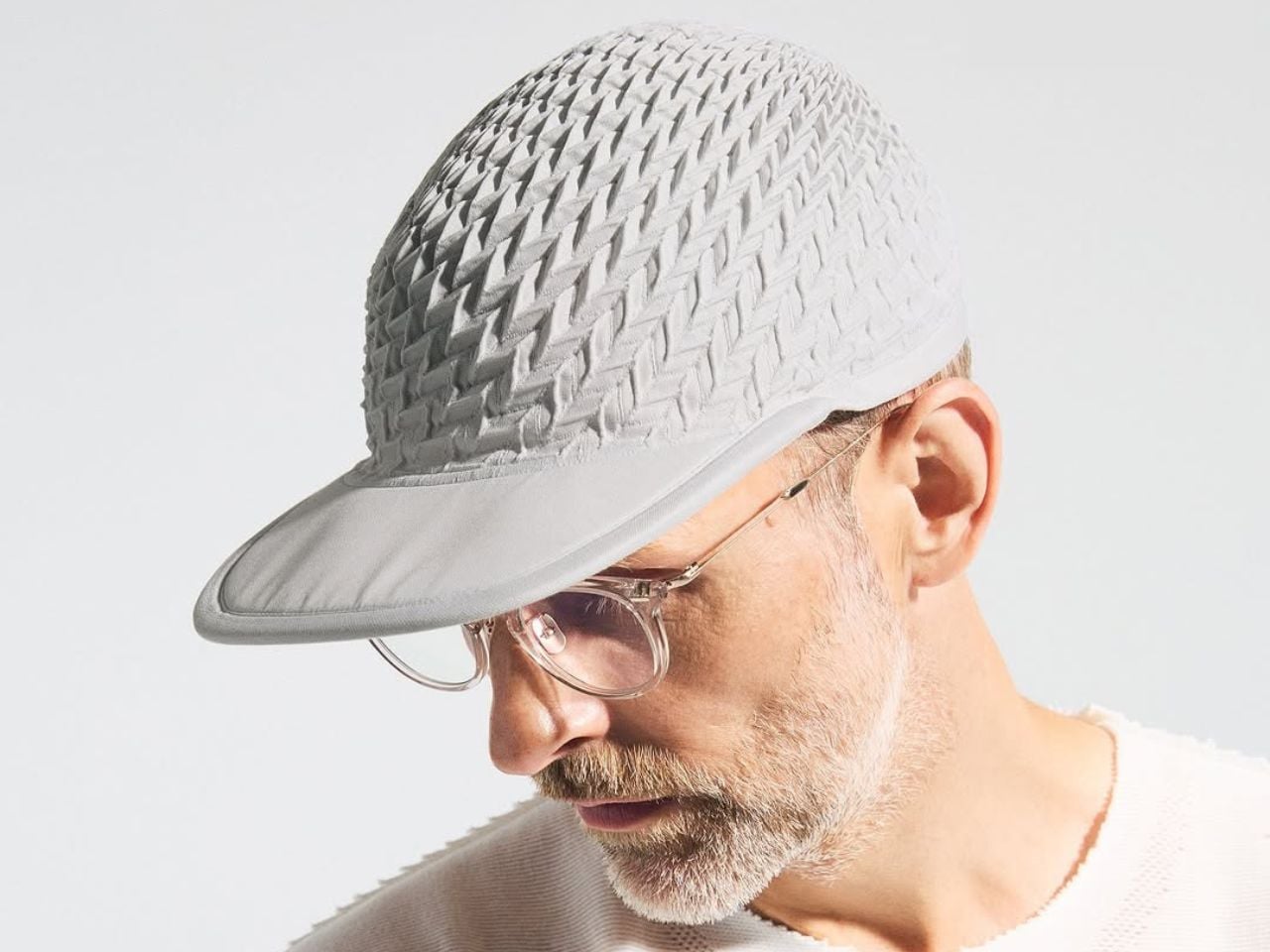
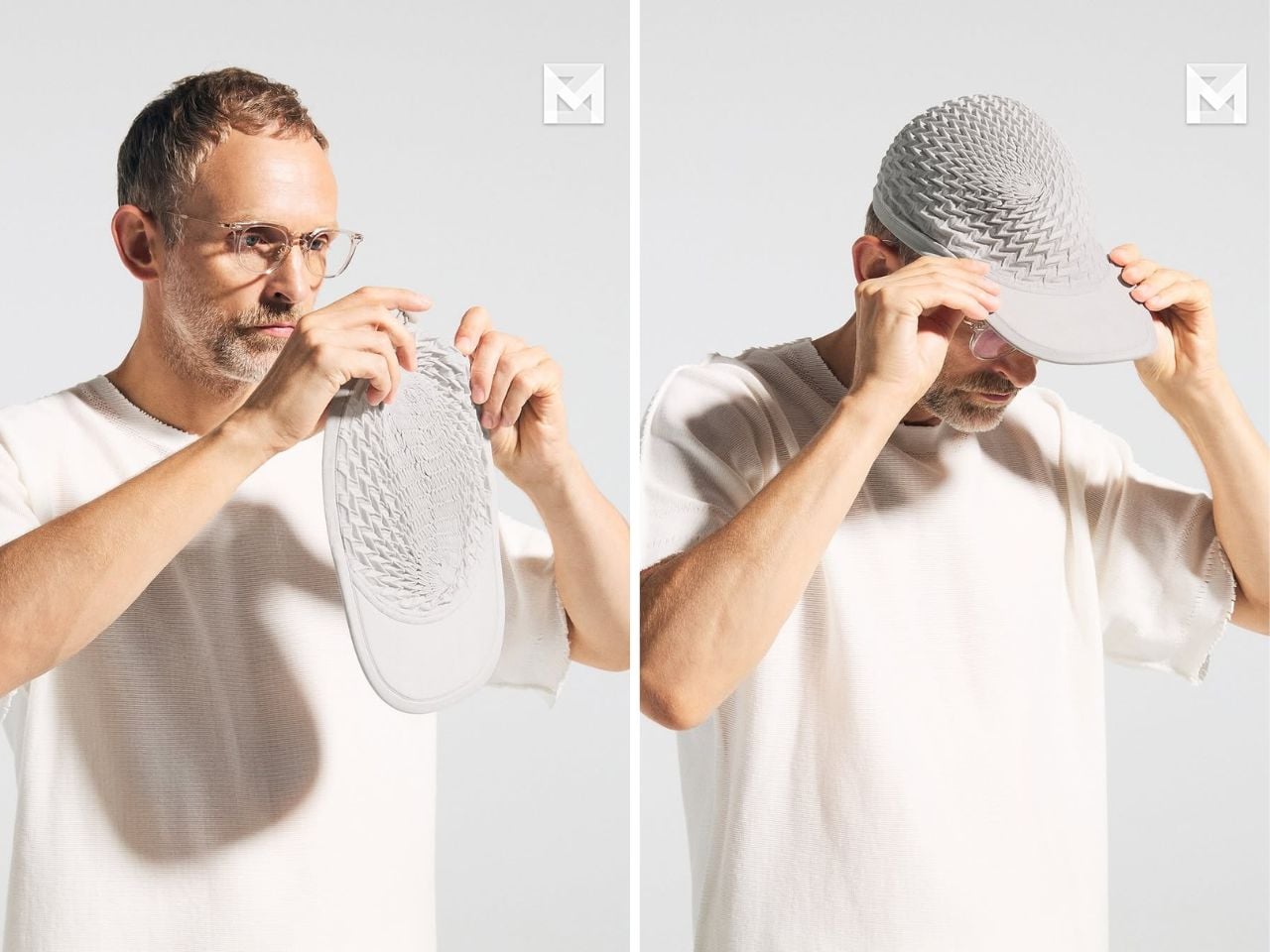
The TYPE-O CAP by A-POC ABLE ISSEY MIYAKE is not just a cap; it is a small, wearable study in transformation. At first, it begins as something surprisingly simple: a flat woven textile. But through the application of heat and steam, the fabric contracts, expands, and reshapes itself into a sculptural three-dimensional form. What was once flat becomes structured. What looked quiet becomes expressive. The result is a cap that feels both technical and poetic, sitting somewhere between fashion, material research, and soft architecture.
At the center of the cap is Steam Stretch, an innovative textile technique developed by A-POC ABLE ISSEY MIYAKE. The fabric is woven using heat-reactive yarns that respond to steam by shrinking in specific areas. This contraction is not random. It is carefully planned through data-driven jacquard weaving, where thousands of threads are arranged to create a structure before the object even visibly takes shape. Once steam is applied, the hidden logic of the weave is activated, allowing the cap to rise from a flat surface into a dimensional form.
Designer: Yoshiyuki Miyamae
This is what makes the TYPE-O CAP so compelling. Its shape is not created by cutting multiple panels and stitching them together in a conventional way. Instead, the structure is embedded into the textile itself. The pleats, curves, and volume emerge from the behavior of the material. The fabric almost seems to remember what it is supposed to become.
Created in collaboration with Nature Architects, the cap is part of a larger exploration into how textiles can transform through programmed material behavior. Nature Architects studied the contraction properties of the Steam Stretch yarn and developed algorithmic methods to generate weave patterns that control how the fabric changes shape. In the case of the cap, this results in a geometric pleated structure that expands around the head, adapting to the wearer while maintaining its sculptural character.
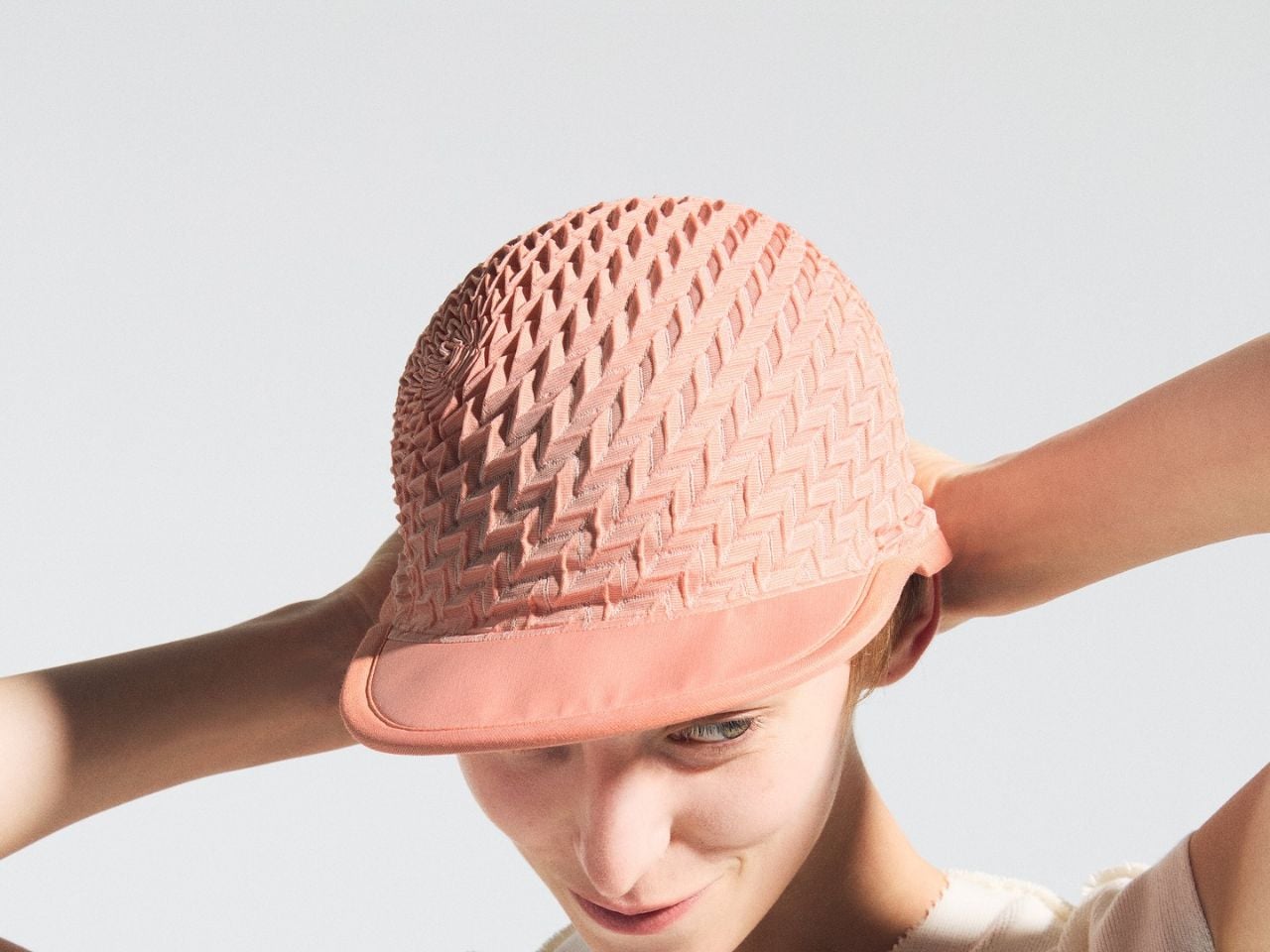
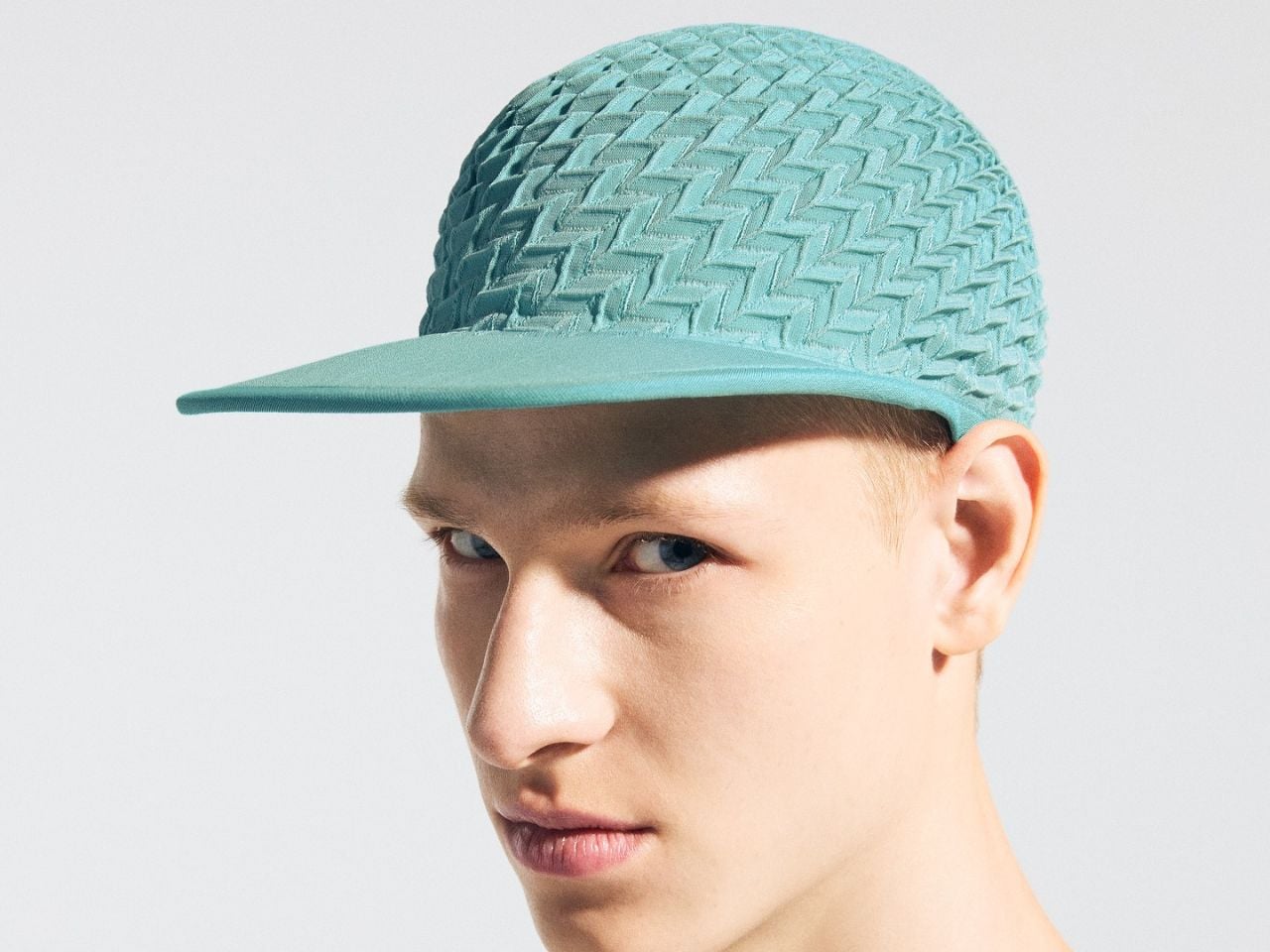
Despite its experimental process, the cap remains thoughtfully functional. It is unisex, washable, adjustable, and flat-packable, making it as practical as it is innovative. A drawcord at the back allows the wearer to fine-tune the fit, while the pleated structure gives the cap a flexible, adaptive quality. It can also be dyed in various colors, giving the same material system different expressions depending on finish, tone, and styling.
What is especially interesting about the TYPE-O CAP is how it makes advanced material technology feel approachable. It is not a dramatic runway object that only exists as a concept. It is an everyday accessory, but one that quietly challenges how we think about clothing construction. The cap suggests a future where garments may not need to be assembled from many separate cut pieces. Instead, they could be woven flat, transported efficiently, and transformed into complex forms through heat, steam, or other triggers.

While the cap is the focus here, the possibilities of this material system extend far beyond headwear. The same Steam Stretch and data-driven weaving approach can be used to create other garments with complex pleats, adaptive silhouettes, and reduced sewing requirements. It also opens up possibilities beyond fashion, including furniture, lighting, interiors, and even architectural applications. A textile that can shift from flat to dimensional has enormous potential in a world increasingly interested in compact production, responsive materials, and more efficient design systems.
The TYPE-O CAP captures that potential in a beautifully contained form. It is small enough to be worn casually, but conceptually large enough to suggest a different way of making. It turns fabric into structure, steam into a design tool, and a cap into an object that feels almost alive.