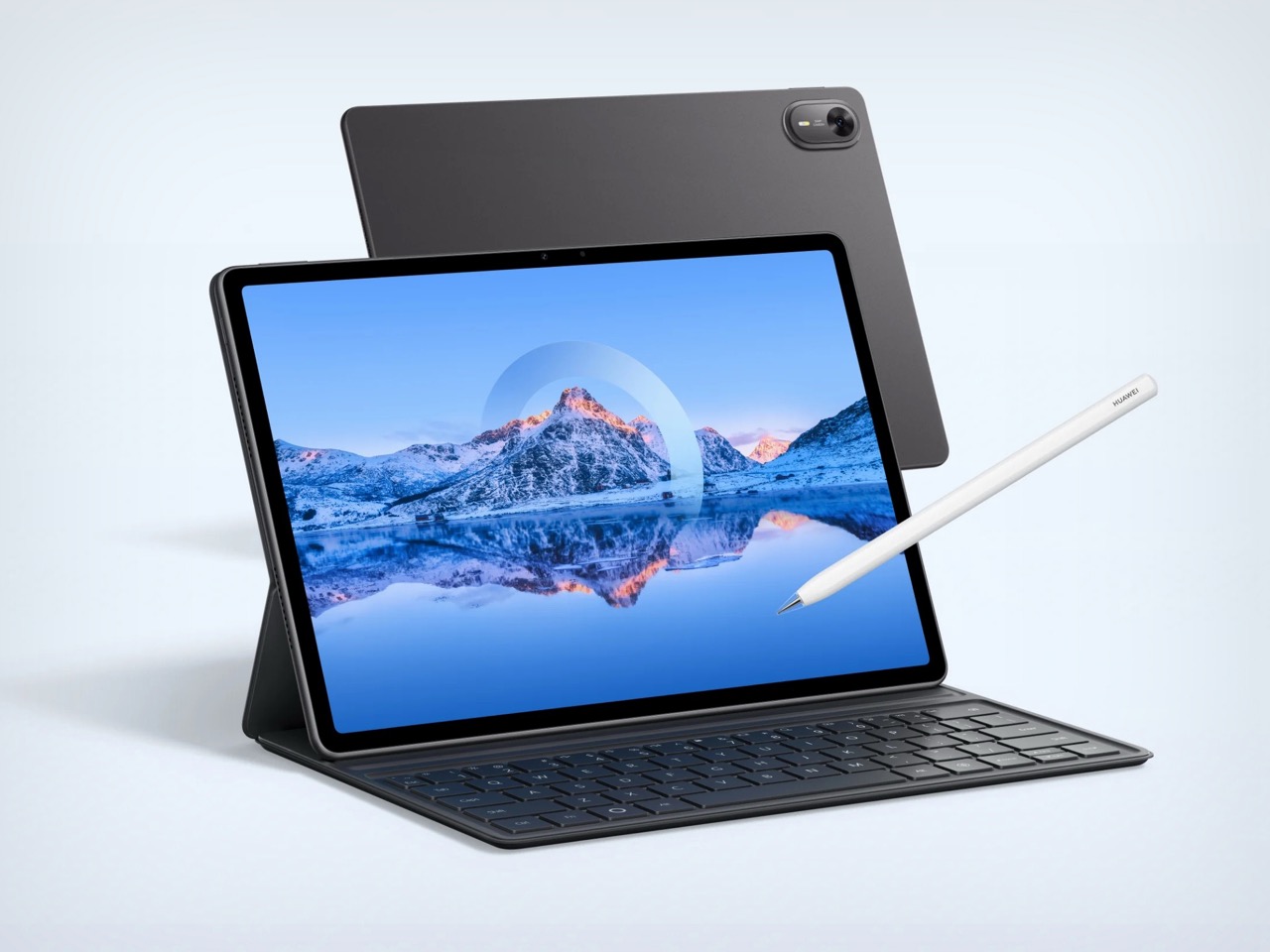

Business tablets have a reputation, and it involves rubber bumpers, thick bezels, and zero personality. Panasonic’s Toughbook and Samsung’s Galaxy Tab Active are built for the kind of workday that might involve a tumble off a forklift, which is great until you have to carry one around all day. Huawei went the other way with the Qingyun C7 (3rd Gen), a work tablet that’s 0.23 inches (5.9 mm) thick and weighs 1.22 pounds (555 g). That’s slimmer than Apple’s 13-inch iPad Air (6.1 mm), the tablet most of us secretly wish IT had handed us. Turns out fleet hardware can have a waistline after all.
The C7 debuted at the China Hi-Tech Fair in Shenzhen on November 26 as Huawei’s flagship tablet for government and enterprise buyers. It runs HarmonyOS 7, with AI office tools ranging from meeting transcription to a research assistant that writes structured reports. The 12-inch, 144 Hz display has a 3:2 aspect ratio geared toward document work, and Huawei rates the 10,100 mAh battery for up to 16 hours of heavy use. Huawei hasn’t announced pricing, and the Qingyun line sells through business channels in China. So much for sneaking one onto your company’s next hardware order.
Designer: Huawei
Huawei’s MatePad Air, Now With a Corporate Dress Code
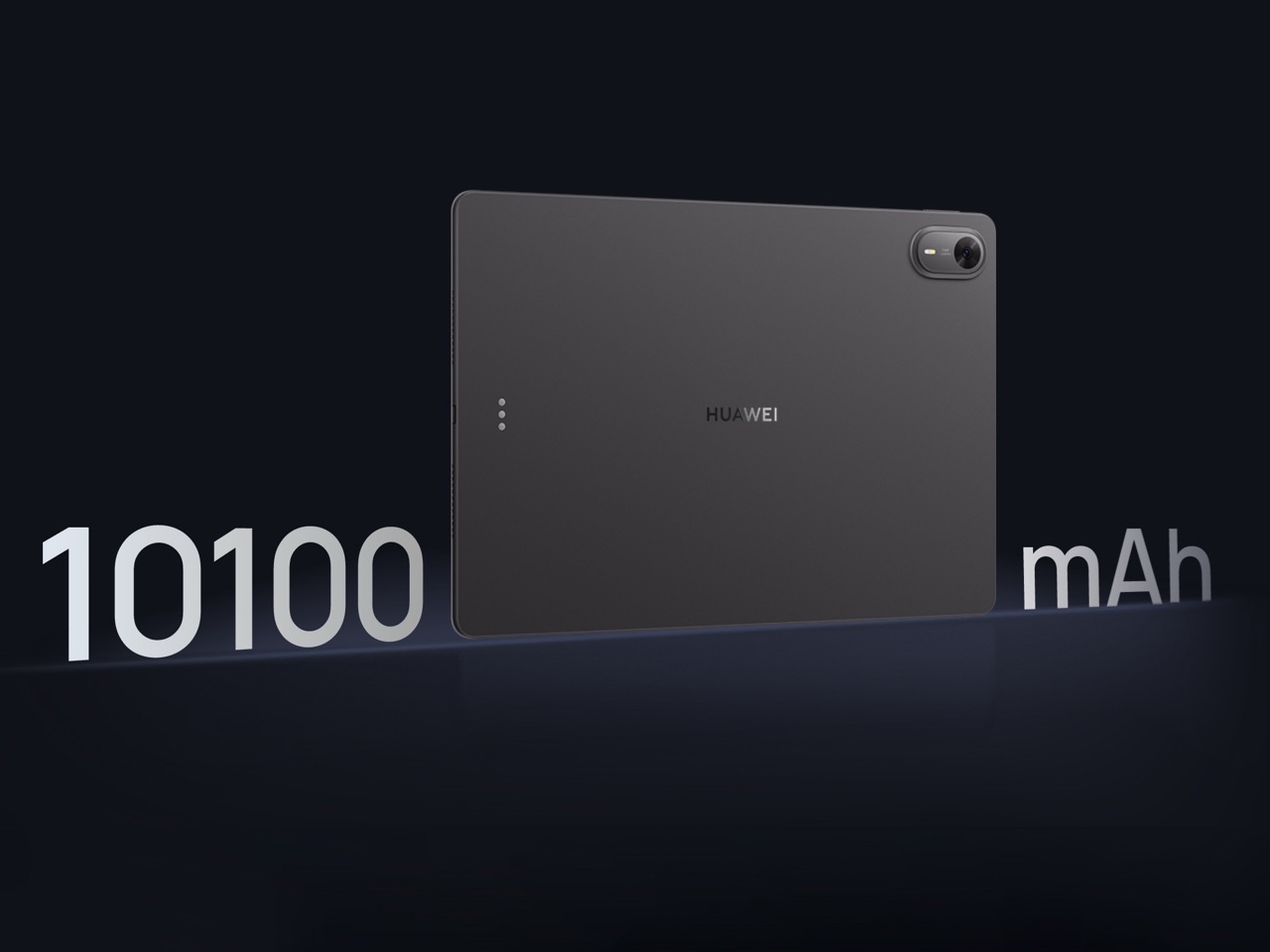
The C7 borrows its chassis from the 2025 MatePad Air, sold globally as the MatePad 12 X. The 12-inch, 2800 x 1840 display, 10,100 mAh battery, and 66 W charging carry over. Even the cameras match, with a 50 MP sensor on the back and an 8 MP one up front. Huawei trimmed a few things for the office version. Peak brightness drops from 1,000 nits to 900, RAM goes from 12 GB to 8 GB, and the color menu is down to one entry: Deep Space Gray. Huawei hasn’t named the chip, which feels right for a product sold to people who sign NDAs.
Reusing last year’s hardware is an old enterprise move. Samsung’s Galaxy Tab Enterprise Editions follow a similar playbook: familiar consumer hardware with longer support windows and extra management tools. To the people supporting a thousand tablets, having the same hardware on every desk can matter more than having the newest screen. Seen that way, it’s no surprise the C7 skipped the OLED screen and 5.3 mm body of the newer MatePad Air 2026. Sticking with a familiar chassis can simplify support and keep costs down. Boring in all the right ways.
A Screen Shaped Like the Paperwork on It
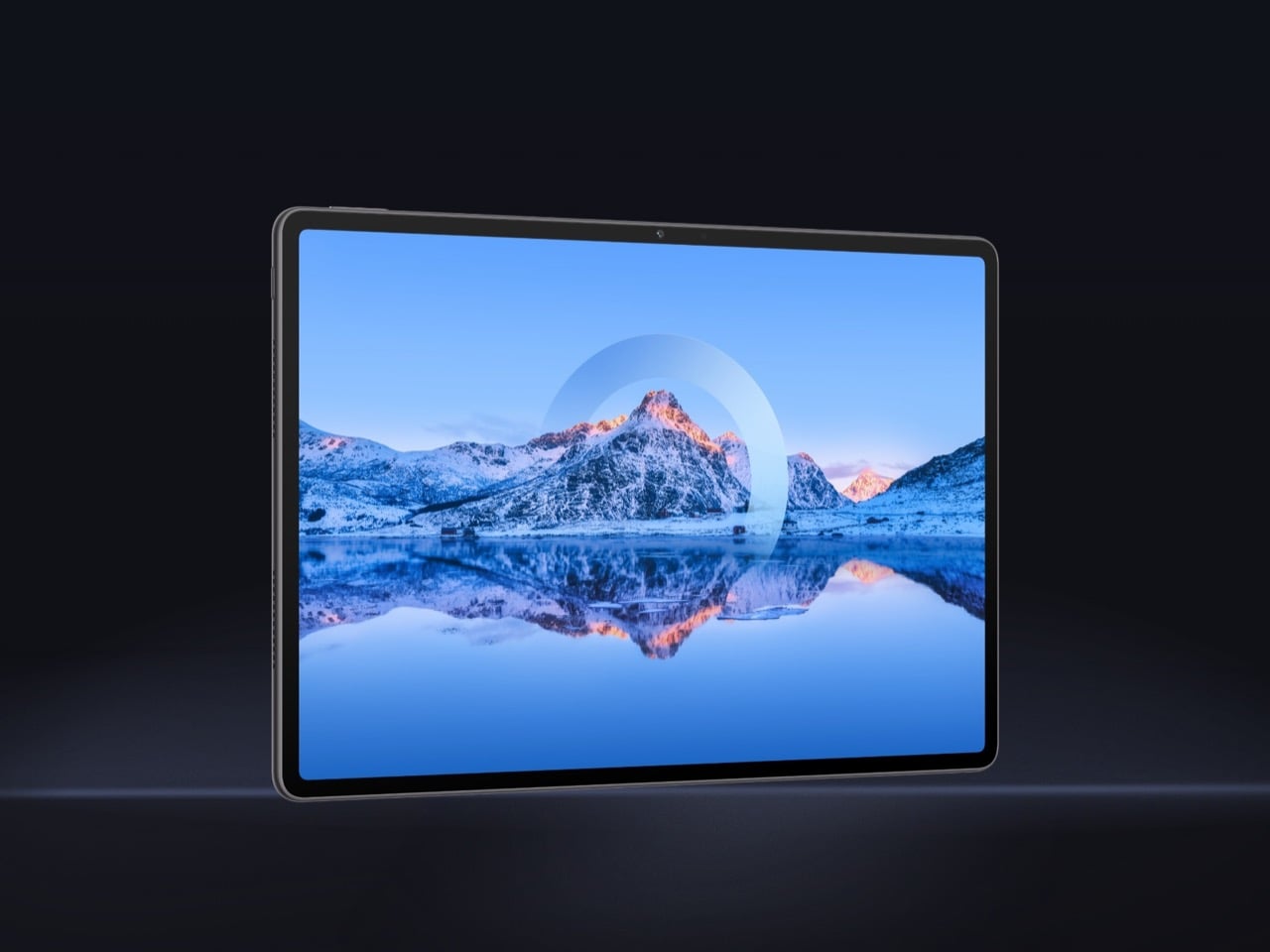
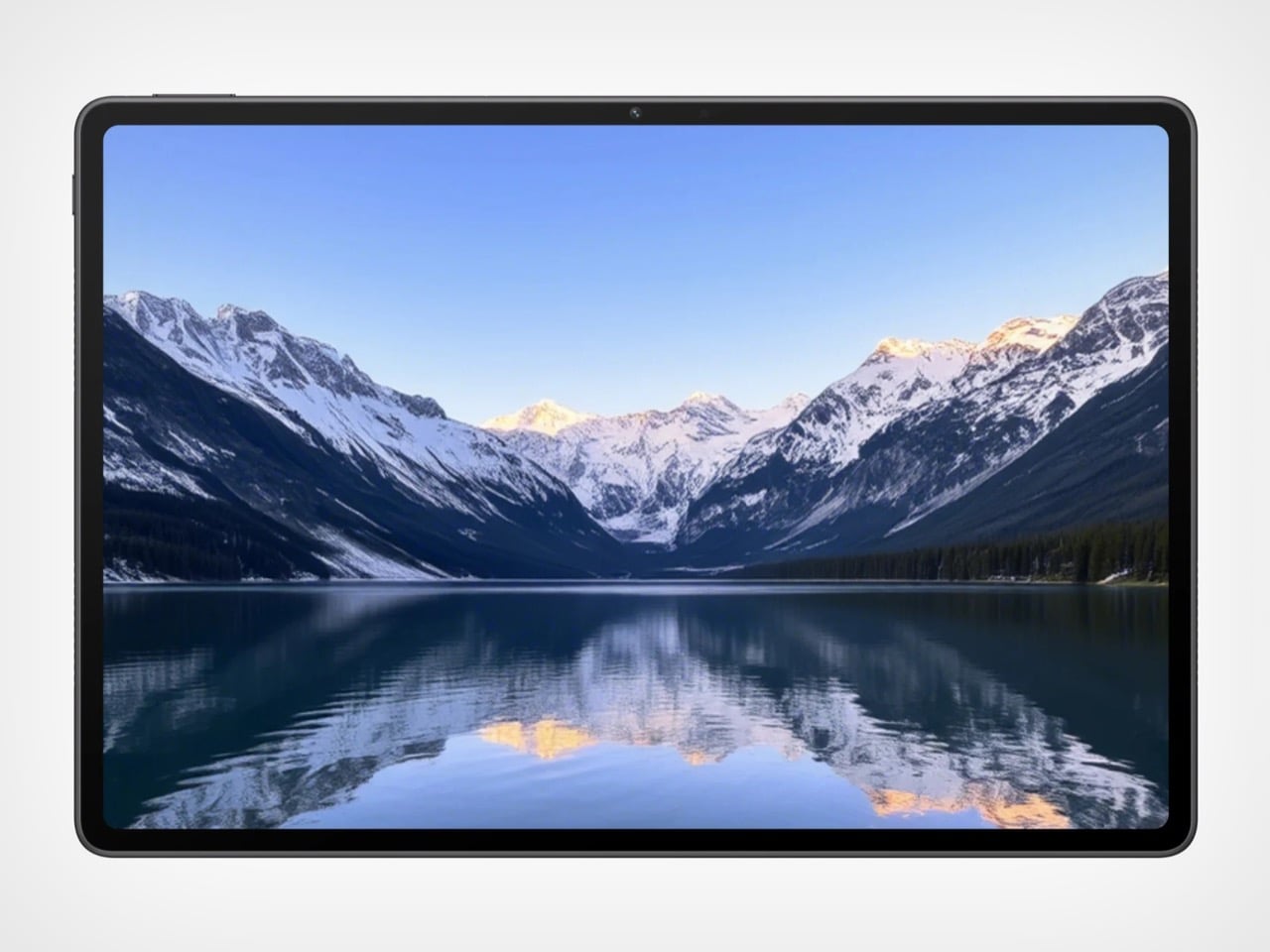
Plenty of Android tablets use a 16:10 screen, a ratio that loves movies and hates PDFs. The C7’s taller 3:2 display comes closer to the proportions of US Letter paper and leaves more vertical room for contracts and spreadsheets. Microsoft made much the same case for 3:2 with the Surface Pro 3 back in 2014. The panel refreshes at 144 Hz, and Huawei lists P3 color coverage and a Delta E below 1. Huawei hasn’t mentioned the MatePad Pro 12‘s PaperMatte anti-glare finish for this model, a small shame for a tablet built around reading.
Huawei bills its document translation tool as an industry first. It’s designed to preserve the original layout and show both versions side by side, so a translated contract still looks like a contract instead of word soup. Huawei’s Celia assistant (Xiaoyi in China) can transcribe meetings, pull out action items, and compile structured reports in its deep research mode. For editing documents and mapping ideas, there’s PC-grade WPS Office and Wondershare’s mind-mapping app. Add the M-Pencil Pro and Smart Magnetic Keyboard, both sold separately, and the C7 starts to do a convincing laptop impression.
Your IT Department Gets the Keys
The C7 ships with built-in mobile device management backed by more than 200 security APIs. Admins can switch off the camera, Bluetooth, and USB, set which apps and websites are allowed, and keep business apps running in the background whether you like it or not. Huawei’s HEM platform handles bulk setup, preinstalled software, and custom home screens. It can also remotely lock the tablet someone left in a taxi. Wireless options include what Huawei calls Wi-Fi 7+, plus Bluetooth 6.0 and NearLink, Huawei’s own short-range wireless standard. The C7 can also borrow a network connection from up to three Huawei phones at once, a handy trick for a hotel conference room.
Huawei already has a desktop to go with it. Earlier in November, it launched the Qingyun HM650, a HarmonyOS desktop it bills as China’s first PC built entirely from Chinese-made components. With both devices, Huawei can pitch government offices a work setup without Windows, Android, or Intel. The familiar options for US readers are the iPad with Apple Business Manager and the Galaxy Tab with Samsung Knox. Huawei’s neat trick was making its business tablet look like the one you’d pick for yourself.