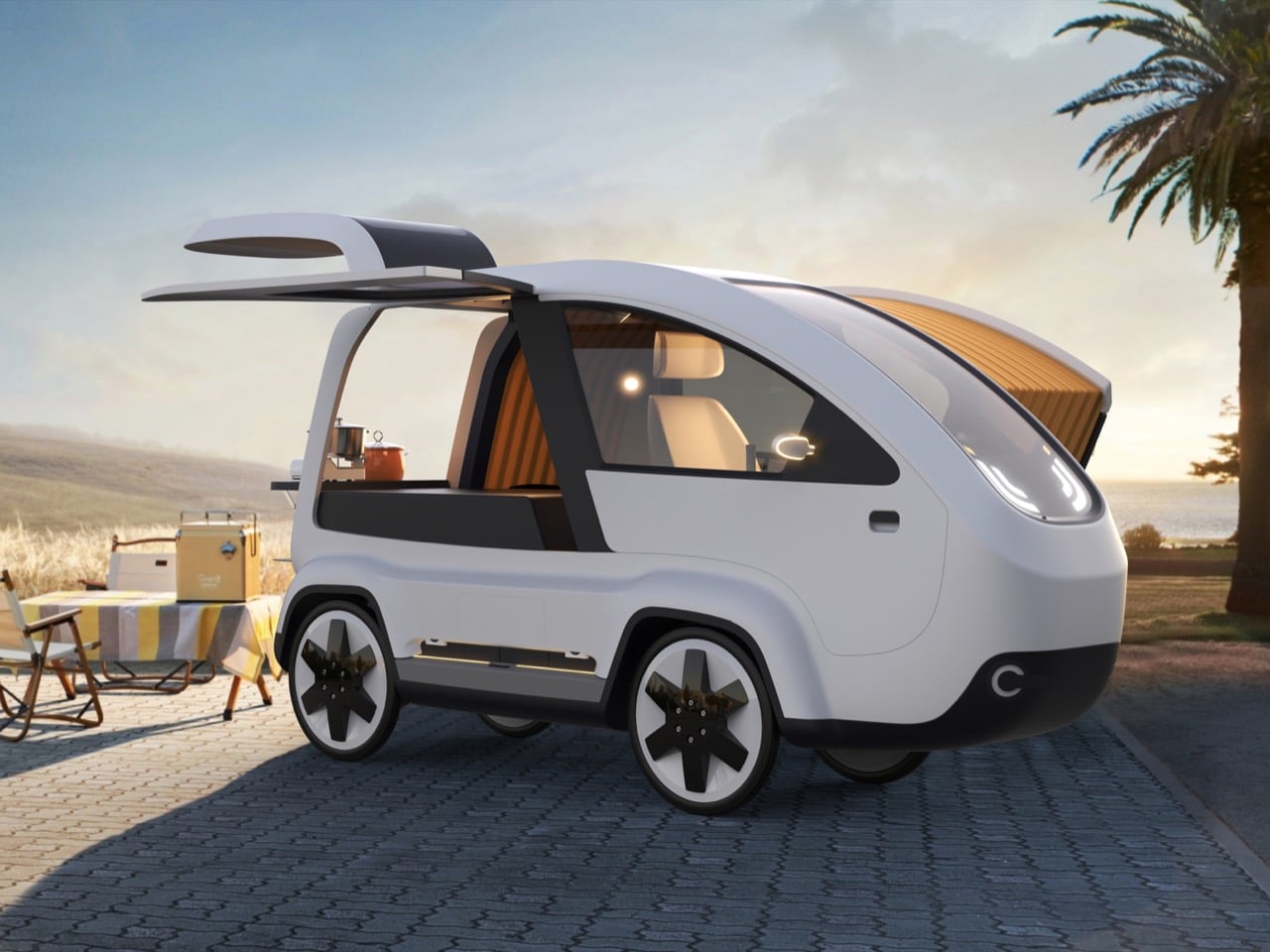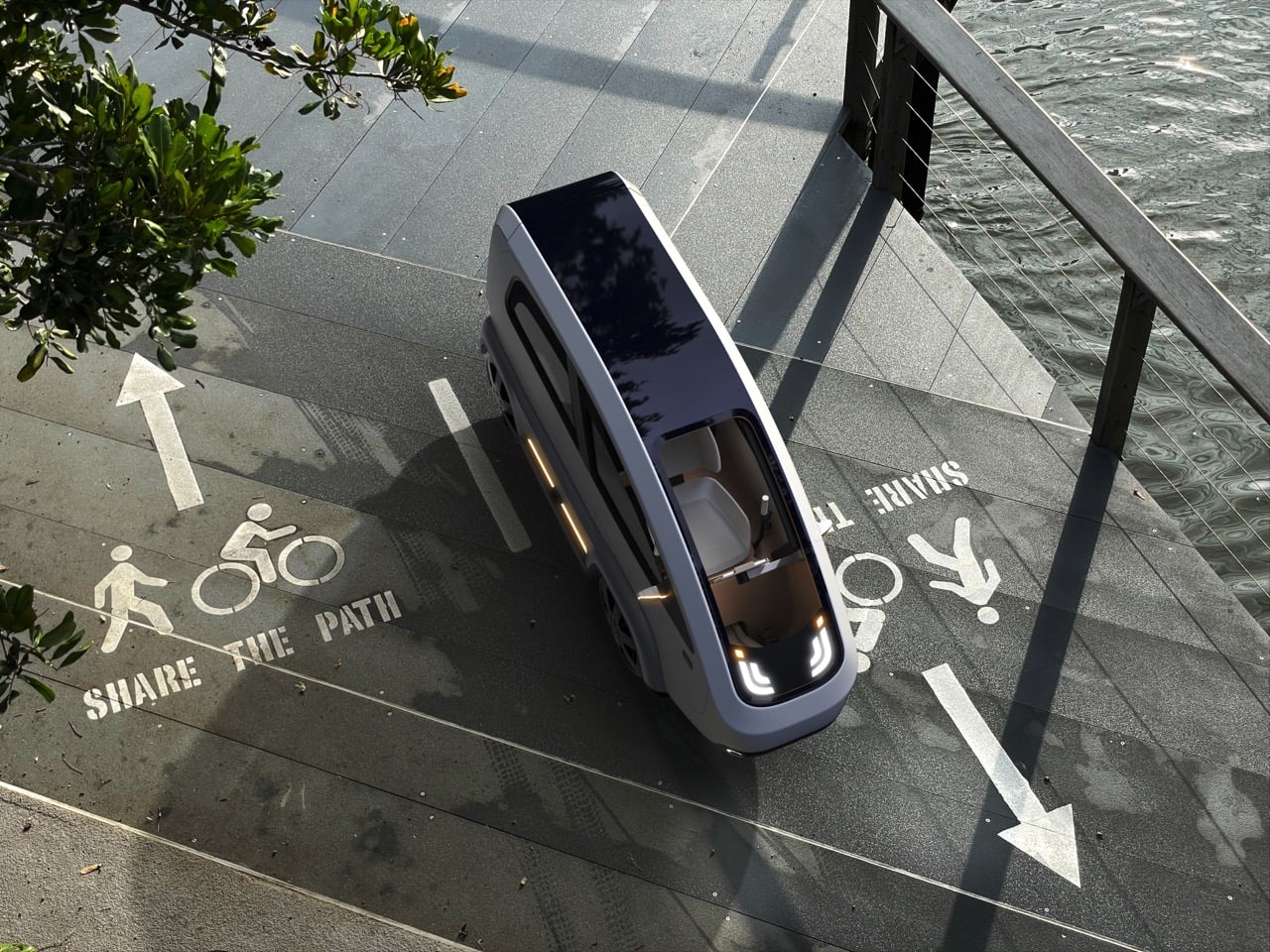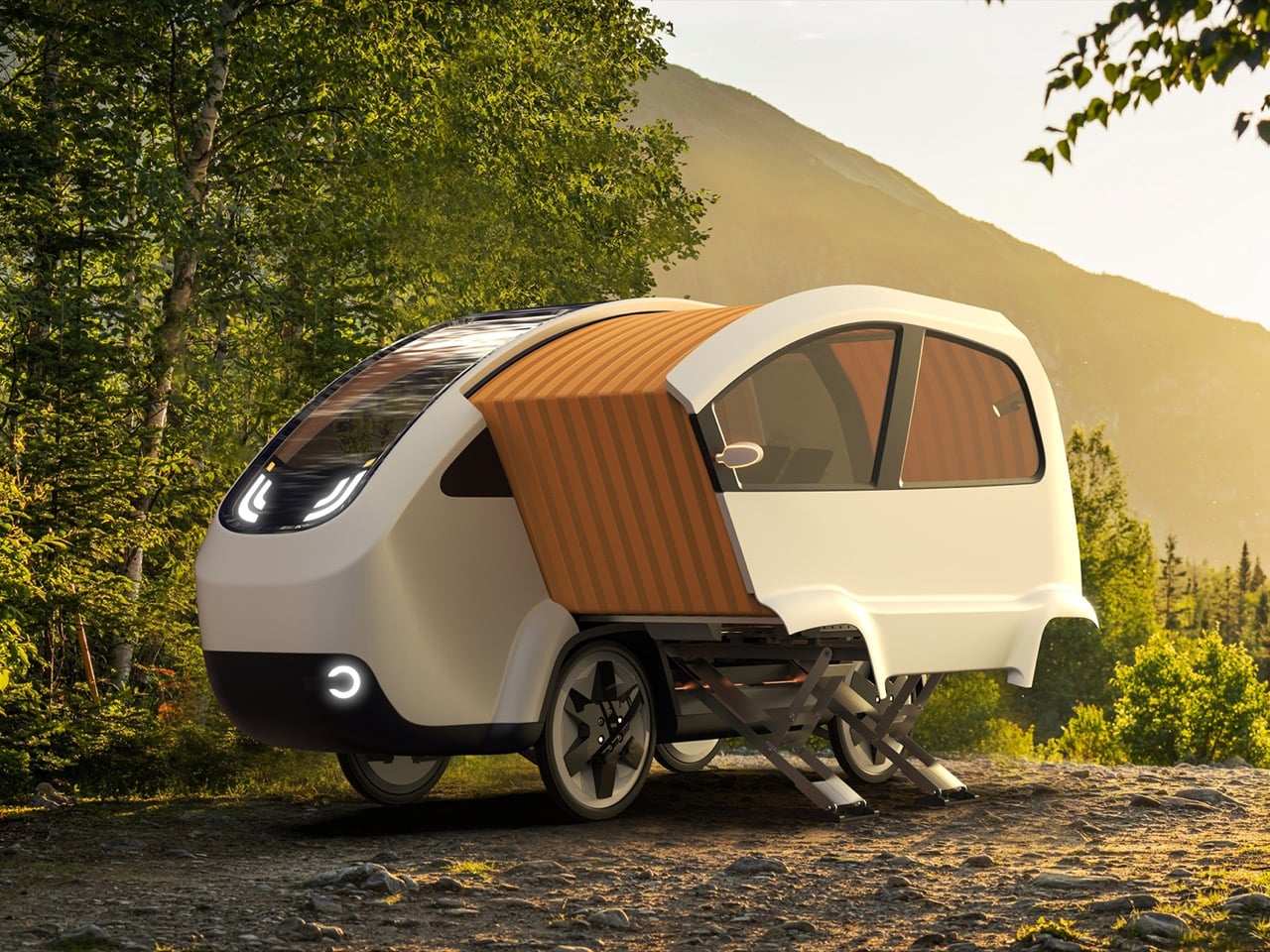

Picture pedaling into a campsite, parking your ride, and watching the back unfold like a pop-up book into a kitchen, a dining nook, and a place to sleep. That is the pitch behind Huuselox, a three-wheeled pedal camper recognized by the European Product Design Award. I will be honest, another box towed behind an e-bike rarely makes me stop scrolling. Huuselox goes with something closer to origami, a pleated orange and white panel that expands the cabin’s rear end into sheltered living space. It is a strange-looking thing, and I mean that as a compliment.
Designer Yu-Chang Wu dreamed this up as his bachelor’s thesis at Hochschule Hannover back in 2022, years before its EPDA recognition. The brief was simple on paper and harder in practice: let someone cycle from one campsite to the next with their shelter built into the ride. Inside, a reclined seat, a flip-out wooden table, and a sleeping berth share the compact cabin. Outside, the rear awning shelters a cooking station, stove included, beneath that same folding skin. Four years between thesis defense and award podium is a long gap, but apparently good ideas know how to wait.
Designer: Yu-Chang Wu
An Accordion Fold Opens Up the Campsite Kitchen
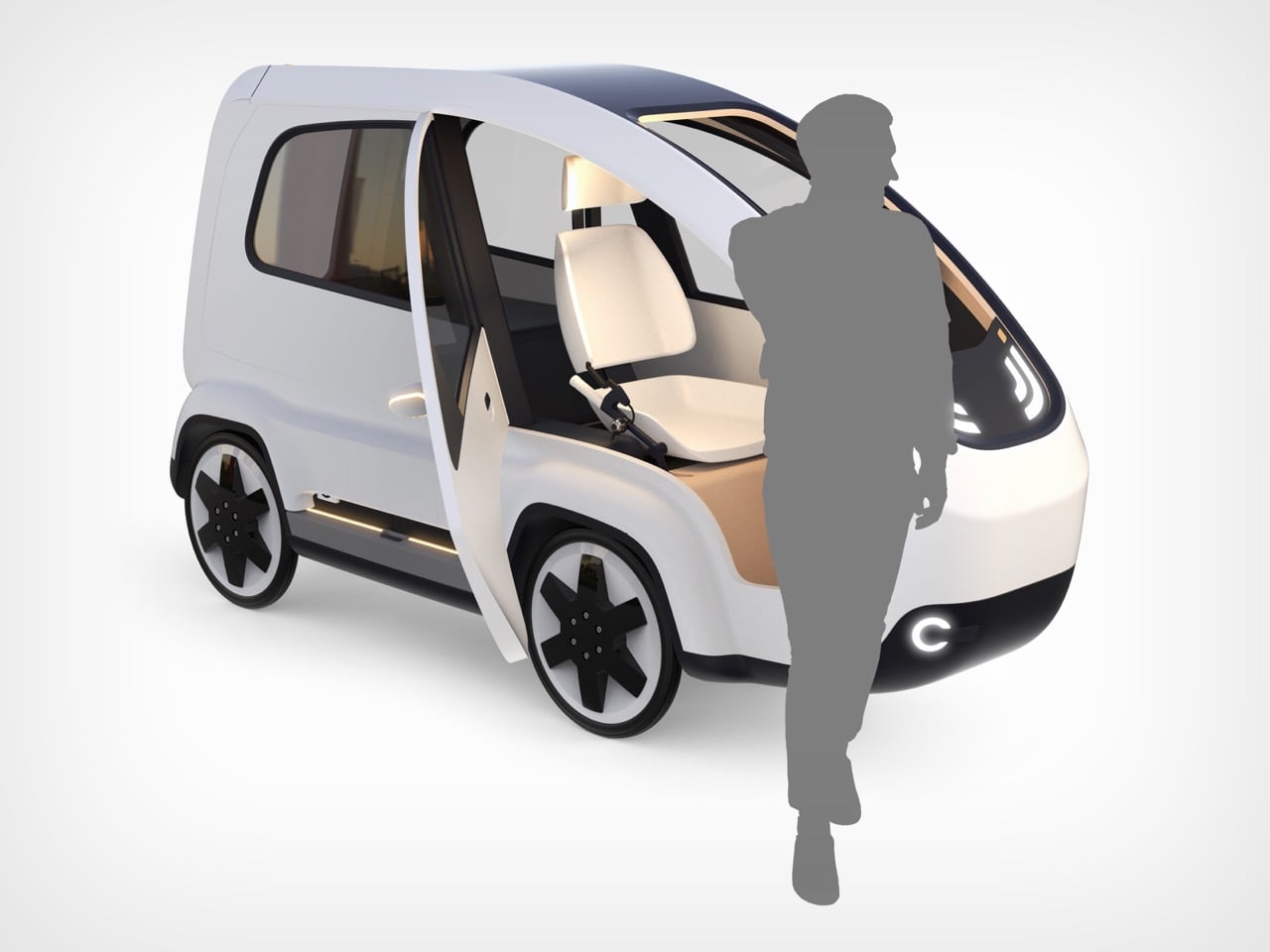
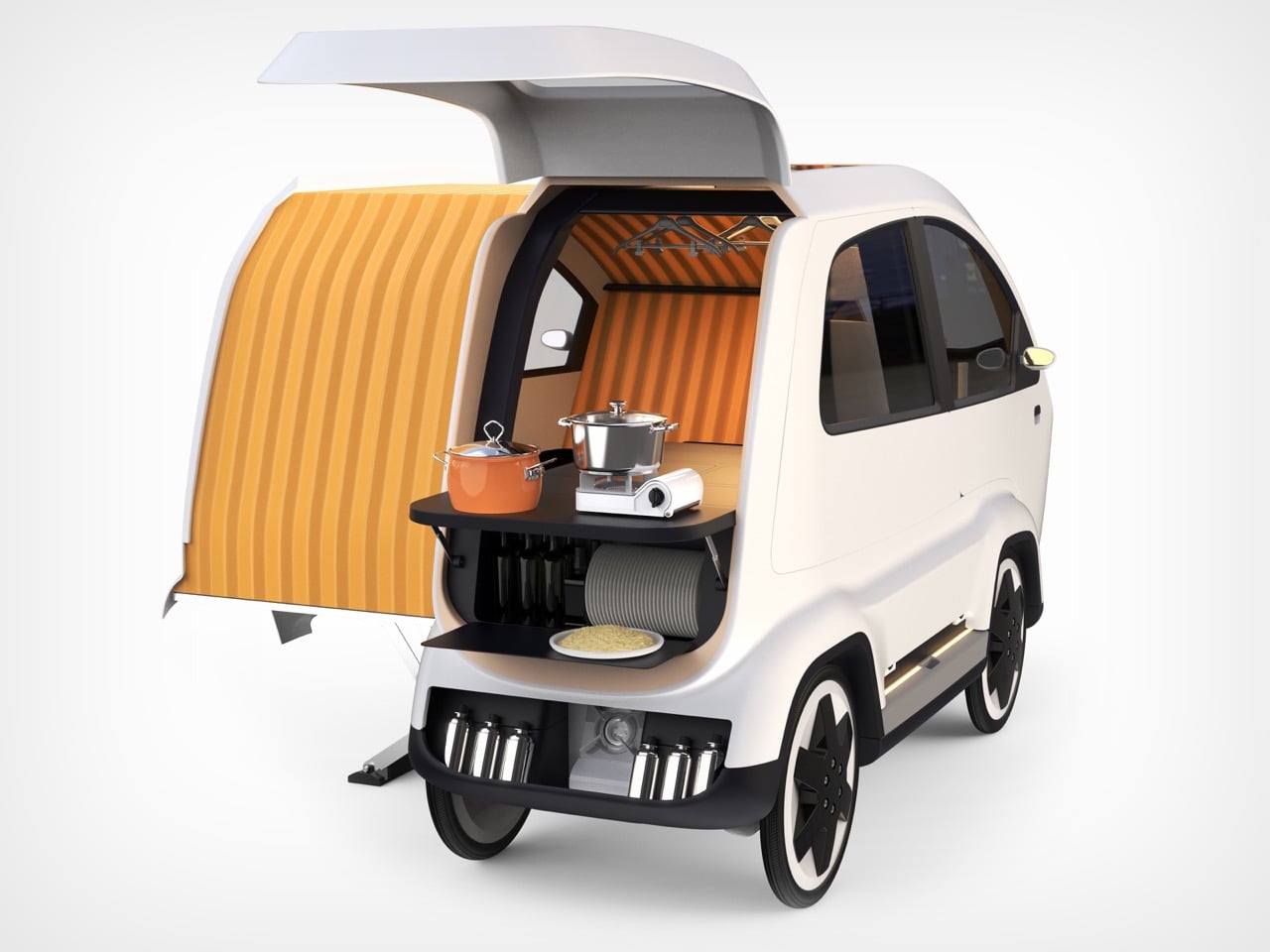
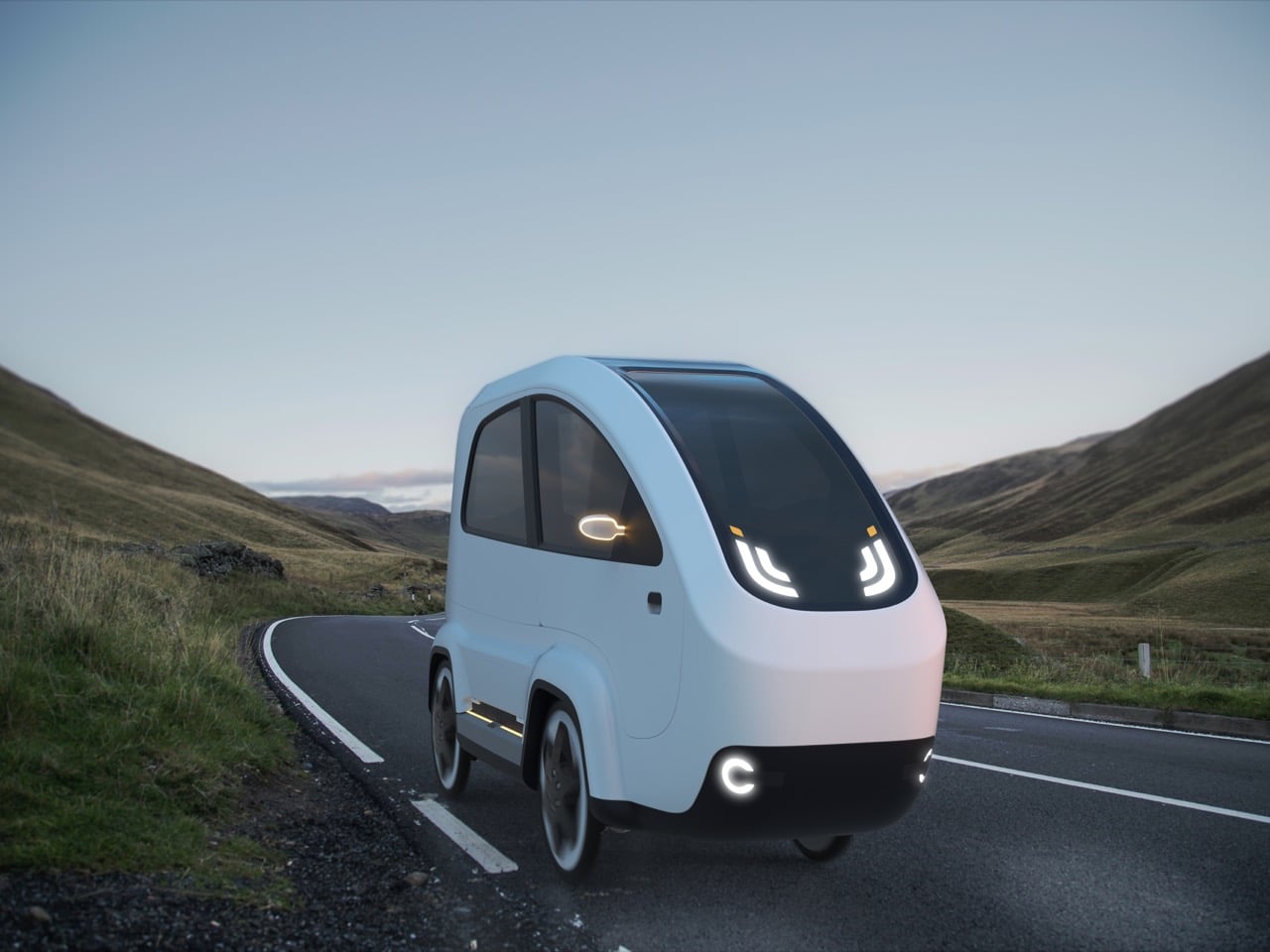
That rear panel carries almost the entire design story. Folded shut, Huuselox reads as a teardrop-shaped pod with a wraparound windshield and running lights that would look at home on a concept microcar. In the renders, the orange and white skin fans open in pleats, using the folding logic of a bellows camera or an accordion to shelter a stove, a fold-down counter, and stashed cookware. The idea is to turn the rear end into a sheltered galley without pitching a separate kitchen canopy. The cabin doors lift up and out too, rising like a beetle cracking open its wing cases.
Hard-sided bike campers offer another way to solve the space problem, borrowing the sliding panels of full-size RVs. The Alpencamper Eco Slide Out uses that approach to expand its tiny interior enough for a double bed. Huuselox folds a flexible skin instead, closer to a canvas awning than anything on drawer rails. That choice makes sense for a vehicle someone still has to pedal, although the renders cannot tell us what the assembly weighs. It also gives Wu room to shape the expanding section around the campsite setup, which helps explain why the rear looks like a lantern rather than a drawer.
A Sleeping Berth Behind the Cockpit
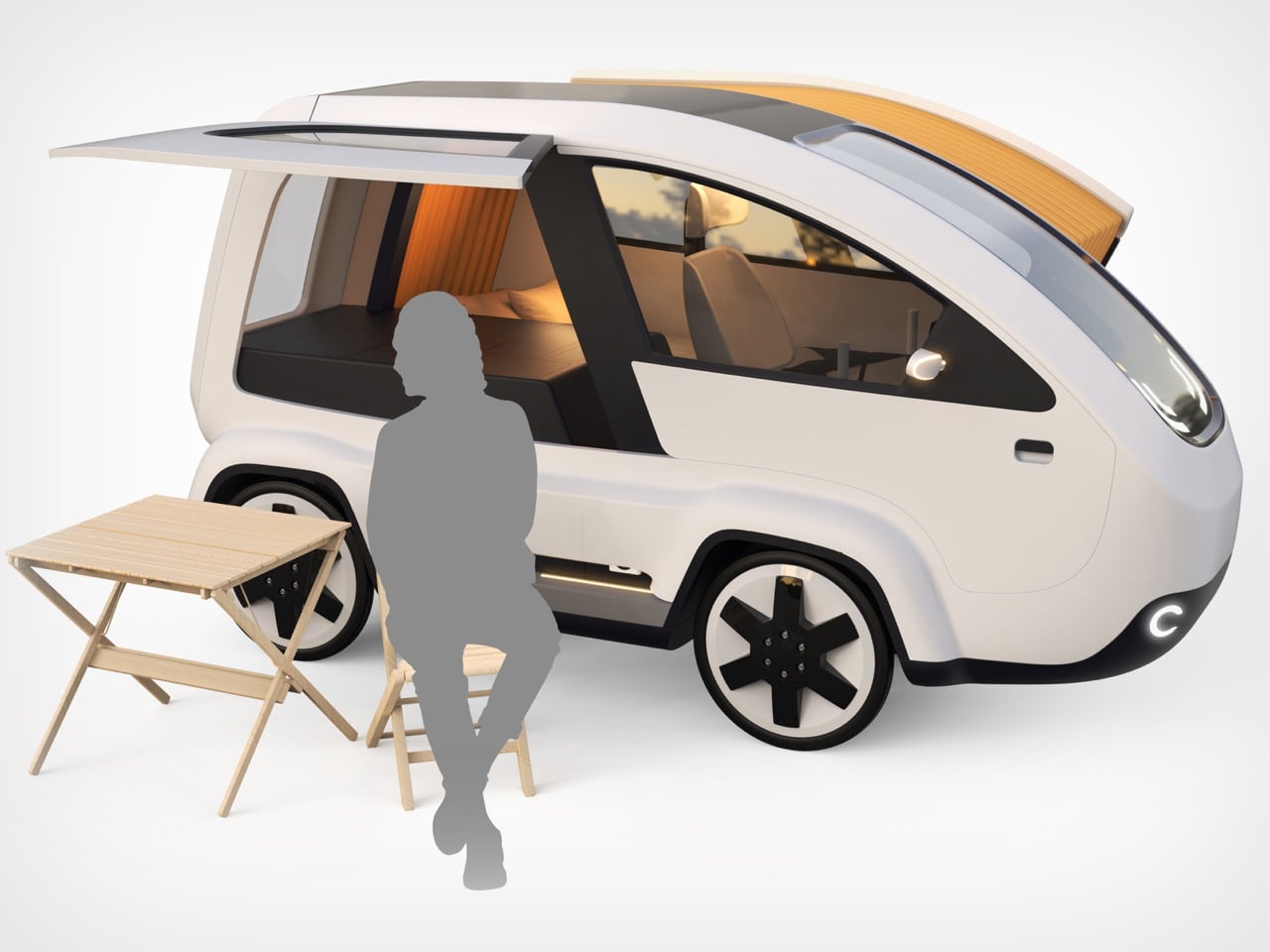
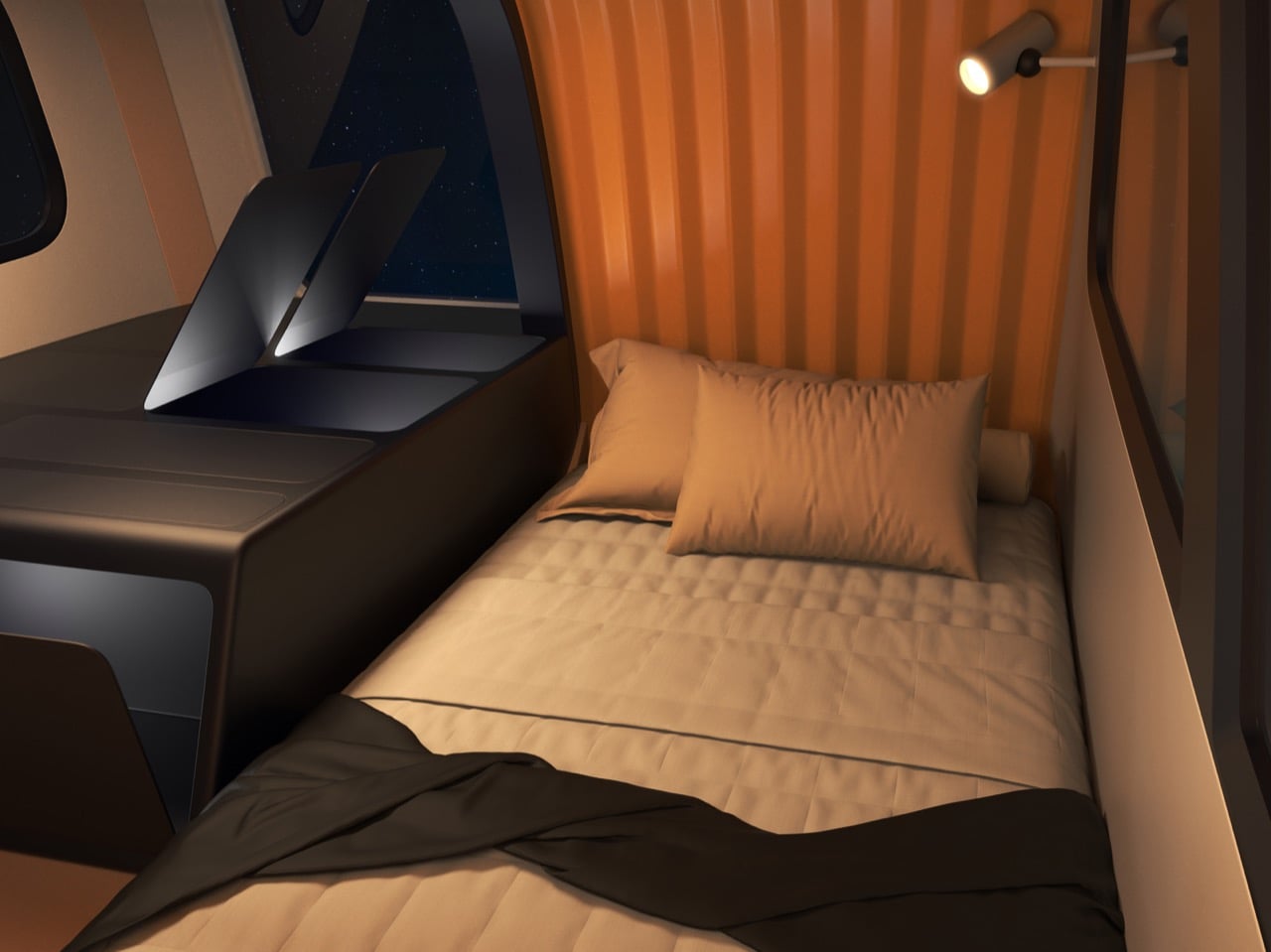

Inside, the renders show a reclined seat with a tall headrest, with a sleeping berth tucked behind the cockpit. Ribbed orange lining carries the exterior’s color and texture into the sleeping area. A flip-up tray and a mounted screen suggest a spot for anyone determined to answer emails before falling asleep under a very stylish tent. A second table, wood-topped and mounted on an articulated arm, folds out near the front seat for eating or working while parked. The visible pedal unit brings the cycling part of the equation back into view, a gym membership with considerably better scenery.
All of this single-occupant intimacy feels deliberate. The Hupi trailer takes a similarly compact approach, giving a solo cyclist a fixed roof and a small dinette. Huuselox packages its shelter and riding position within one vehicle, keeping the campsite setup attached to the thing that gets you there. The award description emphasizes the sheltered cabin, organized storage, and short trips with less setup, which fits what the renders show. This feels pitched at the pleasure of a campsite-to-campsite hop, with somewhere to cook dinner and stretch out at the end.
A Thesis Project With a Second Life
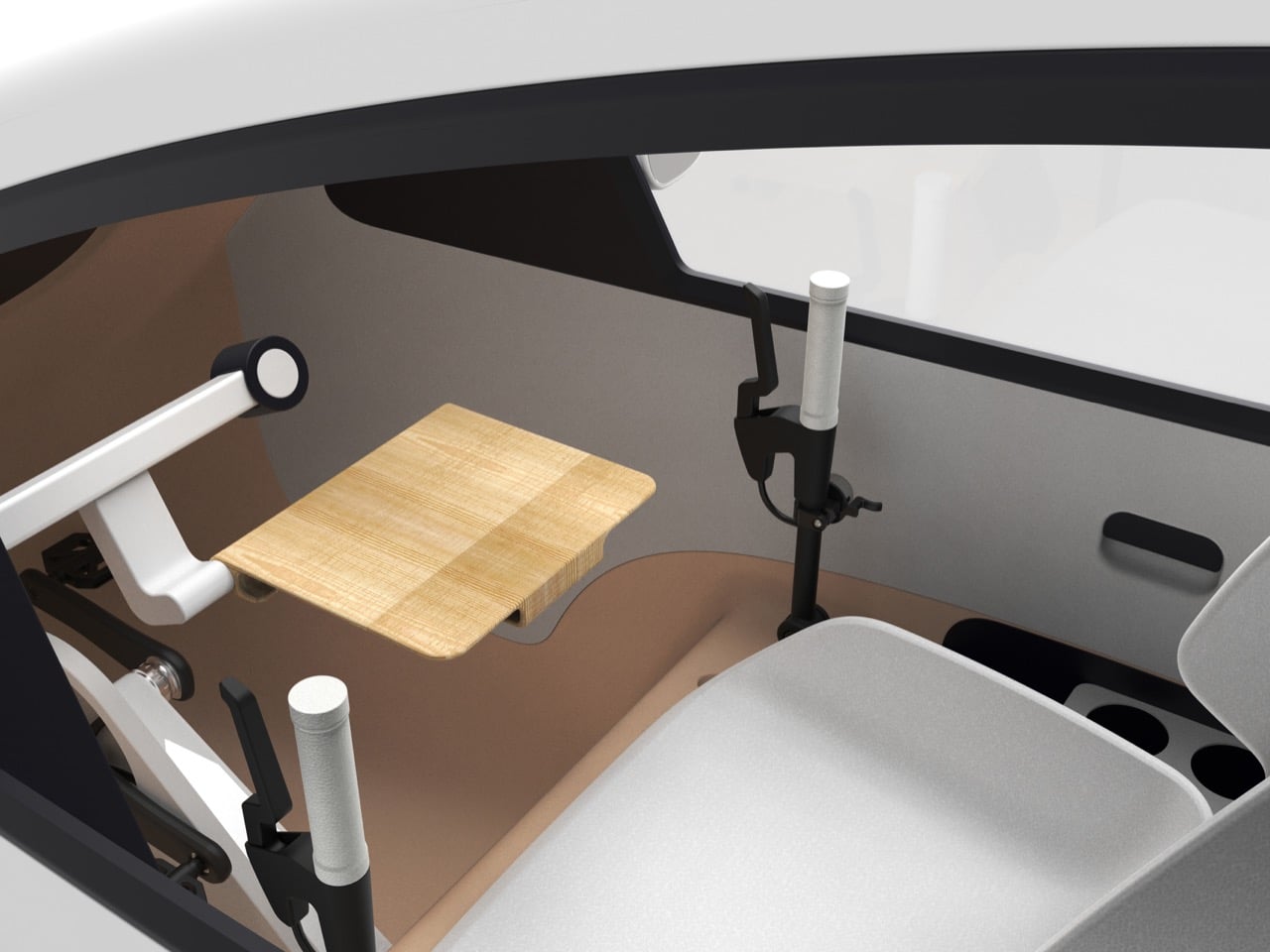
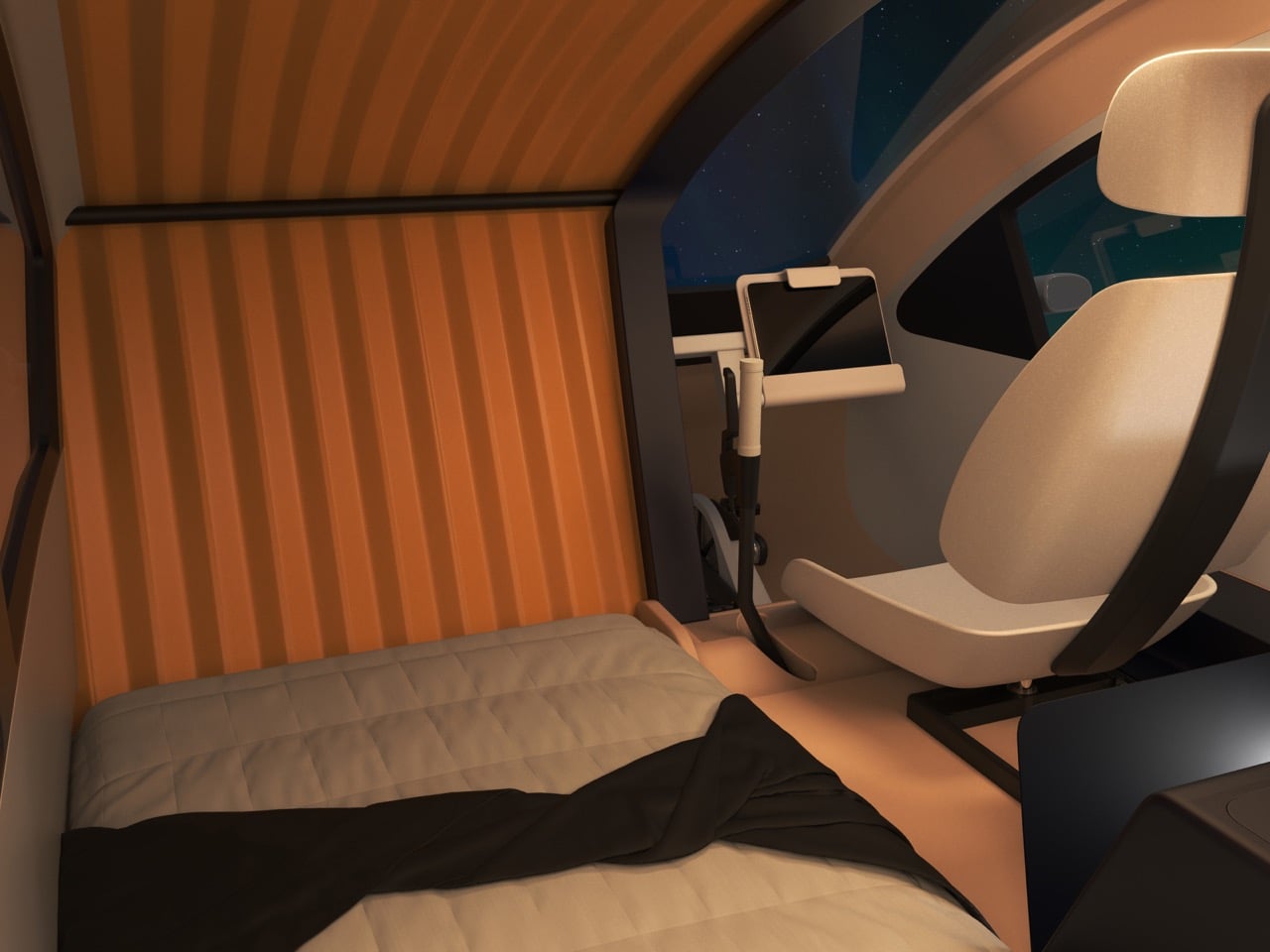
Huuselox began as Wu’s 2022 bachelor’s thesis, titled Space on the Move. Its 2026 EPDA recognition places it in Automotive and Transport Product Design, within the Conceptual, Design Only or Prototype category. That last part matters: the award recognizes the concept, rather than establishing that a finished vehicle is on sale or road legal. The broader competition draws entries from more than 80 countries and has previously honored names including Maserati and Pininfarina. That is quite a change of company for something that began with a university deadline.
The project it resembles most in spirit is the SpaceCamperBike, an electric cargo bike arranged for riding, working, sleeping, and camping without a trailer. Both put shelter on the cycle itself, keeping the riding and camping equipment together. What sticks with me about Huuselox is how much of its identity comes from one folding detail. The pleated shell gives the compact pod a distinctive silhouette and a convincing reason to open up once parked. I would rather see ten more concepts this weird than another slide-out box with a fresh coat of paint.