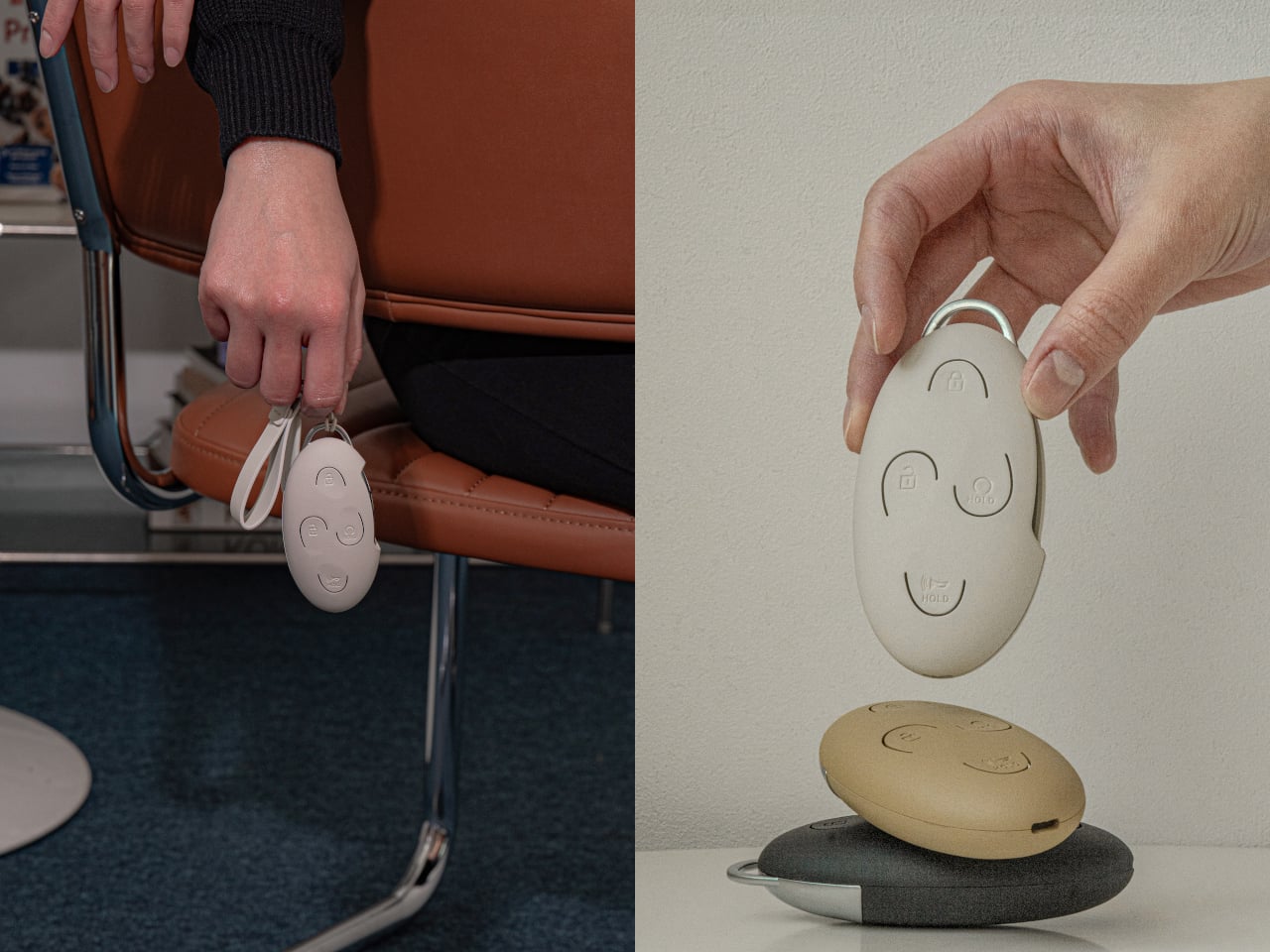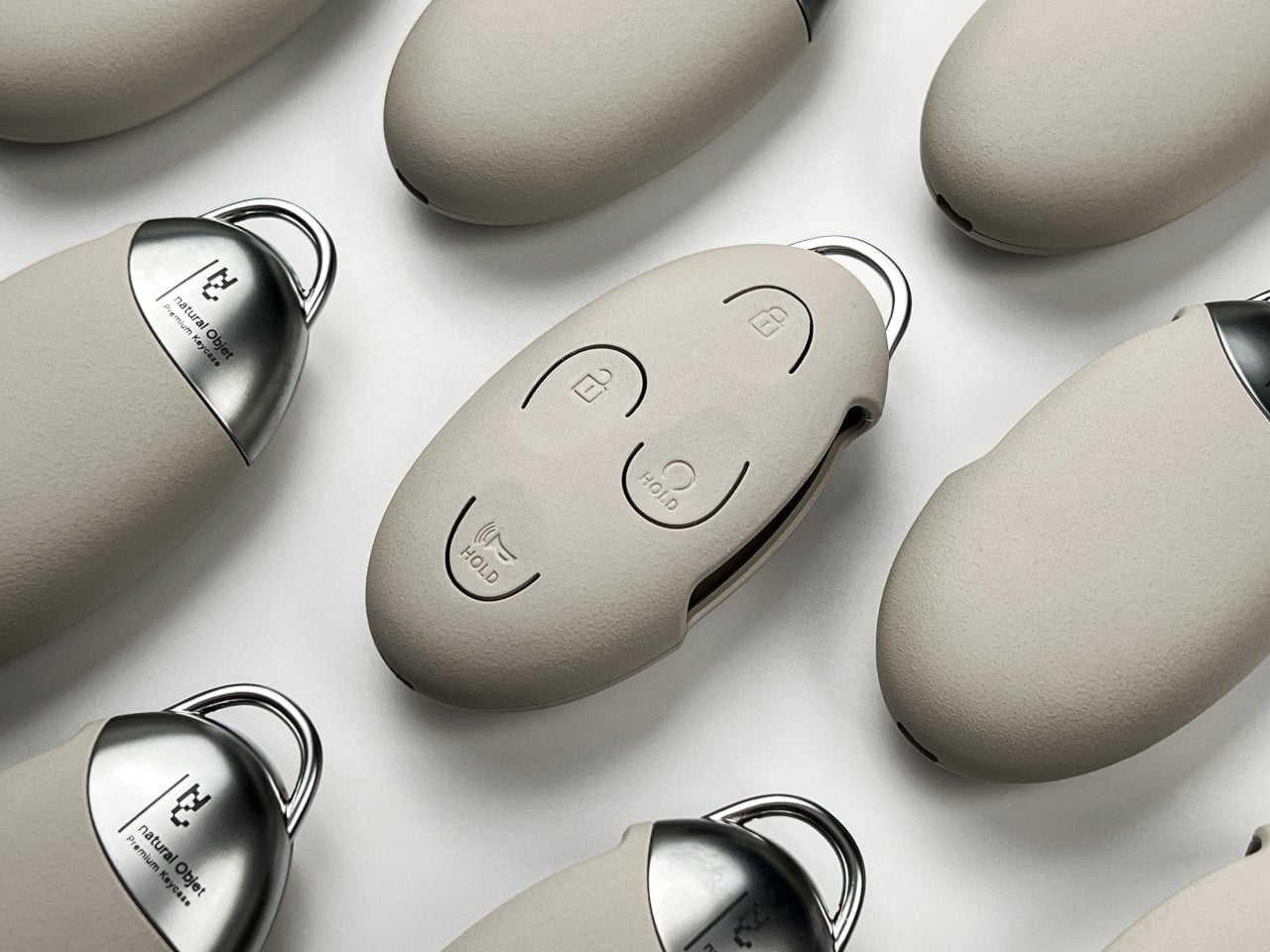

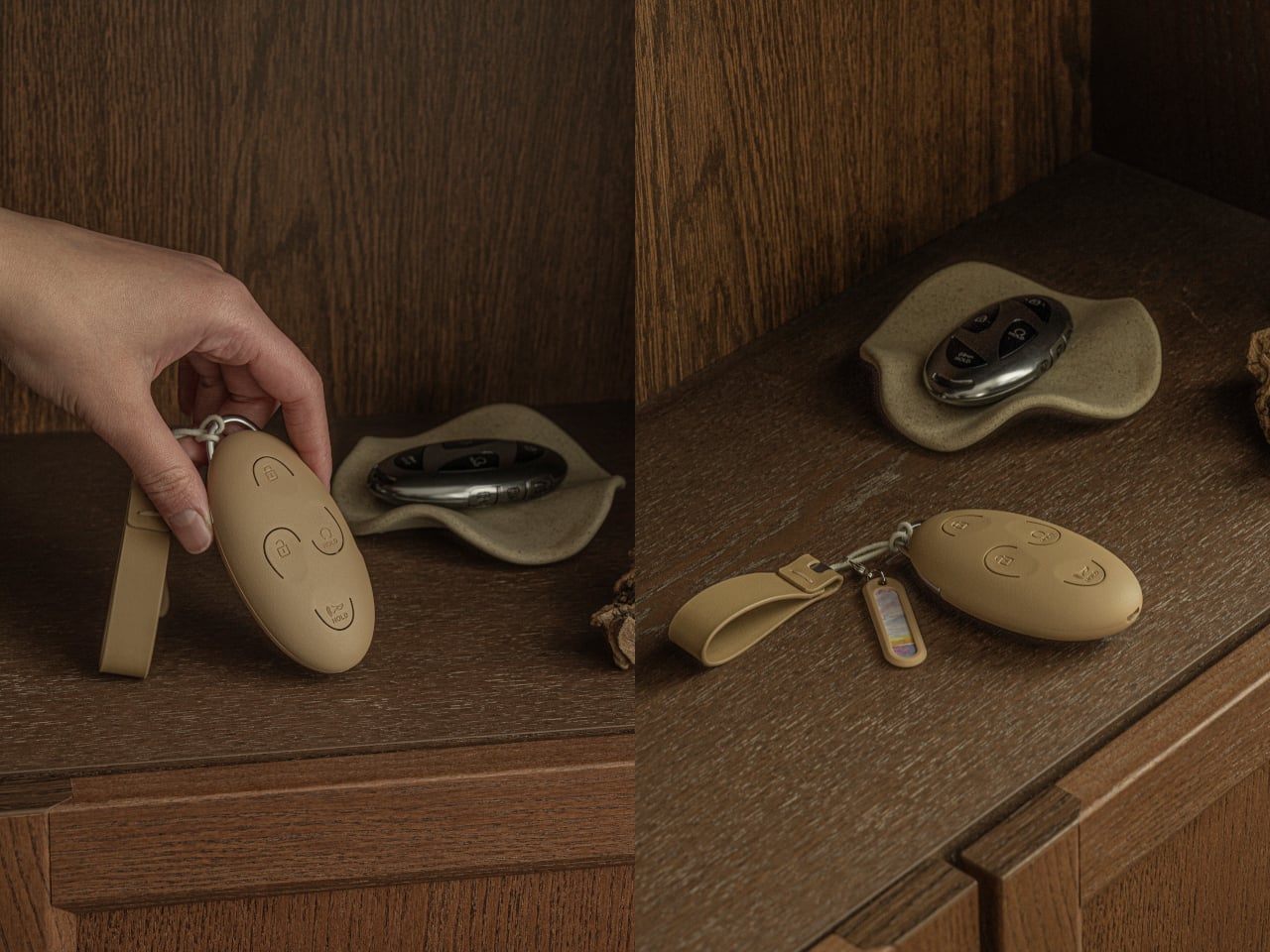
A car key doesn’t have to advertise its electronics with a shiny shell and conspicuous buttons. Natural Objet is a design concept for smart keys. Its rounded body takes the shape of a pebble and adds a grainy finish, aiming to make something you carry every day feel less like a miniature remote control.
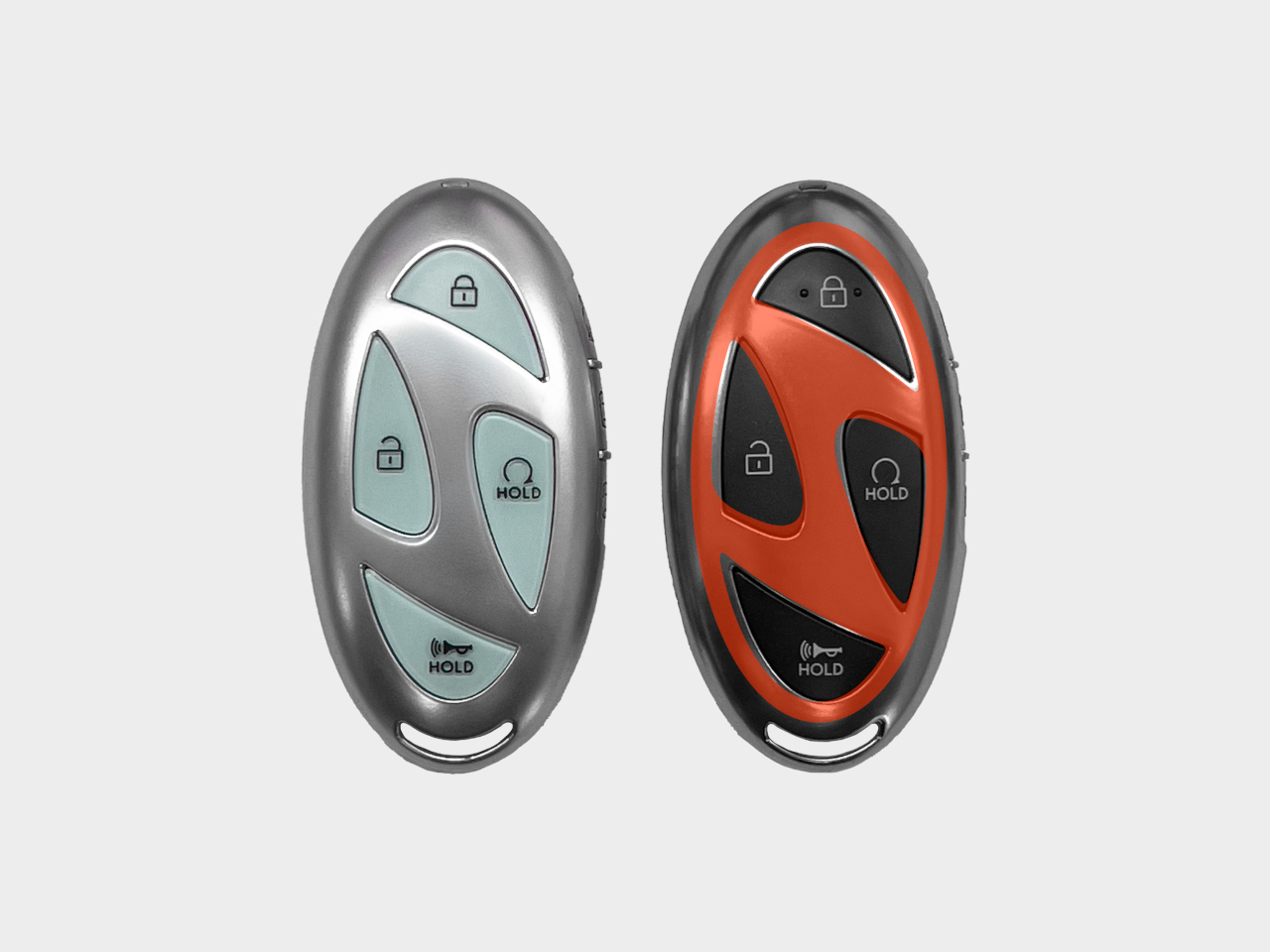
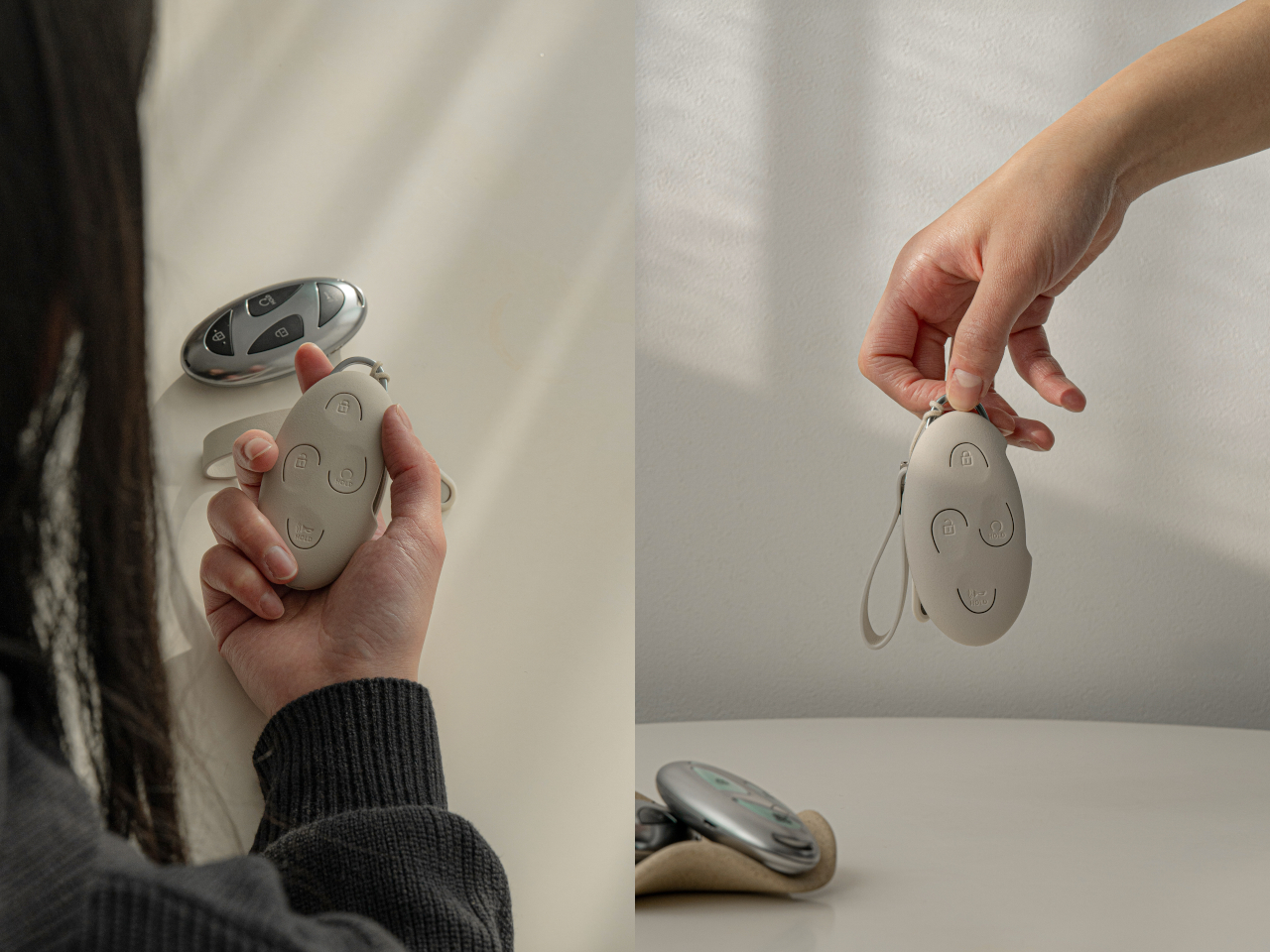
The case keeps the original key inside, so this isn’t a replacement remote or an extra layer of smart technology. Instead, it changes the surface your thumb meets. Irregular curved cuts across the front outline the lock, unlock, remote-start, and horn buttons, interrupting the shell just enough to define each control without bringing back the bold, emblem-like pattern of an uncovered Hyundai key.
Designer: Eunsu Lee
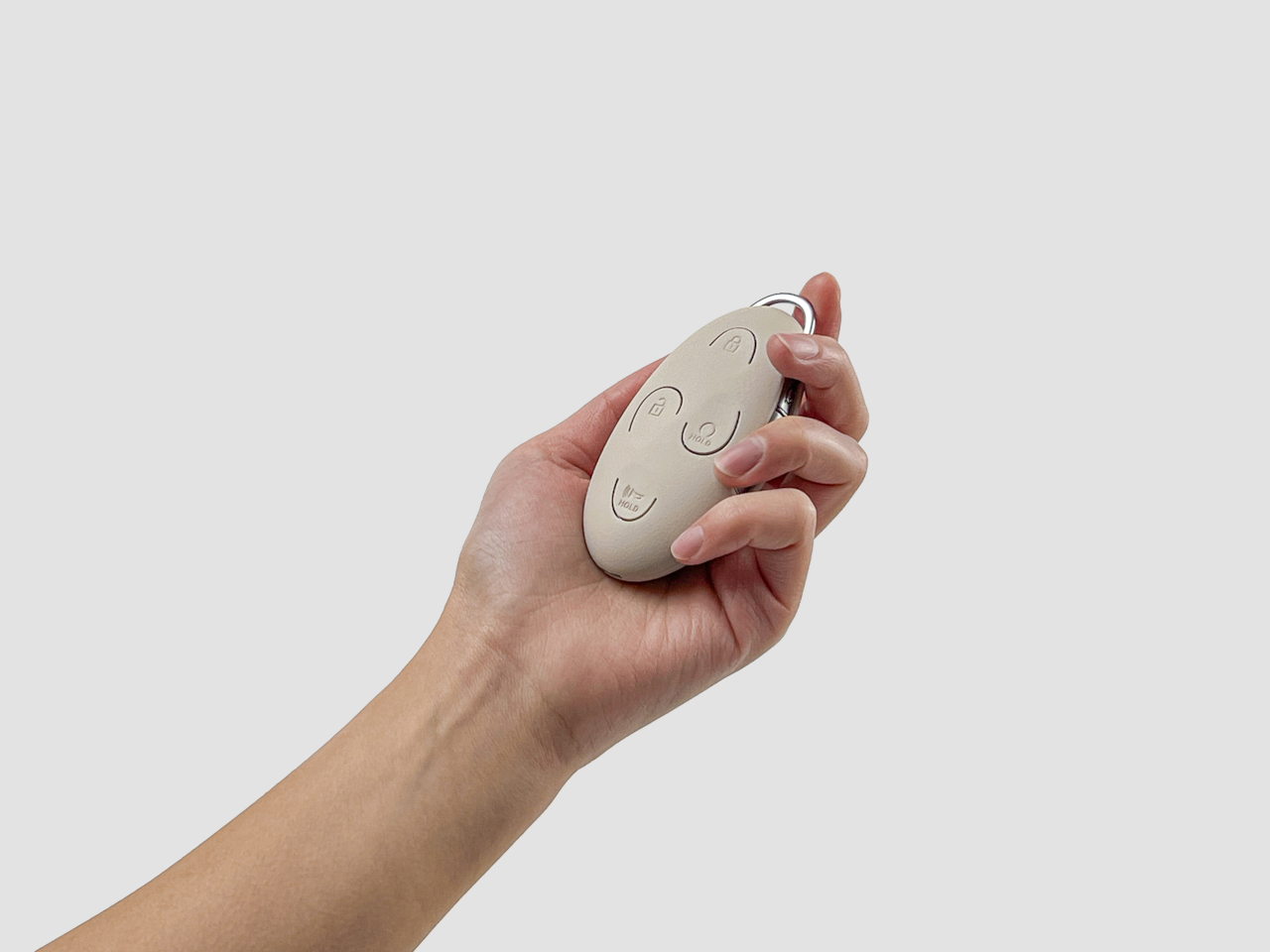
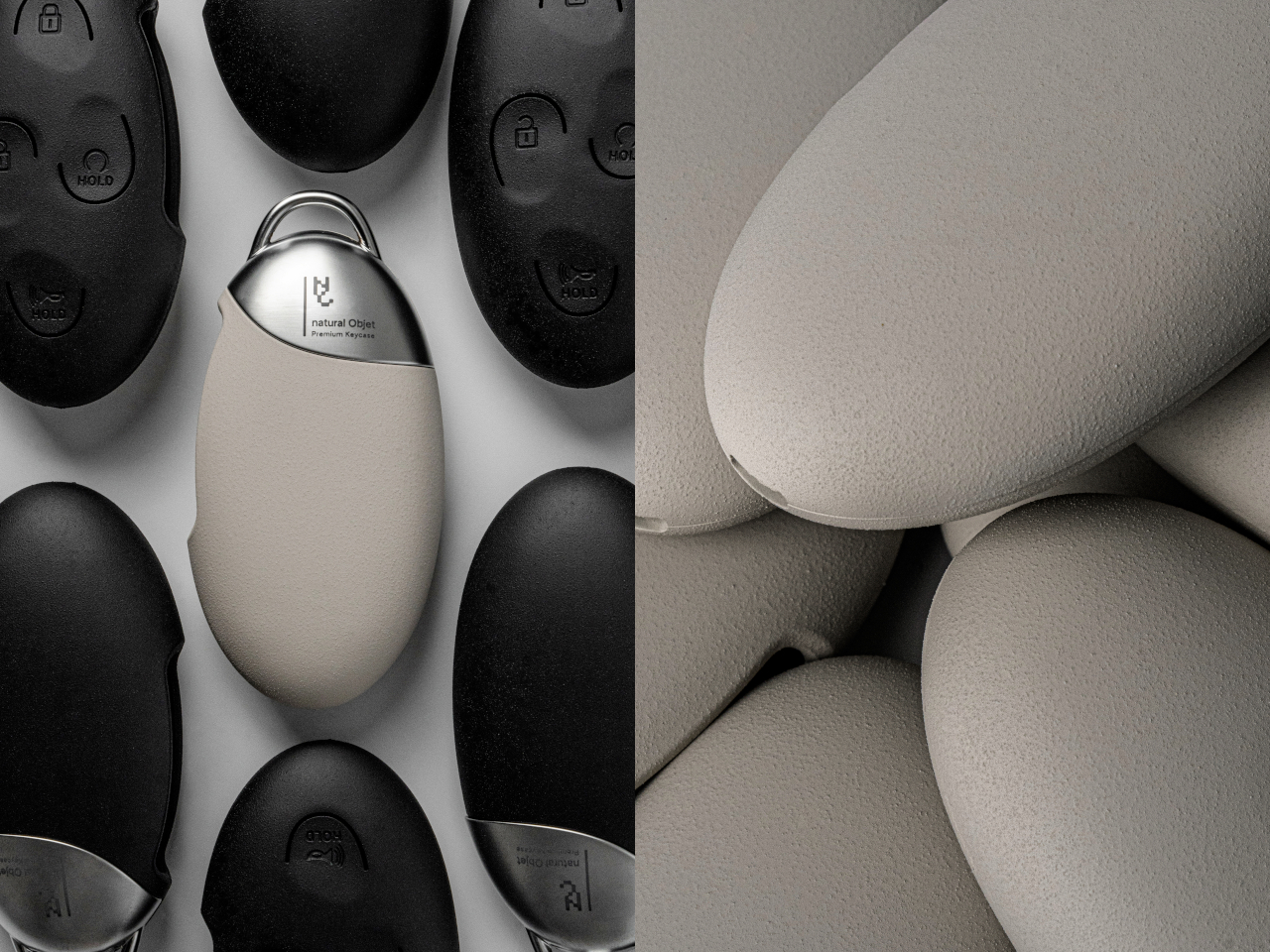
That understated front hides a practical material problem. The button areas need to move, even though the case needs to hold its shape. In testing materials, ABS versions resisted pressing too much, while softer materials didn’t deliver the intended finish. Polycarbonate became the compromise, with repeated changes to the internal contact points intended to improve how each press reaches the key.
The custom coating carries that stone association. It’s intended to recreate a sandy sensation rather than the smoothness you might expect from molded plastic. A rounded edge can suggest a pebble, but a textured surface asks you to notice it with your fingers, too. That could make it easier to distinguish from other smooth objects in a bag before you see the buttons.
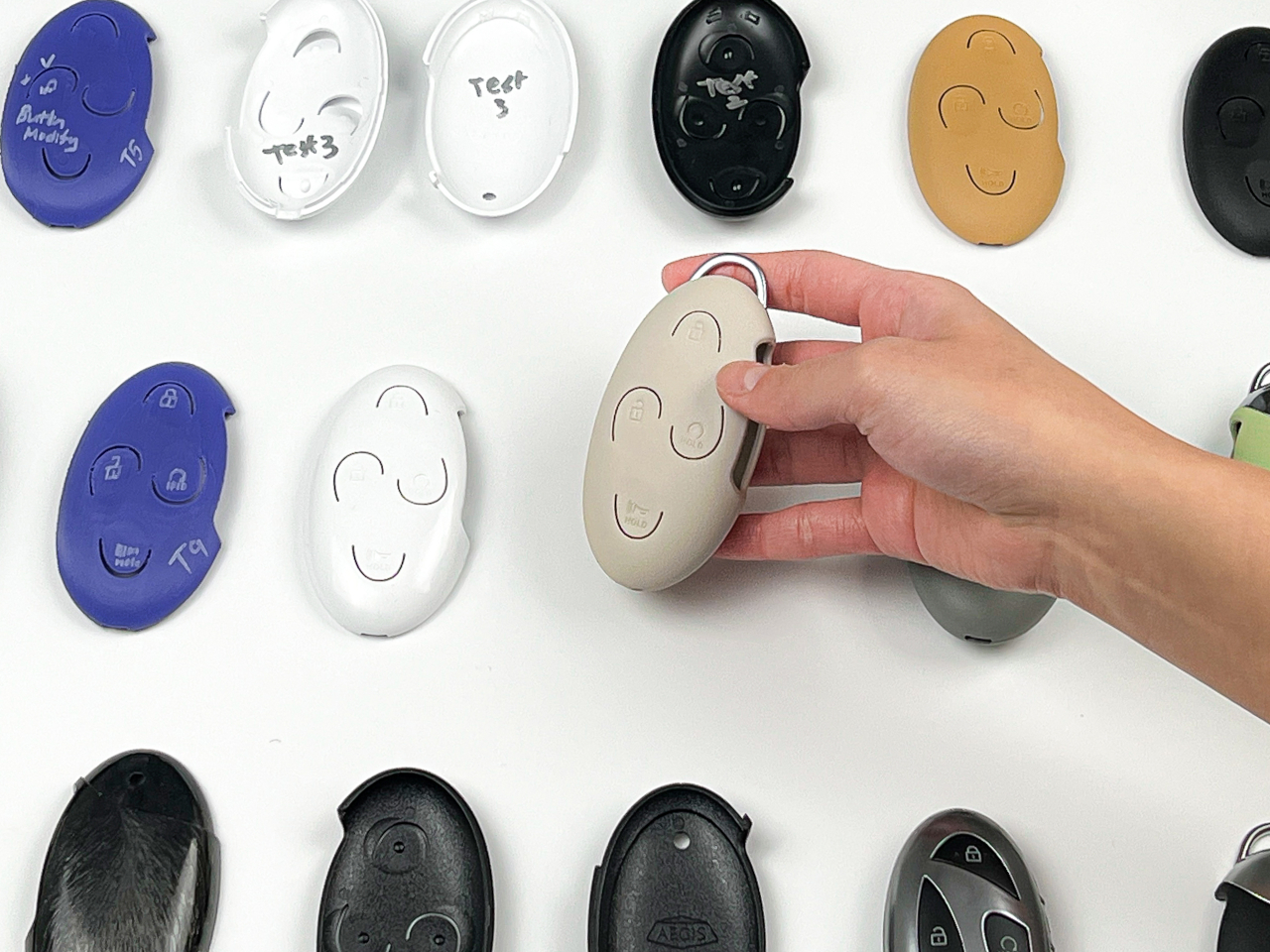
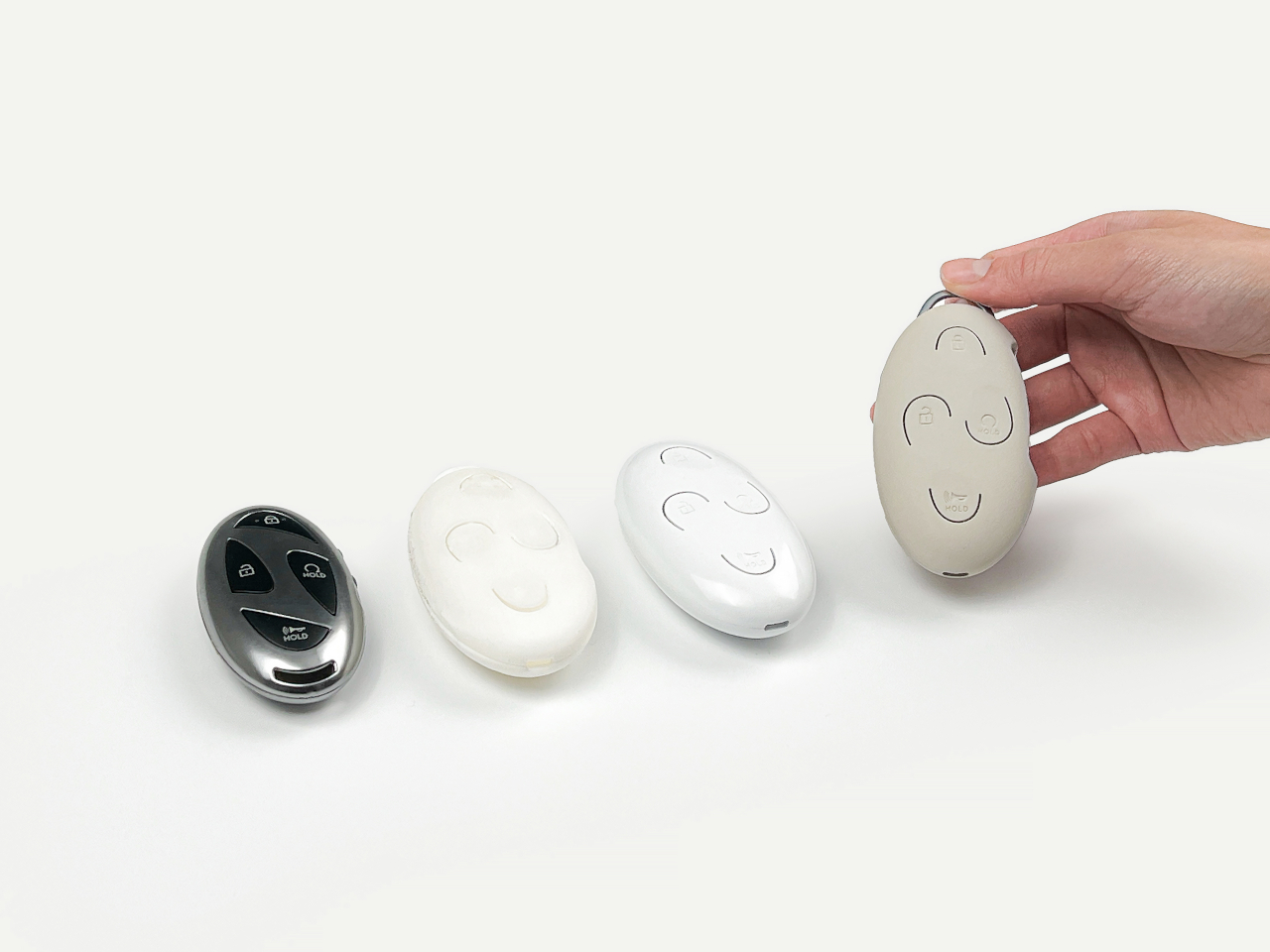
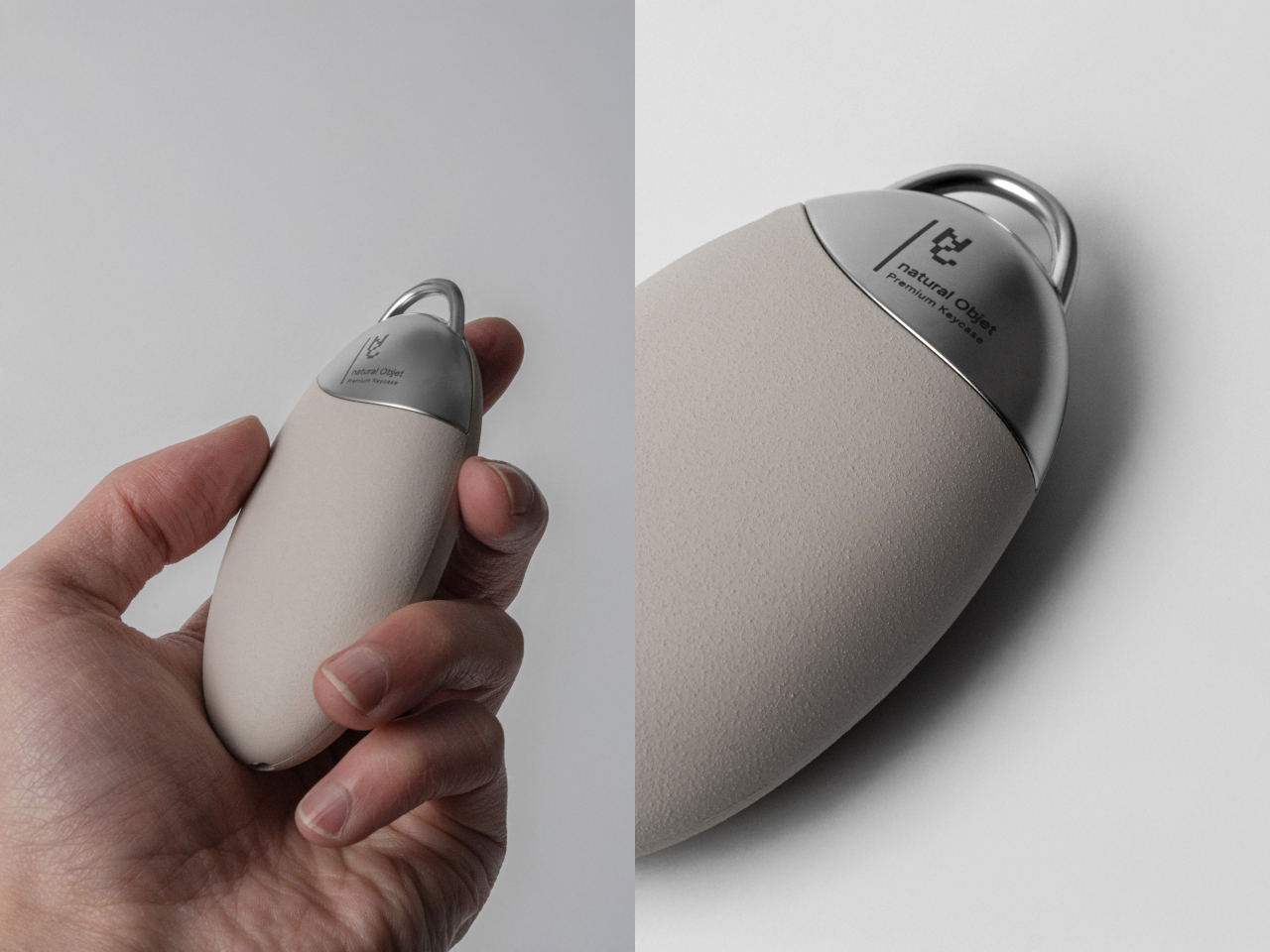
Metal breaks up the textured body at the back, where a die-cast zinc-alloy section meets the shell along a sloping edge. The design uses an interlocking connection rather than a merely attached decorative piece, intended to improve durability. A loop extends beyond the top for carrying accessories, giving the otherwise quiet object a small flash of shine when it hangs from a bag.
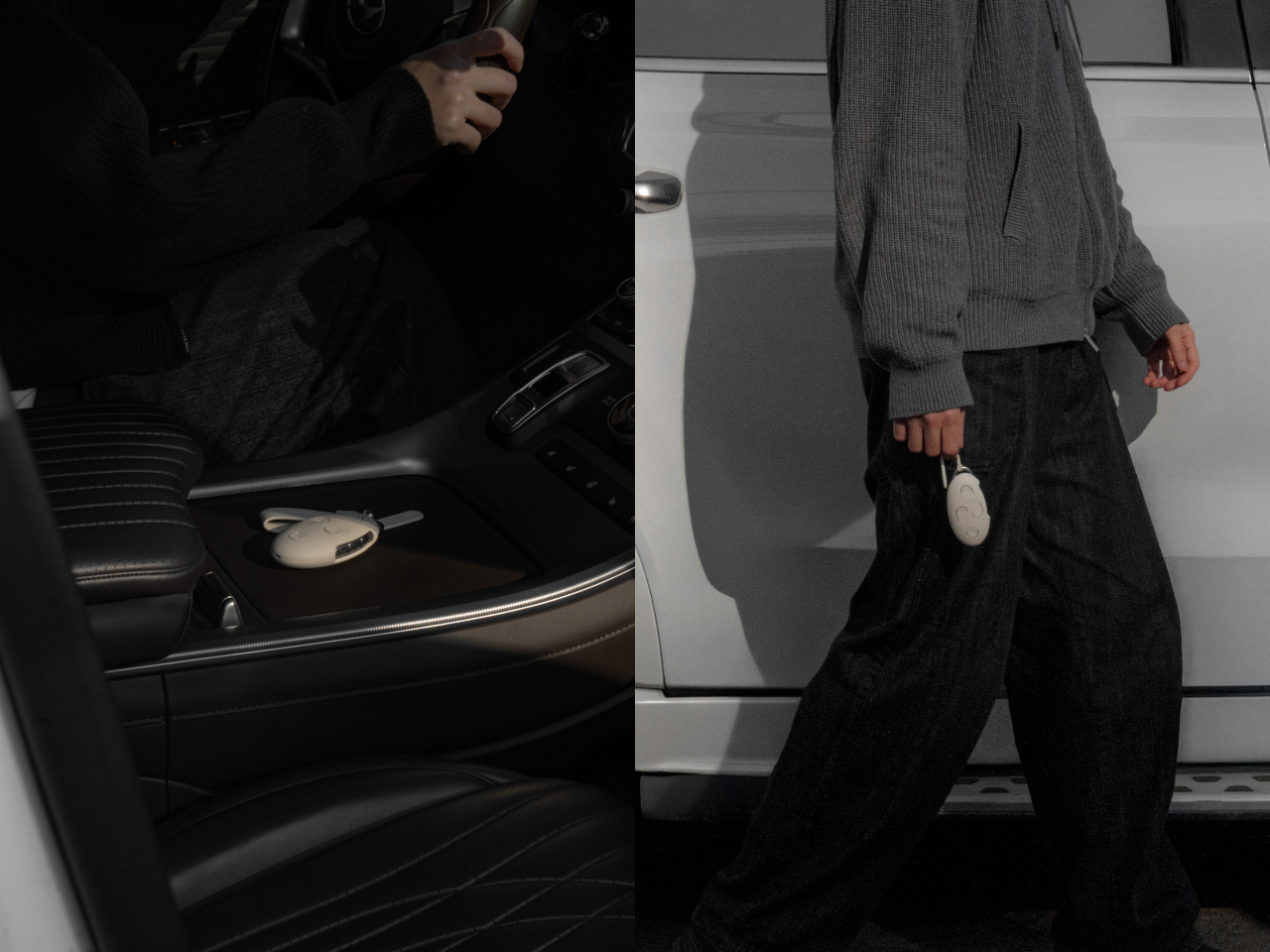
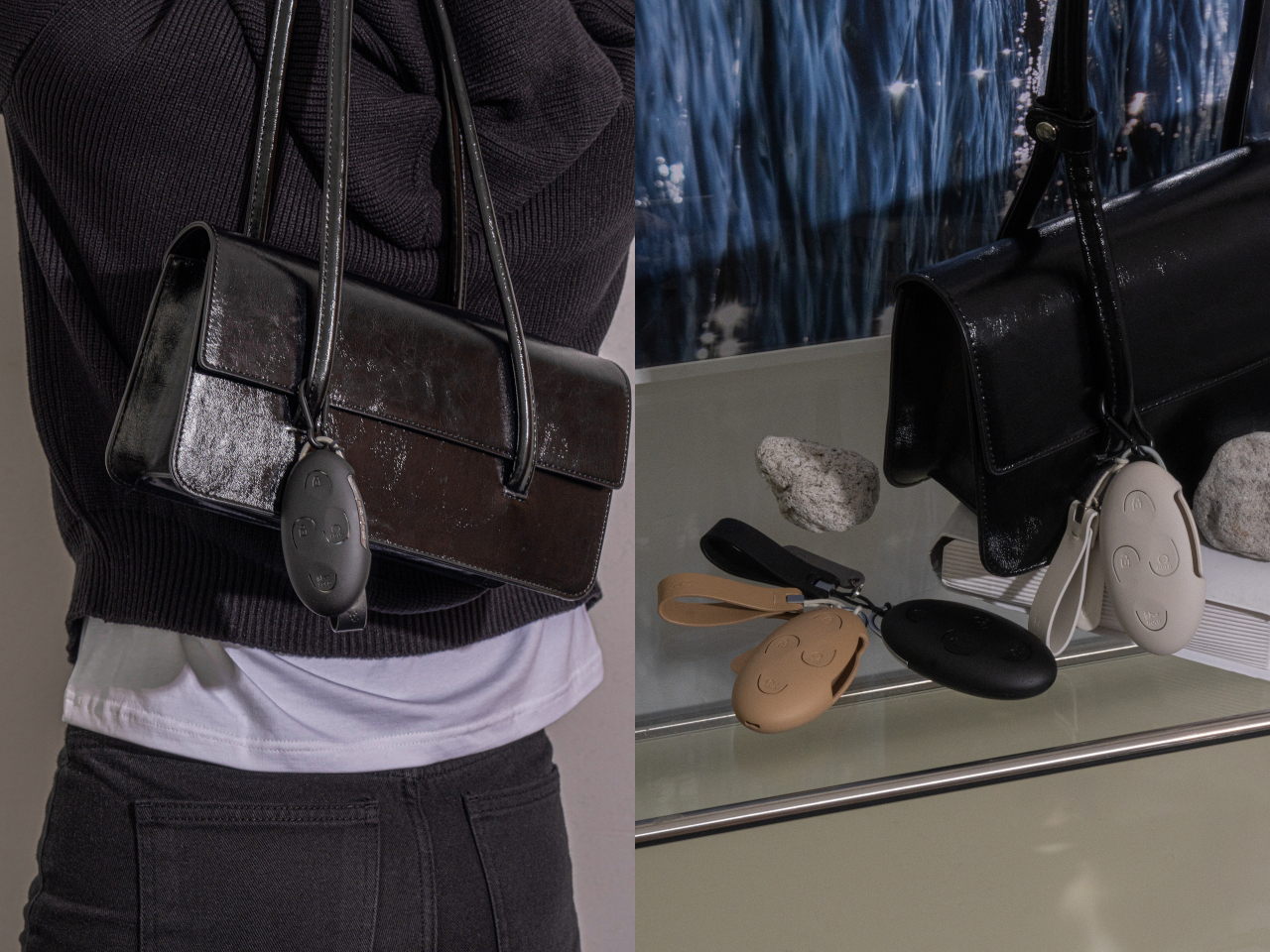
Warm gray, deep black, and earthy brown keep the palette close to sand, volcanic rock, and soil. A matching wrist loop continues the color beyond the shell, giving you somewhere to hold the key while carrying it between the house and car. Hanging from a handbag, the case could read as an accessory in its own right, rather than exposed automotive equipment.
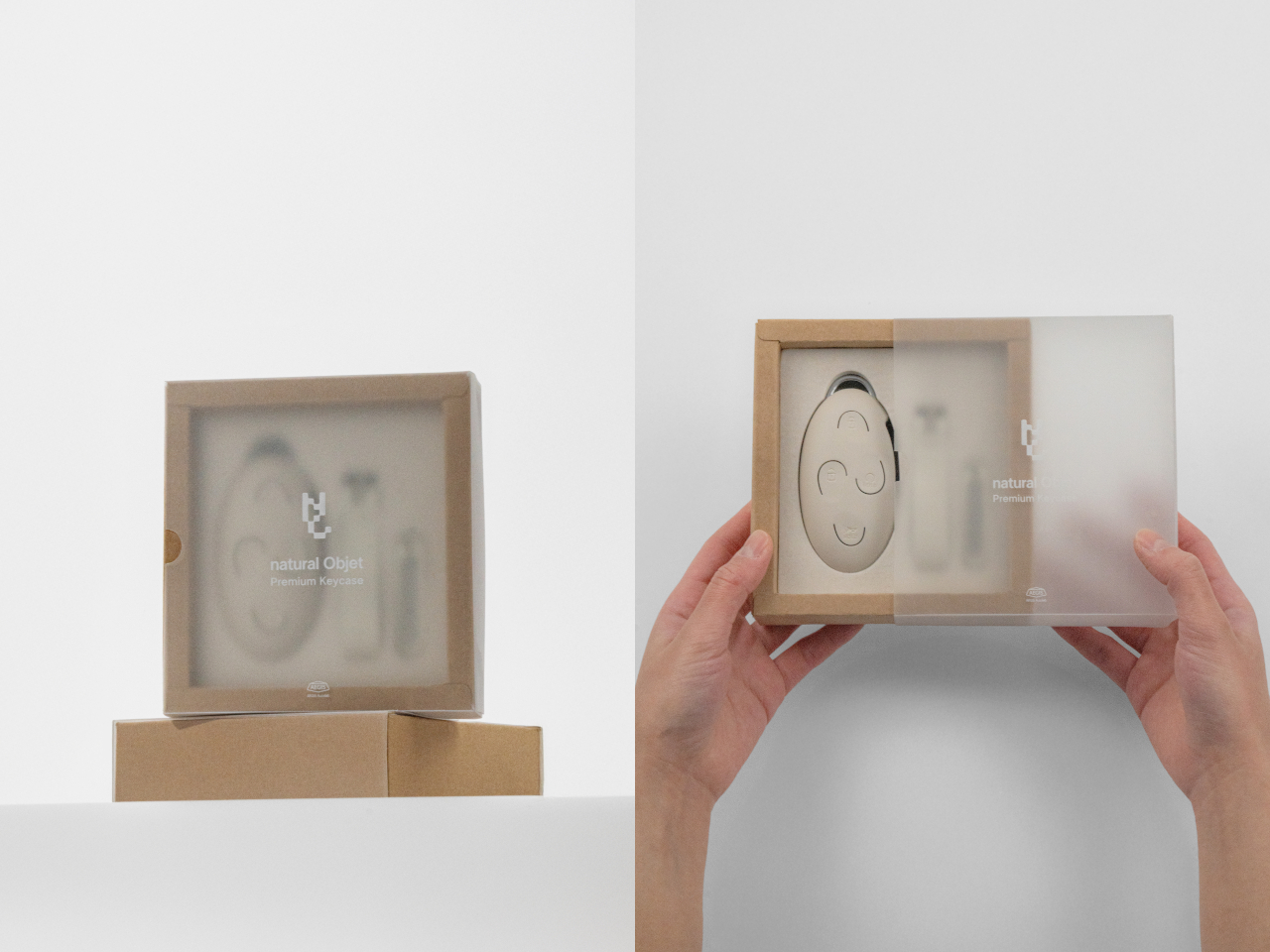
The packaging gives you a similar sequence of surfaces before the case ever reaches your pocket. A translucent sleeve softens the outline of the object inside, then slides away from a folding kraft box. Its paper texture continues the material theme without copying the case’s coating. The contrast between hazy wrapping and rougher paper prepares you for the mix of surfaces underneath.
Keeping everything visually quiet has a practical consequence. The subtle symbols have less contrast than the original dark buttons, potentially making a quick glance less useful. Their curved borders would have to do more of the work when finding a control by touch. That’s where the pebble idea meets its test, somewhere between enjoying the surface and pressing the right button.