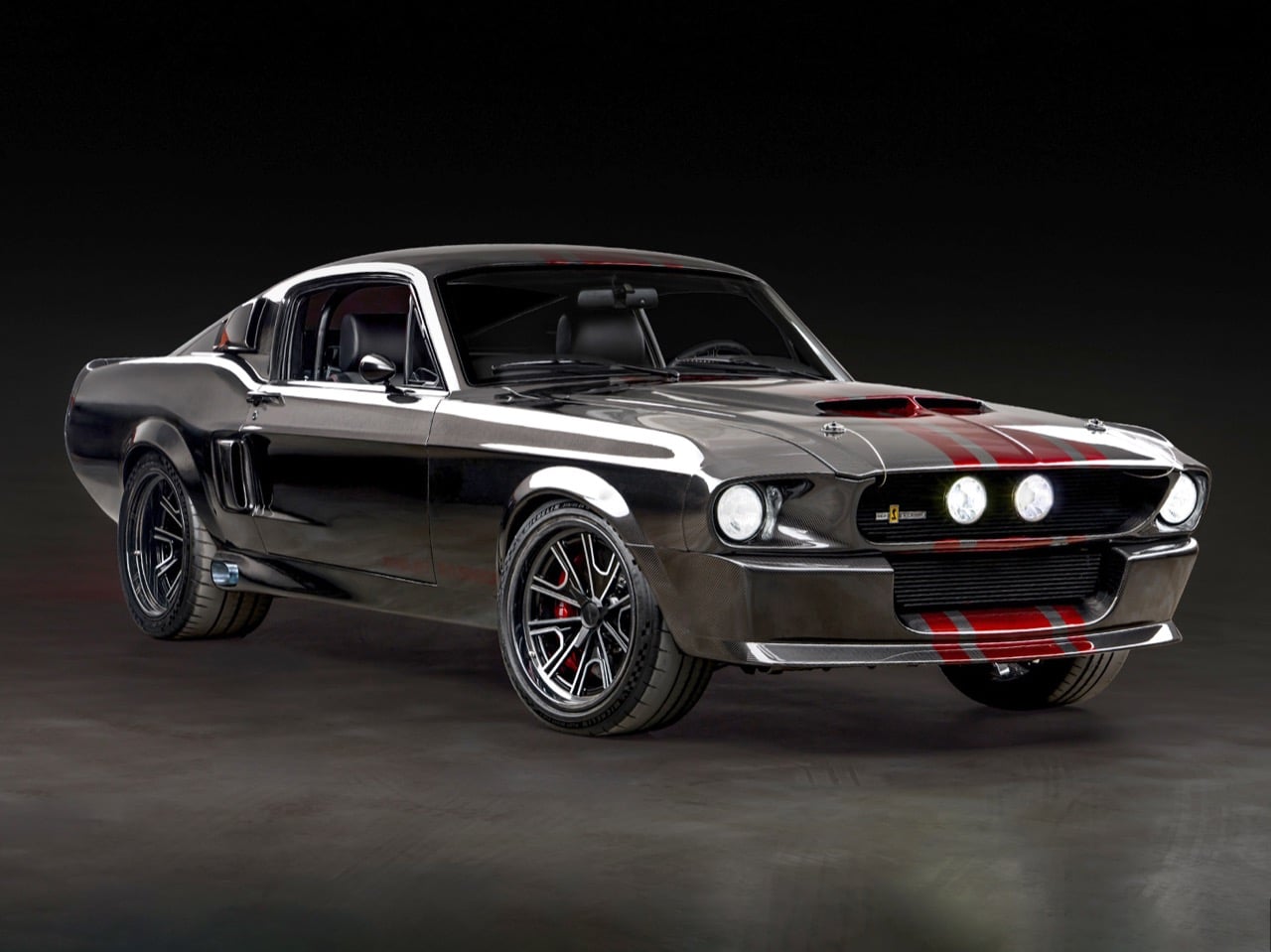

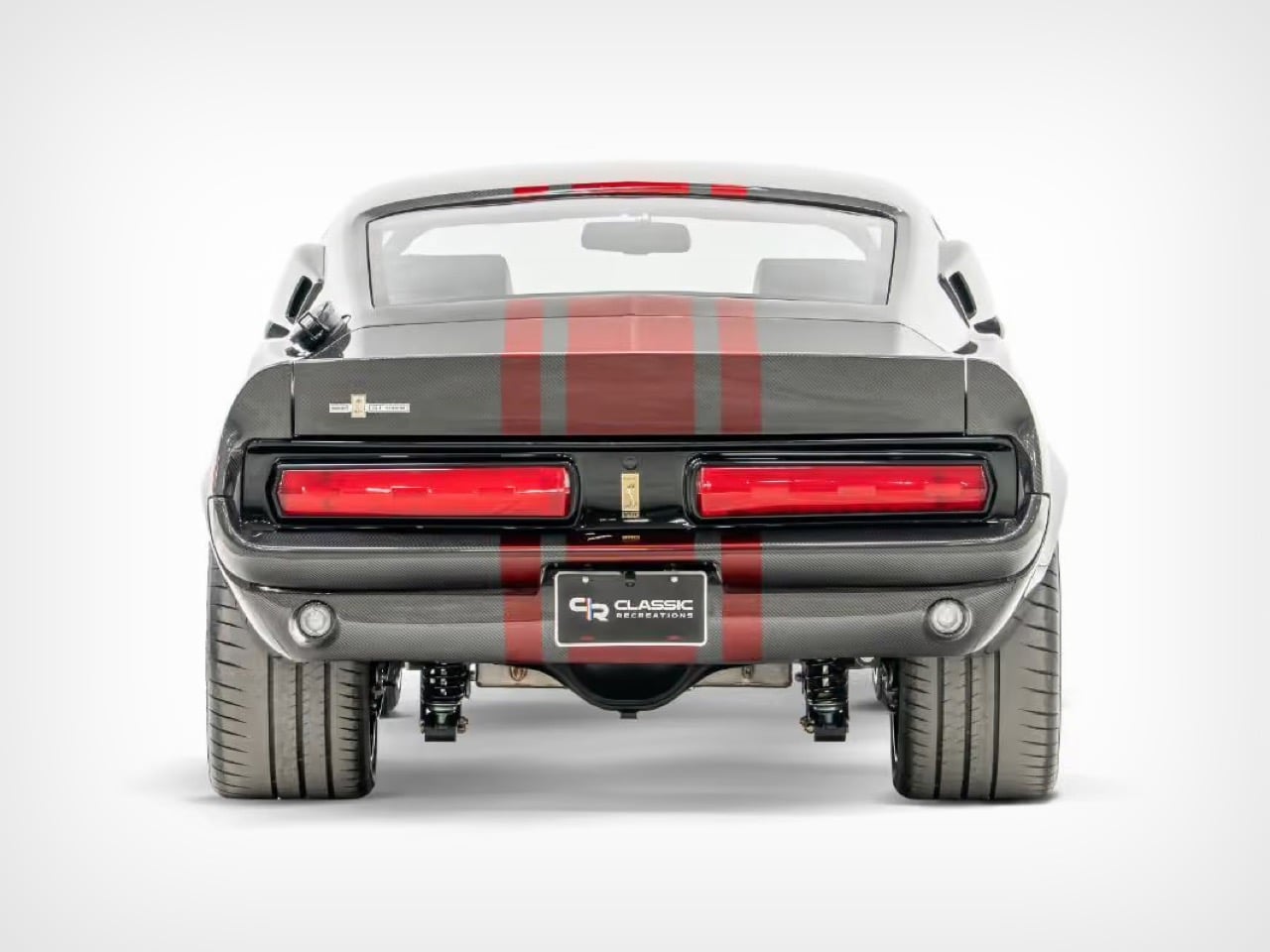
Back in 1967, Carroll Shelby took a perfectly good Mustang and bolted on a fiberglass nose, hood, and ducktail, because apparently steel was slowing him down. Almost sixty years later, Classic Recreations has finished that thought by building a 1967 Shelby GT500 with a body made entirely from carbon fiber. Every exterior panel is woven, cured, and left exposed, so you can stare at the weave like it’s a lava lamp. The reveal car also packs a supercharged Coyote V8 making 1,000 horsepower, nearly triple what the original was rated at. It’s officially licensed by Shelby too, so nobody gets to call it a kit car.
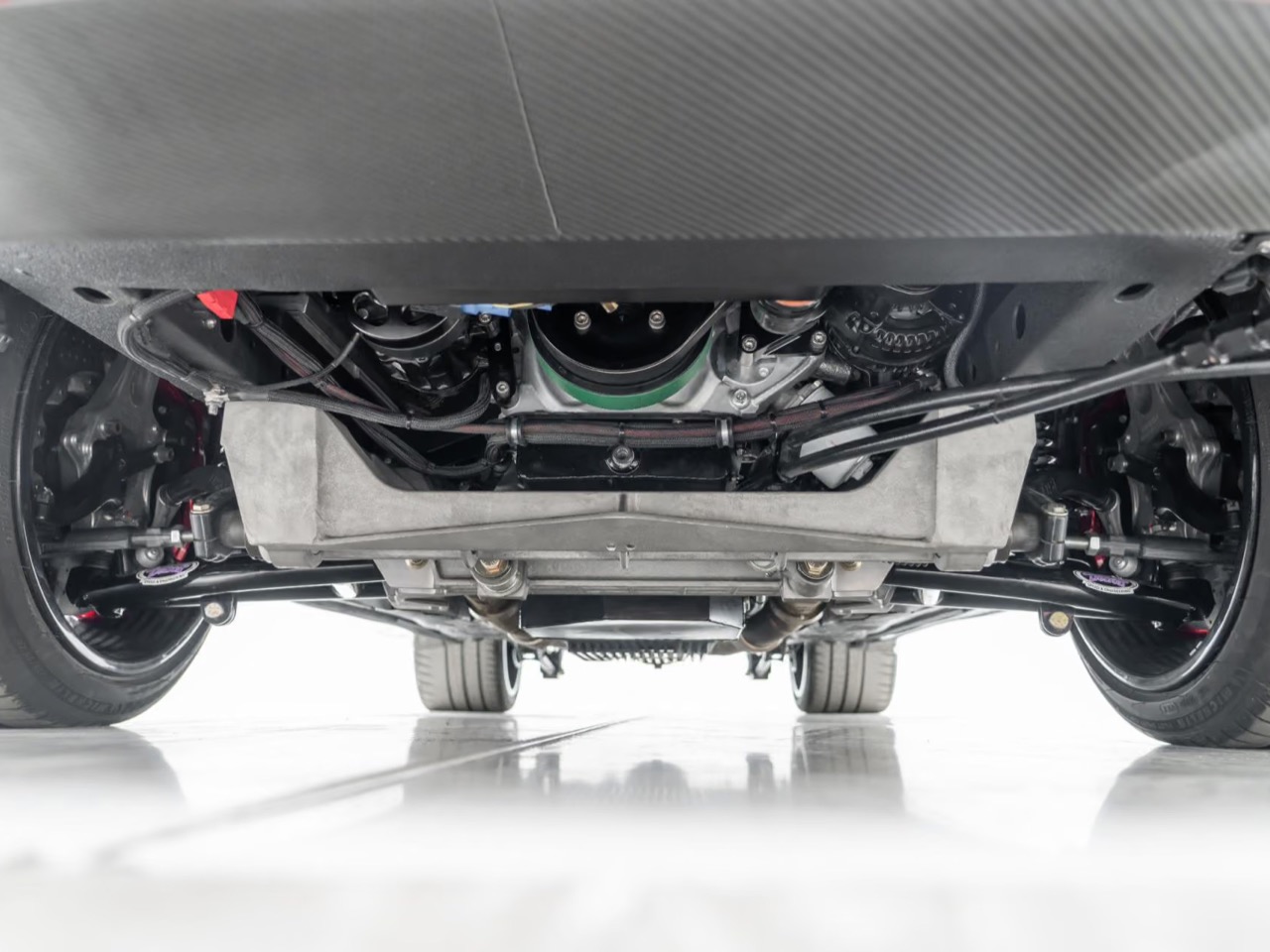
The car broke cover at the Concours at Wynn Las Vegas and is now sitting at FuelTech’s booth at SEMA 2026. It’s the brand’s first big outing since Velocity Restorations bought the company and moved production to a 135,000-square-foot facility in Pensacola, Florida. The carbon body first debuted in 2021 and is about 600 pounds lighter than a steel GT500CR. Underneath you get a Detroit Speed chassis, Nitron electronic dampers, and Brembo carbon-ceramic brakes roughly the size of a medium pizza. Orderable versions start at $549,900, which works out to about 131 original GT500s at 1967 sticker prices.
Designer: Classic Recreations
Carbon Skin Over Steel Bones, Shaped Exactly Like 1967
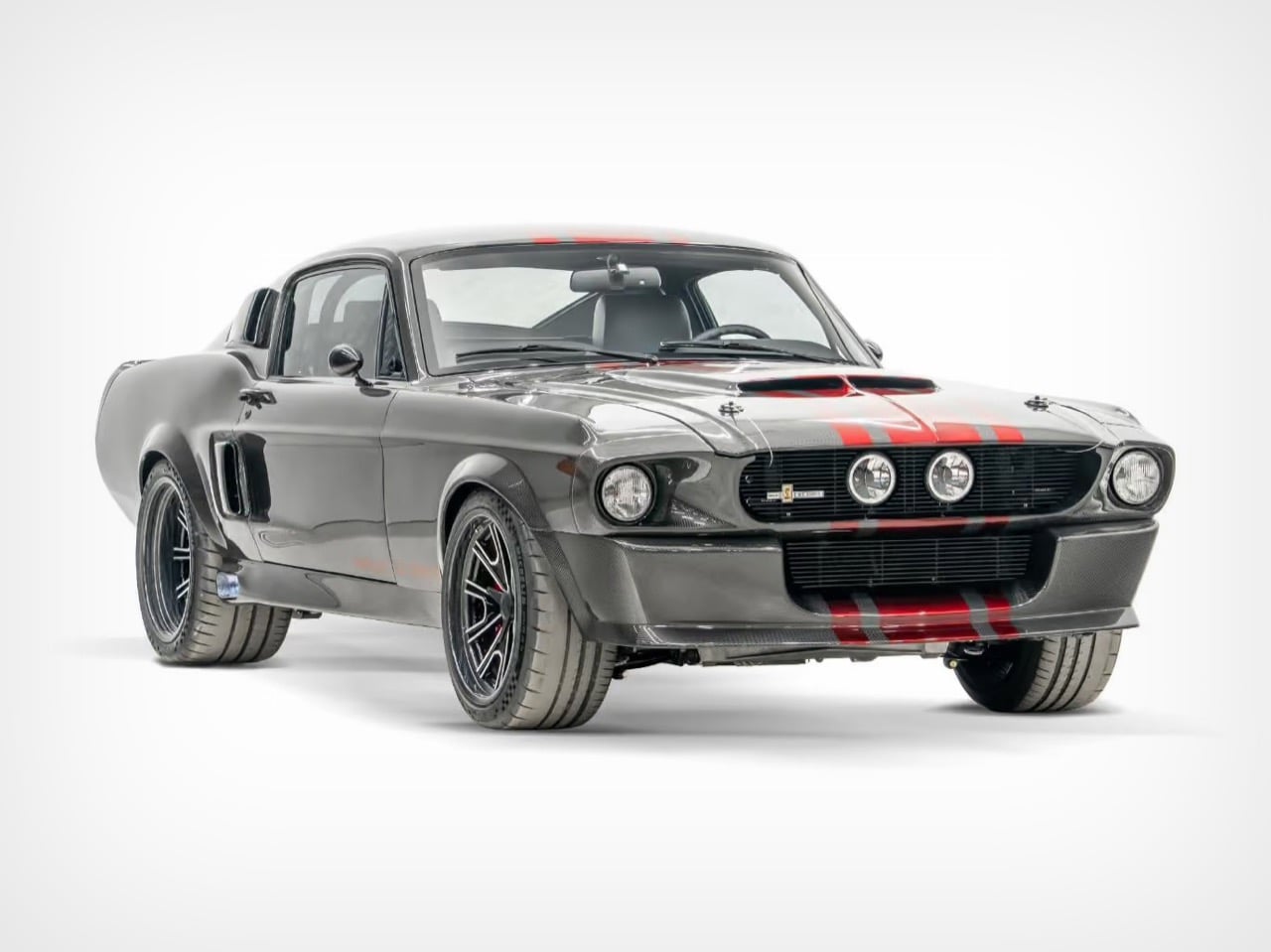
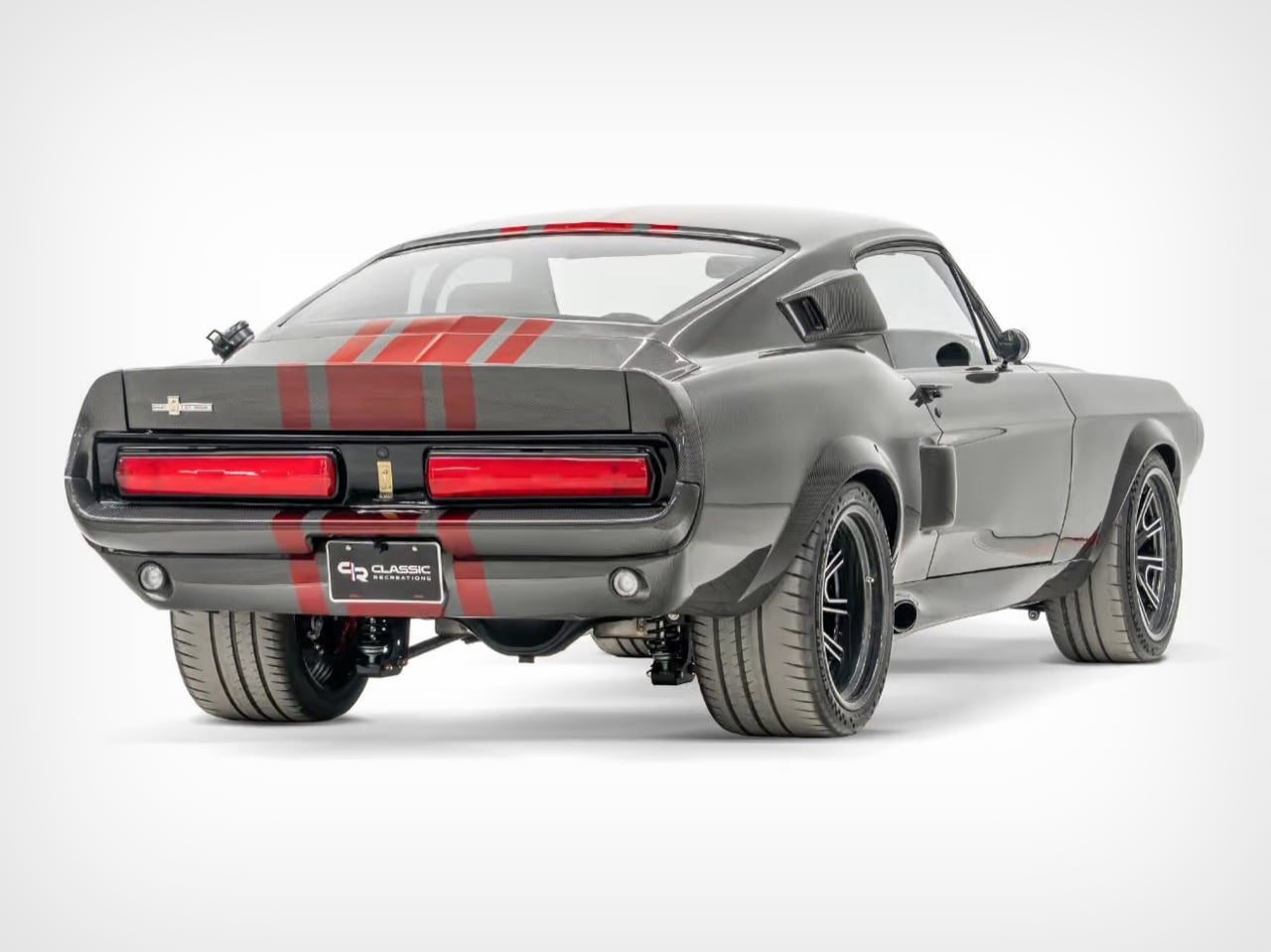
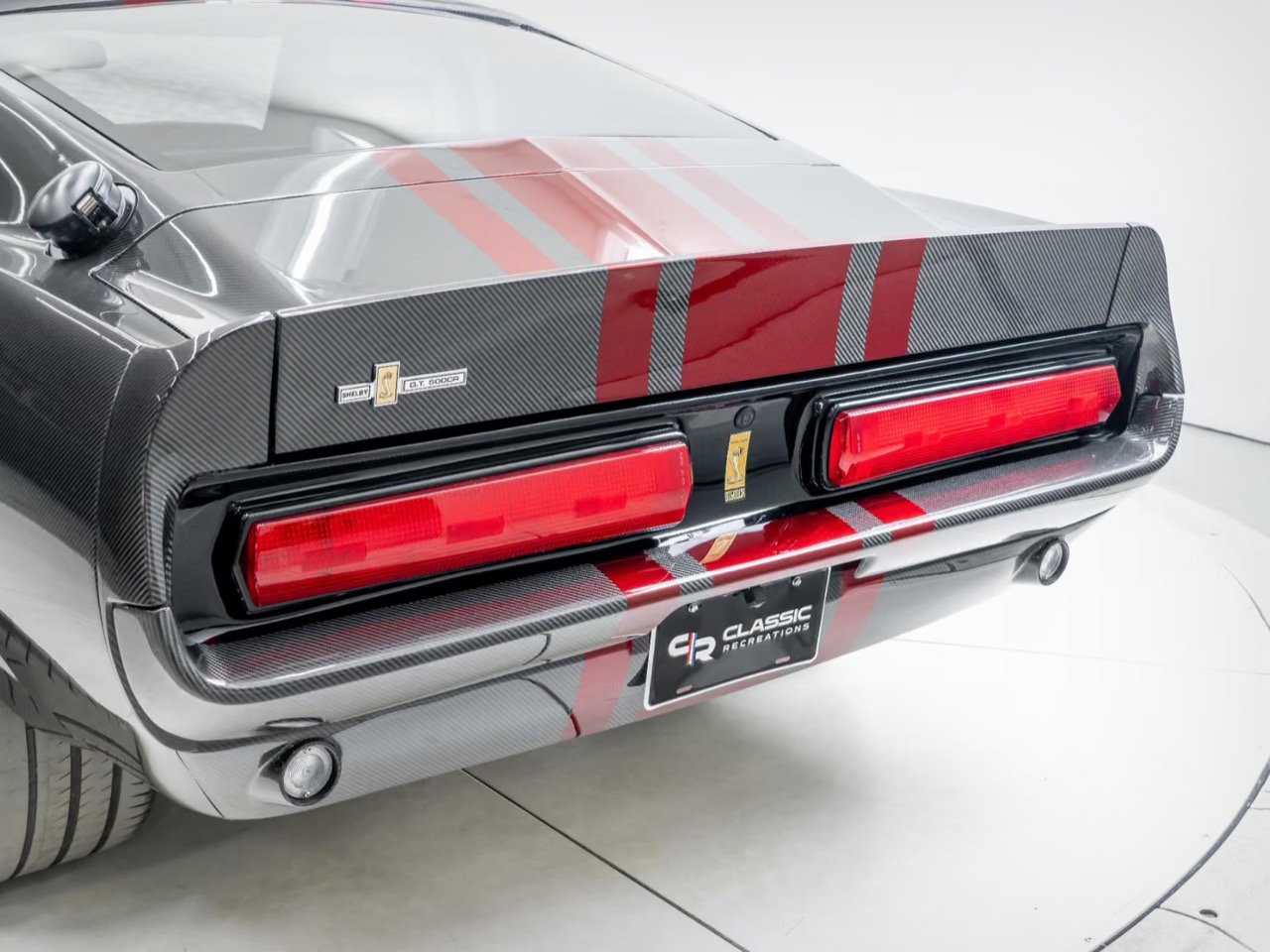
Classic Recreations developed the carbon body with SpeedKore Performance Group, blue-light scanning a steel GT500CR and rebuilding every surface in CAD. Those files became molds, and the panels were cured in an autoclave, the pressurized oven race teams use to bake composites. The carbon skin wraps a steel substructure, so picture carbon clothing over a metal skeleton instead of a full carbon chassis. Founder Jason Engel said at launch that this approach let the team get panels, seams, and lines spot on. Look at the shut lines around the ducktail and the hood scoops in the photos and that precision is easy to spot.
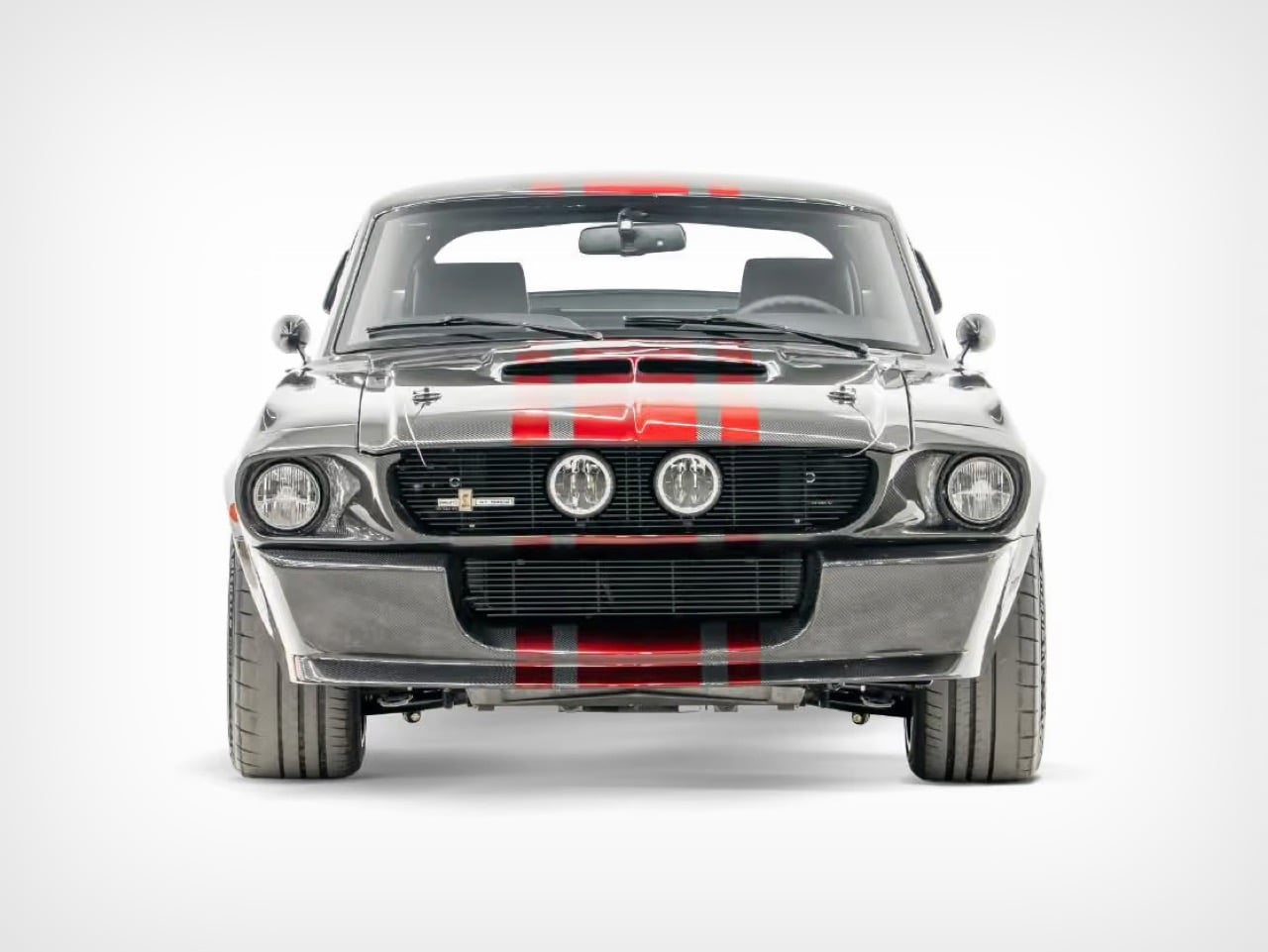
Every cue that made the 1967 car an icon survived the translation. The fastback roof, the twin-nostril hood scoop, the side intakes ahead of the rear wheels, and the full-width taillight bar all sit exactly where Shelby American put them. The racing stripes are red-tinted carbon, so the weave keeps showing through them like red cellophane laid over a checkerboard. Up front, LED driving lights fill the two center-mounted lamp positions in the grille, an update of the original’s center high beams. The dark weave does swallow some of the coke-bottle surfacing a white car would show off, though under studio lights those hips still pop.
1,000 Horsepower, With A Computer Holding The Leash


The reveal car’s company-rated 1,000 horsepower comes from a Wegner-built Gen 4X Coyote 5.0-liter V8 wearing a Whipple 3.0-liter inverted supercharger. A Suncoast-built 10R80 10-speed automatic sends that power through a Panhandle Driveline carbon driveshaft to a Ford 9-inch rear housing with a Gear FX 8.8 center section. Keeping it all sane is a FuelTech FT700 standalone ECU, which runs the engine and its traction control alongside a Vaporworx fuel controller. “A thousand horsepower only means something if the driver can use it,” says Cody Dabney, Director of Production at Velocity and Classic Recreations. For perspective, the original GT500’s 428 Police Interceptor V8 was rated at 355 horsepower, fed by a pair of Holley four-barrels.
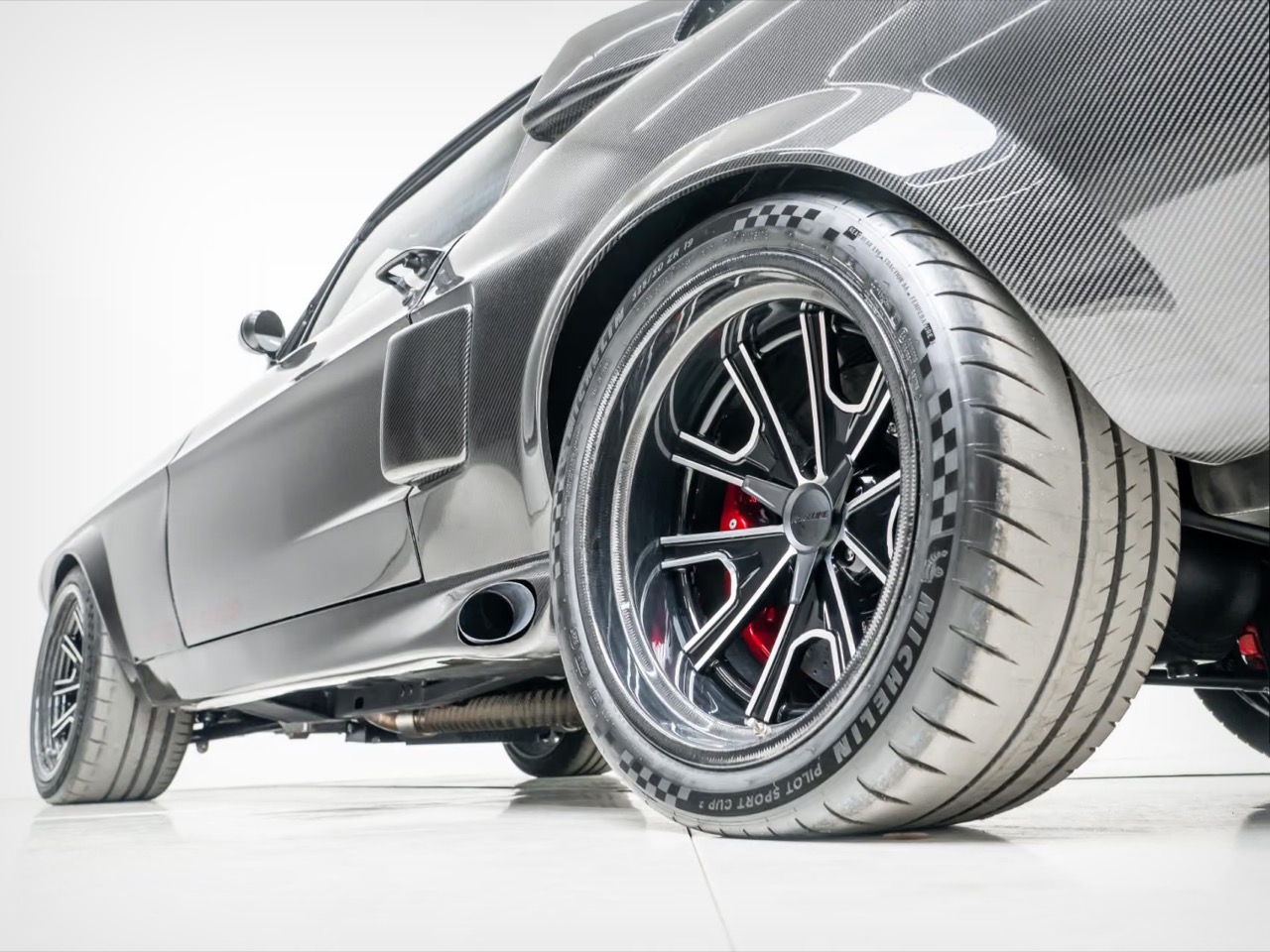
Detroit Speed’s Aluma-Frame front subframe and QuadraLink rear suspension replace the original’s leaf-sprung rear end entirely. Nitron Elec-Tron electronically controlled shocks adjust the damping on the fly, which is handy when your 1960s silhouette is carrying supercar output. Brembo CCM-R carbon-ceramic discs measure about 15 inches (380mm) at all four corners, clamped by six-piston calipers up front and four-piston units out back. Forgeline Carbon Grudge wheels wear Michelin Pilot Sport Cup 2 tires, rubber usually reserved for track-focused supercars. A side-exit exhaust tucked ahead of the rear wheels nods to period racing Mustangs and gives the V8 a shorter, louder path to your ears.
A Cockpit Signed By Carroll, Priced For Collectors
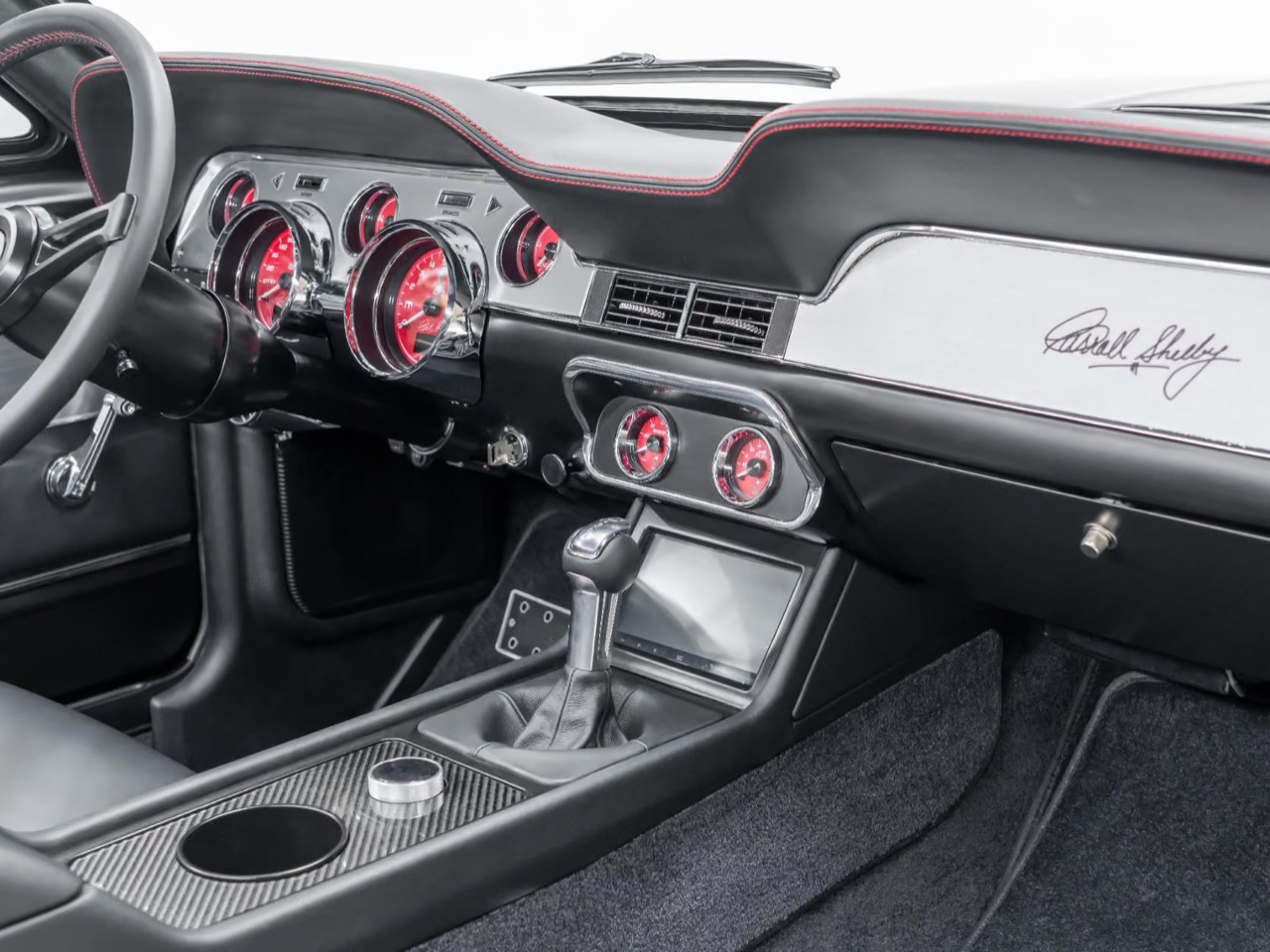
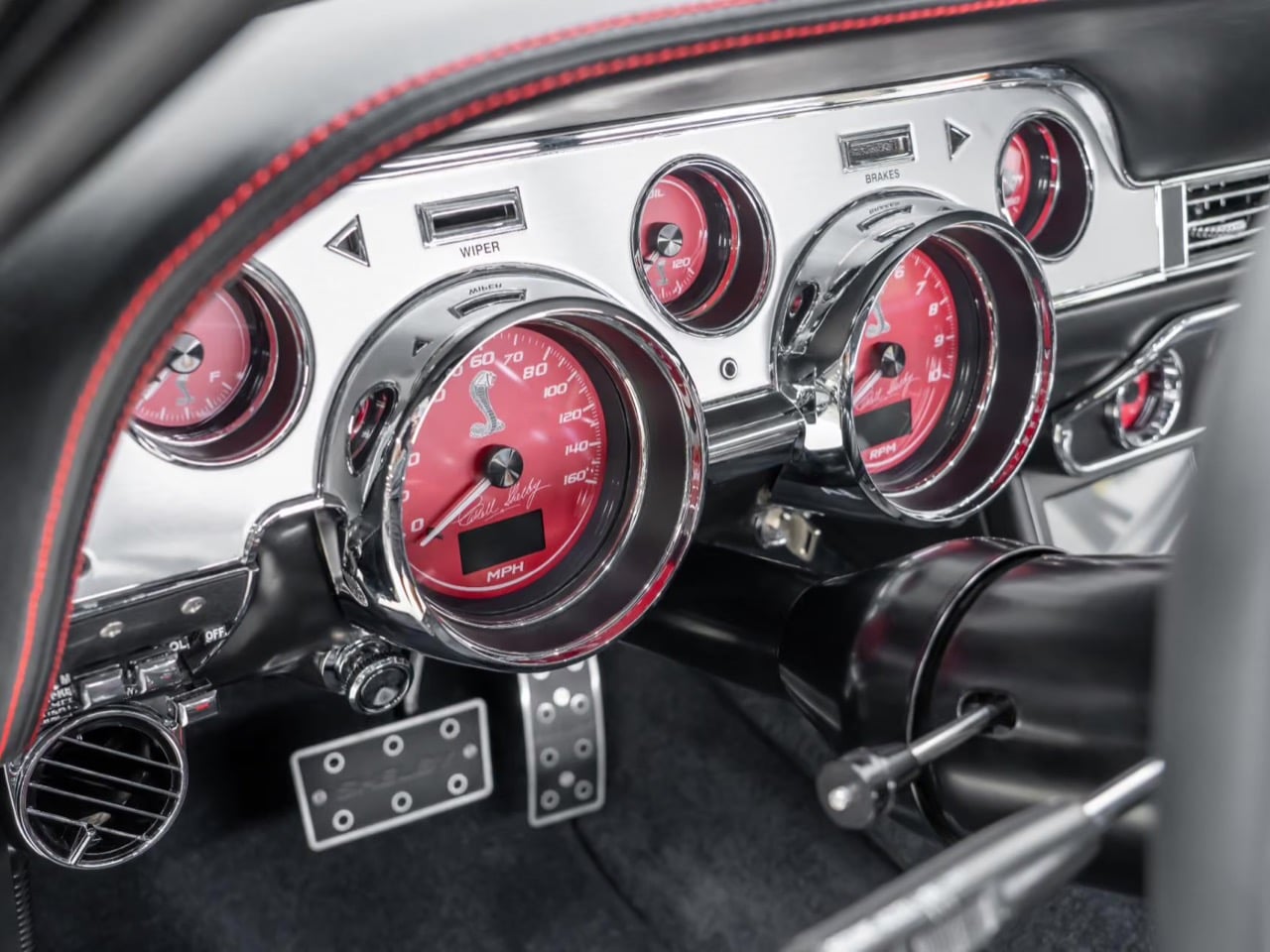
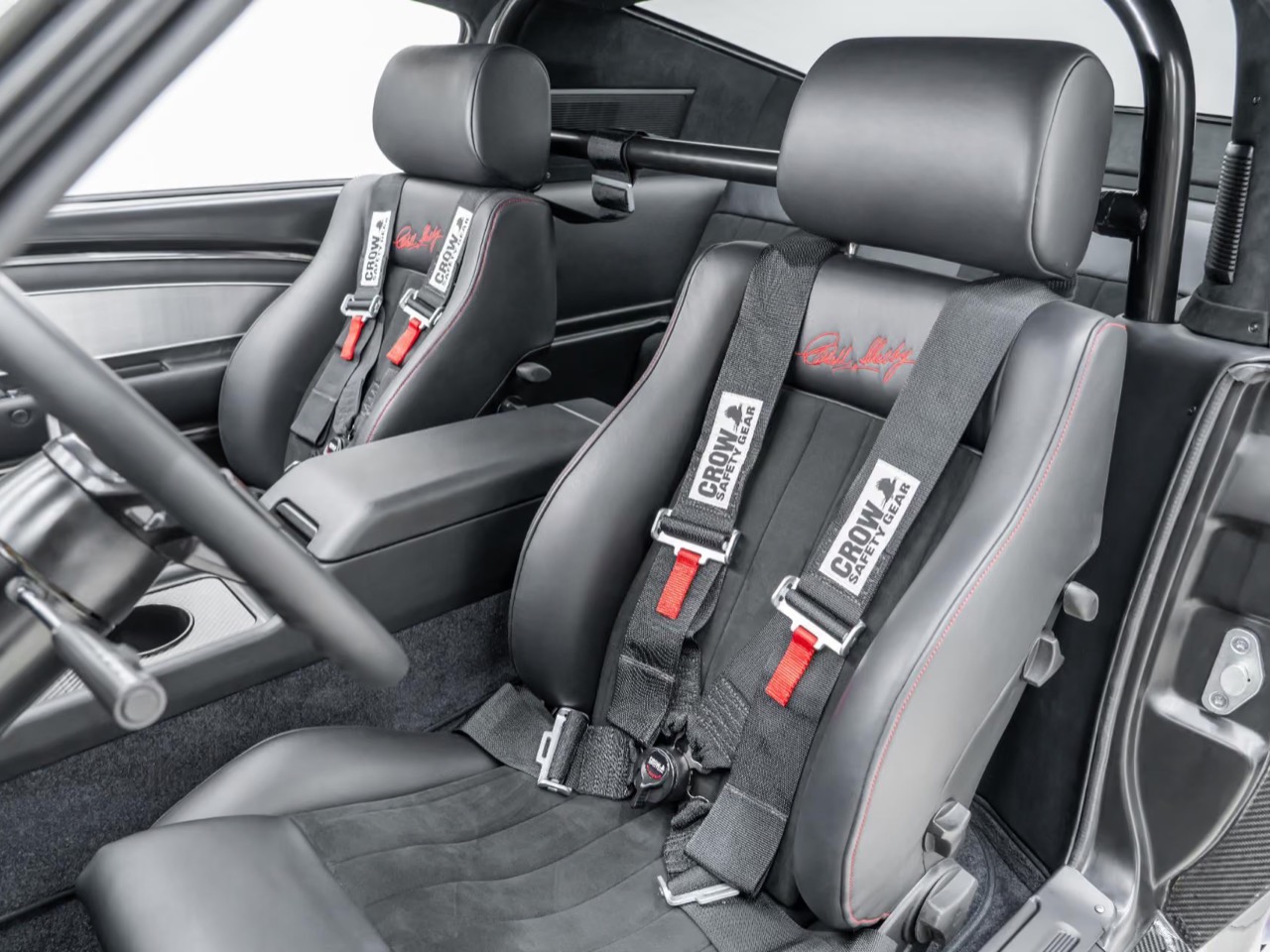
The cabin keeps the 1967 dash architecture, a brushed-metal fascia with big twin dials flanked by smaller gauges, filled with red-faced Dakota Digital instruments. Red contrast stitching traces the dash top, a carbon insert dresses the console, and the seats carry Crow Safety Gear harnesses anchored to a roll bar. That combo is a sweet callback, since the 1967 GT500 shipped with a padded roll bar and inertia-reel shoulder harnesses borrowed from aviation. Vintage Air climate control, an Alpine head unit, Focal K2 speakers, and a Mosconi amp handle the modern comforts. My one edit would be the autographs, because Carroll Shelby’s signature appears on the dash, the gauges, and both seats, and one would land harder than four.
The GT500CR Carbon comes in three orderable stages: 500 horsepower for $549,900, a supercharged 700 horsepower for $624,900, and 900 horsepower for $724,900. Classic Recreations hasn’t priced the 1,000-horsepower reveal spec yet, and the company says 2026 build slots are nearly full, with 2027 reservations open. Every car gets a Shelby serial number and an entry in the official registry, which separates it from the endless parade of Eleanor tributes. Shelby American swapped steel for fiberglass in 1967 because lighter panels made a faster car. Classic Recreations simply picked the next material on the list.