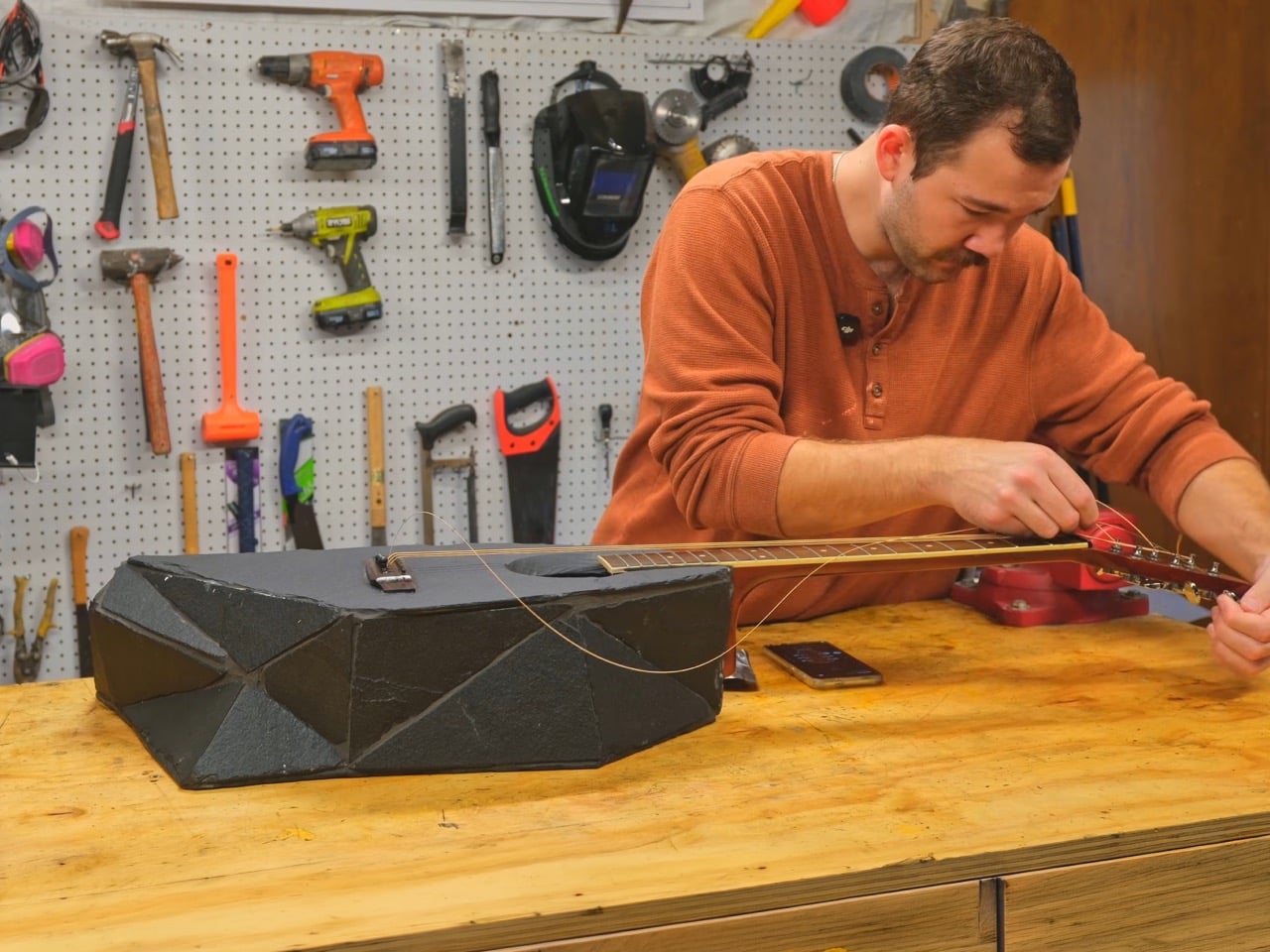
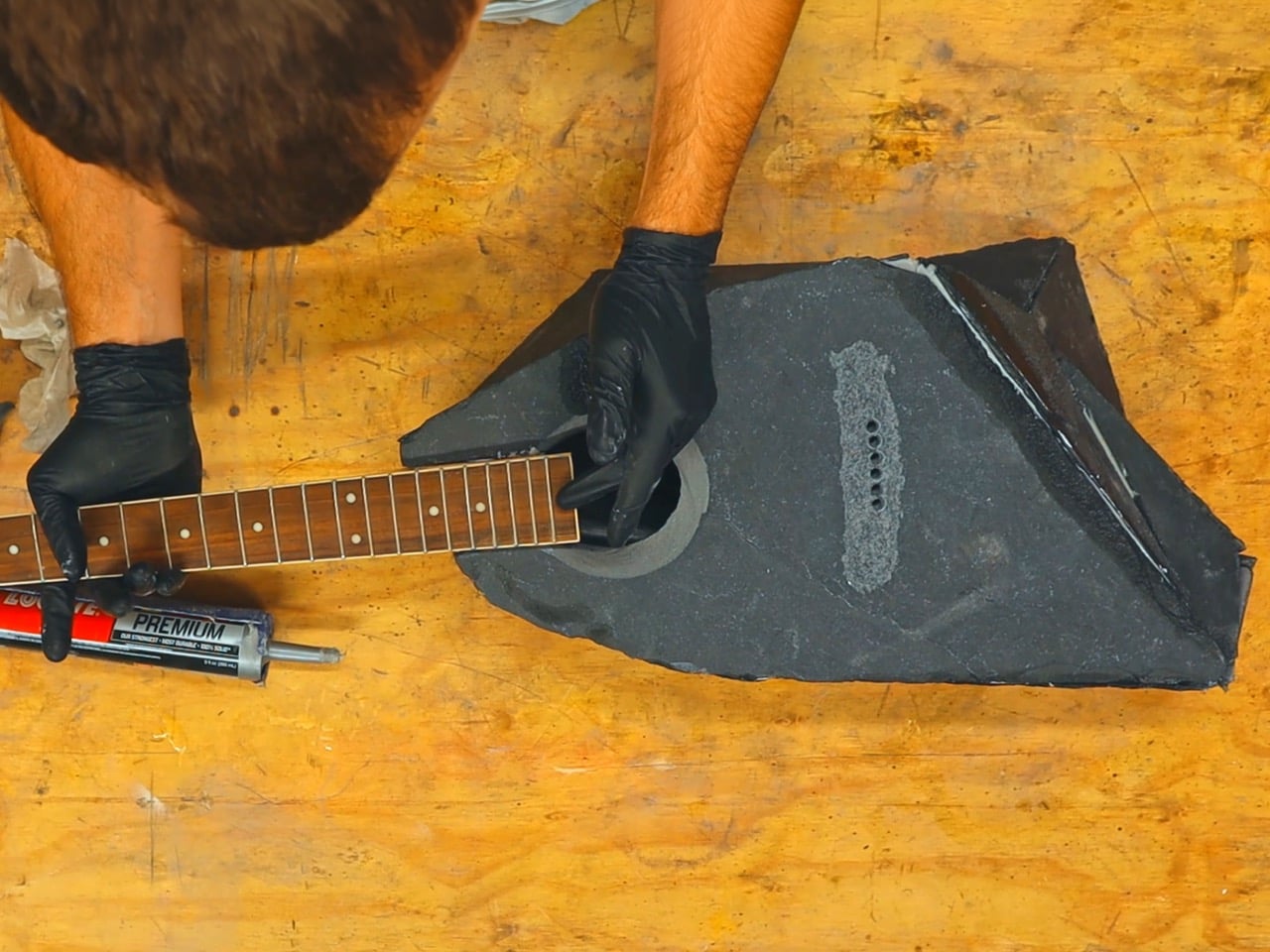
Almost every guitar ever made, acoustic or electric, comes from wood, which means the genre names have been lying to us the whole time. Rock guitar is not made from rock. Heavy metal is not made from iron ore. Somebody finally got tired of that gap between name and material, and a YouTuber going by BeBeau Builds decided the phrase “rock guitar” had the potential to be the greatest dad joke ever attempted with a table saw. So he sacrificed a perfectly good acoustic guitar, kept the fretboard, and built the rest of the instrument out of actual slate stone. It works. It plays. It is somehow real.
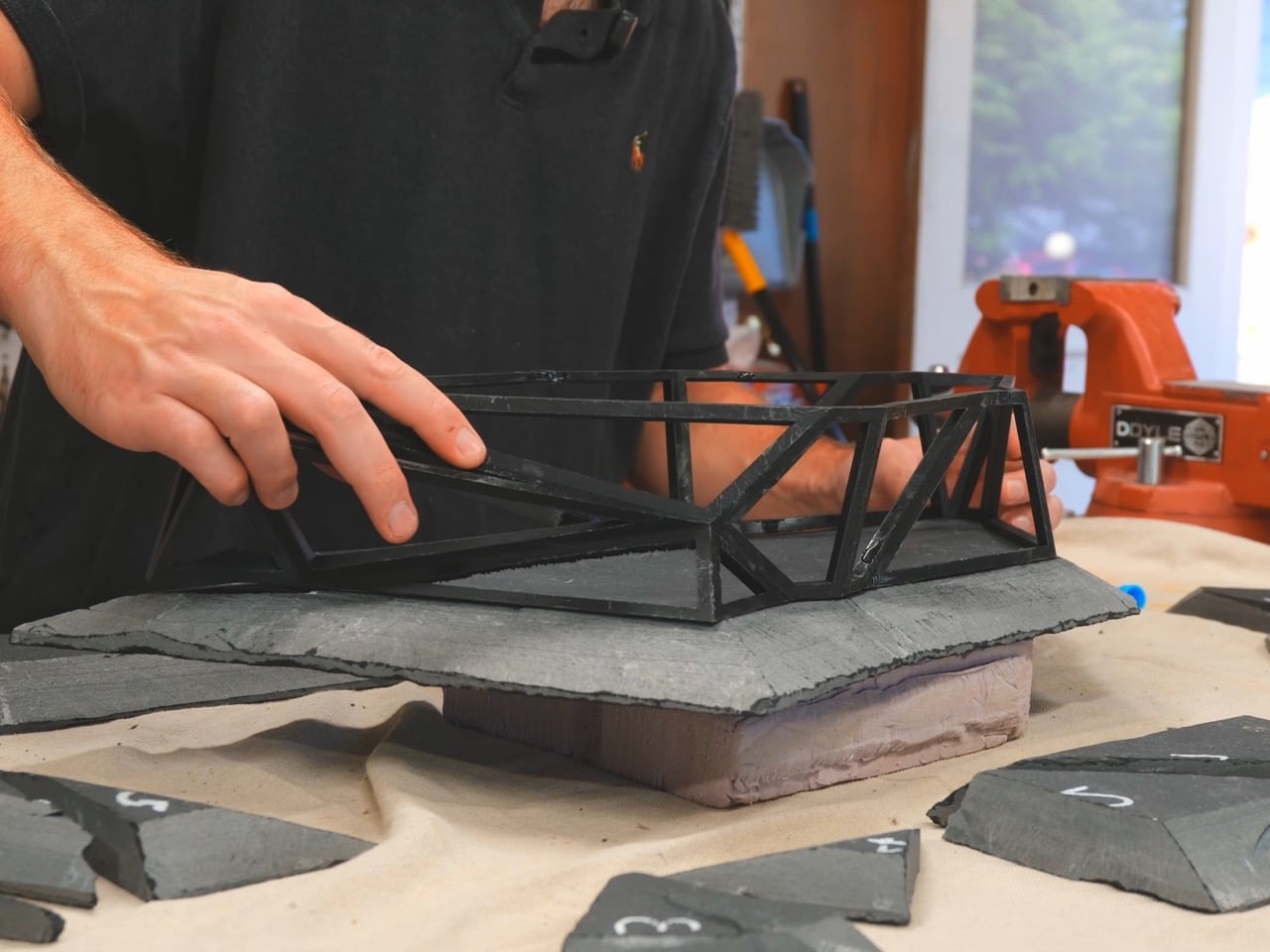
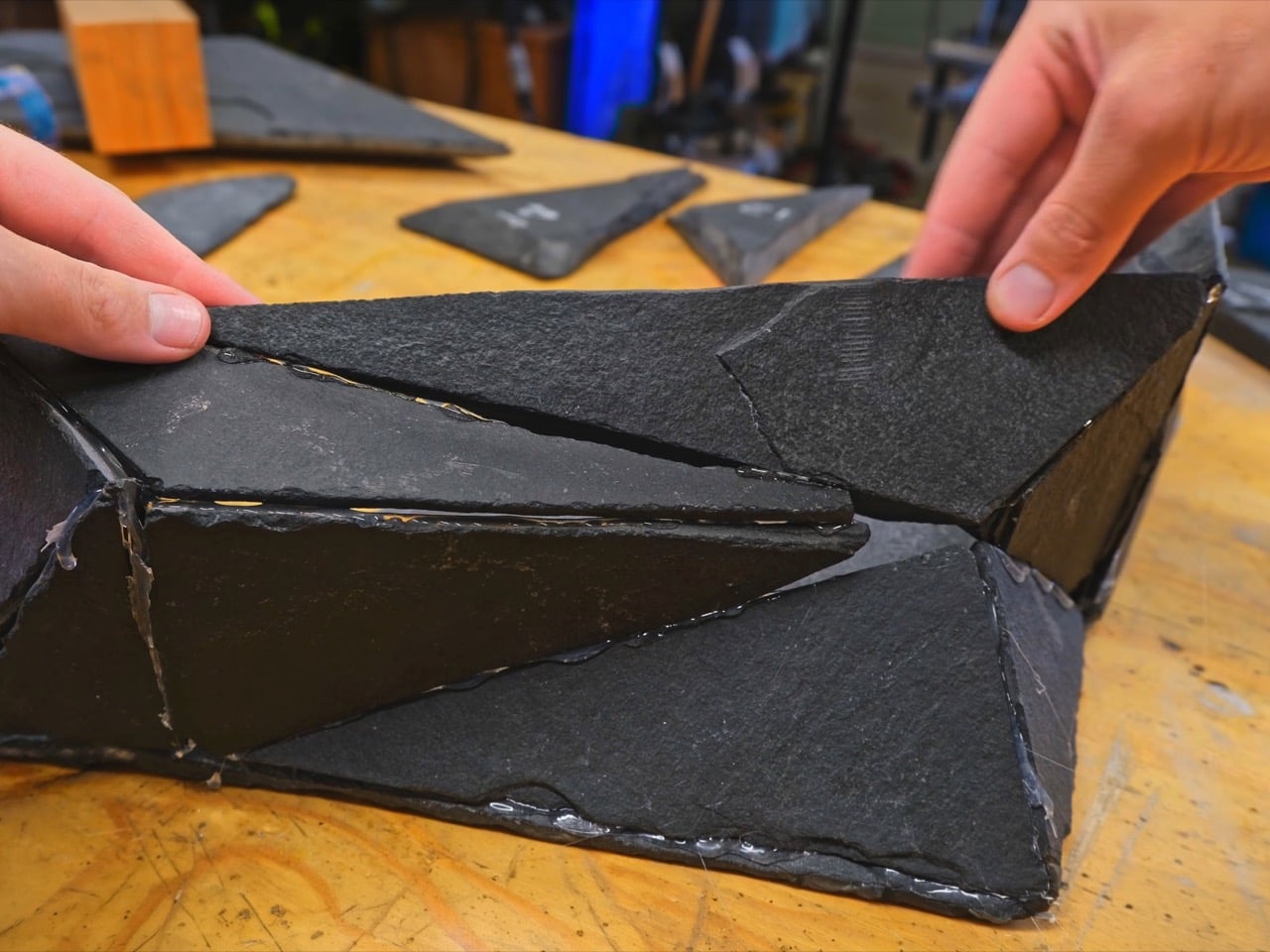
Repurposing the neck and fretboard from a donor acoustic, BeBeau built an internal armature to hold the stone in place, then pieced together individual slabs of slate into a guitar body that looks like the spiritual cousin of Rocky from Project Hail Mary. Eighteen separate stone pieces went into the shape, cut and glued over a 3D printed skeleton, because free handing eighteen matching slabs by eye would have ended several friendships. The finished instrument weighs just under 49 pounds, which is closer to a car battery than a guitar. Somehow it still sounds like one.
Designer: BeBeau Builds
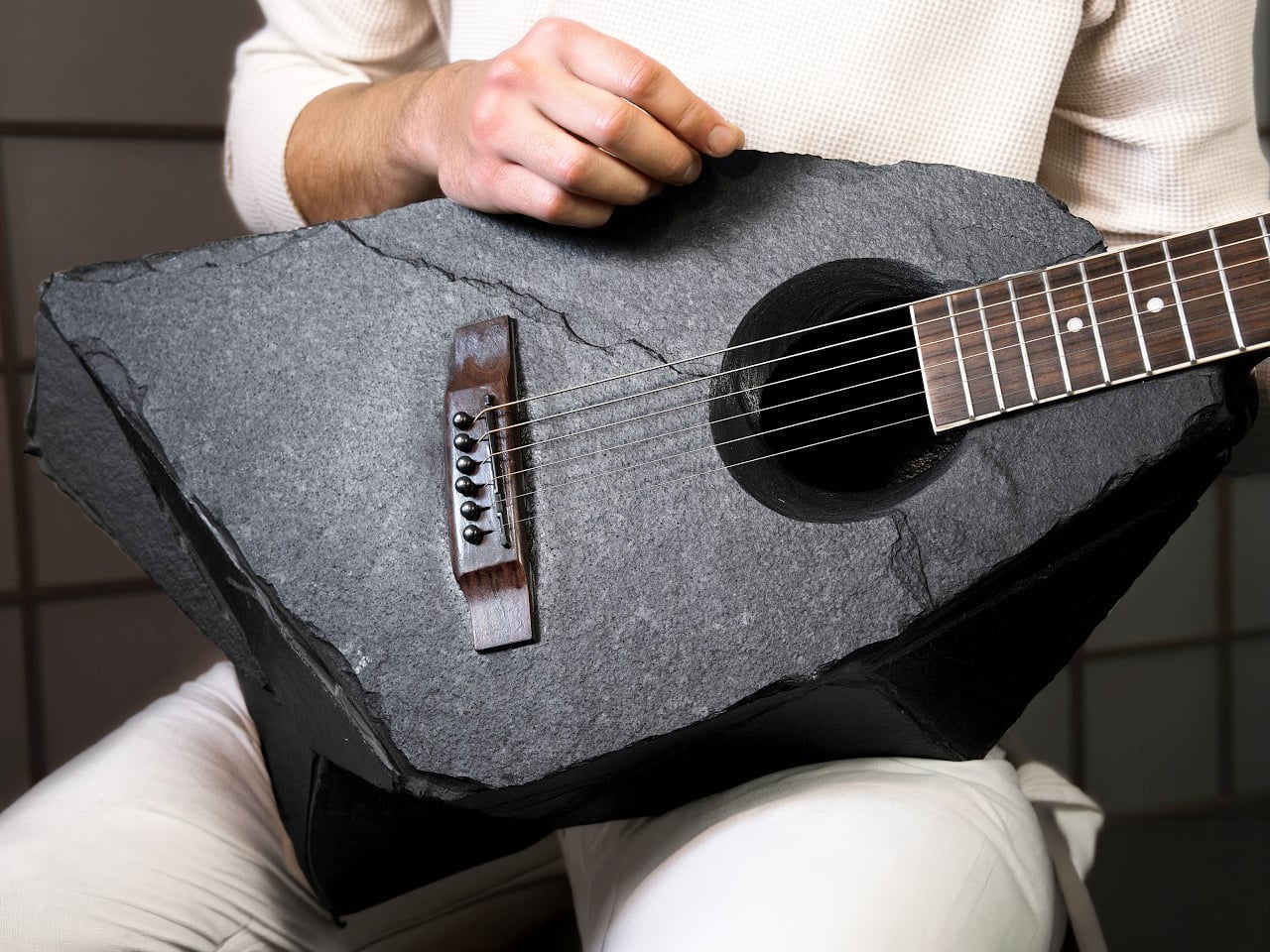

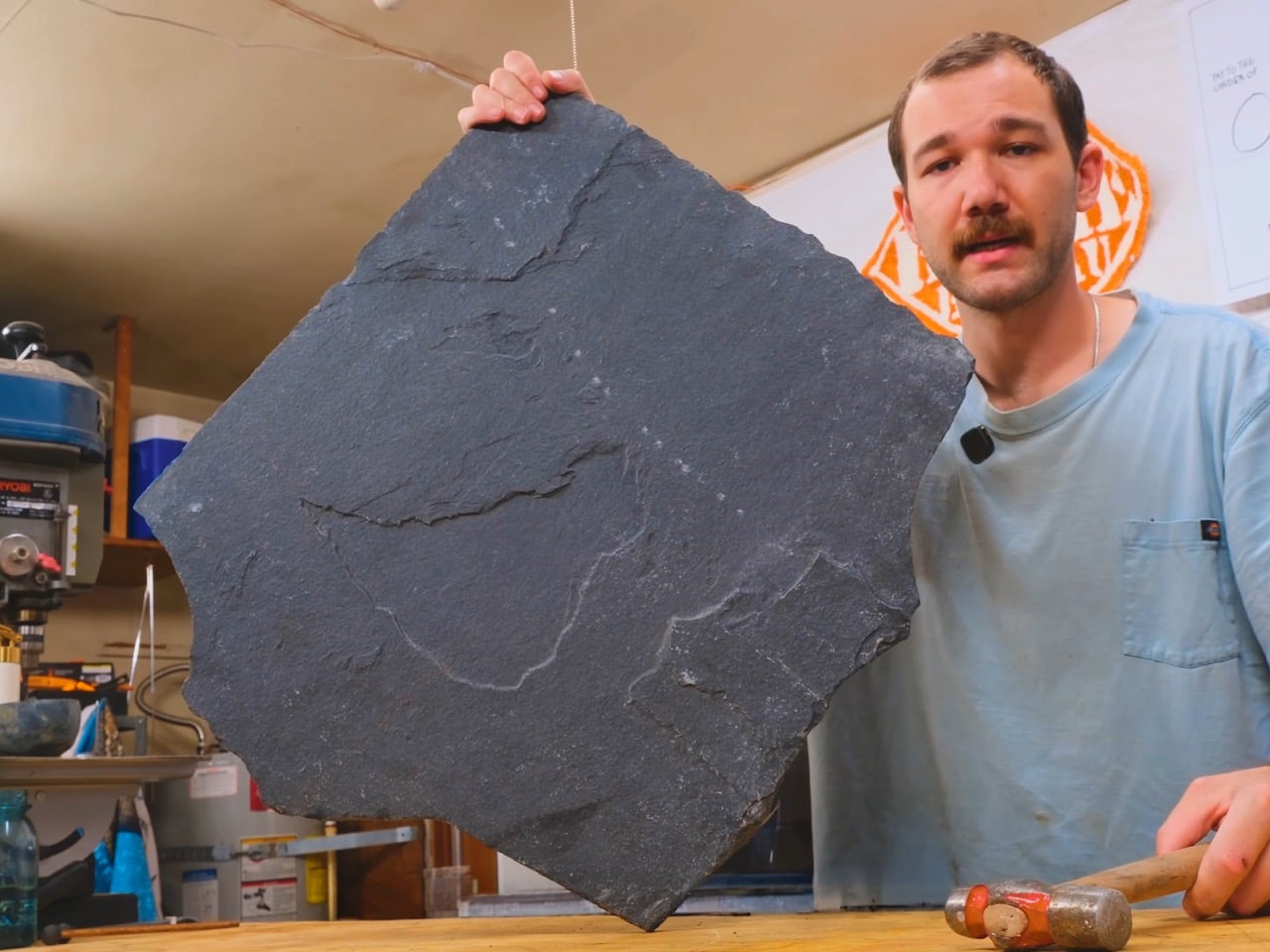
Slate was not exactly the obvious pick here, but it makes more sense for purely logistical reasons. The stone splits into clean, flat sheets naturally, which is exactly why it has been used for roofing tiles and pool tables for centuries, and that same property made it possible to cut consistent slabs for a guitar body instead of fighting a shapeless boulder. A tile saw got tried first and overheated almost immediately on material this thick, which tells you slate was never meant to be machined like plywood. The build leaned on 3D printed templates to keep eighteen individually cut pieces close enough in dimension to actually fit the internal skeleton. Even with that help, thickness varied enough across slabs that small angle errors piled up until the whole assembly stopped lining up, forcing a redo.
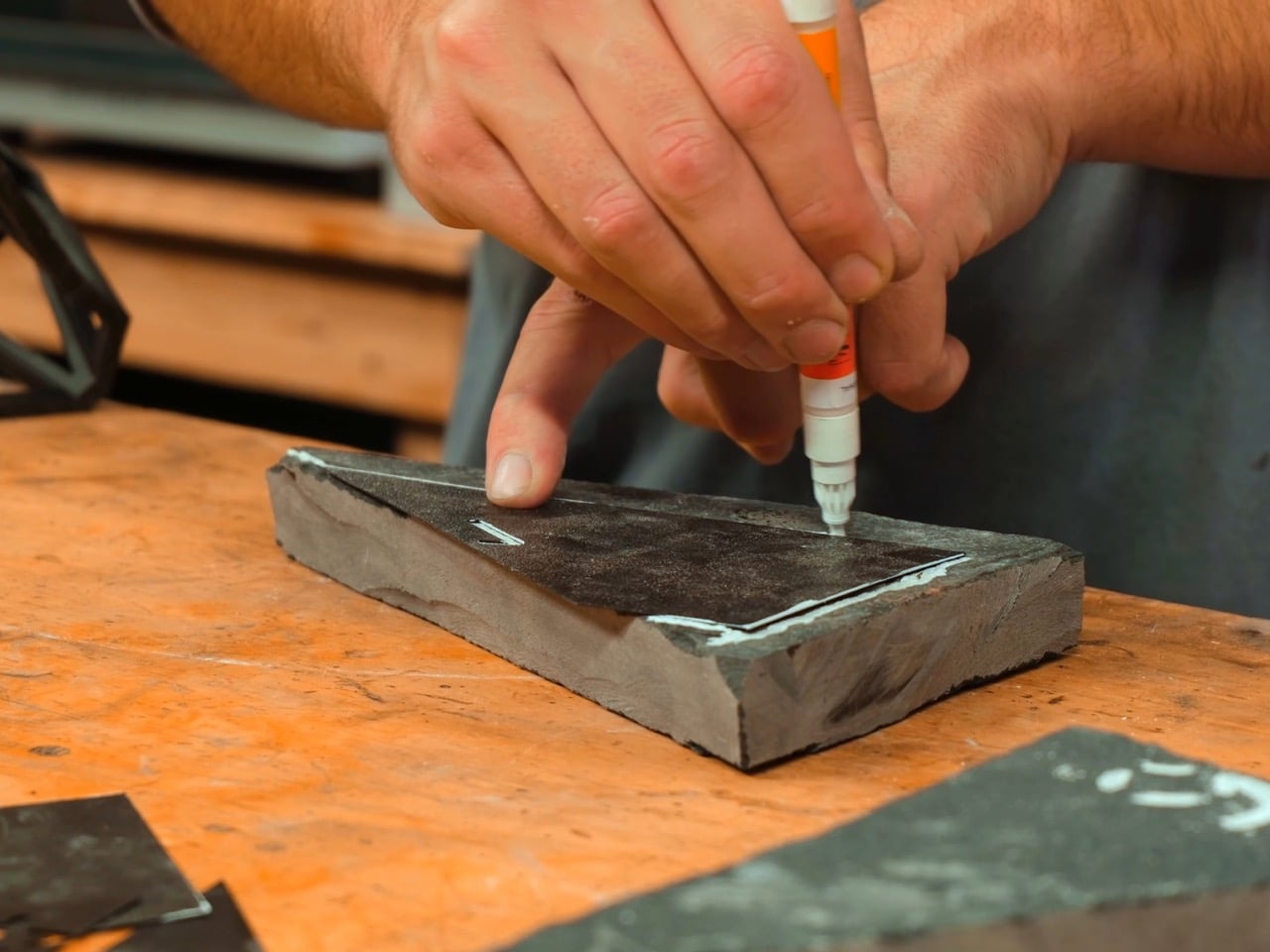
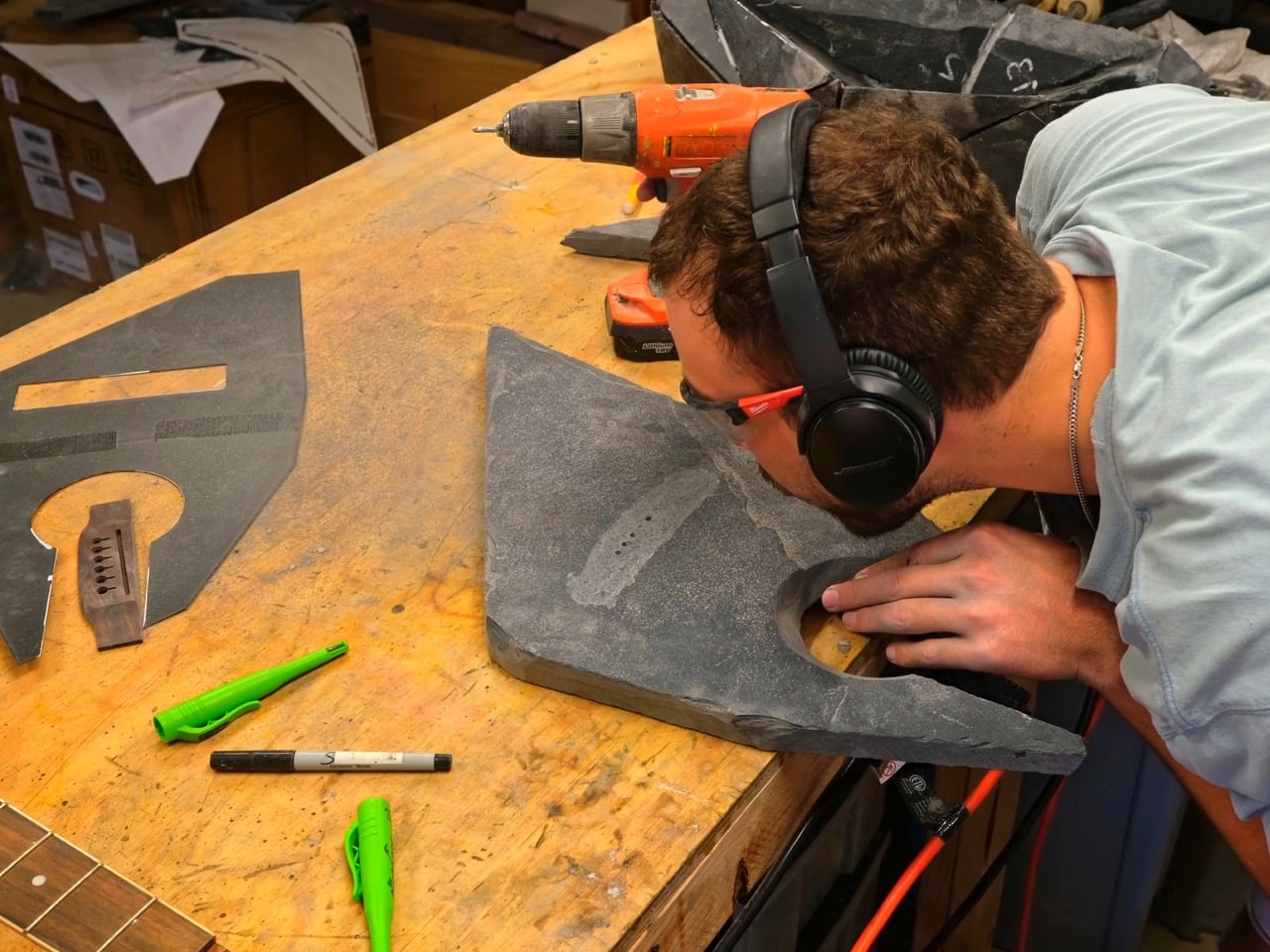
The first full glue attempt failed outright and had to be scraped clean by hand, a multi hour job that nobody signs up for twice. The fix was smarter the second time around, using hot glue as a temporary skeleton while construction adhesive filled the gaps and did the actual structural work over several days of curing. One piece of the soundboard cracked during shaping, which is the kind of moment that ends most builds, except a spare slab was on hand and it turned out to have even better tone than the original. Mineral oil went on at the end, both to protect the stone and to give it the same worn, wet look you would expect from a countertop rather than a guitar.
Here is the part that actually surprised me. Strummed unplugged, this thing sounds a lot closer to a normal wooden acoustic than a 49 pound rock guitar has any business sounding, trading off mostly in reduced volume and shorter sustain rather than some completely alien tone. Compare that to steel bodied resonators like the Dobro, which change an instrument’s voice dramatically even at a fraction of this weight, and slate starts looking less like a stunt and more like a real data point on how much a guitar’s material actually shapes its sound. The trade-off is obvious and unavoidable. Nobody is retiring their dreadnought for a slab of rock that weighs as much as a mini fridge shelf, and the neck angle on this build is slightly off, which stretches the strings sharp under fretting pressure.
Still, as a proof of concept, it lands. Burls Art has made a habit of testing whether guitars actually need to be guitar shaped materials at all, and we covered his cardboard guitar, built from laminated corrugated sheets and resin, which he engineered by studying the alternating grain structure of the Wiggle Side Chair to survive real string tension. Before that there was a fully functional bass built from 2000 LEGO bricks, and a guitar whose body was cast from 5,000 roasted coffee beans suspended in epoxy, so a rock guitar fits an established pattern of testing lutherie against materials that have no business holding a string. BeBeau’s slate build earns its place in that lineup by actually working as an instrument instead of just posing as one. A trained player still needs to put this through its paces before anyone calls the tonal verdict final. Until then, the dad joke holds up, and honestly, that might be the best review it needed.