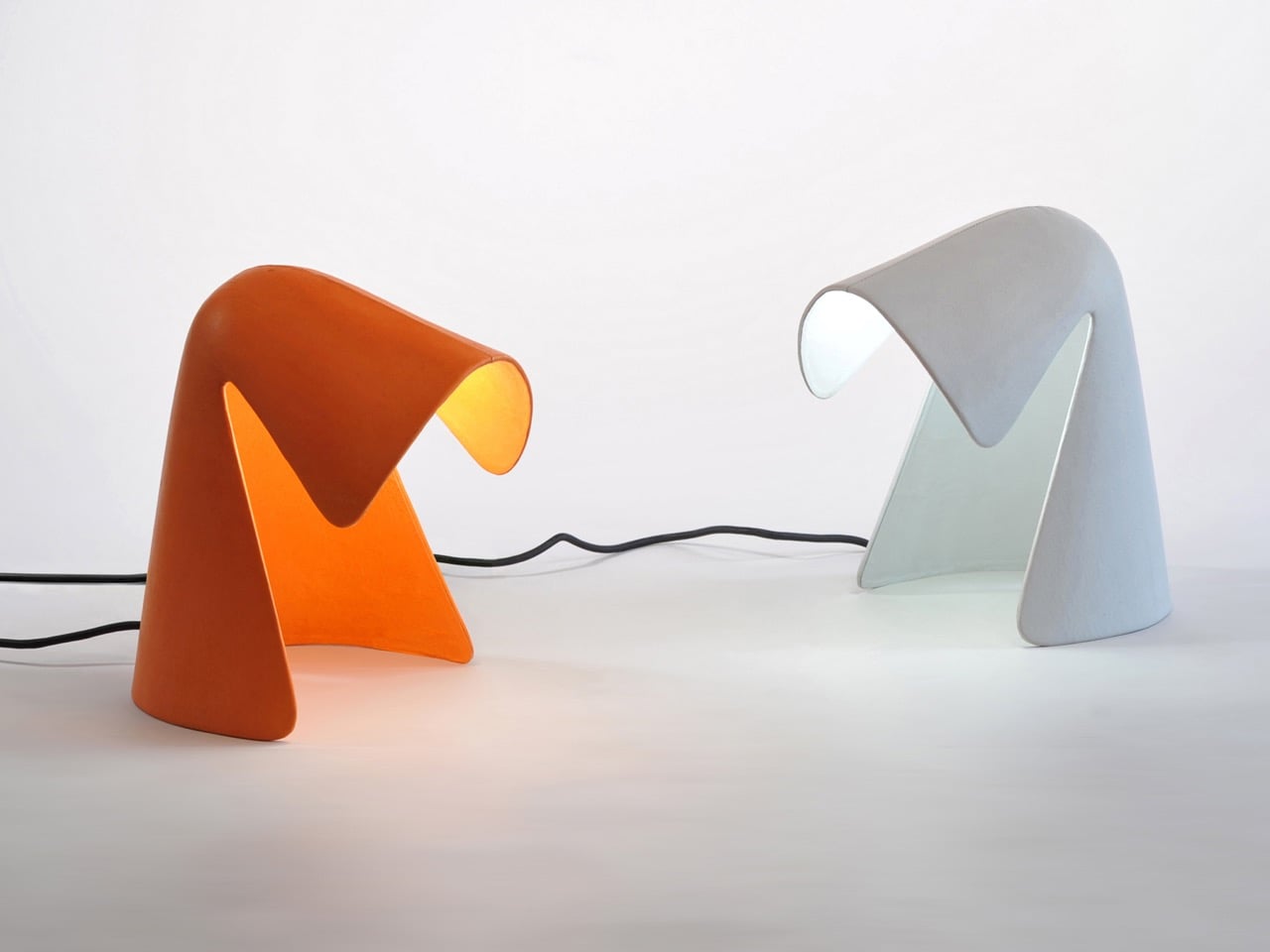

There are objects designed to illuminate a room, and then there are objects that quietly change the way a room feels. Otsuchi, a table light by a Japanese designer, belongs firmly to the latter. At first glance, it reads as an intriguing sculptural lamp. Look closer, and its story reveals something far more layered: an exploration of life, loss, material memory, and the possibility of giving an otherwise discarded resource a new purpose.
The lamp takes its name from Otsuchi in Iwate Prefecture, Japan, a coastal town devastated by the tsunami that followed the 2011 Great East Japan Earthquake. In the years since, the community has faced another, less visible challenge. As the local human population declined, deer numbers increased significantly, damaging agricultural crops in the region. Local hunters consequently began developing a gibier business around animals that needed to be culled, finding ways to make fuller use of the deer rather than allowing their lives to end as little more than pest control. Otsuchi emerges from this context, using deer leather as a way of extending the material life of the animal and translating it into something that can remain present in a home.
Designer: Yuto Yamada
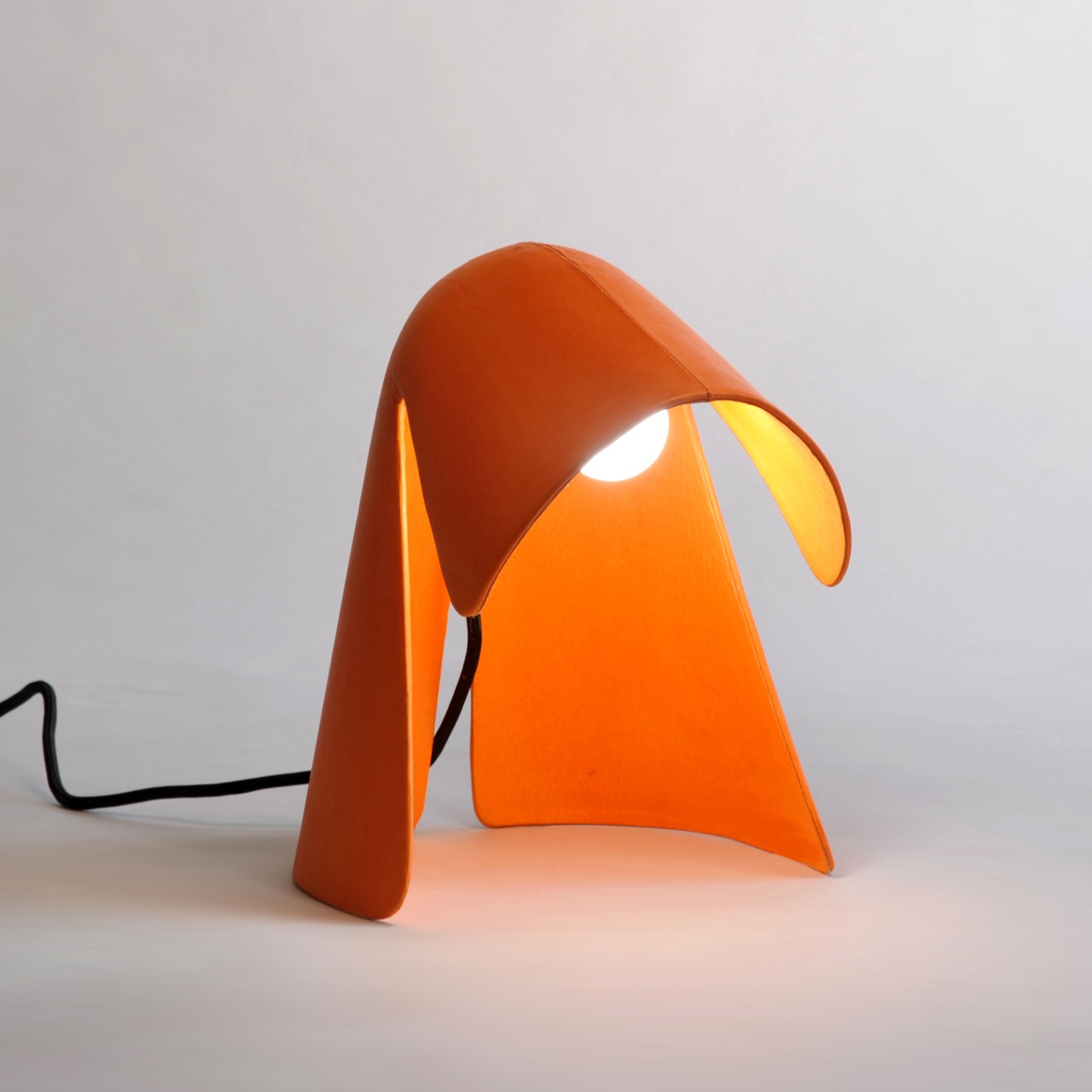

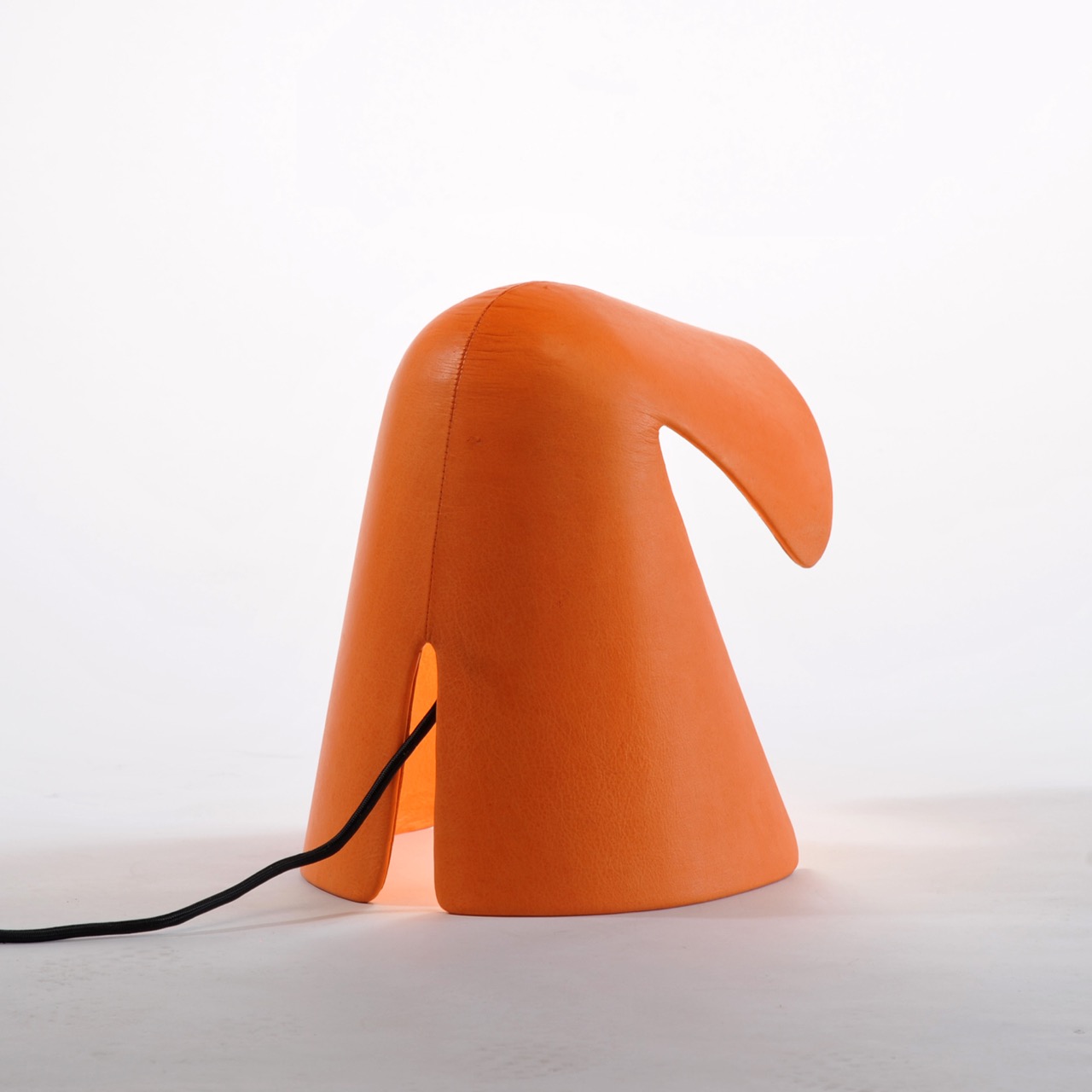
That history could easily have turned the lamp into an object dominated by its narrative, but Yamada avoids that trap. The story is embedded in the material rather than spelled out through an overly literal form. The result sits somewhere between product design and art. It unmistakably functions as a light fixture, yet its silhouette and surface possess an almost animalistic quality. The leather does not simply cover the lamp; it gives the object a kind of skin. Its grain, subtle irregularities, and softness create the impression that the surface might once have breathed.
This sense of vitality is what makes Otsuchi so compelling. Most lamps are intentionally static. Their purpose is architectural: to illuminate a desk, soften a corner, or provide a pool of ambient light. Otsuchi feels strangely alive by comparison. Its organic contours and tactile exterior introduce a sense of wilderness into an otherwise domestic object. It does not resemble a deer in any obvious figurative way, yet it somehow carries the presence of one.
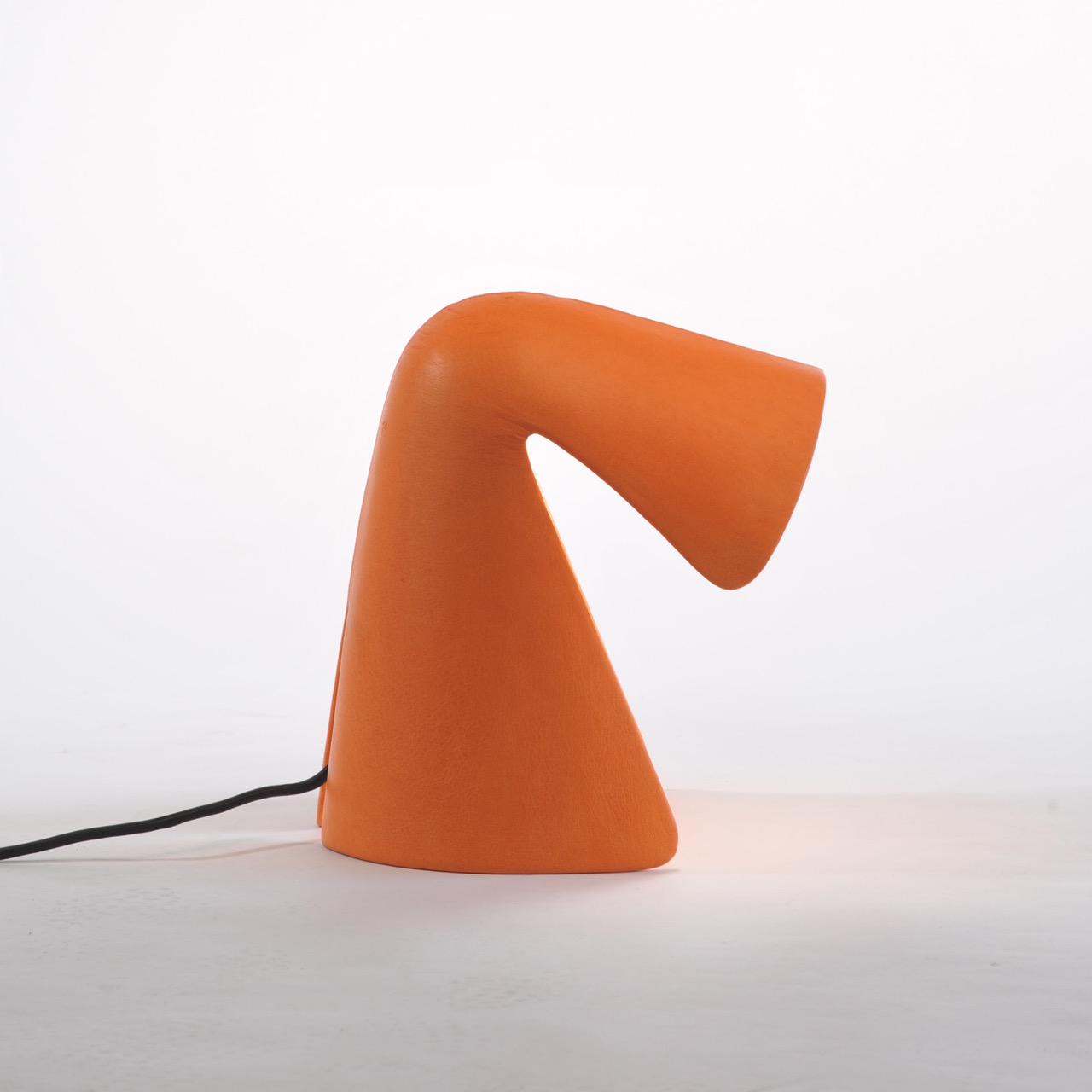
The construction adds another layer of interest. Beneath the leather is a 3D-printed structure, creating a rigid framework over which the hide can be carefully formed. It is a thoughtful meeting of contemporary fabrication and an unmistakably natural material. Leather is usually associated with flexibility, something wrapped, stretched, folded or worn. Here, paired with the underlying printed form, it becomes architectural enough to define the body of a lamp. That contrast is particularly satisfying: digital manufacturing establishes precision and structure, while the leather restores individuality, texture and imperfection.
Light completes the transformation. Rather than producing a sharp or intrusive glow, the shade diffuses illumination into something softer and more intimate. The effect feels suited to a bedside table, reading corner or quiet hospitality setting, where light needs to provide atmosphere without visually competing with the people around it. Its warmth is not simply a matter of color temperature; it seems amplified by the material itself. Light passing across leather feels inherently different from light reflecting from polished metal, plastic or glass. There is a depth and softness to it that makes the lamp comfortable to look toward rather than something that demands shielding from the eye.
It is this combination of material, story and atmosphere that prevents Otsuchi from becoming merely an exercise in sustainable reuse. Sustainability here is not presented as an aesthetic category. Instead, the lamp asks a more emotional question: what does it mean to continue the life of a material that once belonged to something living?
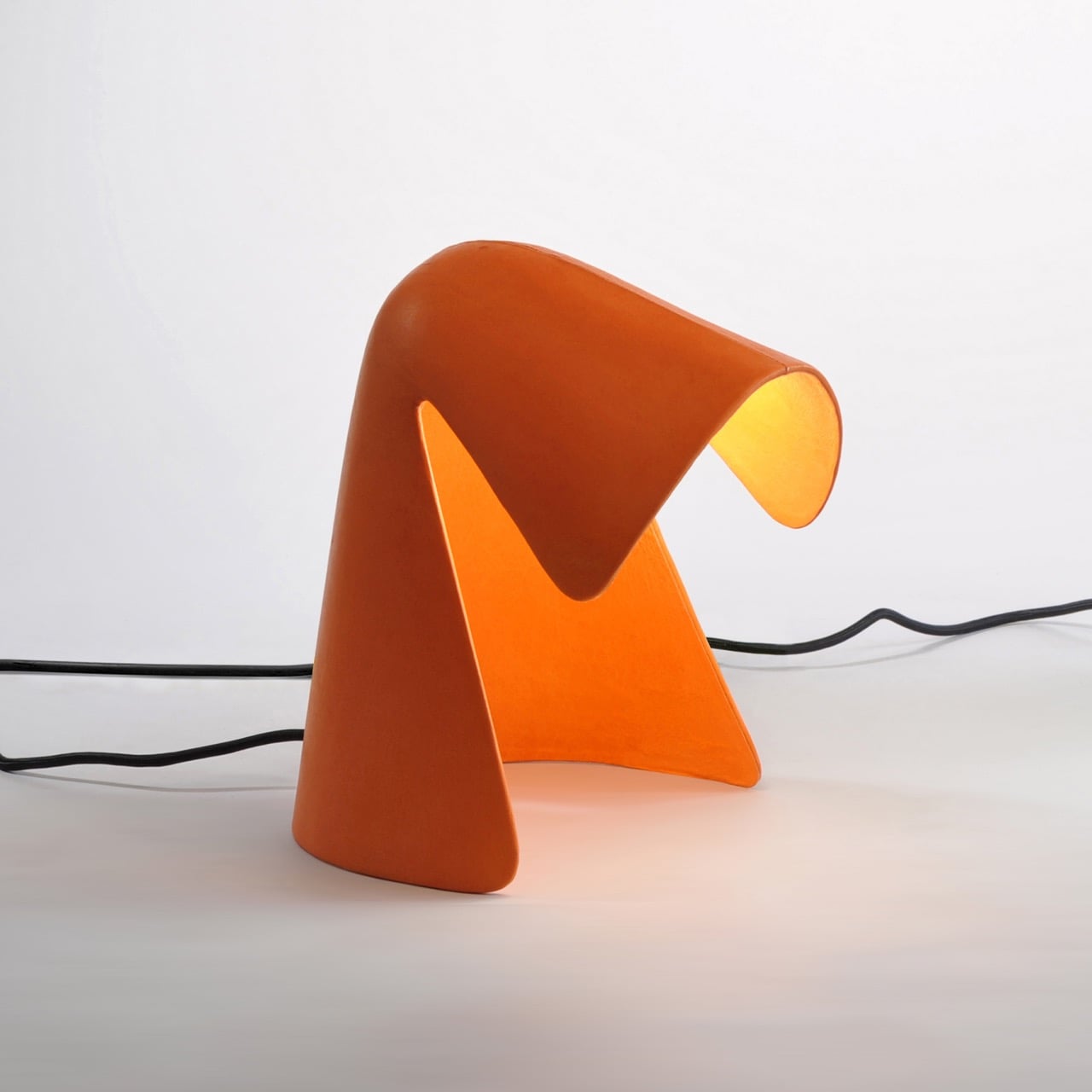
That idea is particularly powerful in a culture of products designed to arrive immaculate, identical, and disconnected from their origins. Otsuchi is the opposite. Its value comes partly from knowing where its material came from and why that material became available in the first place. The deer, the hunters, the changing population of Otsuchi, and the agricultural landscape are all indirectly present within the finished object.
Otsuchi demonstrates how a table lamp can carry more than light. It can carry geography, circumstance, and memory. Its wild texture reminds us of the animal it came from, while its gentle illumination transforms that history into something peaceful. In doing so, the lamp occupies an unusual and beautiful territory: not quite sculpture, not simply lighting, but an object through which a past life continues to cast a quiet glow.