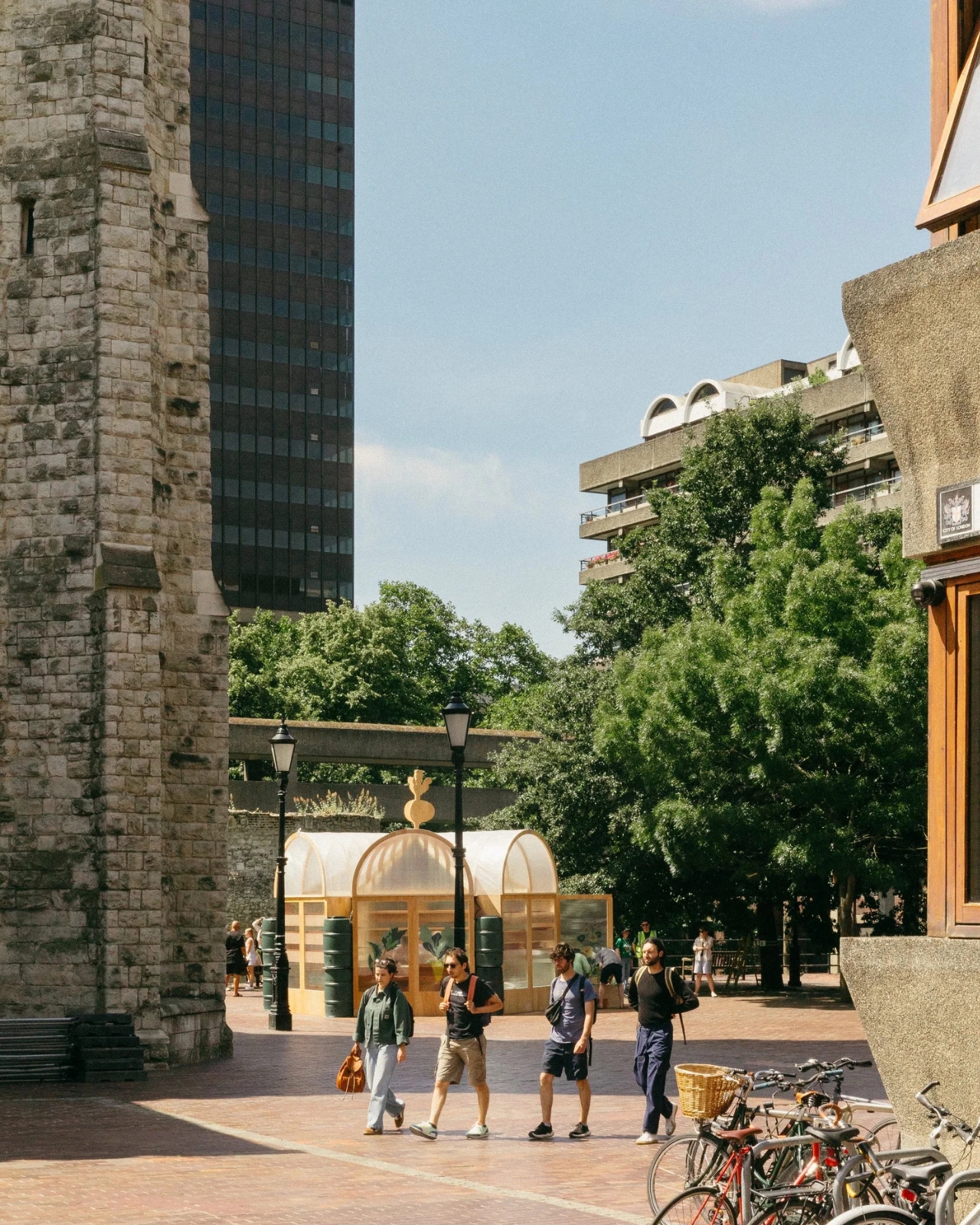
Most architecture competitions produce something sleek, serious, and slightly self-important. The Veggery is none of those things, and that’s precisely why it deserves your attention. Installed at the Barbican Estate’s St Giles Terrace in London, The Veggery is a temporary greenhouse pavilion designed by Studio Folk Architects and design-and-build studio Raskl. It was the winning entry to the “Seeds in the City” competition, organized by the Culture Mile Business Improvement District as part of the closing stretch of the 2026 London Festival of Architecture.
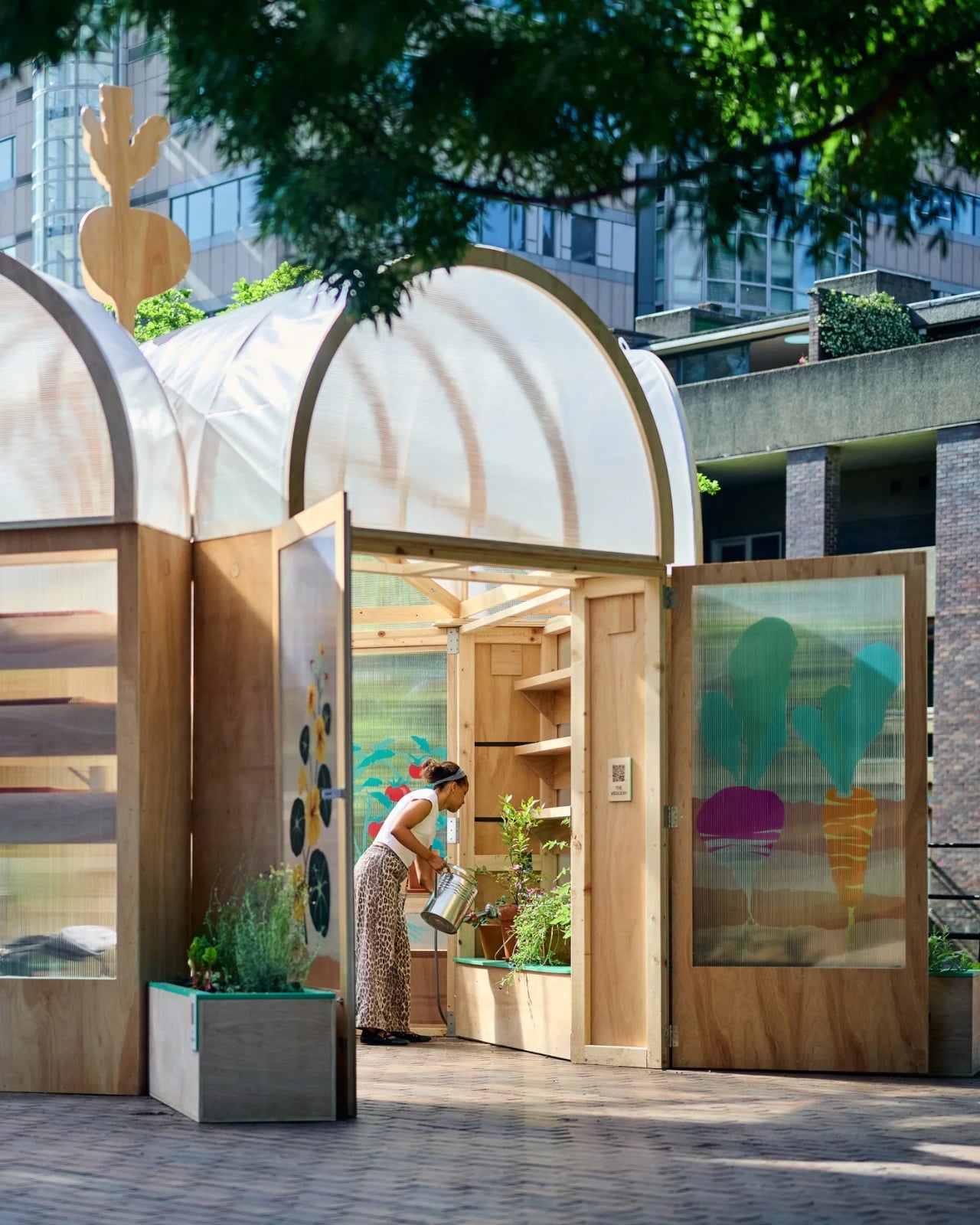
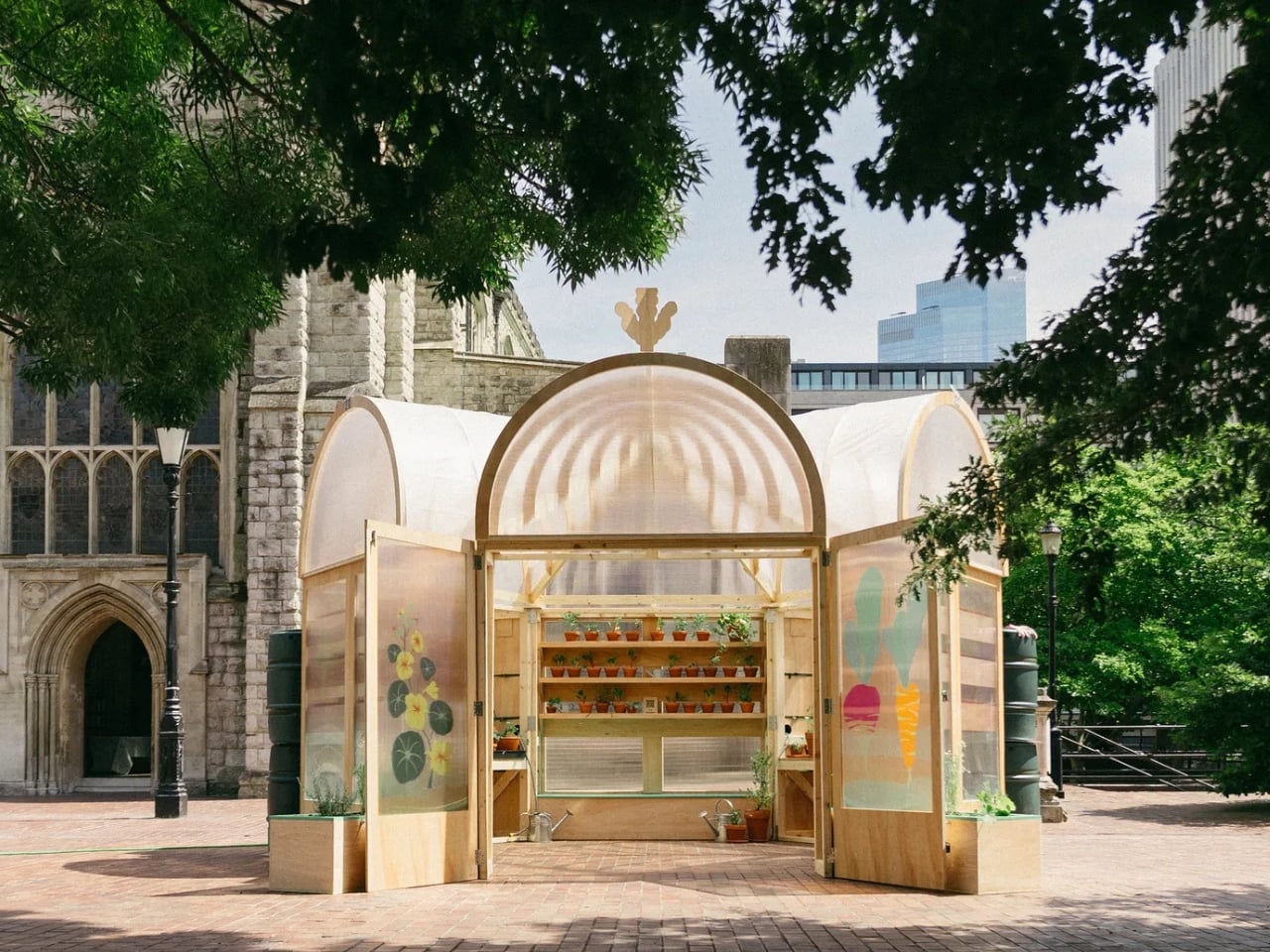
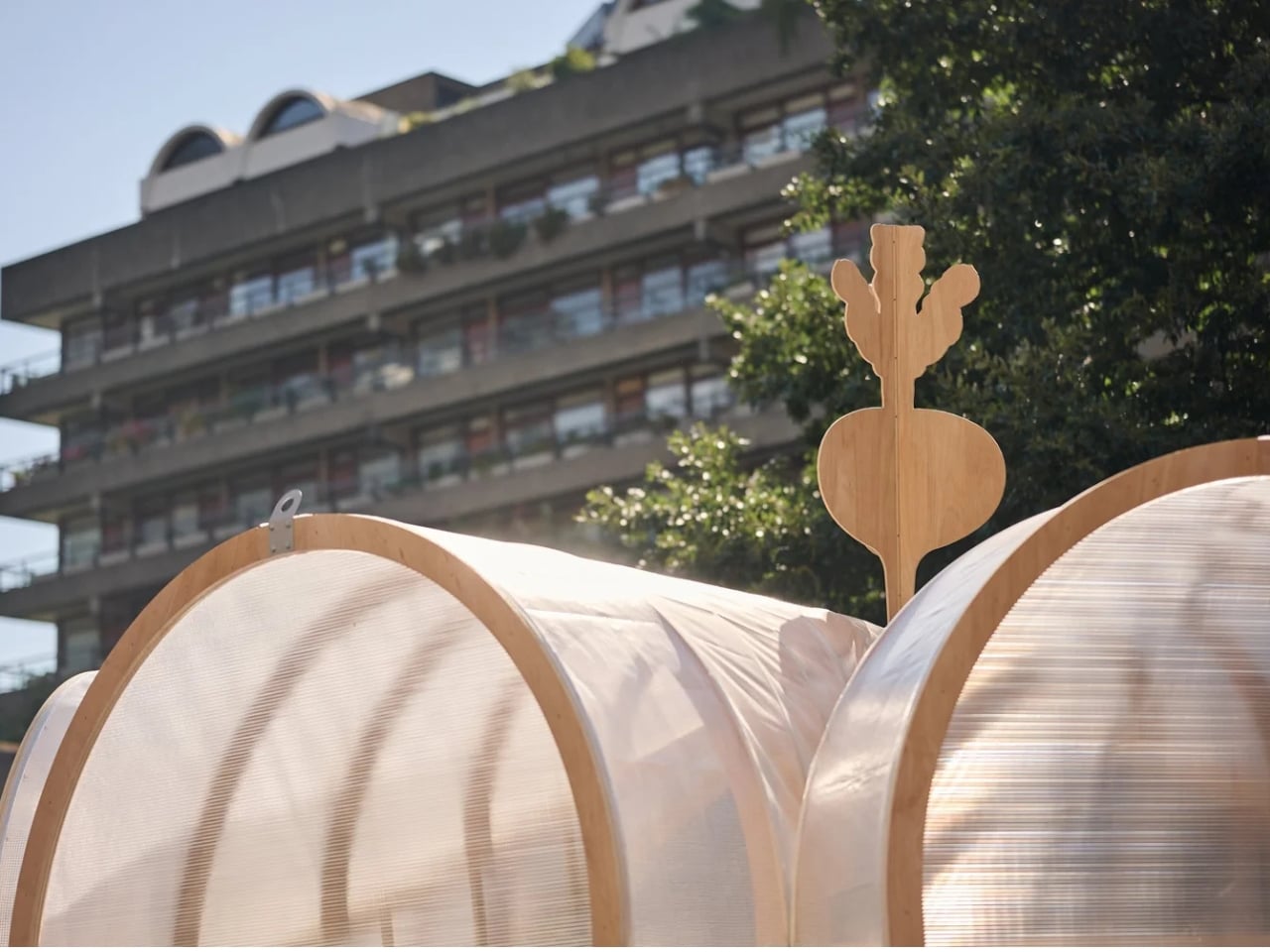
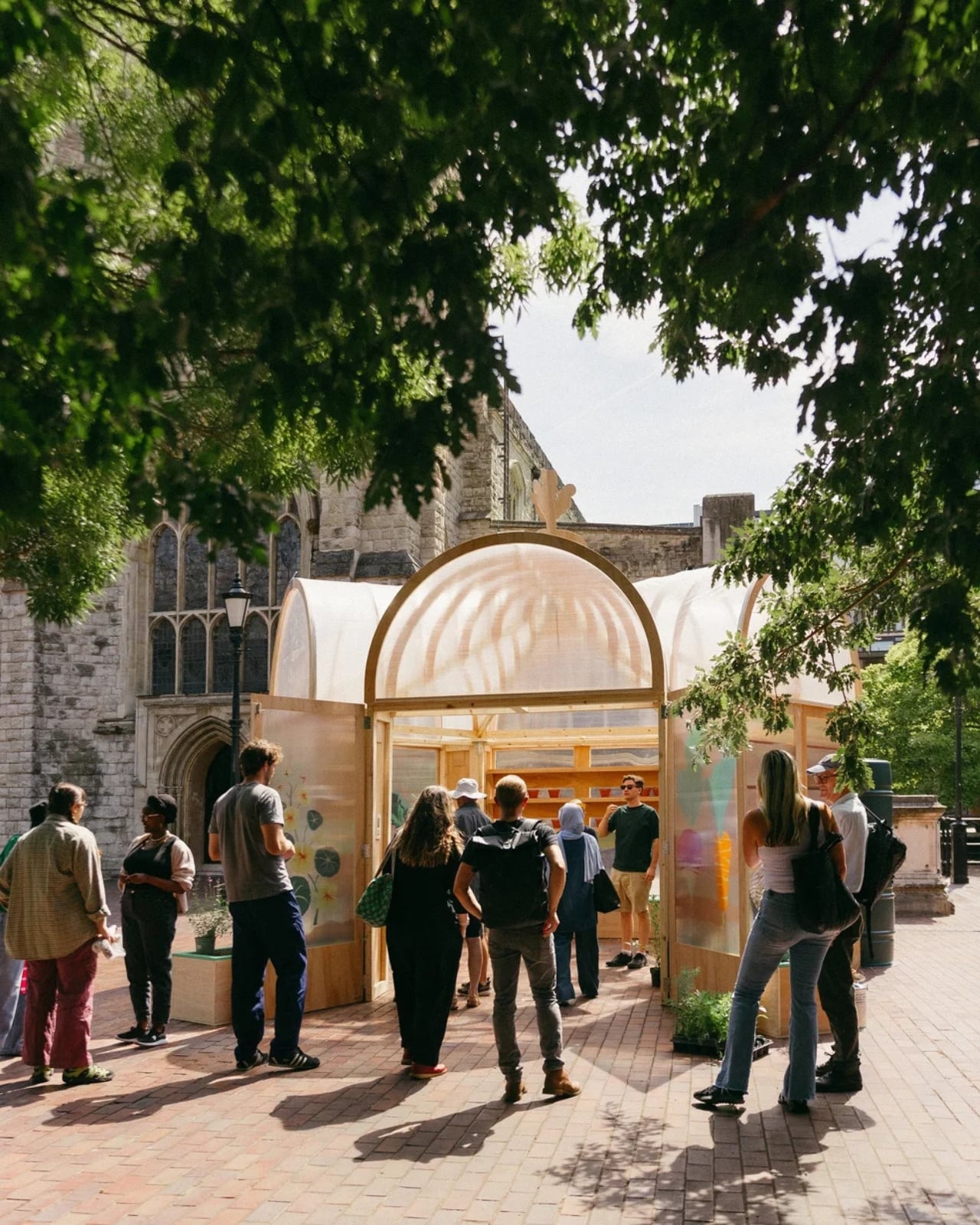
The brief asked designers to create a community-focused structure around food growing and sustainability. What came back was a hexagonal, domed greenhouse with a vaulted polytunnel roof, recycled water butts standing in as columns, and a one-metre-tall turnip finial sitting right at the top. Yes. A giant turnip. Perched at the apex of a greenhouse pavilion. On the Barbican Estate. I love it.
Designers: Studio Folk Architects and Raskl
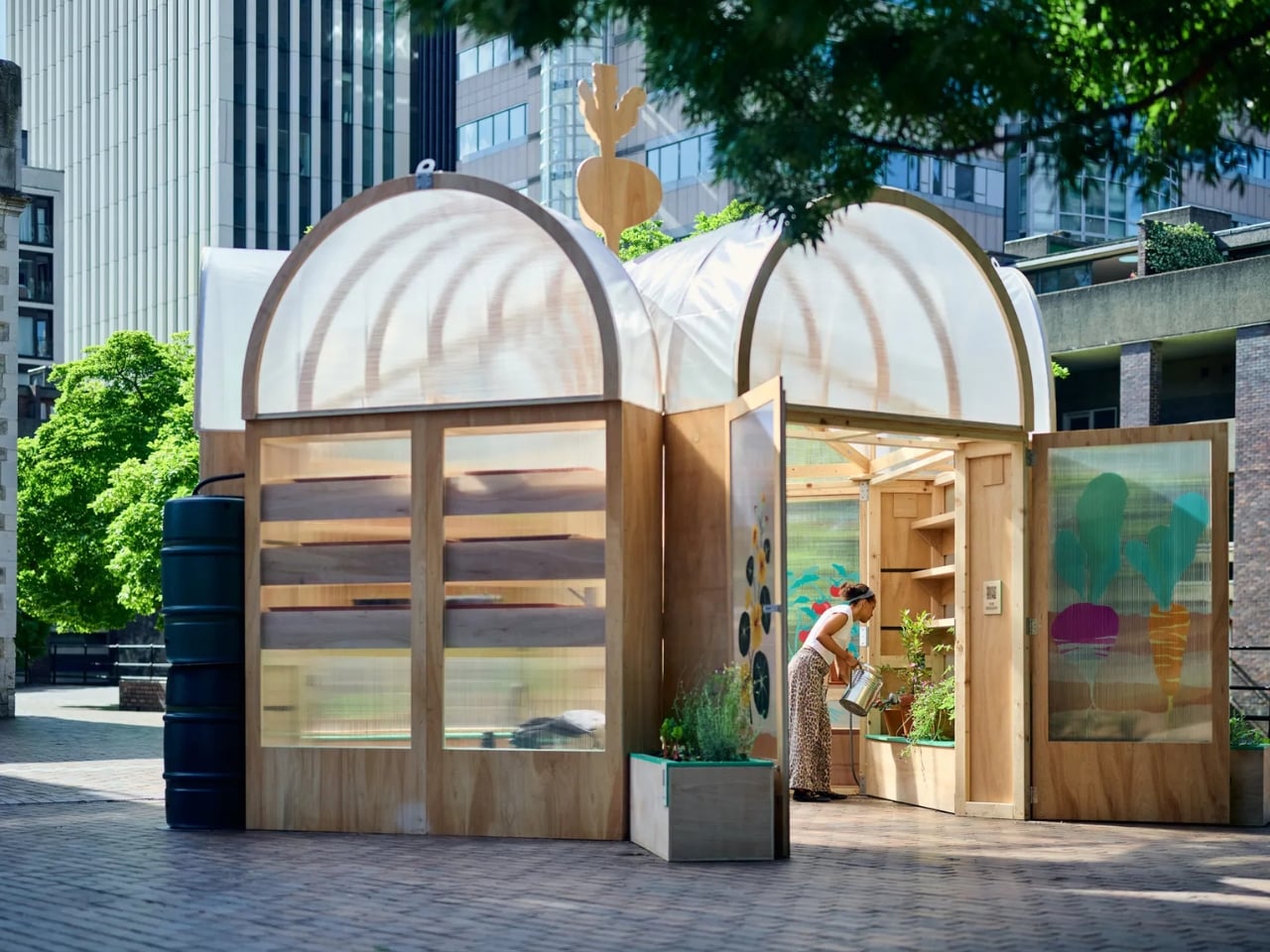
The Barbican is one of those places that takes itself extremely seriously, and rightly so. Its brutalist architecture is globally revered, its arts centre is a cultural institution, and its residents are fiercely protective of its character. Dropping a whimsical garden folly into that context feels almost mischievous, except that Studio Folk Architects clearly thought very carefully about how to make it fit. The Veggery’s silhouette actually echoes the estate’s own barrel-vaulted roofscape, and its proportions nod to English landscape garden traditions. The turnip, though playful, is no accident. It roots the whole design in something very specific: the act of growing food, of getting dirt under your fingernails, of doing something tangible in a city that can feel relentlessly abstract.
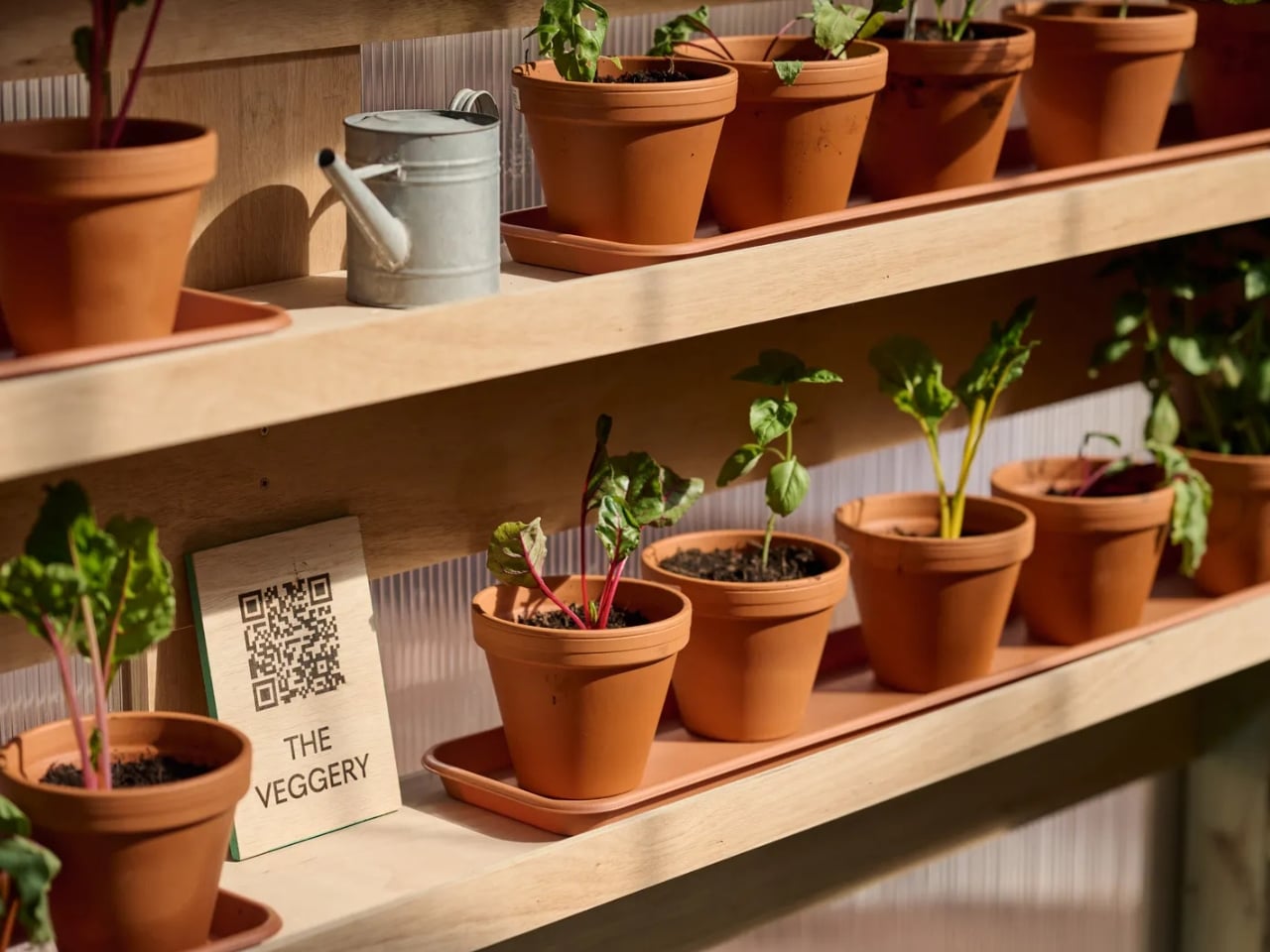
The detail work is where it gets genuinely interesting. The patterns pressed into the structure’s surfaces weren’t generated by a computer or lifted from an archive. They came from giant paper collages made by students at the neighbouring City of London School for Girls during design workshops. That decision changes the whole feel of the pavilion. These are not decorative gestures by designers working behind a screen. They are marks made by actual people who live and study next to this space, which is exactly the kind of community integration that too many public design projects only claim to have.
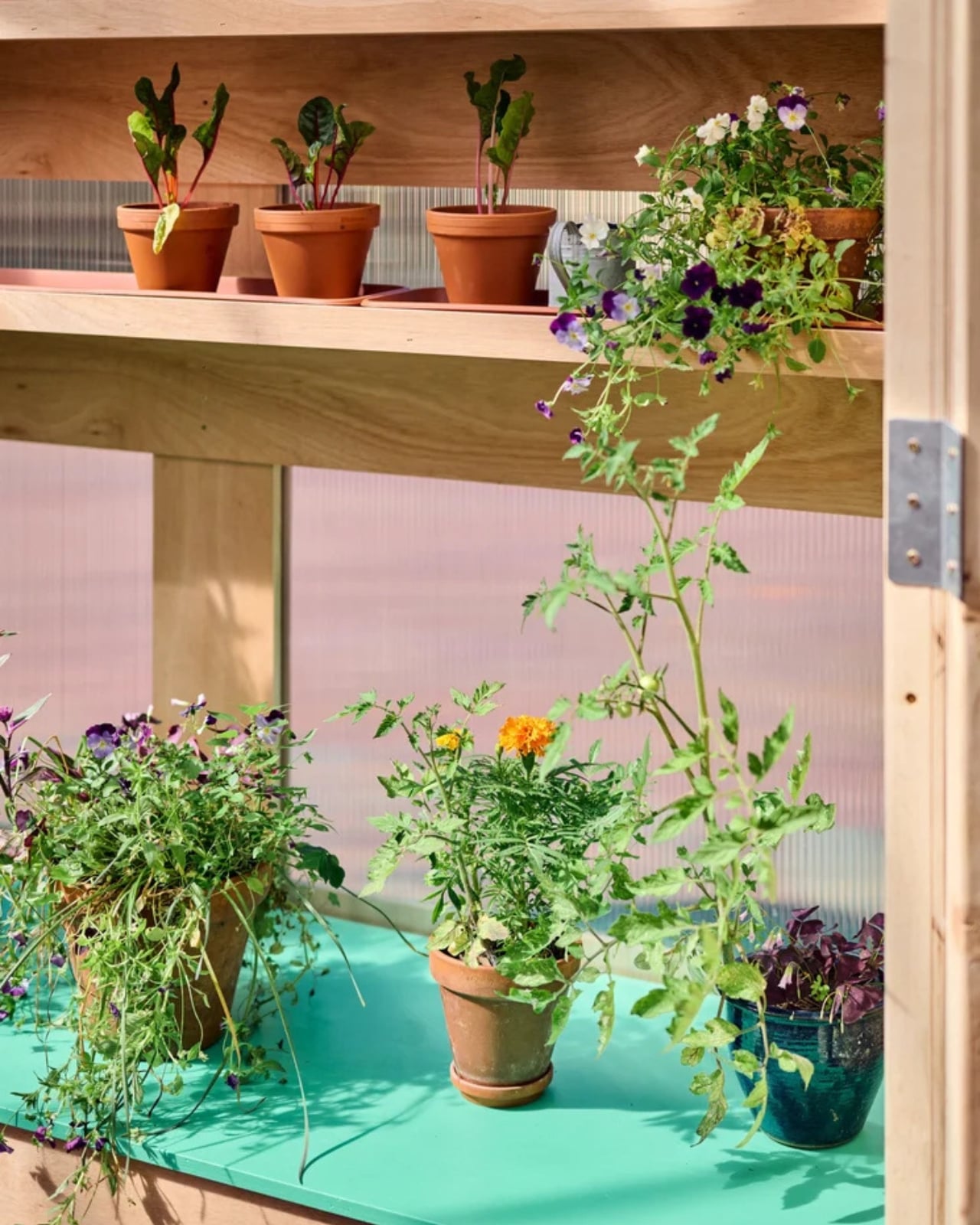
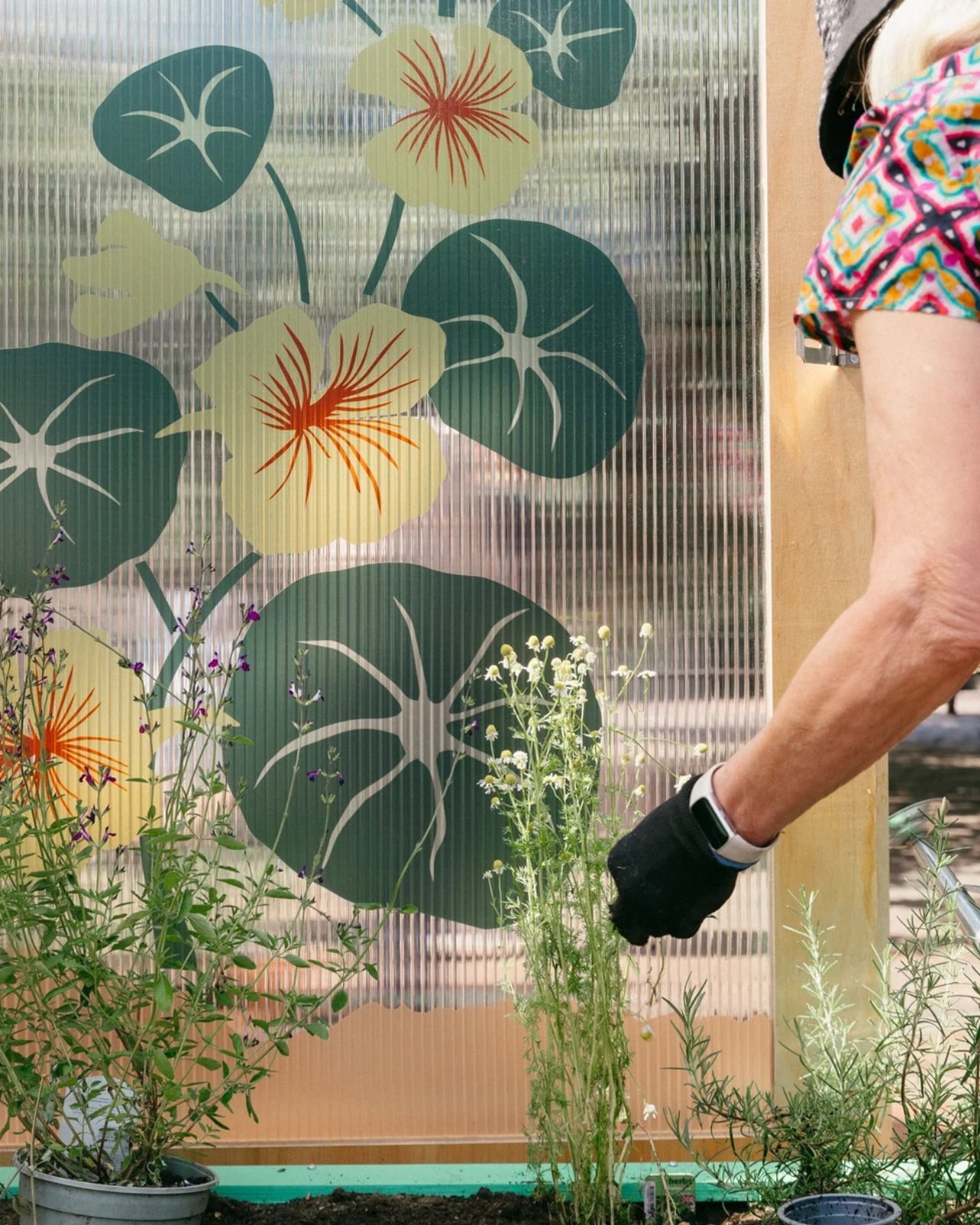
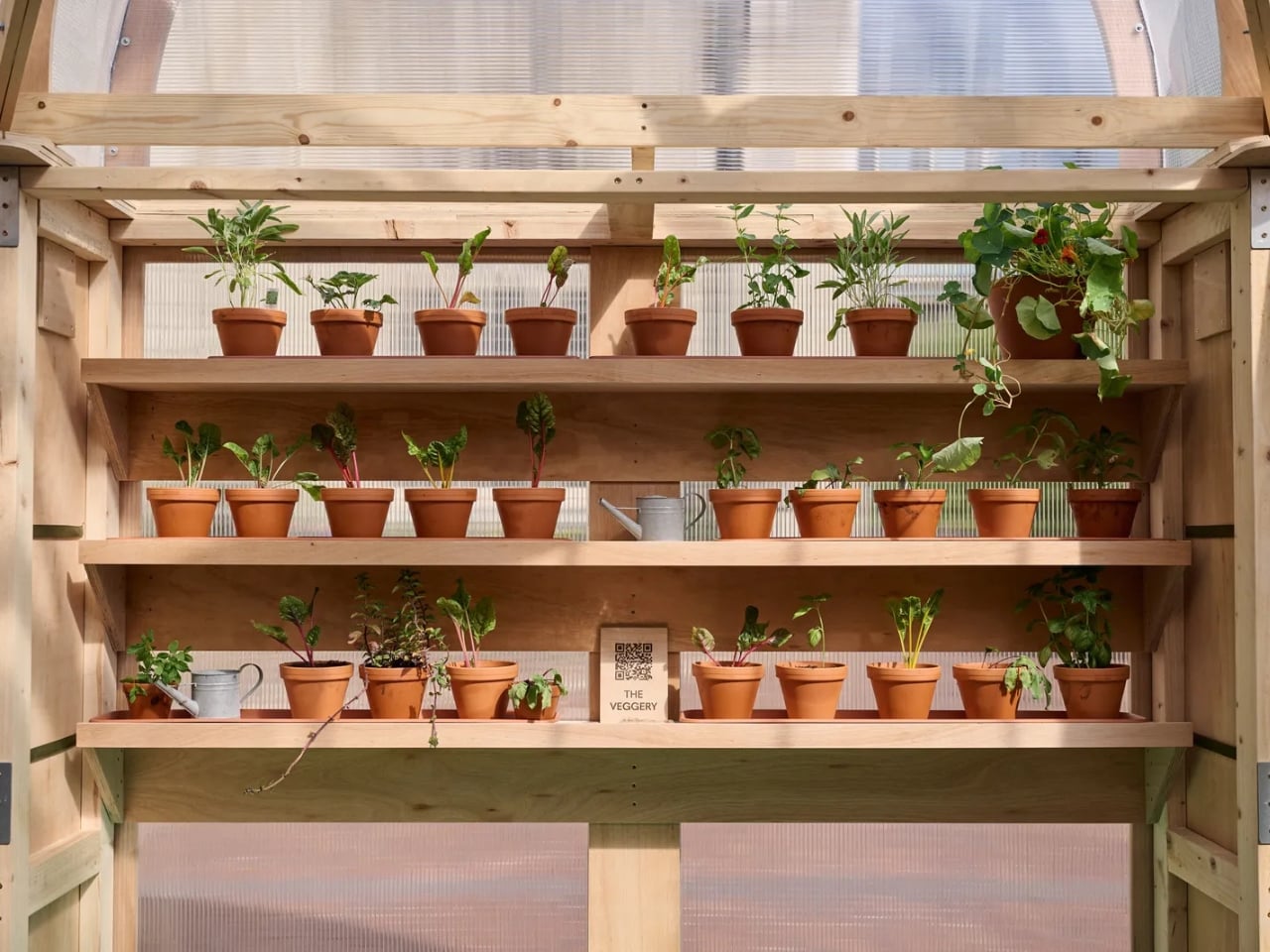
Inside, the pavilion functions as a working greenhouse. Three bays of flexible shelving hold plants and potting benches, with a clear open area that can be used for talks, workshops, and events. The Barbican Horticultural Society, local residents, and school groups all contributed to the planting itself. The structure’s timber framing is also demountable and designed for easy disassembly. It is not precious about itself, which is refreshing given how many temporary pavilions seem more interested in Instagram than in actual use.
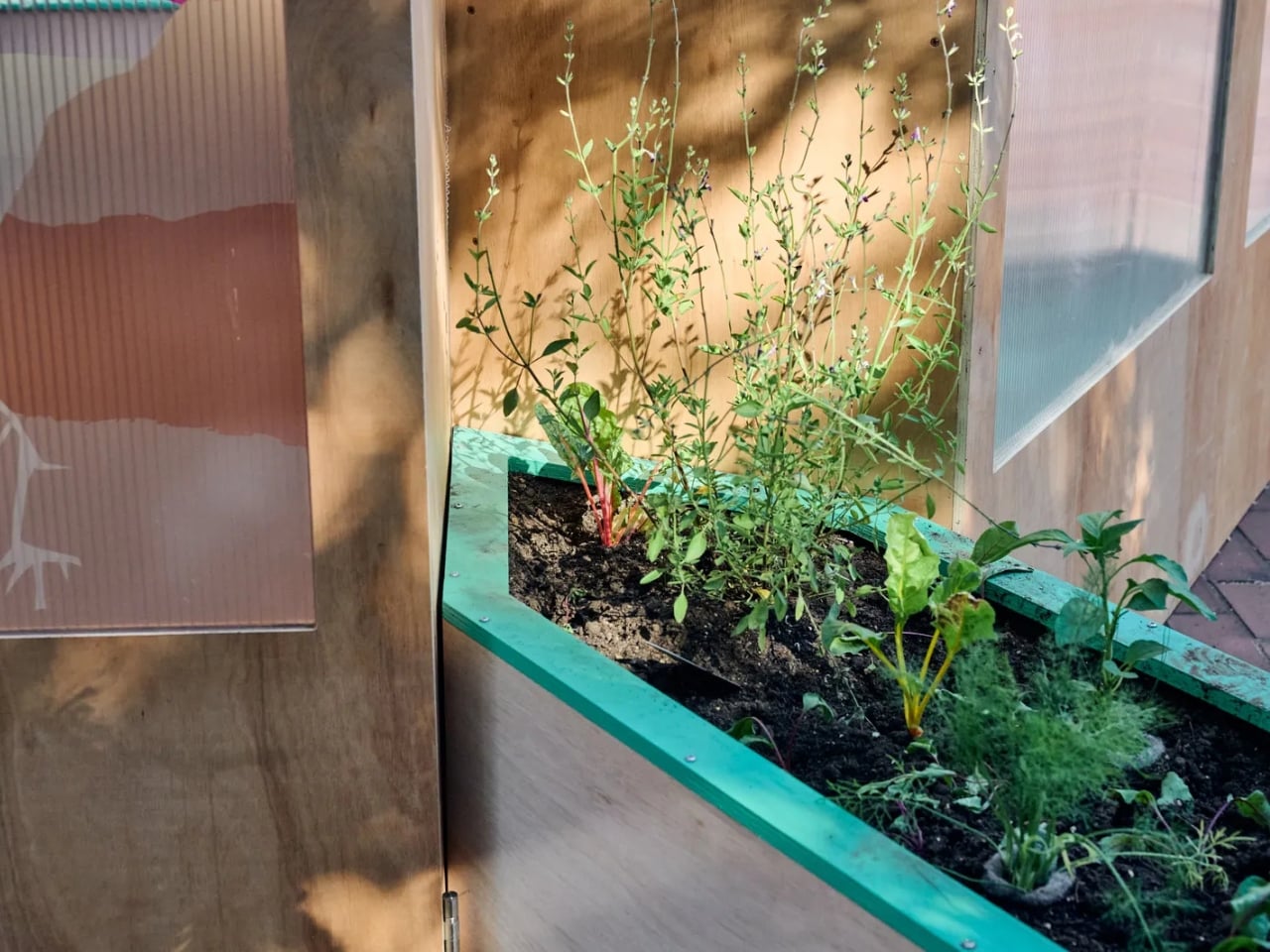
The £50,000 budget strikes me as modest for what they pulled off, and it shows what a clearly considered design brief and genuine collaboration between an architecture practice and a fabrication partner can achieve. Raskl’s hands-on, design-and-build approach seems to have kept the whole thing grounded in practicality without sacrificing ambition.
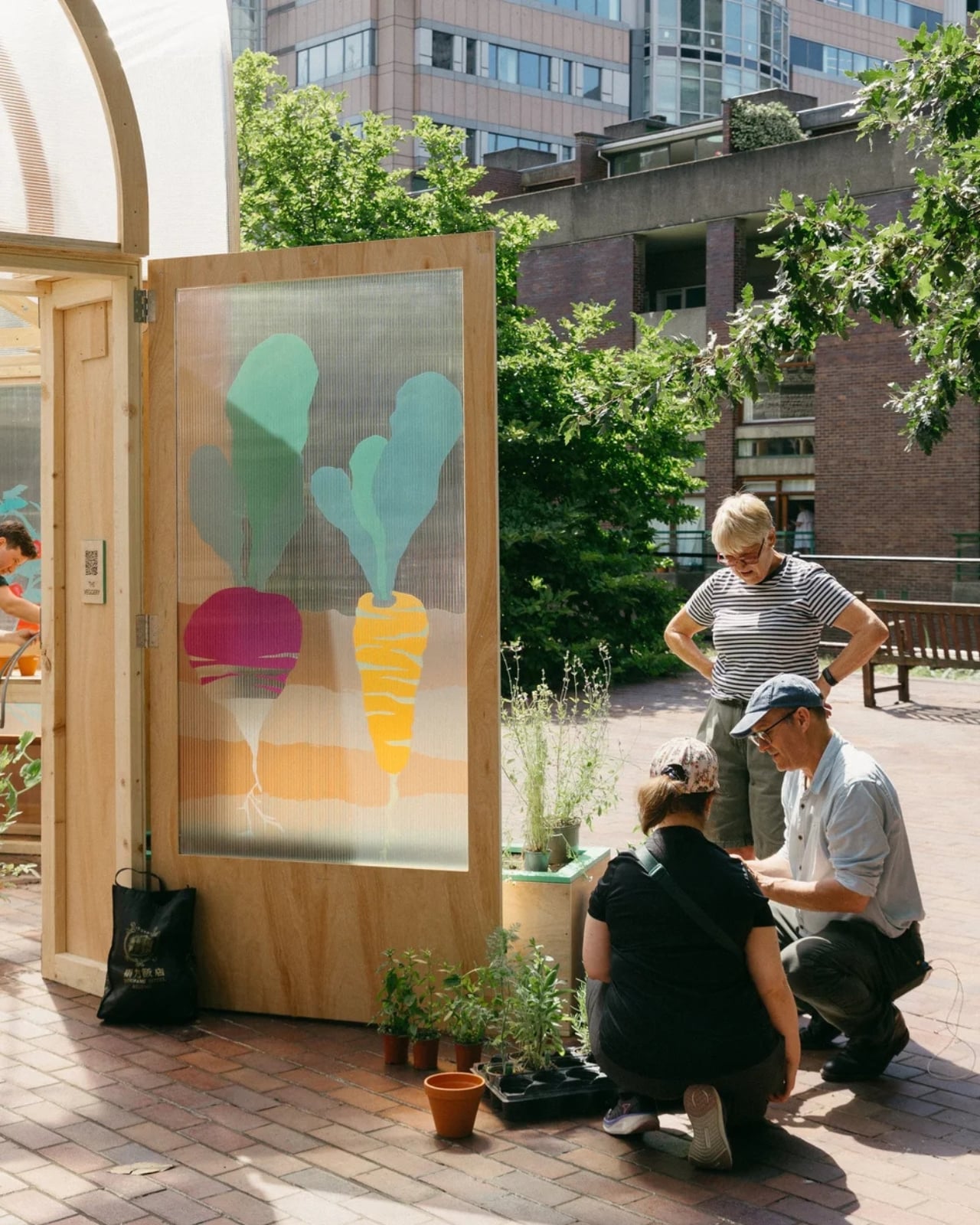
The theme of the 2026 London Festival of Architecture was “Belonging,” and The Veggery answers that prompt with more honesty than most. Belonging, at its most basic, means having somewhere to go that actually wants you there. Not to look at, not to photograph, but to use. A potting bench and a shelf of seedlings is not glamorous, but it is welcoming in a way that a lot of elevated design is not. The fact that the pavilion sits within one of London’s most architecturally celebrated estates makes that contrast land even harder.
The Veggery is only temporary, which feels like the one genuinely unfortunate thing about it. For now, it is open, free to visit, and growing things. Which is more than can be said for most of what wins design competitions.