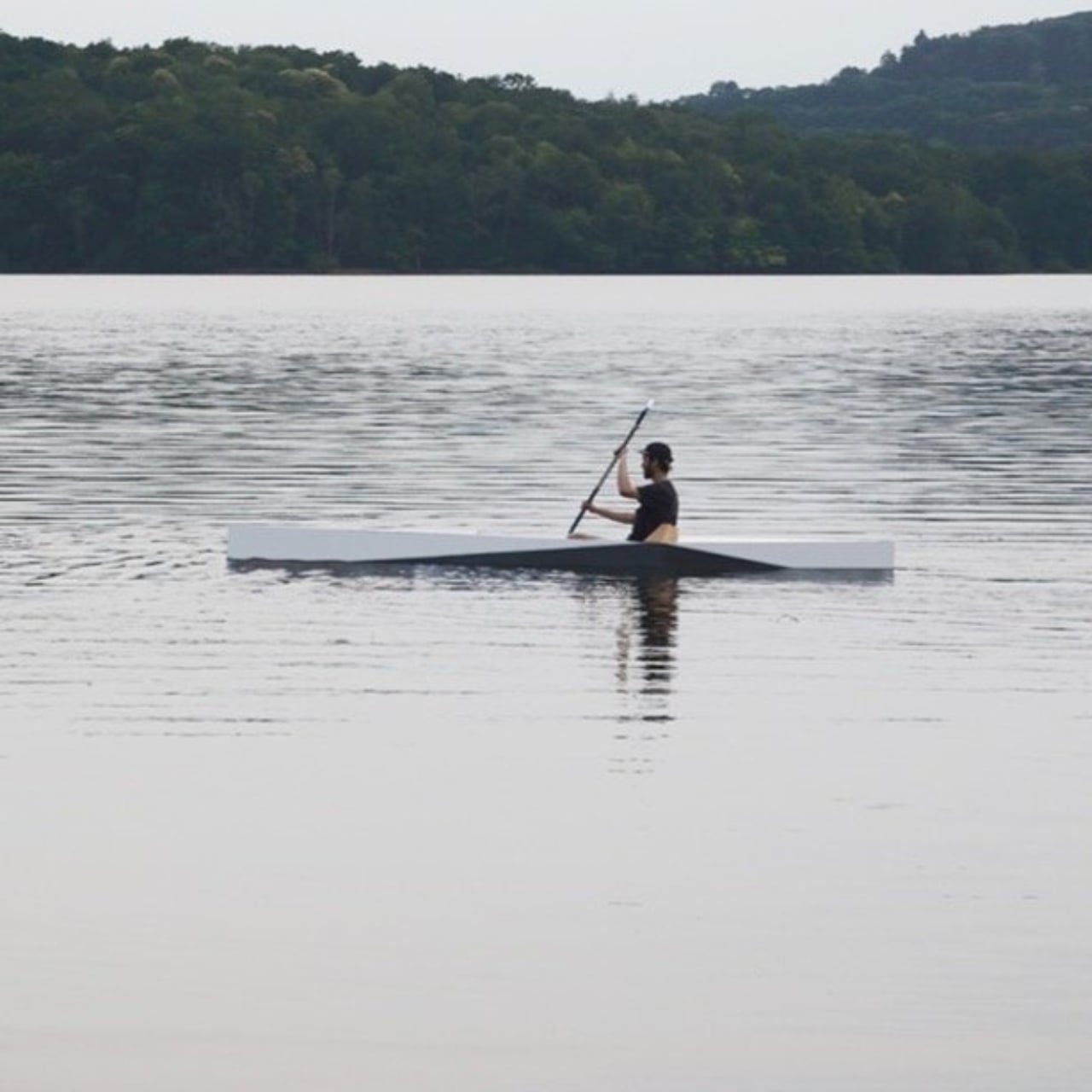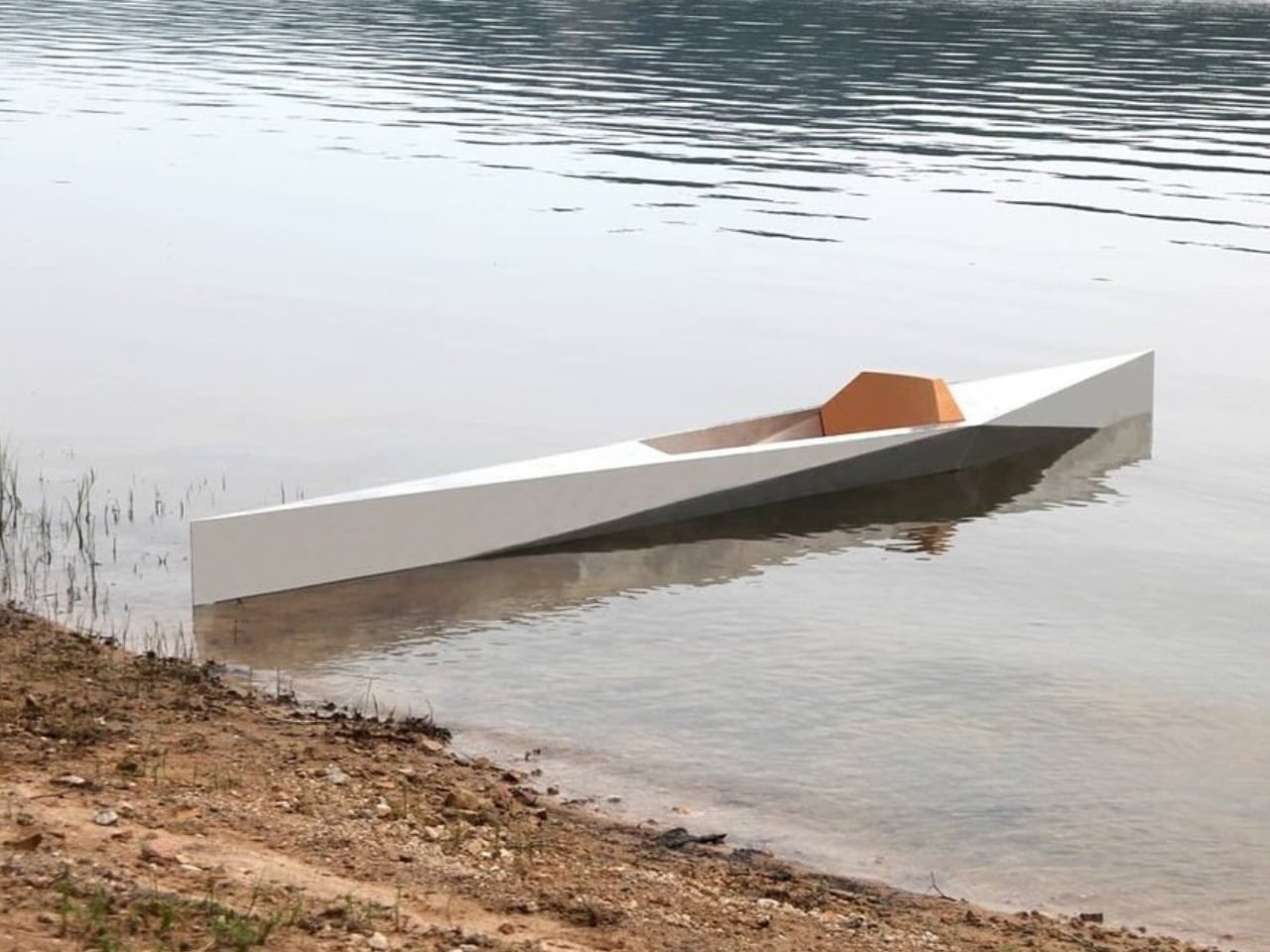
When Guillaume Bloget arrived at France’s Rhizome Association for a research-creation residency, he was surrounded by lakes. Most people would have simply enjoyed the view. Bloget looked at the water and immediately started thinking about how to cut through it. The result is Sharp, a kayak built from folded aluminum sheet and cork, and it’s one of the more quietly compelling design objects I’ve come across recently.
It’s one of those designs that stops you cold the moment you see it. Not because it’s trying to be shocking or provocative, but because it gets the balance so right. The silhouette is clean and geometric, almost architectural, and yet it moves your eye the way a good piece of sculpture does. You keep looking at it, trying to figure out exactly why it works so well.
Designer: Guillaume Bloget
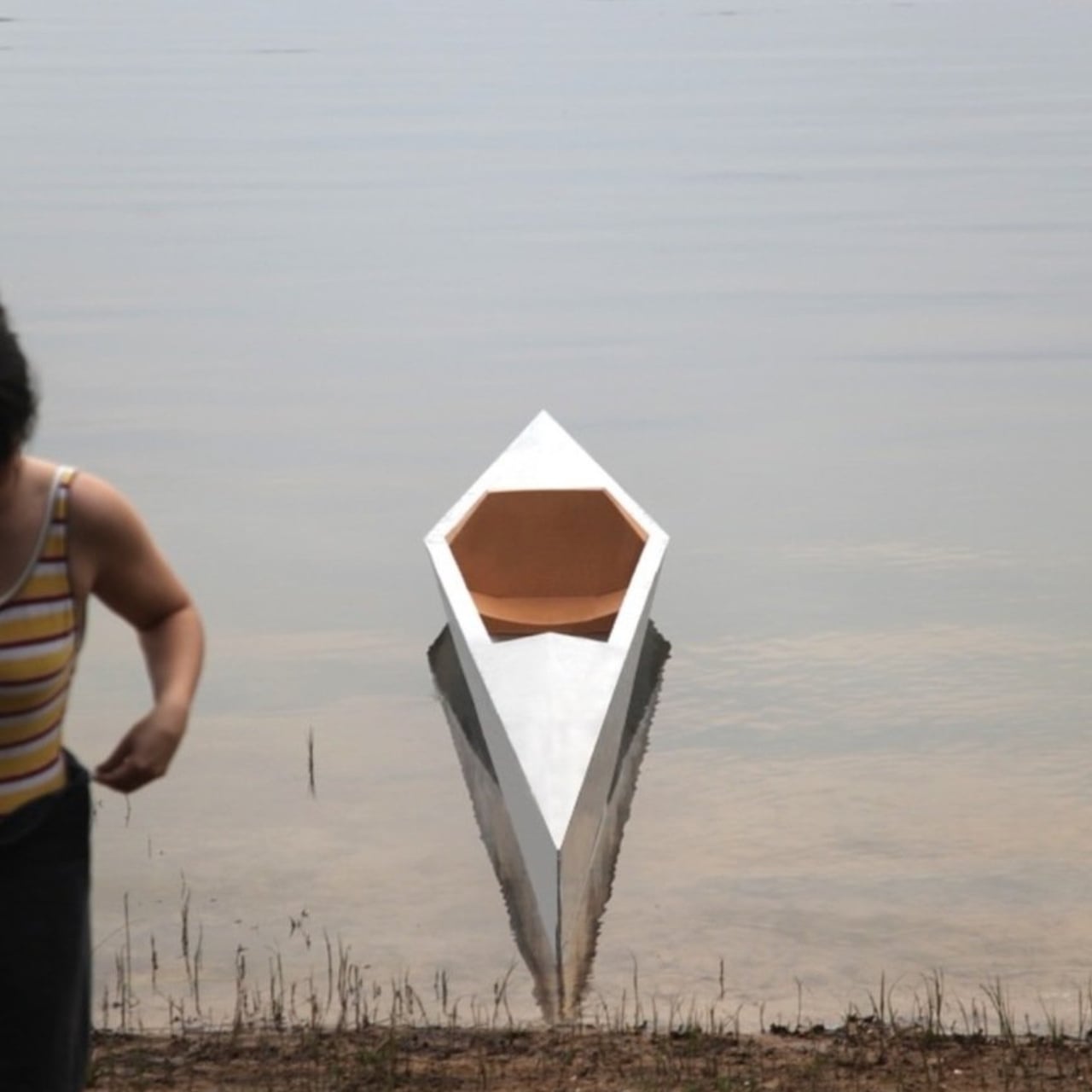
Kayak design, as a category, doesn’t get nearly enough attention. We tend to treat watercraft as purely functional objects, things that should perform and get out of their own way visually. Sharp pushes back on that assumption without making a big show of it. Bloget worked on a hydrodynamic hull to produce what he describes as “a good sliding sensation,” which tells you the function was never an afterthought. But the execution goes well beyond the purely practical.
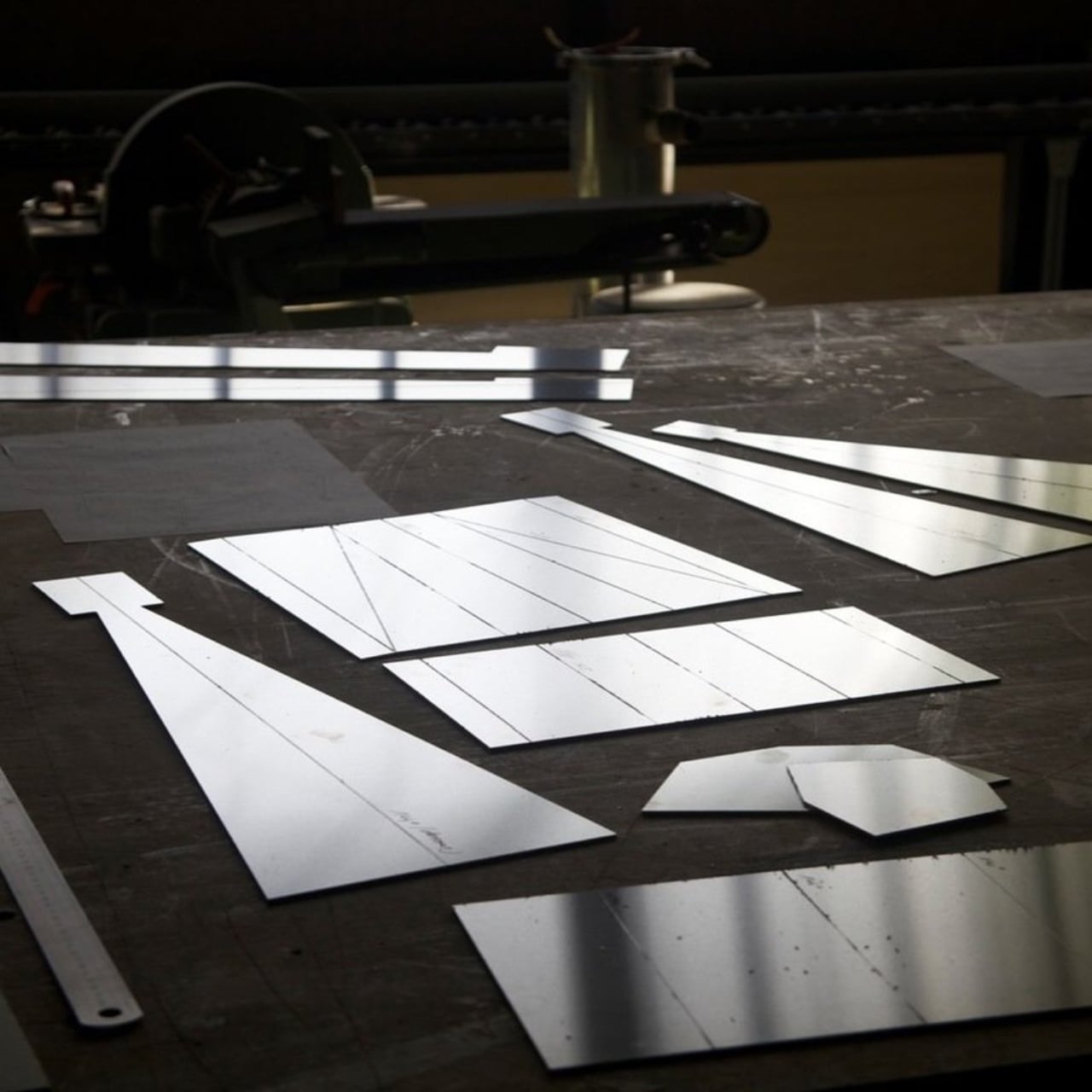
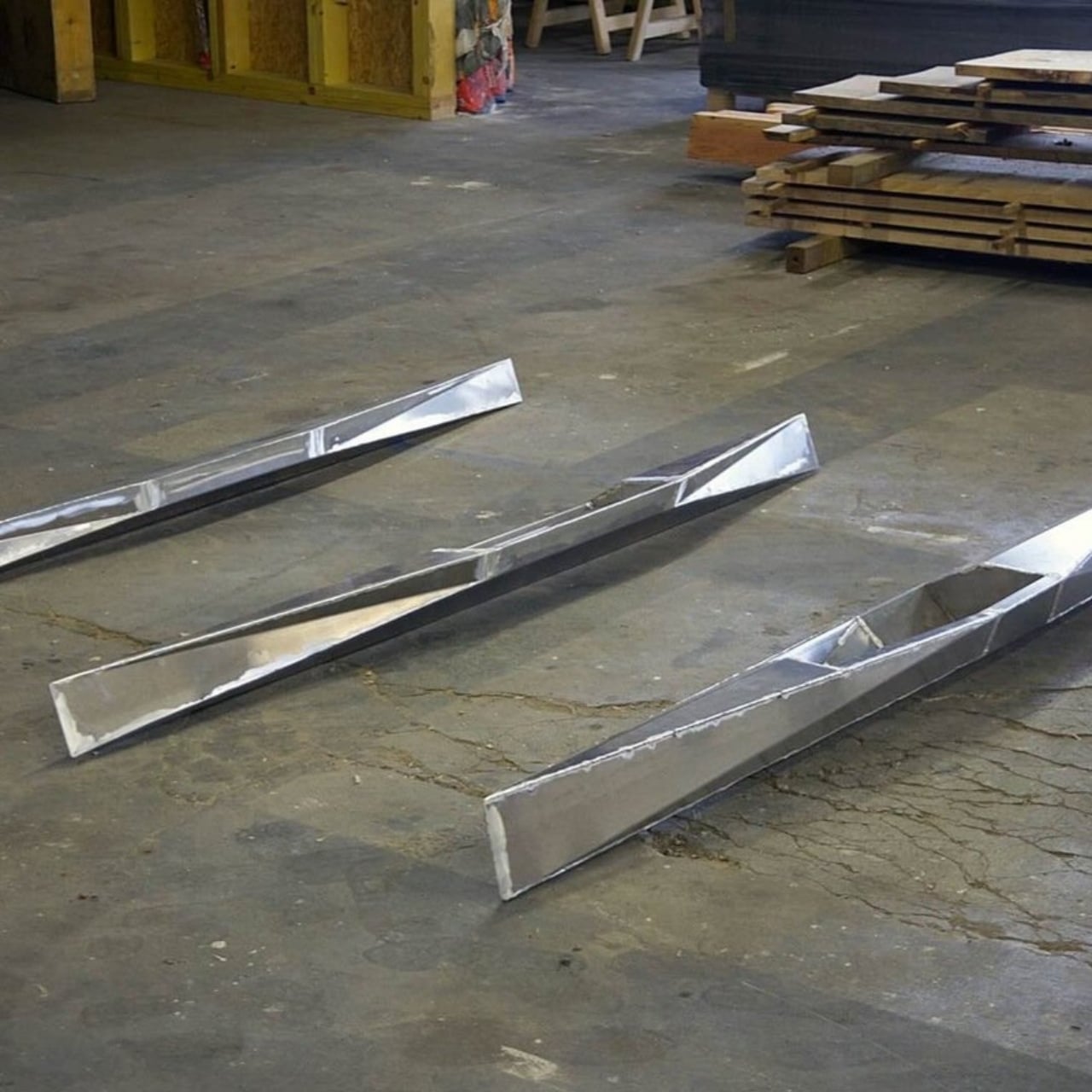
The folded construction is where things get genuinely interesting. The kayak’s structure relies entirely on folding, and the double-wall design makes it unsinkable. That’s not just a clever engineering solution; it’s the kind of constraint-driven thinking that separates good design from great design. When a structural requirement also produces an aesthetic, you know the designer was really paying attention. The angular folds give Sharp its name and its personality. It looks sharp. It feels intentional in a way that a lot of so-called “design-forward” products don’t quite manage.
Cork makes a quiet but important appearance too. The seat is cork, mediating between the angular geometry of the aluminum hull and the organic curves of a human body. It’s a thoughtful detail. Cork is warm where aluminum is cool. Cork is soft where the hull is rigid. Placing it exactly where your body meets the boat is not an accident. It’s the kind of material decision that you might not consciously register the first time you look at the photos, but that you’d definitely feel the moment you sat down.
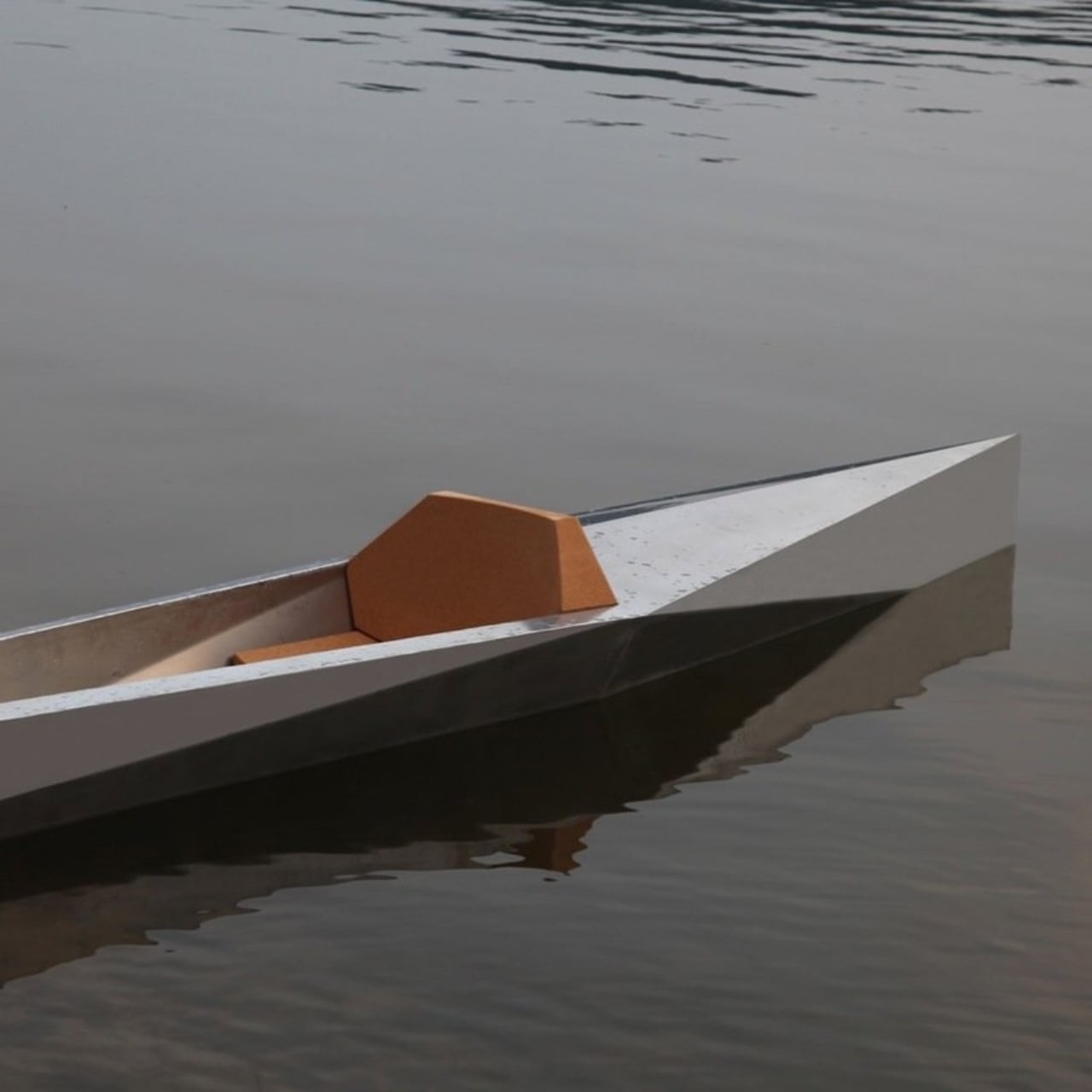
The aluminum itself is doing double duty. Beyond the structural logic of folded sheet metal, Bloget noted that the shine of the material plays with the reflections of the water. That’s a level of environmental awareness that most product designers don’t even consider. Sharp wasn’t designed for a studio backdrop. It was designed for a lake, where light and surface and movement are all part of the experience. The kayak is meant to participate in its environment, not just occupy it.
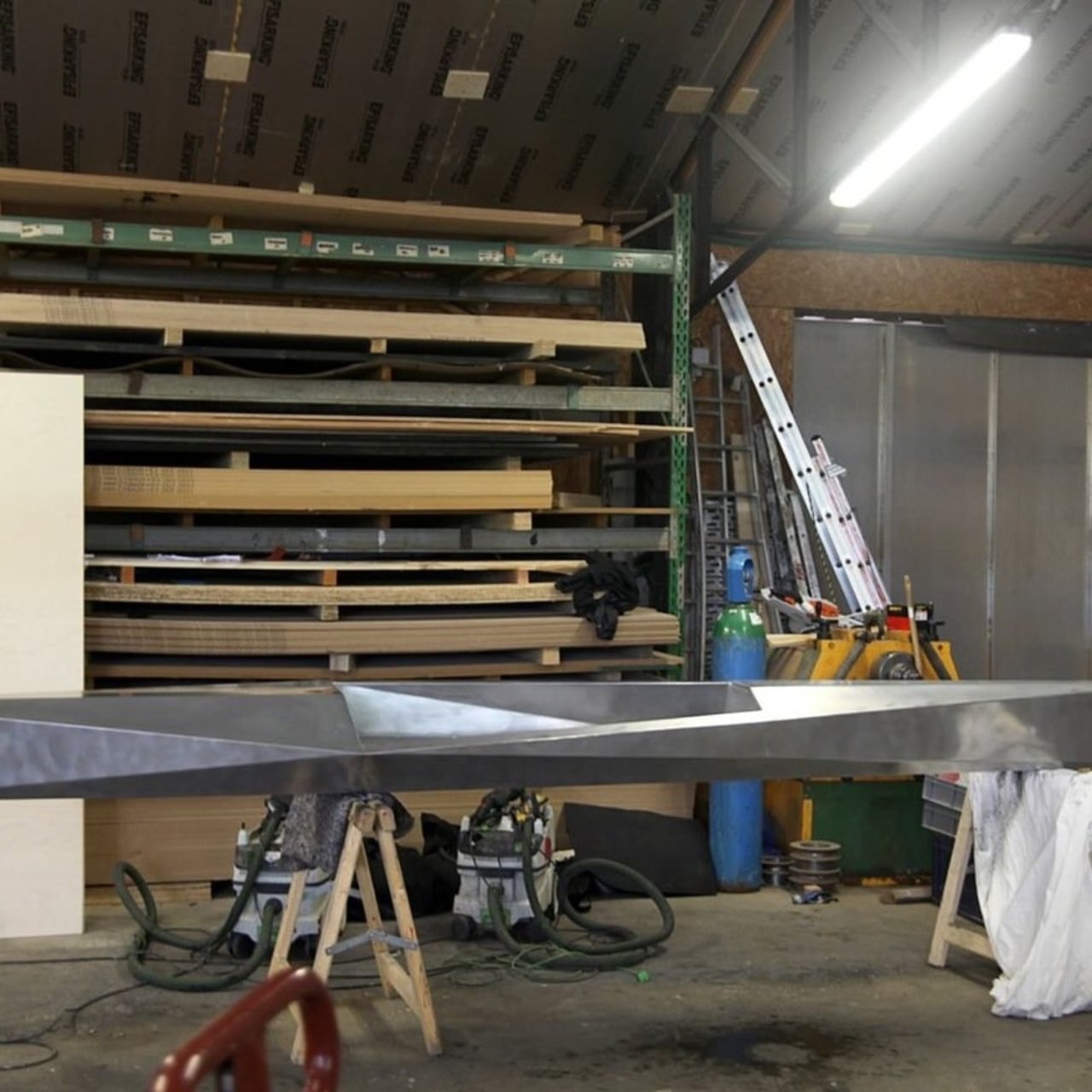
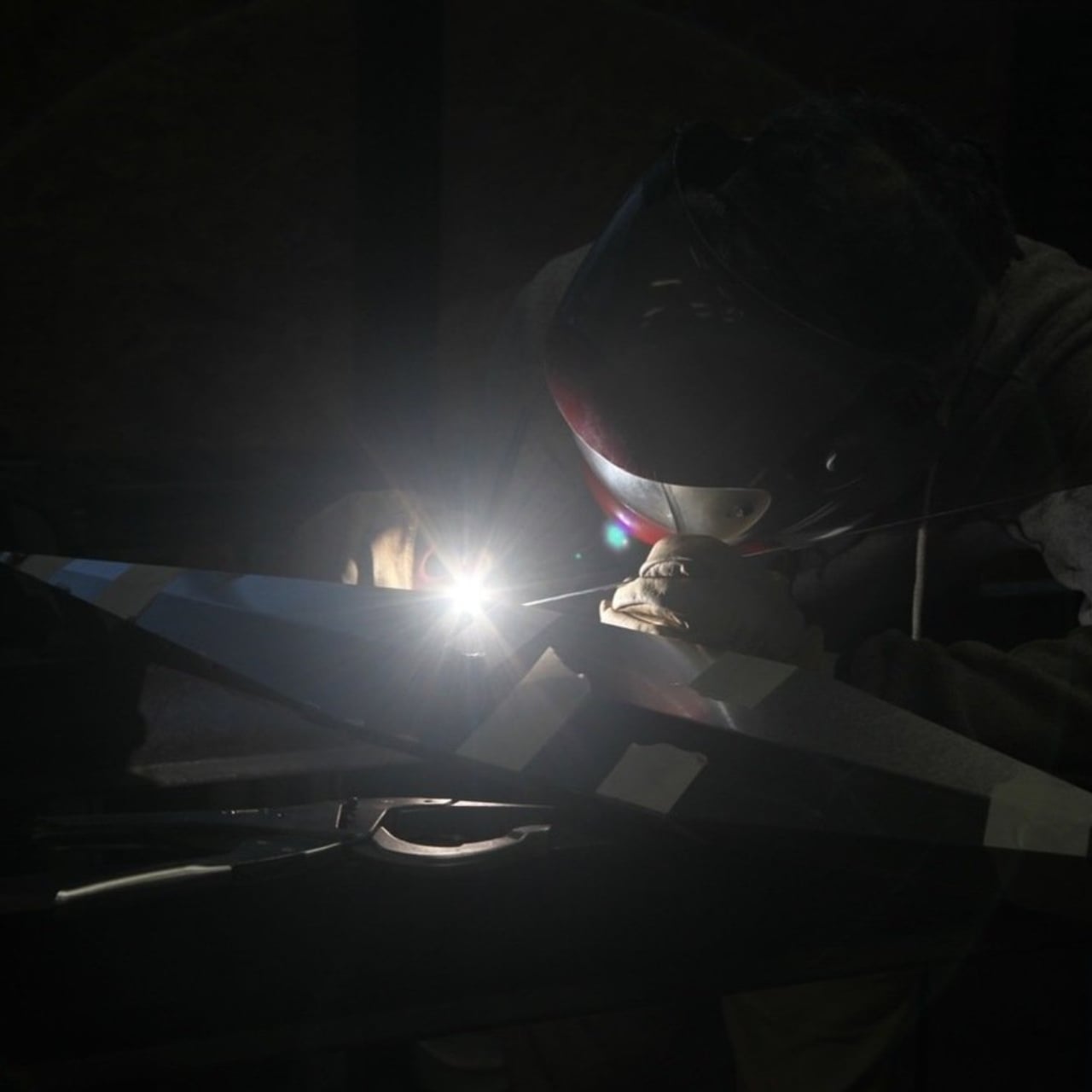
Sharp sits in an interesting space right now. It was produced during a 2023 residency in Ouroux-en-Morvan alongside craftsman Antoine Rivière, labeled as a Mushroom Edition, which suggests it was made in a very limited run. Whether it ever becomes commercially available at any real scale is unclear. And that’s a little frustrating, because designs like this deserve to actually exist in the world, not just in portfolios and Instagram posts. Residency projects often produce beautiful ideas that quietly disappear, and it would be a genuine loss if Sharp became one of them.
The broader point here is about what we expect from everyday objects. A kayak is a practical thing. You paddle it, you store it, you use it to get somewhere or to simply be somewhere on the water. None of that changes because it’s beautiful. But when a practical object is also genuinely well-designed, the experience of using it shifts. You treat it differently. You notice things you wouldn’t have otherwise. The aluminum catches the light and so do you, briefly, on a lake somewhere in France. Bloget gave something useful a little poetry. The least we can do is pay attention.