Cremation urns have existed for thousands of years, but their design language has barely moved. They tend toward the ceremonial and the generic, pottery shapes lifted from antiquity or polished boxes that draw from the visual vocabulary of caskets. The underlying assumption across nearly all of them is the same: that the vessel marks an ending. That what’s inside has arrived, not departed.
The Transcendence Urn takes a different philosophical position entirely. It belongs to a series of objects conceived as temporary dwellings for the remains of loved ones, held in anticipation of what comes next. The form it takes to express this idea is strikingly futuristic, almost sci-fi in its ambition, built on the premise that the urn theoretically facilitates the occupant’s journey toward a higher state of existence rather than simply containing what was left behind.
Designer: Michael Jantzen
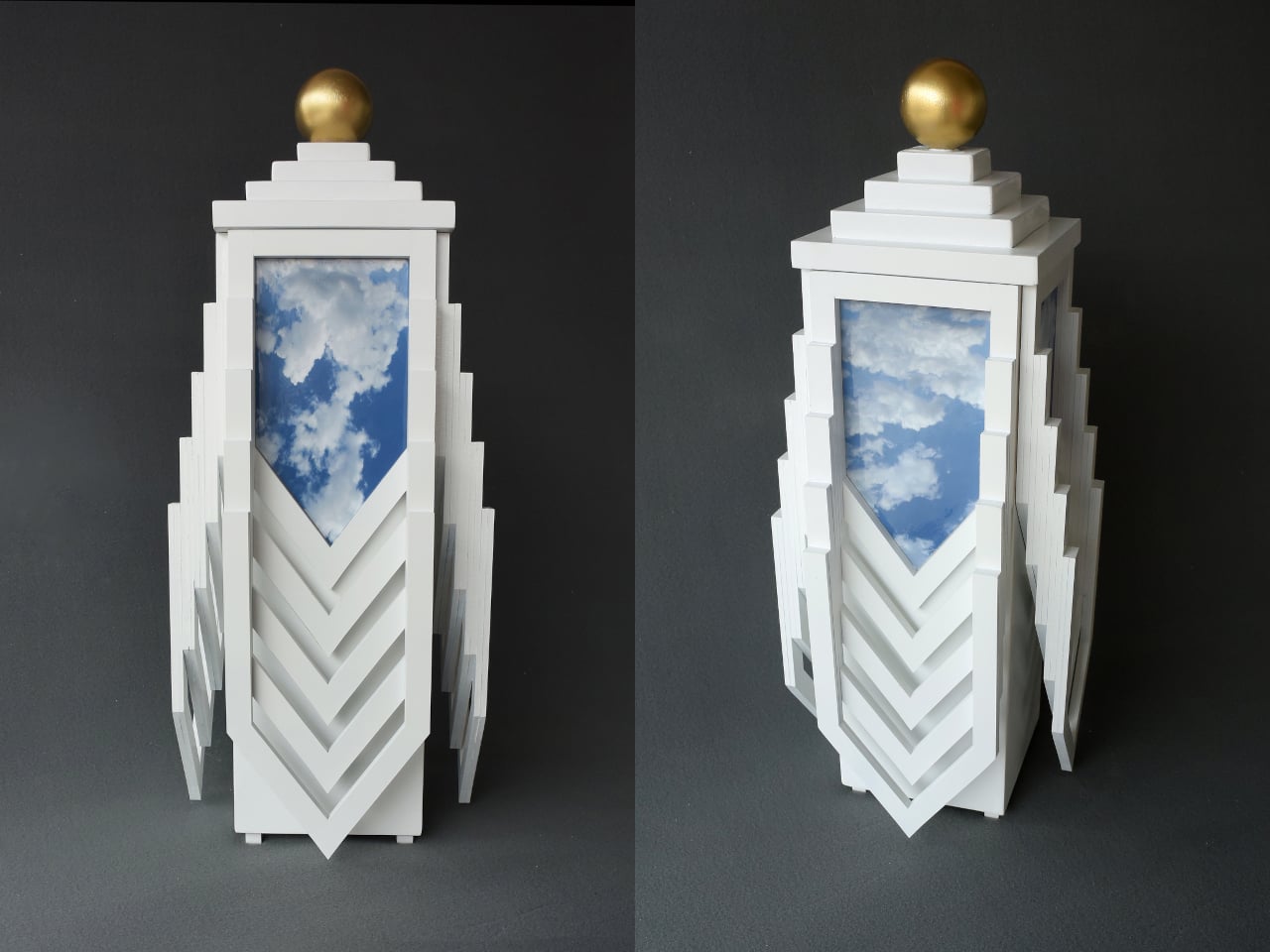
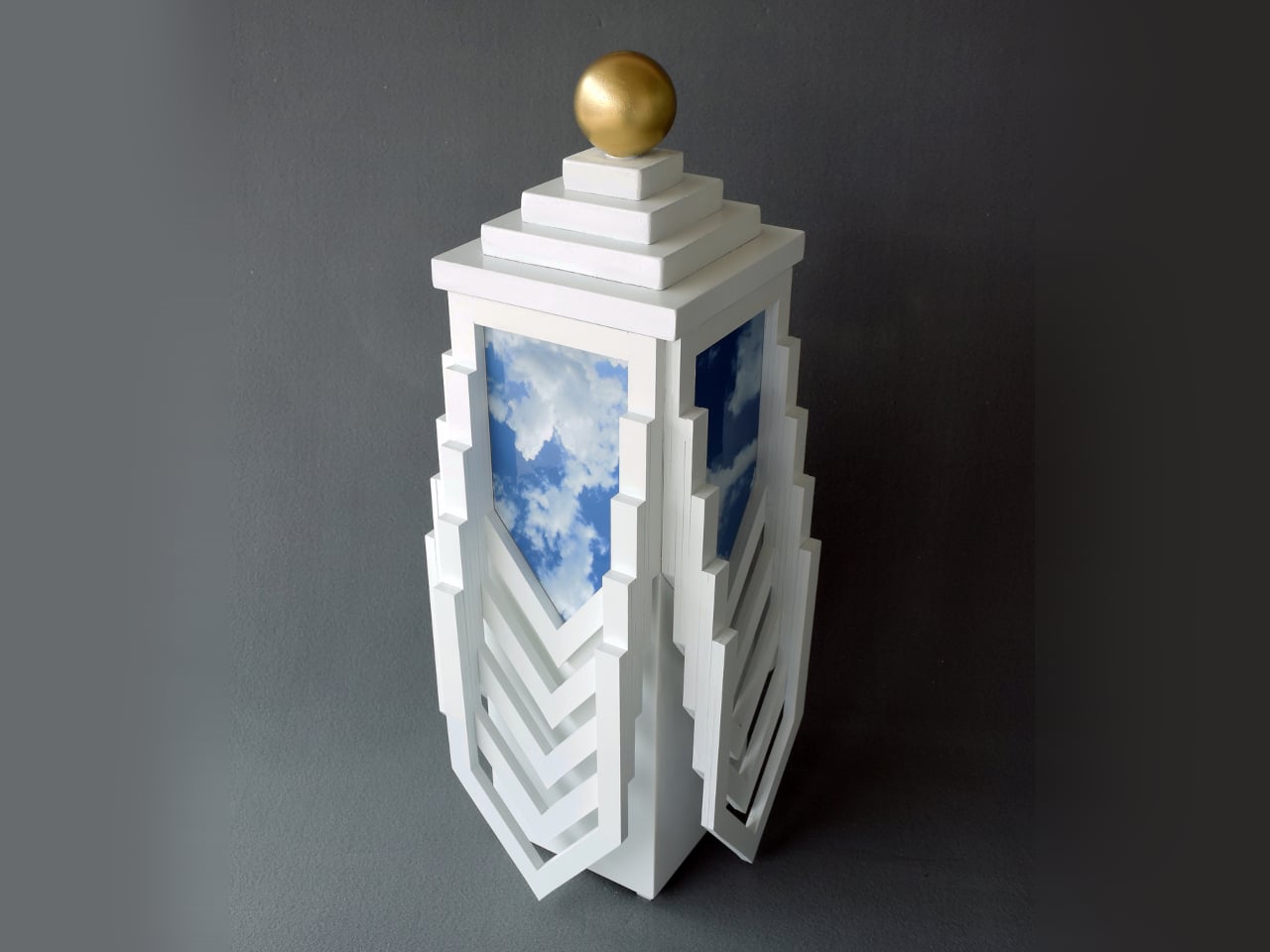
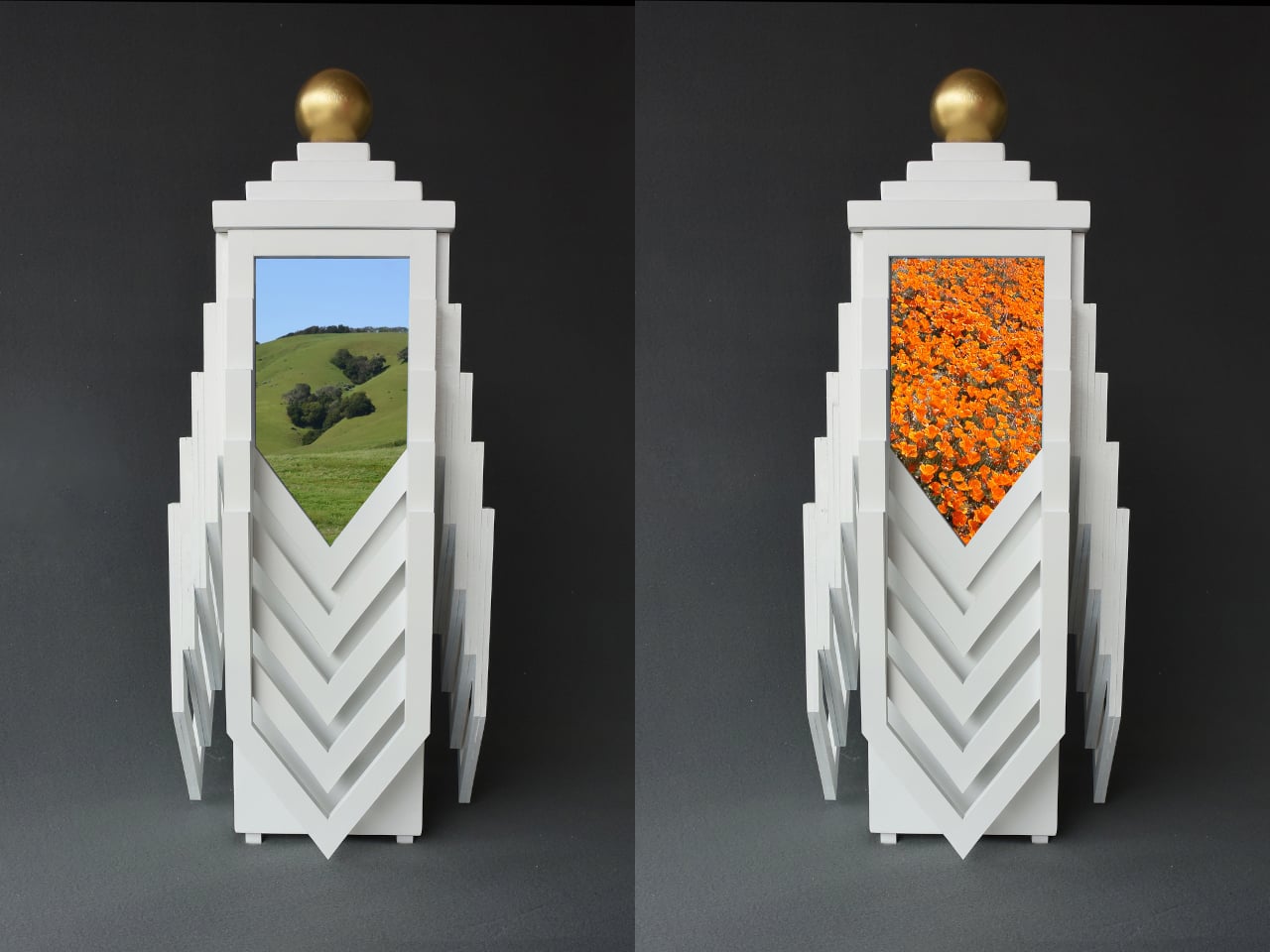
The structure stands 25 inches tall and 12 inches wide, built from painted wood in a form that seems to reach upward. Stepped tiers stack toward the top, followed by a gold sphere that crowns the whole structure and is removable from its own tiered plinth. The lower body radiates outward in layered chevron forms, pointing downward like fins, giving the whole piece a sense of directed energy, as if something inside it is moving rather than resting.
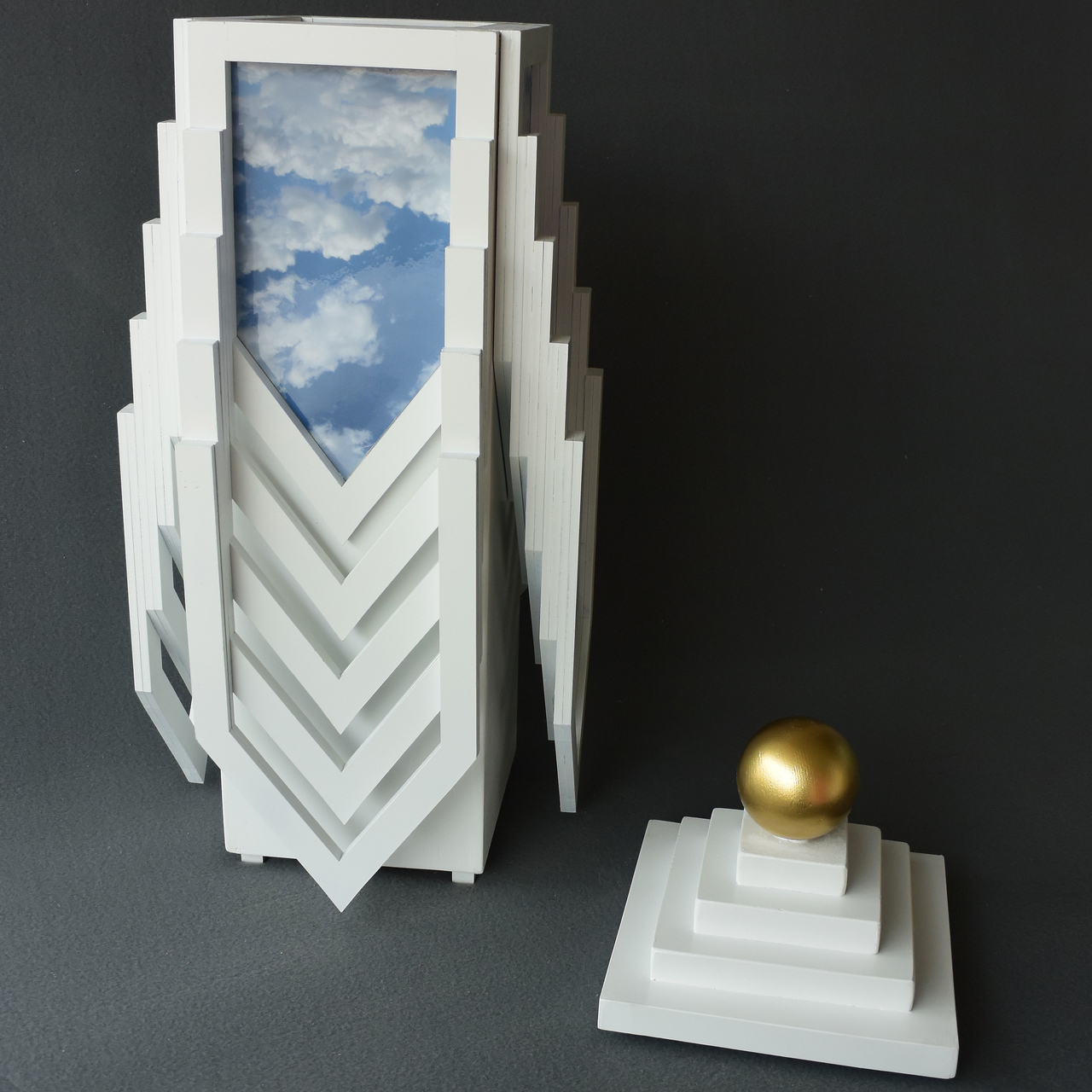
The four panel spaces near the top of the urn are where the personal dimension takes shape. Owners can fill them with photographs selected from a curated series of symbolically resonant images, or with their own. The possibilities run a wide emotional and metaphysical range: images of open sky and drifting clouds, a sunlit hillside, a field of orange flowers, a galaxy, fire, storm, and lightning are all part of the symbolic vocabulary this design draws from. Of course, photos of the actual person can go there, too.
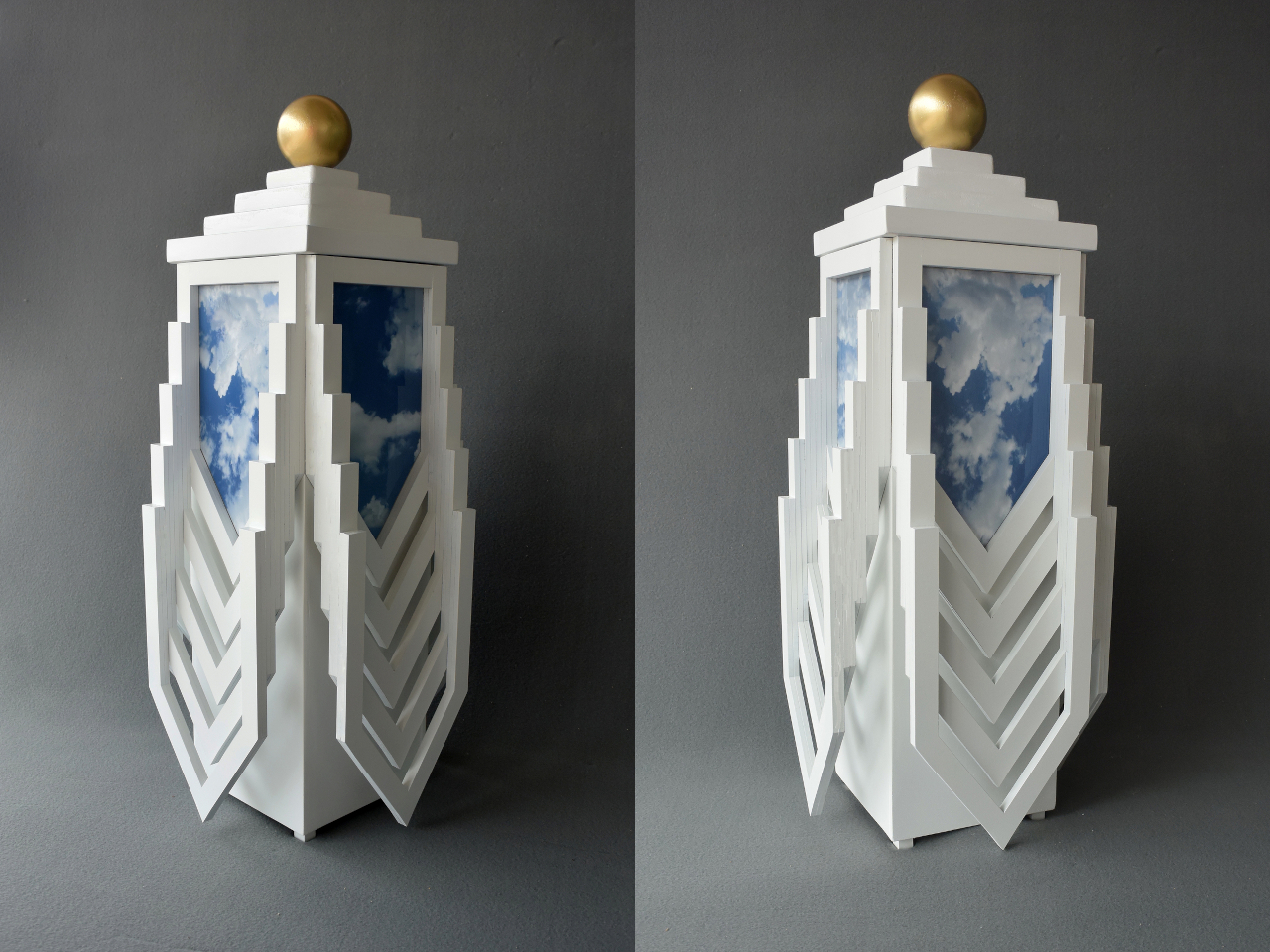
That choice matters more than it might first appear. Most memorial objects leave the bereaved as passive recipients of a fixed form. This one asks them to make decisions about meaning, to assign symbols, and to decide what the person they lost should be surrounded by. It’s a quiet but real kind of agency during a period when very little feels controllable.
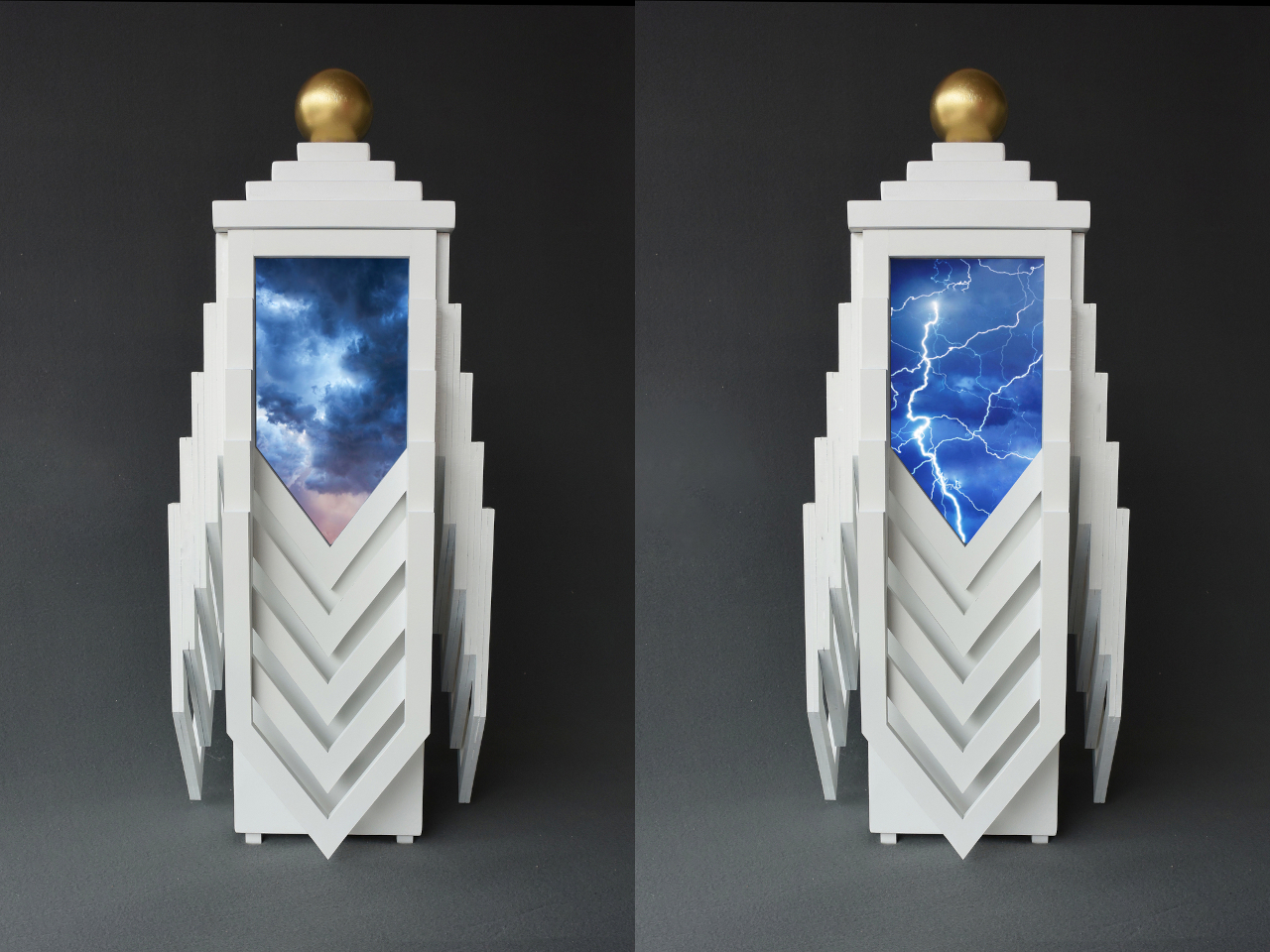
A digital variant of the Transcendence Urn replaces the four static panels with four screens displaying moving images and sounds, turning the object from a still memorial into something more like a living one. That version shifts the experience even further, letting the presence of the deceased linger in a more active, dynamic way rather than being fixed to a single still photograph chosen on a single day of grief.
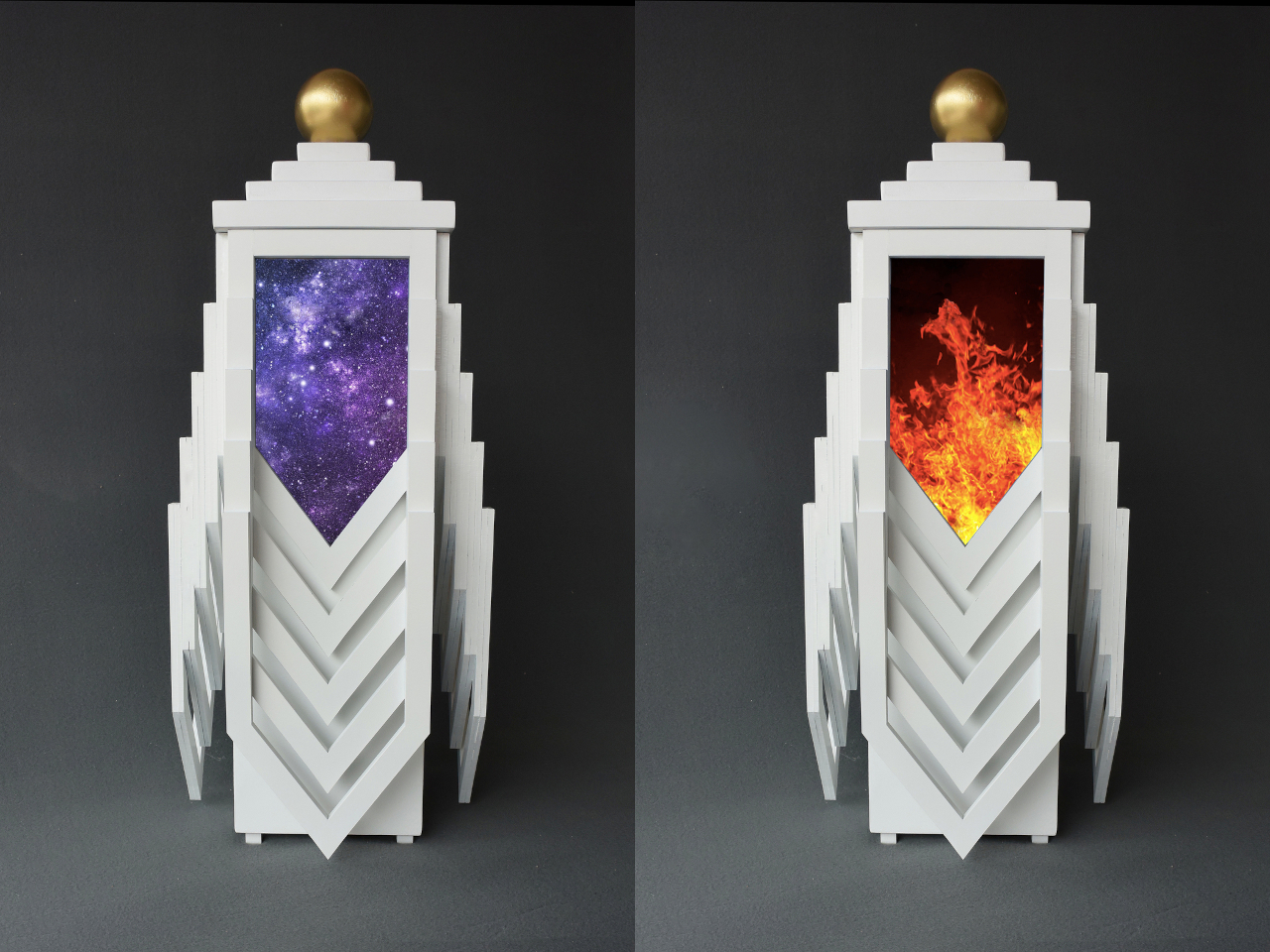
It’s also worth noting what the object looks like on a shelf or a table. It doesn’t look like an urn. It looks like a piece of speculative design, the kind of object that invites questions before anyone knows what it holds. That unfamiliarity carries its own kind of comfort: it doesn’t announce loss the same way a traditional vessel does, and it doesn’t ask the viewer to feel a particular thing on sight.
SHARE