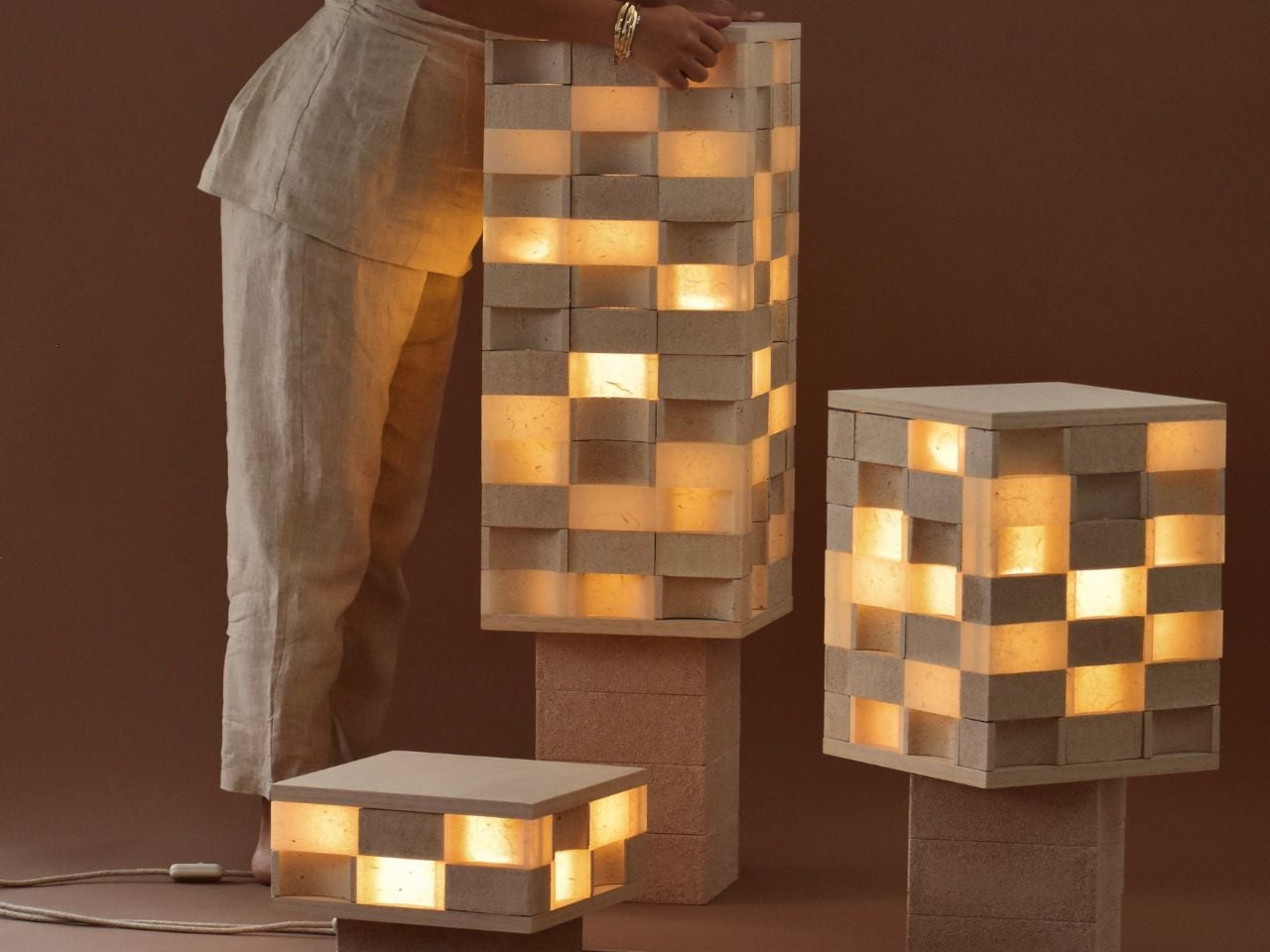
Joanne Odisho’s Mod-u lamp feels like the kind of object you want to touch before you fully understand what it is. Made from modular, Jenga-like blocks, the lamp sits somewhere between lighting, furniture, and sculpture. The surprise is its material. The Melbourne-based designer has created the piece using thousands of discarded eggshells collected from local cafes, turning a fragile everyday waste material into a durable, tactile, award-winning design.
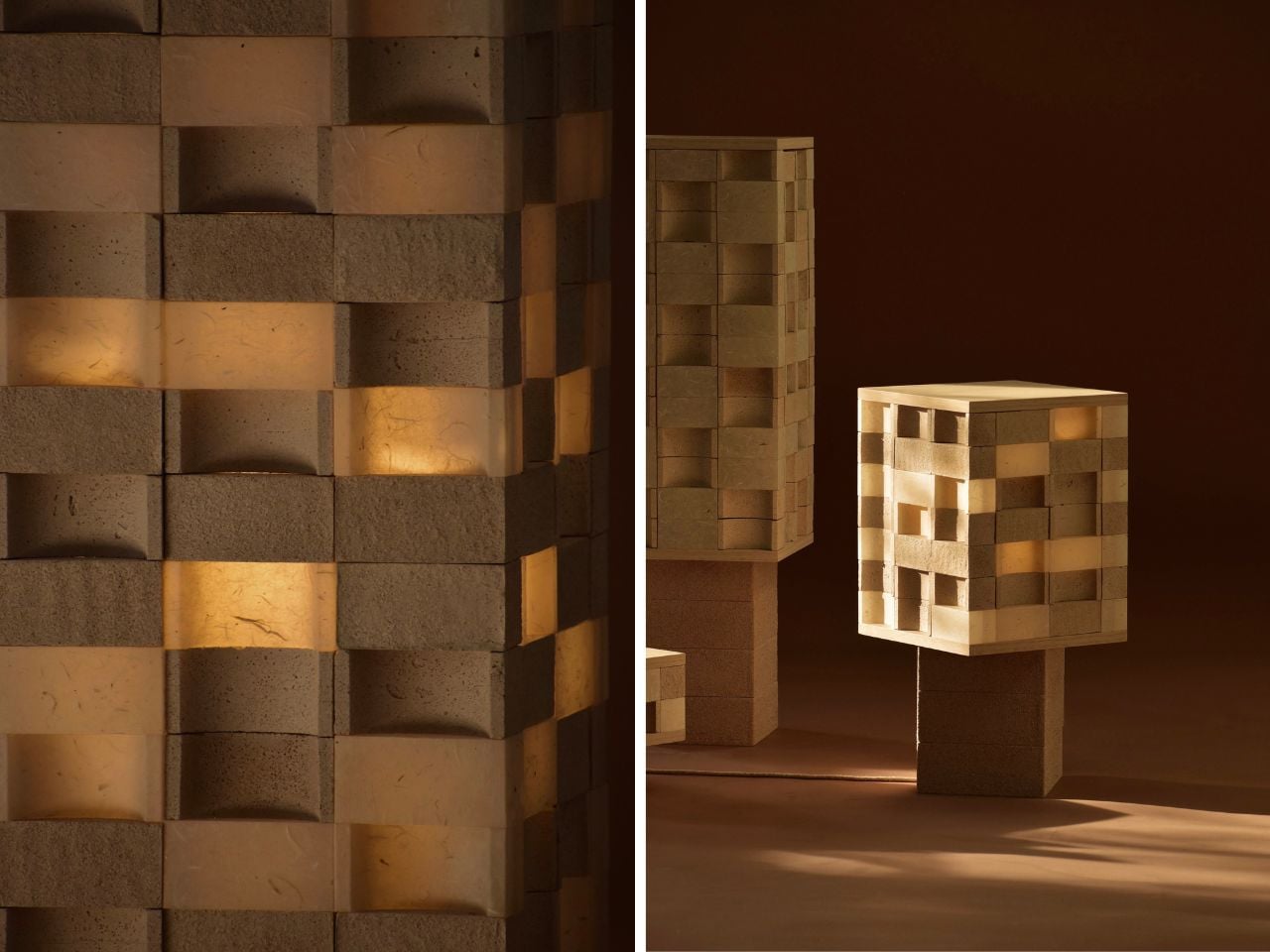
The process starts in a very ordinary place: cafe kitchens. Odisho collects used eggshells, sterilises them, dries them, and crushes them into a fine powder using a Nutribullet. The powdered shells are then mixed with a biodegradable biopolymer to form a wet, sand-like composite. This mixture is poured into moulds and left to dry naturally for about a week. There is no firing process, no synthetic dye, and no complex industrial setup. Once cured, the material becomes hard and rock-like, while still holding onto the soft, natural tones of the eggshells themselves.
Designer: Joanne Odisho
The idea began in 2022 while Odisho was studying furniture design at RMIT. For a school assignment, she was asked to create a product using food waste. Her first experiments with coffee grounds did not work because they developed mould. Eggshells, however, offered something more promising. With inspiration from Materiom, an organisation focused on nature-based material innovation, she began testing how this overlooked kitchen scrap could become a strong, compostable design material.
That material eventually became Mod-u, a collection of configurable lighting pieces made from dozens of individual eggshell-composite blocks. Each block can be moved, rotated, stacked, and rearranged, allowing the lamp to shift between a table lamp, a floor lamp, or a sculptural feature piece. This makes the design especially relevant for smaller homes, where objects often need to adapt to different spaces and uses.
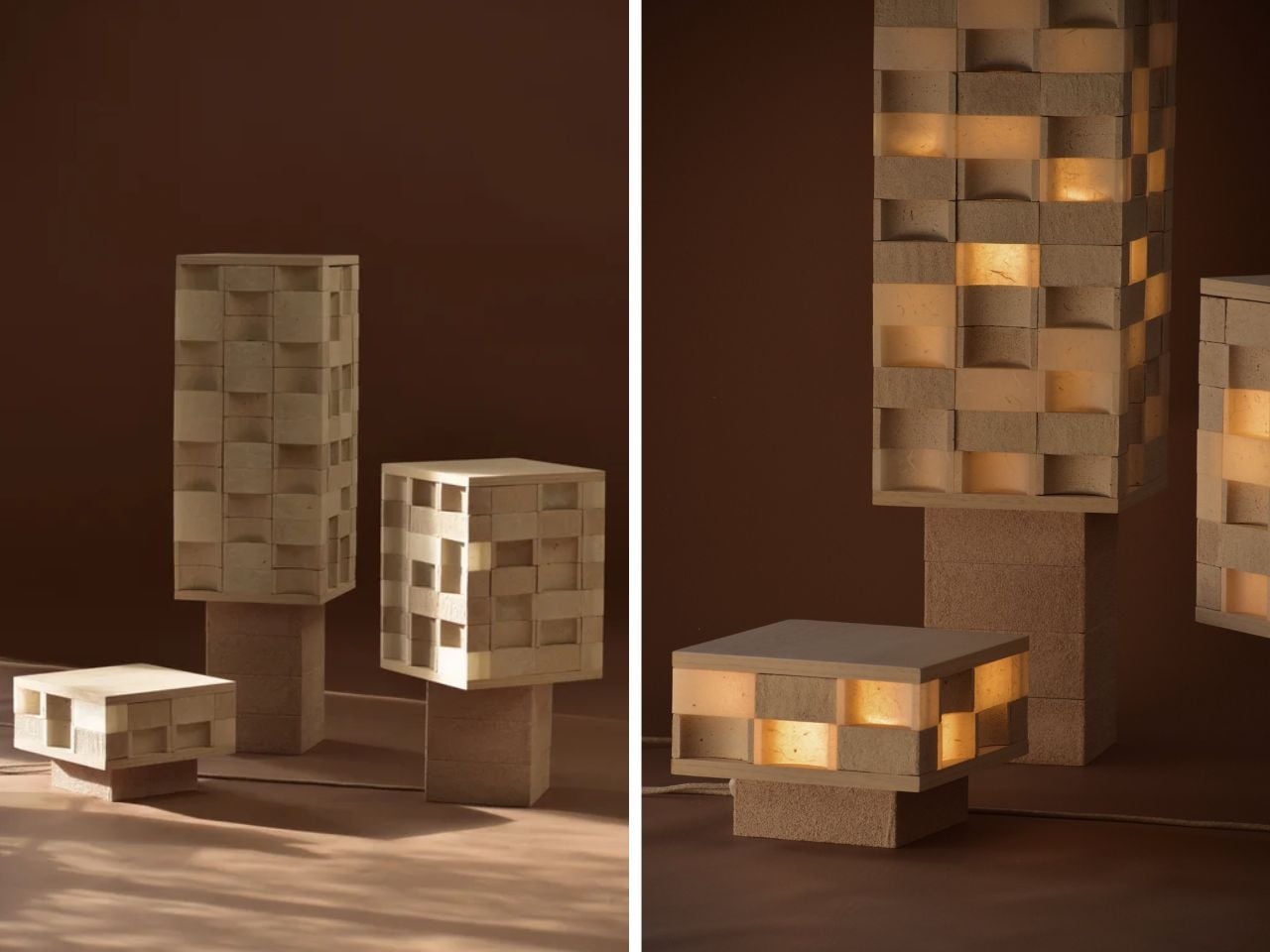
The lamp recently won the Australian Furniture Design Award, one of the country’s most respected design prizes. The award, led by Stylecraft and presented with the National Gallery of Victoria during Melbourne Design Week, challenged designers to respond to the theme “living well, living small.” Odisho’s lamp answered that brief with a balance of function, material experimentation, and emotional appeal.
What impressed the judges was not just the use of eggshells, but the way the object invites interaction. Mod-u is not a lamp that simply sits in the corner and performs one fixed role. Its modular structure gives the user control over its form. It can be built up, pulled apart, shifted, and reimagined depending on the room, the mood, or the need. That sense of play gives the piece a rare warmth. It feels practical, but still personal.
There is also something quietly powerful about the way the lamp treats waste. The eggshells are not disguised or hidden under a polished finish. Their natural colour remains visible, giving each piece a soft, earthy palette that feels honest to the material. It makes the object feel less manufactured and more grown, even though it is carefully designed.
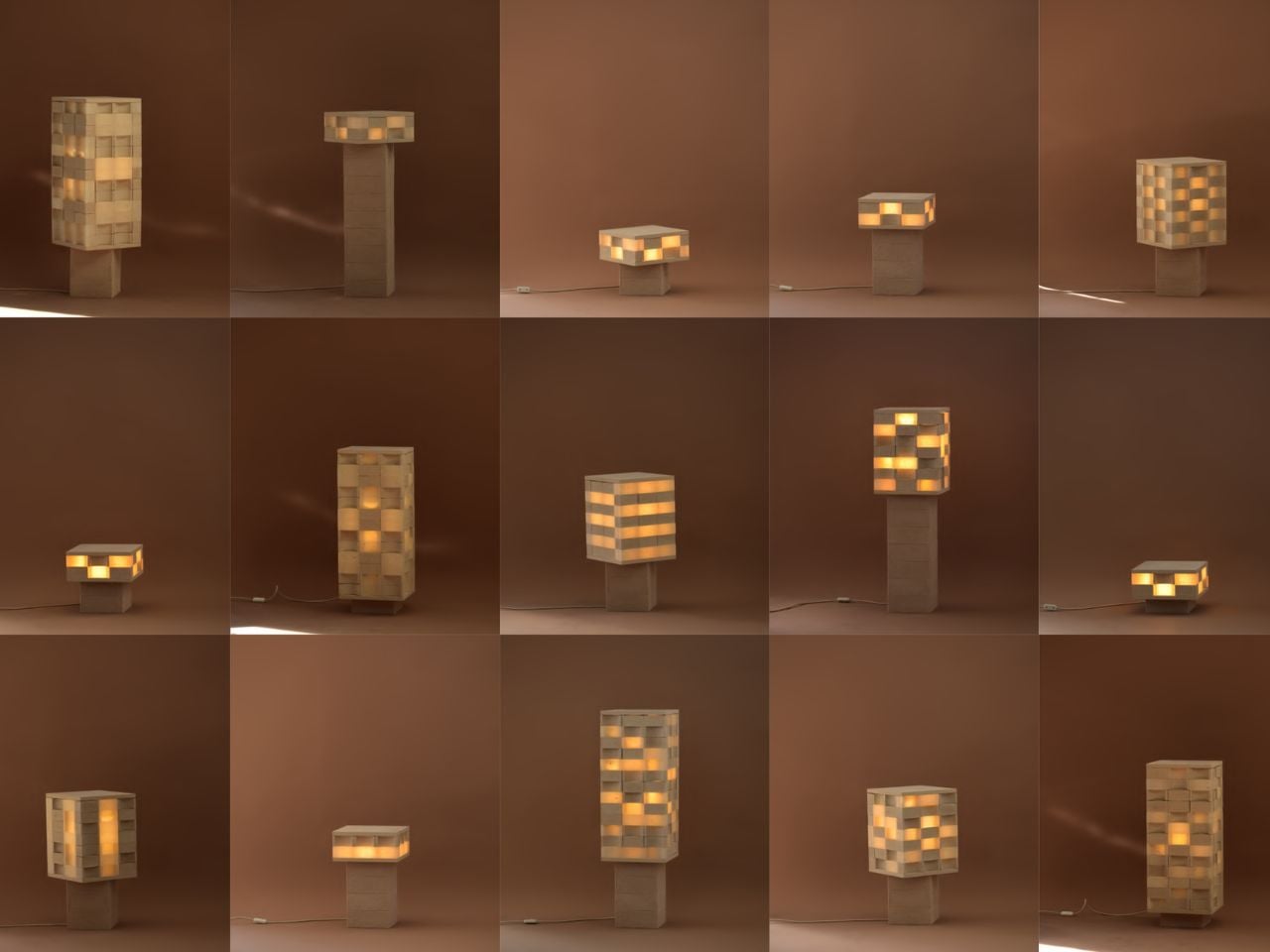
For Odisho, the project opens up a much bigger conversation about what sustainable furniture can look and feel like. It does not rely on guilt or overly technical language to make its point. Instead, it offers a simple idea: the materials we throw away every day might still have value, beauty, and strength left in them.
Mod-u succeeds because it feels experimental without being inaccessible. It is clever, but not cold. Sustainable, but not preachy. By turning something as delicate as an eggshell into a strong and adaptable object for the home, Joanne Odisho shows how thoughtful design can begin with the most ordinary leftovers.