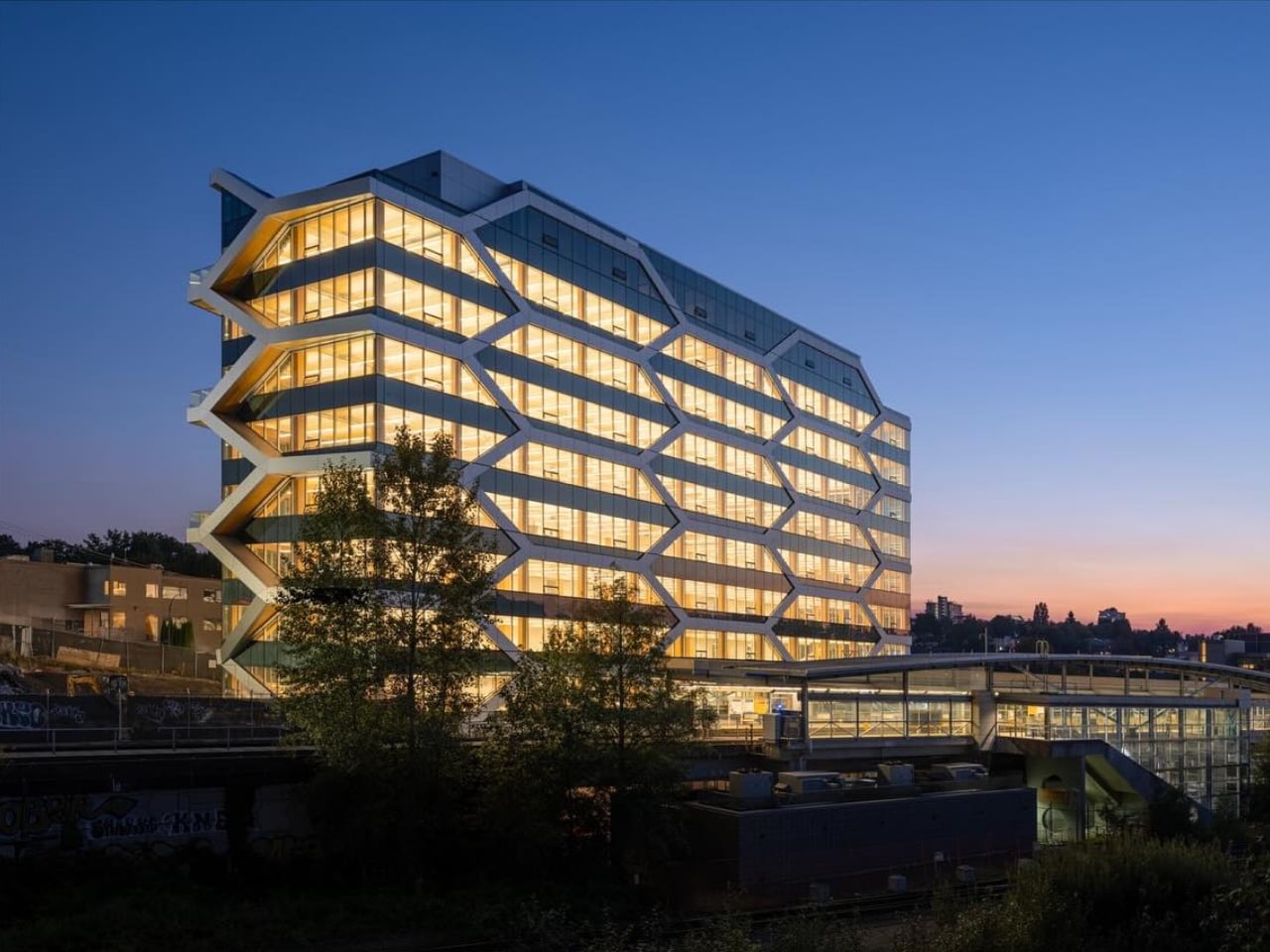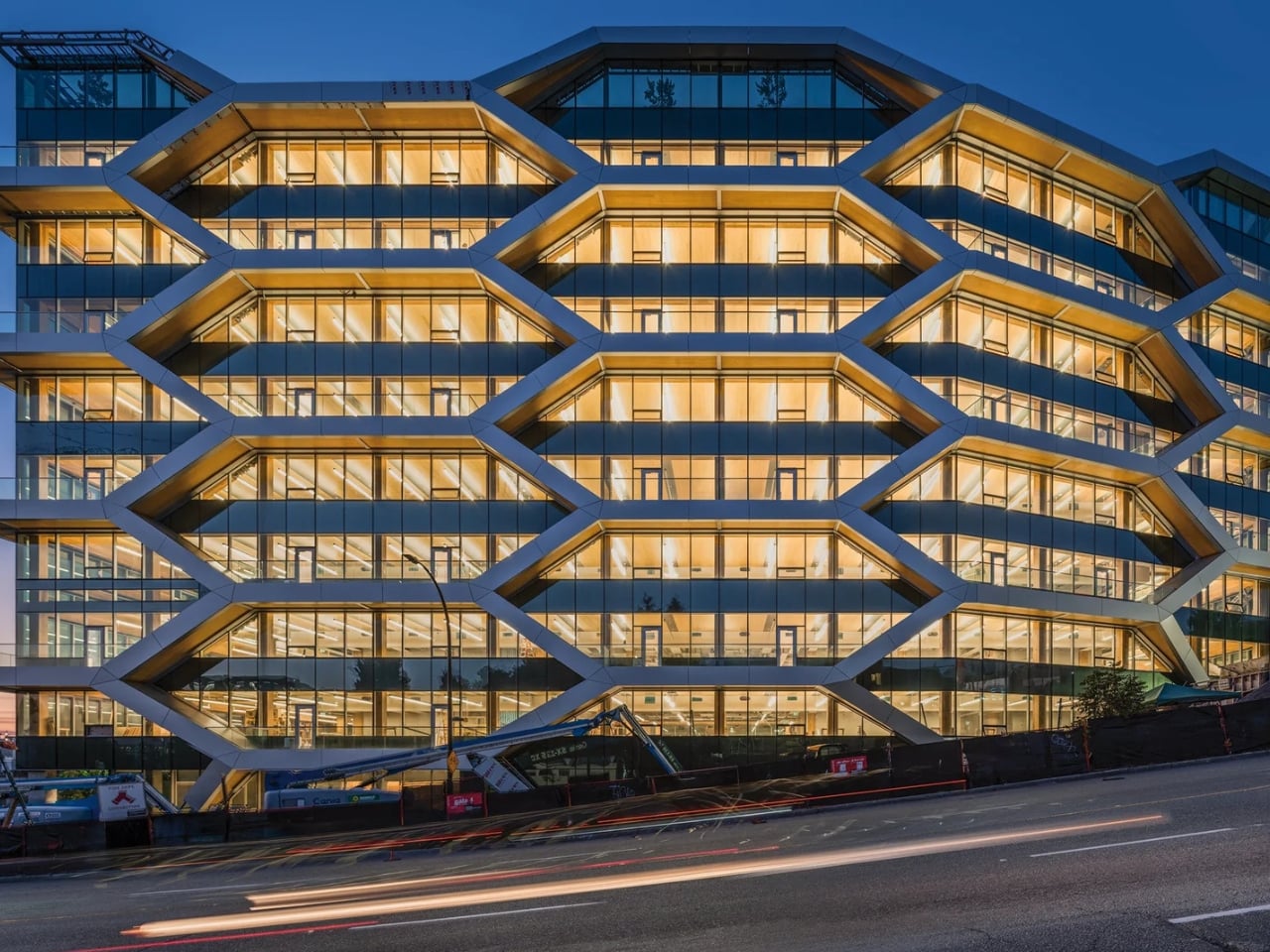
Vancouver just opened a building that looks like it was sketched from a bee’s imagination. Ten stories of glulam diagonal bracing arranged in a cellular honeycomb pattern, climbing above the False Creek Flats neighborhood at 2150 Keith Drive. No concrete core. No steel skeleton hiding inside. Just engineered wood, a very smart structural idea, and 106 seismic dampers quietly doing something extraordinary.
The Hive, designed by Dialog in collaboration with structural engineers Fast+Epp, is officially the tallest seismic-force-resisting mass timber building in North America. Nature’s Path Foods was an early believer in the project. The Insurance Corporation of British Columbia (ICBC) just signed on as anchor tenant, which matters more than it sounds. When an insurance company chooses to occupy a timber building designed for earthquake territory, it’s a signal about confidence, not just aesthetics.
Designer: Dialog Design (photos from Michael Elkan)
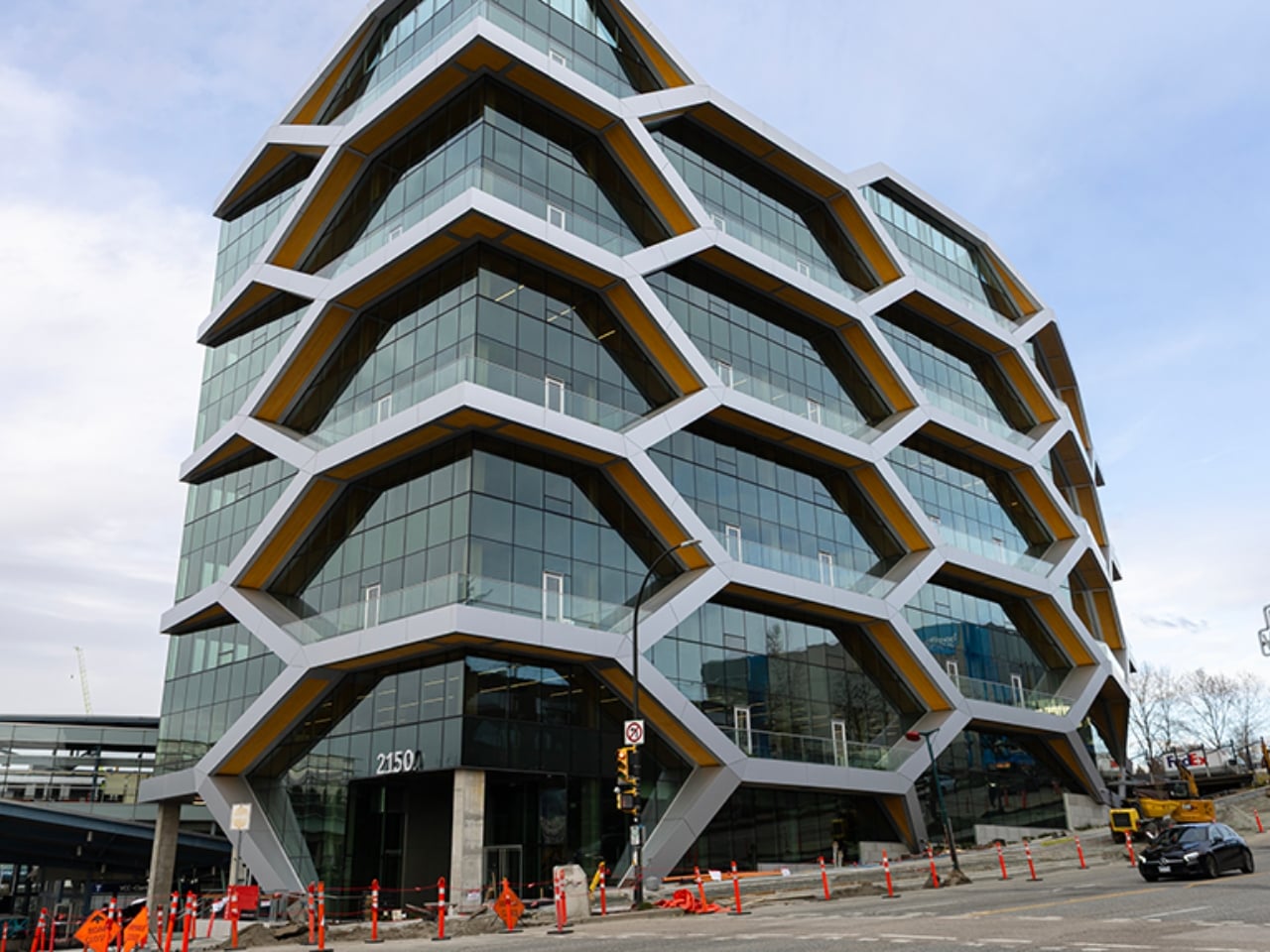
The structural decision at the center of this building is worth pausing on. Most architects building in seismic zones lean on a concrete core to handle lateral loads, then wrap wood or steel around it. Dialog chose not to do that here. Instead, the glulam diagonal braces run along the building’s perimeter, forming that honeycomb grid that reads immediately as a design statement but is actually the load-bearing logic made visible. The structure isn’t decorating the facade. The facade is the structure.
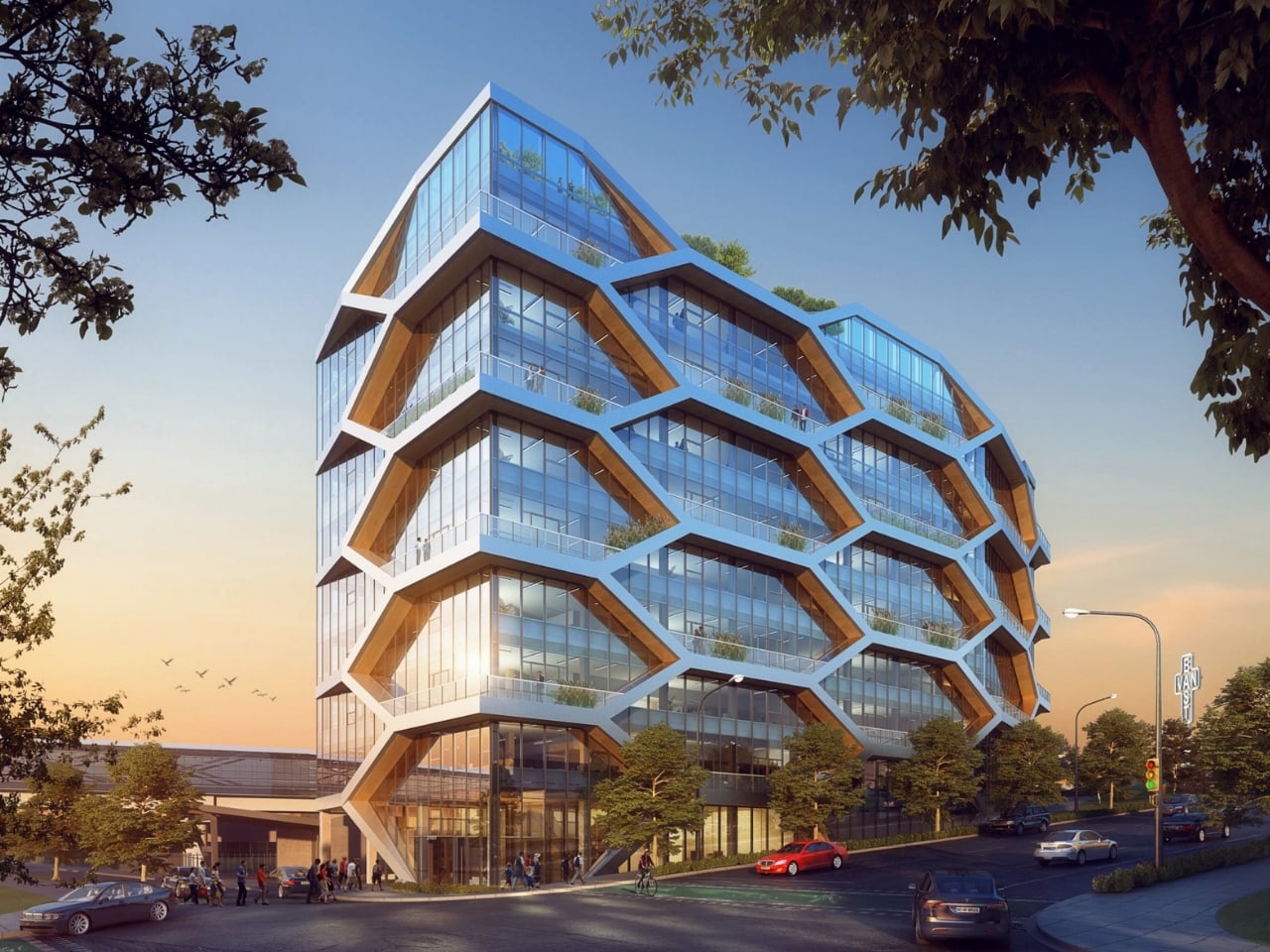
Paired with those diagonal glulam braces are 106 Tectonus damper connections, a system borrowed conceptually from how tectonic plates behave during seismic events. Rather than resisting an earthquake by brute force, the building is designed to move with it, absorbing energy through the dampers and then self-centering once the shaking stops. Testing was carried out at the University of Alberta using large physical mockups to prove the system would hold. That kind of pre-construction stress testing is not a given, and it reflects the level of scrutiny this project had to pass to exist at all.
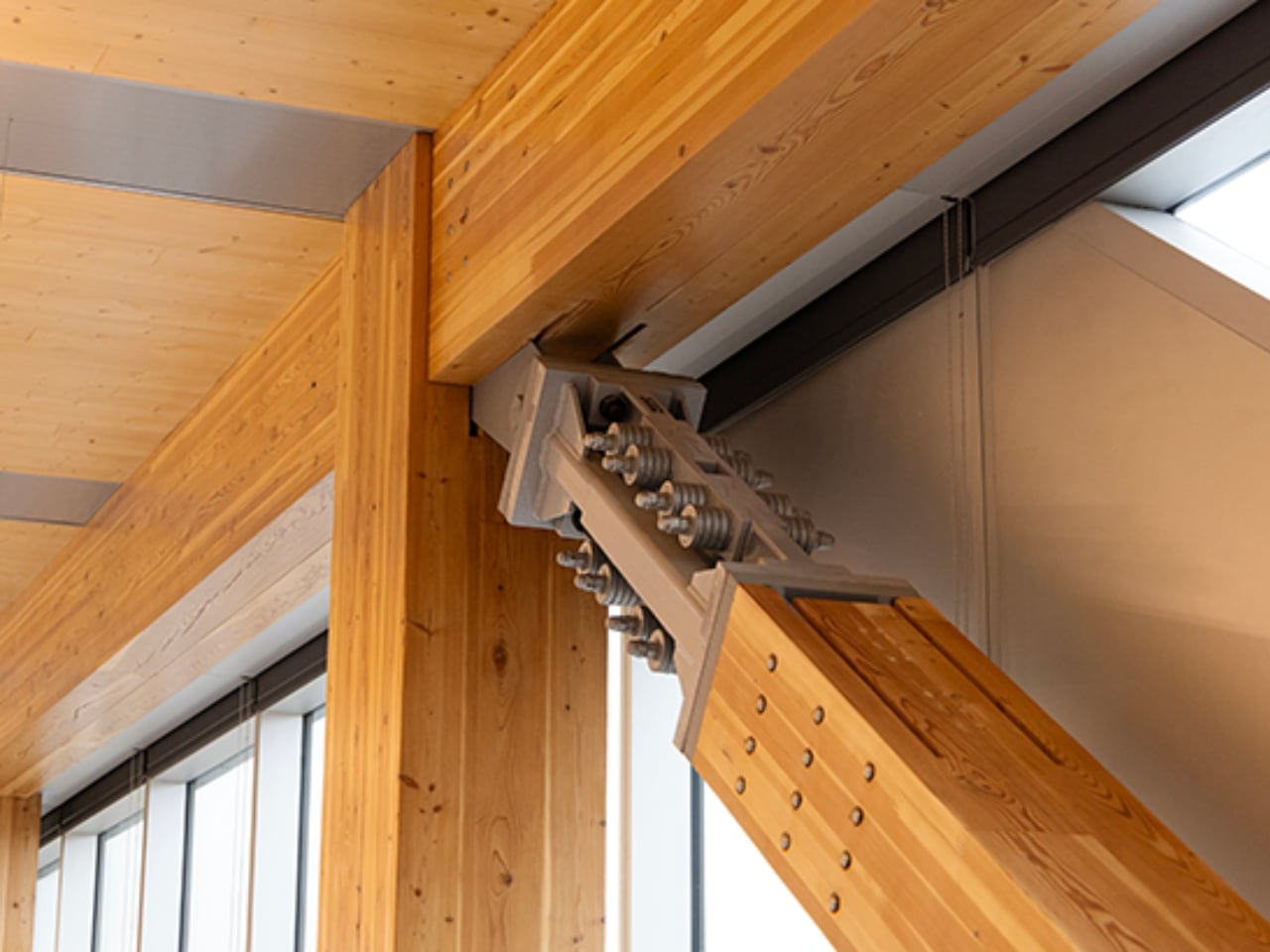
The reason that scrutiny was so high comes down to code. Canada updated its National Building Code in 2020 to permit mass timber buildings up to 12 stories, with changes taking effect in 2022. Vancouver sits in a high-seismic zone, which added requirements beyond the base code. Getting a tall timber building approved here required not just meeting those new standards but helping to write the engineering case for them. The team received $4 million in research funding from federal and provincial governments to do exactly that, covering destructive testing, fire testing, and constructability analysis. The Hive didn’t just benefit from the regulatory shift. It helped earn it.
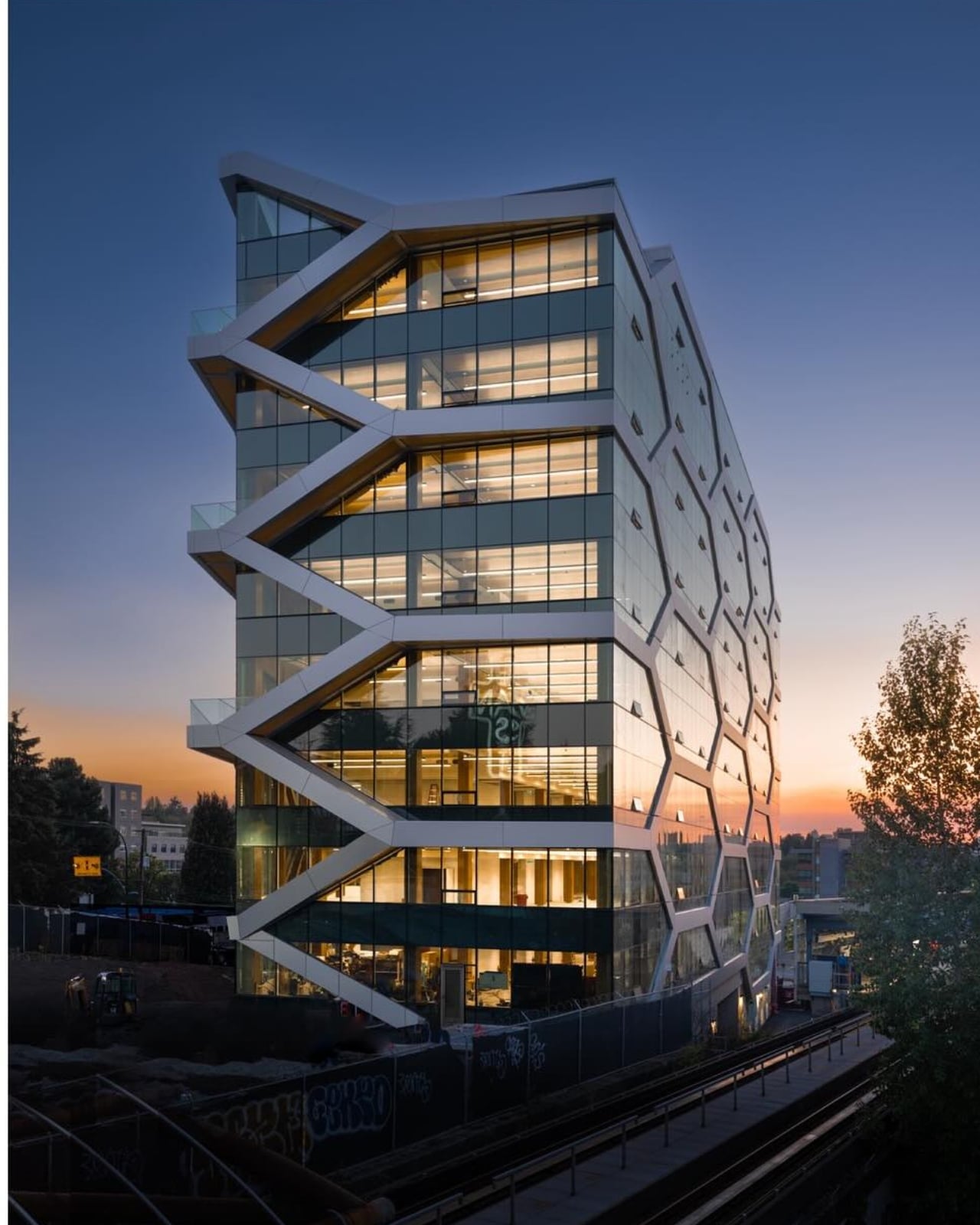
The comparison to other celebrated mass timber towers is instructive. Milwaukee’s Ascent is remarkable at 25 stories, and buildings like Neutral Edison have made compelling arguments for timber in dense urban settings. But neither sits in a high-seismic zone. The Hive isn’t the tallest timber building; it’s the most structurally tested in the conditions most buildings actually fear. Seismic credibility is the specific gap it fills, and filling it in a major North American city with a government-insurer anchor tenant is a different kind of proof than any design award.
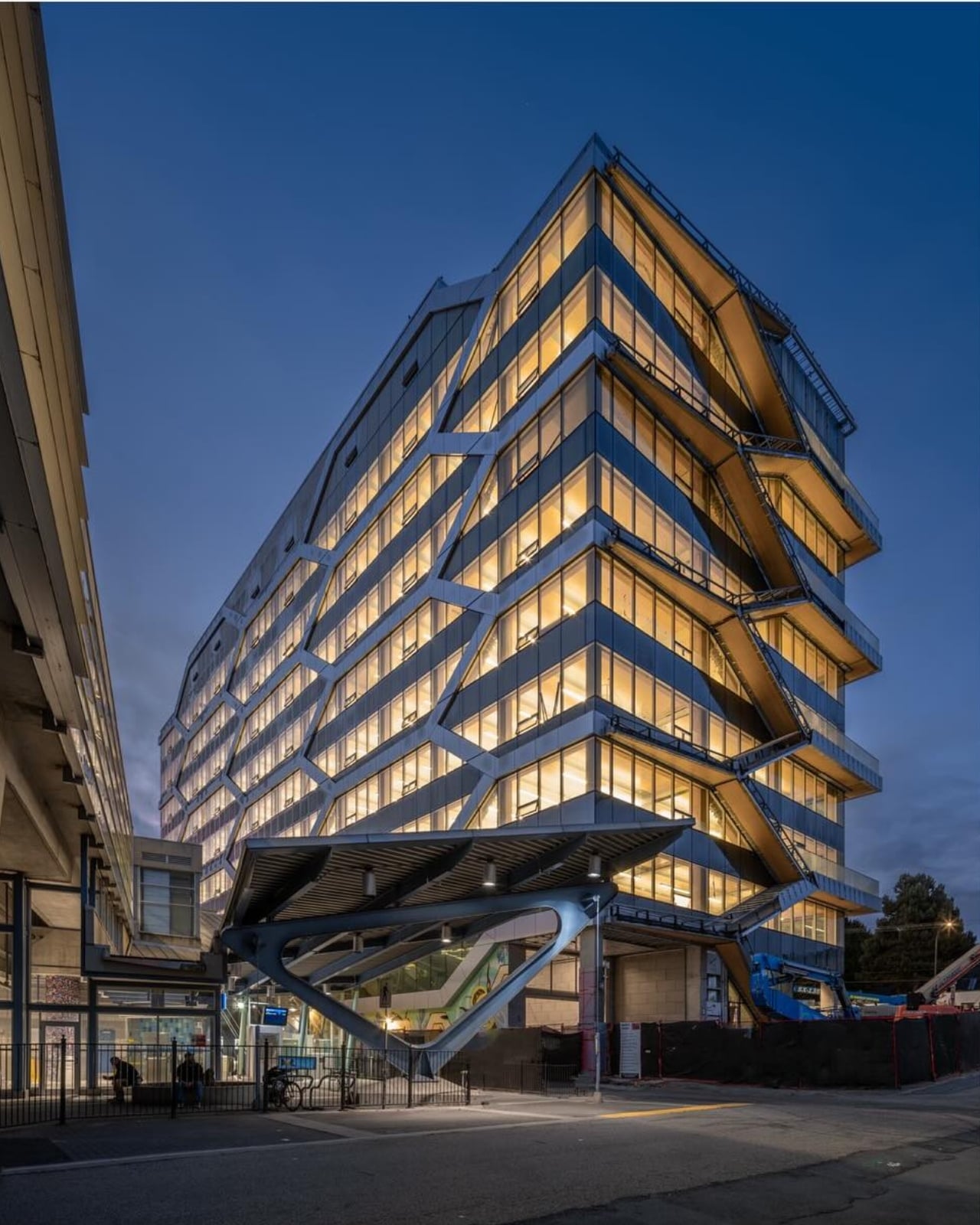
The honeycomb wasn’t chosen to be pretty. It was chosen because the diagonal brace geometry at the perimeter is the most efficient seismic solution for a building this size without a concrete core. And yet the result is one of the most graphically immediate buildings to open anywhere this year. When the structural diagram and the brand identity are the same thing, something has gone right at a foundational level in the design process.
Mass timber has been in a years-long tug-of-war between its admirers and its skeptics. The admirers point to carbon storage, warmth, biophilic benefits. The skeptics point to fire risk, insurance costs, and seismic uncertainty. The Hive answers the hardest skeptic argument directly, in one of the most seismically demanding cities in Canada. Whether it fully tips the debate probably depends on what gets permitted and built next. But as an opening move, it’s a strong one.