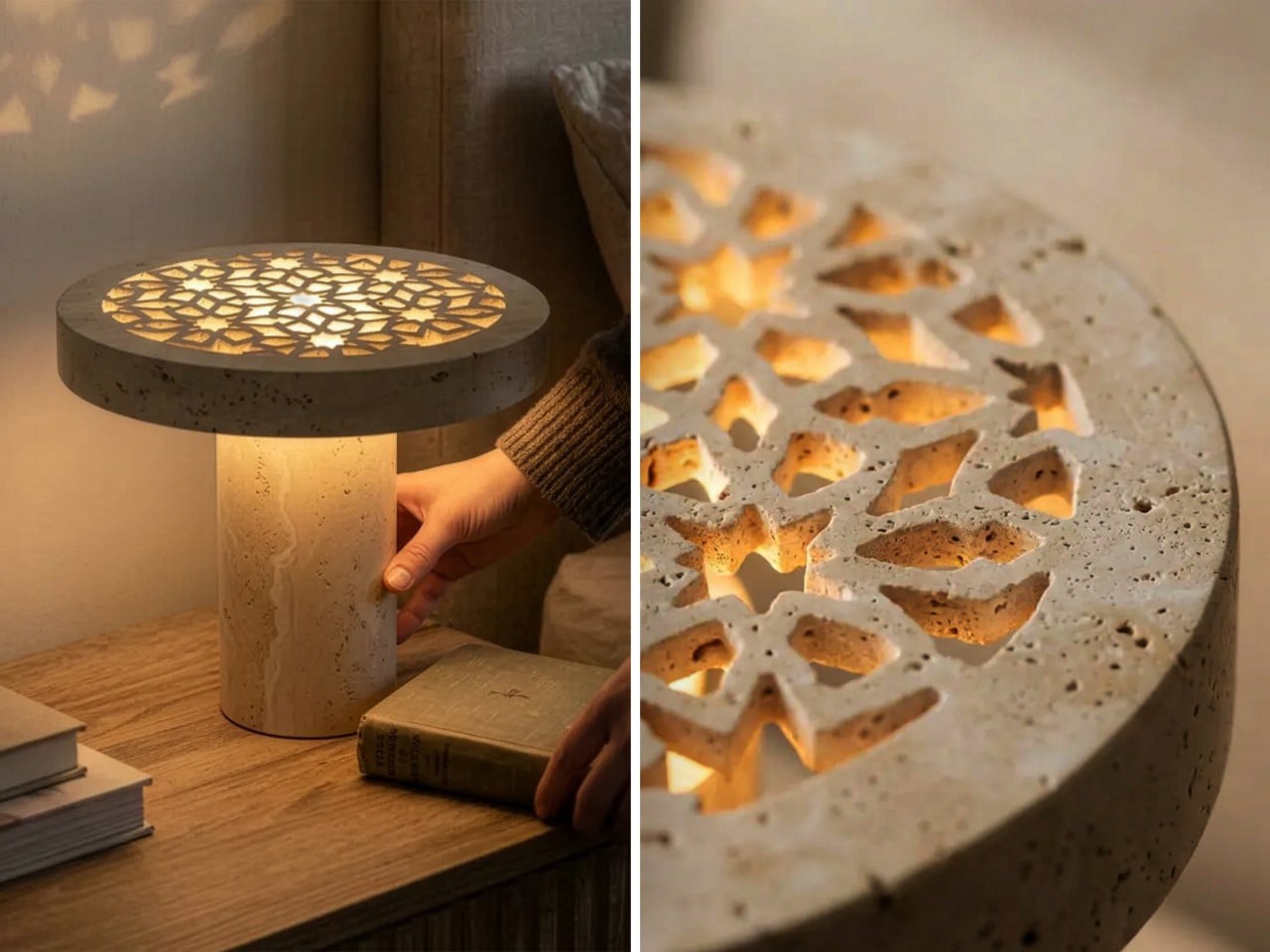
The history of decorative stone carving and the history of electric lighting have almost never intersected in any meaningful way at the shade level. The closest attempts have been thin marble slices backlit into warm translucency, or those Himalayan pink salt lamps that colonized every wellness-adjacent bedroom in the 2010s, both of which use the stone as a passive diffuser, a material you shine through rather than one you design with. The geometric traditions of Islamic architecture, meanwhile, have lived primarily in plaster, wood, and tile, materials that reward the kind of fine, repetitive cutting those patterns demand. Ibrahim Fatih Satilmis, founder of Istanbul’s Studio Soldout, spent the latter part of 2025 testing whether travertine could bridge those two histories, and Sukun is what came out of that research.
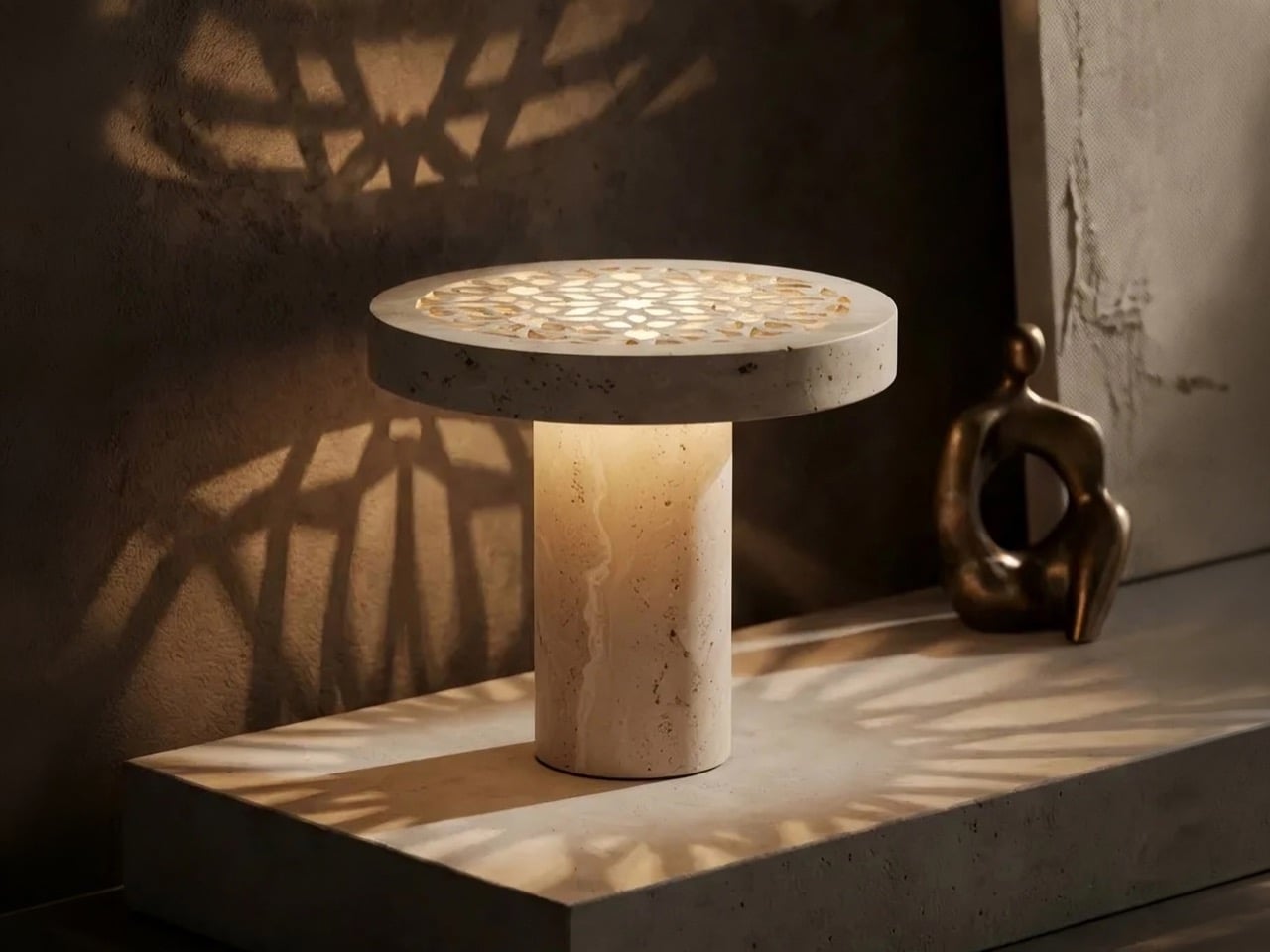
Six Islamic geometric motifs, each sourced from a specific landmark in Konya, Kayseri, Karaman, Cordoba, Valladolid, or Granada, are waterjet-cut and CNC-refined through the travertine disc that forms the lamp’s top. A concealed rechargeable battery powers an integrated LED at 2700K, with three-step phase dimming and six to eight hours of runtime per charge. When lit, the pattern projects outward in every direction, the ceiling, the wall behind, the table surface below, turning the geometry from object into environment. Sukun just picked up a win in the A’ Design Award’s Lighting Products and Fixtures category for the 2025-2026 cycle.
Designer: Ibrahim Fatih Satilmis
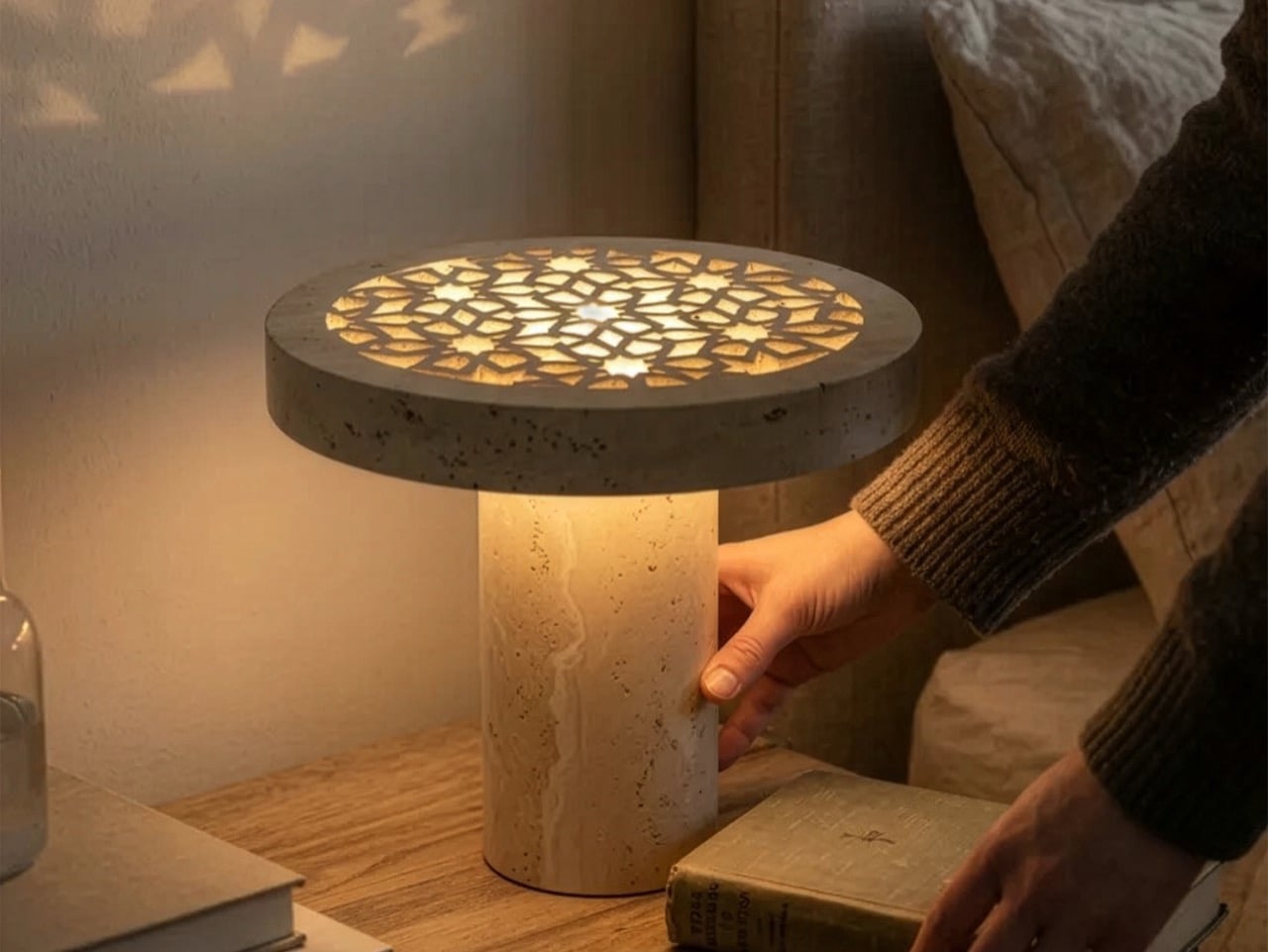
Travertine is defined by geological accident, by voids and veins left behind as calcium carbonate settled over millennia, and those natural pores sit millimeters away from the machined perforations without any visual conflict. If anything, the stone’s inherent texture makes the precision of the geometry feel more earned, the way a hand-laid mosaic reads differently than a printed reproduction of the same pattern. Satilmis worked through Eric Broug’s geometric reconstruction methodology to ensure each motif was mathematically faithful to its source site before committing it to stone, which matters because these patterns are systems, not ornaments, and a slightly wrong angle compounds across repetitions into something that reads as off without the viewer quite knowing why. The main machining challenge was cutting fine perforations through travertine without chipping, while keeping the disc thick enough to remain structurally stable, a balance that required significant prototyping before the geometry held cleanly at full depth.
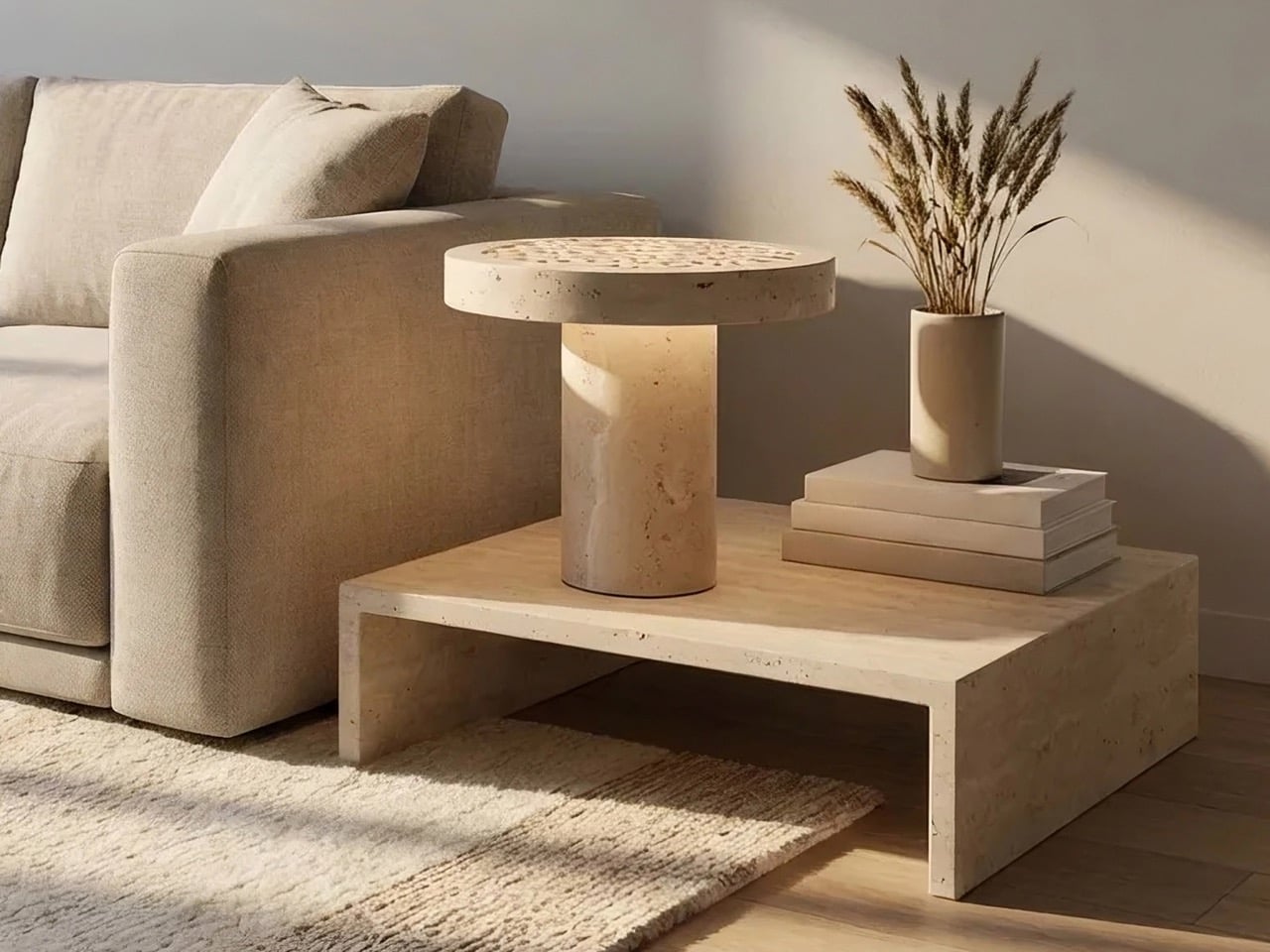
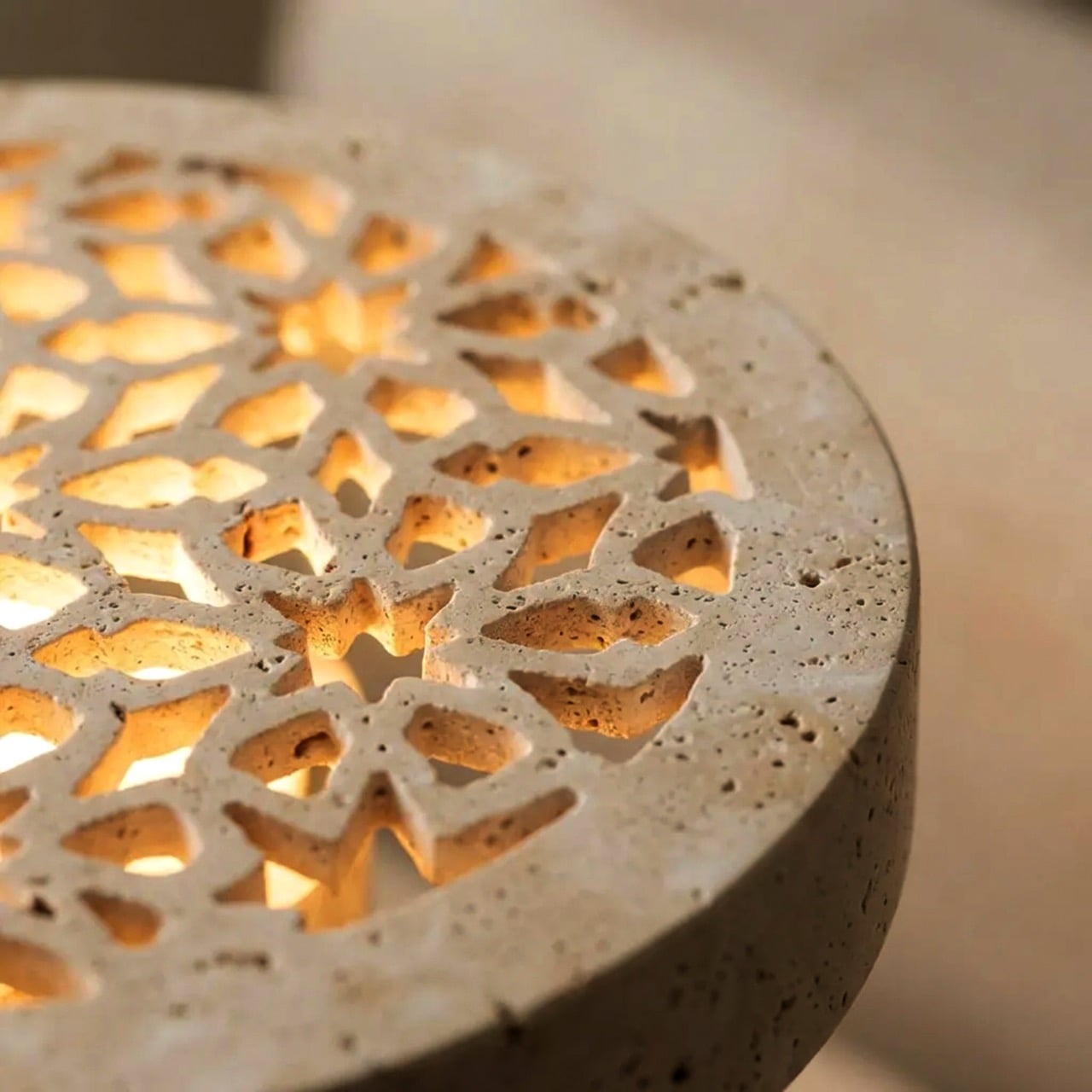
A cylindrical travertine base houses the electronics and doubles as a downward light diffuser, washing the table surface in soft 2700K warmth, while the carved disc floats above on a simple shoulder, elevated just enough to let light escape sideways and upward through the pattern. At 250mm wide and 300mm tall, the proportions sit comfortably between a statement object and an everyday lamp, substantial enough to anchor a bedside table or a dining sideboard without demanding the room reorganize around it. The rechargeable system charges via USB-C and runs six to eight hours per charge, which means no cord breaking the silhouette, a non-negotiable for a lamp this considered about its own appearance. Three-step phase dimming lets you dial the output down for ambient use without the flicker that plagues cheaper dimming implementations.
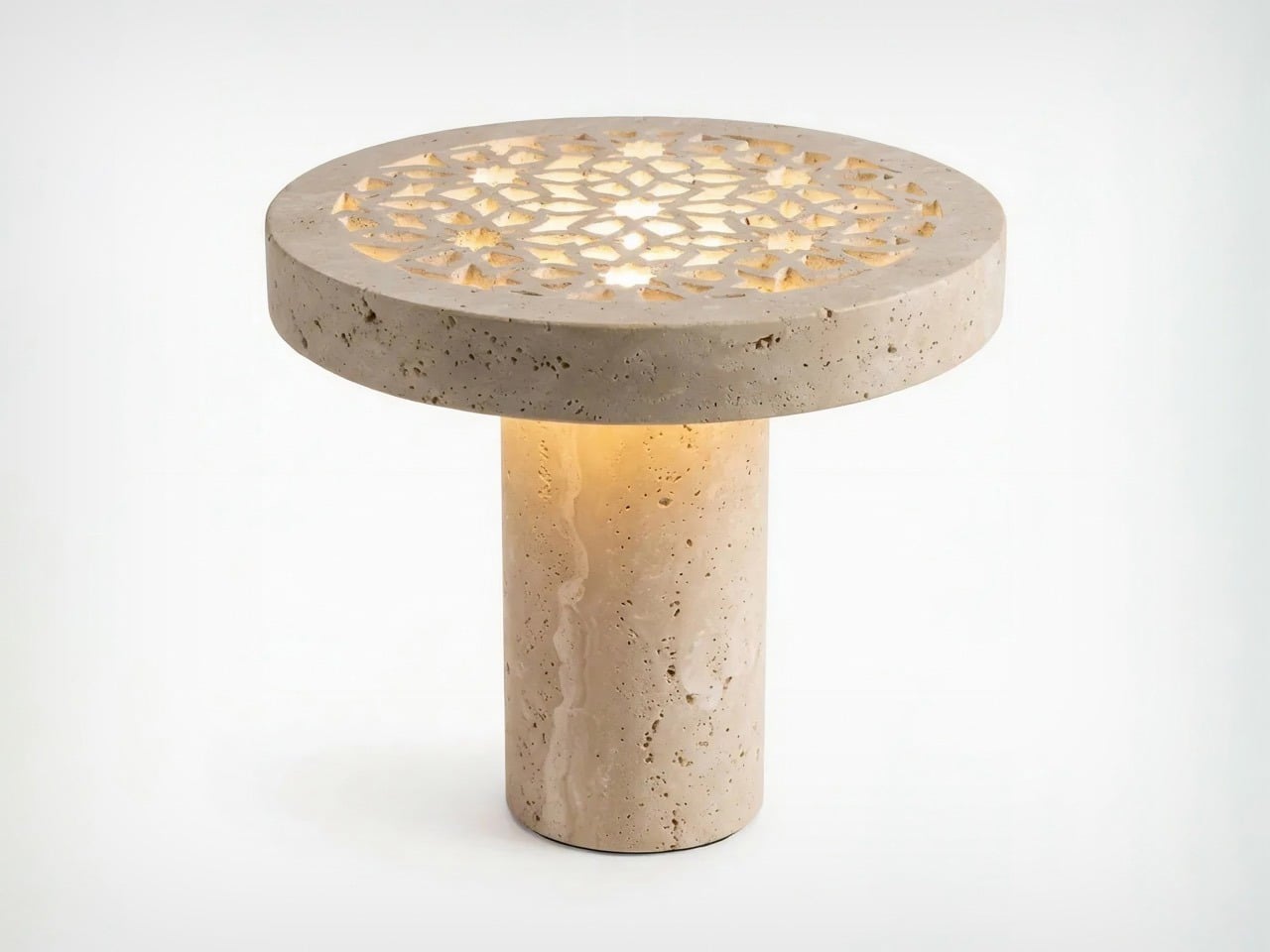
Switched off, Sukun reads as a serious piece of stone craft, the kind of object that holds its own in a well-edited interior without requiring explanation. Switched on, the room changes, and because travertine’s natural texture catches light unevenly, the projected shadows carry a slight warmth and irregularity that a laser-cut metal shade could never replicate. The stone absorbs and diffuses before releasing, softening the LED’s output into something that feels genuinely warm rather than merely color-temperature warm. Six pattern variants are available as separate lamps, each tied to a different historical site, giving the collection a documentary dimension that most lighting ranges never attempt.