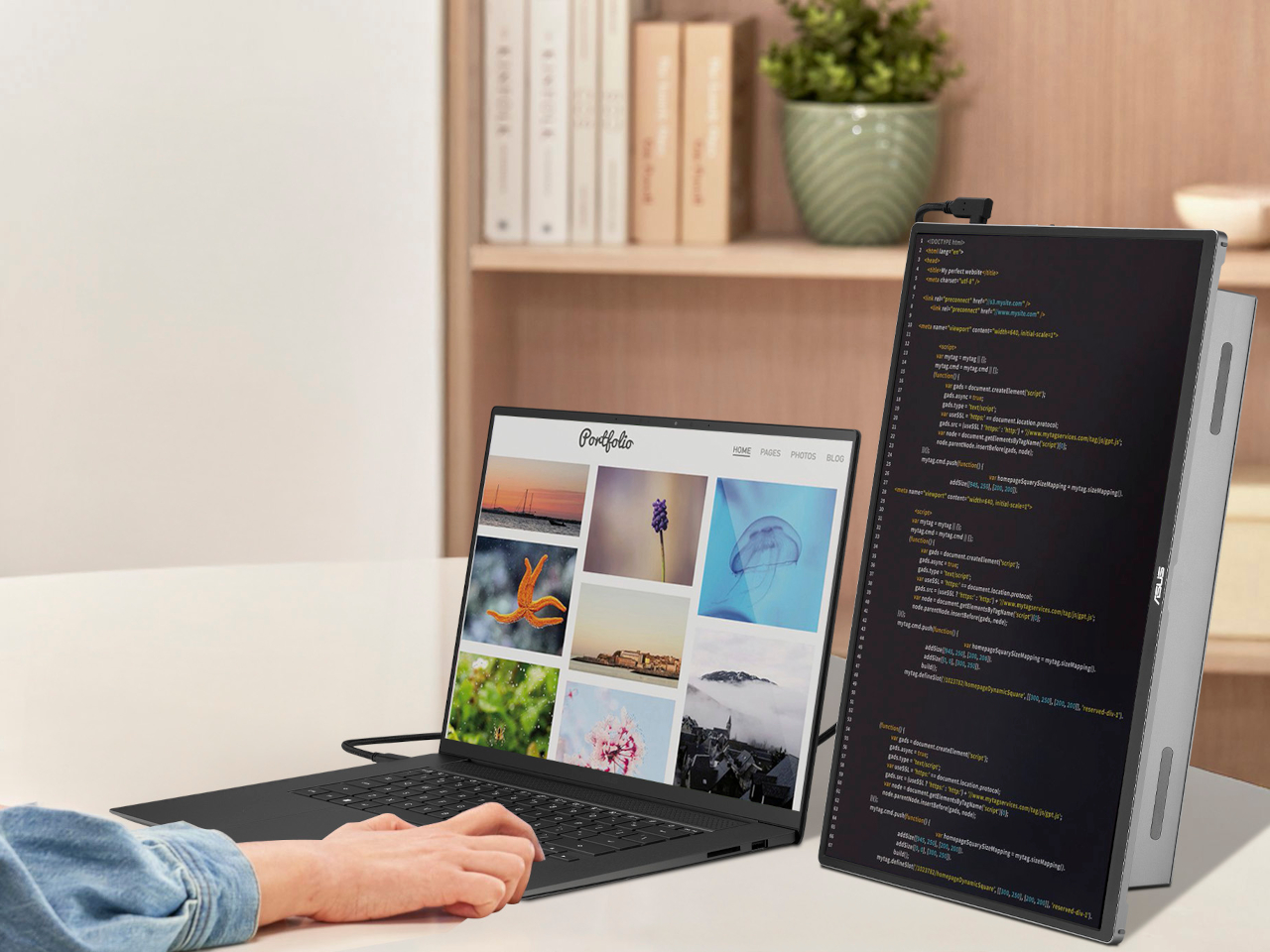
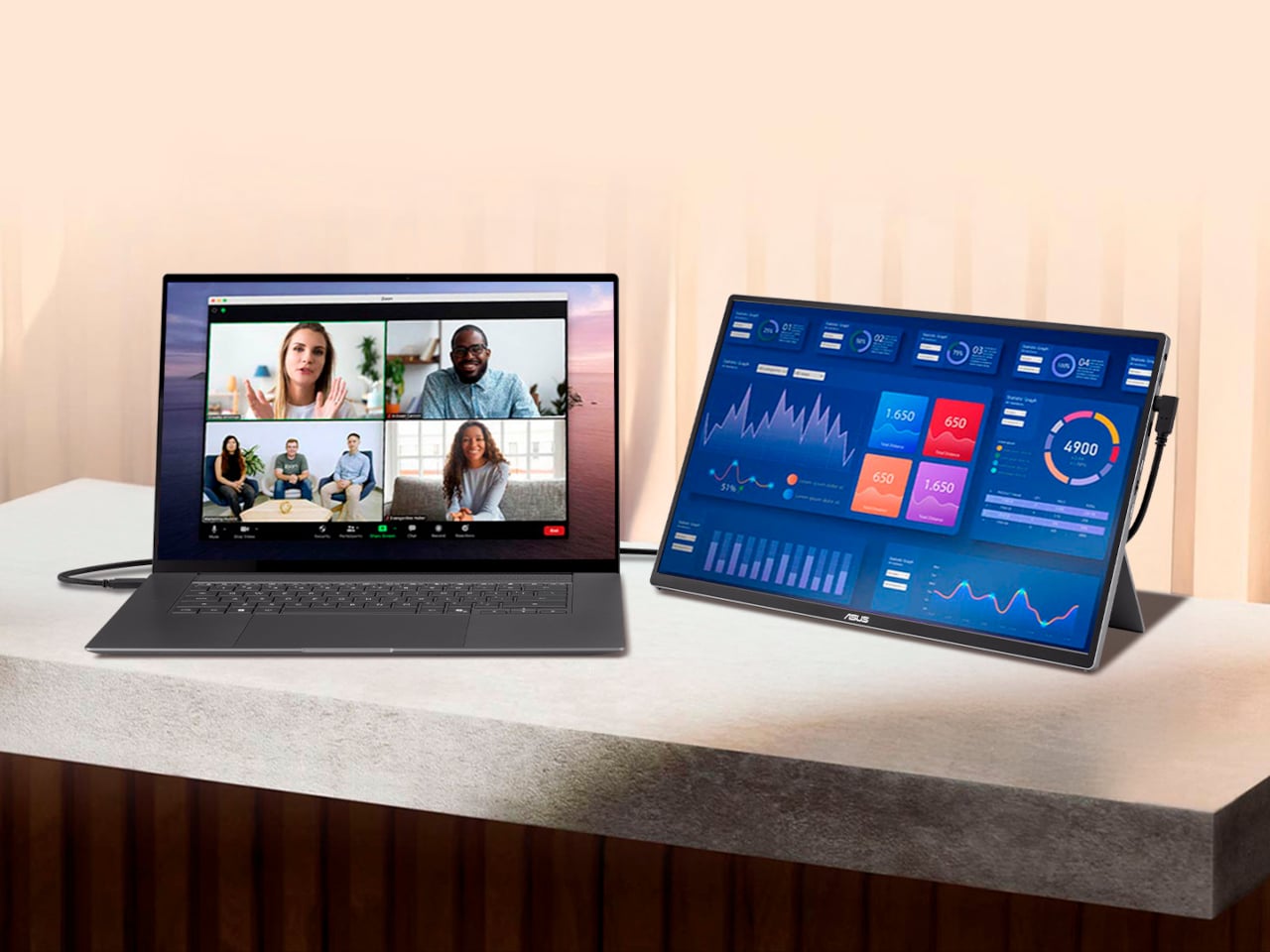
Portable monitors have quietly become one of the most appealing accessories for people who work on the go. Pack a slim second screen, connect it to your laptop, and you’ve doubled your workspace without lugging a desktop around. What nobody really advertises, though, is the trade-off: those displays almost always draw power from the laptop they’re attached to, cutting into the battery life you were counting on.
The ASUS ZenScreen OLED MQ16FC tries to fix that. It’s a 16-inch portable OLED display that launched in Europe in early May 2026 at around €280 to €300, measuring 9mm thin and weighing roughly 0.68 kilograms. Those are already respectable numbers for a display of this size, but what actually sets it apart is buried in the port specification: two USB-C connections that can send power in either direction.
Designer: ASUS
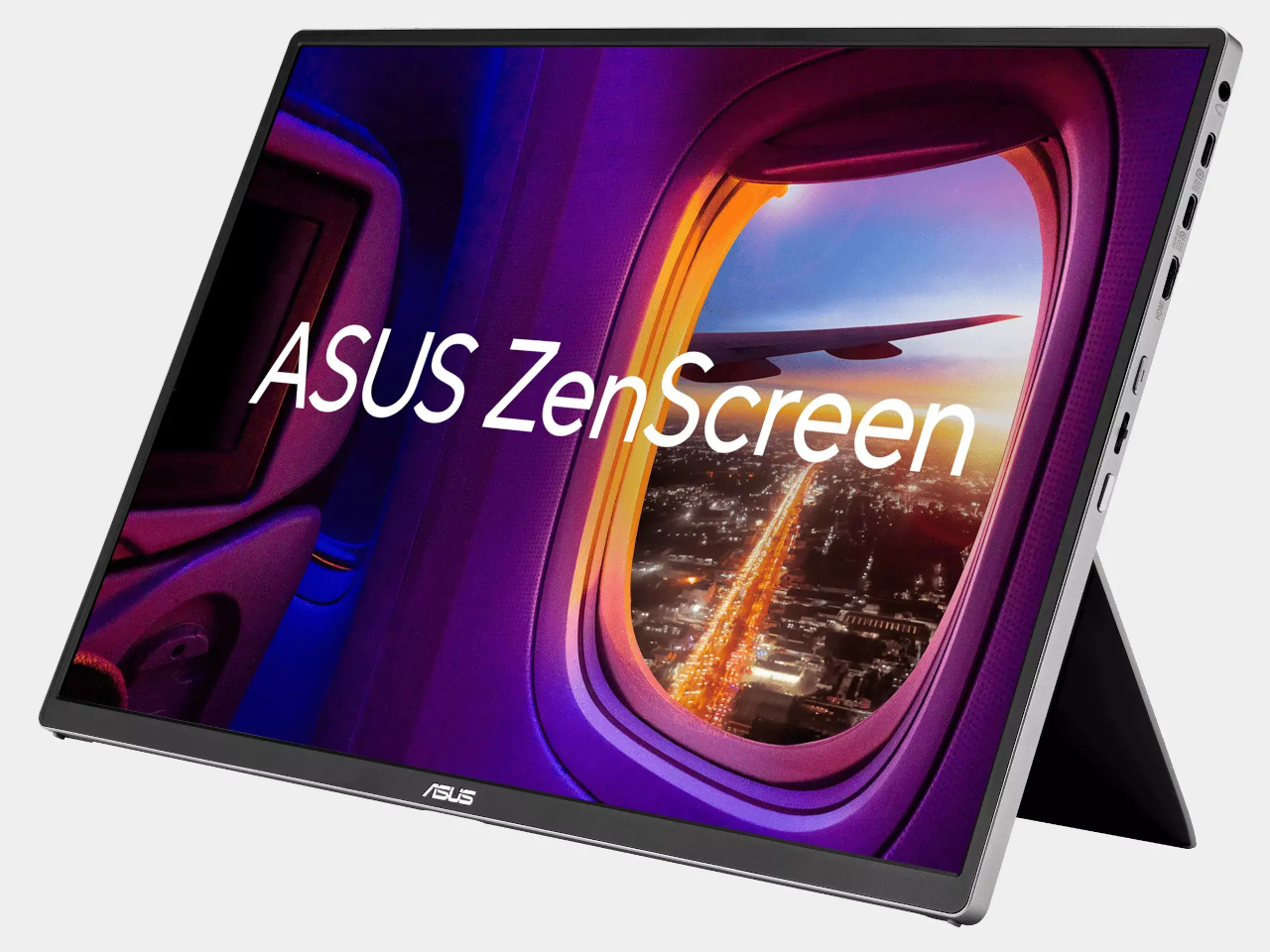
Here’s how that works in practice. Plug a USB-C charger into one port on the monitor, then run a single cable from the second port to your laptop. That cable carries both the video signal and up to 65 watts of power, so your notebook keeps charging while the display is running. No power brick plugged separately into the laptop, no second cable hunting for a free port.
It’s worth pausing on why that matters. Most portable monitors are passive in the power conversation; they take whatever the laptop offers and give nothing back. ASUS’s approach treats the power relationship between screen and computer as something the monitor has a responsibility to manage. That’s a small but meaningful shift in thinking, one that asks the accessory to do more work instead of quietly billing the host.

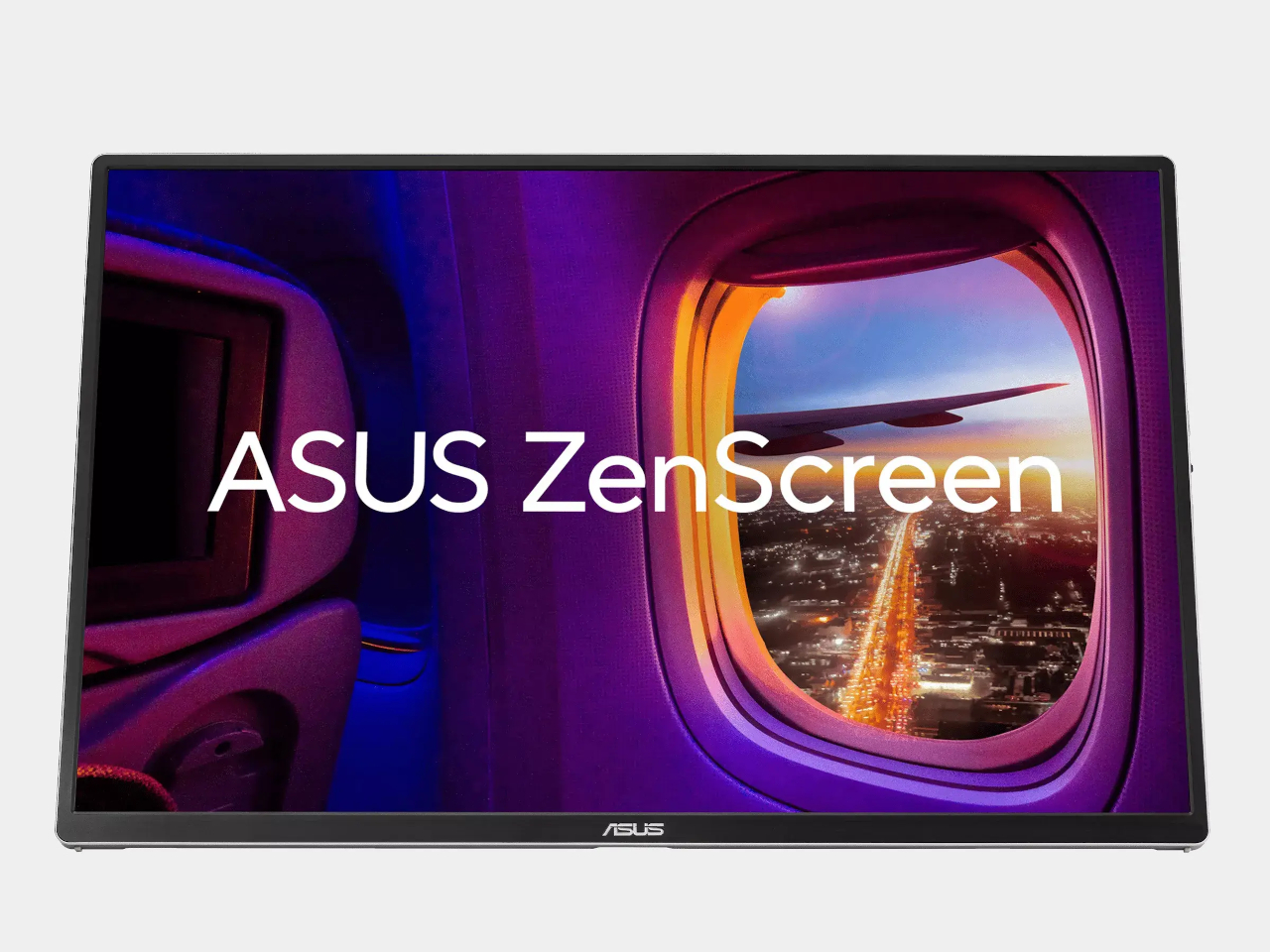
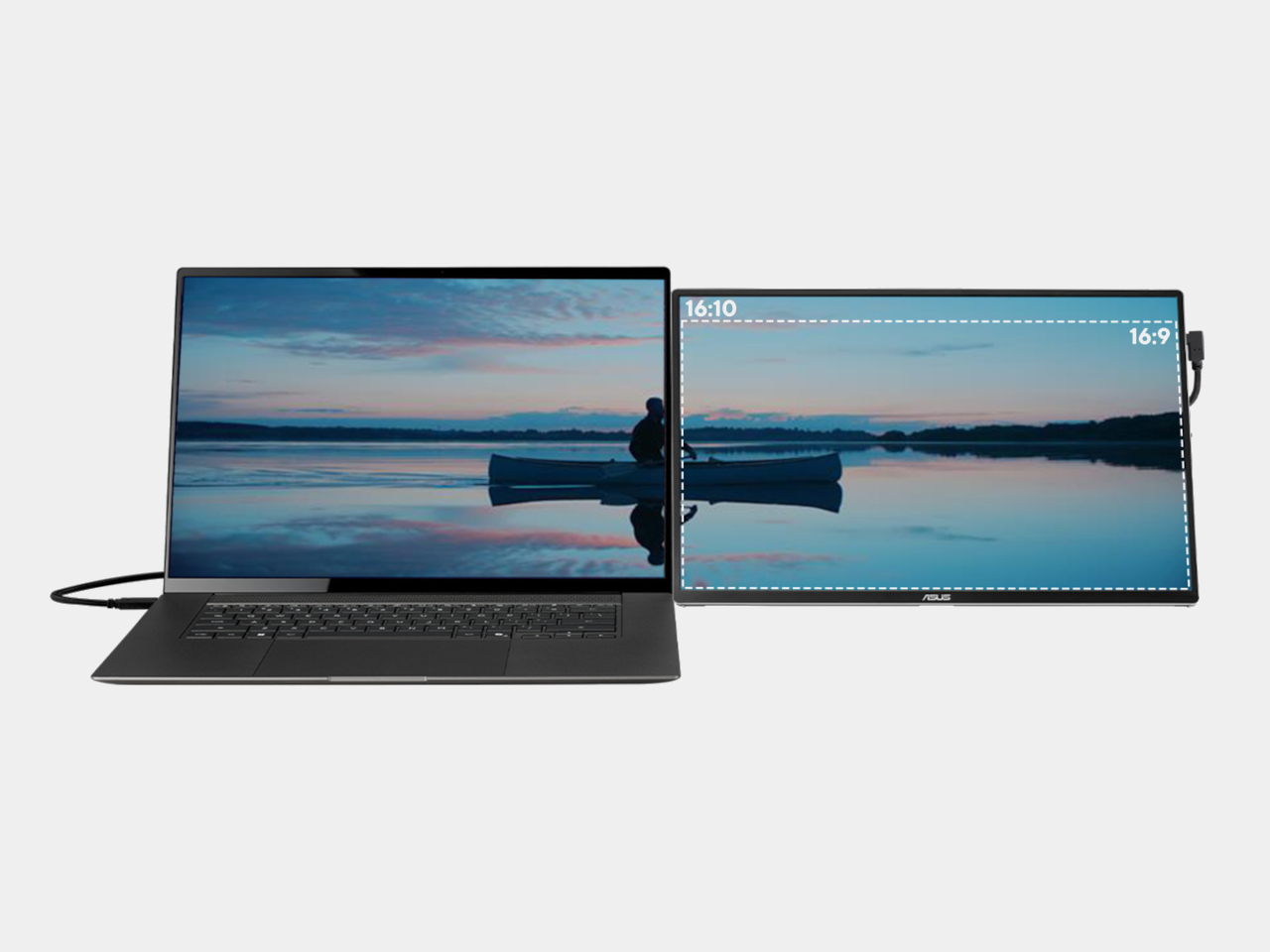
Beyond the power story, the MQ16FC has a display worth carrying. The OLED panel covers 95% of the DCI-P3 color gamut at a 1920 x 1200 WUXGA resolution in a 16:10 aspect ratio, which adds that extra vertical breathing room that widescreen layouts tend to cut off. Contrast is practically infinite by OLED standards, and a 1ms response time keeps things clean enough for video and everyday multitasking.
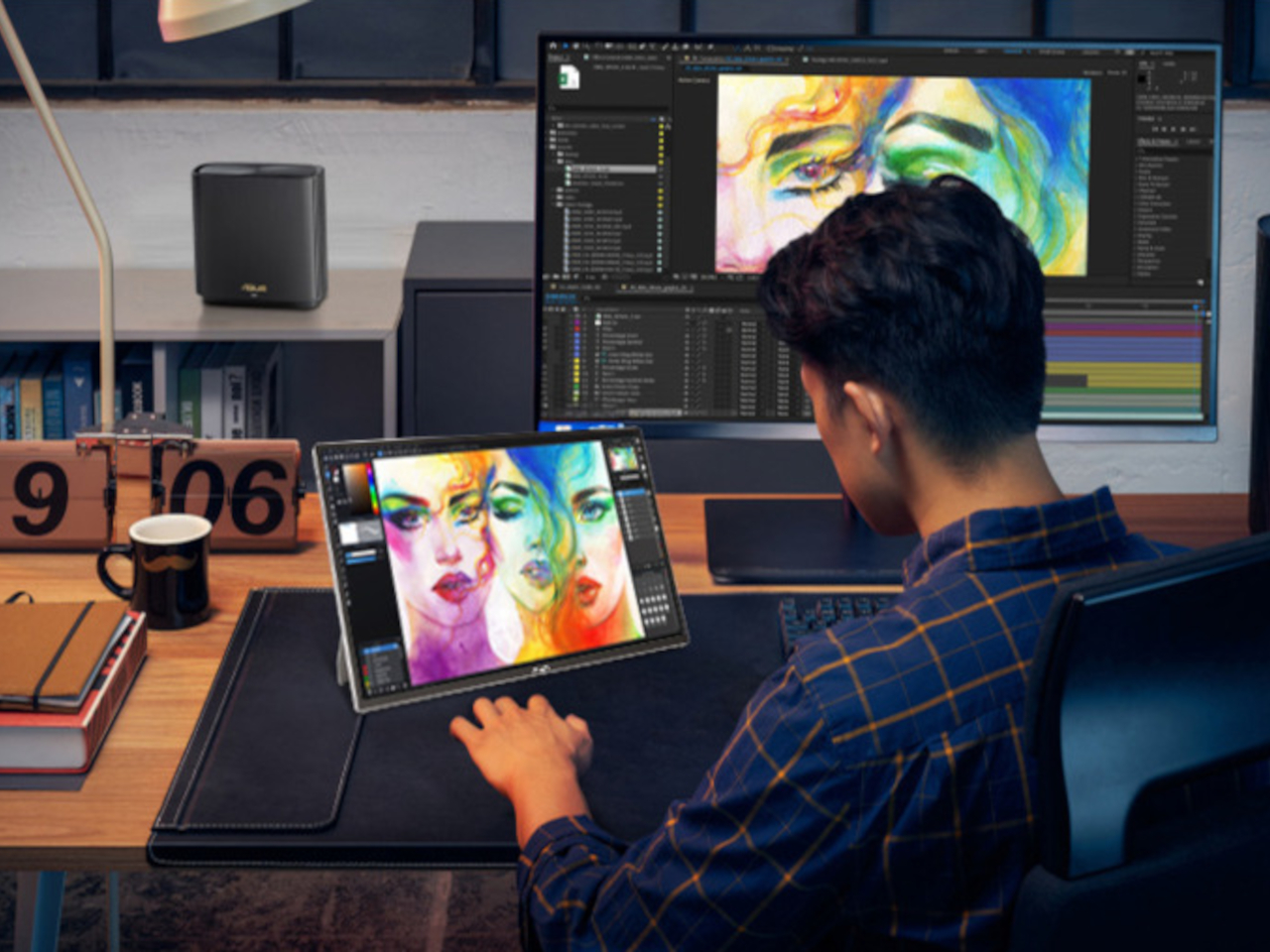
That said, the MQ16FC isn’t without its quiet losses. There’s no internal battery, so without a charger in the loop, the monitor can still draw from your laptop’s reserves. The 60Hz refresh rate and WUXGA resolution are competent but not particularly exciting for a display positioned as premium. The kickstand-only stand can be awkward on tray tables, and the glossy OLED panel isn’t always your friend in brighter environments.
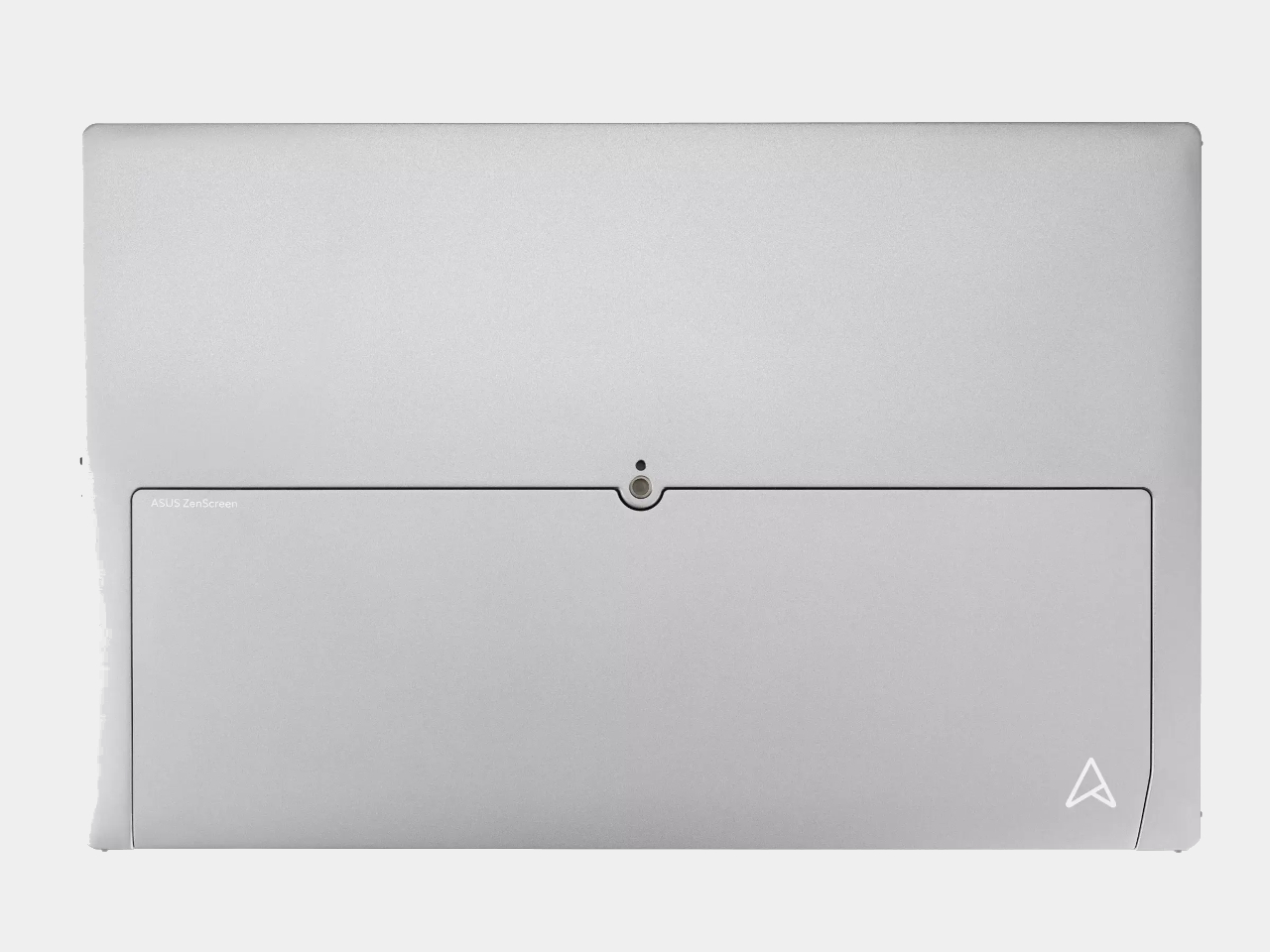
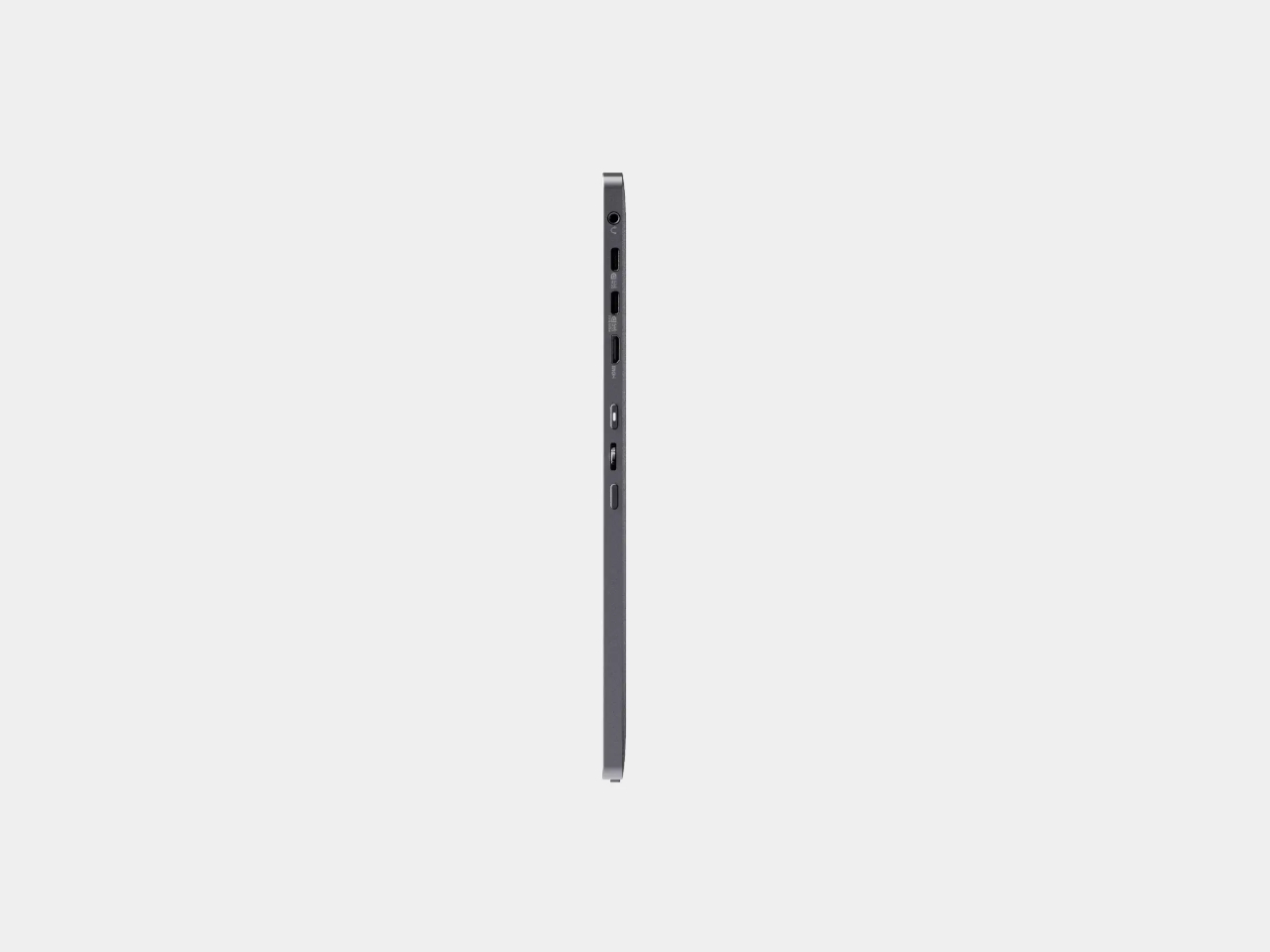
None of those shortcomings cancels out what makes the MQ16FC interesting. Adding a second screen to a laptop has always been a negotiation between convenience and cable chaos, and for years, the hardware hasn’t done much to simplify that deal. A portable monitor that treats power routing as part of its job description is making a quiet argument about what the category should have been doing all along.