Most lamps disappear into a room. They’re functional, fine, forgettable. The new collection from Taiwan-Lantern, shown this week at ICFF during NYCxDESIGN in New York, does the opposite. These are lamps you stop in front of. Lamps you study. Objects that reward attention the longer you give them.
The Amsterdam-based studio, founded by Pei-Ching Hsiao and Jean-Marc Daniëls, brought a floor and table lantern collection to Booth 843 at the Javits Center, and the visual logic of each piece is genuinely worth unpacking. The forms pull directly from the traditional East Asian paper lantern, that familiar oval body stretched over a bamboo frame, but what the studio has done with that starting point is where it gets interesting.
Designer: Taiwan-Lantern
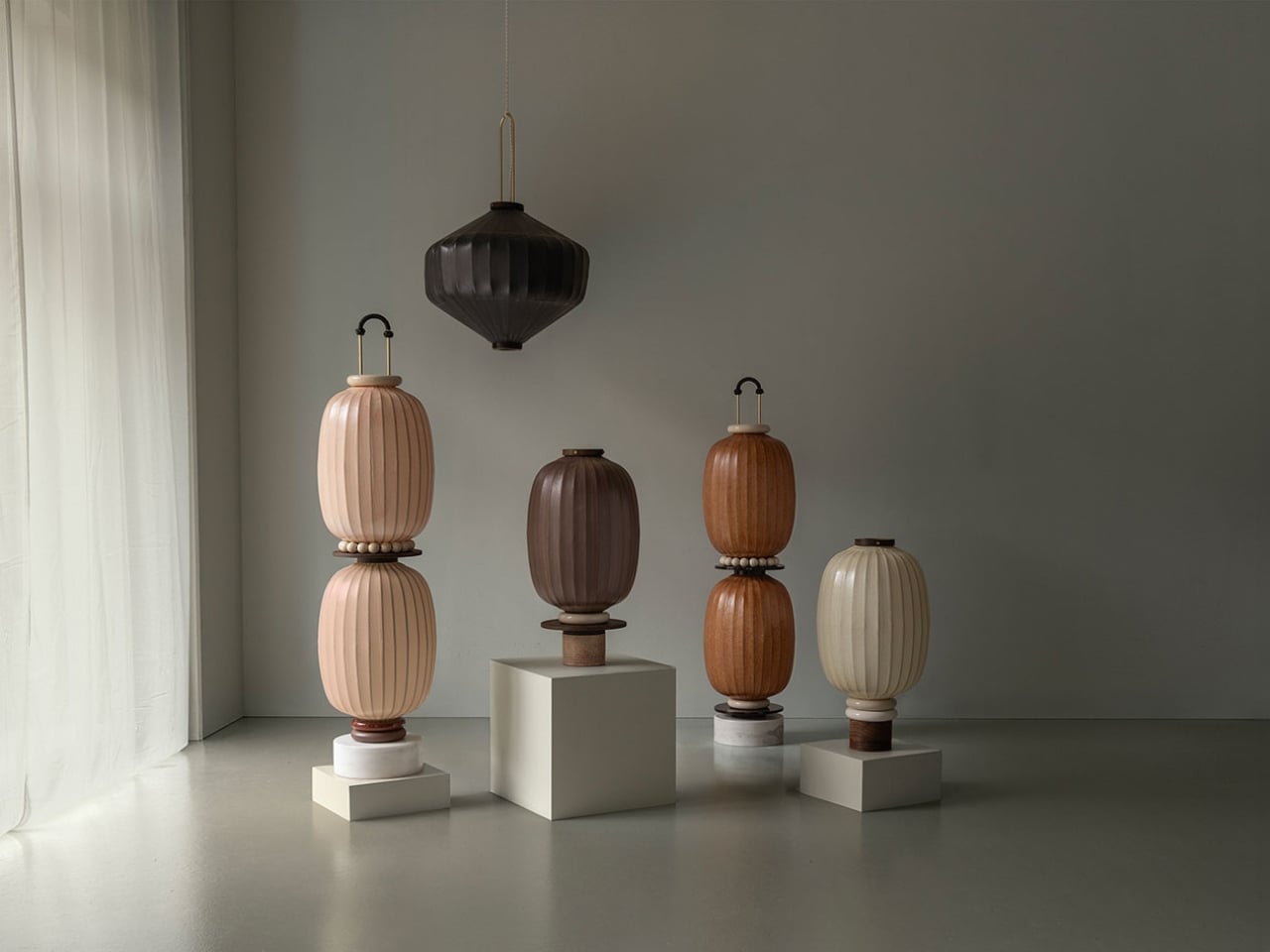
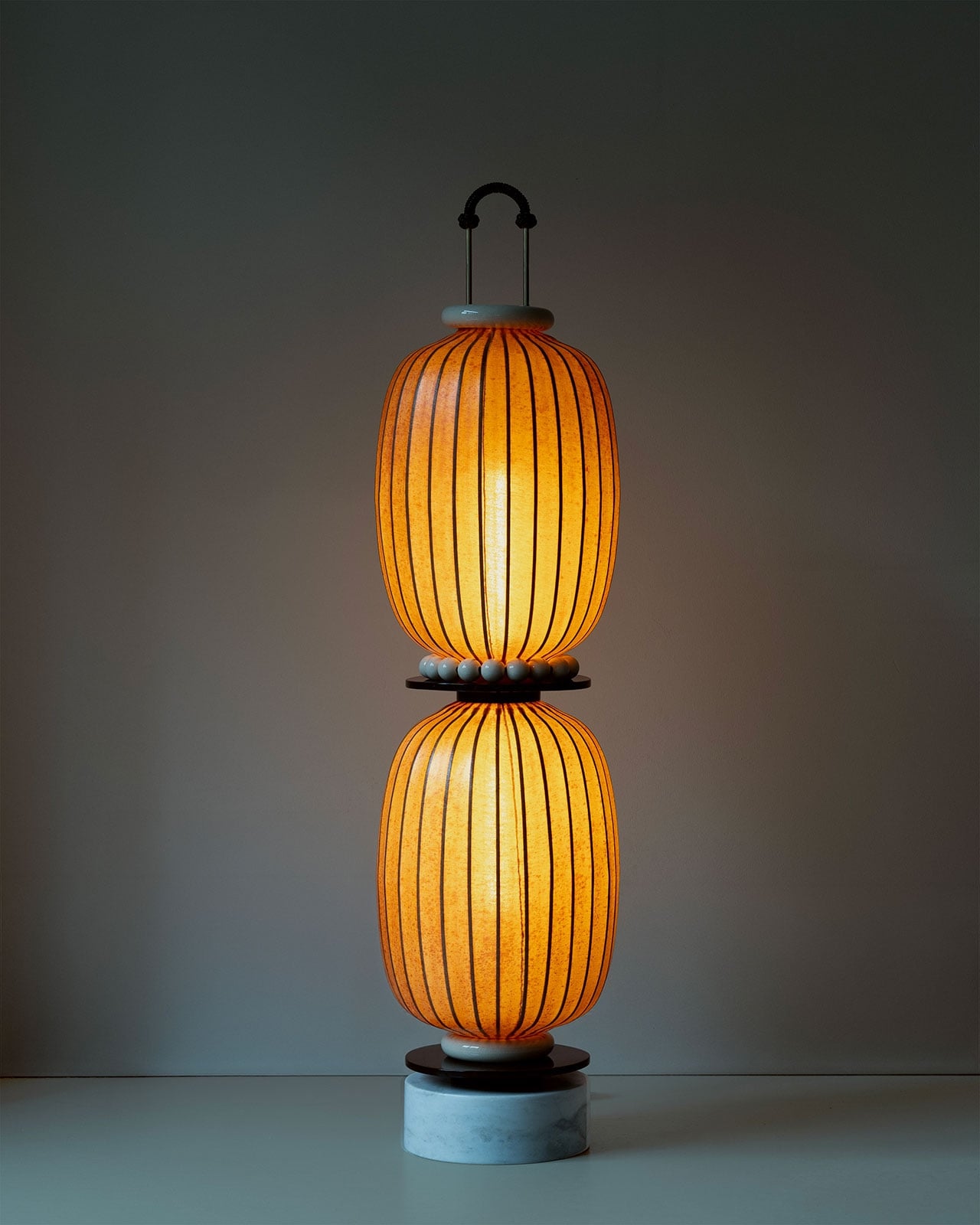
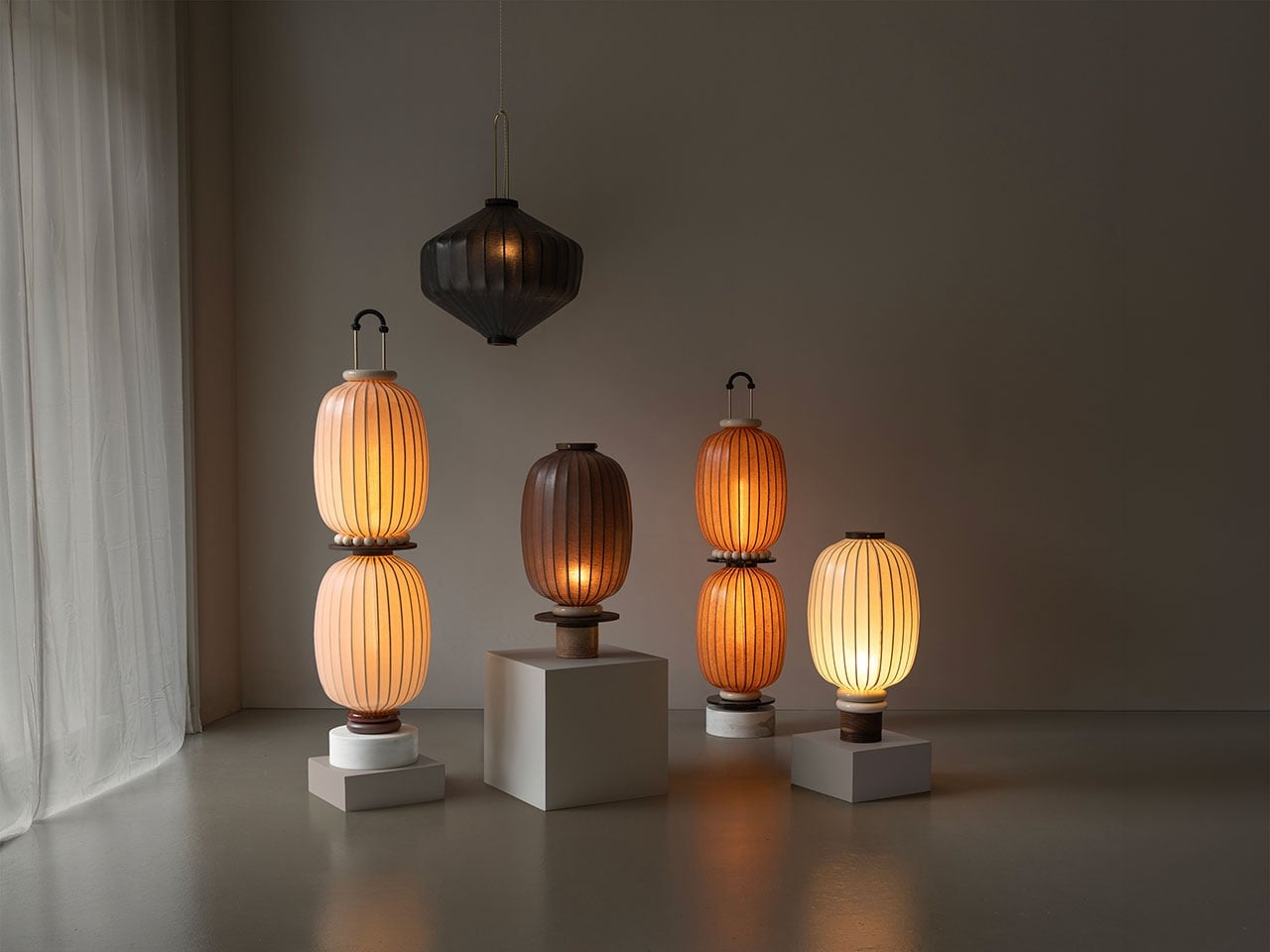
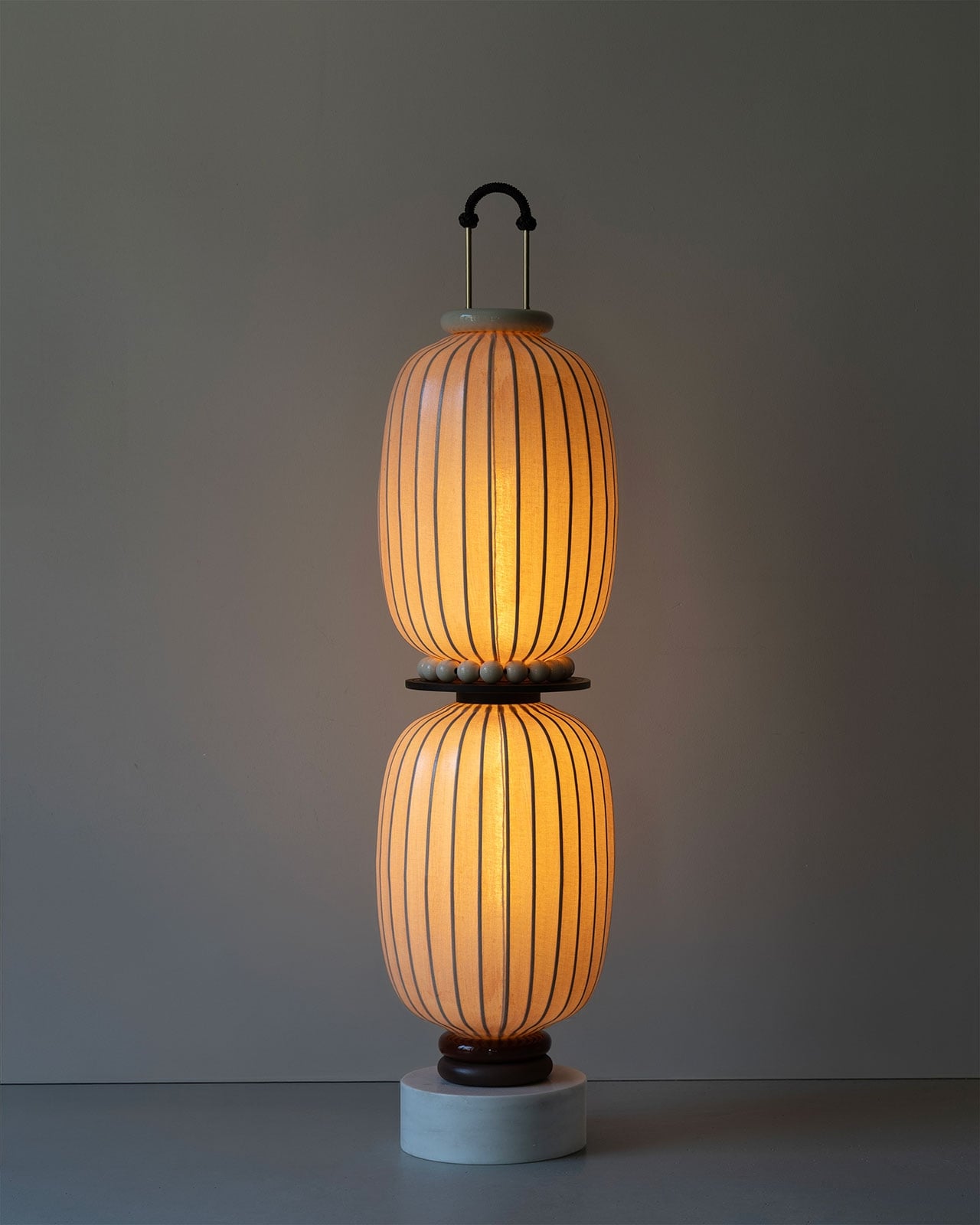
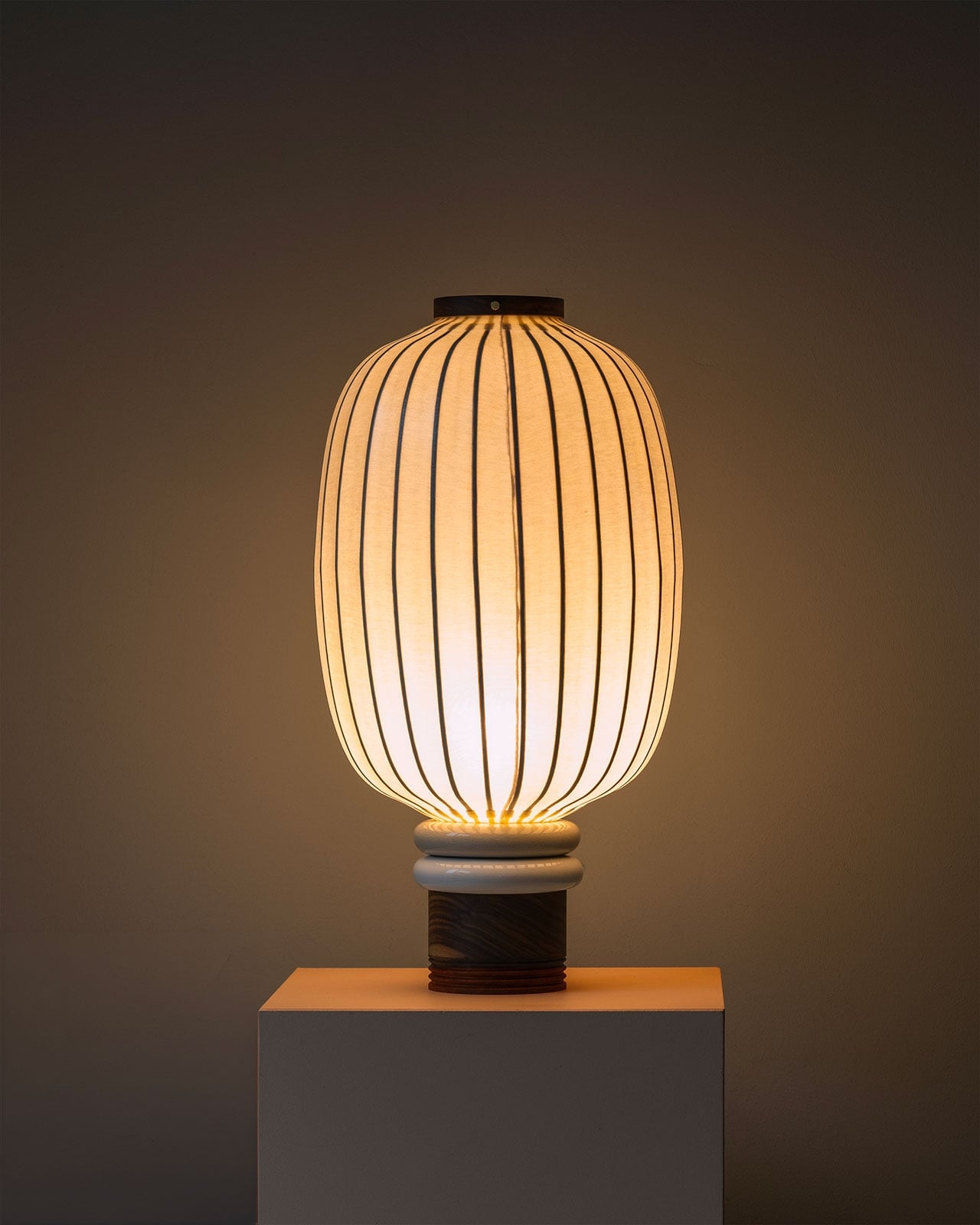
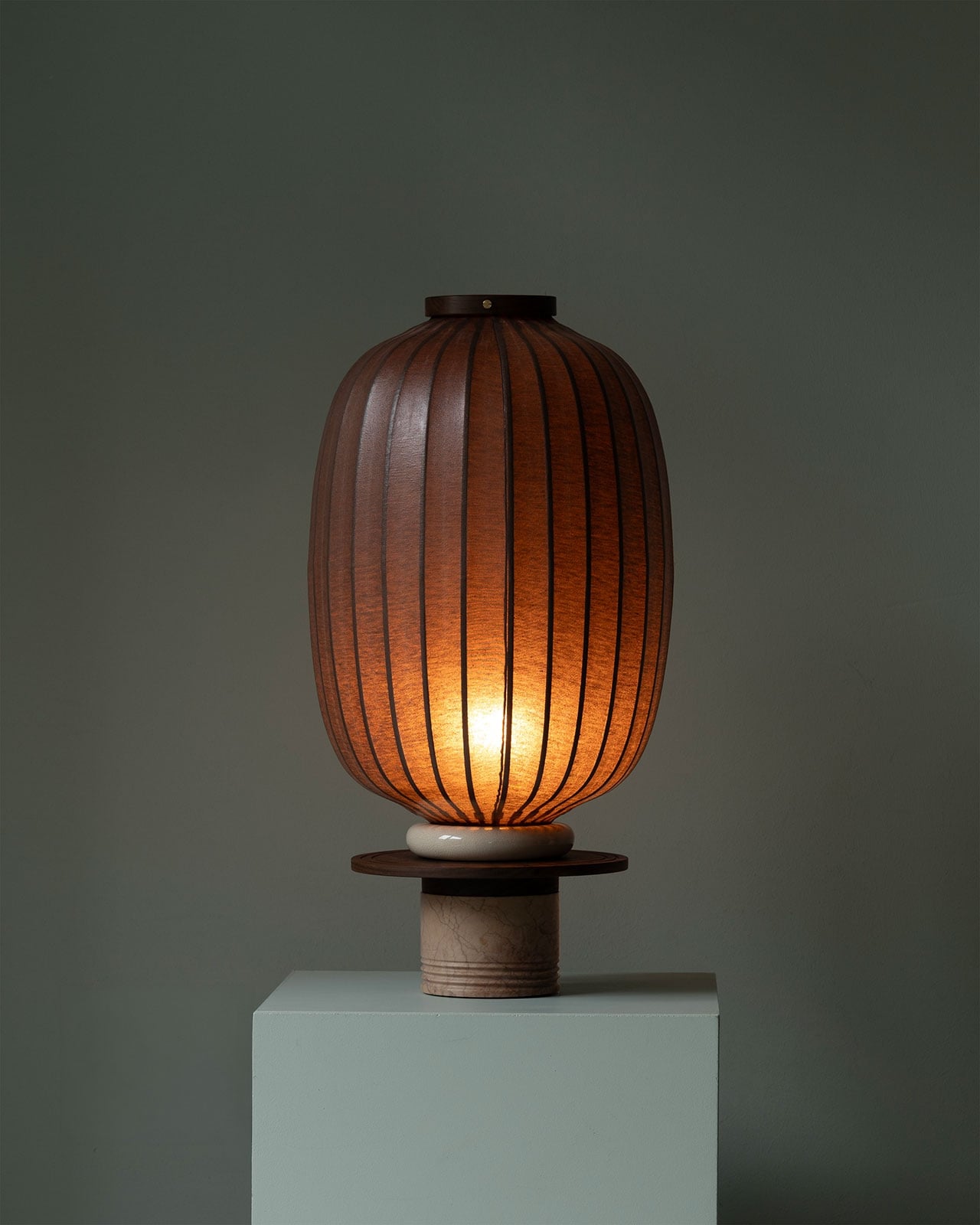
The lantern bodies themselves are pleated fabric pulled taut over a ribbed structure, with vertical seams running from crown to base like meridian lines on a globe. Unlit, the forms are sculptural and matte, almost ceramic in feeling, which is part of what makes them so surprising when the light comes on. The fabric glows from within, casting a warm amber that bleeds between each rib and throws thin lines of shadow onto the floor below. It’s the kind of light that changes a room’s entire temperature without a dimmer switch.
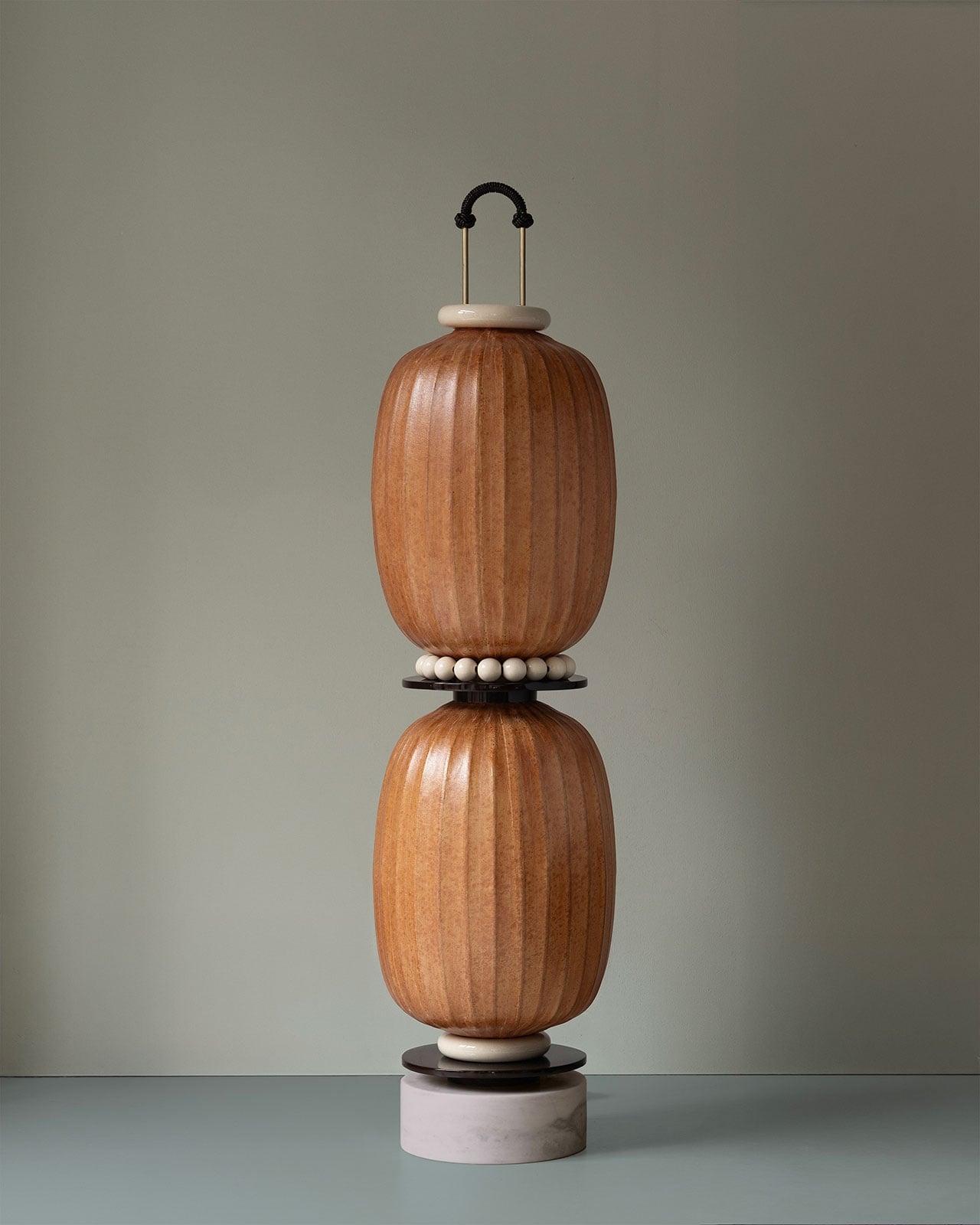
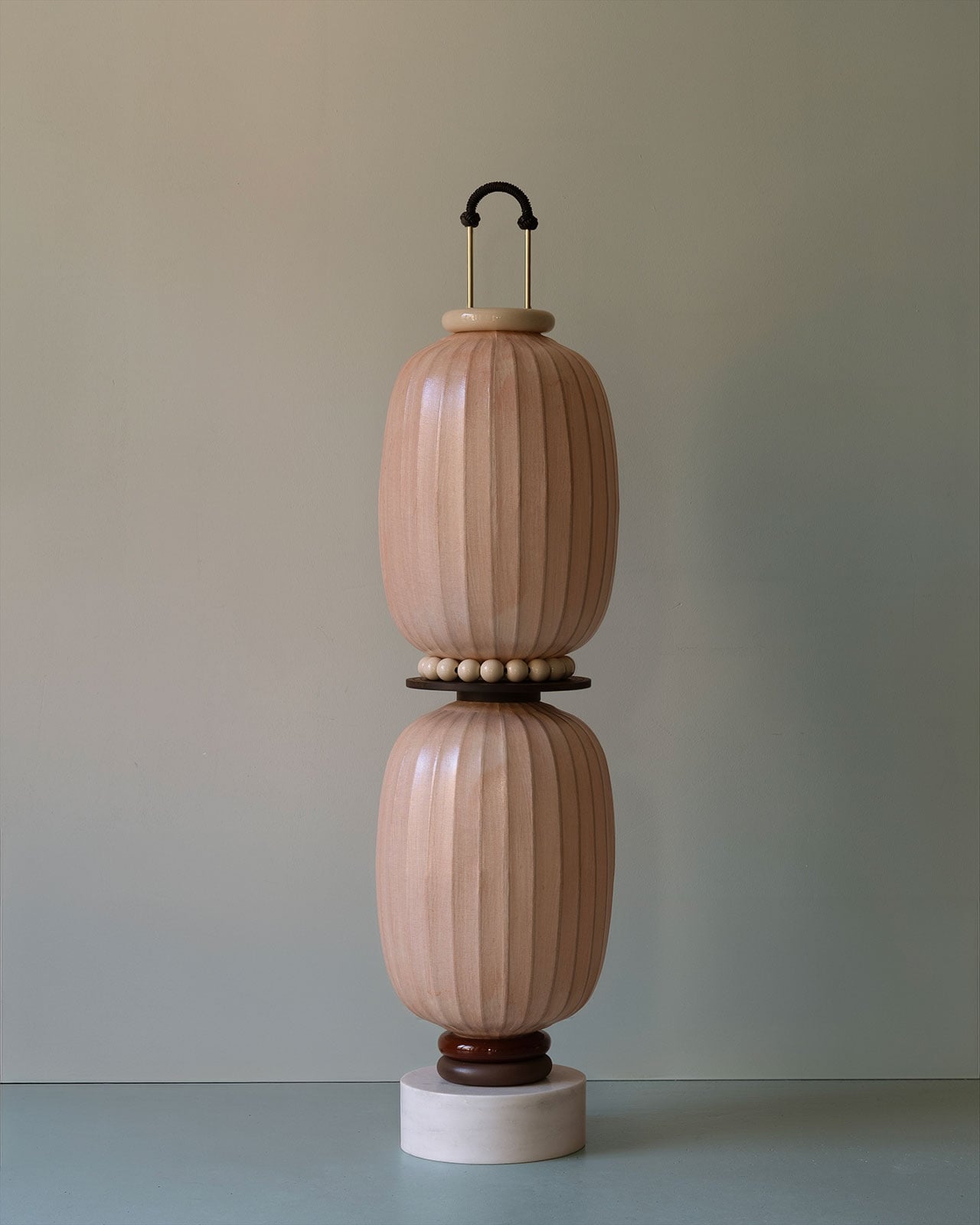
The floor lamps take this further by stacking two of these oval forms vertically, separated by a collar of small hand-strung beads, pale or dark depending on the colorway. The overall silhouette is monumental and a little totemic, tall enough to feel architectural, grounded enough to feel domestic. A round marble disc sits at the very base, and a dark wooden platform separates the stone from the lantern body above it. At the top, a small ceramic collar and a brass arch handle, finished with a hand-knotted rope loop, completes the form. Each of those transitions between materials is considered. Nothing gaps. Nothing looks like an afterthought.
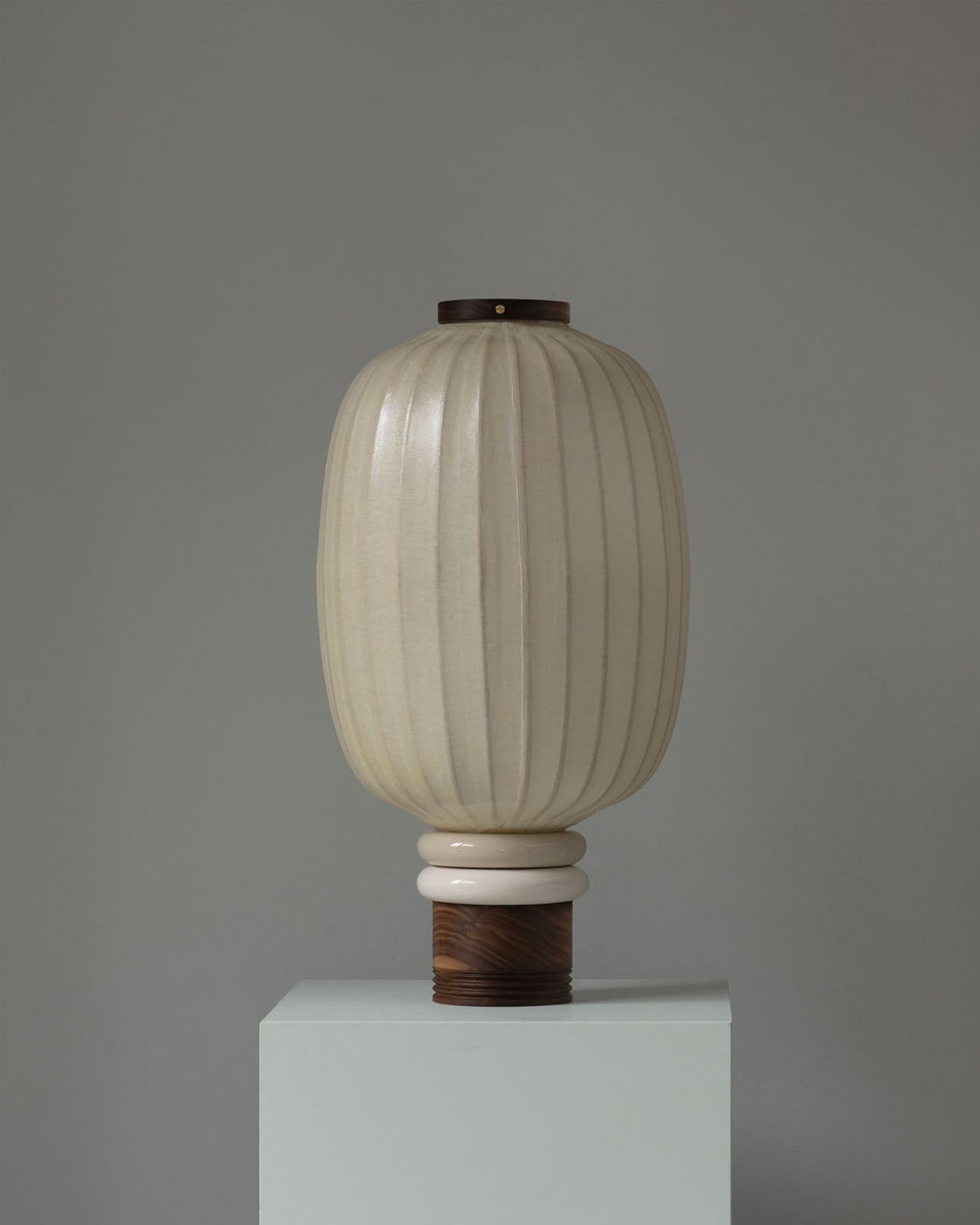
The table lamps are a single lantern body on the same layered base construction: marble cylinder, wooden disc, ceramic ring, all stacked in sequence before the lantern begins. Seen in the cooler, dark photography with light on, the table lamp version becomes something else entirely. The fabric blazes orange-amber, the ribs define themselves sharply, and the base grounds it with the coolness of stone and lacquered wood. The contrast between the glowing body and the inert base is the design’s central tension, and it holds.
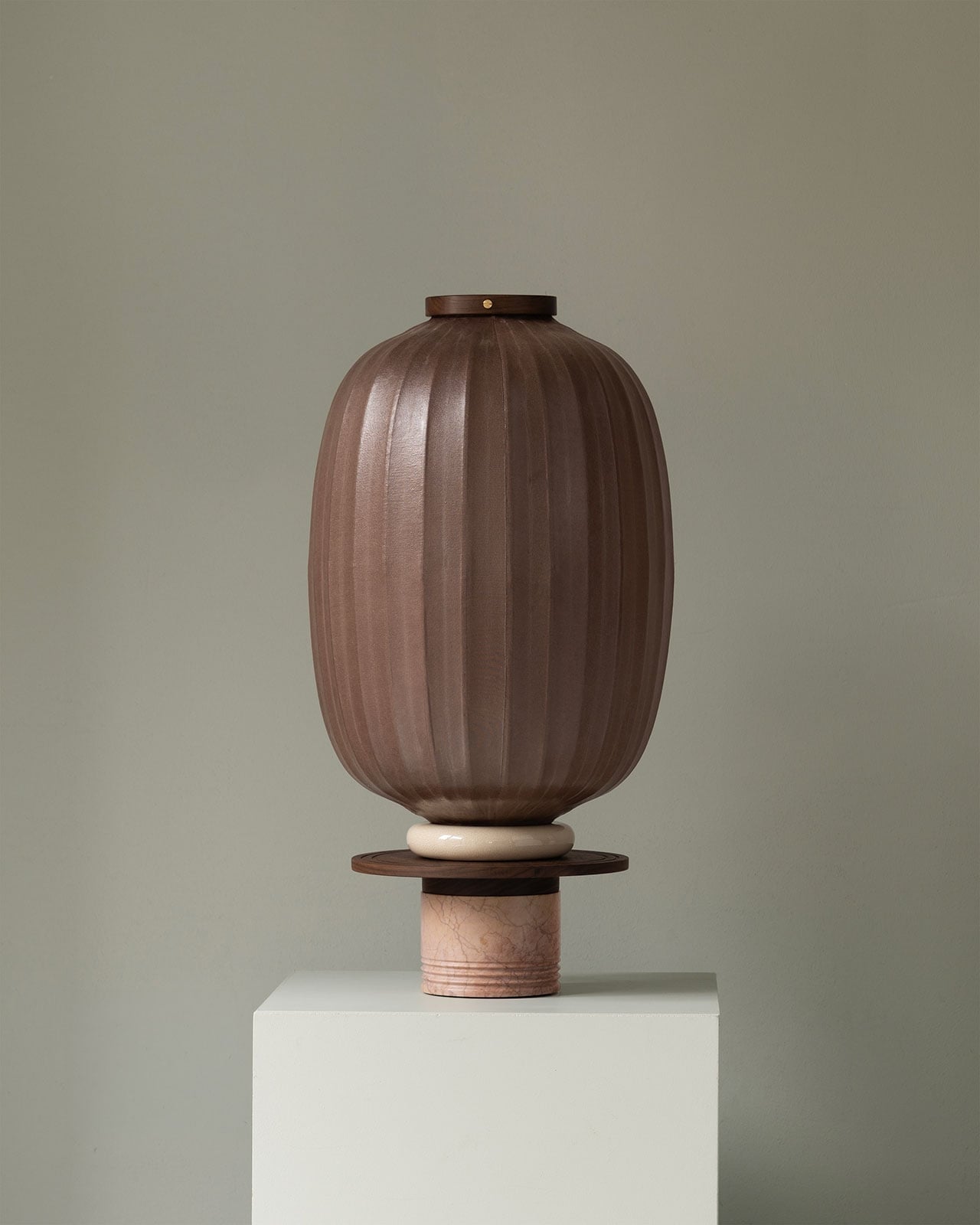
The color palette is restrained and precise. Pale pink Huo and terra cotta Tu are the named hues for the Lotus Charm floor lantern, but the full collection also includes a deep chocolate brown and an off-white cream that reads almost bone in natural light. These aren’t trendy colors. They’re earth tones in the truest sense, rooted in the Wu Xing framework of the five elements that informs the studio’s design philosophy. The naming isn’t decorative. It’s structural.
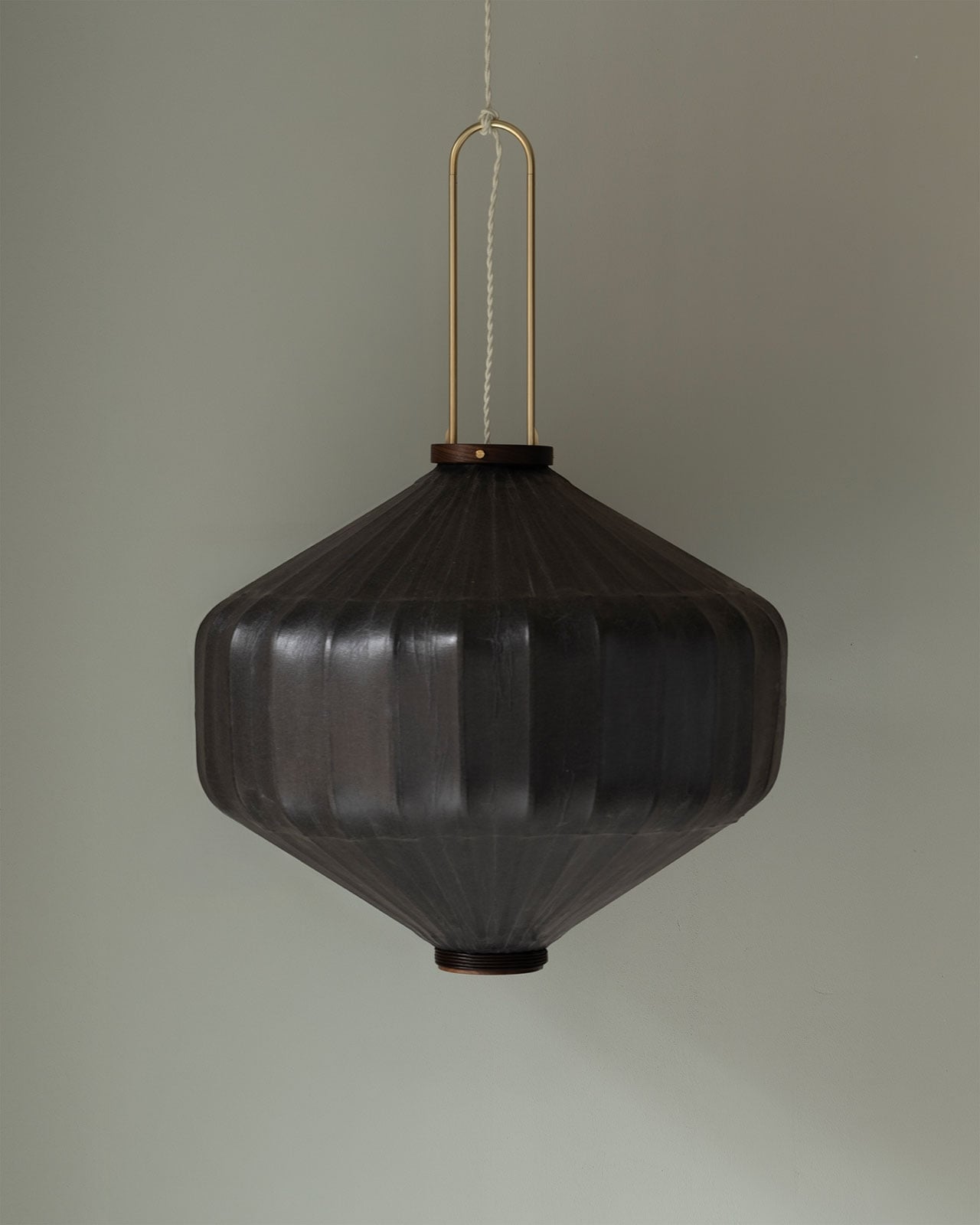
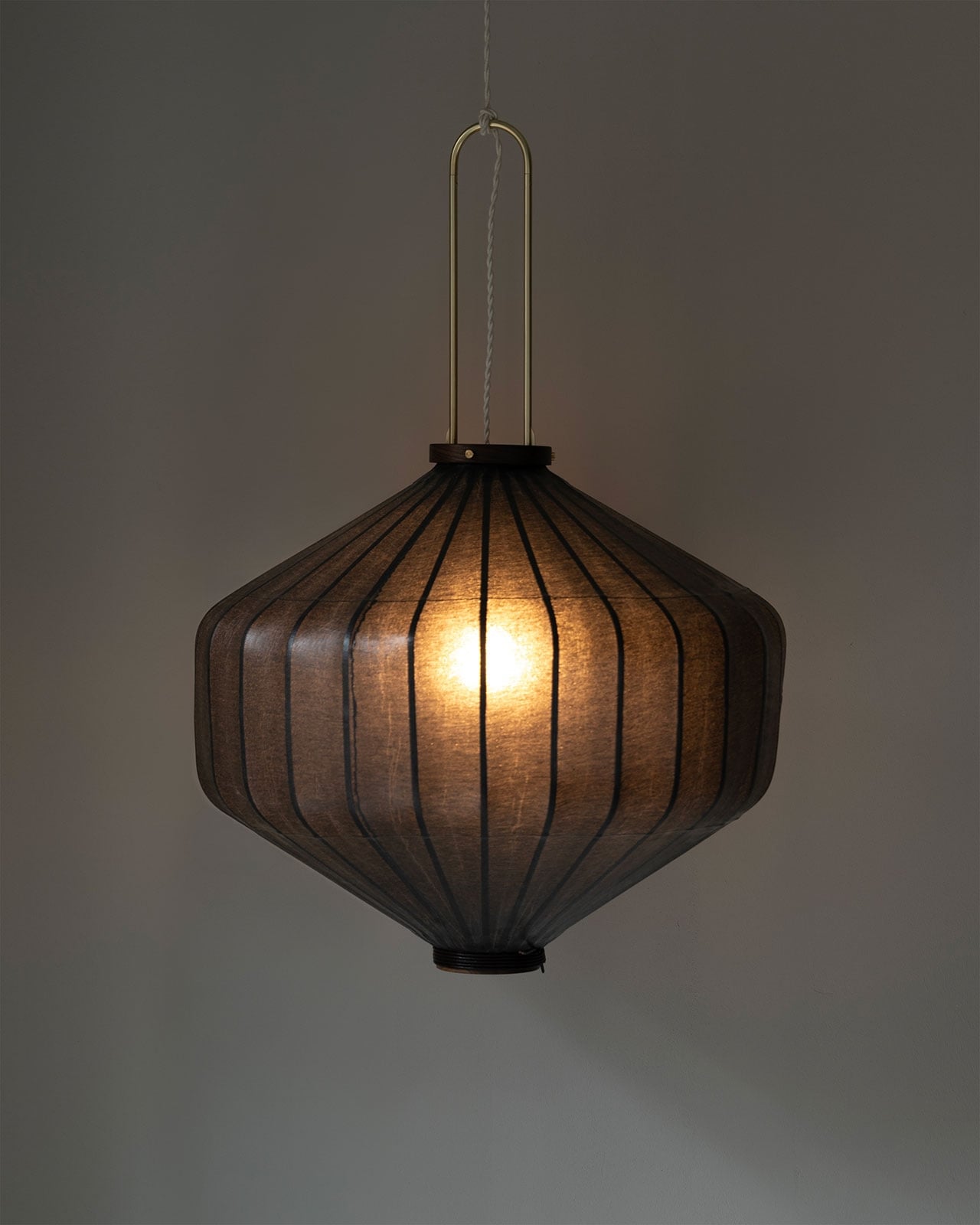
The pendant lamp is worth separate attention because it behaves differently from everything else in the collection. Rather than the soft oval, it takes a compressed diamond shape, wider at the middle and tapering to neat points at top and bottom. The fabric is a much darker, denser weave, almost charcoal, so the light it produces is intimate and filtered rather than openly warm. A brass U-shaped arch suspends it with a clean, modern hardware logic that sits at an interesting remove from the more ornate treatment of the floor lamps. It’s the cooler, quieter cousin in the room, and it earns its place.
Nine artisans contribute to each piece, working across bamboo, lacquer, natural dyeing, stone, porcelain, and Chinese knotting. That number shows. Not in any busy or demonstrative way, but in the specific quality of objects where every transition between materials is resolved and every surface has been touched with purpose. In a design market that rewards speed and volume, that level of attention to a single object is increasingly rare, and immediately perceptible. Taiwan-Lantern’s collection isn’t trying to reinvent the lamp. It’s trying to make one that’s worth keeping.