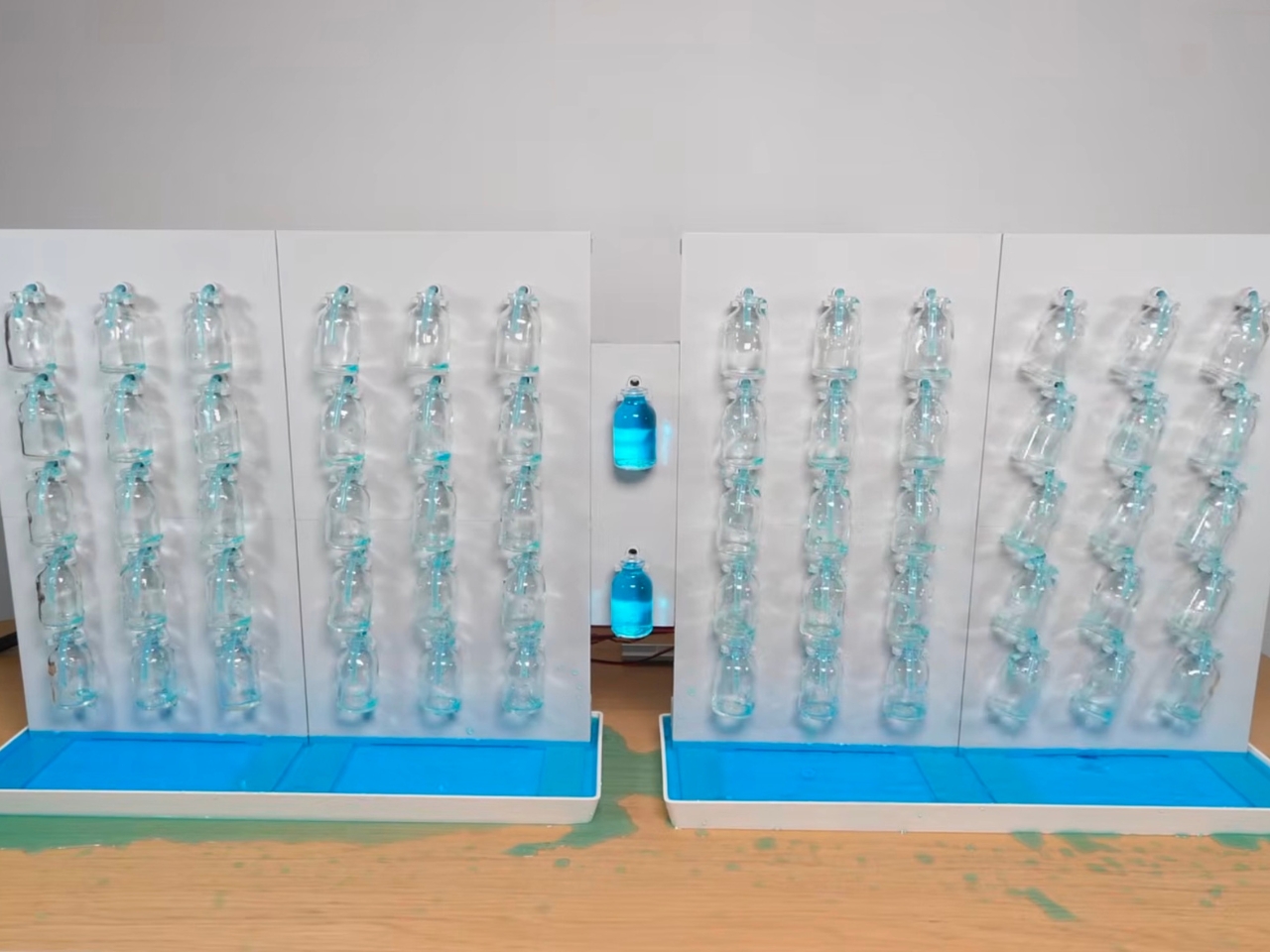
When I first saw the Water Tower Clock by Strange Inventions, I genuinely had to watch it twice. Not because I didn’t understand it, but because I couldn’t quite believe that someone looked at a pile of 10-cent glass bottles and thought: yes, this is how I’m going to display the time.
The concept is deceptively simple. Each digit on the clock is made up of a fifteen-segment display, except instead of LEDs, each segment is a small glass bottle. When a bottle is filled with dyed water, the segment is active. Empty it, and it disappears. Put enough bottles together in the right configuration and you get numbers. Numbers that tell you it’s 4:37 in the afternoon, rendered entirely in colored water. It’s the kind of idea that sounds ridiculous until you see it running, and then it seems almost obvious.
Designer: Strange Inventions
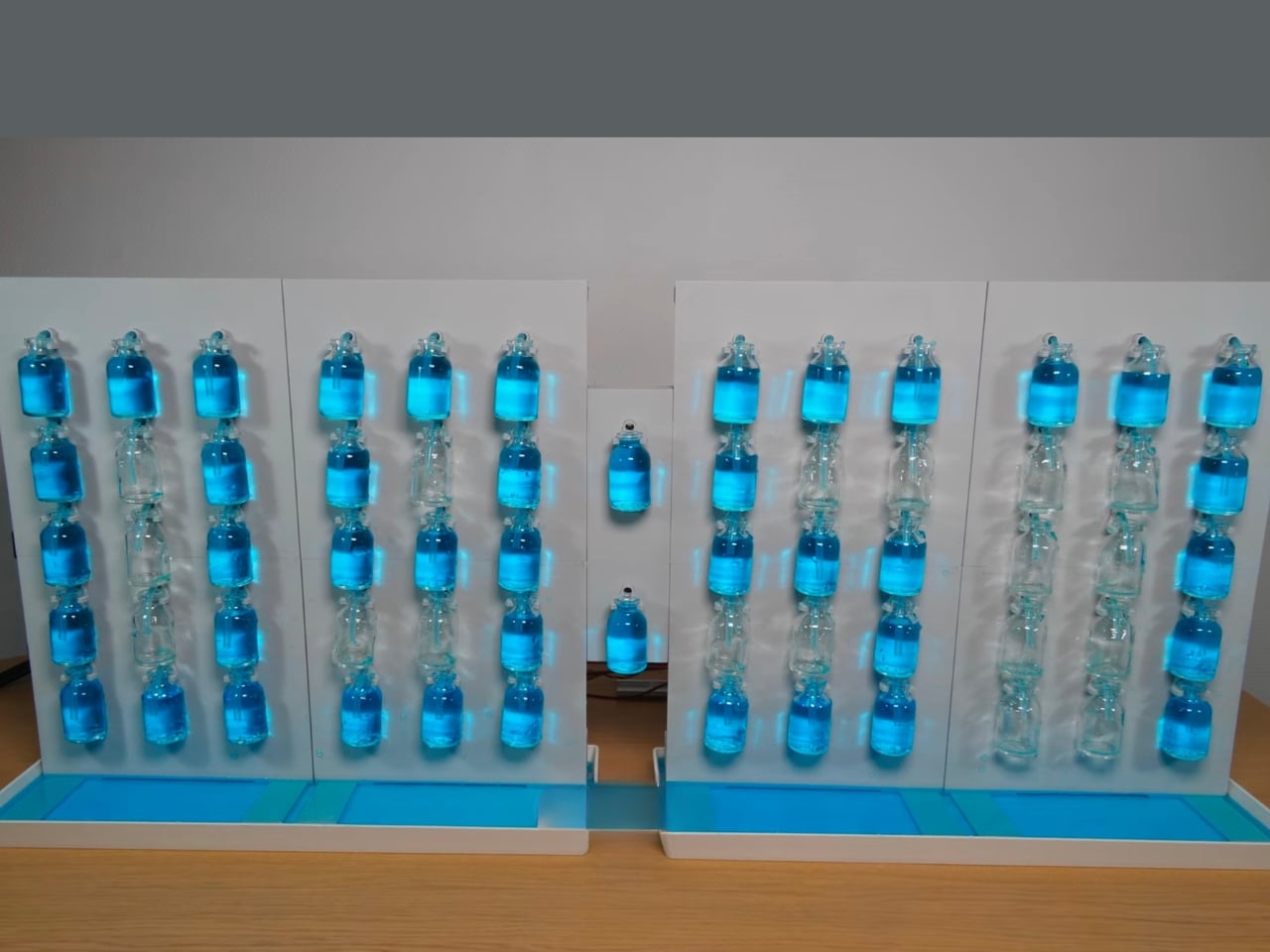
I love this for a lot of reasons, but the biggest one is that Strange Inventions didn’t try to make something efficient. He made something worth looking at. That’s a design philosophy I respect more than I can easily put into words. There’s an entire industry dedicated to optimizing displays, making them thinner, brighter, more power-efficient. And then someone comes along and asks, what if we pumped water into tiny bottles instead? And somehow, it works.
Behind the scenes, the build is genuinely complex. The clock uses 60 pumps in total, a stepper-driven peristaltic pump paired with membrane-pump boosters, to route dyed water into the precise bottles needed for each digit. The water isn’t doing any actual timekeeping here. It’s purely the display medium. The electronics handle the time; the water handles the theater.
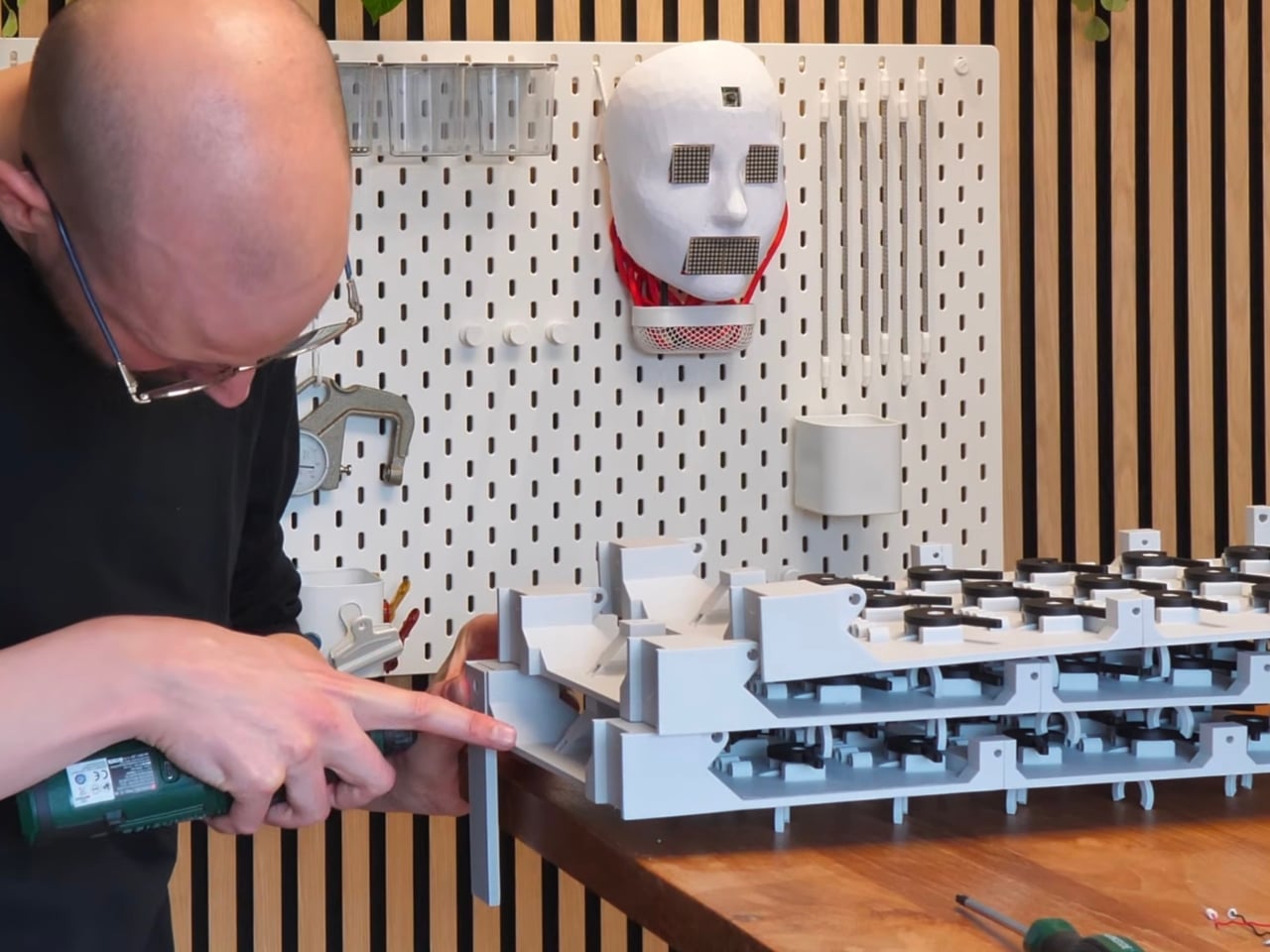
The mechanism for emptying the bottles is particularly clever. Rather than individually draining each one with a separate pump, Strange Inventions engineered a servo-driven linkage that flips all nine bottles in a single digit at once. It’s one motion, one satisfying dump, and the digit resets. Getting that 3D-printed mechanism to work took significant troubleshooting, but watching the finished result operate, you’d never guess it was anything other than effortless.
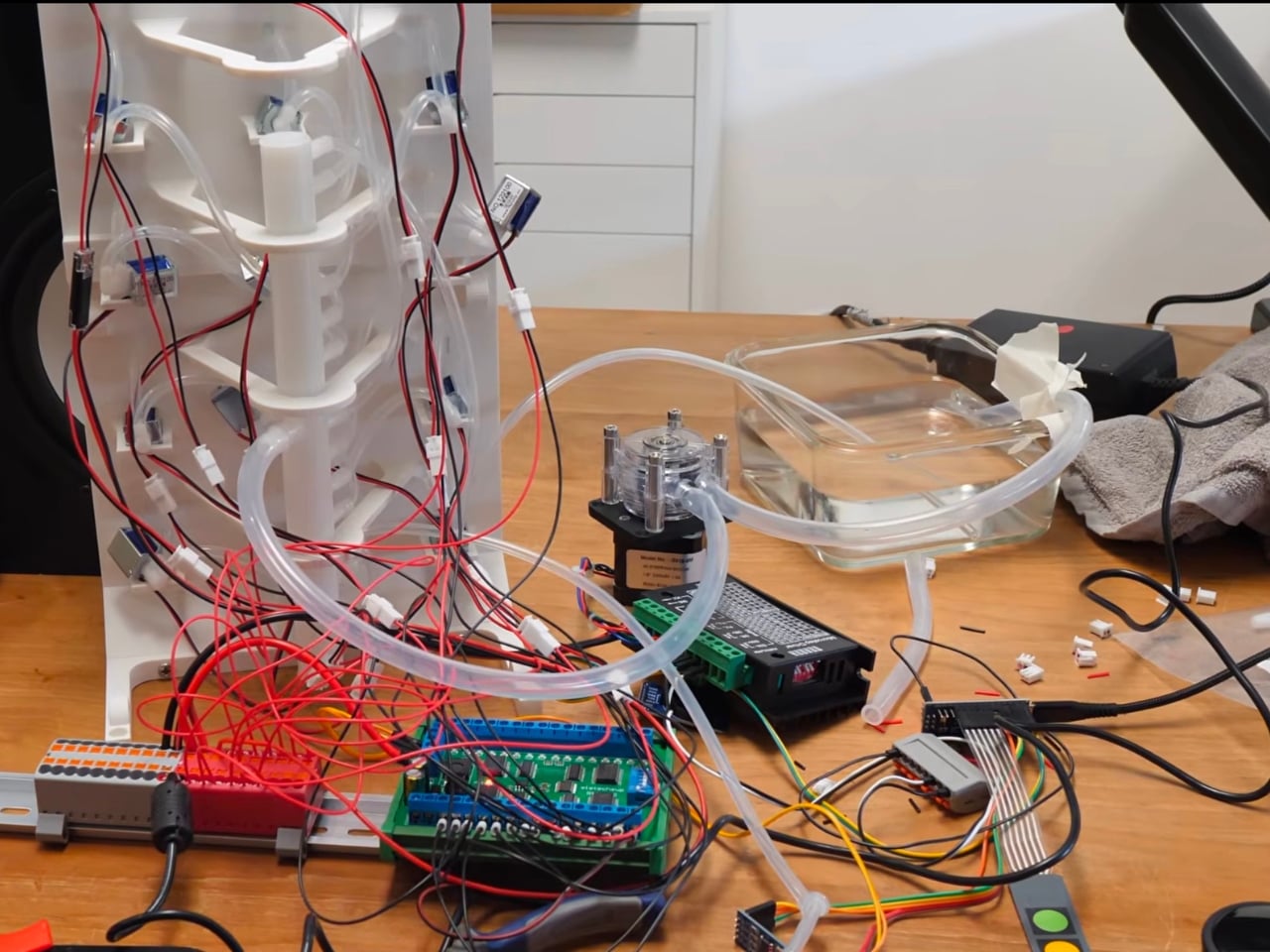
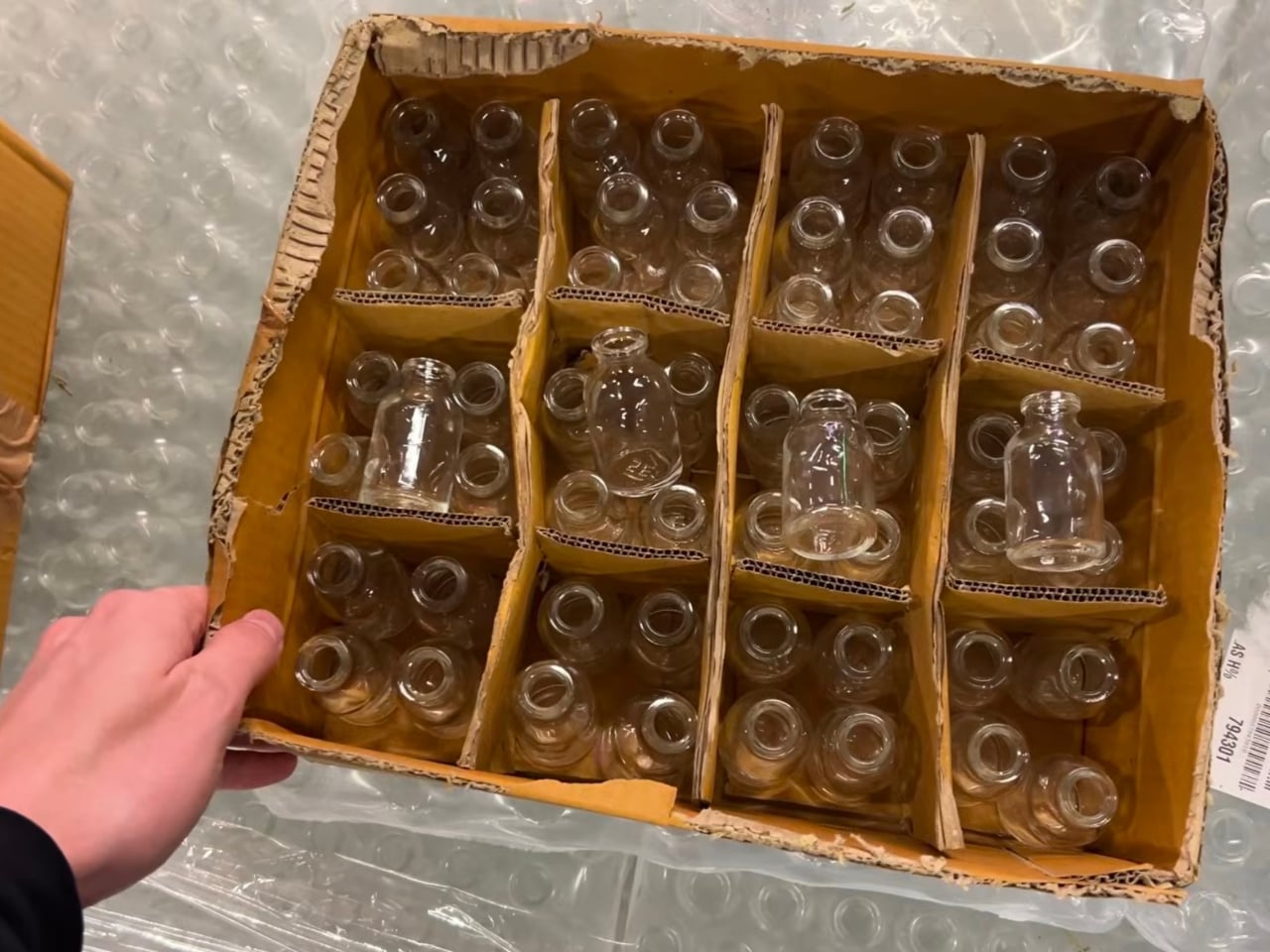
The tiny bottles, by the way, were found in a random shop for 10 cents apiece. Sounds affordable, right? Until you scale it up to a full clock and the total project cost lands somewhere around $580. That gap between cheap materials and expensive obsession is actually one of my favorite things about independent makers. The individual components are humble. The vision is not.
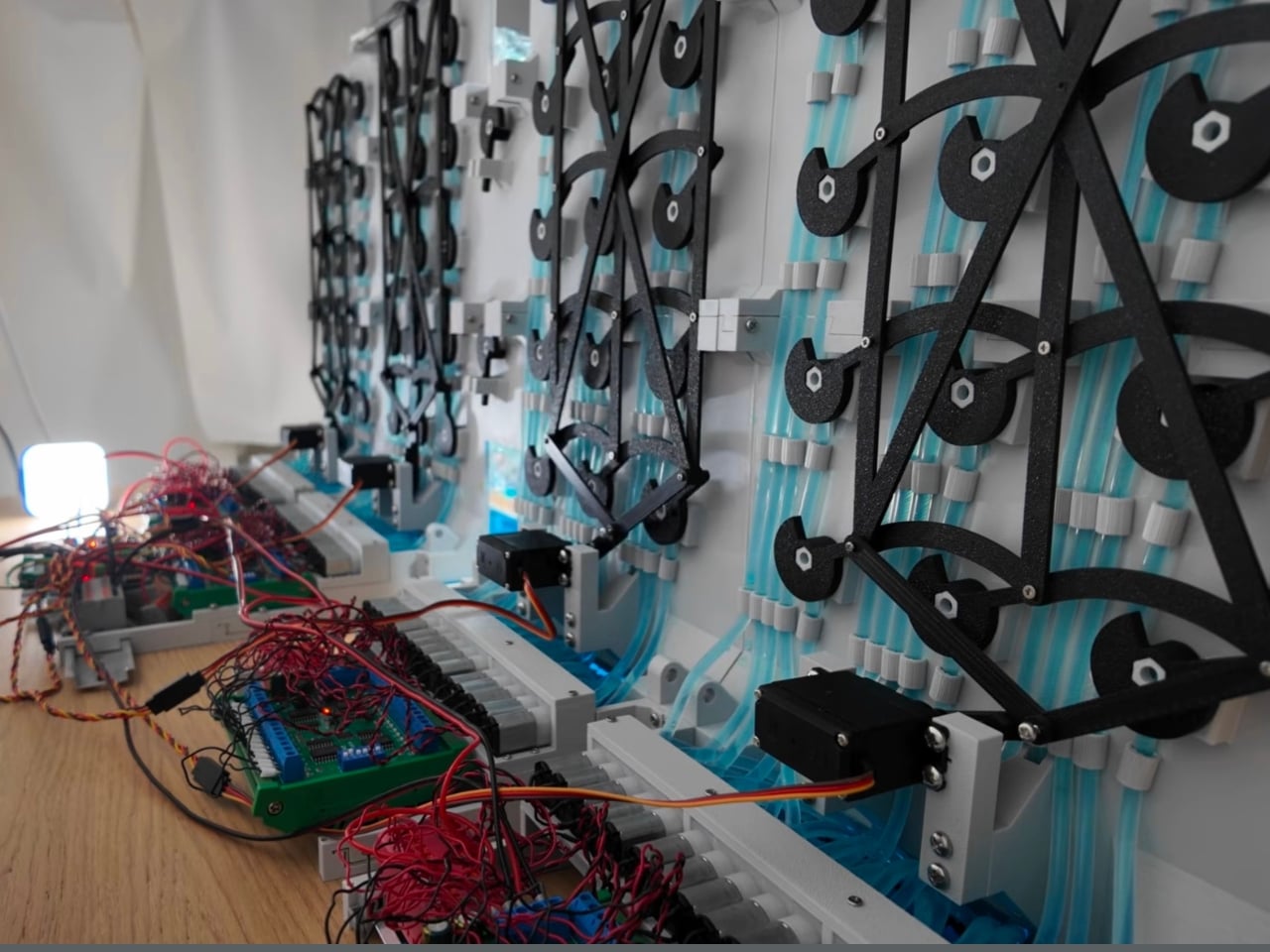
Visually, the Water Tower Clock sits in a category I struggle to name. It’s not exactly art, though it absolutely qualifies. It’s not just a gadget, though it functions as one. It has the patience of a kinetic sculpture and the practicality of something that actually tells you what time it is. The dyed water catching the light, the slow fill of each segment, the deliberate dump when a digit changes: all of it has a rhythm that most digital objects simply don’t have.
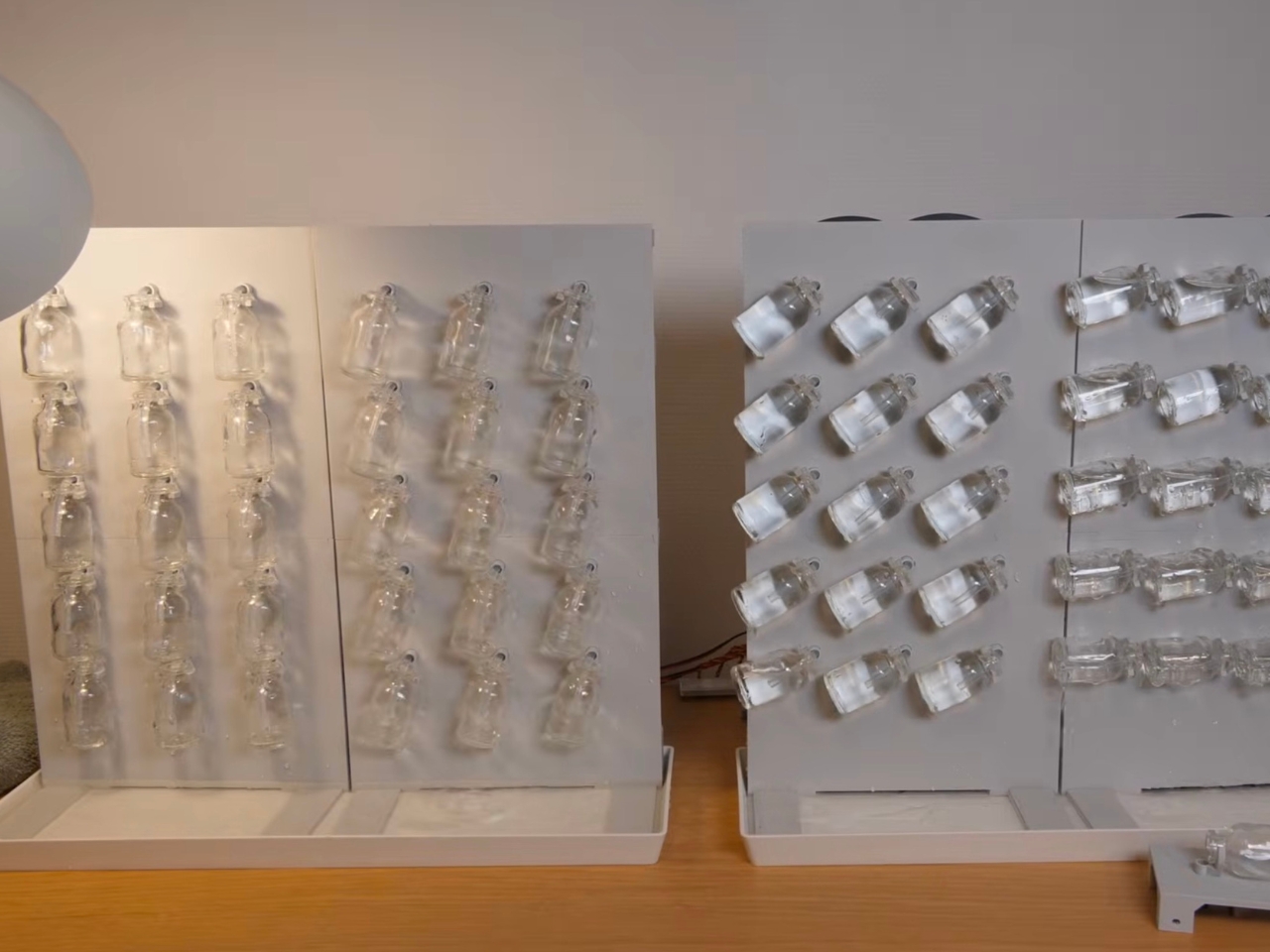
I think what makes projects like this matter to the broader design conversation is that they challenge our assumptions about what a display should look like. We’ve become so accustomed to LEDs and screens that we’ve stopped asking whether there might be a more interesting material to work with. Strange Inventions answered that question with dyed water and glass bottles from a random shop, and the result is one of the more memorable pieces of functional design I’ve come across this year.
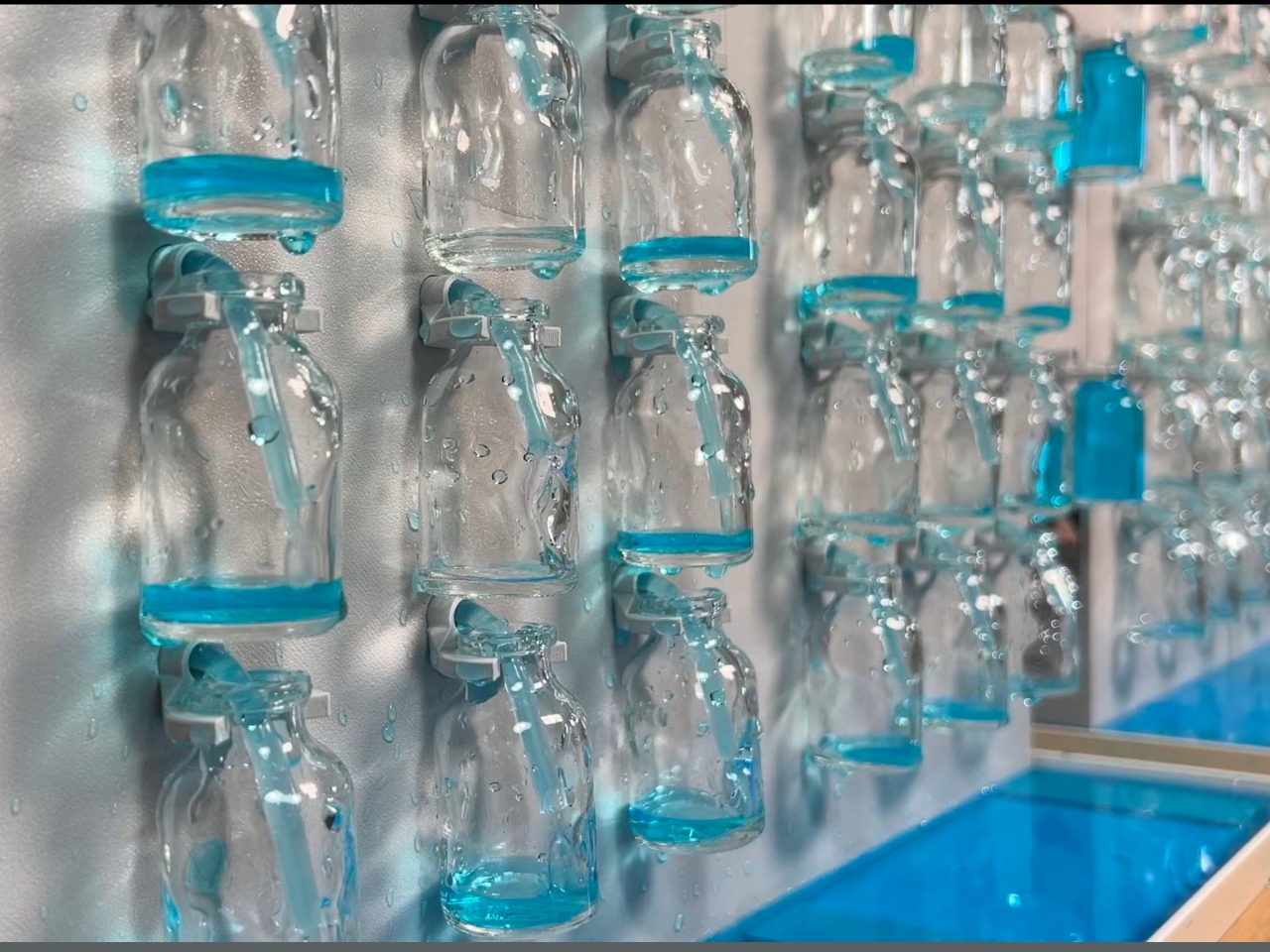
It’s also, for what it’s worth, completely impractical in the best possible way. The water will need maintenance, the pumps add complexity, and the whole thing would be thoroughly confused by a power outage. None of that matters. The point isn’t that this is the future of clock displays. The point is that it makes you feel something when you look at it, which is more than most technology ever manages to do. Strange Inventions earns the name.