In a market saturated with look-alike pet products, the Decopark Dino Bowl stands out by asking a deceptively simple question: What does feeding actually look like, for both cats and their humans? From that question emerges a ceramic object that blends ergonomics, storytelling, and quiet functional innovation into a single, memorable form.
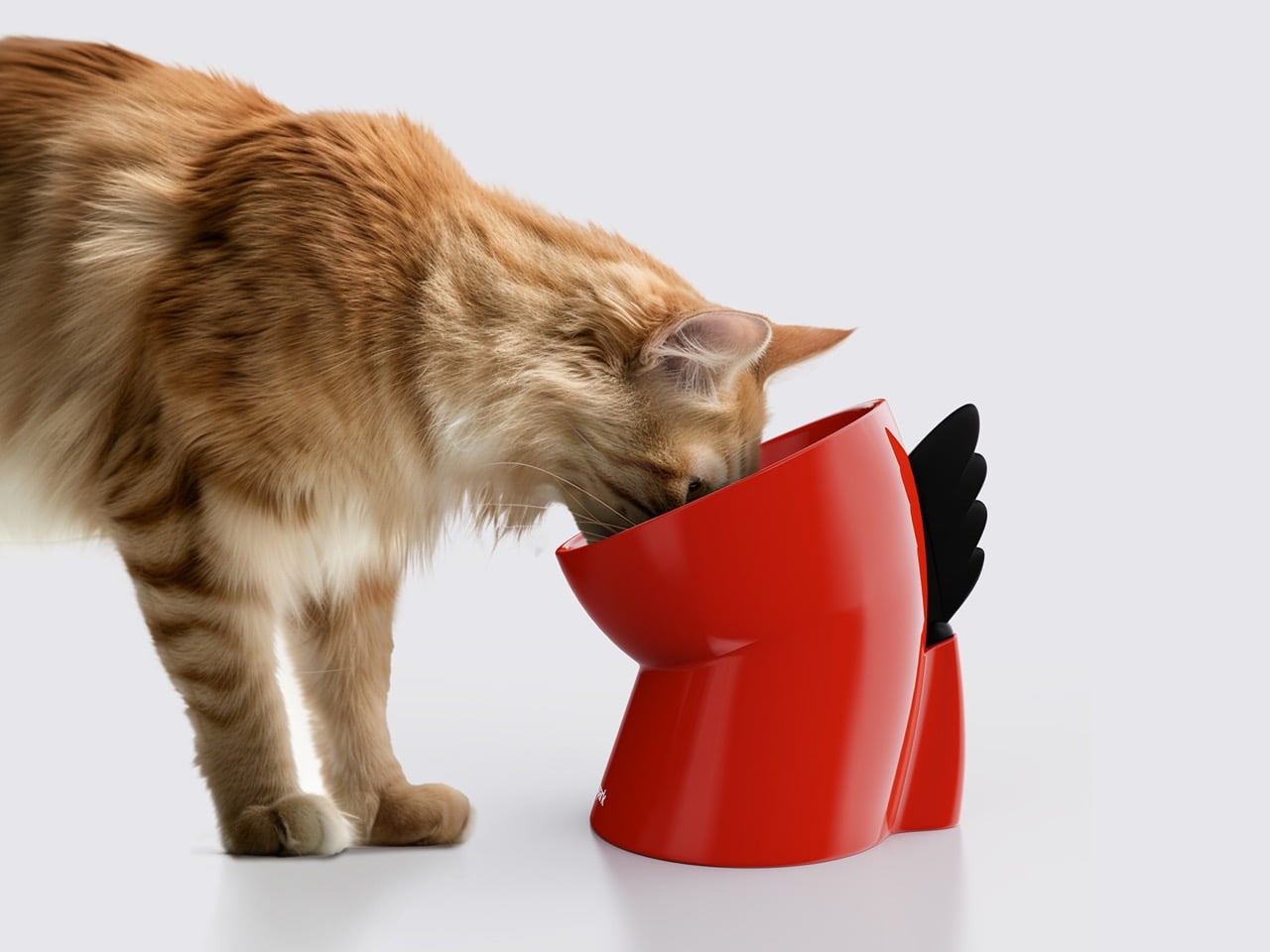
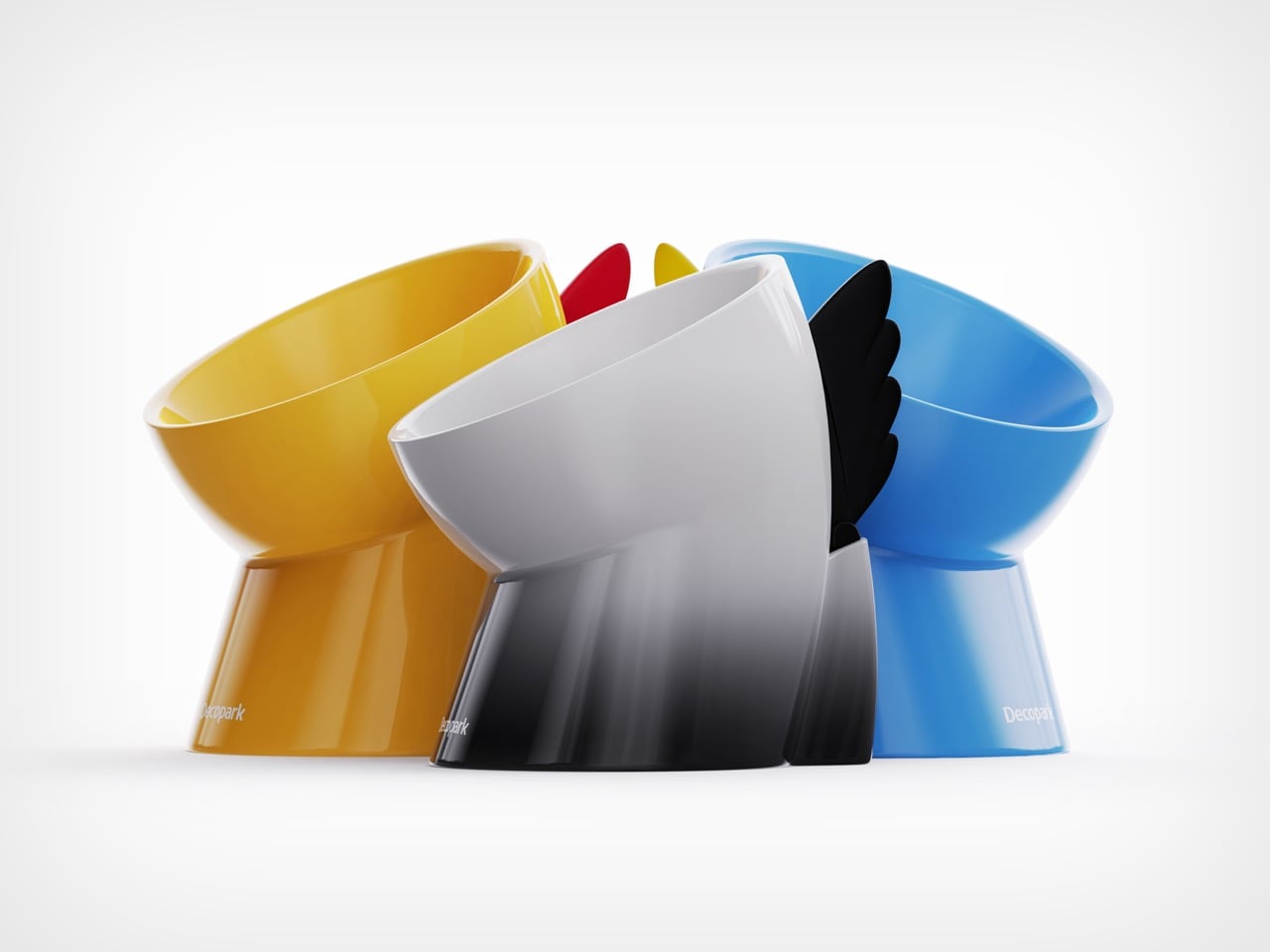
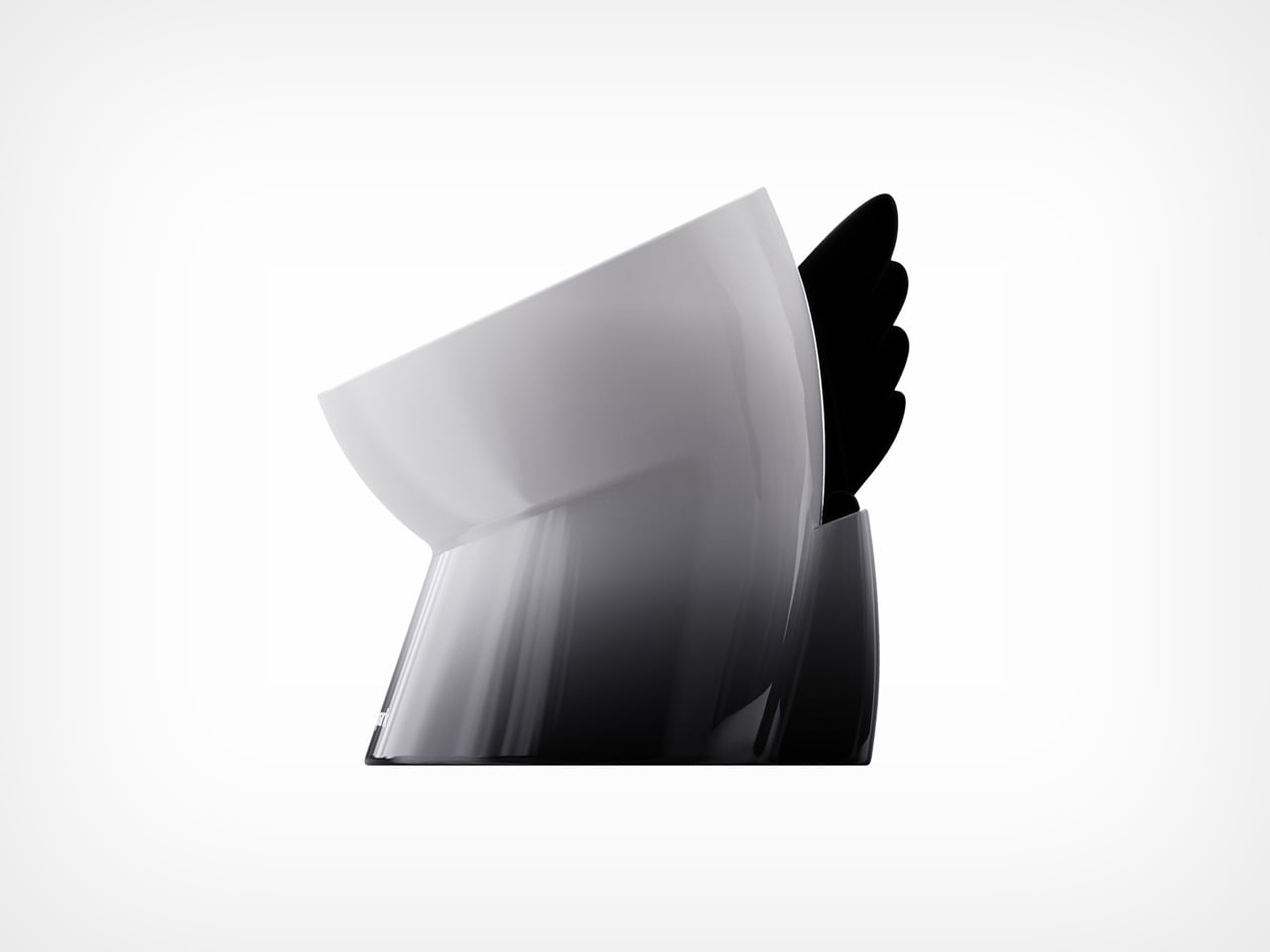
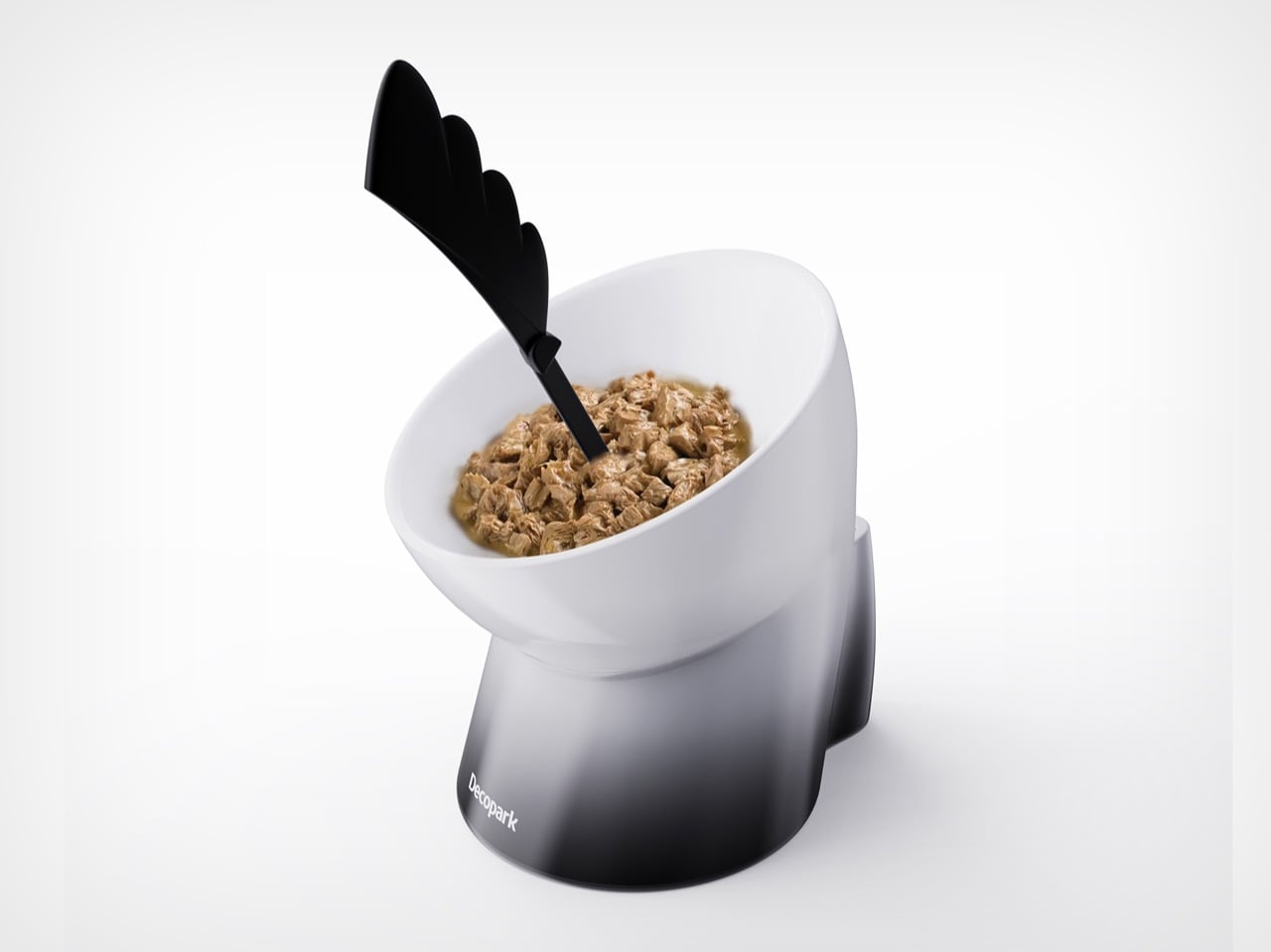
At first glance, the Dino Bowl reads as charming and whimsical. Its silhouette resembles a small dinosaur mid-stride, with its neck arched forward and its spine visible along the back. However, this visual identity is not decorative excess; it is a design serving multiple purposes simultaneously. The bowl’s cylindrical form is bent at the center to create a slanted feeding surface, improving a cat’s eating posture. The “spine” at the back, meanwhile, is not just an aesthetic flourish: it is a fully integrated stir stick, transforming a playful metaphor into a practical tool.
Designer: Xueyong Liang
The designers behind the Dino Bowl began with observation. Research revealed two critical gaps in existing ceramic pet bowls: visual homogeneity and a lack of consideration for real feeding routines. Many cat owners regularly feed canned food, which requires mixing, yet most bowls offer no solution for this step. The result? Extra tools, cluttered countertops, and frequently misplaced stir sticks.
The Dino Bowl addresses this head-on by merging bowl and tool into one cohesive unit. The attached stir stick slots neatly into an insertion hole at the rear of the bowl, always returning to the correct orientation regardless of how it is placed. During feeding, it assists with mixing; afterward, it wipes clean and stores seamlessly back into the form. No extra parts, no visual disruption.
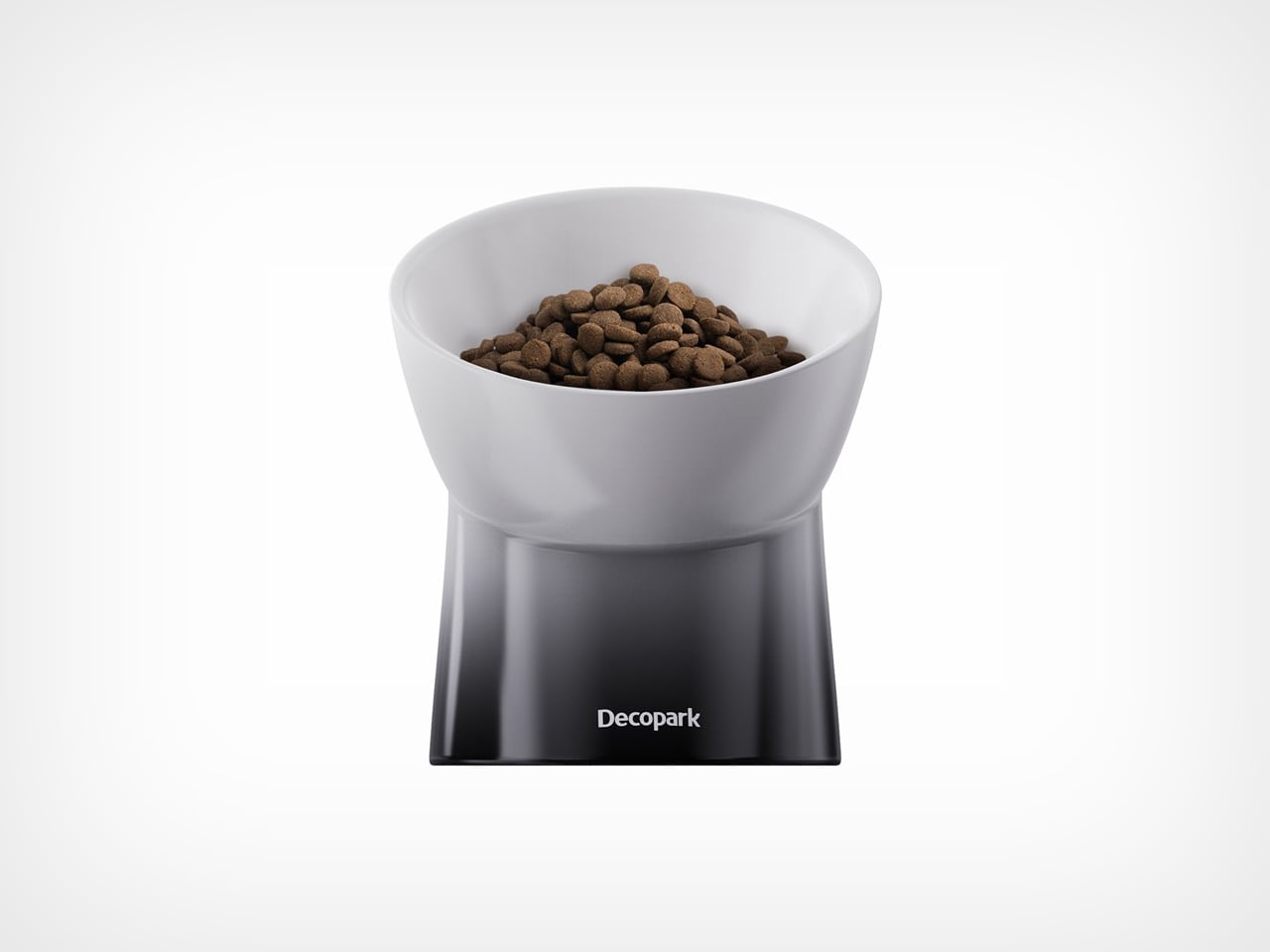
This integration is where the project’s core innovation lies: recognizing that usability is not just about the primary function (holding food), but about the entire micro-ritual surrounding it. Material choice plays a crucial role in translating this idea into a durable object. The bowl itself is made from high-temperature fired ceramic, giving it weight, stability, and a premium tactile quality. At 1kg, the bowl resists sliding during use, another subtle nod to feline behavior. The stir stick, crafted from PP, balances durability with ease of cleaning.
Designing a slanted ceramic rim, however, introduced a technical challenge. During firing, asymmetrical forms are prone to deformation. To counter this, the designers engineered a double-layer rim structure, reinforcing the edge while preserving the intended silhouette. Multiple iterations were required to refine both the curvature of the bowl and the fit between the stir stick and its housing, ensuring harmony not only in appearance but also in manufacturing reliability. The result is a one-piece ceramic form that feels intentional from every angle, cute, yes, but also structurally resolved.
Pet products occupy a unique space in design: they must satisfy animals ergonomically while appealing emotionally to humans. The Dino Bowl leans into this duality. User research indicated that owners are strongly drawn to playful shapes, especially in objects that live openly in the home. By referencing a dinosaur, an instantly recognizable, almost universally beloved figure, the bowl becomes more than a utility item. It becomes a character.
Yet the designers were careful not to let novelty overpower function. Every line, proportion, and junction was calibrated to maintain unity between bowl and stir stick, ensuring the product reads as a single, holistic object rather than an accessory-laden gimmick. With overall dimensions of 168 × 140 × 164 mm and a bowl capacity of 115 ml, the Dino Bowl is compact yet substantial, suited to everyday feeding without overwhelming a space. More importantly, it demonstrates how even the most ordinary household objects can be reimagined through careful attention to behavior, context, and form.
SHARE