Modern life has made genuine rest surprisingly hard to come by. Homes are saturated with obligations, travel gets consumed by itineraries, and the spaces that are supposed to support recovery often fall short. Young people in particular are navigating a kind of exhaustion that doesn’t come from a lack of free time, but from a lack of environments that actually know how to be still.
Epik is a mobility concept that addresses this at its root. Rather than packing more comfort into transit or filling trips with more activities, it takes a different route entirely: nature and light, the things that already surround you but go unnoticed, become the primary tools for rest. The vehicle reimagines the journey as a second home that moves with you and adapts entirely to your intentions.
Deisgners: Ellie Ahn, Shirley Cheon, Changdong Min, Geonhoo Son
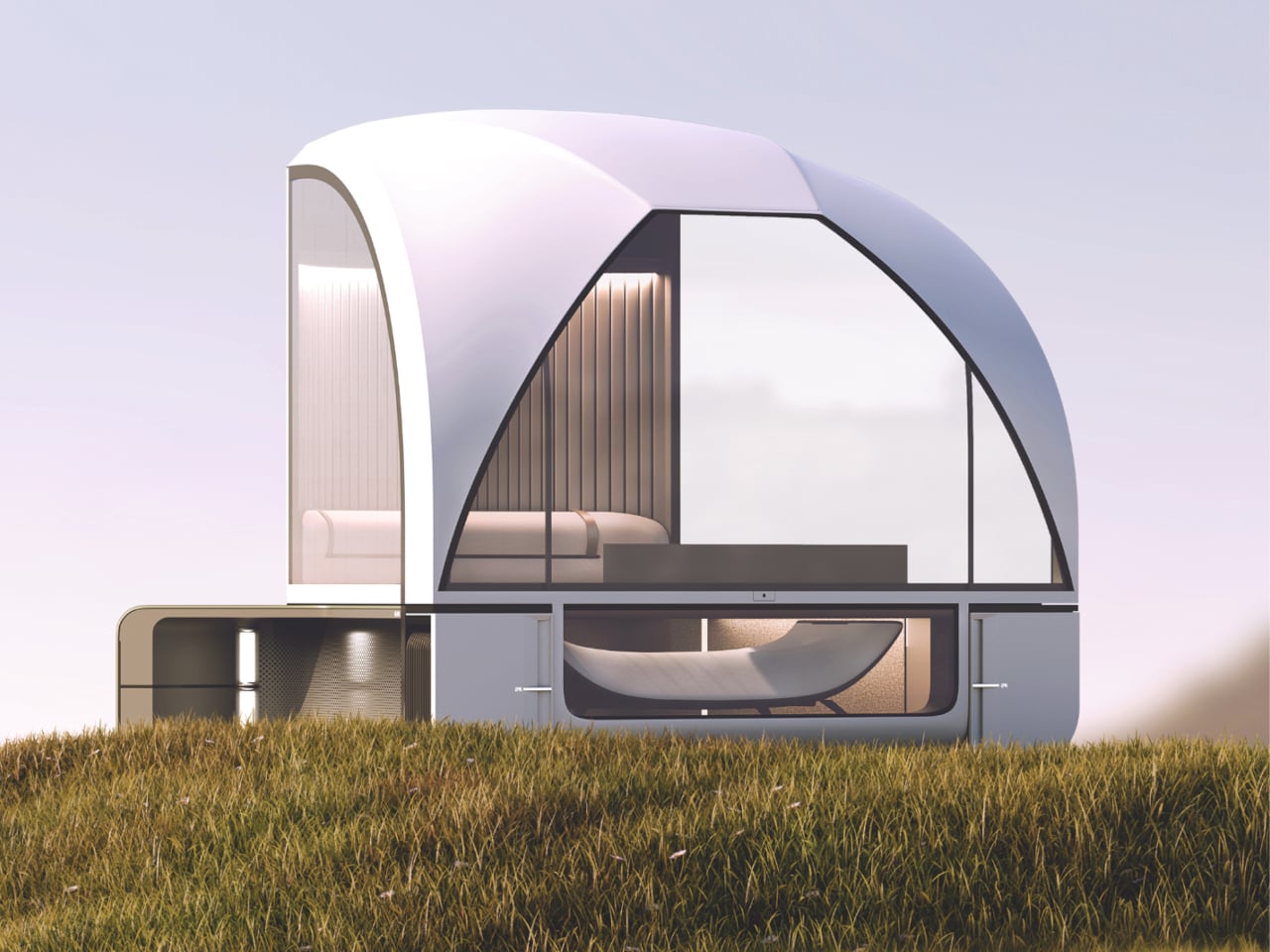
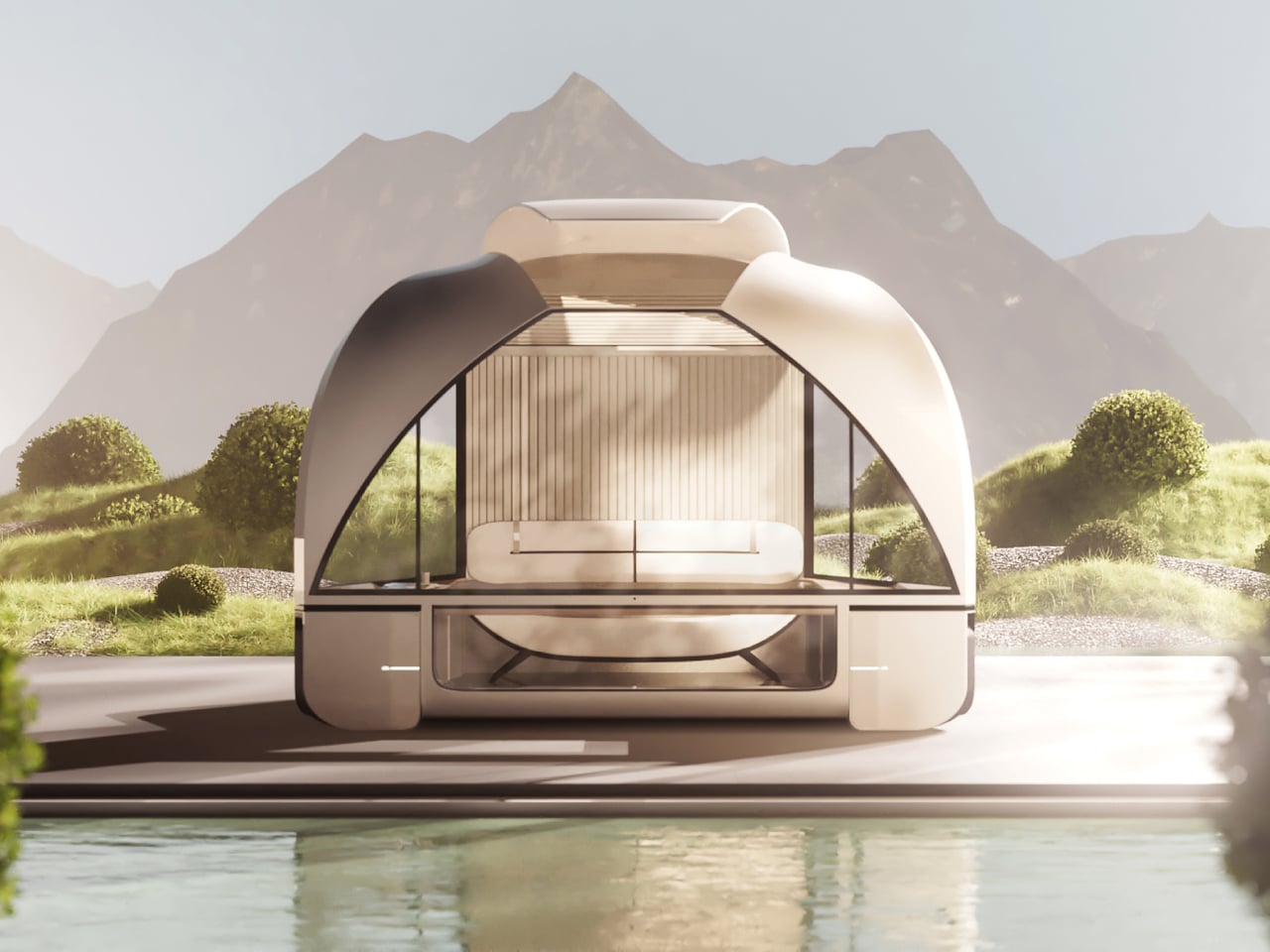
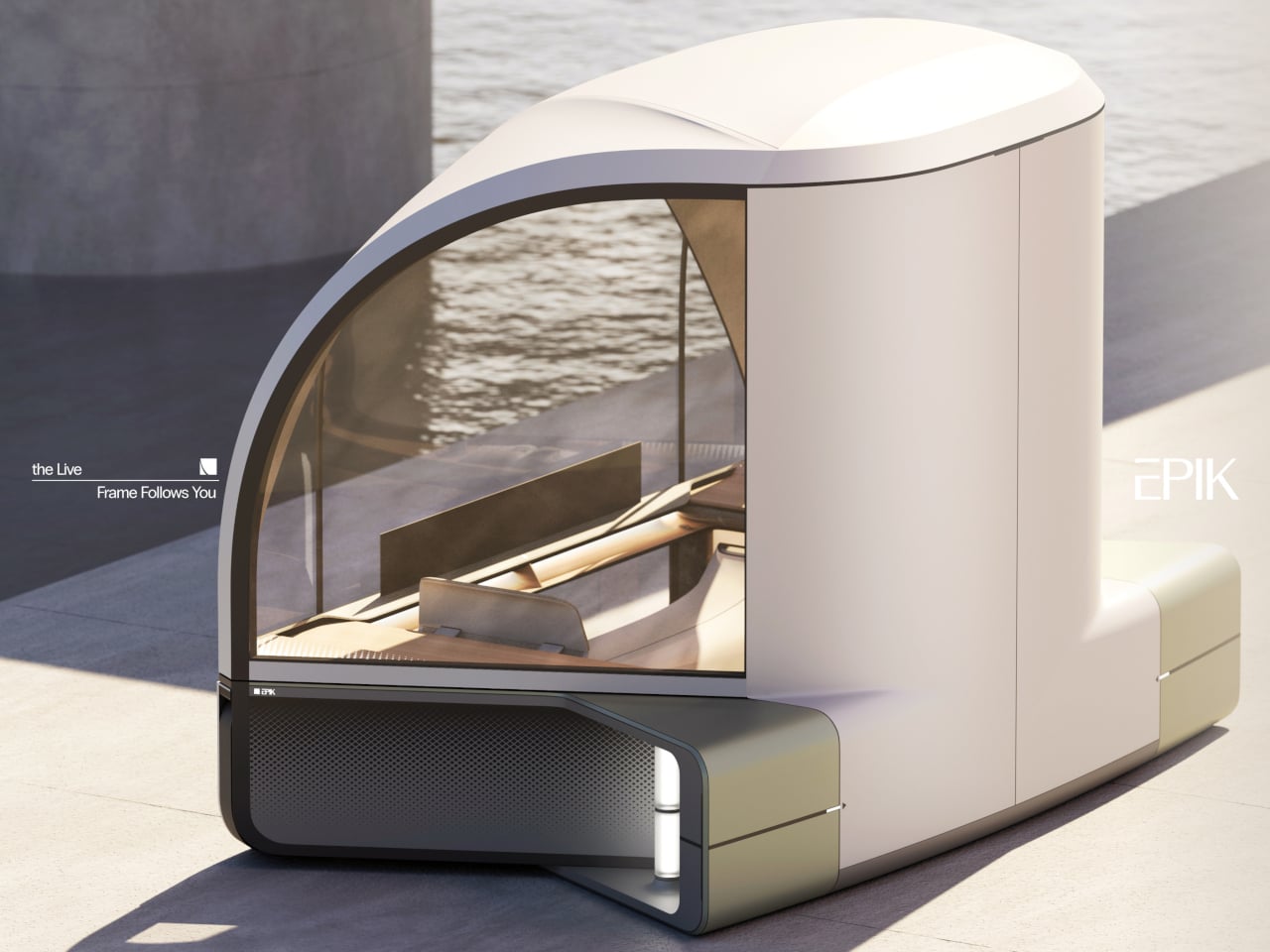
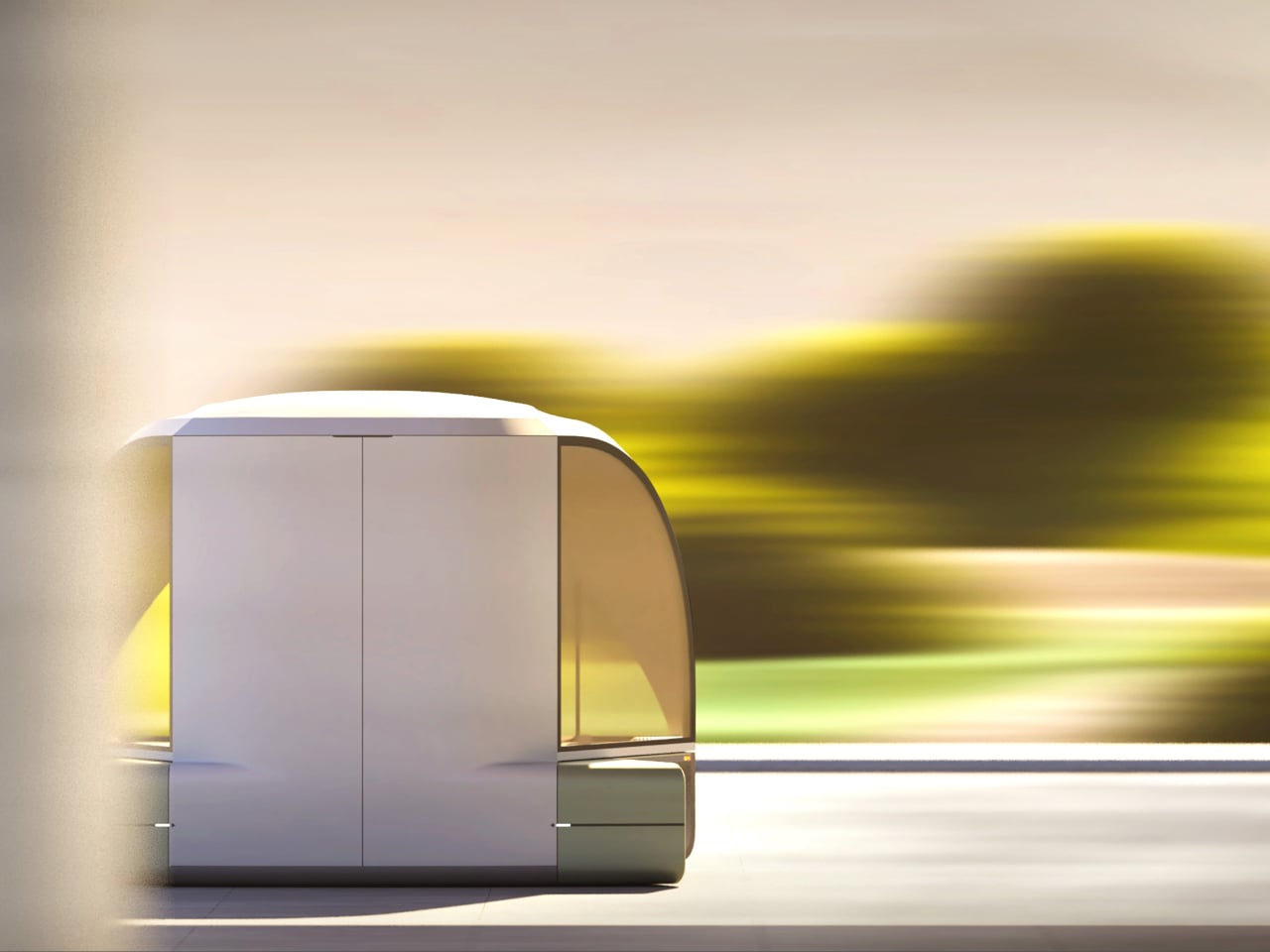
The exterior form draws from the architecture of an auditorium, with a broad, arched glass canopy that gives the interior an immersive, wide-angle view of whatever lies outside. This isn’t incidental; it’s the entire premise. Epik calls this the “Live Frame,” treating the vehicle less like a transport pod and more like a moving window that actively captures and amplifies the surrounding scenery.
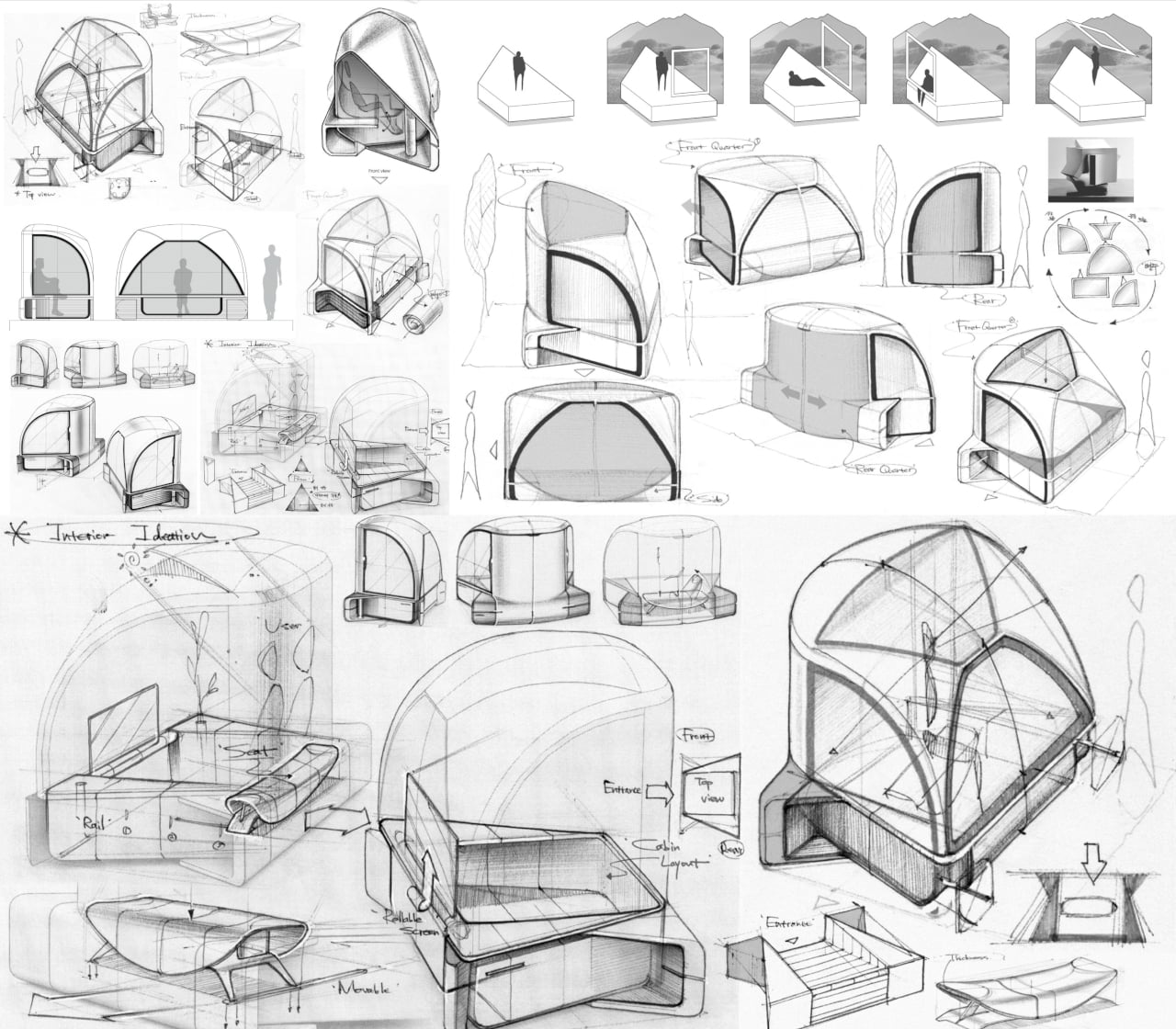
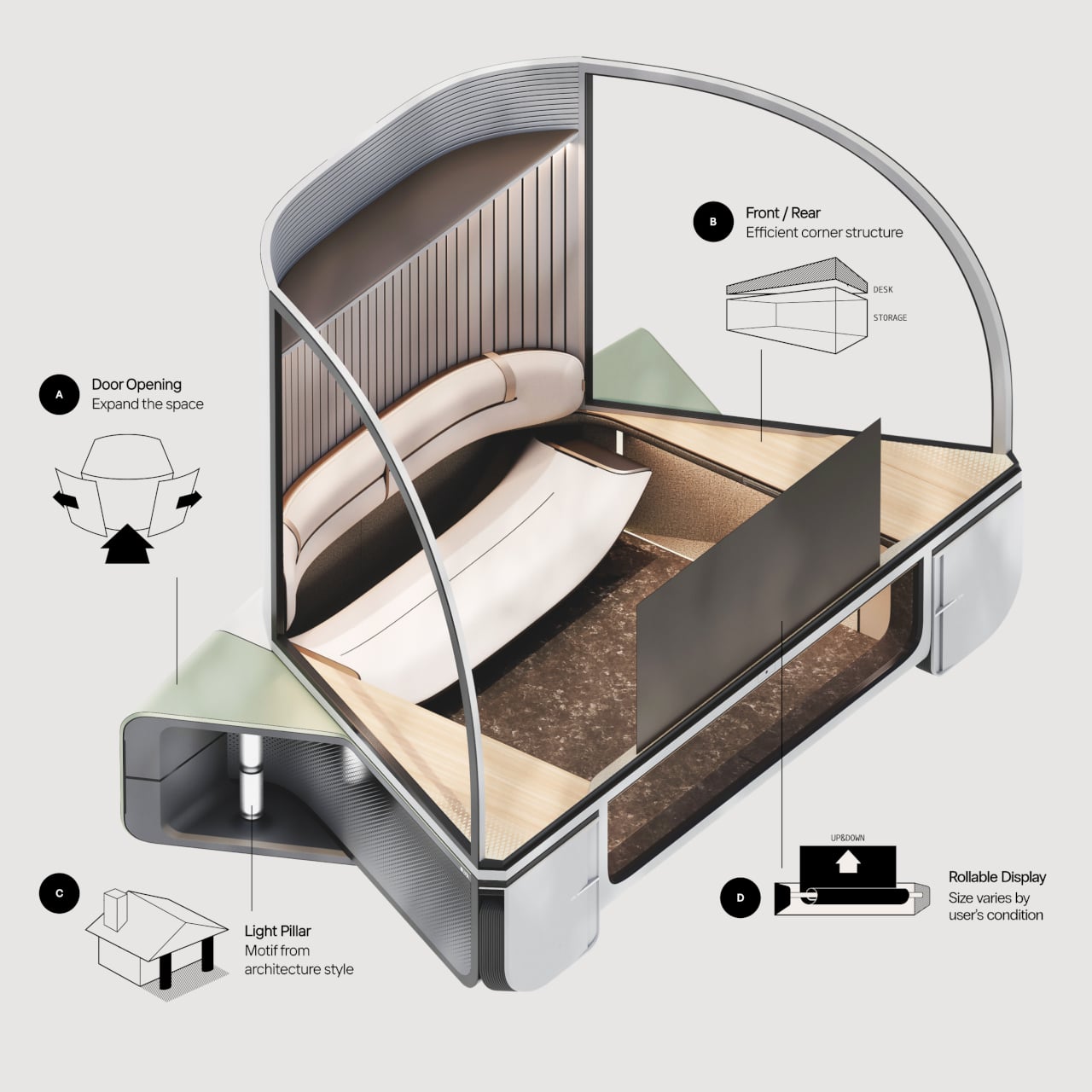
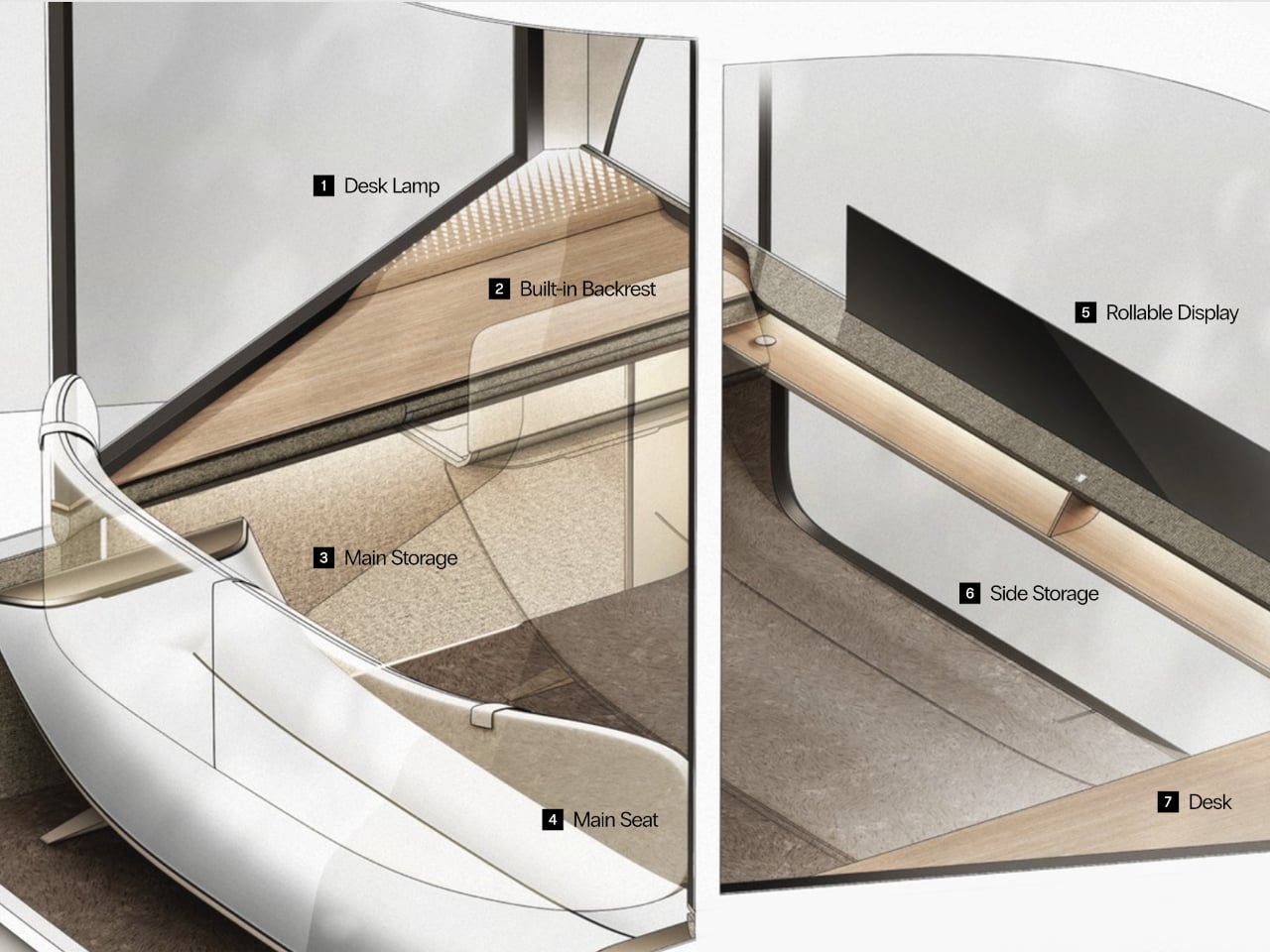
Inside, the compact cabin is built around flexibility rather than fixed arrangements. Doors and windows can open to varying degrees, inviting nature in or closing it out. A rollable display changes size depending on what the occupant wants to do, while corners that would otherwise go to waste are repurposed as storage and a small work surface. The same space can hold one person alone or two people together.
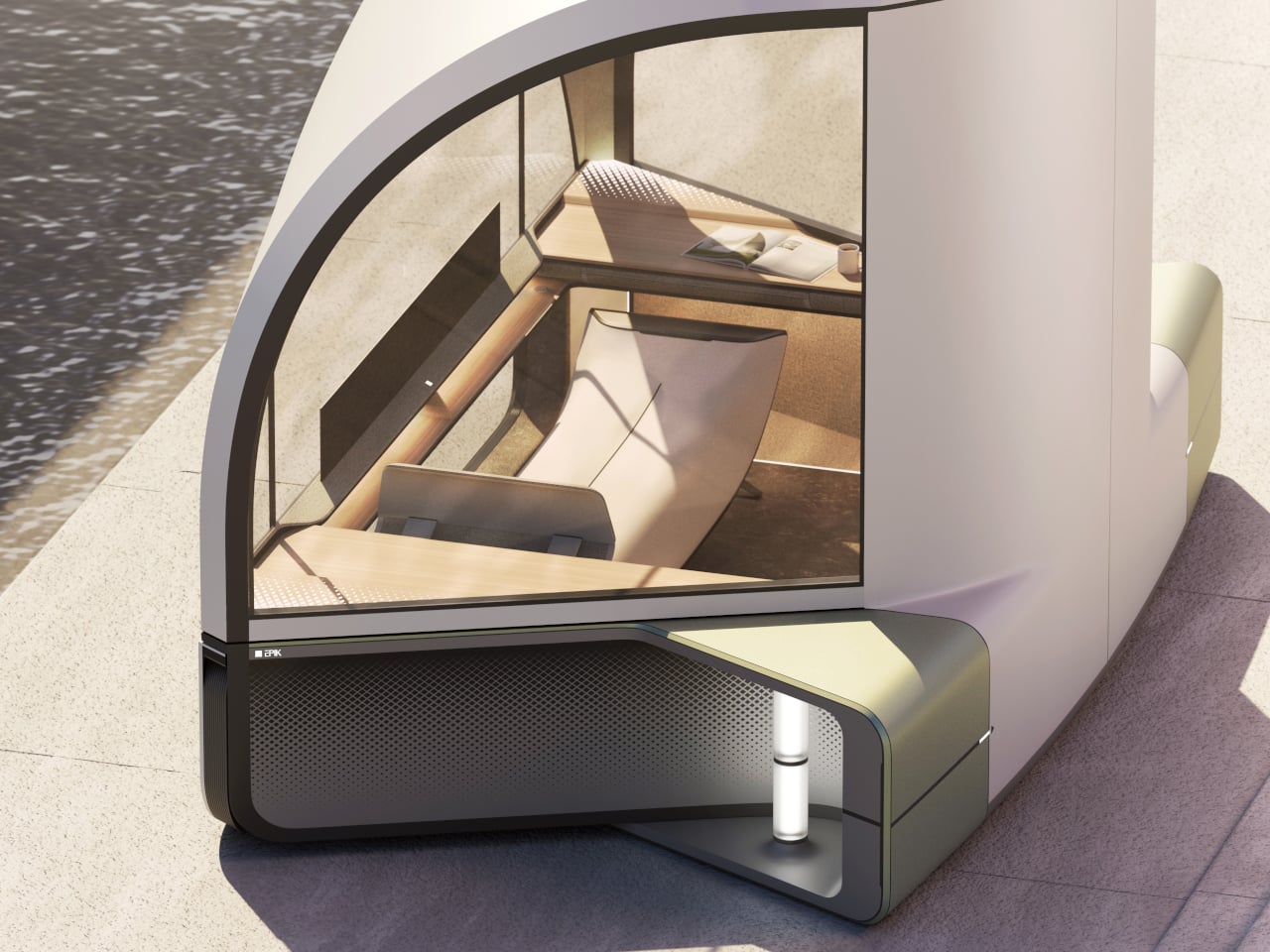
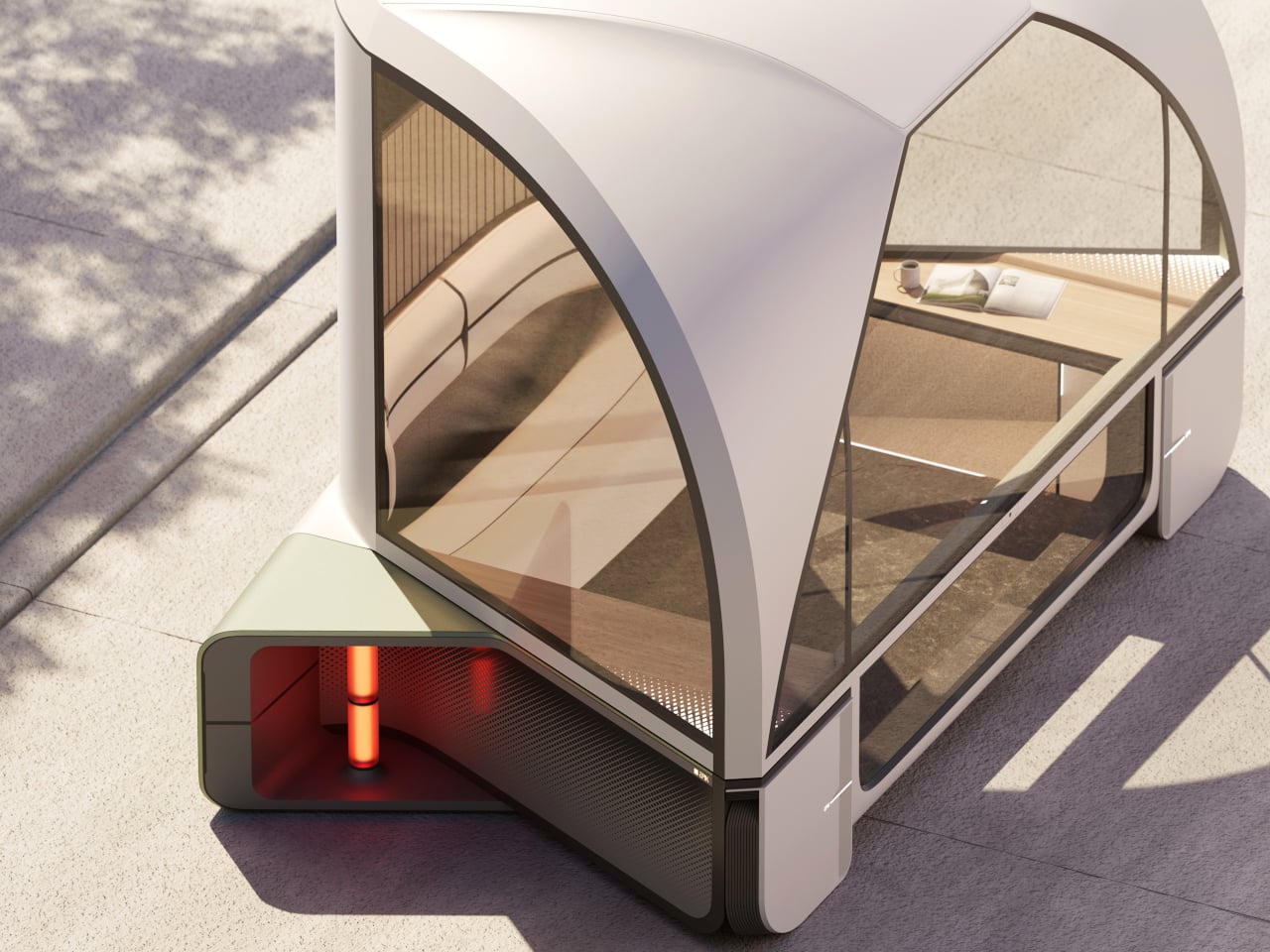
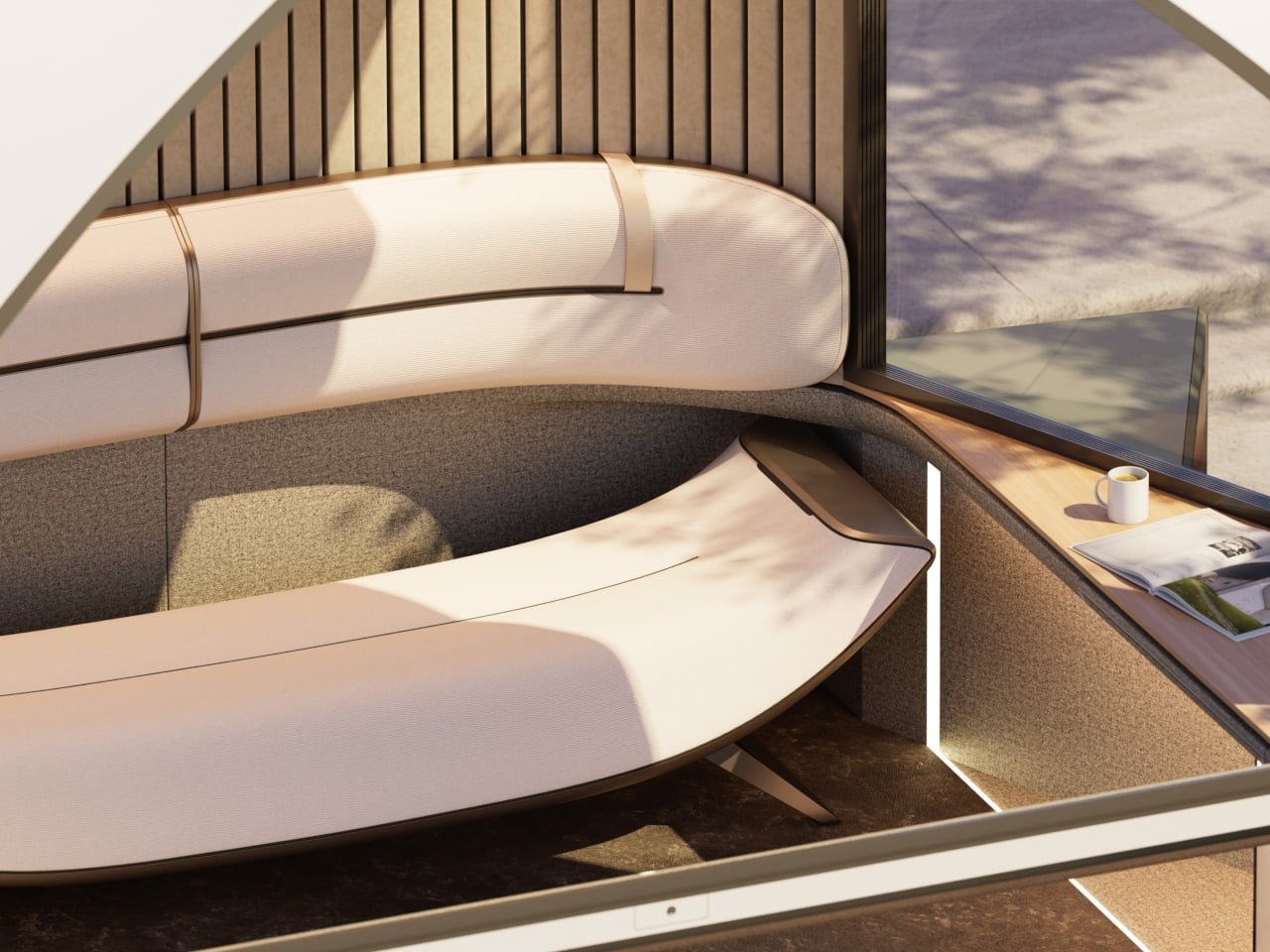
On a trip through mountain country, Epik’s Scenic Mode detects beautiful stretches of road and quietly slows the vehicle, adjusting window angles to frame the best view, almost as if the pod itself is composing a photograph. The detours it suggests aren’t inconveniences; they’re the whole point. Every landscape encountered gets logged in the “Rest Timeline,” a running record of every journey worth remembering.
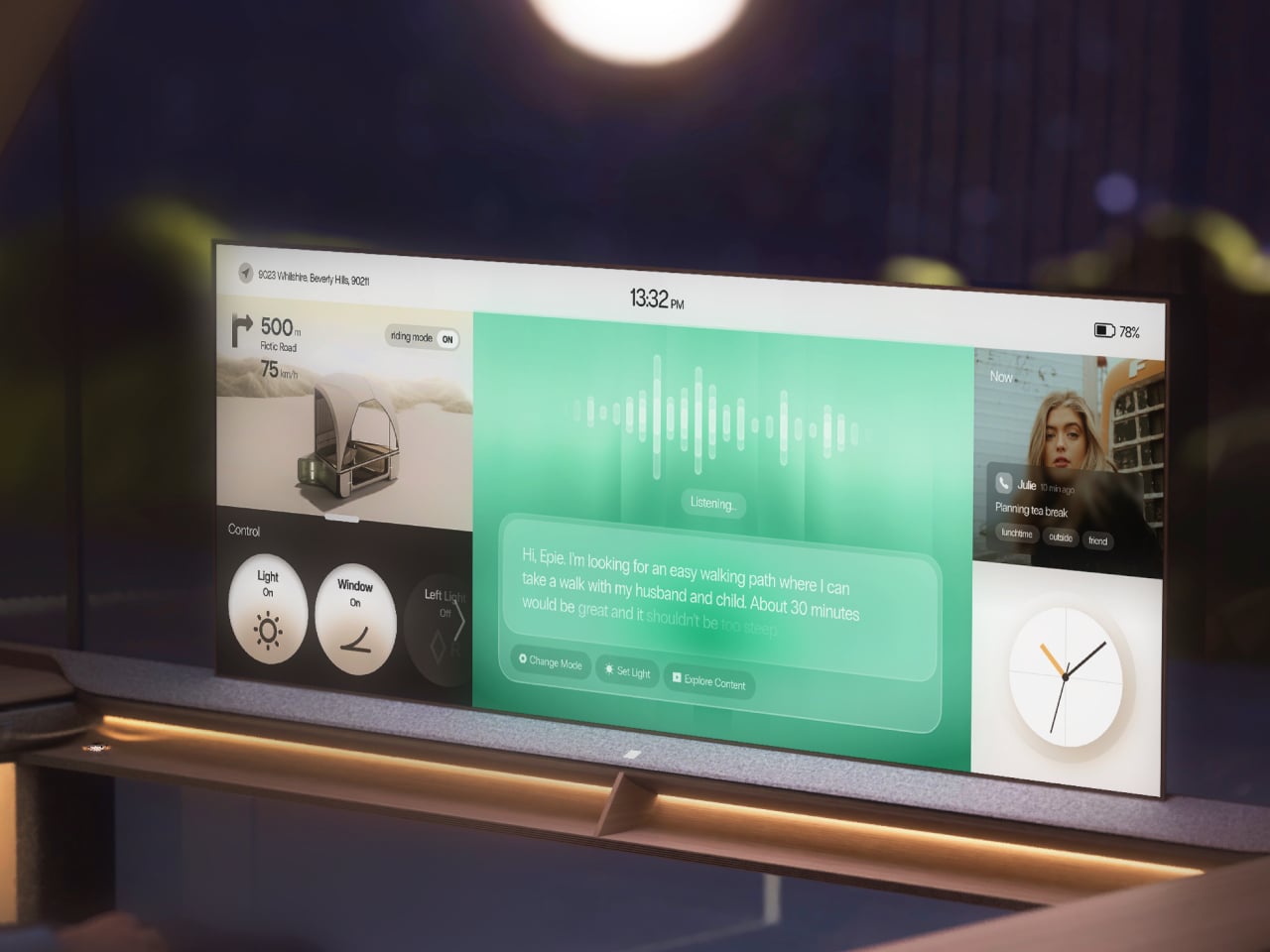
The onboard AI, called EPIE, learns the occupant’s routines, preferences, and how they typically spend time with the people around them. It reads mood signals through music and content choices, then gently nudges toward what comes next, whether that’s a nearby walking path, a quiet stop, or simply reconfiguring the cabin layout. For couples, it can even split the space into two personalized zones when schedules diverge.
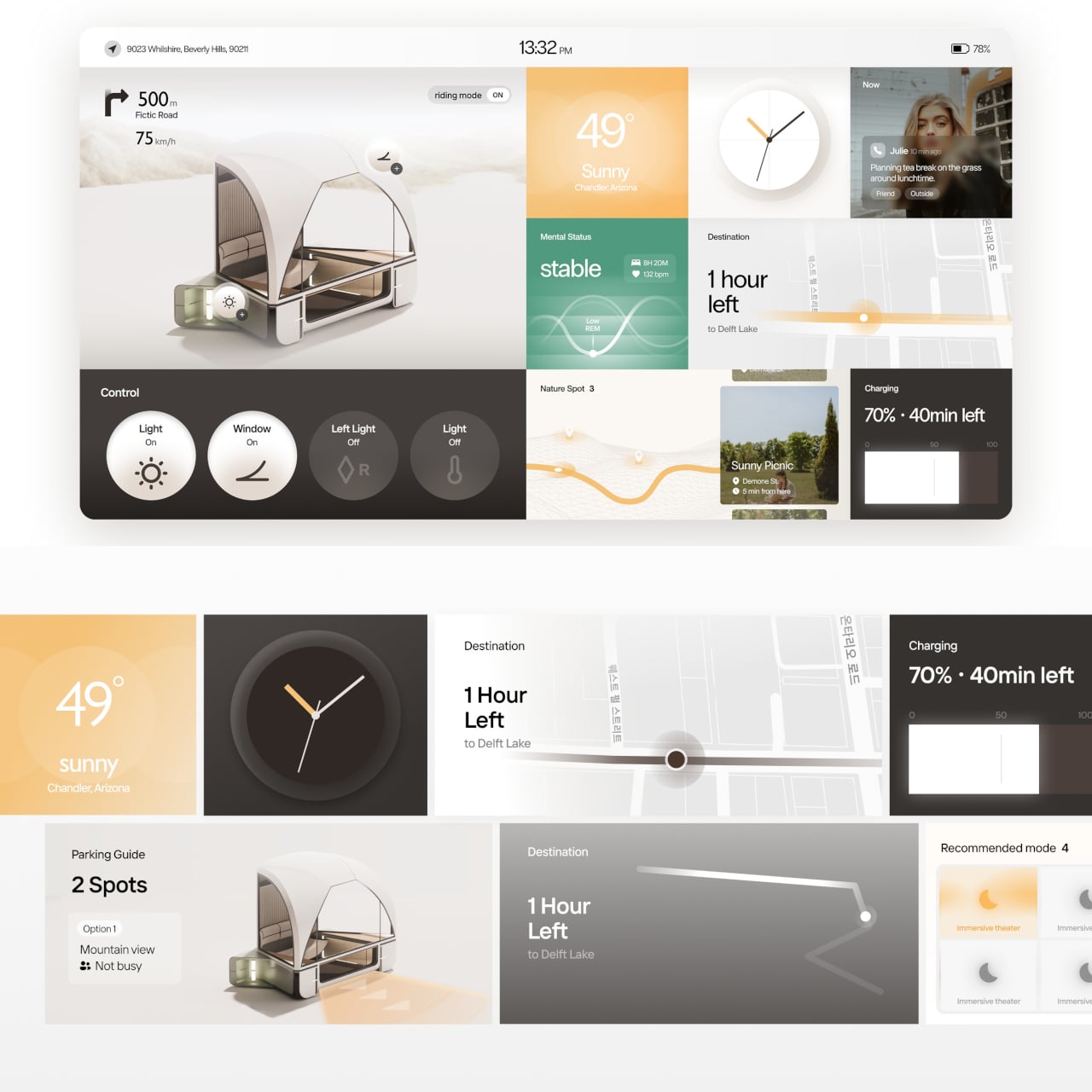
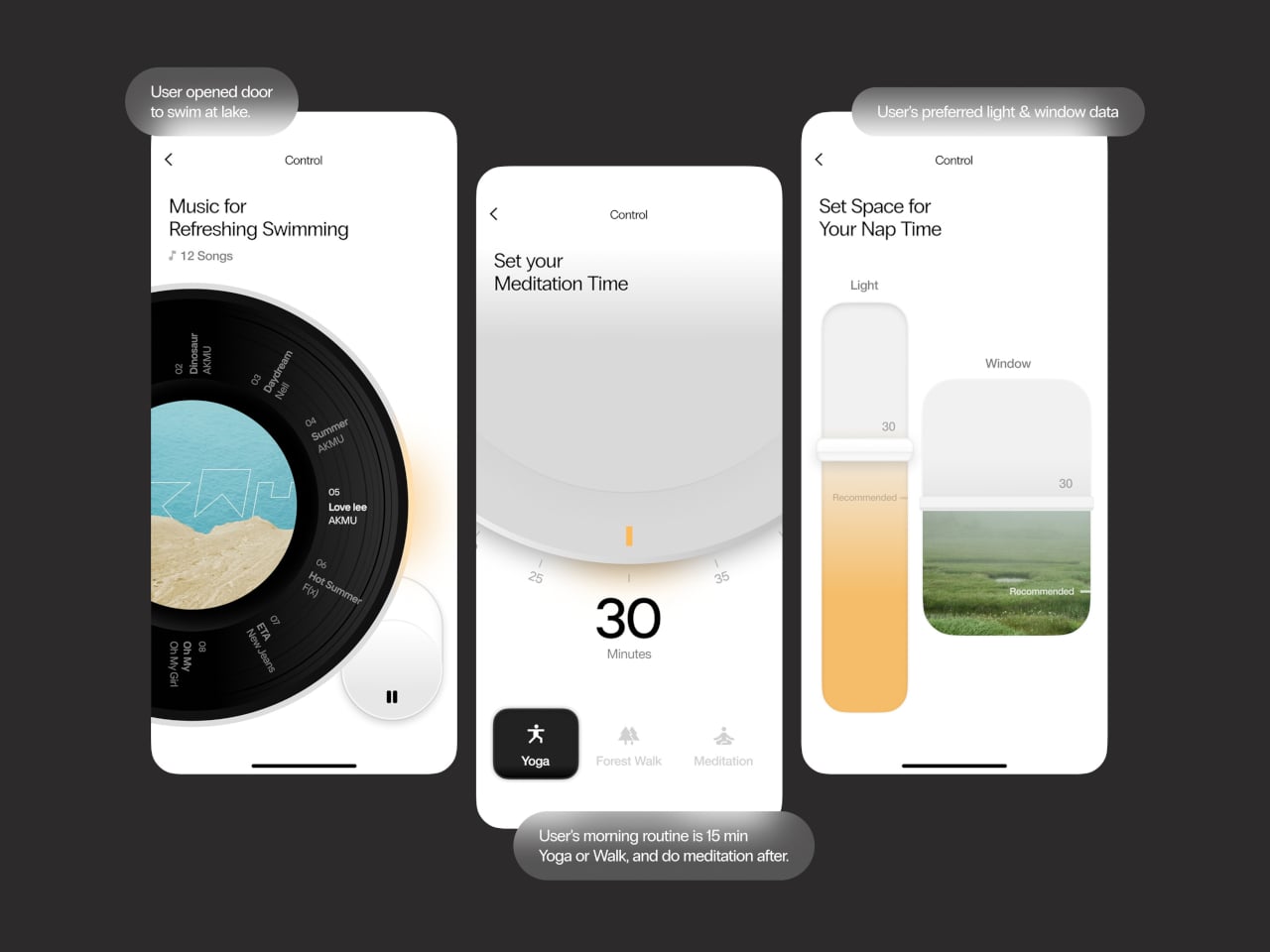
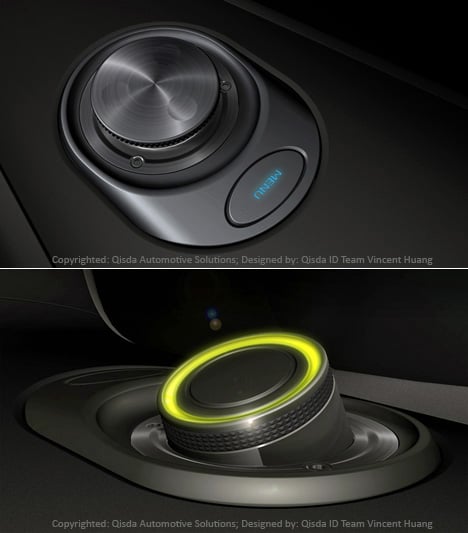
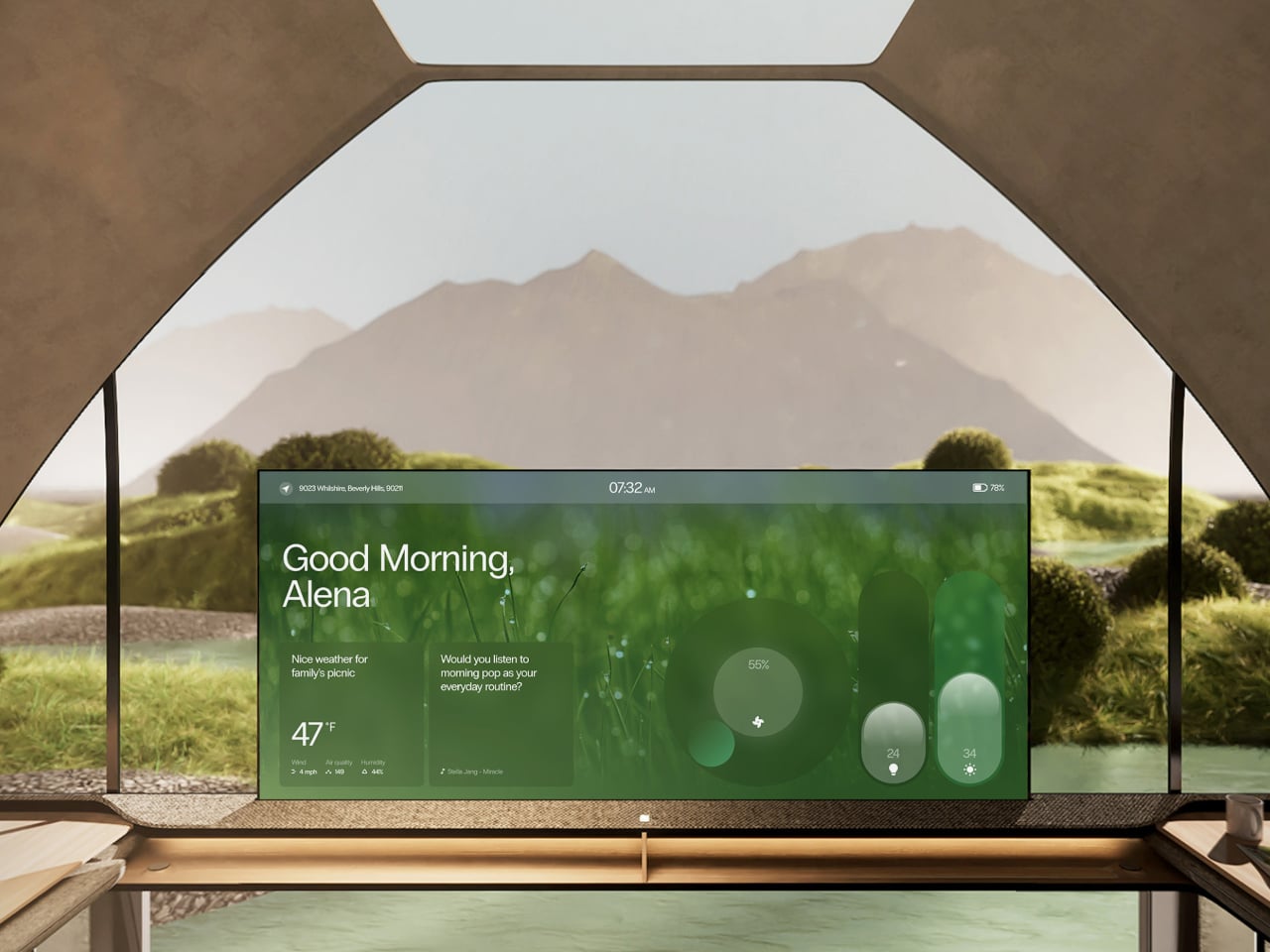
When there’s nothing more to do than absorb the moment, the interface knows to retreat. The screen takes on a skin drawn from the surrounding landscape, blending into the view, and only the most essential details, like weather and music, stay visible. Controls are modeled after analog buttons, using transparent textures so the display feels less like a gadget and more like a natural extension of the cabin walls.
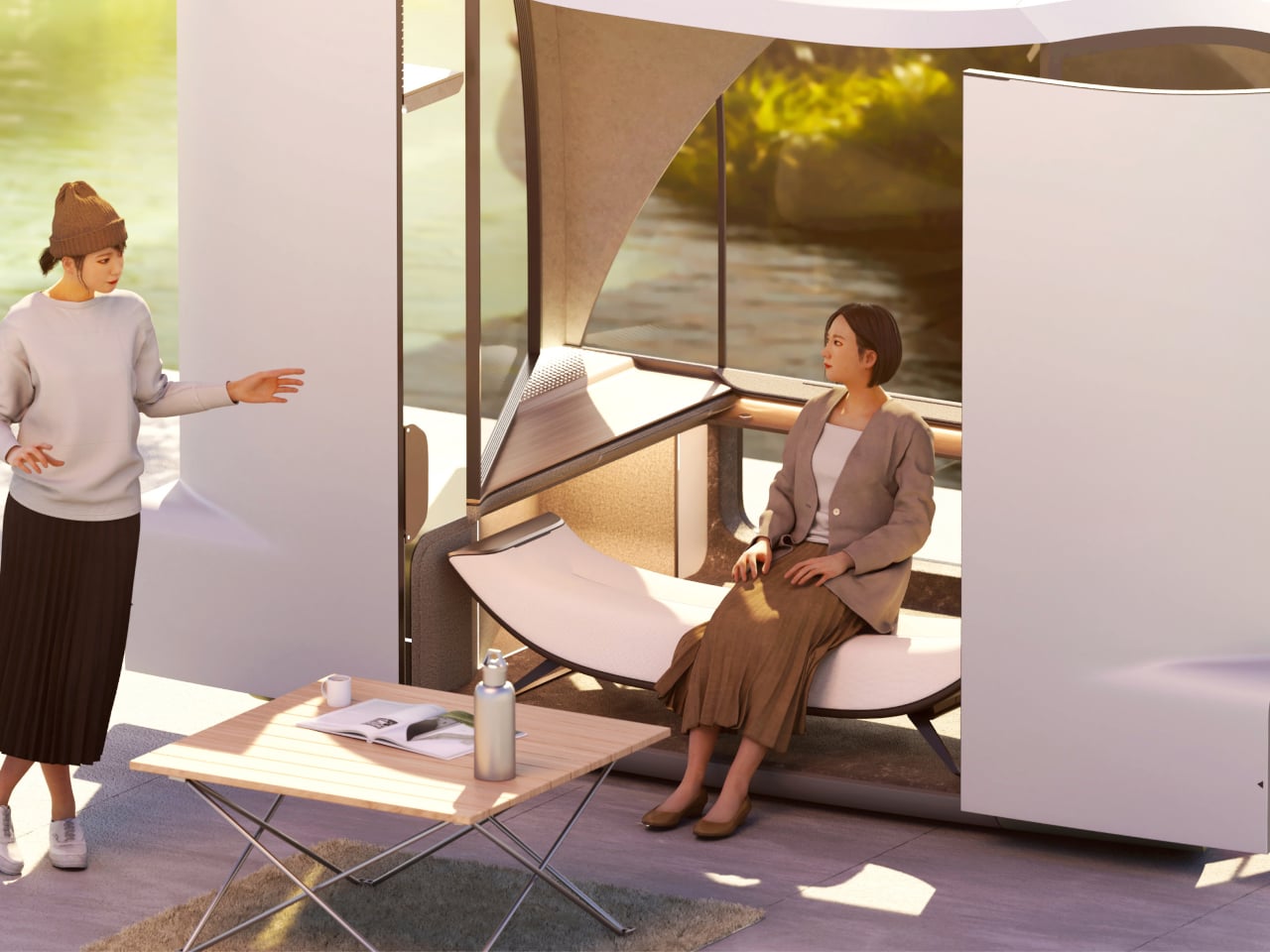
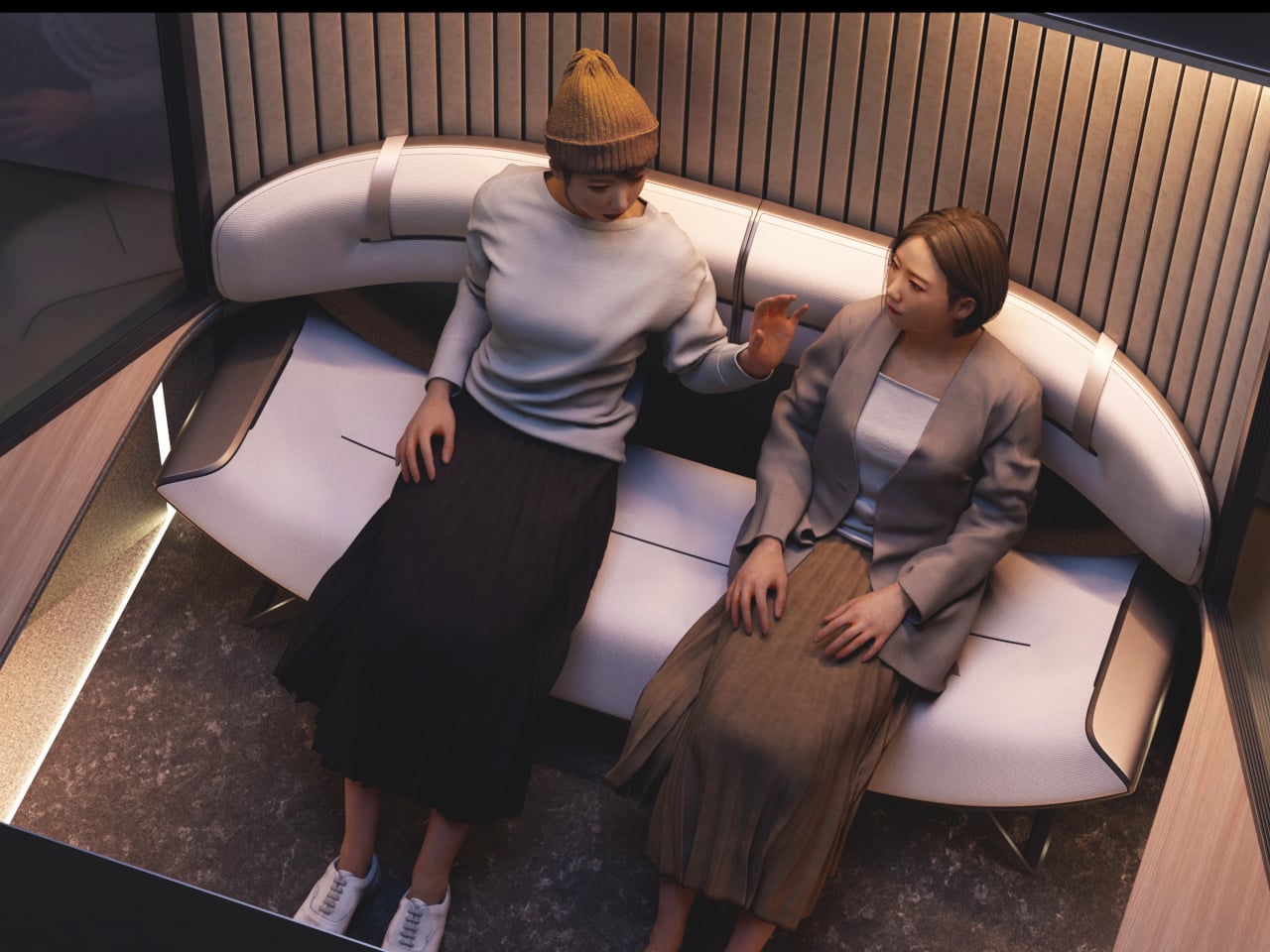
The idea that a vehicle could be primarily about rest rather than destination is still a rare one. Epik doesn’t claim you can find peace anywhere with the right pod, but it argues that the ingredients, specifically light, nature, and a space that listens, are far closer than most people realize. Getting somewhere just becomes the occasion for that rest, rather than the thing standing in its way.
SHARE