Most runners know the feeling. You’re a few miles in, the sun is beating down, and somewhere between the last water stop and the next one, you’re already behind. You’ve read the articles. You know hydration matters. And yet, you still have no real idea if you’re actually drinking enough, or too much, or the right thing at all. You’re just guessing, like almost everyone else out there pounding the pavement.
That gap between knowing and doing is exactly what Yash Ghule, a student at ArtCenter College of Design, set out to close with Osmo, an adaptive hydration system built specifically for runners. It’s a student design project, but the thinking behind it is sophisticated enough to deserve a proper look well beyond the design community.
Designer: Yash Ghule
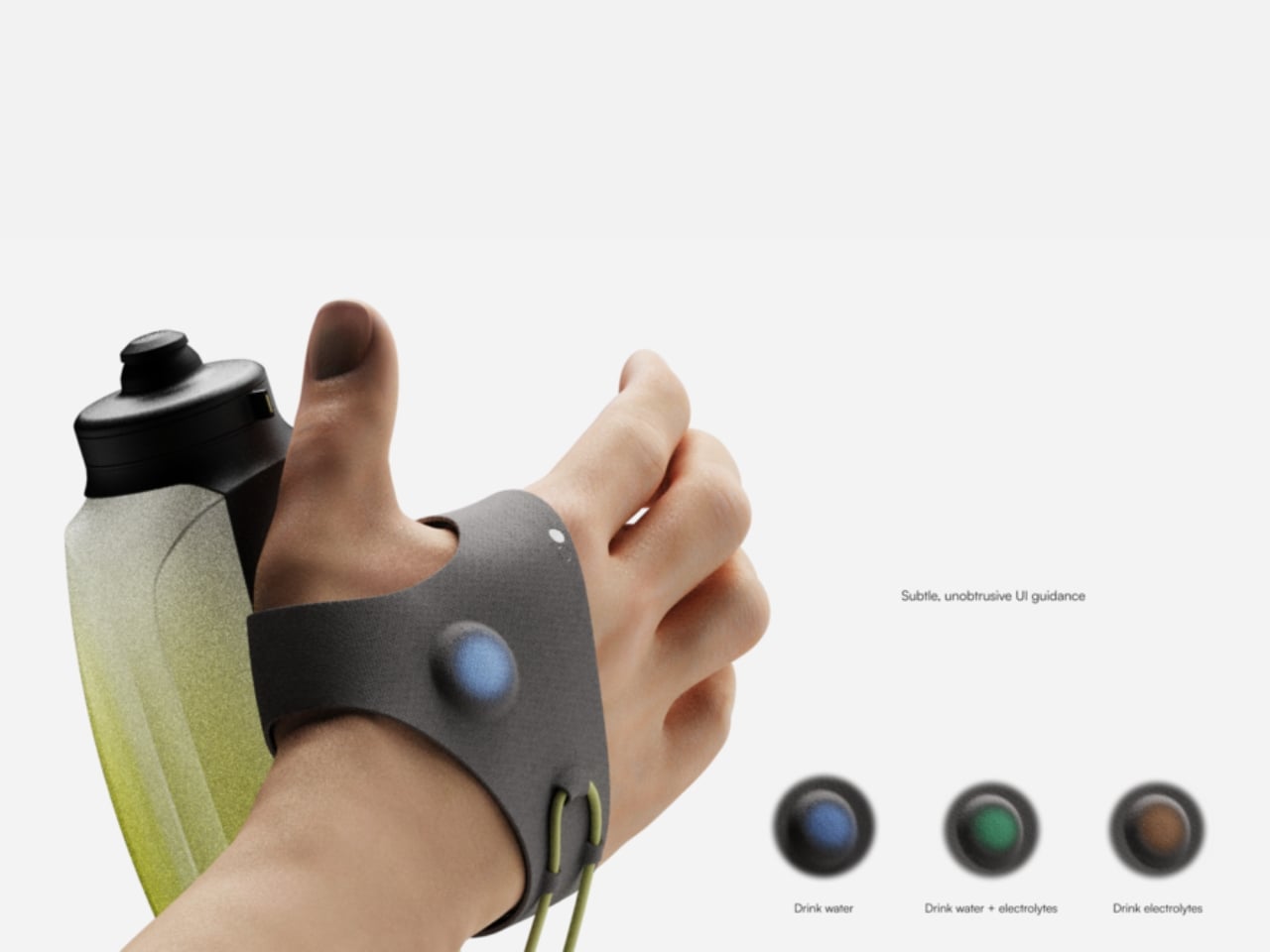
The problem Ghule identified isn’t lack of information. It’s that current hydration tools don’t fit how running actually feels. When you’re in the middle of a run, your cognitive bandwidth is largely committed to the act of running itself. Checking an app, reading a label, or doing mental math about electrolytes isn’t something most people can or will do mid-stride. Hydration fails not because runners don’t care, but because the tools available demand too much attention at exactly the wrong moment. That insight alone is sharp.
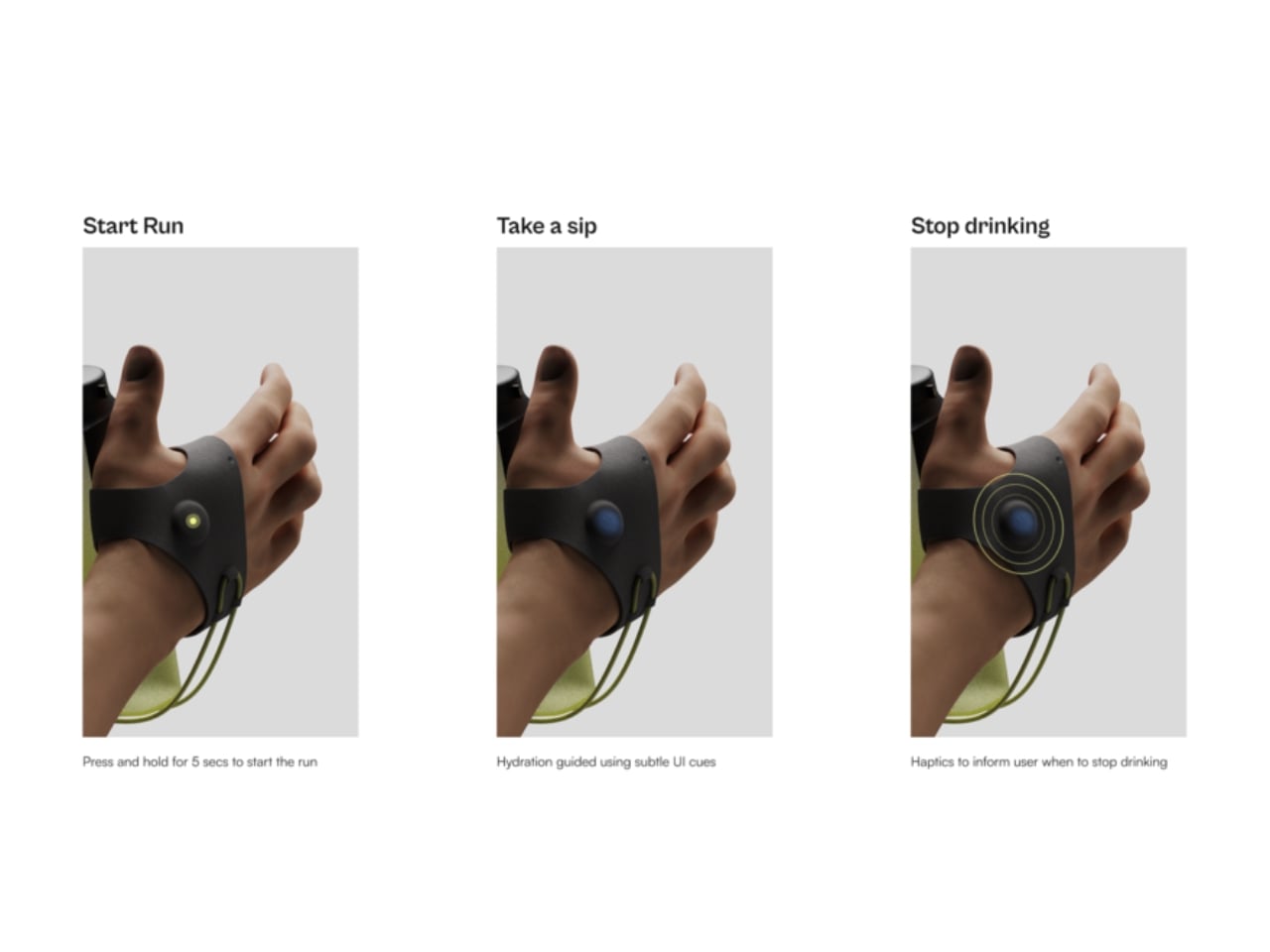
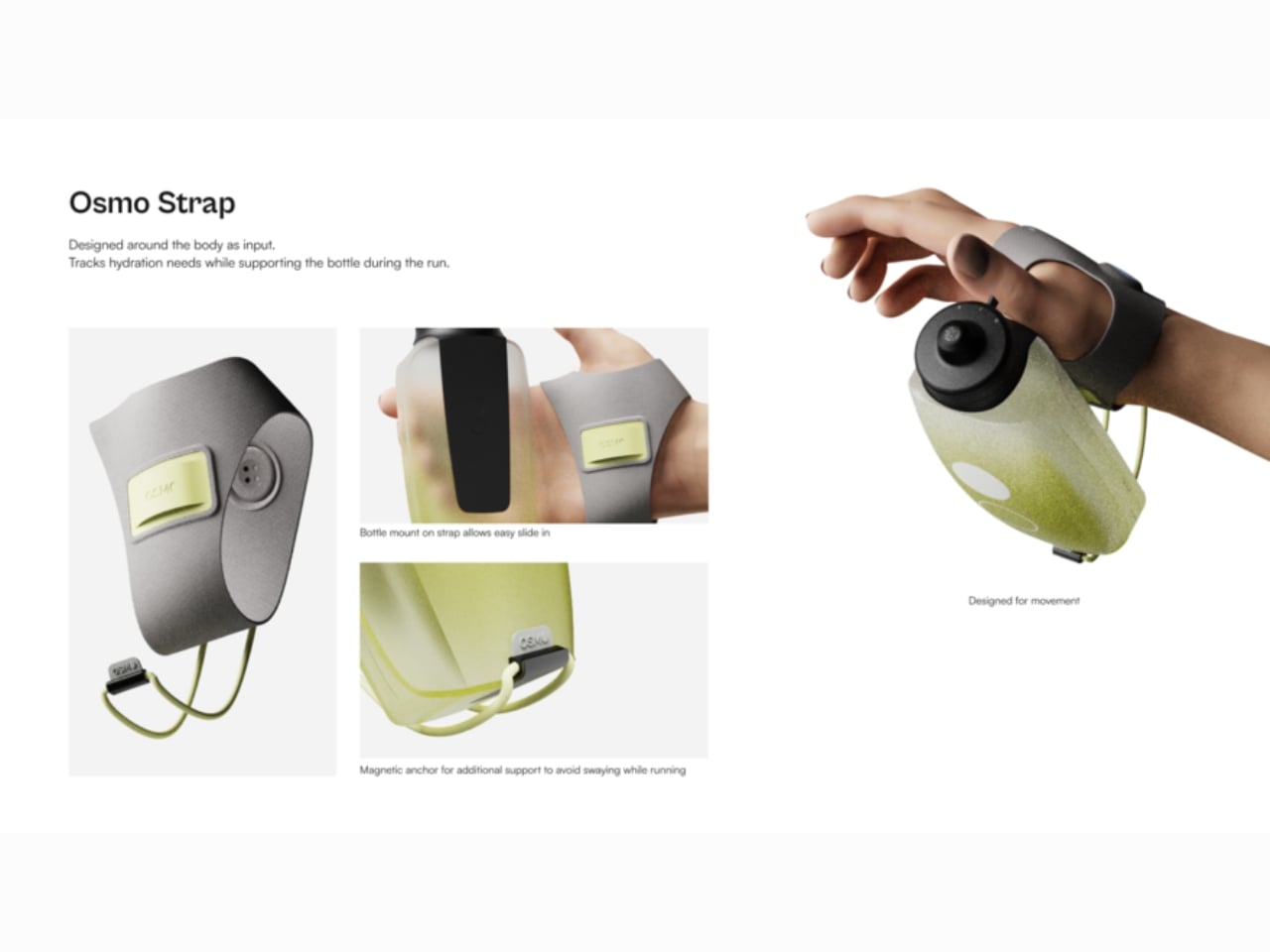
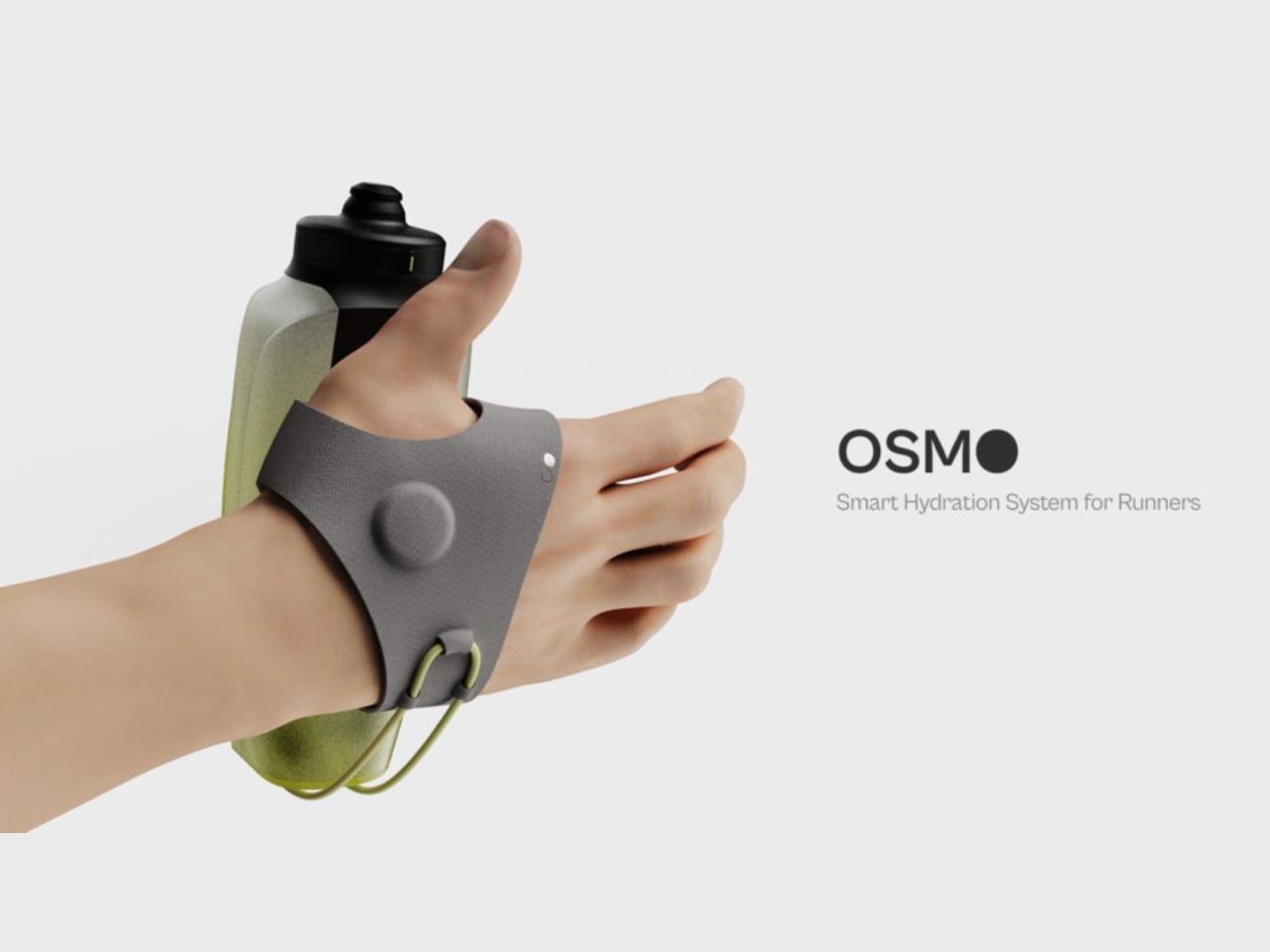
Osmo solves this with three connected components working as a single system. The wearable, worn on the wrist, continuously tracks sweat rate, temperature, humidity, and intake behavior. It then translates that data into cues delivered through haptic vibration and light feedback, nudging the runner without pulling them out of their flow. No screen to look at. No notification to parse. Just a quiet signal saying, drink something now.
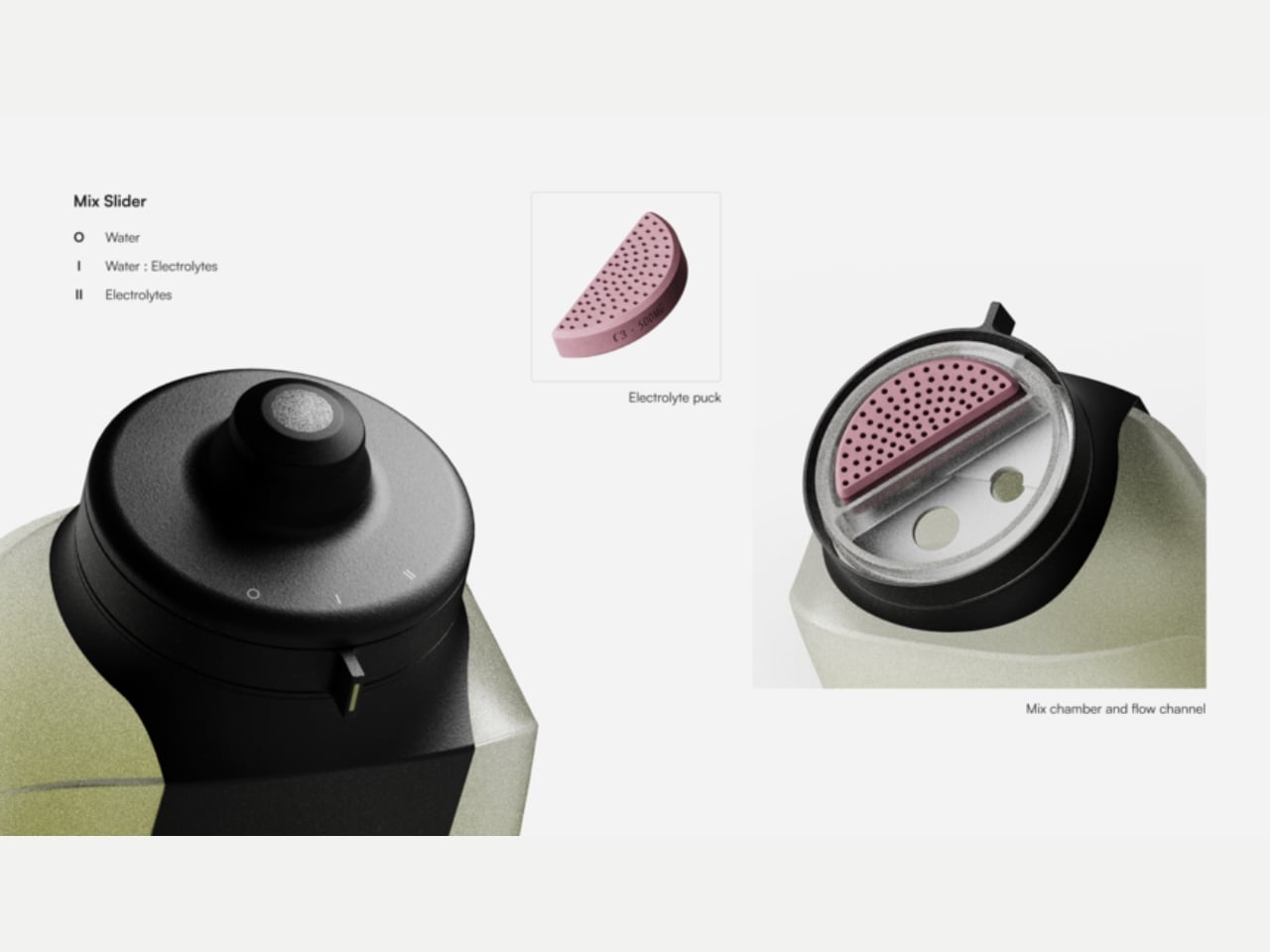
The bottle is where it gets particularly elegant. Rather than requiring you to pre-plan your hydration strategy before lacing up, Osmo’s bottle includes a built-in mixing mechanism that lets you shift between water and electrolytes on the fly. A simple slider adjusts the ratio as your needs change. This is the kind of thinking that solves a real problem rather than adding a layer of complexity dressed up as innovation. No extra pouches, no separate drink mixes to remember, no mid-run compromise where you reach for the wrong option because you didn’t prepare for the conditions.
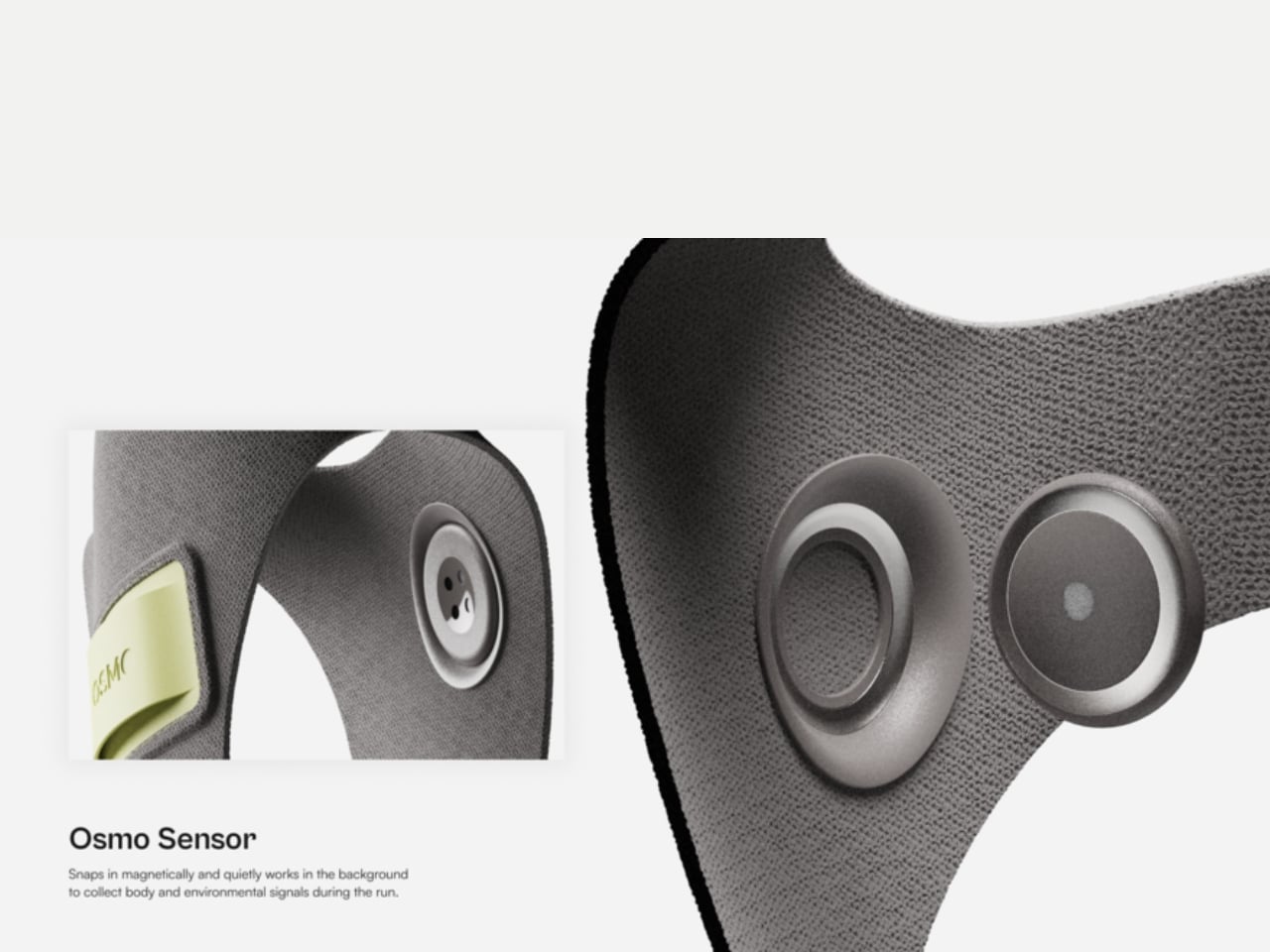
The companion app rounds out the system, handling setup before a run and offering digestible insights afterwards. That structure matters. It keeps the app out of the experience when you need to focus, and puts it to work when you finally have the headspace to reflect. I find this concept genuinely compelling, partly because so many “smart” fitness products get this backwards. They front-load the technology in ways that interrupt the activity itself, demanding interaction at moments when you just want to move. Osmo flips that. The intelligence runs quietly in the background, and the interface shows up only when it’s actually useful.
It’s also worth acknowledging the quality of thinking behind the design approach. Ghule didn’t just design a cool bottle or a slick wearable. He mapped out a friction problem, traced it back to its actual root, and then built a system around it. The research behind Osmo surfaced a key insight: runners know they should be hydrating better, but the physical and cognitive demands of running make it genuinely difficult to act on that knowledge in real time. That’s a design challenge with real nuance, and the response reflects it.
Osmo won’t be on store shelves tomorrow. It’s a student concept, and concept-to-market is always a long road. But the fact that it exists as a fully realized, integrated system rather than a single clever gadget suggests Ghule has a clear understanding of what it actually takes to change behavior. That’s not a minor thing. Running keeps growing as a sport, and the industry has largely kept pace. The gear has evolved, the shoes have evolved, the tracking technology has evolved. It’s about time hydration caught up.