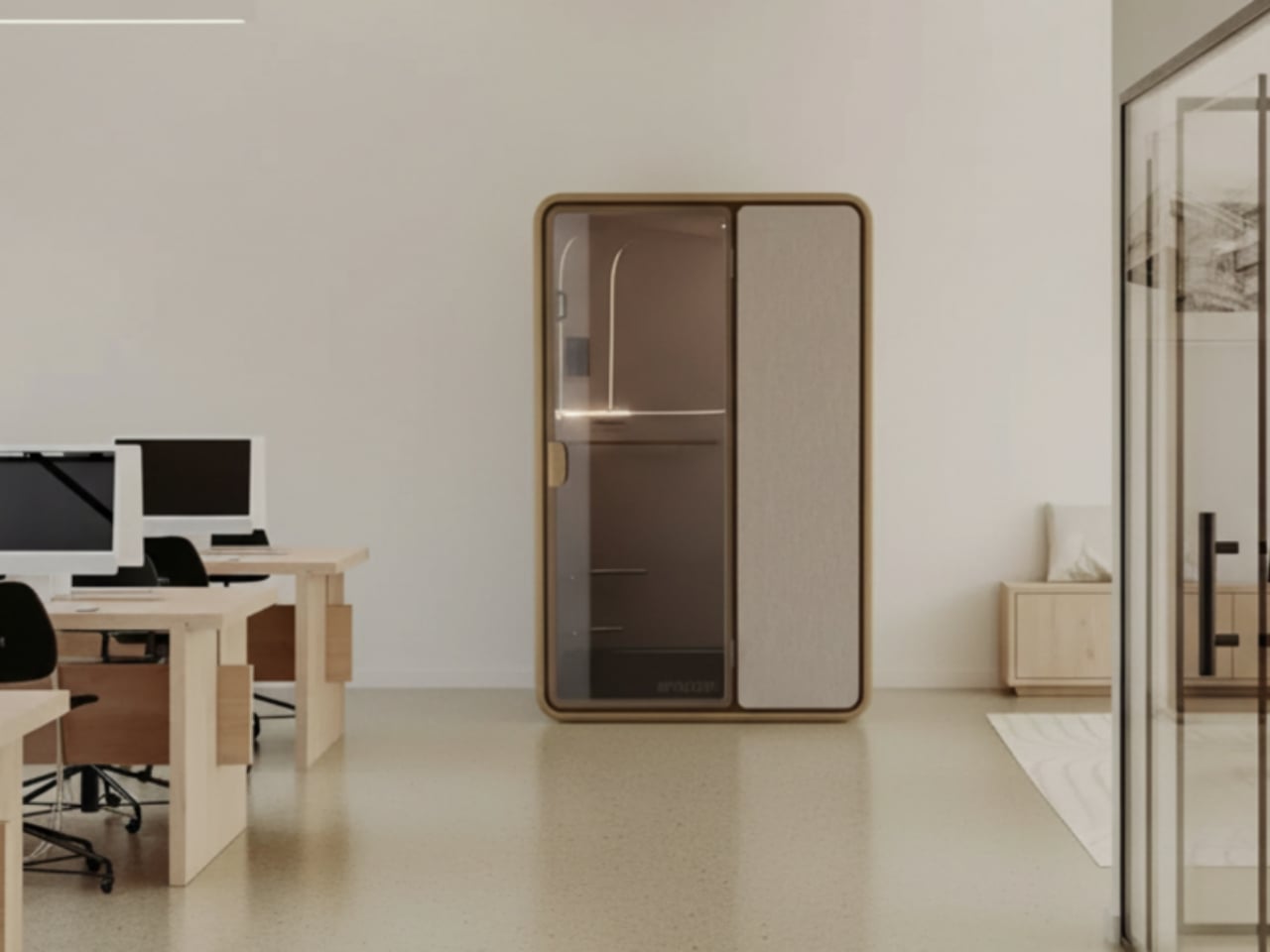
The first thing you notice about Kineo is that it doesn’t look like fitness equipment. It doesn’t look like a medical device, a sensory deprivation pod, or a corporate novelty. Standing in an open-plan office, it looks like furniture: considered, warm, and completely at ease between a row of workstations and a glass conference wall. For a product designed to bring guided stretching and spinal decompression into the workplace, that’s not a small achievement. It’s actually the whole design challenge.
Designer Kat Lew built Kineo in collaboration with fitness brand Precor to address work-related musculoskeletal disorders, the chronic lower back, neck, and shoulder discomfort that most desk workers know well and most offices address badly. The booth measures 5 feet by 5 feet by 8 feet, built from modular panels so it can be shipped, carried through a standard service elevator, and assembled on-site. The logistics are solved. Now look at the thing itself.
Designer: Kat Lew
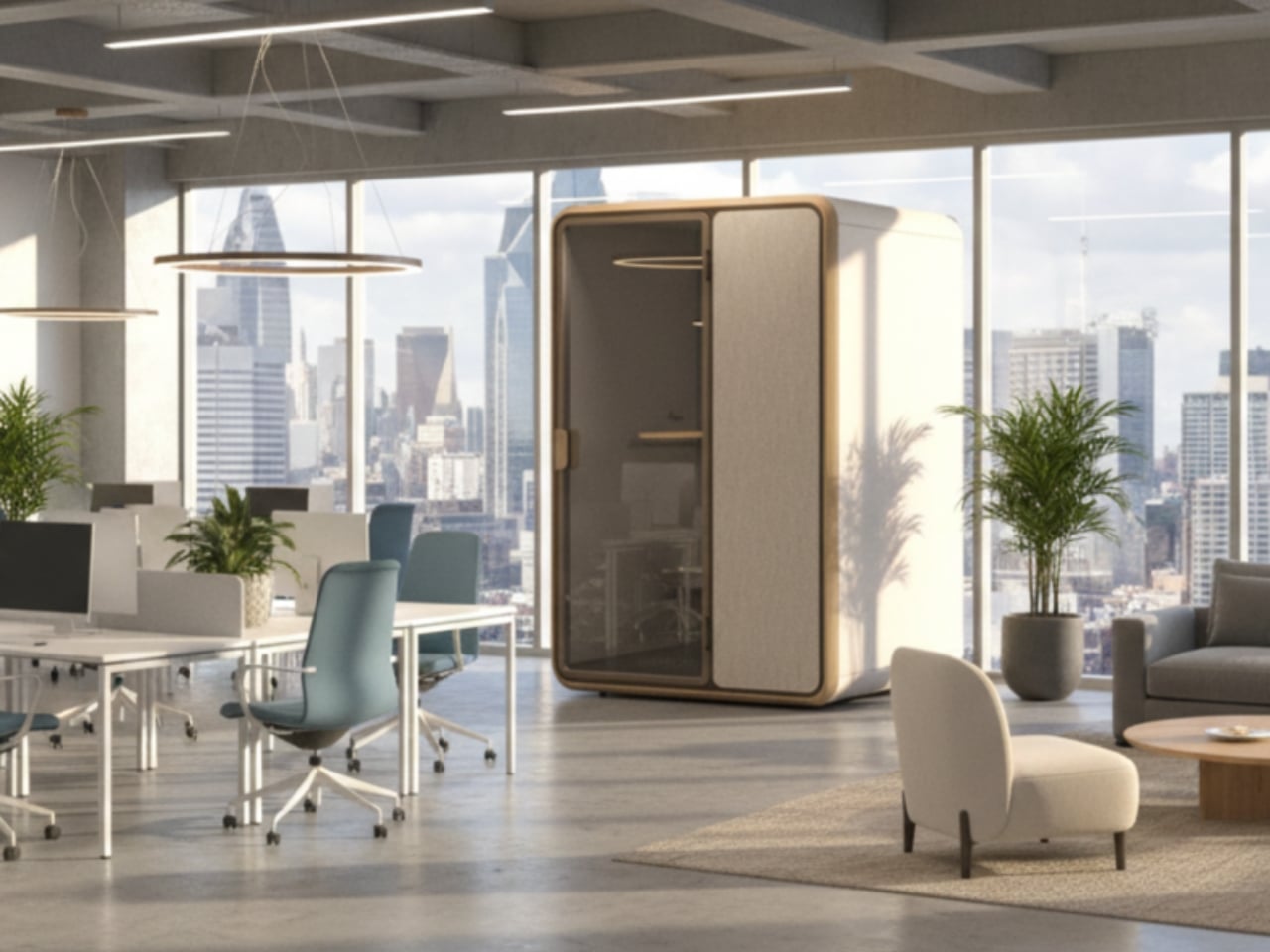
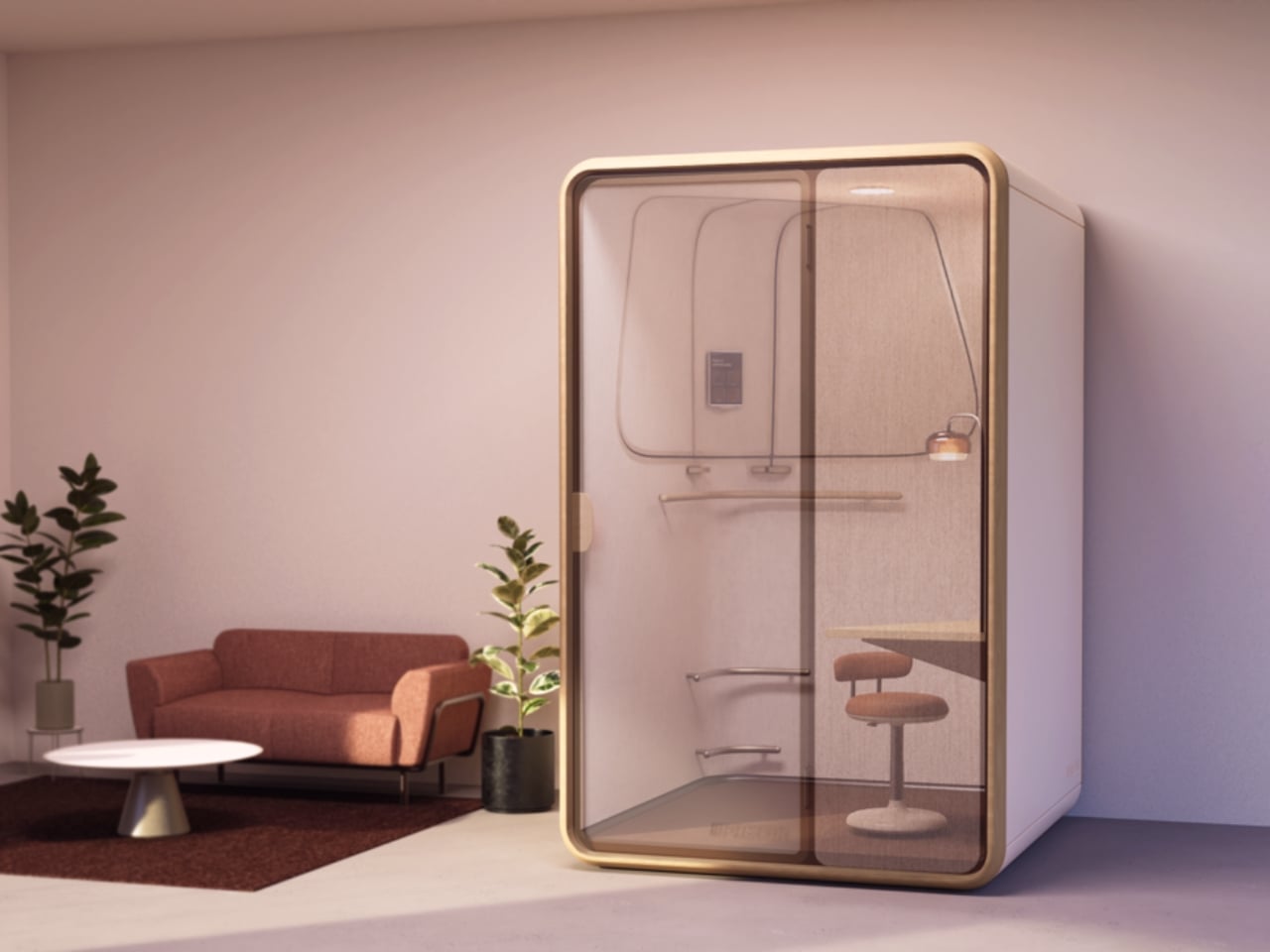
The exterior is a tall rectangular volume with deeply rounded corners, split between tinted glass and a cream acoustic panel, unified by a warm champagne gold frame. The glass is smoked just enough to imply privacy without making the booth feel opaque or isolating. The fabric panel has the soft, oatmeal texture you’d expect on a well-designed lounge chair, not a piece of fitness infrastructure. Together they give the booth a material warmth that sits comfortably alongside contemporary office furniture. It borrows loosely from the visual language of privacy pods, the kind you’d find in forward-thinking studios and airport lounges, but the palette keeps it from reading as purely functional. The gold trim does a lot of quiet persuasion here. It signals quality without announcing it.
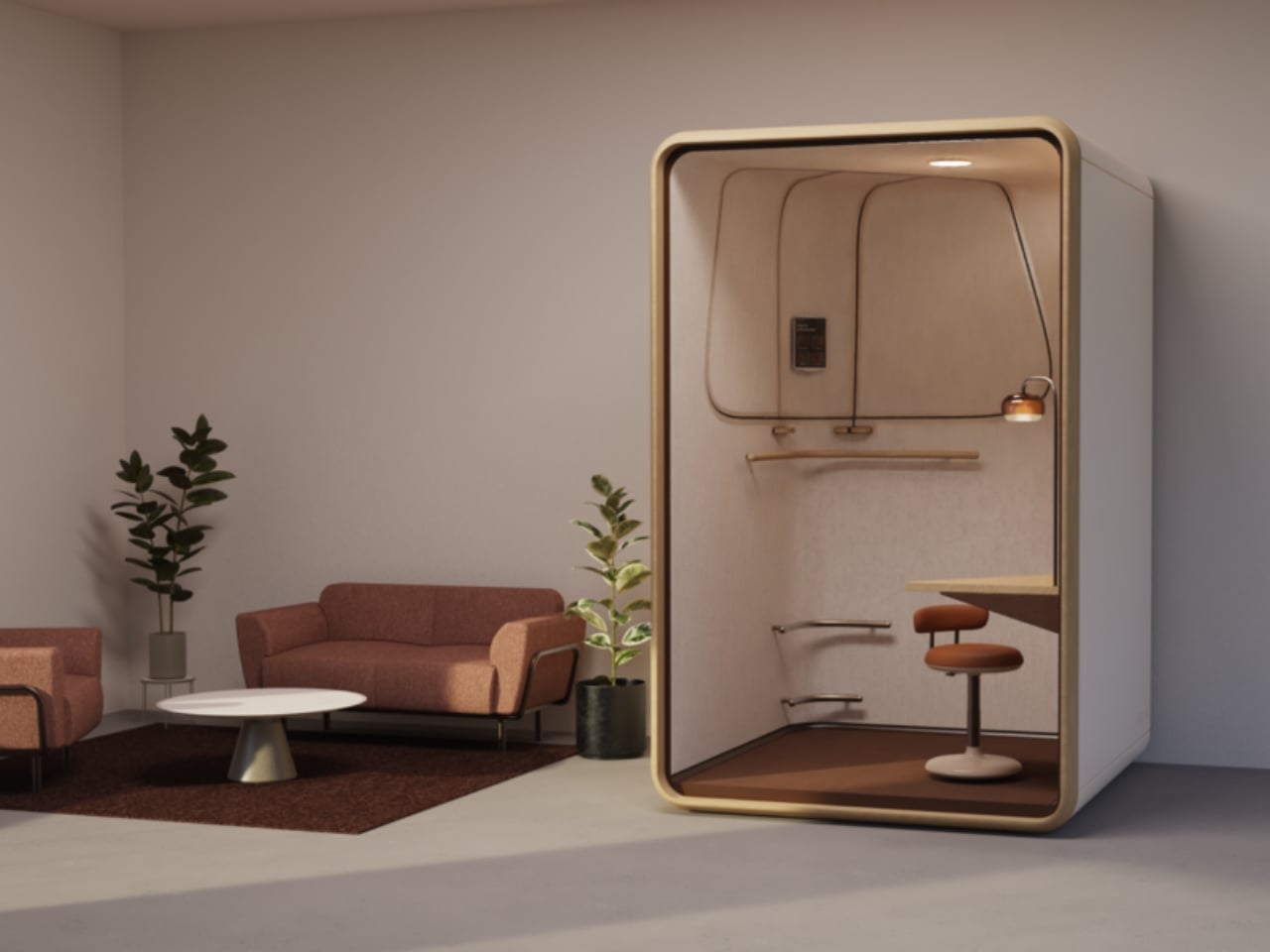
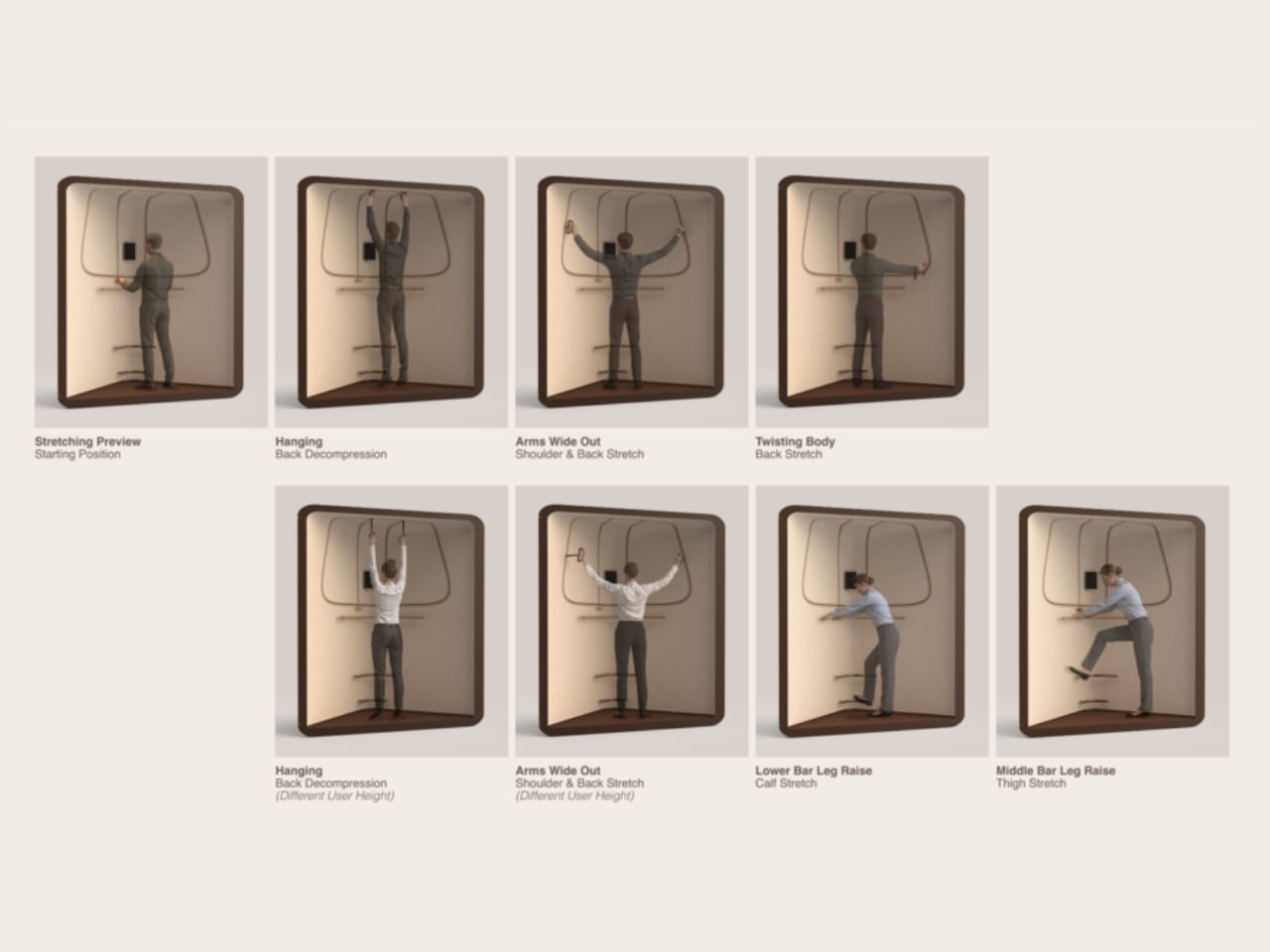
Inside, the booth divides into two distinct zones, and this is where Lew’s design thinking becomes most legible. One side features a wall-mounted stretching apparatus: a set of slim horizontal bars at multiple heights, embedded into a warm wood-lined back wall. The bars accommodate hanging back decompression, shoulder and back stretches, calf raises, and thigh stretches, guided by a small control panel positioned at eye level. It’s a considered sequence. And importantly, the bars look like they belong on that wall. They don’t look bolted on; they read as part of the architecture, which takes real restraint to pull off.
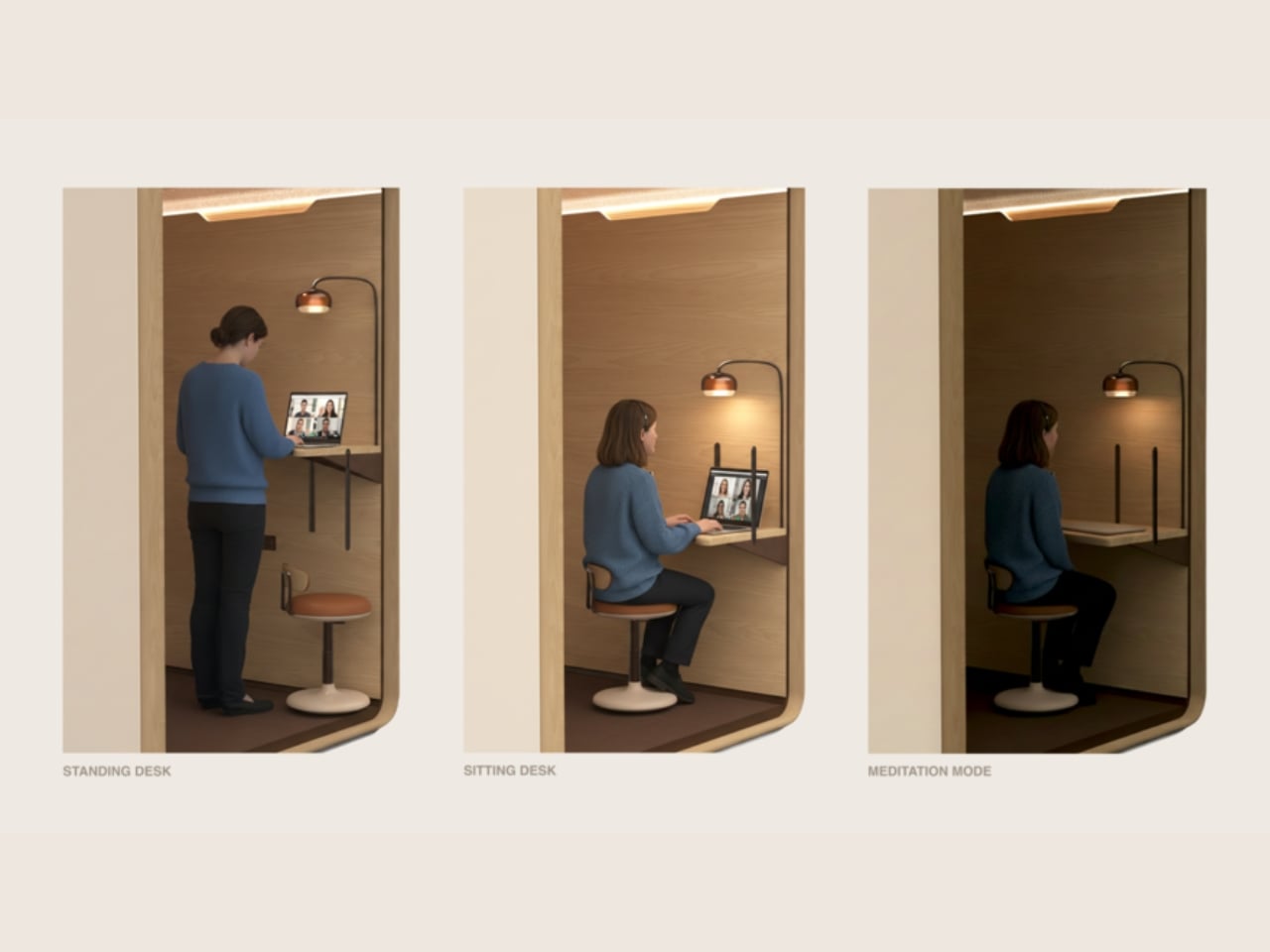
The other half is a micro-workspace: a fold-down desk, an adjustable saddle-style stool with a round seat, and an arc floor lamp with a small copper shade. The lamp is doing significant tonal work here. A copper-shaded arc lamp in an office recovery booth communicates something specific: that this space is meant to feel restorative rather than clinical. Kineo has three functional modes inside the work zone: standing desk, sitting desk, and a meditation configuration where the desk folds away and the lamp becomes the only light source. The shift between those modes is a good editorial decision. The meditation mode is an acknowledgment that recovery isn’t always about movement. Sometimes it’s about stillness.
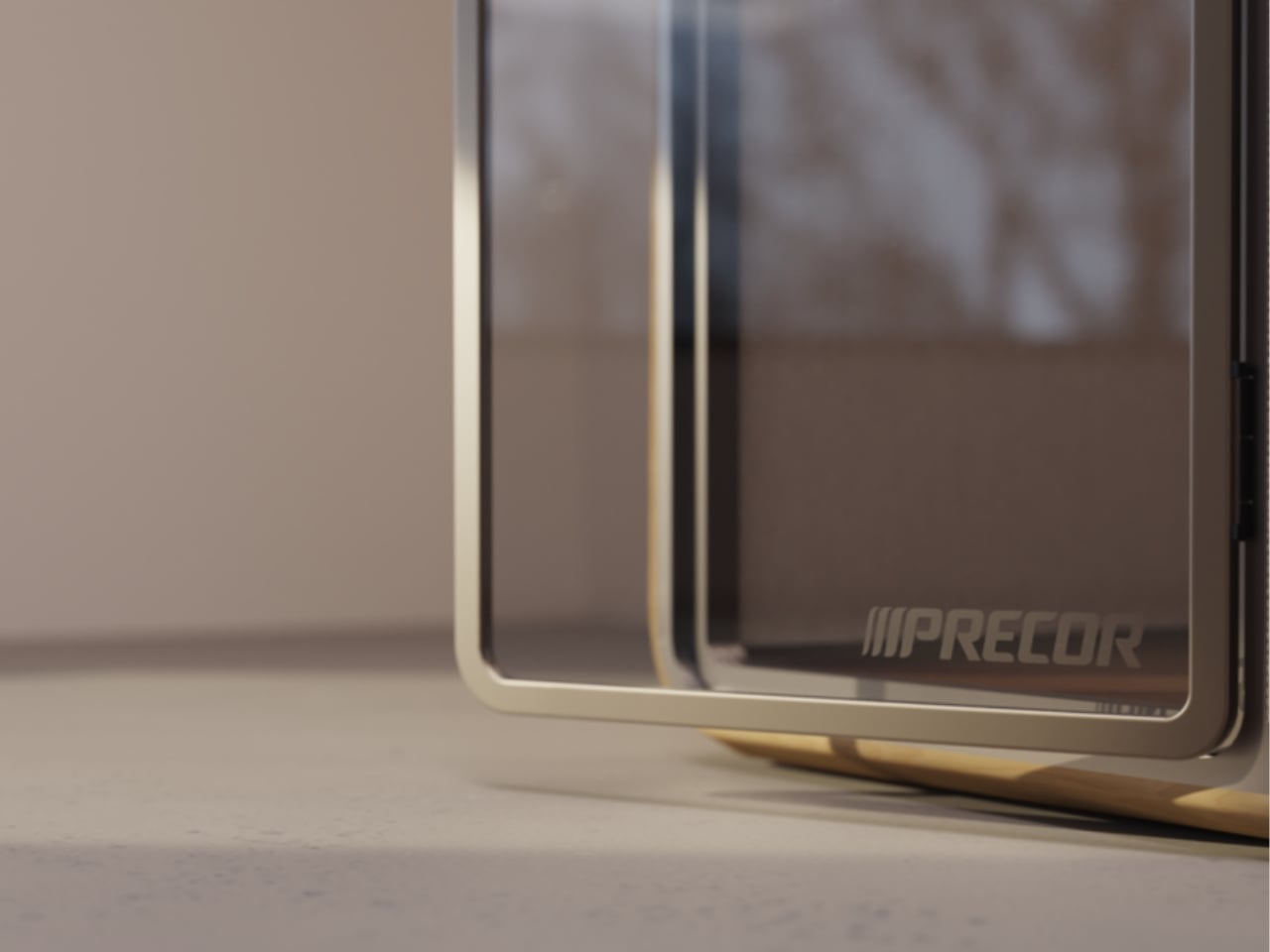
What holds the whole design together is the restraint of the material palette. Warm wood, oatmeal fabric, matte gold metal, and tinted glass are each quiet on their own, and Lew keeps them that way. Nothing fights for attention. The arc lamp echoes the curve of the door frame. The stretch bars mirror the warmth of the interior paneling. Every detail reads as intentional without being fussy, which is the hardest balance to strike in this kind of product.
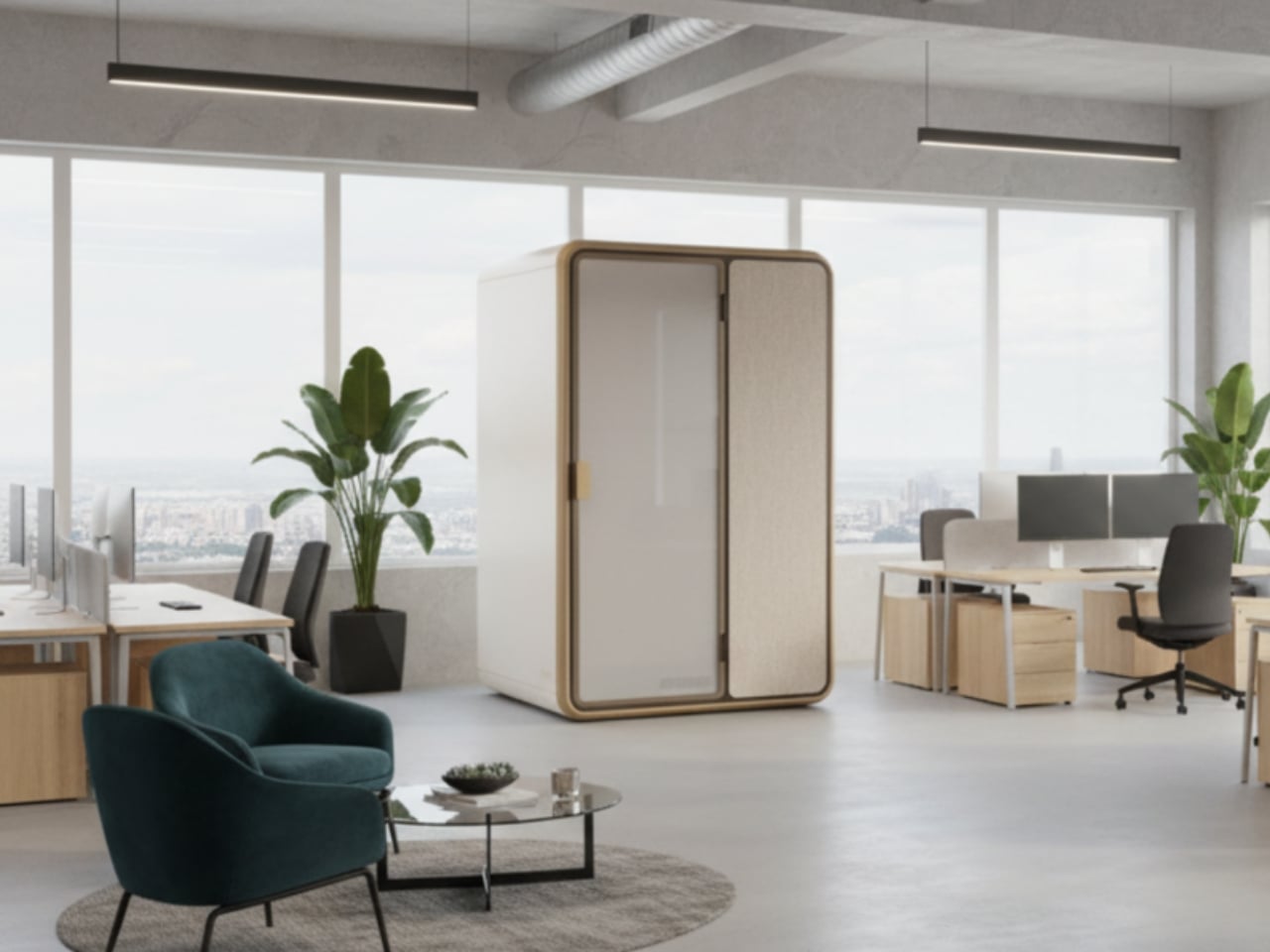
That coherence matters more than it might seem. Kineo is asking people to do something that most office environments quietly discourage: slow down, step away, and attend to their body during the workday. A booth that looked harsh or clinical or gym-adjacent would undermine that ask before a person even stepped inside. The softness of the design is not decorative. It is, in fact, the argument. Walk past Kineo and it looks like a place you might actually want to go. That’s not accidental. That’s the design working exactly as it should.
SHARE