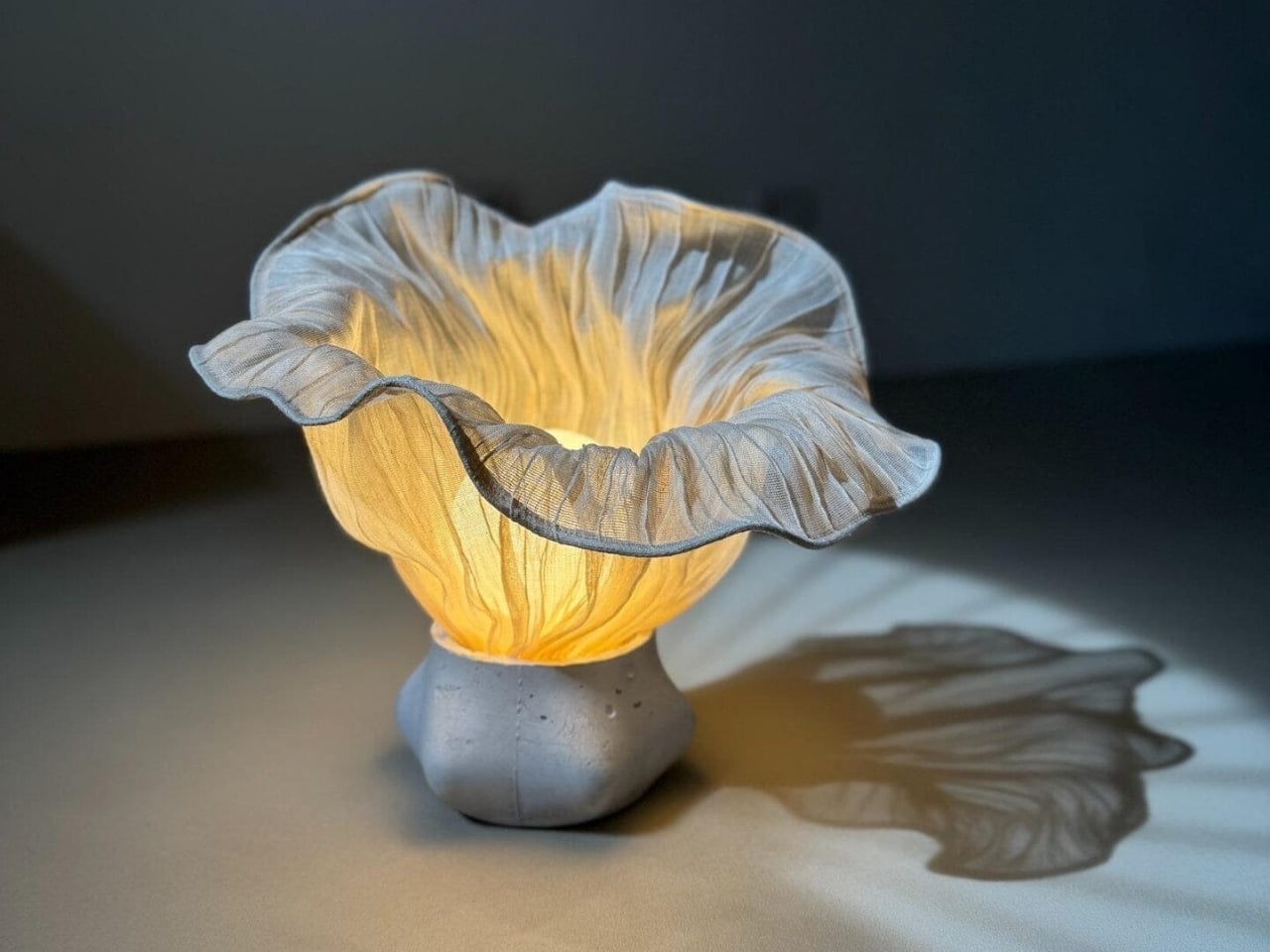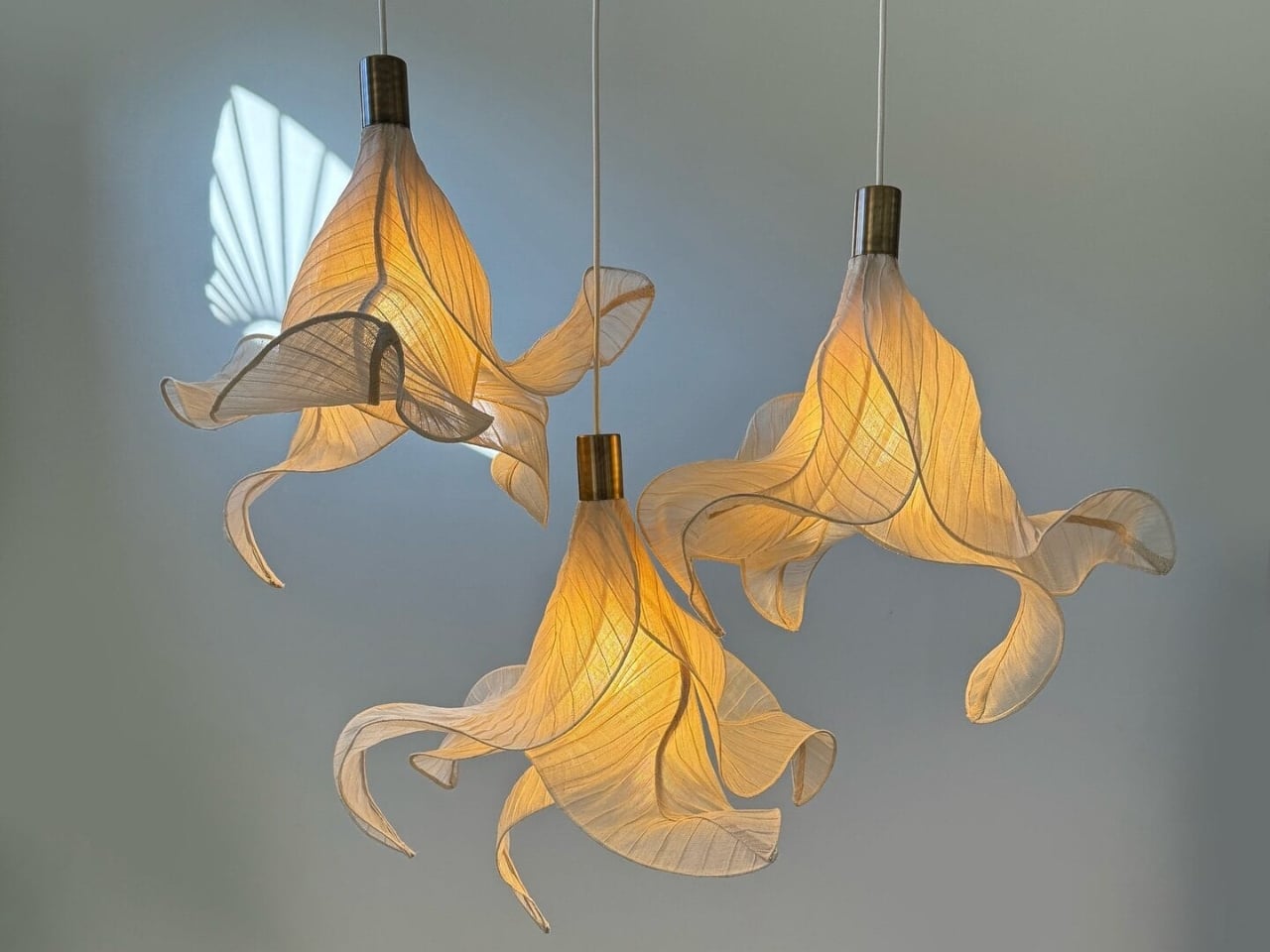
Most lamps just sit there. They do their job, emit their light, and fade into the background of a room. Mirei Monticelli’s lamps are the kind you keep looking at.
The Milan-based Filipina designer has built her practice around a single material: banaca, a woven textile made from the fibers of the banana-abaca plant, harvested by hand on the island of Catanduanes in the Bicol region of the Philippines. It’s not exactly the kind of material you’d expect to find at the center of a glossy Milanese design studio, and that’s exactly the point.
Designer: Mirei Monticelli
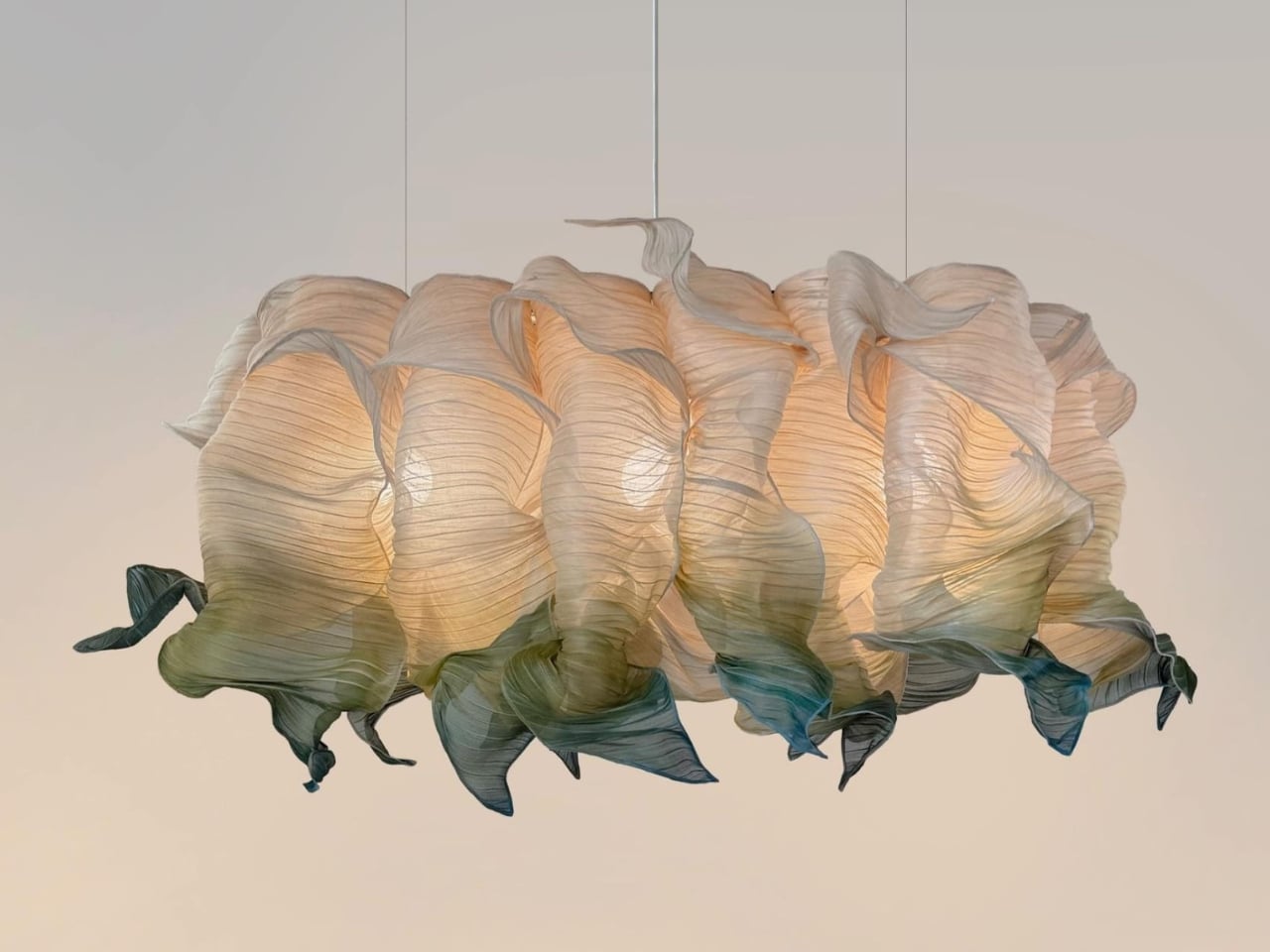
Monticelli studied at Politecnico di Milano, earning her Masters in Design and Engineering, but her roots have always pulled her back to the Philippines. Her mother, celebrated fashion designer Ditta Sandico, actually pioneered the banaca textile itself, a blend of banana and abaca fibers that is both remarkably durable and incredibly malleable. Working with renowned rattan designer Kenneth Cobonpue also shaped her early understanding of how natural, traditional materials can carry enormous aesthetic power. In 2019, she founded Studiomirei, and by the end of that same year, her Nebula lamp had already won the Salone Satellite Award at Milan Design Week.
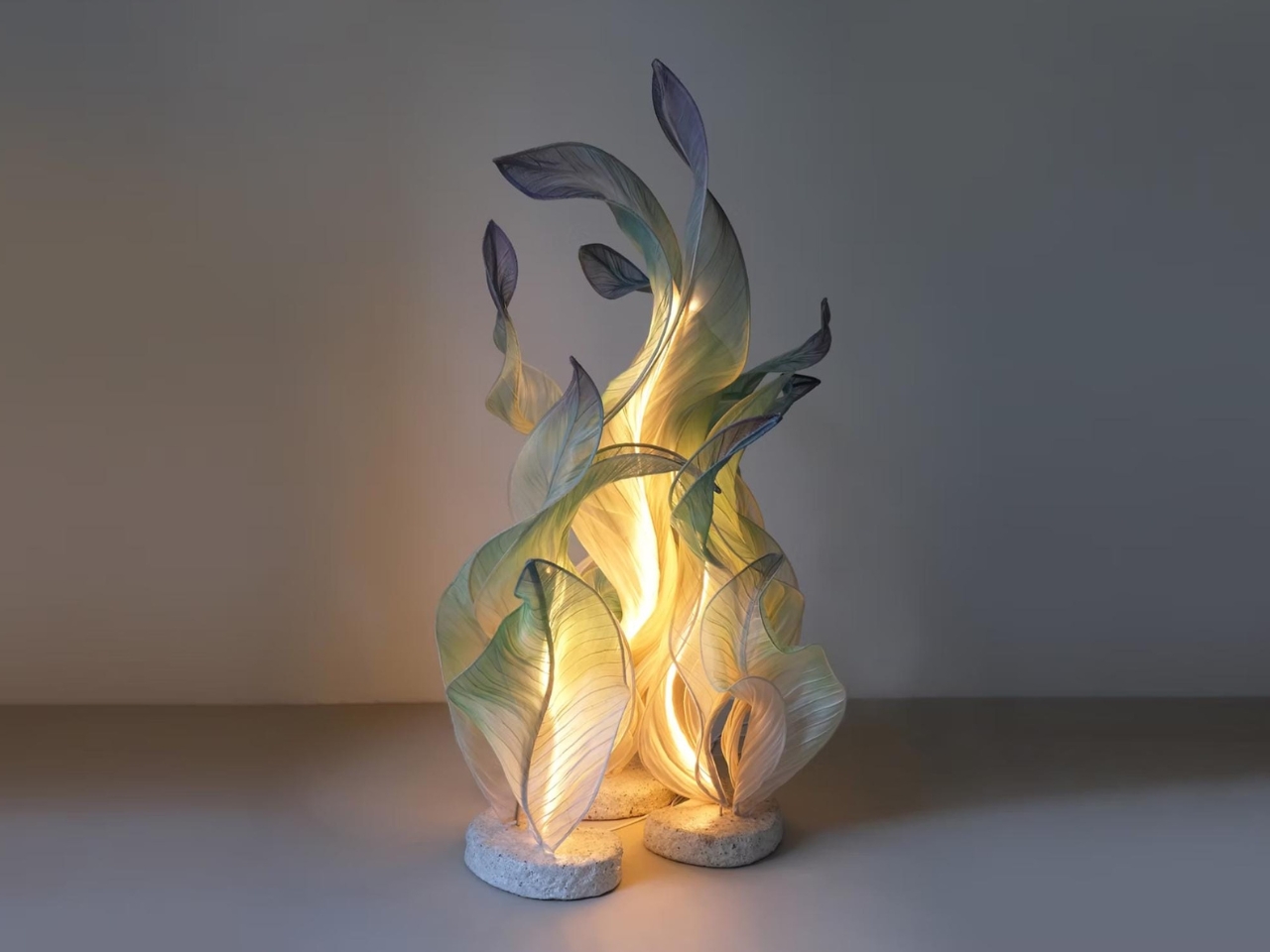
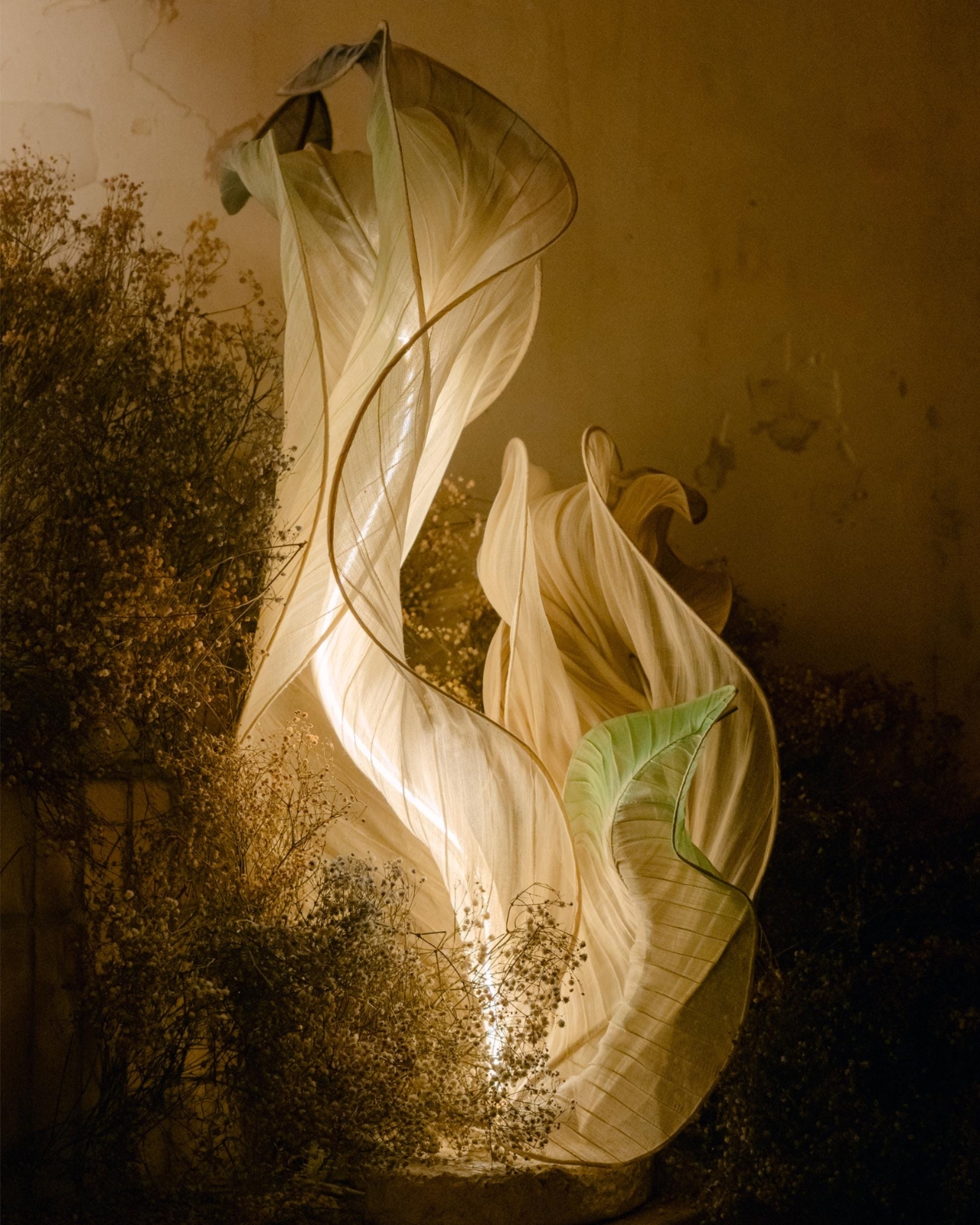
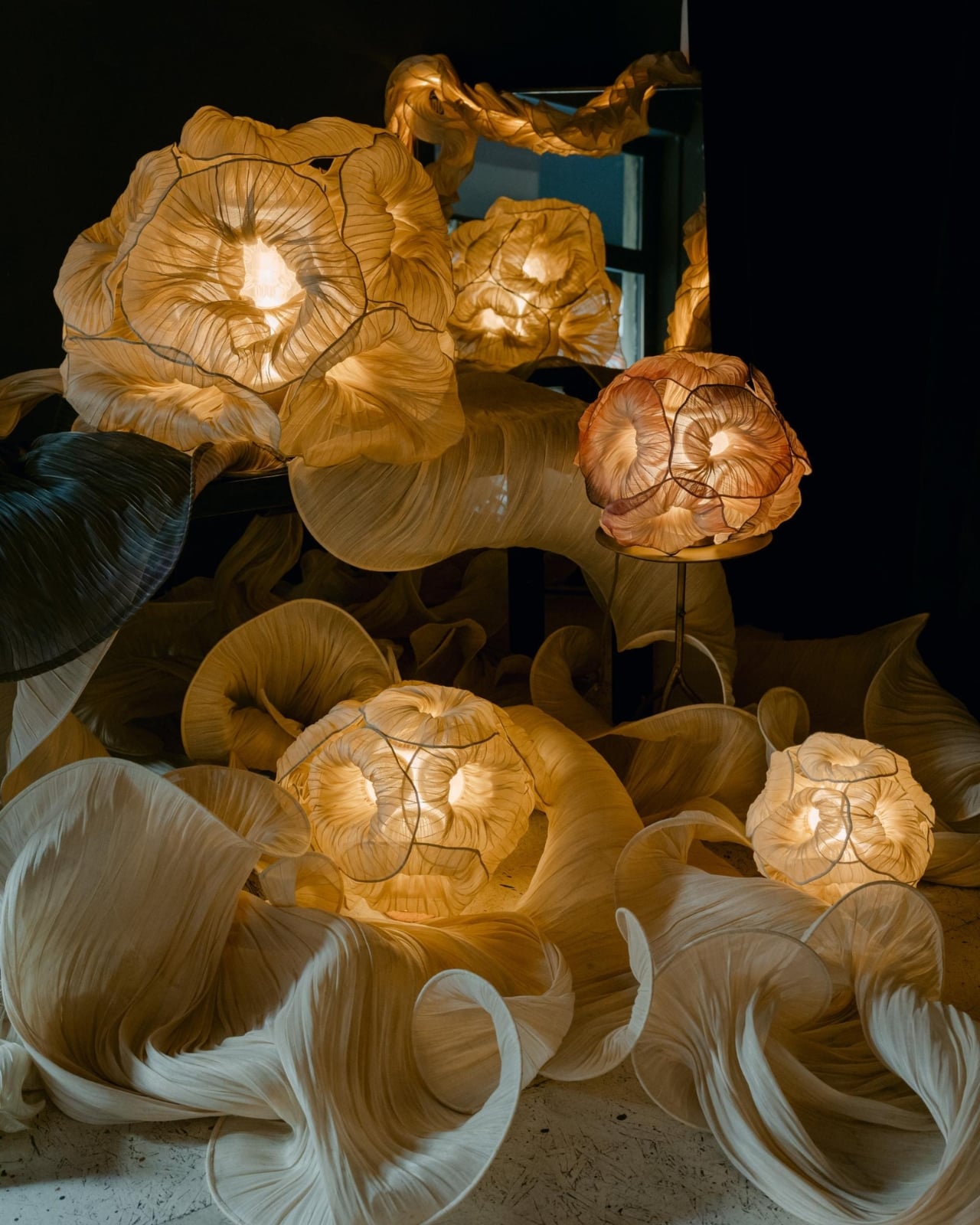
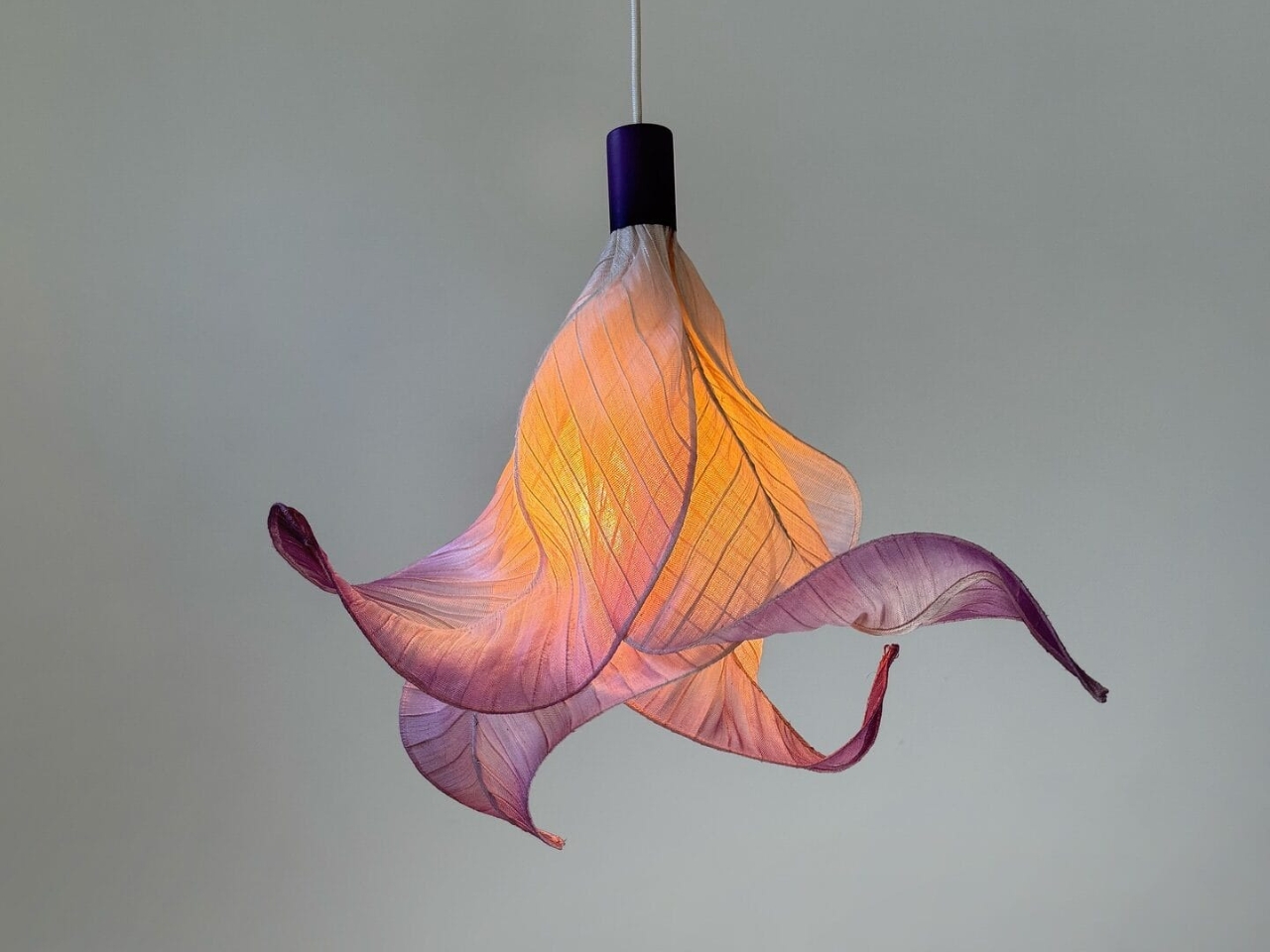
Since then, she has used banaca almost exclusively for her lighting pieces, and the results are genuinely hard to categorize. They hover somewhere between sculpture and utility, between craft object and fine art. When light passes through the woven fibers, the pieces seem to breathe. The way the material catches and filters illumination gives each lamp a softness you don’t usually expect from a functional object. The forms manage to feel both ancient and completely contemporary.
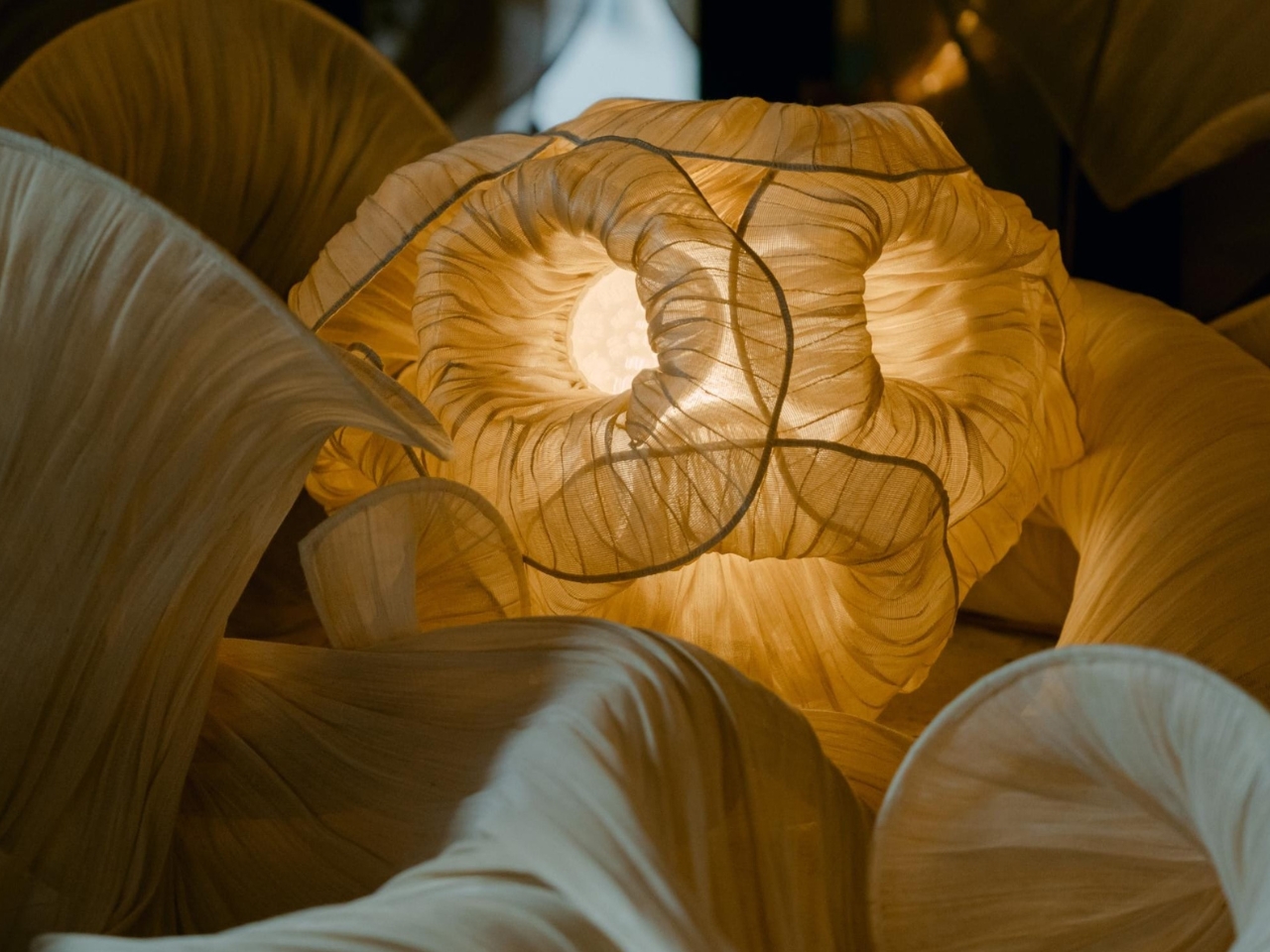
The newest work carries that same visual language forward. Biomorphic shapes, swells and folds that recall sea creatures, coral reefs, and natural formations, seem to suspend mid-motion. The organic quality of banaca lends itself to this perfectly. Unlike glass or metal, the material doesn’t impose rigidity; it holds form while still suggesting movement. Looking at them, you get the sense that if you turned the light off, the shape might slowly release and unfold.
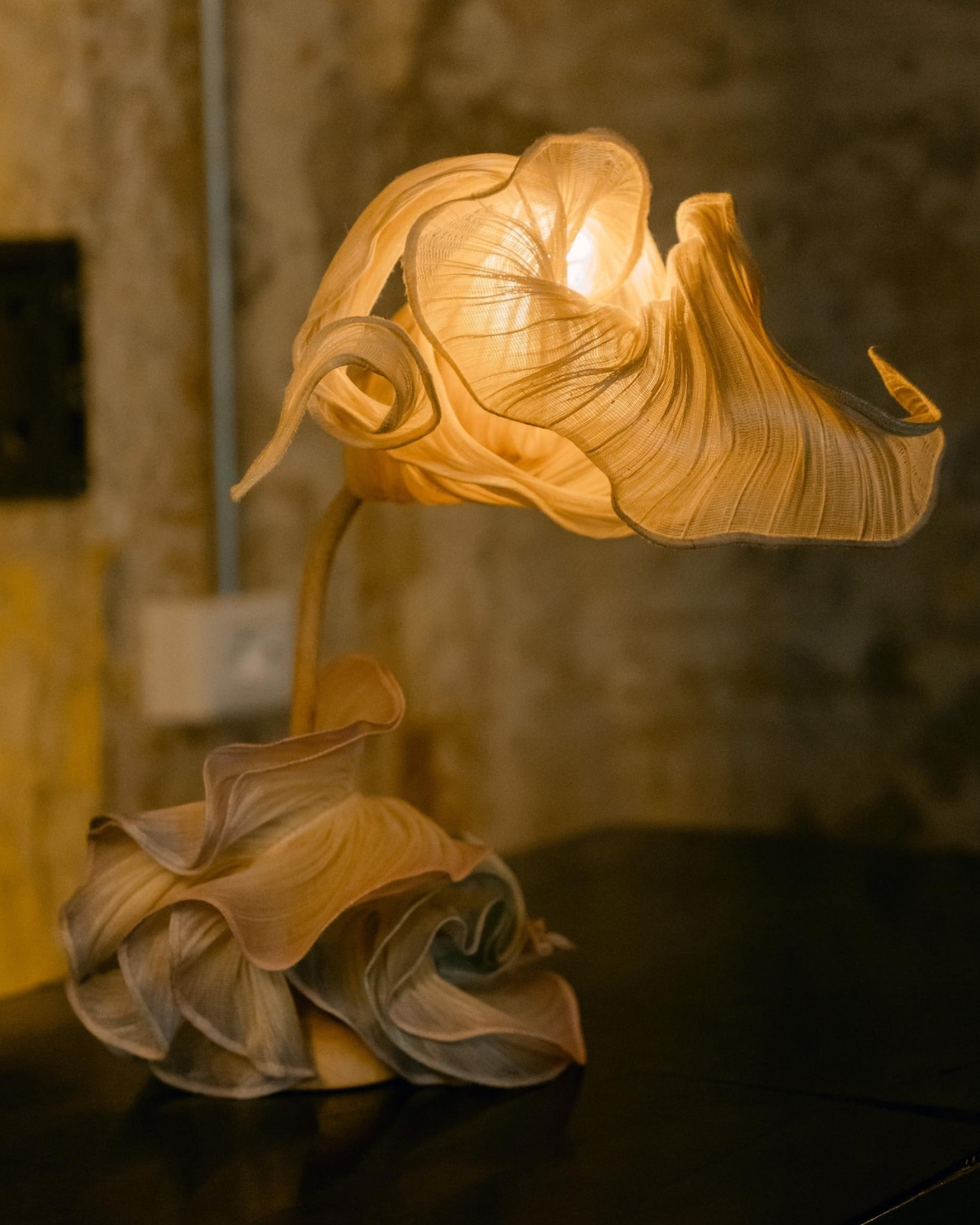
The material story goes deeper than aesthetics, and it’s the part that tends to get overlooked in design coverage. Each lamp is the result of an entire chain of human hands. Farmers in Bicol harvest the banana-abaca trunks by hand when the plants reach maturity. The fibers are extracted, brought to the community, and woven by artisans using techniques passed down through generations. By the time a finished lamp reaches a room in Milan, it carries the labor and heritage of an entire province in the Philippines.
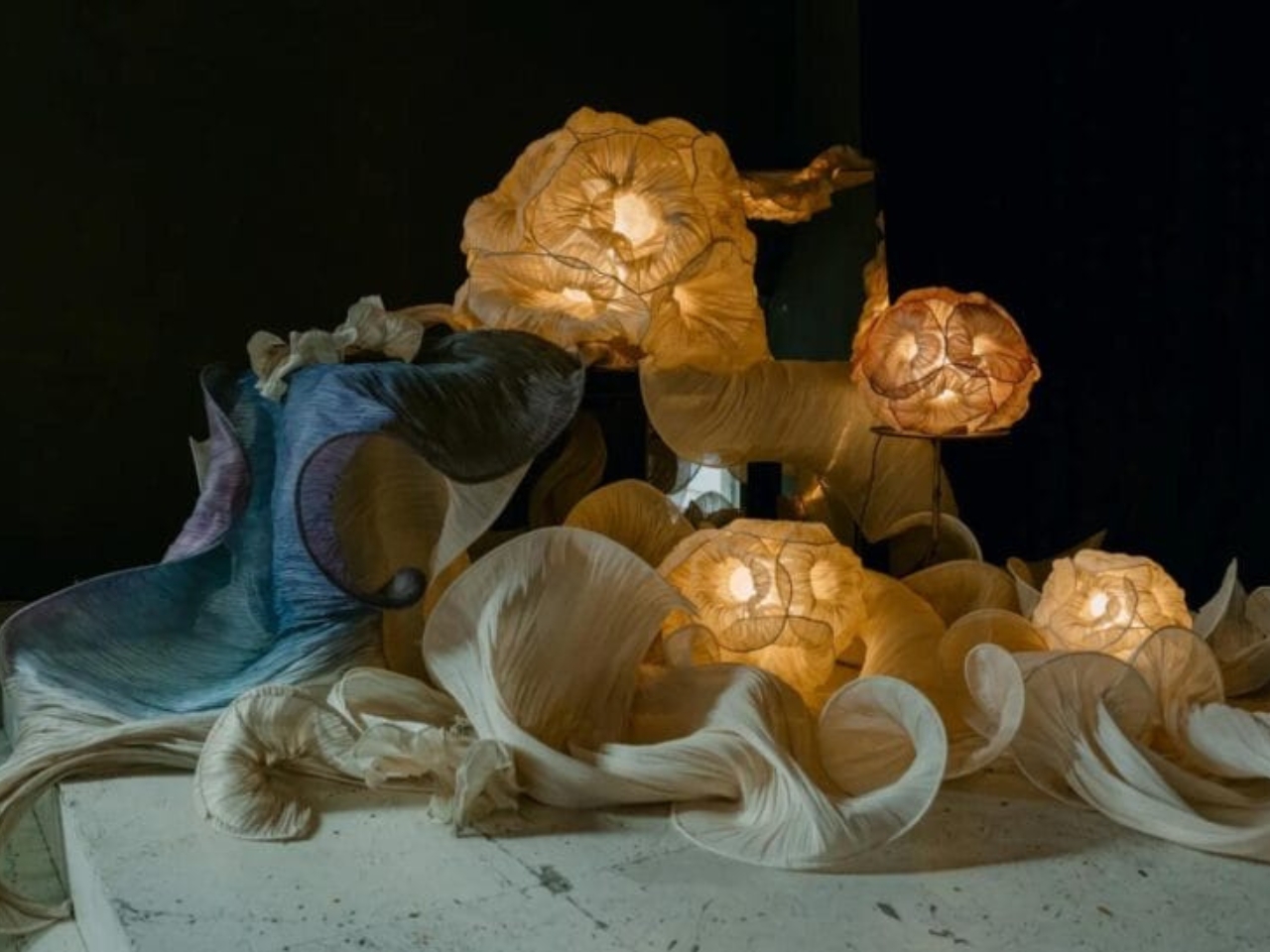
Monticelli has said explicitly that her studio works at the intersection of sustainable materials, craft, technology, and community empowerment. It sounds like a mission statement, and maybe it is, but the work itself proves it isn’t just positioning. The banaca lamps are not mass-produced. They are made to order, with lead times that reflect the reality of handcraft. Customizable in size and color, they are objects you commission with intention rather than objects you add to a cart.
A real tension exists in sustainable luxury design between the genuine and the performative, and it’s worth naming. Many brands talk about ethical sourcing while scaling in ways that hollow out what made the material meaningful in the first place. Monticelli’s studio, still rooted in direct relationships with the farmers and weavers of Bicol, has navigated that tension well. The limited production isn’t a constraint; it’s the whole point.
The design world loves a good material story, and banaca has a genuinely good one. A plant grown on a remote Philippine island, harvested by hand, woven by a community of artisans, shaped by a designer navigating two cultures, and ultimately glowing softly in rooms that could not be further from the landscape that produced it. That kind of distance, traveled with integrity, is what turns a lamp into something worth writing about.