
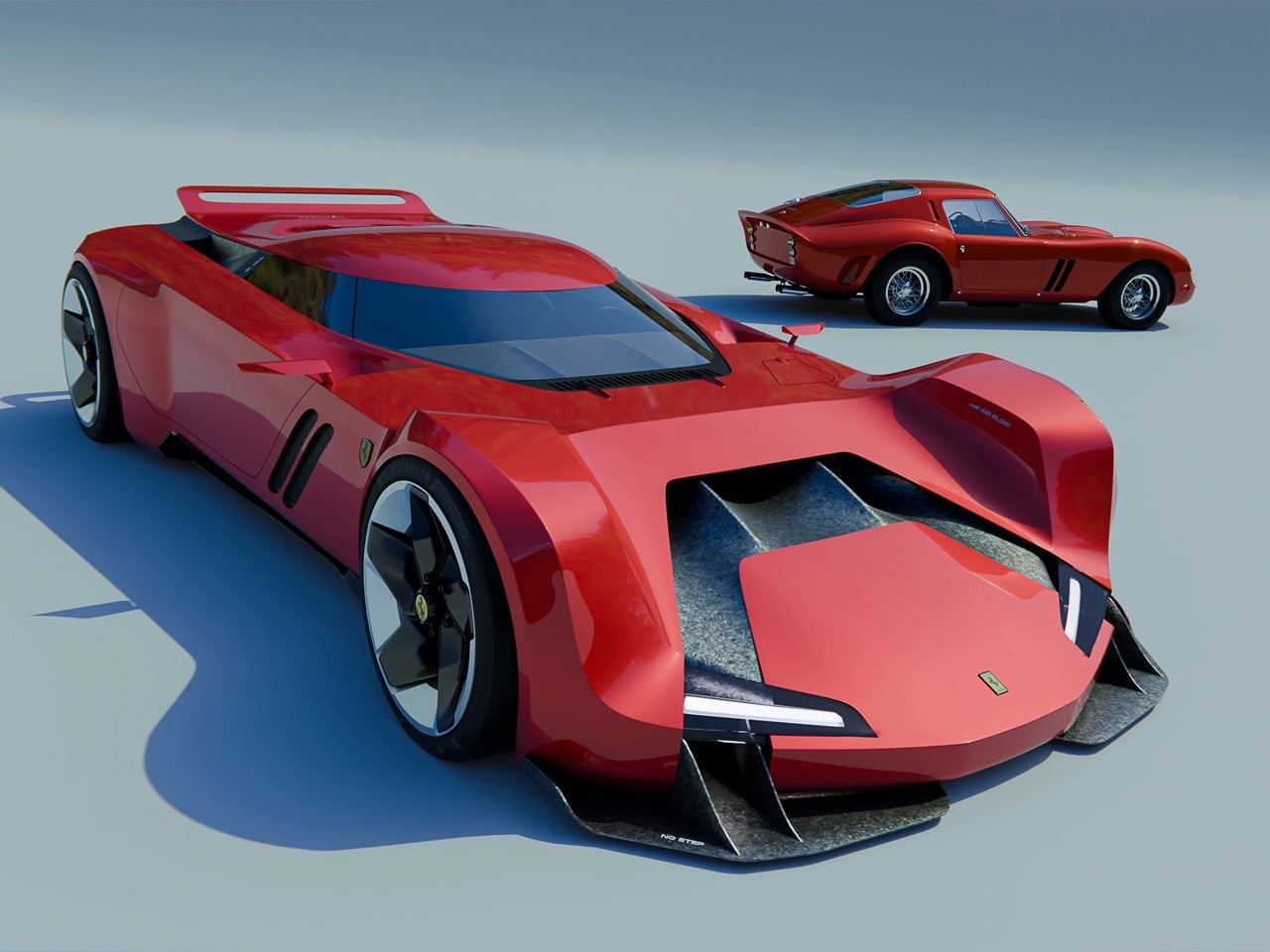
Only 36 Ferrari 250 GTOs were ever built between 1962 and 1964, and one of them sold privately for $70 million in 2018. The body was shaped by Sergio Scaglietti working metal directly over the frame, piece by piece, without drawings, which means the most valuable car in the world was essentially hand-sculpted from instinct and aerodynamic necessity. Giotto Bizzarrini refined the GTO’s form through wind tunnel testing at the University of Pisa and extensive track sessions at Monza, chasing tenths through aluminum curvature at a time when the science of aerodynamics was barely a decade old. The result was a long, low nose, muscular flanks, and a Kamm-tail rear that looked inevitable rather than designed. That visual logic, equal parts science and poetry, is what makes the 250 GTO the single hardest car in automotive history to reimagine credibly.
India-based designer Krishnakanta Saikhom, a mechanical engineering graduate and National Institute of Design alumnus whose Lamborghini Massacre concept we covered on these pages, decided to try anyway. His Ferrari SC250 concept plants a provocative question at Maranello’s feet: what if the 250 GTO’s aerodynamic DNA had been allowed to keep evolving for sixty years, unconstrained by road regulations, homologation rules, or production economics? The SC250 answers by stretching the GTO’s proportional logic into Le Mans Hypercar territory, wrapping a dramatically low, wide body in Rosso Corsa and staging it directly alongside the original in the renders. The juxtaposition is deliberate and devastating. The ancestor looks delicate. The descendant looks like it wants to consume the atmosphere.
Designer: Krishnakanta Saikhom
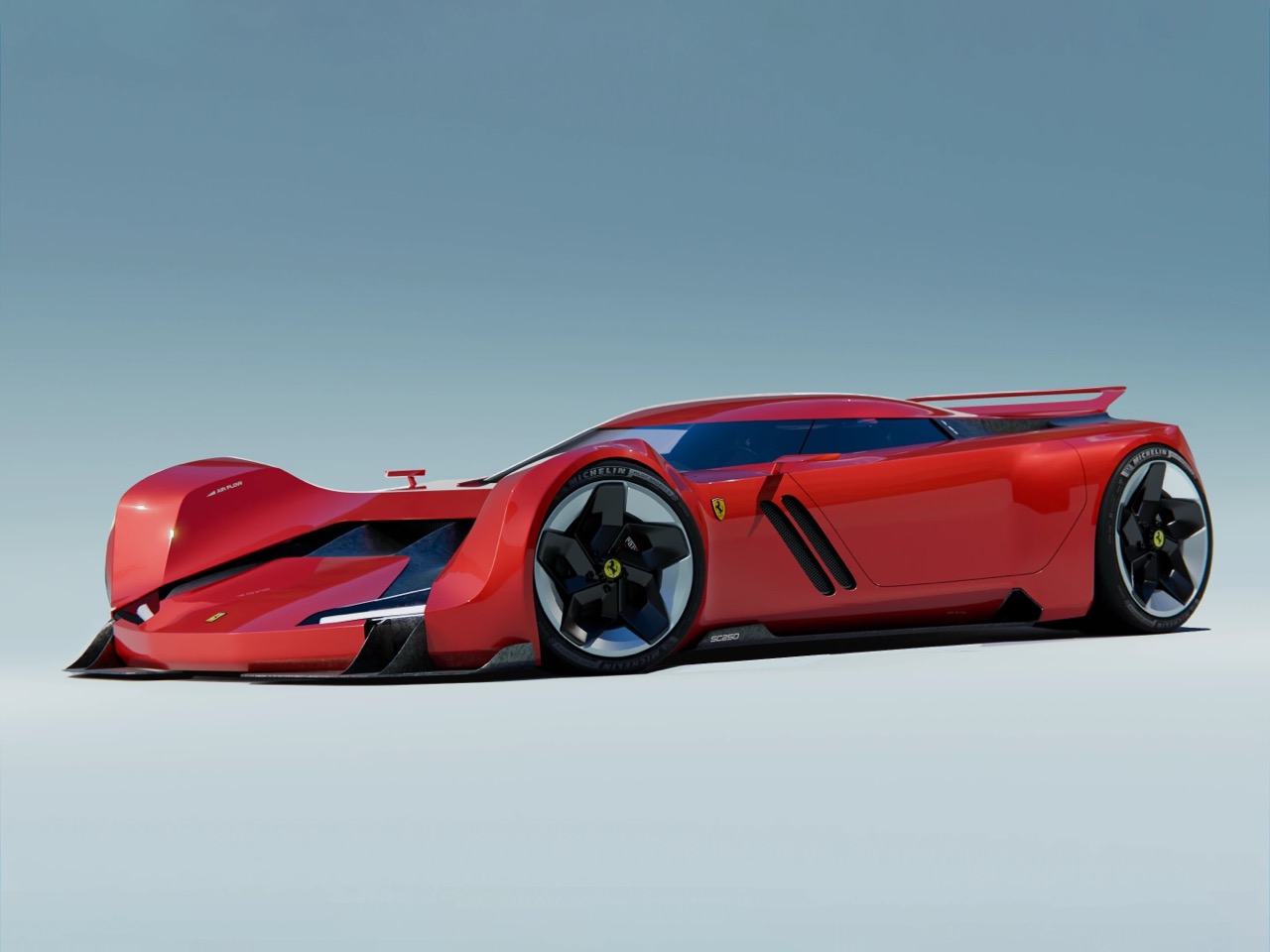
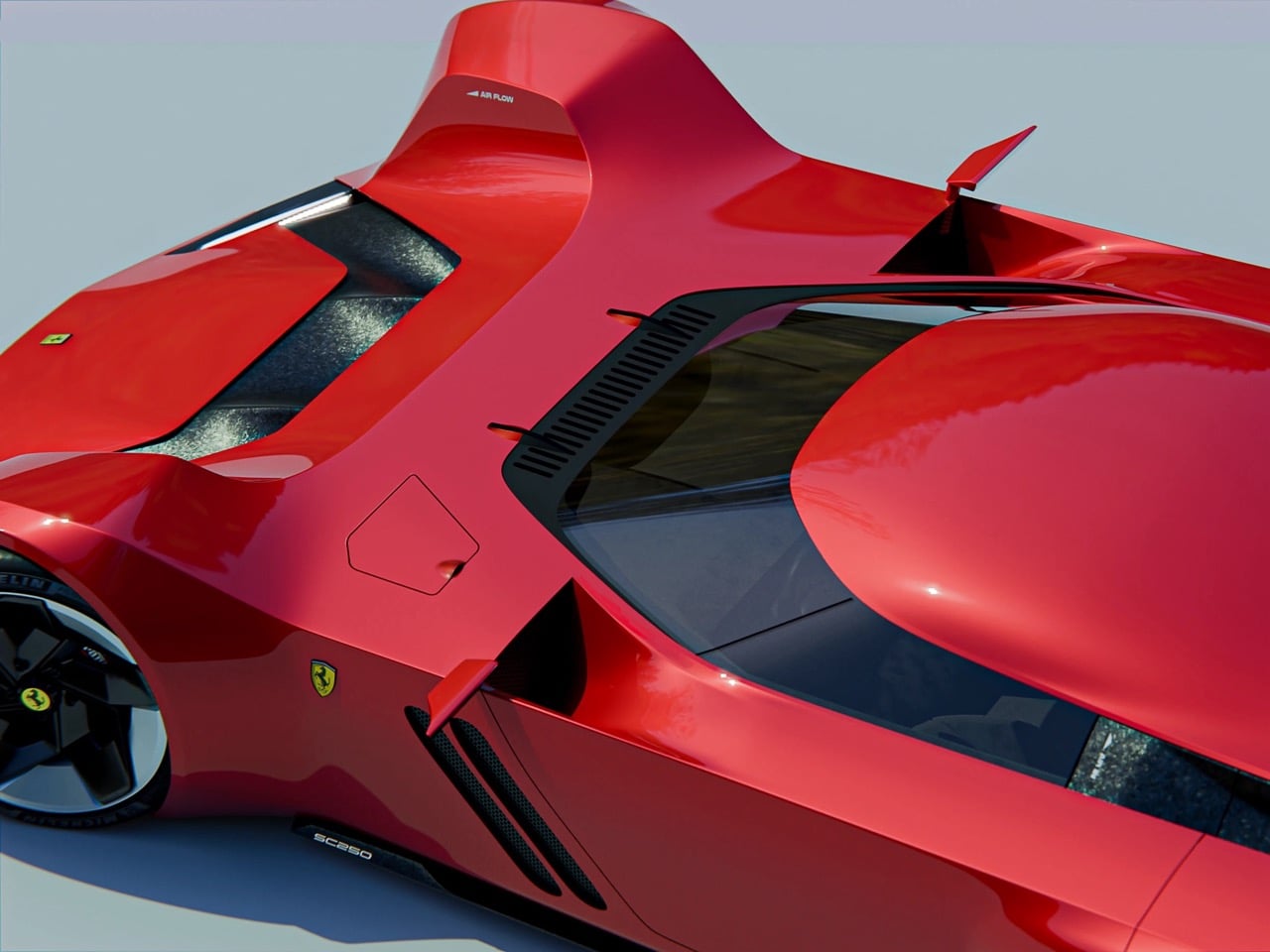
From the side profile, the most direct visual conversation with the 250 GTO happens through proportion rather than surface decoration. Saikhom has preserved the long-nose, short-tail logic of the original, but stretched everything laterally and pushed the greenhouse rearward until it sits almost over the rear axle, compressing the visual mass of the cabin into something that reads more like a fighter jet canopy than a traditional coupe roof. The fastback line drops sharply into a truncated tail equipped with a pronounced multi-element rear wing, a detail that the original GTO gestured toward with its modest spoiler and that the SC250 takes to its aerodynamic conclusion. The flanks are clean and tumblehome is aggressive, with the body visibly wider at the rear haunches than at the shoulder line, generating the kind of planted visual stance that makes a car look fast even in a still image.
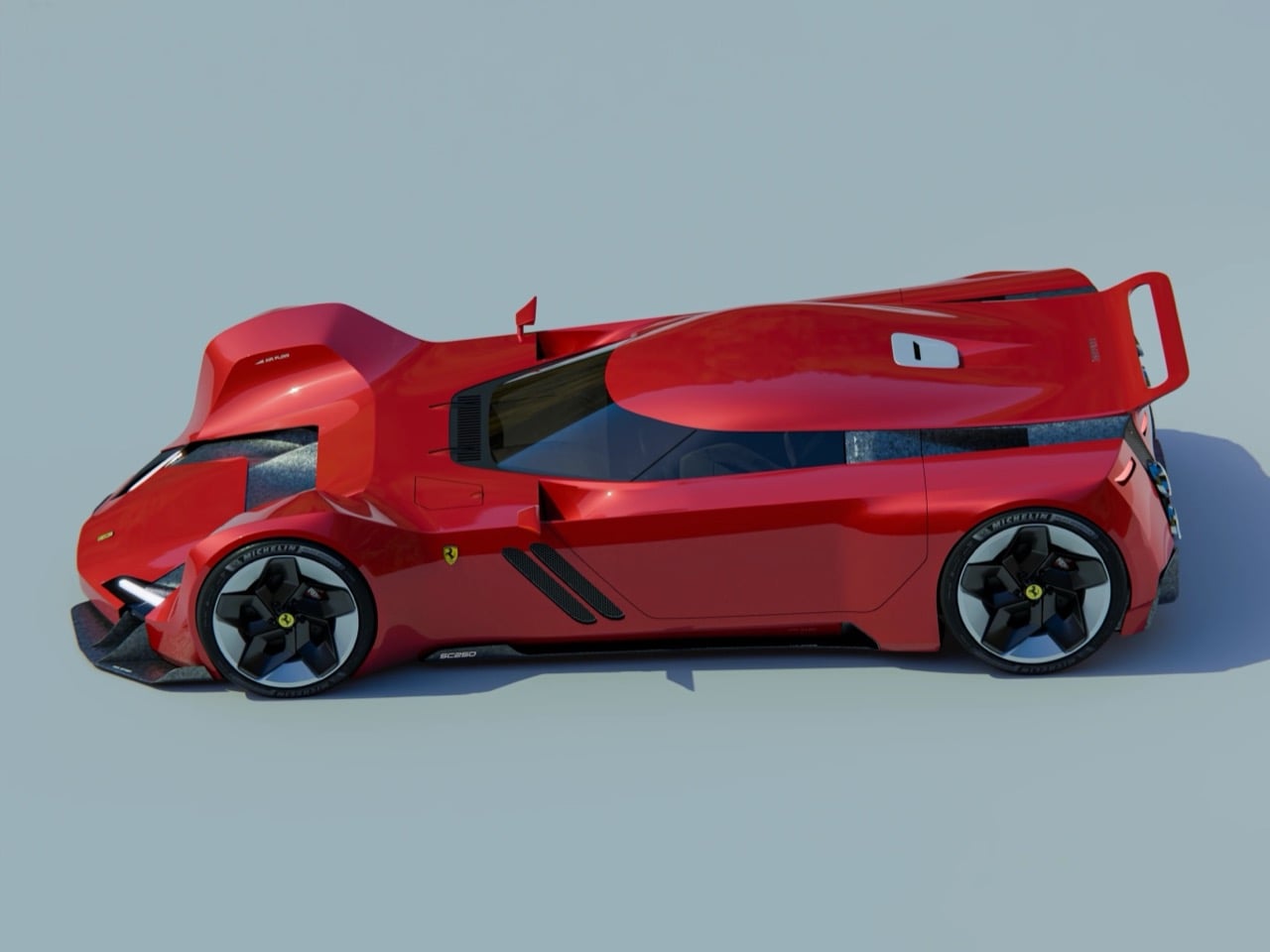
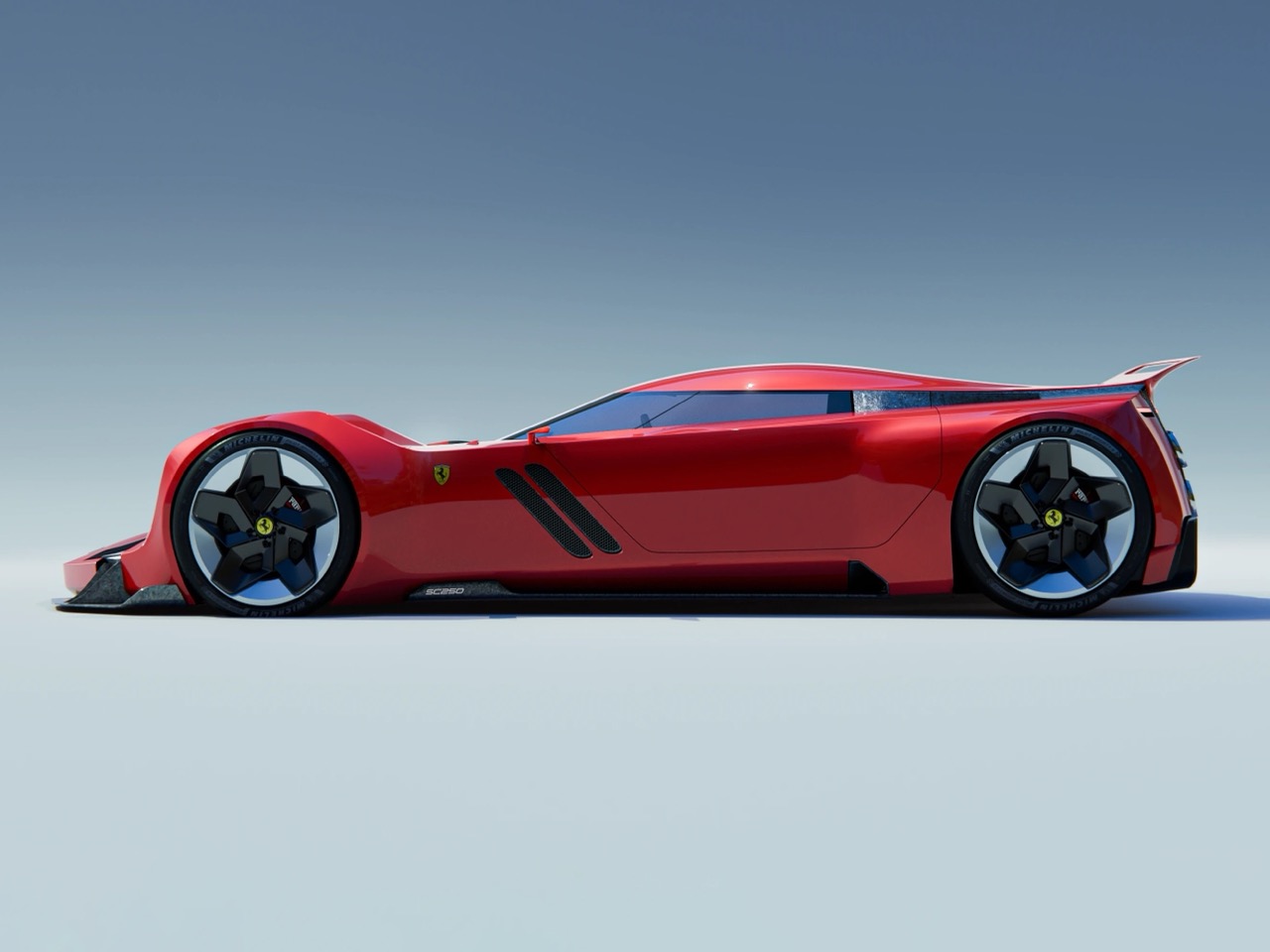
The front end is where Saikhom makes his boldest departure from GTO orthodoxy. Where the original wore a relatively narrow, rounded nose with small paired air intakes, the SC250 arrives with a full-width splitter assembly that consumes most of the front fascia, flanked by deep aerodynamic channels that feed air under and around the bodywork. A small prancing horse badge sits centered on the nose panel above the splitter, almost understated against the aggression of the aero package surrounding it. The twin vertical gill vents on the front quarter panels directly echo the 250 GTO’s signature side intakes, which is the most explicit heritage callout in the entire design and the one that ties the sixty-year conversation together most convincingly.
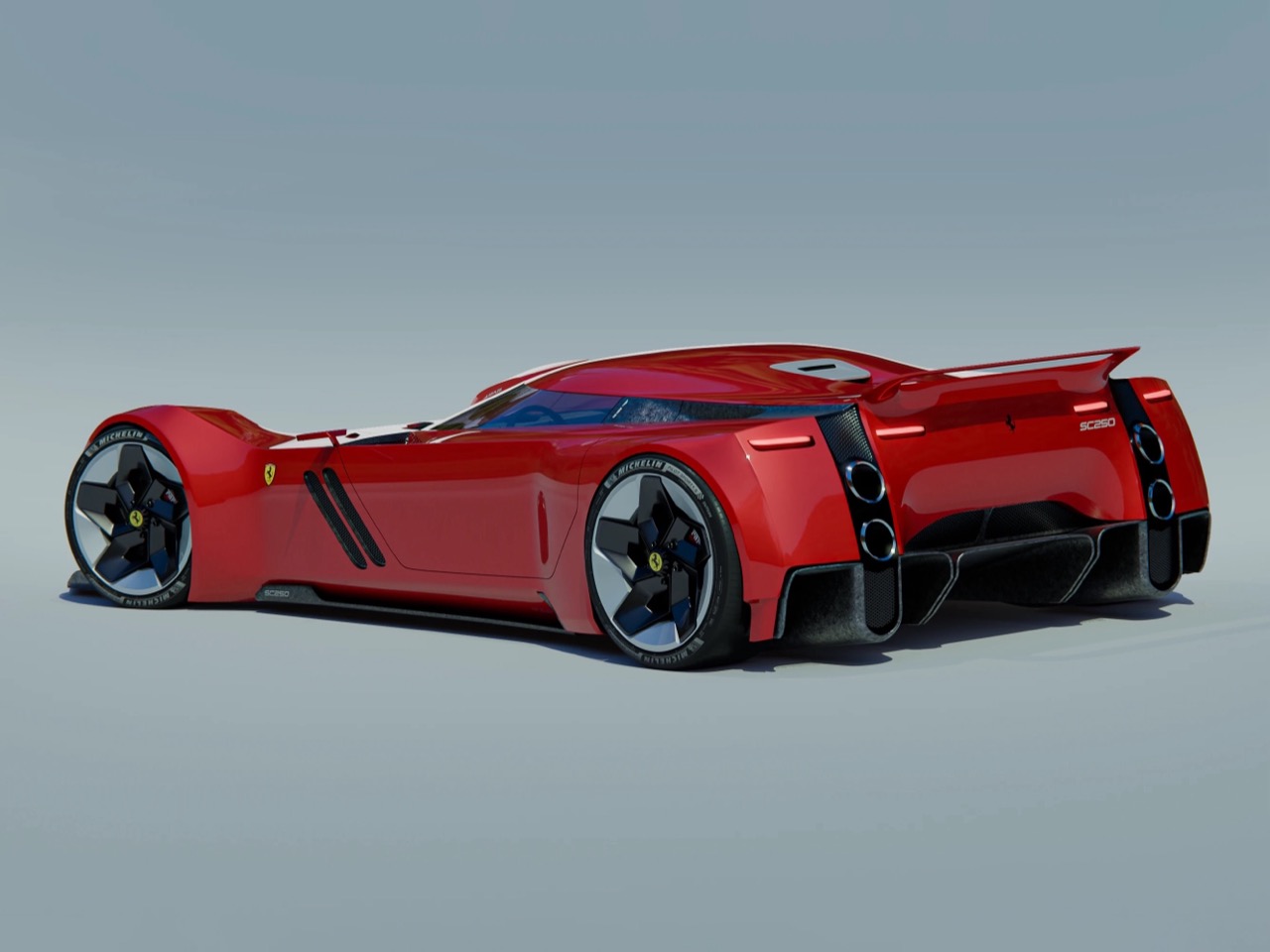
The rear is the SC250’s most purposeful face. Four circular exhaust outlets are stacked vertically in pairs on the rear panel, flanked by a carbon-fiber diffuser that rises aggressively from the undertray, and the “SC250” designation is stamped into the bodywork just above the lower valance. The multi-element rear wing sits on twin end plates and reads as a structural aero component rather than a styling accessory, consistent with the car’s overall refusal to treat aerodynamics as decoration. Michelin-shod five-spoke wheels in deep graphite fill the arches at all four corners, and their star-spoke geometry echoes, probably intentionally, the classic cross-spoke alloys that the period 250 GTO wore on its wire-spoked rims.
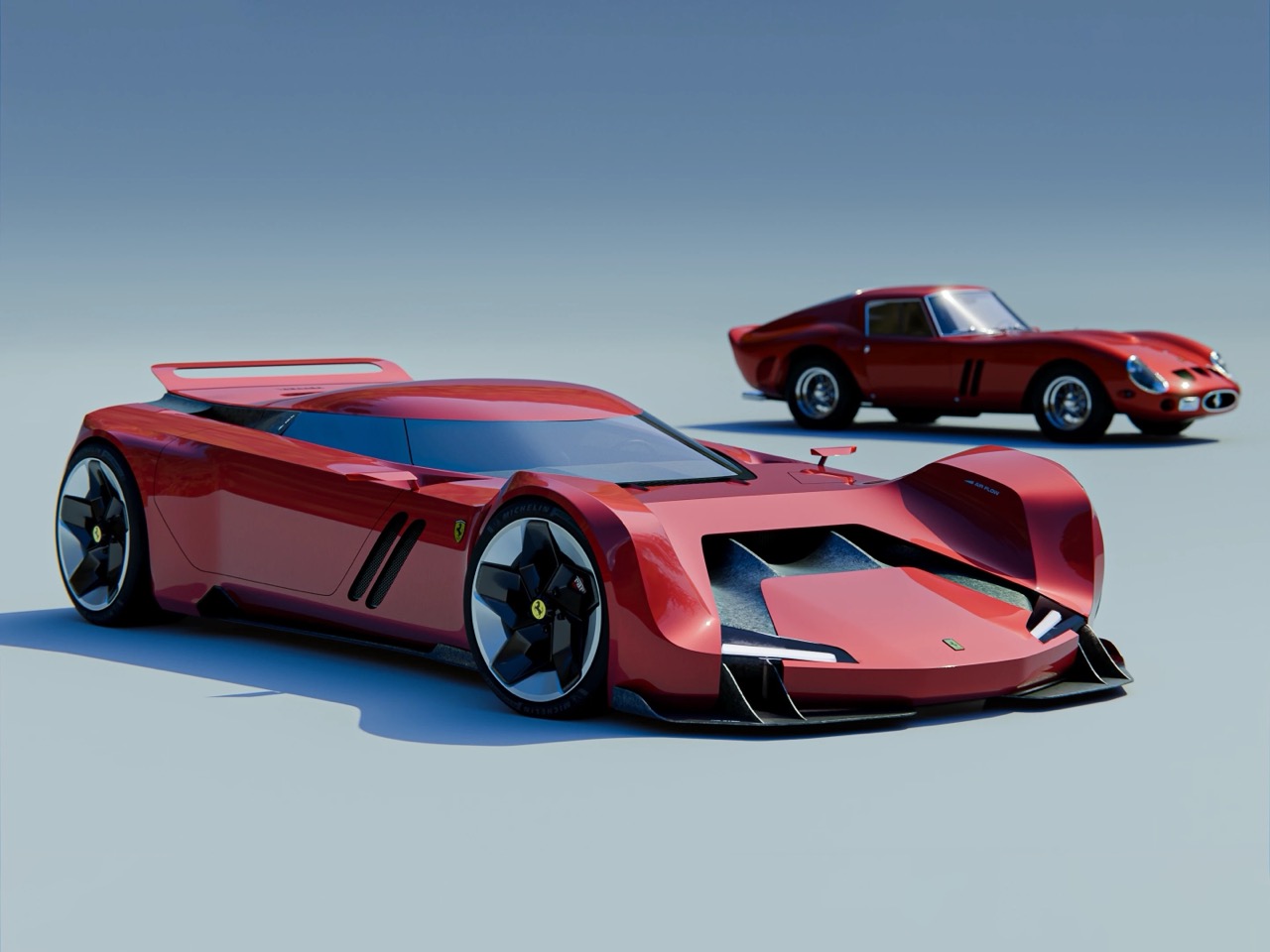
Saikhom stages the SC250 directly alongside a period 250 GTO in several of the key compositions, and it is a brave editorial choice that pays off completely. The original reads as something assembled from courage and aluminum by people making up the rules in real time. The SC250 reads as the logical destination of the journey those people started. Whether Ferrari would ever sanction something this uncompromising as an official concept is a separate question, and honestly an irrelevant one. What Saikhom has demonstrated is that the 250 GTO’s design language is durable enough to survive extrapolation into a completely different performance era without losing its identity, which is precisely what separates a genuinely great design language from one that only looks good frozen in its original context.