PROS:
- Highway composure rivals luxury sedans despite off-road tires
- Seats built for hours, not just showroom impressions
- Hybrid torque smooths every merge and grade effortlessly
- Genuine off-road hardware never compromises daily driving
- Restrained design reduces visual bulk without losing presence
CONS:
- Dual-screen infotainment takes time to internalize
- Third row remains tight for adult passengers
I spent a week with the 2025 Lexus LX 700h Overtrail on a family road trip. Not crawling over rocks. Not testing approach angles. Just driving, for hours, across highways and through small towns with my family loaded in.
Designer: Lexus
The Overtrail package is engineered for terrain I never touched. Electronically locking front and rear differentials. A torsen center diff. 33-inch all-terrain tires mounted on 18-inch wheels. Multi-Terrain Select with crawl control and downhill assist. Lexus built this thing to climb, descend, and articulate through conditions that would strand most luxury SUVs.
I used it to pick up coffee and cover 400 miles of interstate.
That disconnect sounds like a waste. It isn’t. The Overtrail’s capability translates into something unexpected on pavement: confidence that borders on calm.
Design Intent: Restraint Over Spectacle
Most off-road trims exaggerate aggression. Overtrail does the opposite. It reads like industrial equipment that happens to be finished well.
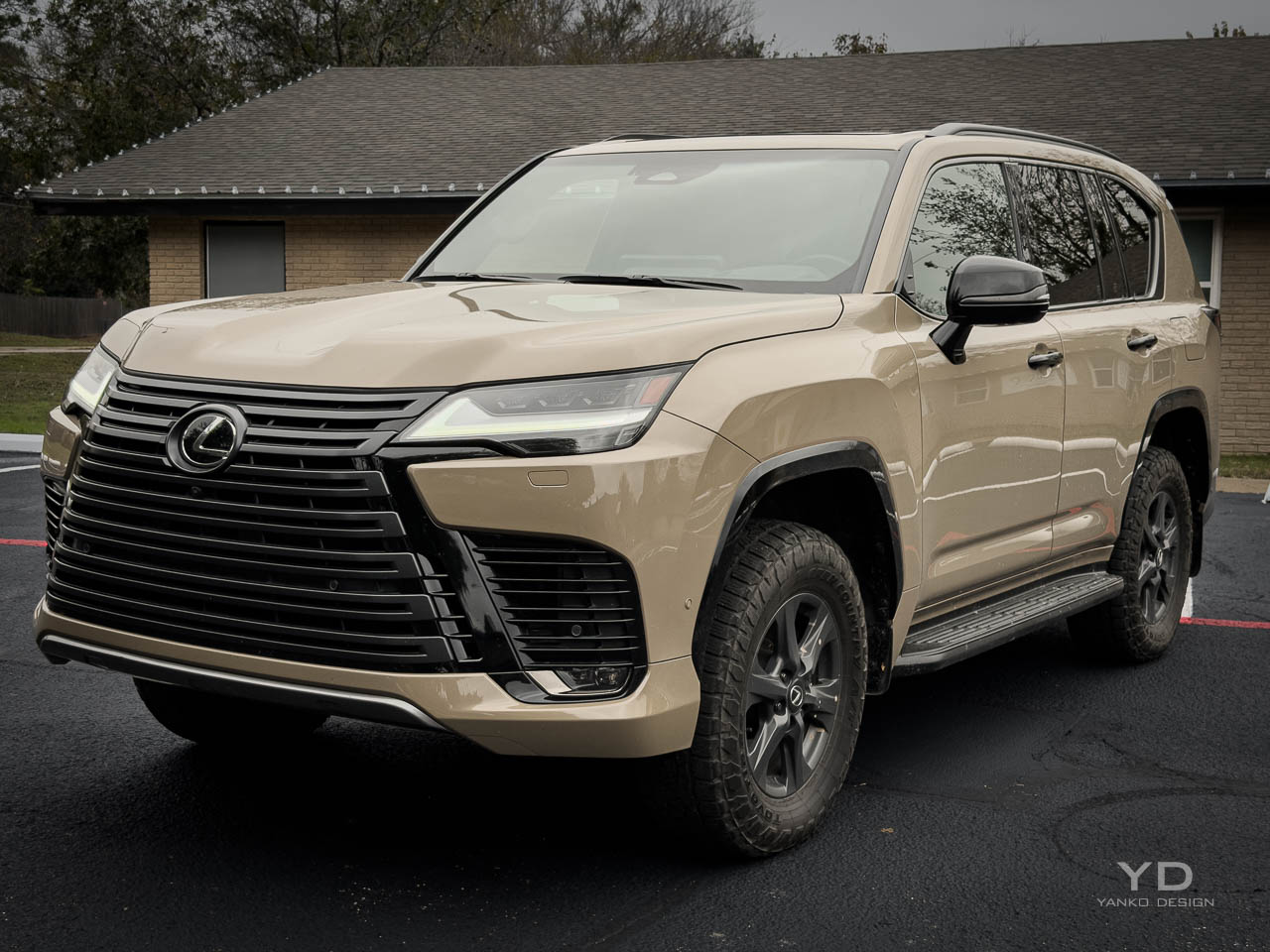
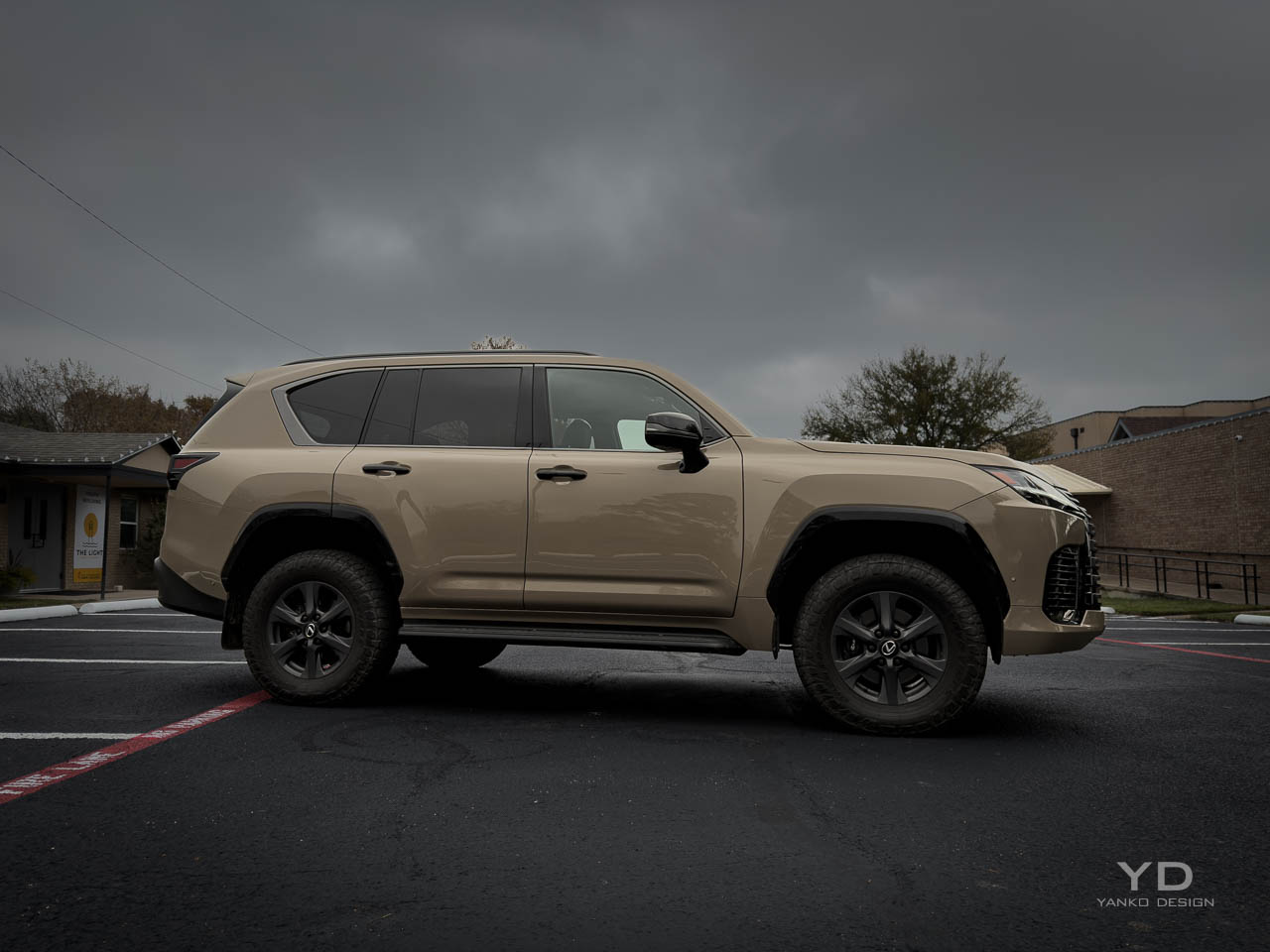
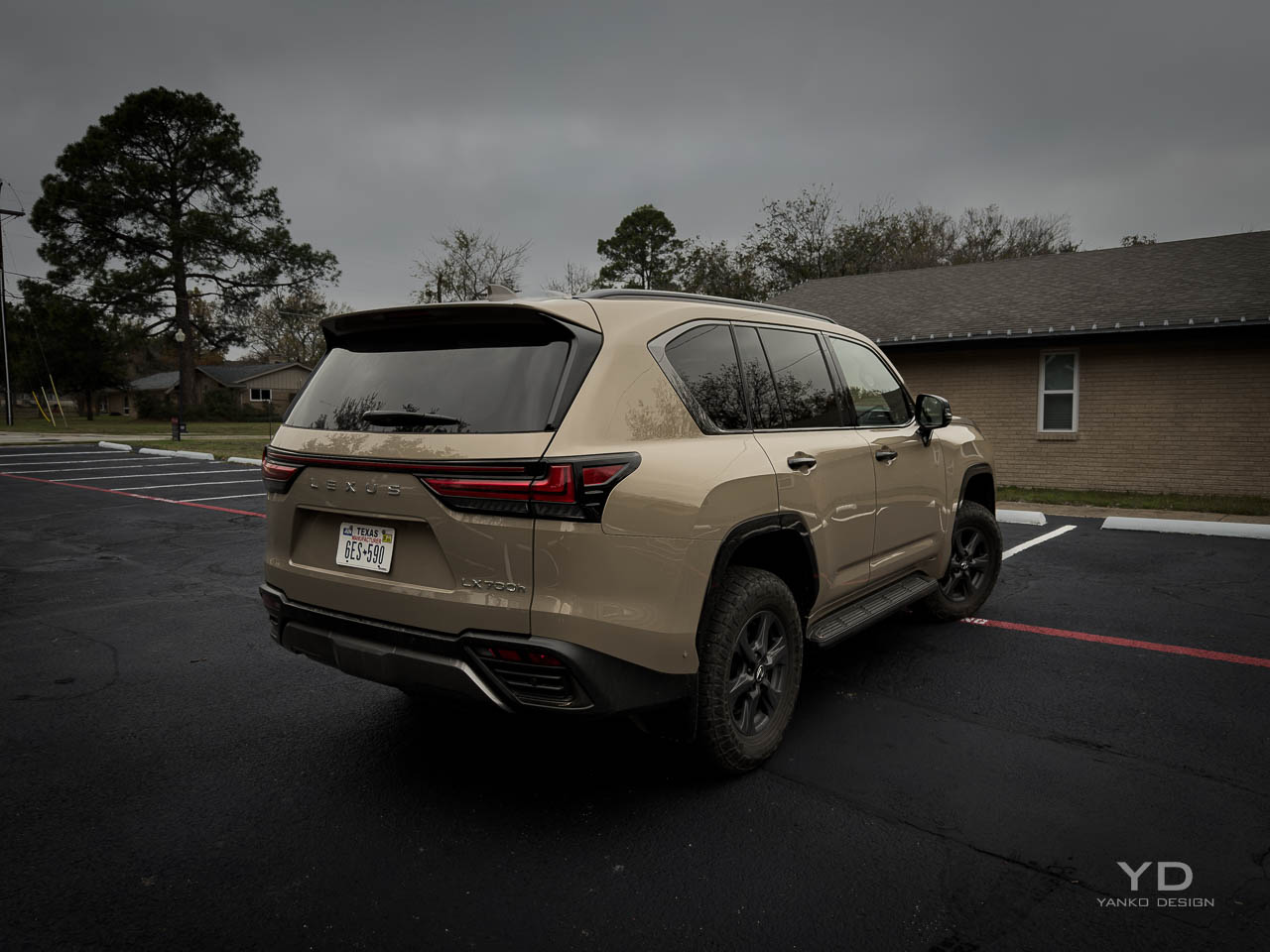
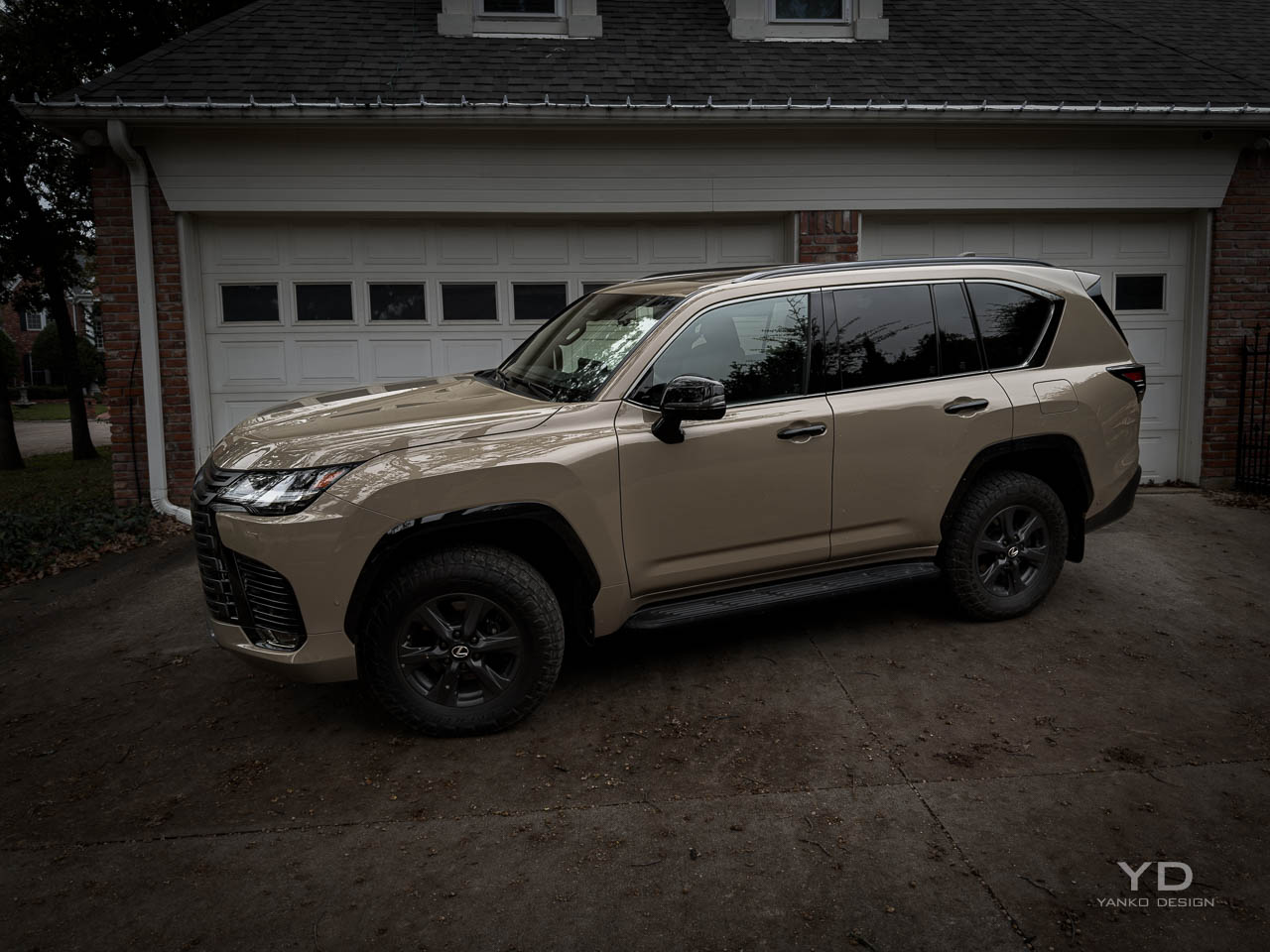
My tester arrived in Desert Moon Beige, a color that does real design work. In overcast light, it leans neutral and slightly cool. In direct sun, it warms without becoming flashy. There’s no metallic sparkle, no high-contrast drama. The finish behaves like a muted architectural surface, and that restraint helps the LX feel calmer and less imposing despite its size. For a vehicle this large, color choice matters more than most buyers realize. Desert Moon Beige actively reduces perceived bulk.
The Overtrail-specific dark spindle grille anchors the front fascia with no chrome and no bright interruptions. Horizontal slat density visually lowers the nose and widens the stance. The black surround ties directly into lower cladding and wheel arch trim, creating a continuous dark band that grounds the vehicle from every angle. Headlights sit high and slim, emphasizing width rather than height. The LED signature reads clean and controlled, not aggressive.
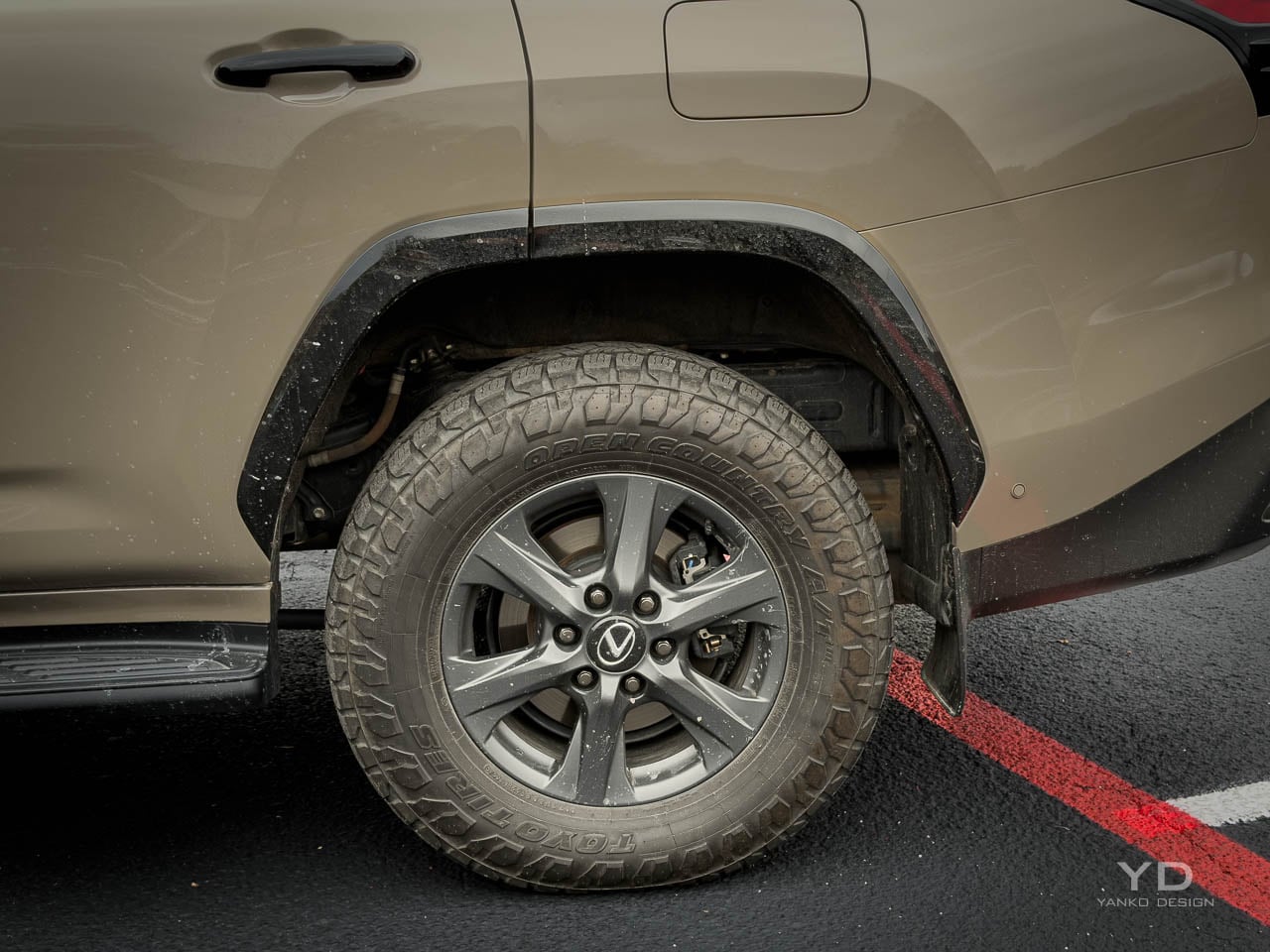
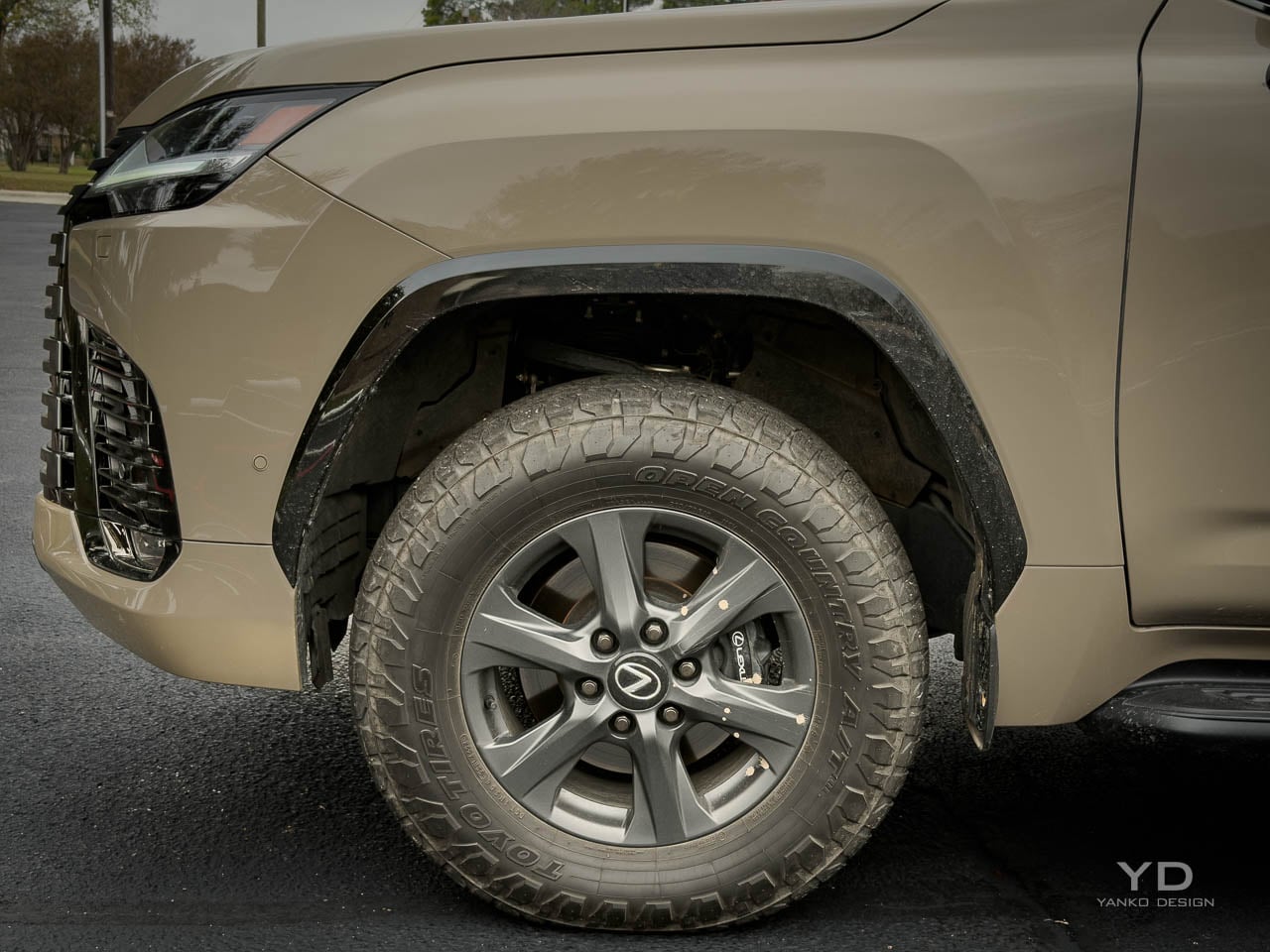
Wheel choice plays a bigger role than it first appears. The 18-inch black wheels with tall all-terrain sidewalls visually compress the body and soften the stance. That extra tire volume signals off-road intent, but it also calms the design. Larger wheels would have sharpened the edges and made the LX feel top-heavy. Instead, Overtrail looks grounded and planted, even parked. Tire tread is visible but not visually loud. Capable at rest, quiet in motion.
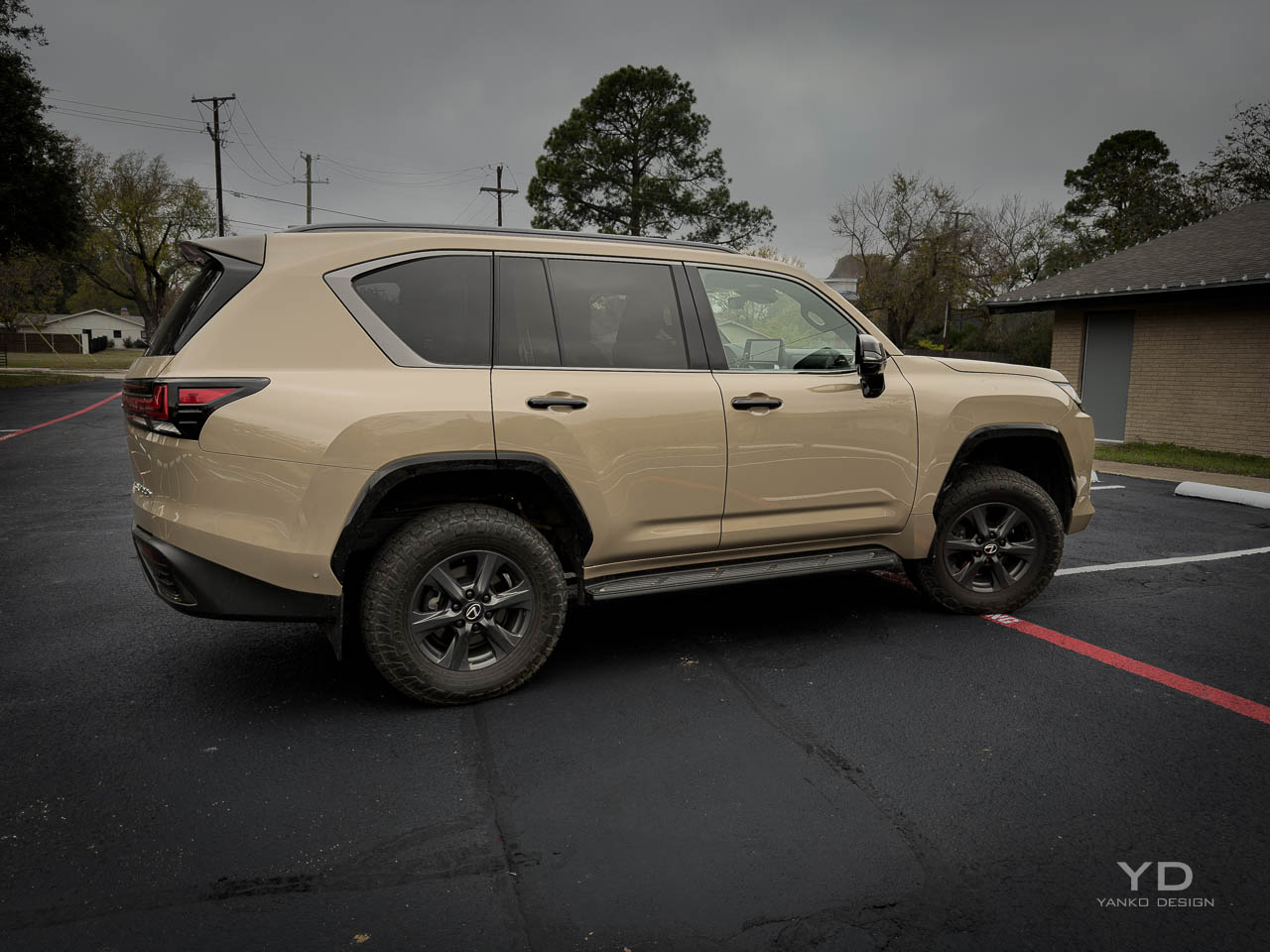
My vehicle included two options worth noting. Black side steps visually lower the body line and materially improve daily usability, making entry and exit easier on a family road trip without making the vehicle look less capable. A roof rack subtly changes the silhouette and adds a hint of expedition intent, but it remains proportionally integrated and introduces no visual clutter or noticeable wind noise. Both are optional, not standard, and both reinforce the configured nature of this specific vehicle.
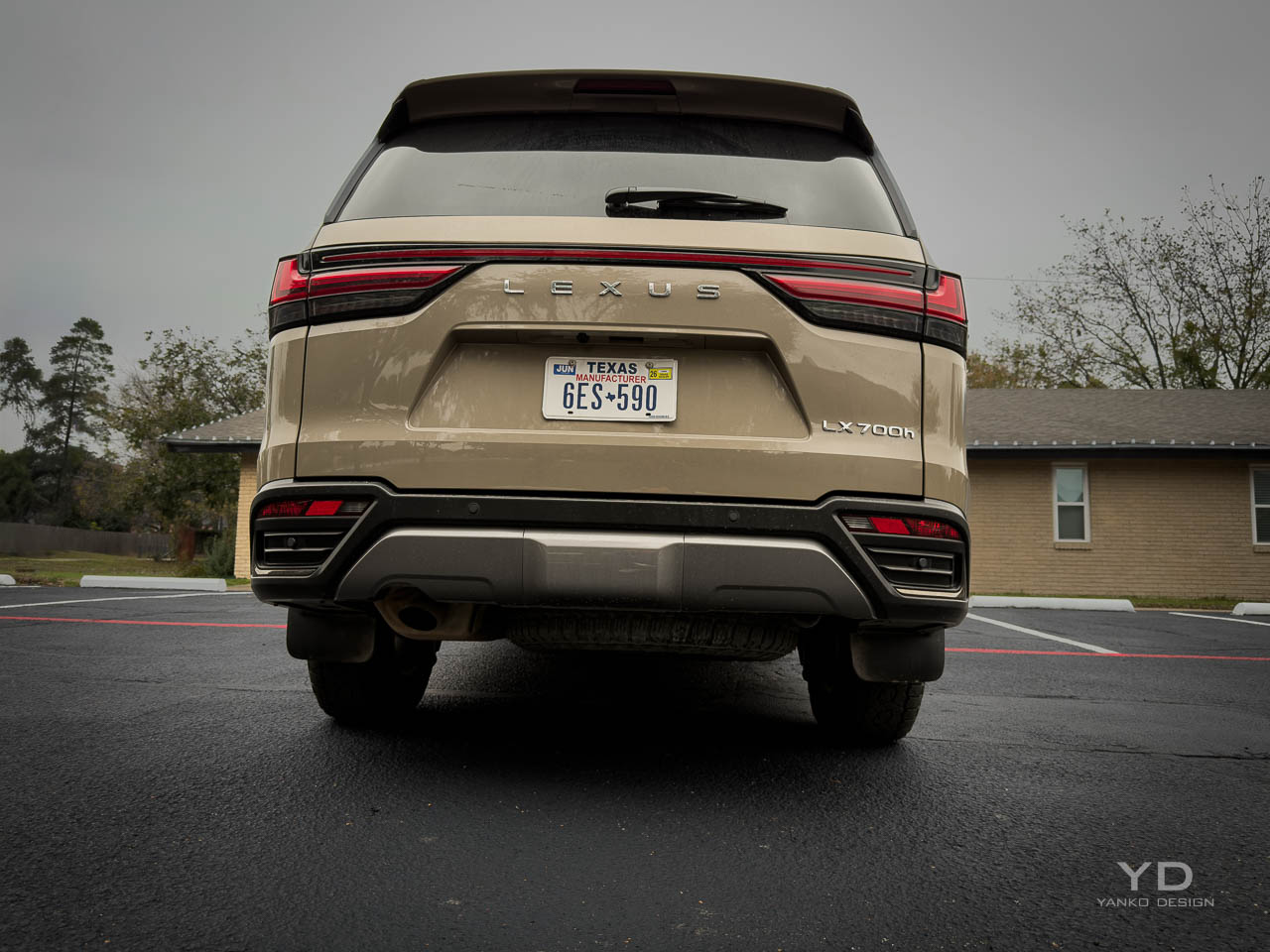
Nothing about Overtrail pretends to be lightweight or sporty. The surfaces are thick. Panel gaps look engineered for durability, not minimized for show. It feels designed to survive abrasion, dust, and neglect without losing its identity. In this exact configuration, the LX 700h Overtrail looks intentional, grounded, and restrained. It doesn’t read as an off-road costume. It reads as a long-distance vehicle that happens to be engineered far beyond what most daily driving demands. That material honesty carries into the cabin.
Cabin Design: Luxury Filtered Through Utility
Inside, Overtrail prioritizes clarity, durability, and spatial calm. These qualities become obvious after hours behind the wheel.
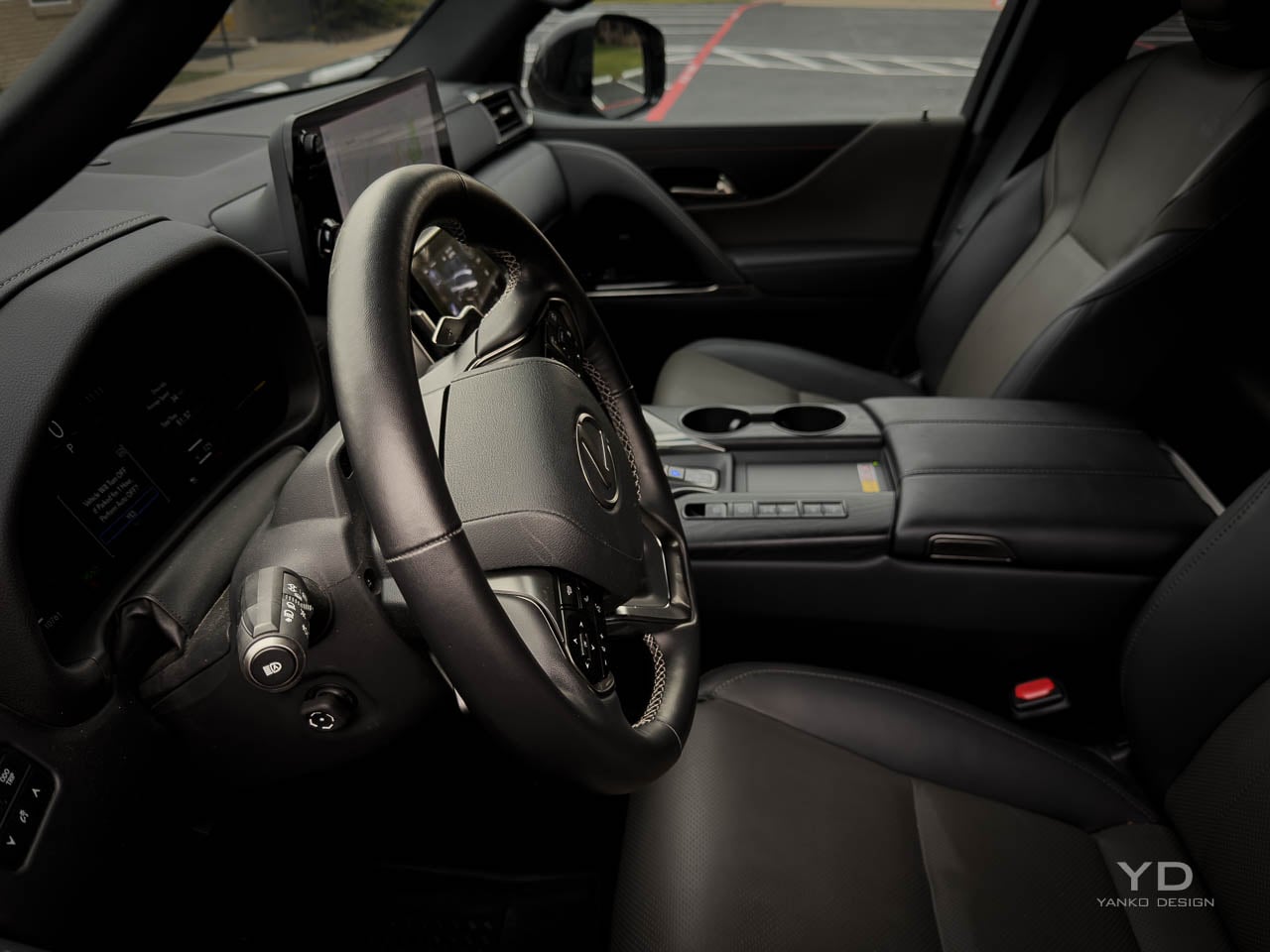
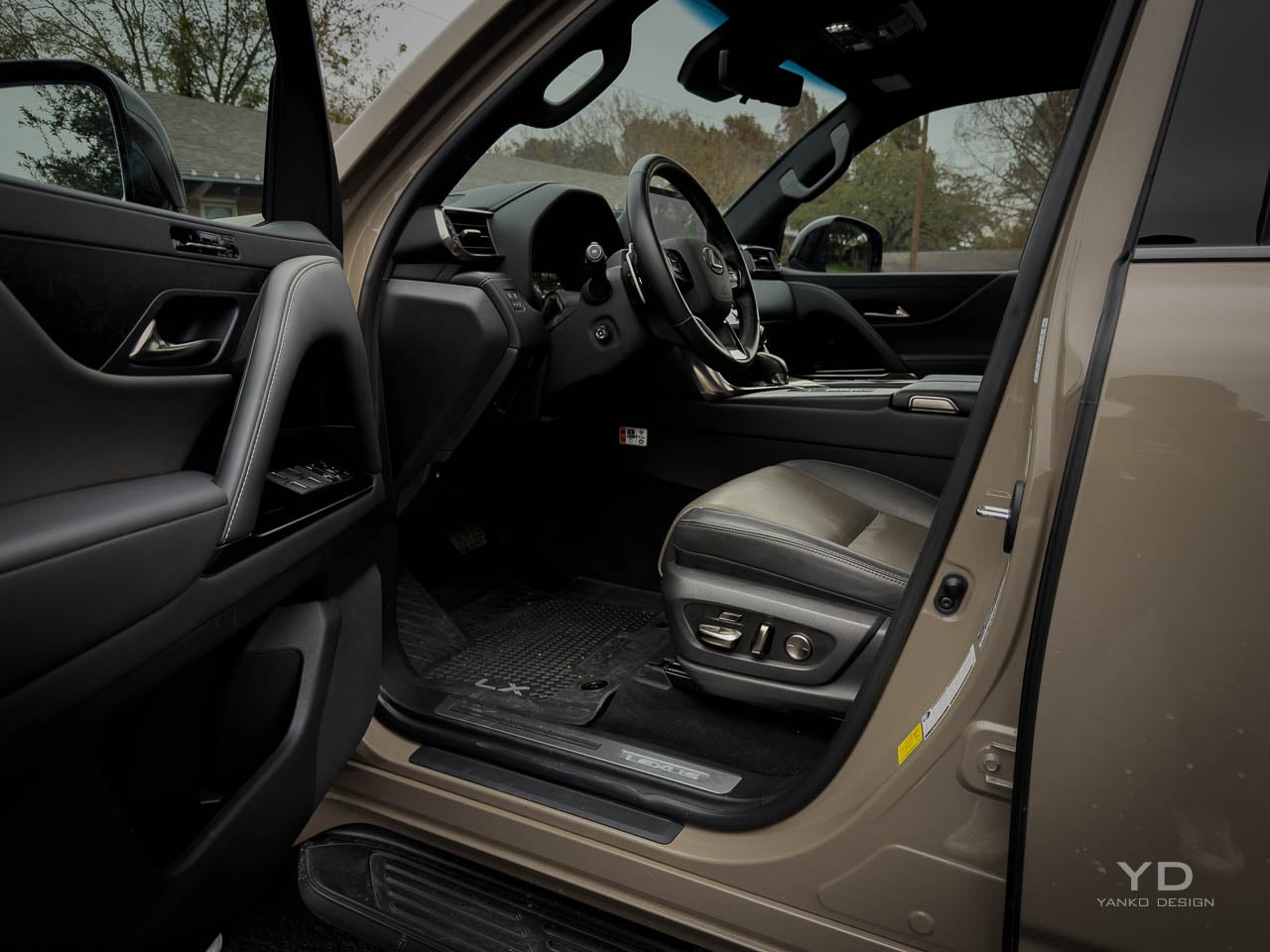
The seats deserve specific credit. Cushions are broad and upright, with a firmness that supports posture rather than sinking you in. On a road trip, this matters more than initial plushness. Hours in, fatigue stays low. Lexus tuned these seats for sustained comfort, not showroom softness.
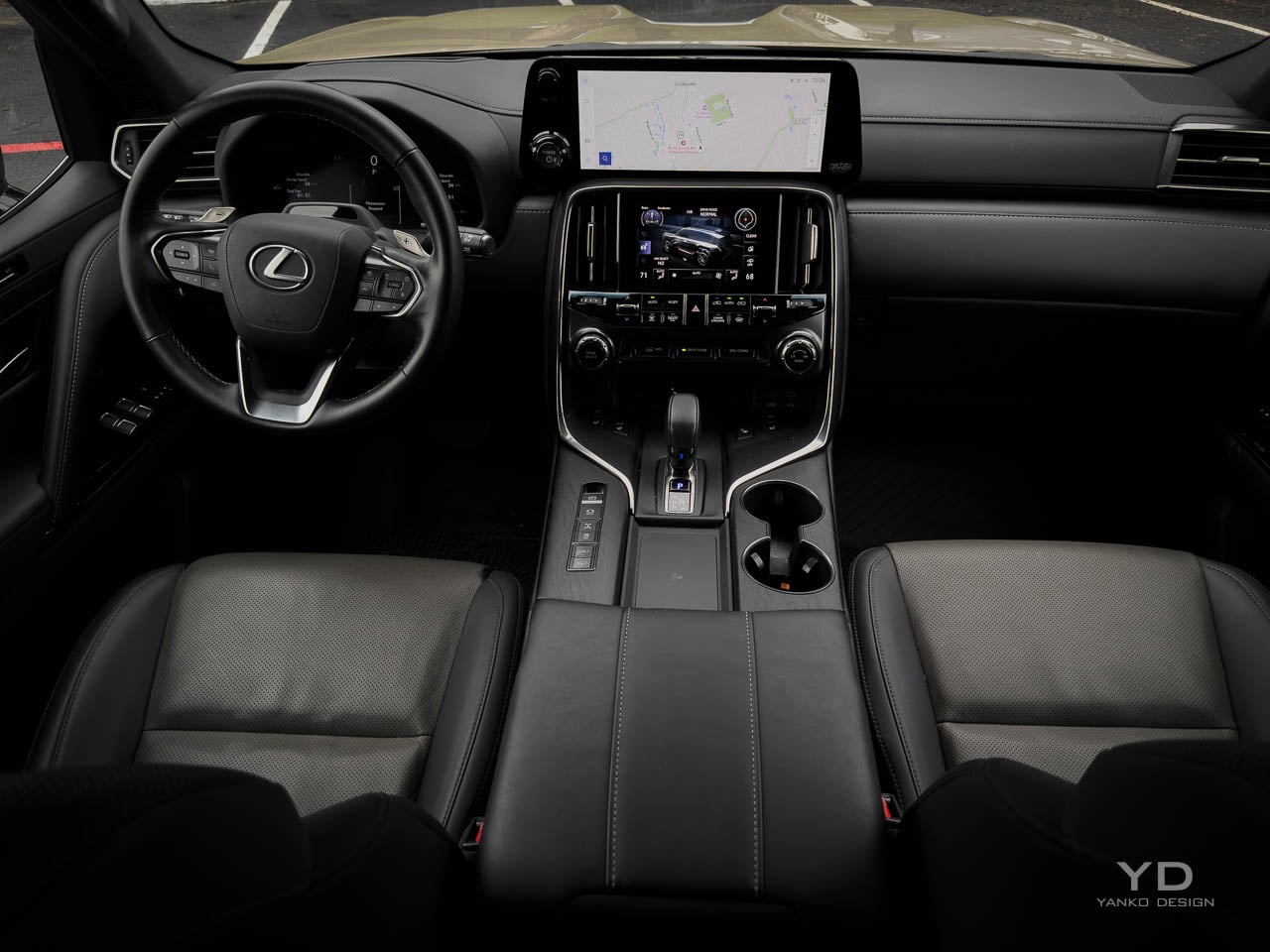
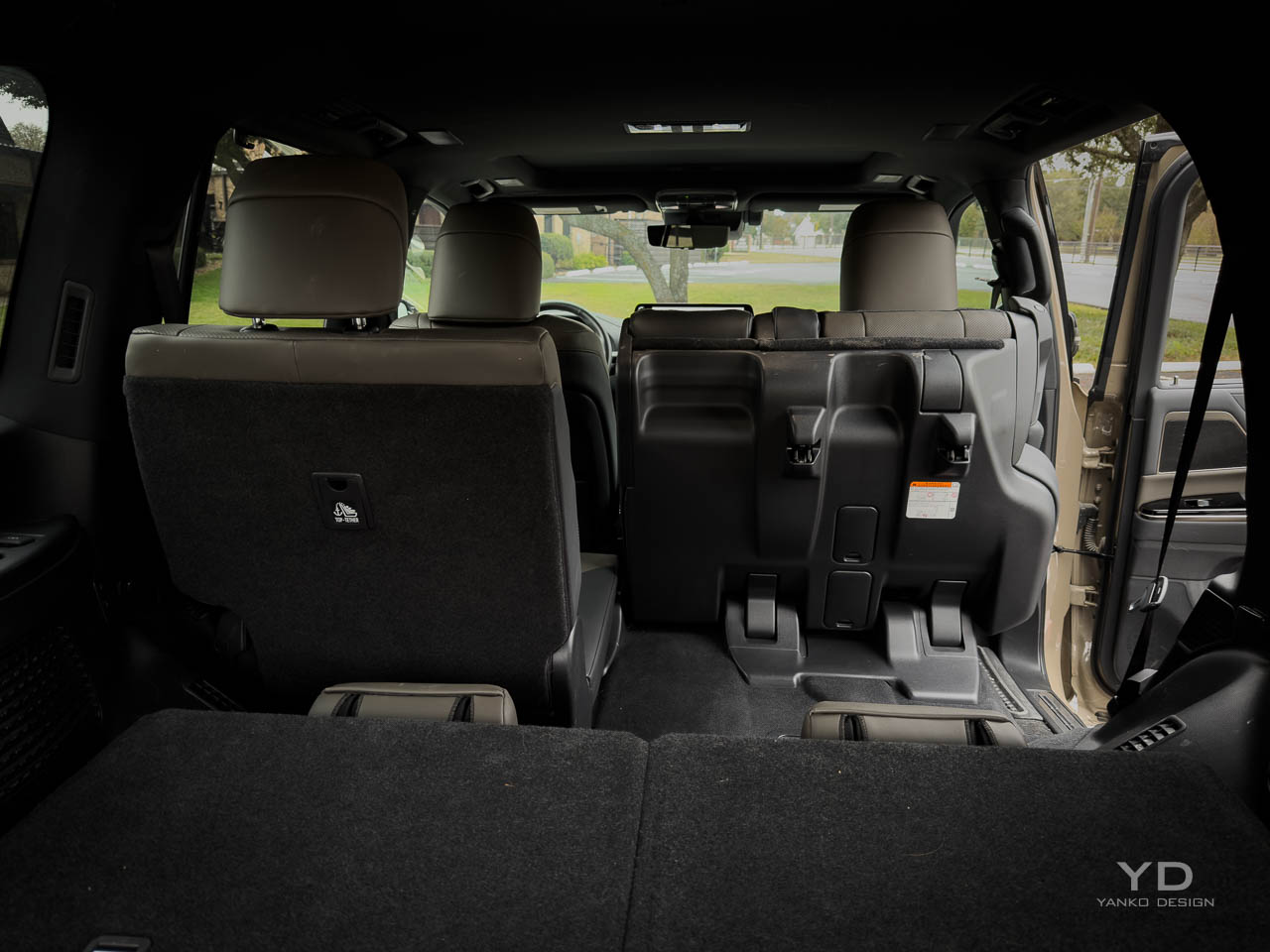
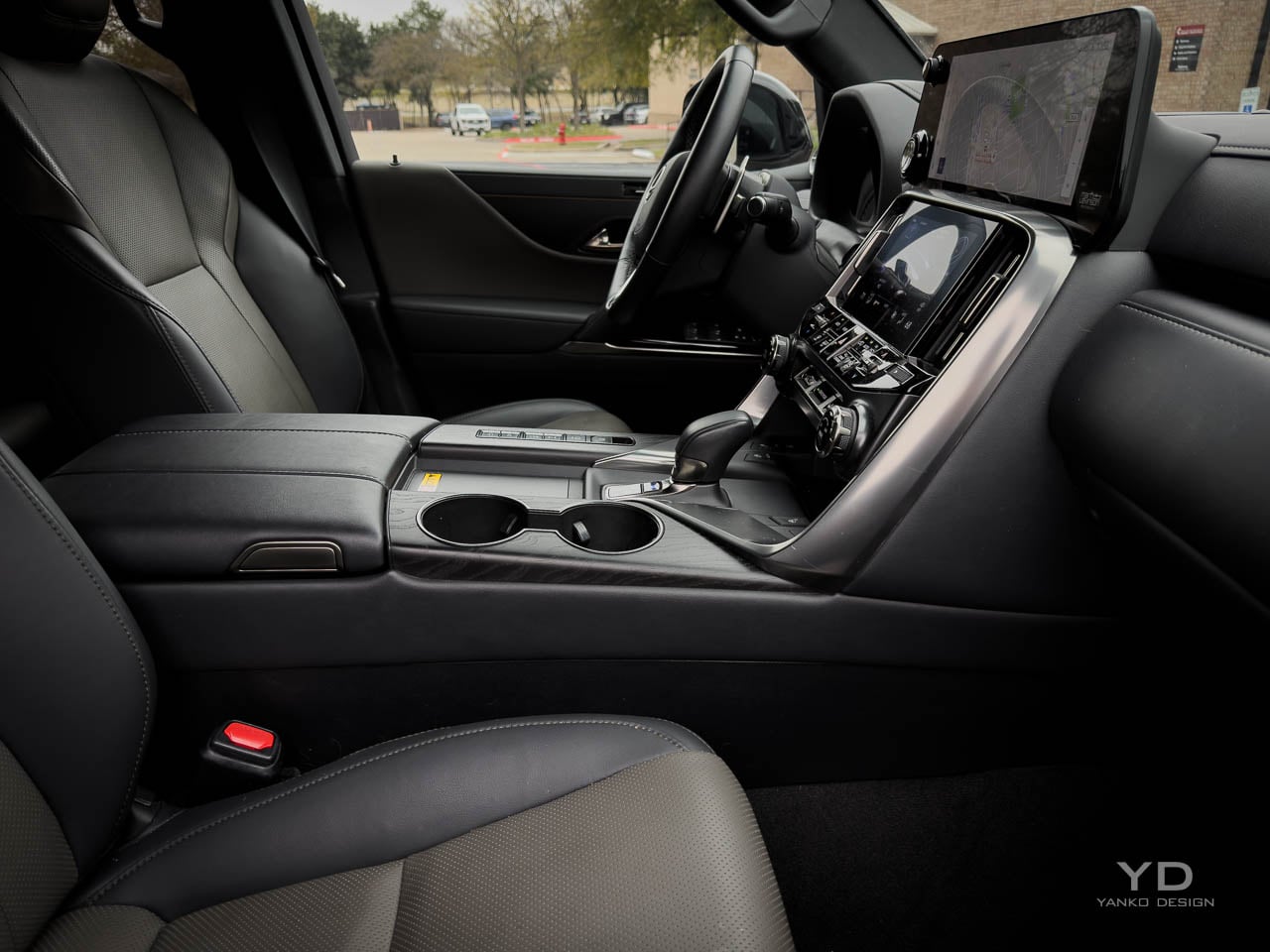
Material choices reinforce that goal. Leather surfaces feel resilient rather than delicate. Trim finishes avoid gloss in favor of textures that diffuse light. In changing daylight conditions, the cabin stays visually quiet. No glare. No sparkle. That reduces cognitive load on long highway stretches.
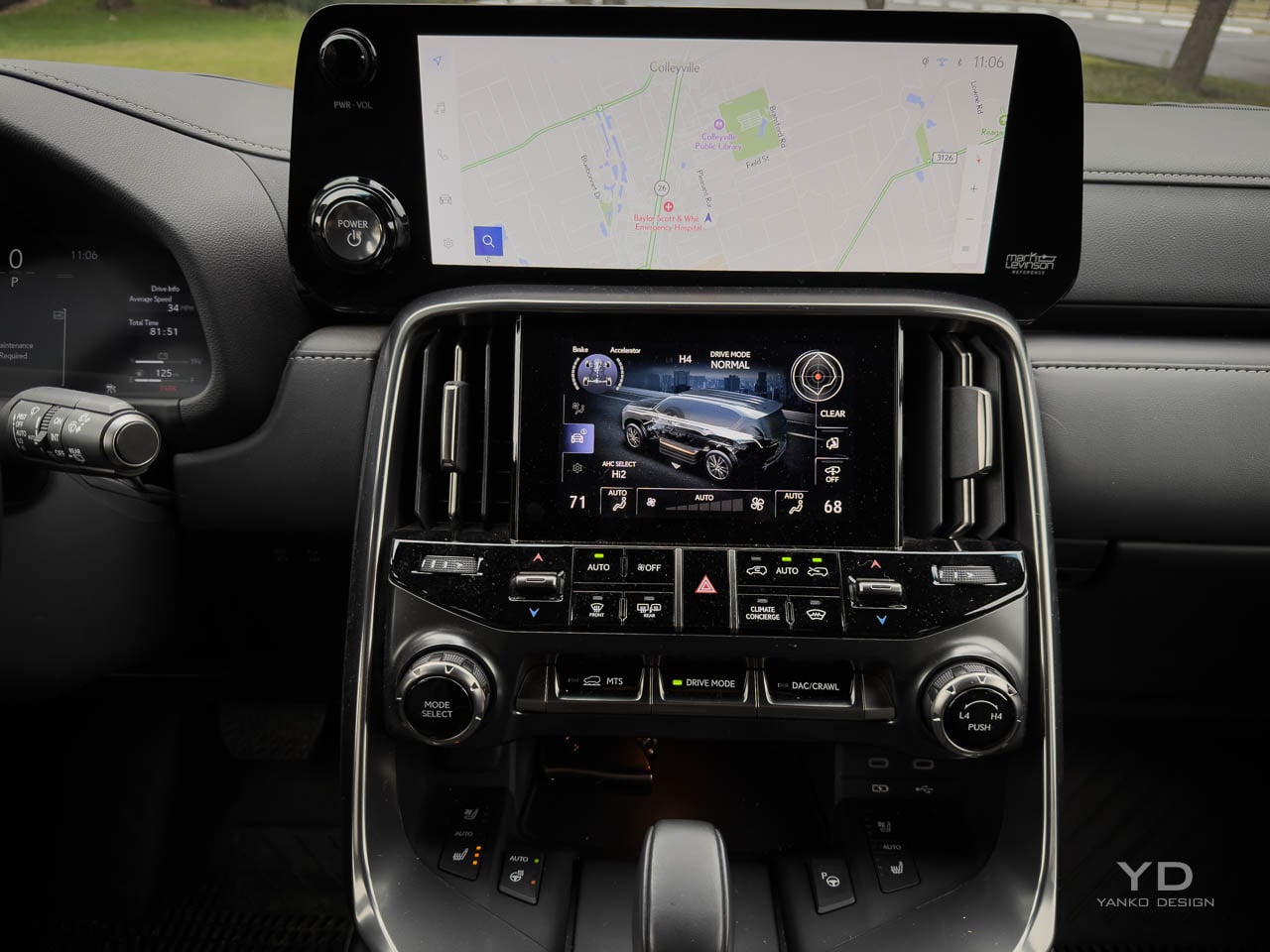
The dual-screen layout finally makes sense in this context. The upper 12.3-inch display handles navigation and media without feeling crowded. The lower 7-inch screen anchors climate and vehicle functions in a fixed visual zone. This separation reduces hunting for controls. Muscle memory builds quickly when you’re driving for hours rather than minutes.


Physical controls deserve credit. Knobs and buttons for key functions feel deliberate and weighted. Lexus resisted the urge to bury everything in menus, and that restraint pays off when you’re adjusting climate or audio repeatedly during a 6-hour drive.
Powertrain: Hybrid Torque Without Drama
The 3.4-liter twin-turbo V6 hybrid pairs with a high-torque electric motor and 10-speed automatic. Output reaches 457 horsepower and 583 pound-feet of torque, significantly more twist than the non-hybrid LX600.

On paper, those numbers suggest performance ambitions. In practice, the hybrid system plays a subtler role. It smooths transitions and fills gaps rather than announcing itself.
Throttle response feels immediate without being jumpy. Low-speed acceleration is effortless, especially when merging or climbing grades. The electric assist masks turbo lag and prevents the drivetrain from feeling strained under load. At highway speeds, the LX settles into a relaxed cruising rhythm. Engine noise stays muted. Gear changes are unobtrusive.
The vehicle never feels confused about its identity. Power delivery remains linear and confident, reinforcing the sense that this is a long-distance machine. EPA ratings land at 19 city, 22 highway, and 20 combined. Real-world highway testing shows around 20 mpg on premium fuel. The roughly 22-gallon fuel tank helps offset the hybrid system’s modest efficiency gains, though range still trails some non-hybrid rivals due to weight and tire choice. Off-road tire fitment can drop economy nearer to 13 mpg in demanding conditions. For my highway-heavy week, fuel stops came more often than expected but never felt punishing.
Ride Quality: The Overtrail Surprise
This is where the experience becomes genuinely interesting.
Despite the aggressive tire and suspension setup, the LX 700h Overtrail rides with unexpected composure on the highway. No constant jiggle. No nervous vertical motion. Expansion joints and uneven pavement are absorbed with a controlled, damped response rather than sharp impacts.
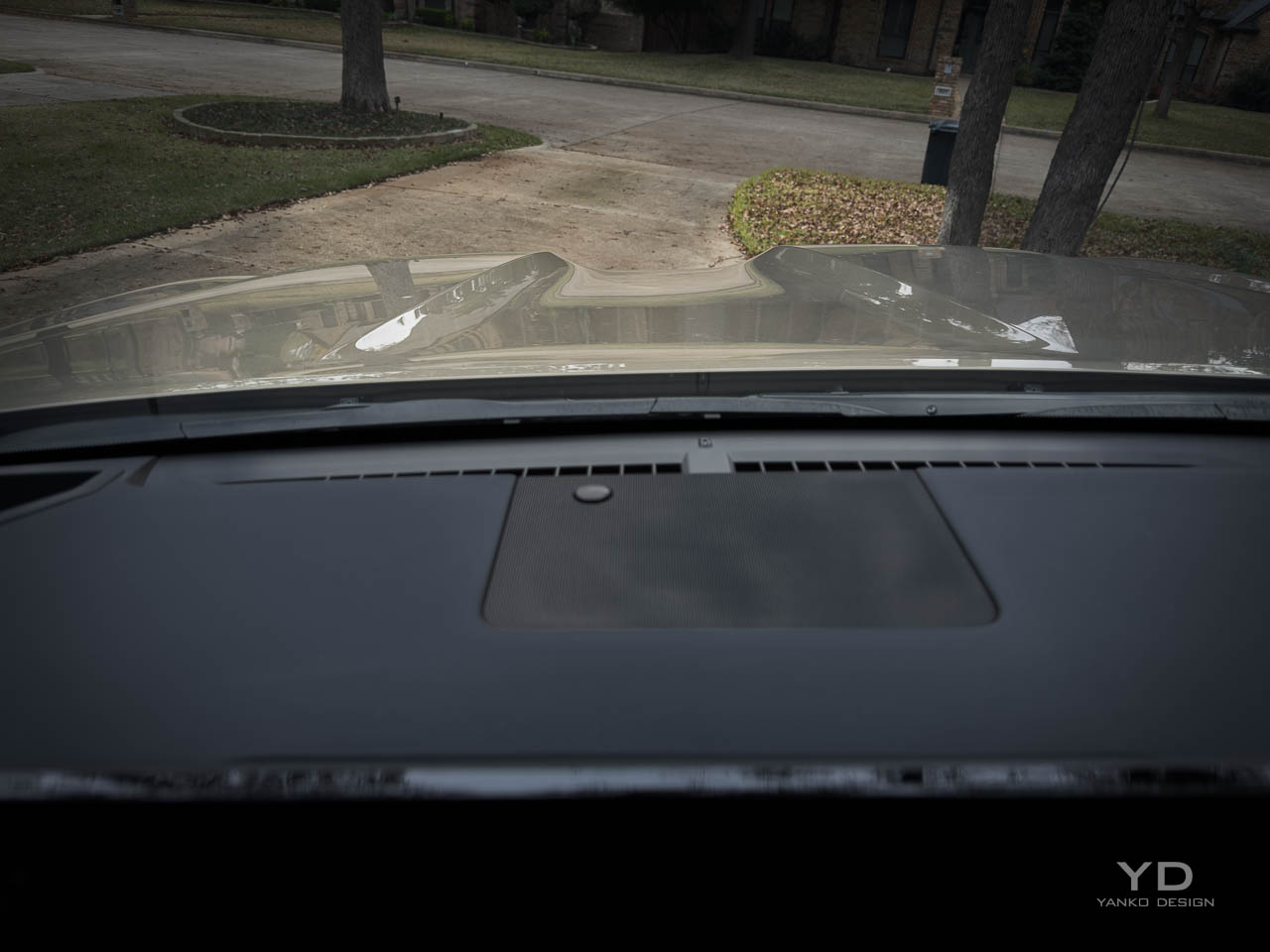
The tall sidewalls do significant work here, but suspension tuning deserves equal credit. Lexus prioritized body control over stiffness. The vehicle settles quickly after bumps, maintaining a sense of mass without sluggishness. It doesn’t float, but it doesn’t punish either.
At highway speeds, the cabin remains impressively insulated. Tire noise is present but subdued, more of a distant texture than a distraction. Wind noise stays low, even around the mirrors and A-pillars. That achievement isn’t trivial given the LX’s frontal area.
Long stretches reveal another strength. The ride stays consistent over time. Some off-road oriented vehicles feel fine initially, then wear you down. Overtrail maintains its composure. After hours, it still feels predictable and settled.
Steering and Control: Calm Over Sharpness
Steering feel aligns with the rest of the design philosophy. It isn’t sporty, but it’s precise enough to inspire confidence.
On-center stability is strong, which reduces constant micro-corrections on the highway. The wheel weights up naturally at speed, reinforcing a sense of control rather than urgency.
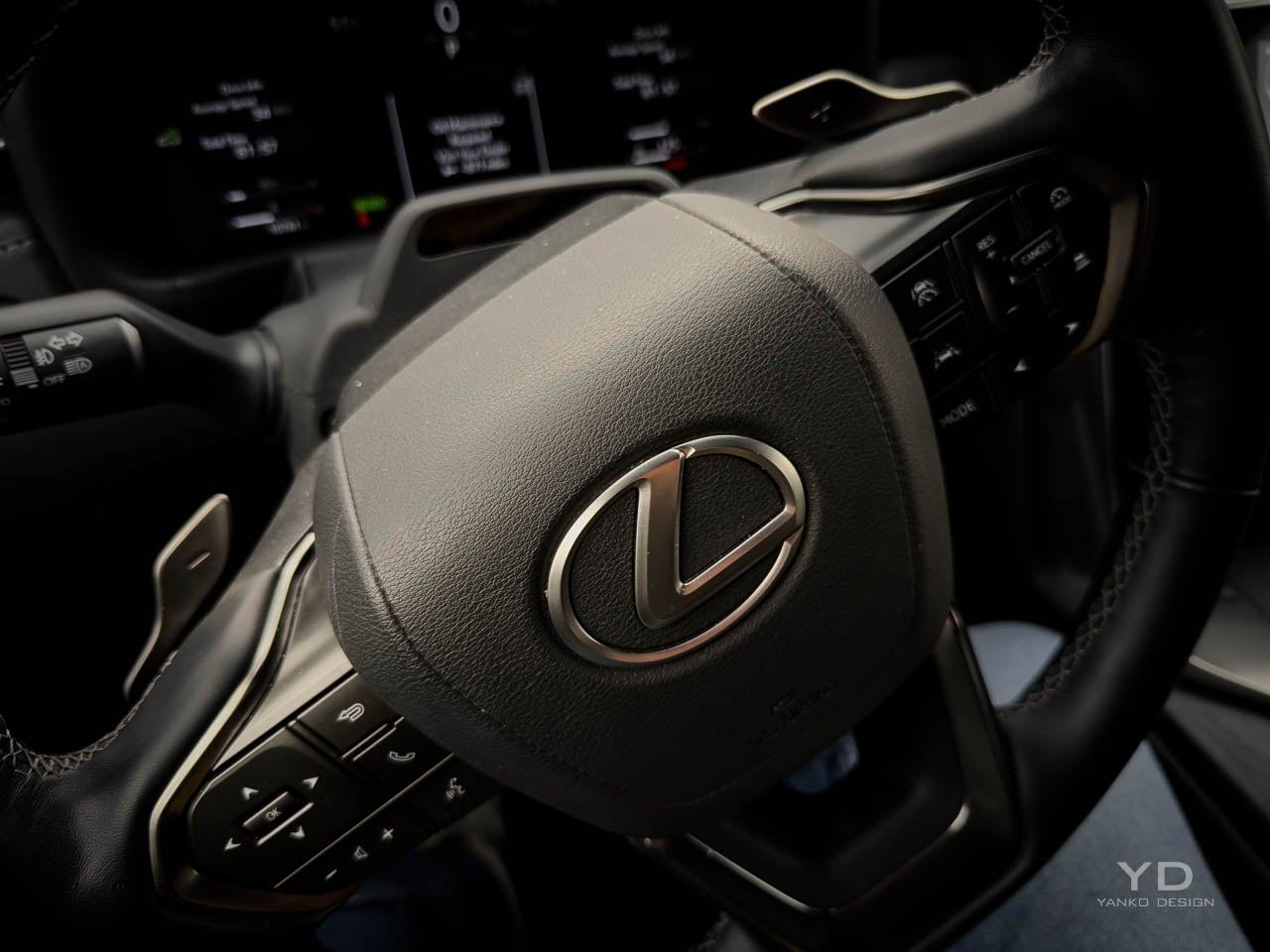
In corners, the LX reminds you of its 6,000-plus pounds. But it manages weight transfer gracefully. No sudden lean. No delayed response. Everything happens predictably. That predictability becomes a form of comfort on long drives.
Driver assistance systems stay mostly out of the way. Lane keeping and adaptive cruise work quietly in the background without aggressive corrections. That restraint fits the Overtrail personality. The vehicle supports the driver rather than competing for attention.
The Off-Road Hardware You May Never Use
The Overtrail package isn’t cosmetic. The hardware is real.
Front and rear electronically locking differentials provide genuine capability. The torsen center diff, front skid plate, and 33-inch all-terrain tires on 18-inch wheels add articulation and low-speed control that matter on dirt and rock. Multi-Terrain Select, crawl control, and downhill assist mean Lexus built systems for conditions most owners will never encounter.
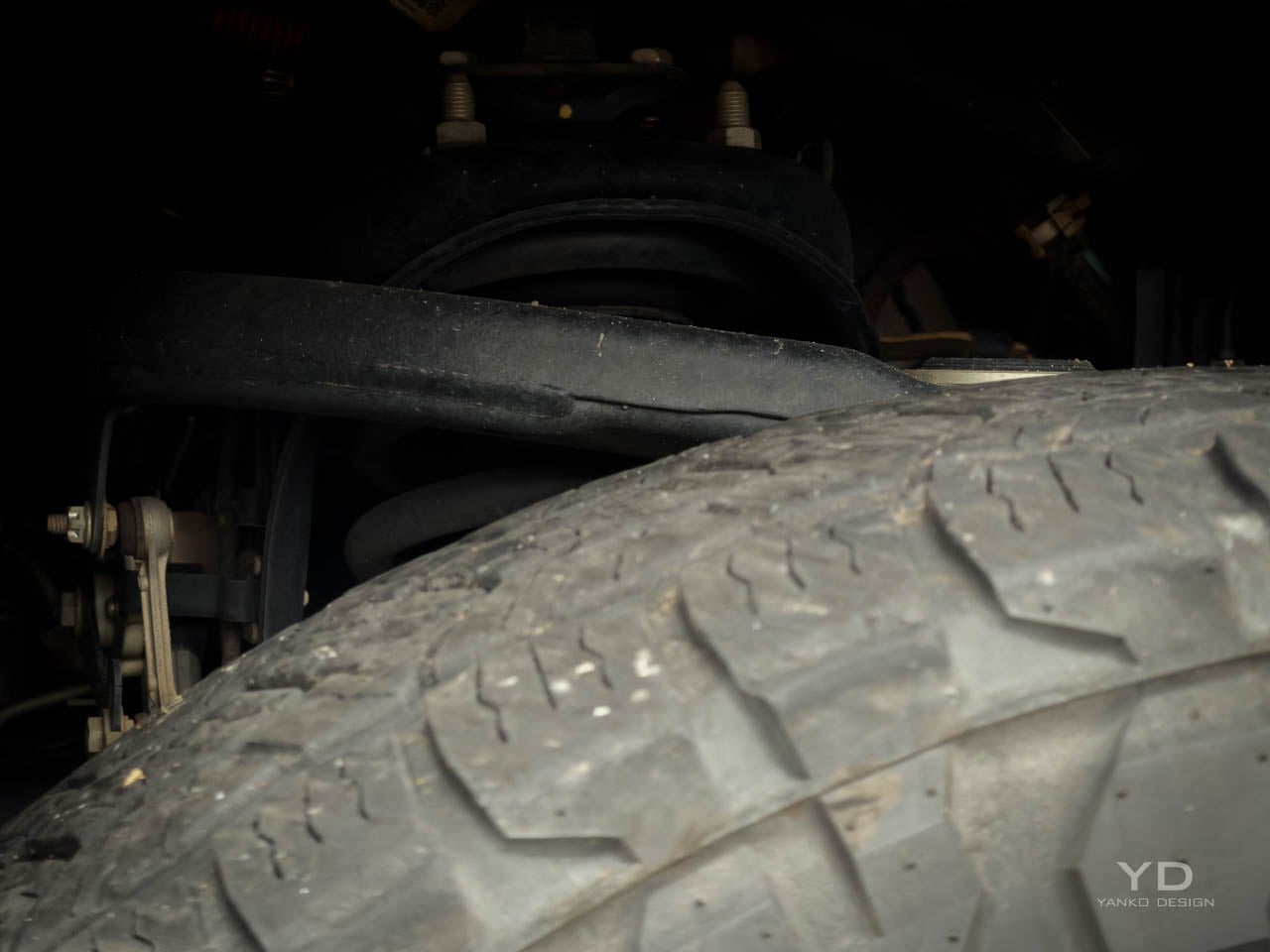
Physical buttons for drive modes make it both automatic point-and-shoot capable and manually configurable for serious terrain. Reviewers who have tested Overtrail in off-road conditions confirm it performs. I simply chose not to.
That choice reveals the real achievement. Lexus engineered an off-road package that doesn’t dominate the on-road experience. The hardware adds capability without injecting harshness, noise, or visual chaos into daily use.
What Lexus Got Right and What They Didn’t
The interior craftsmanship is excellent. High-end materials and supportive seats make long drives comfortable. Physical controls for essential functions feel deliberate and earned. Safety technology is plentiful.
The digital user experience is less cohesive. The dual-screen infotainment can feel disjointed and layered in ways that take time to internalize. Some competitors offer more advanced hands-free driver assistance. Cargo space is modest with the third row up, though it grows significantly when folded. The third row itself is tight for adults.
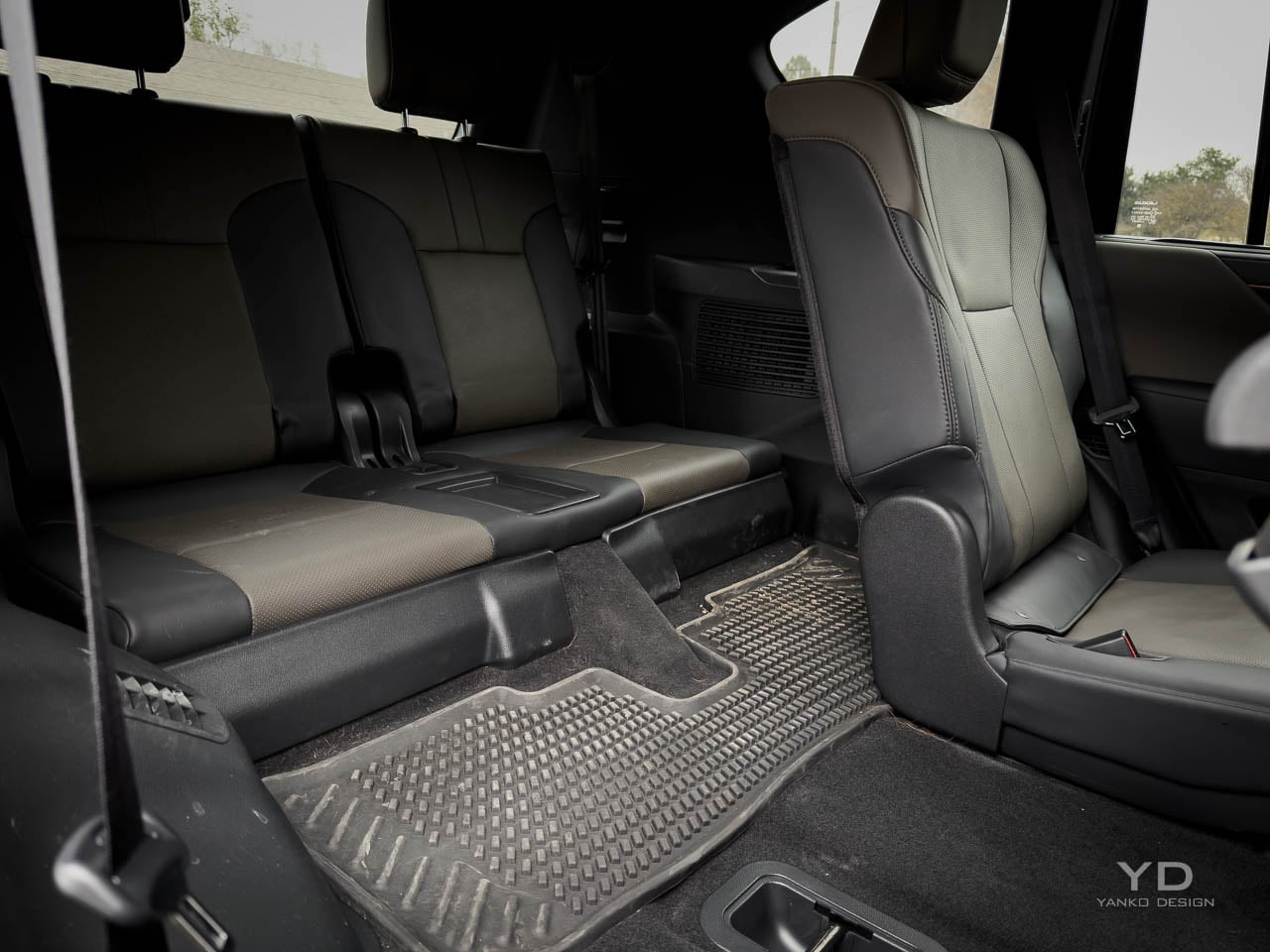
At six-figure pricing, starting around $114,500 to $119,000 before options, some buyers may expect interior richness that matches or exceeds European benchmarks. Lexus delivers refinement and durability, but the cabin doesn’t scream opulence. It whispers capability.
The Design Takeaway
The LX 700h Overtrail is not an off-road cosplay vehicle that sacrifices road comfort. It’s a long-distance luxury SUV that happens to be overbuilt for terrain you may never touch.
From a design perspective, that’s the real achievement. Ruggedness doesn’t need to announce itself loudly. Sometimes the most confident design choice is letting capability exist quietly beneath the surface.
I drove it across states with my family. The off-road hardware sat unused, but its presence shaped everything about how the vehicle behaved. The mass felt intentional. The composure felt earned. The confidence felt deserved.
For buyers who want genuine capability without the aesthetic compromise, Overtrail makes a compelling argument. You’re paying for engineering that may never be tested, but you feel it every mile anyway.
Price: Starting at $114,500 (Overtrail trim)
Powertrain: 3.4L twin-turbo V6 hybrid, 457 hp, 583 lb-ft
Fuel Economy: 19 city / 22 highway / 20 combined (EPA)
Key Features: Electronically locking front/rear differentials, 33-inch all-terrain tires, Multi-Terrain Select, adaptive suspension, dual-screen infotainment with physical controls
SHARE