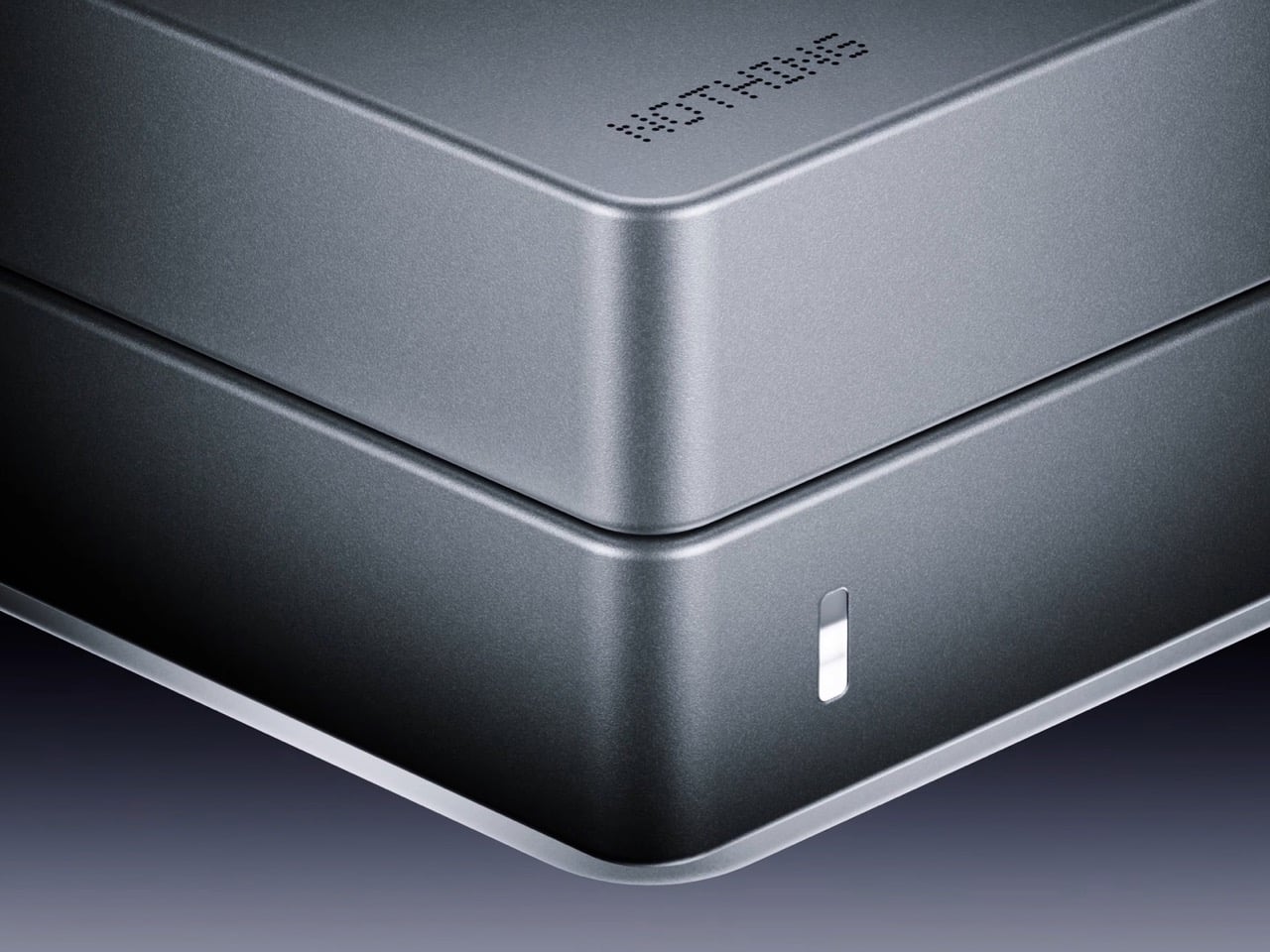
The first glimpse of Nothing’s new gadget came from a DJ, which feels very on brand. Last week, Sebastian Ingrosso of Swedish House Mafia posted a photo of his desk with a slim black box next to his MacBook, tagged @nothing, and said, well, nothing else. The box had a red-dot button and two little pill-shaped LEDs, one red and one green. Nothing has since filled in the blanks with the Ear (note), a pair of earbuds whose aluminum charging case doubles as a standalone meeting recorder. The resemblance is hard to miss. Swedish House Mafia happen to be Nothing investors, so consider it a well-placed wink.
Nothing calls the Ear (note) its first “AI-native” device and says it launches December 8. The case mics record conversations in the room, the buds record your calls, and an app transcribes and summarizes the recordings. A big TALK key and a red RECORD button give you physical controls. Nothing hasn’t announced a price or full specs yet. Plaud unveiled its strikingly similar Plaud One earbuds with a recording case at IFA in September. With two brands making the same pitch, design is where Nothing gets to pick its favorite fight.
Designer: Nothing
A brutalist aluminum box with Walkman-style buttons
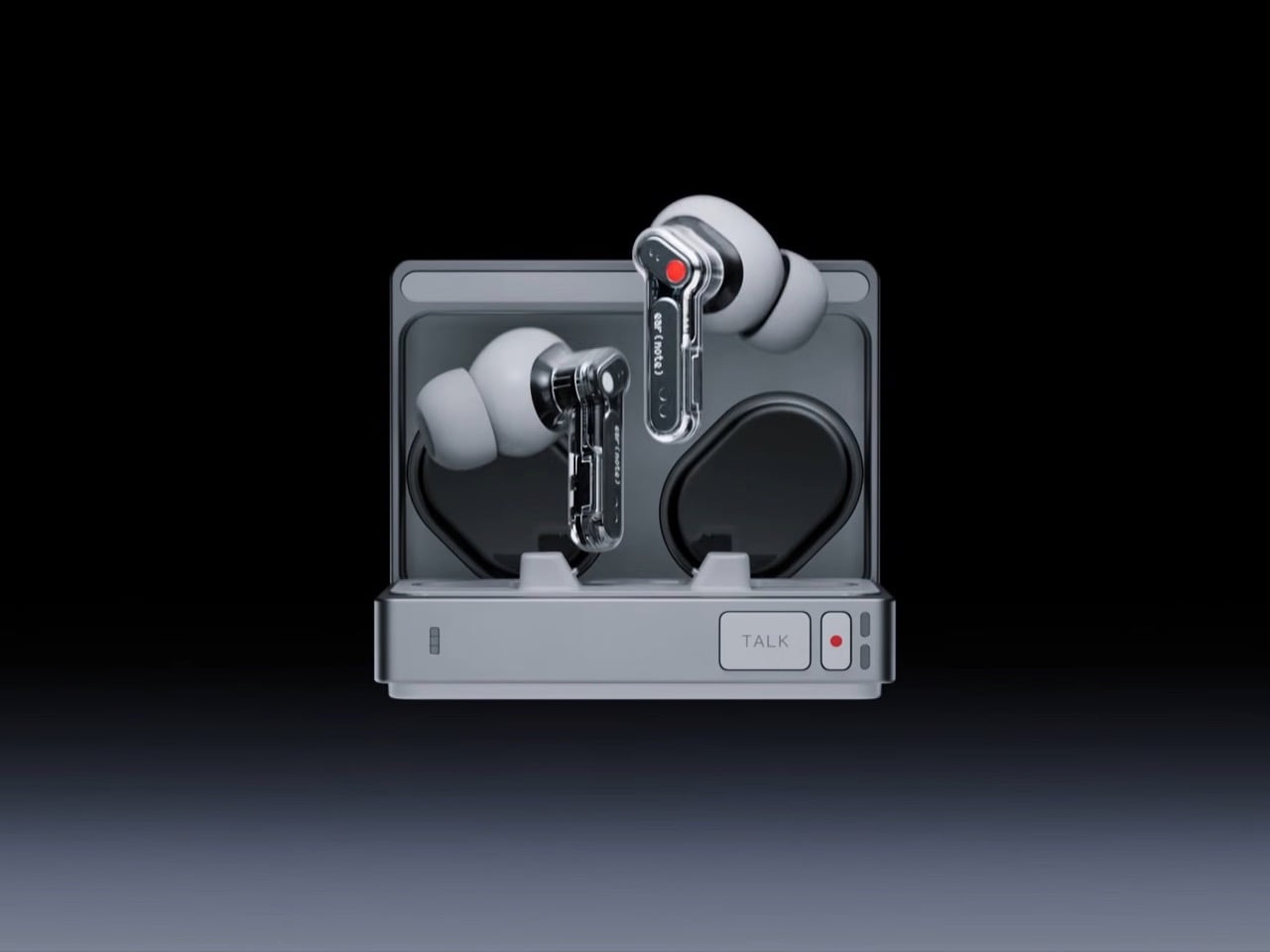

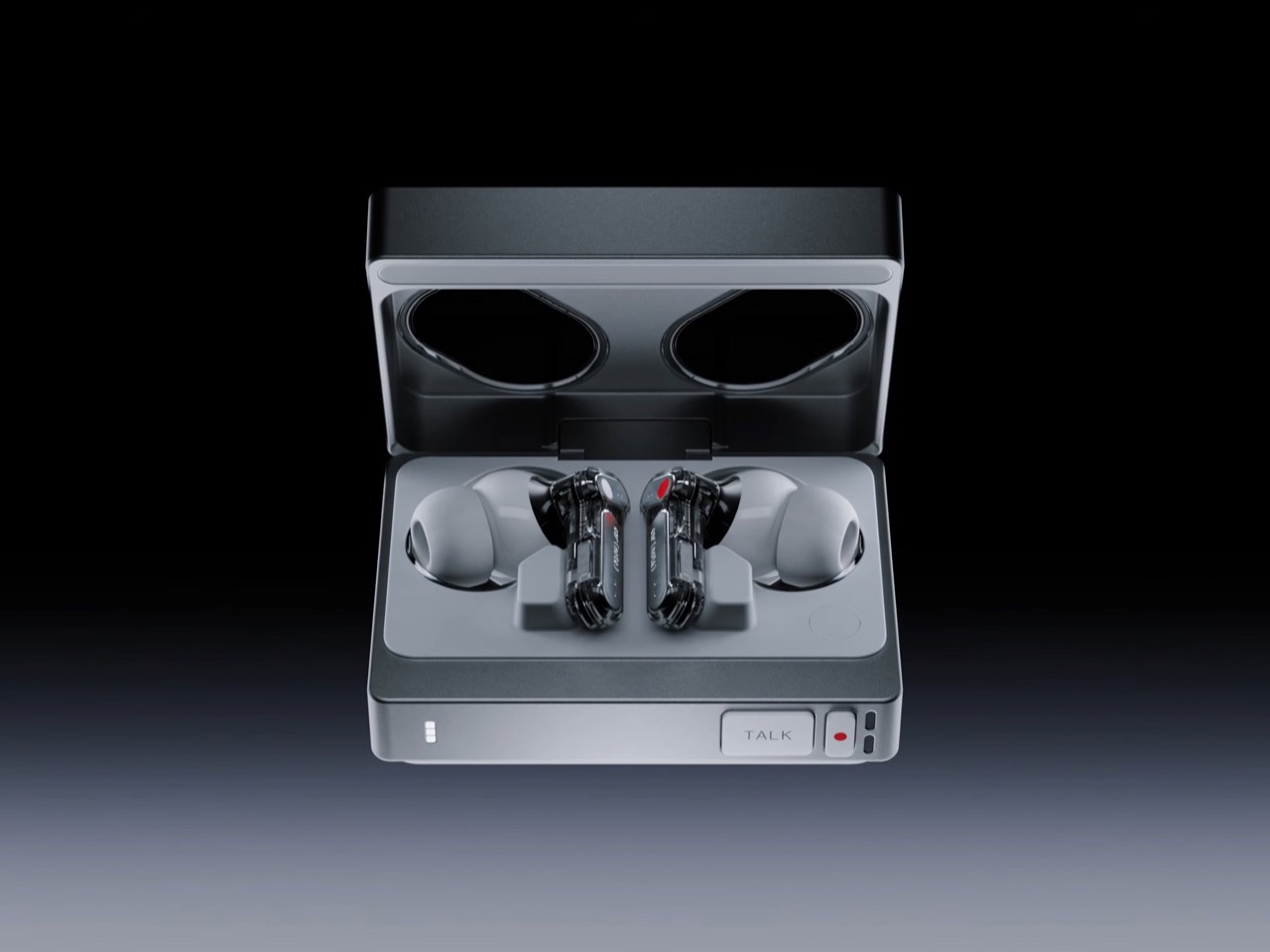
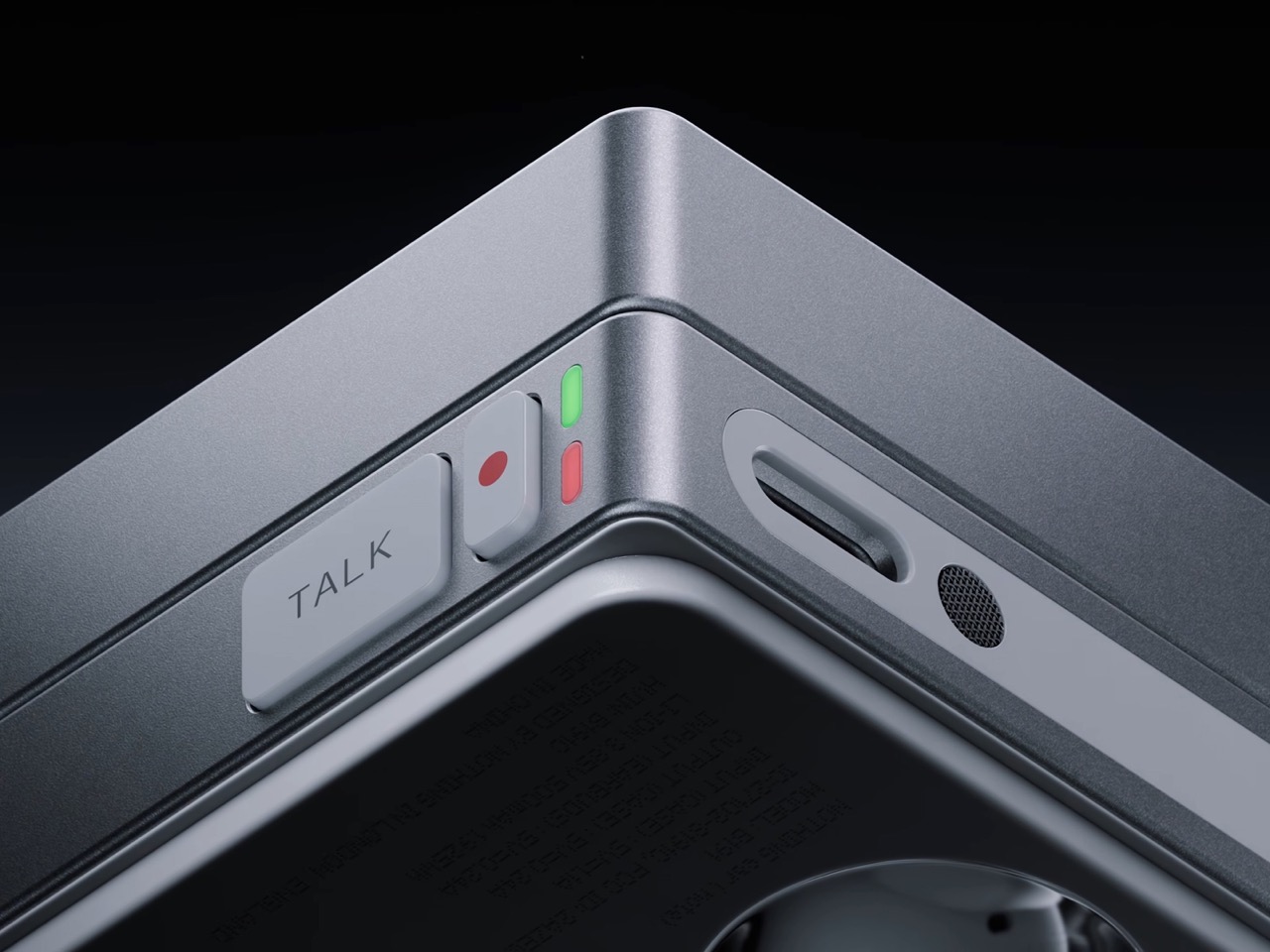
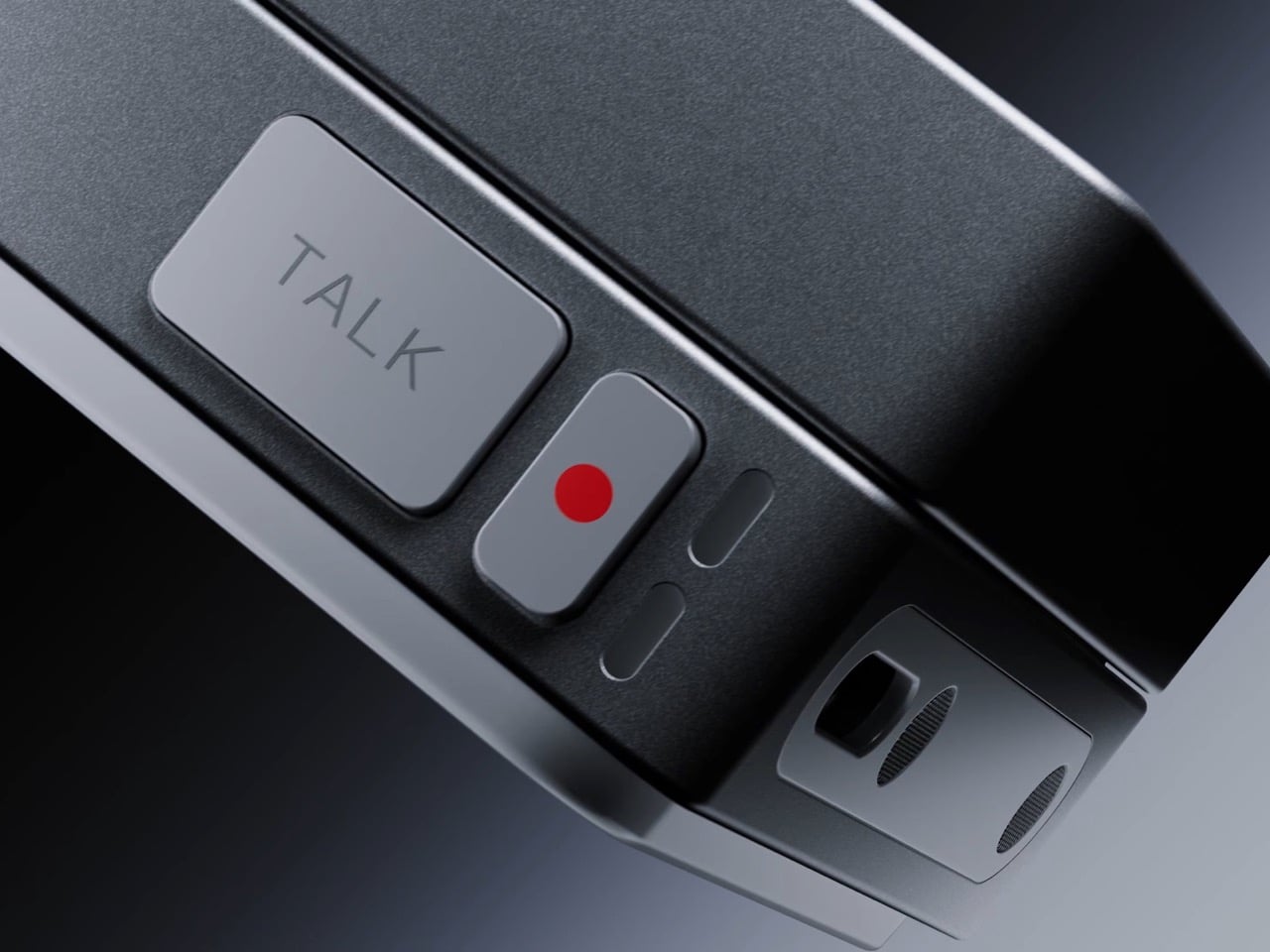
Nothing describes the squared-off aluminum case as a step toward “machined metal and brutalist forms.” In the renders, it looks like a cassette recorder that went to finishing school, with crisp vertical edges and a stepped seam where the lid meets the base. The trademark see-through lid has shrunk to two pill-shaped windows, one over each bud, with stepped layers inside that Nothing says mimic the contours of a topographic map. Up front sit the TALK key and the red-dot RECORD button, both inspired by Walkman controls. The buds keep their transparent stems, now with “ear (note)” printed down each one in Nothing’s dot-matrix type.
The all-clear Ear (1) set the look in 2021, and the Ear (3) brought metal into the mix last year. Putting the buttons on the front is the smartest call here: a meeting recorder spends most of its time lying flat on a table, and you can reach both buttons without picking it up. The green and red LEDs sit beside the keys. Nothing hasn’t said what they do yet, but a visible recording light would be a polite thing to have in a meeting. Both the light and dark versions look like they belong on a desk next to a nice pen. I’d leave one out just to look at it.
The case records the room, the buds record your calls
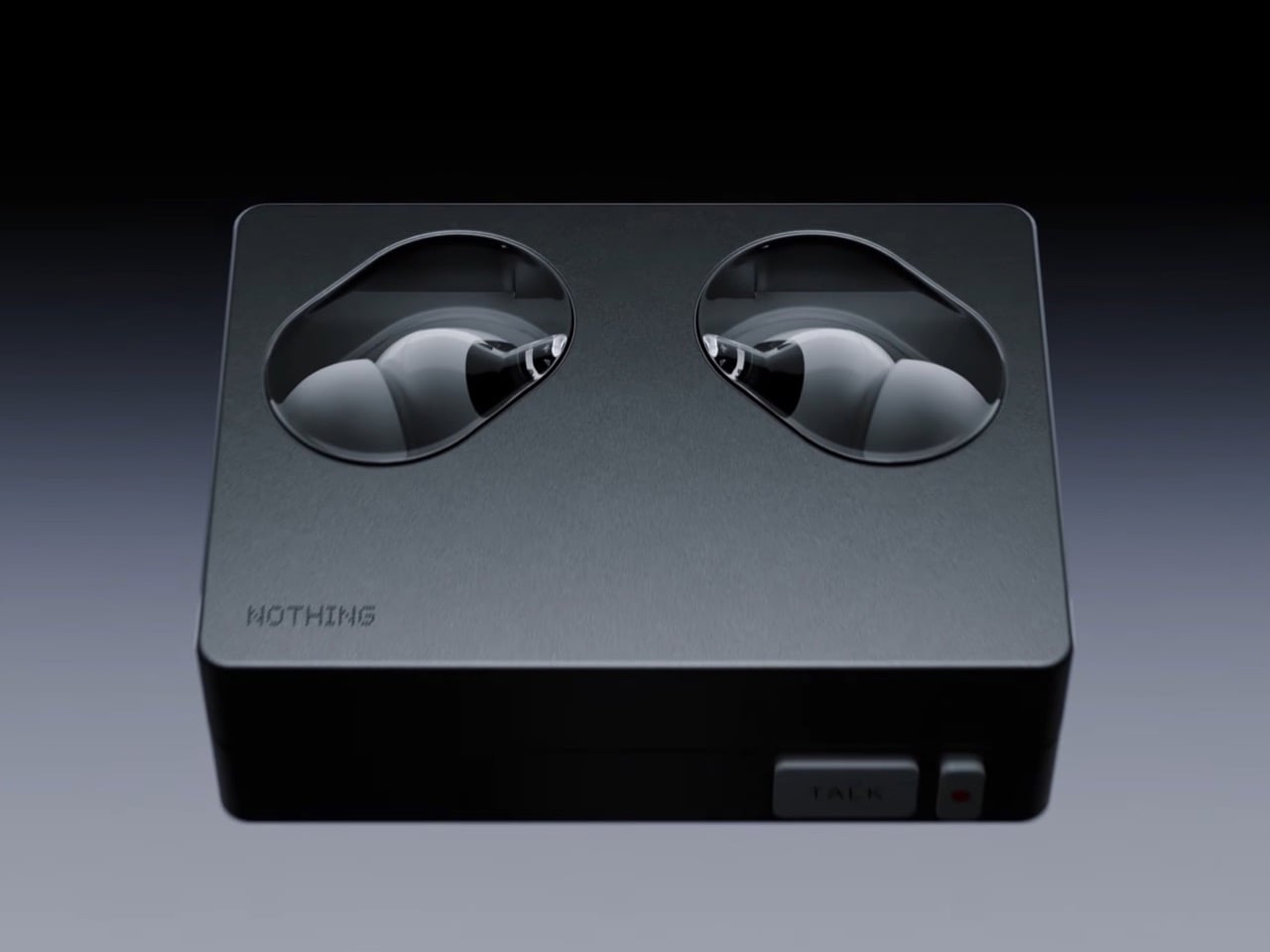
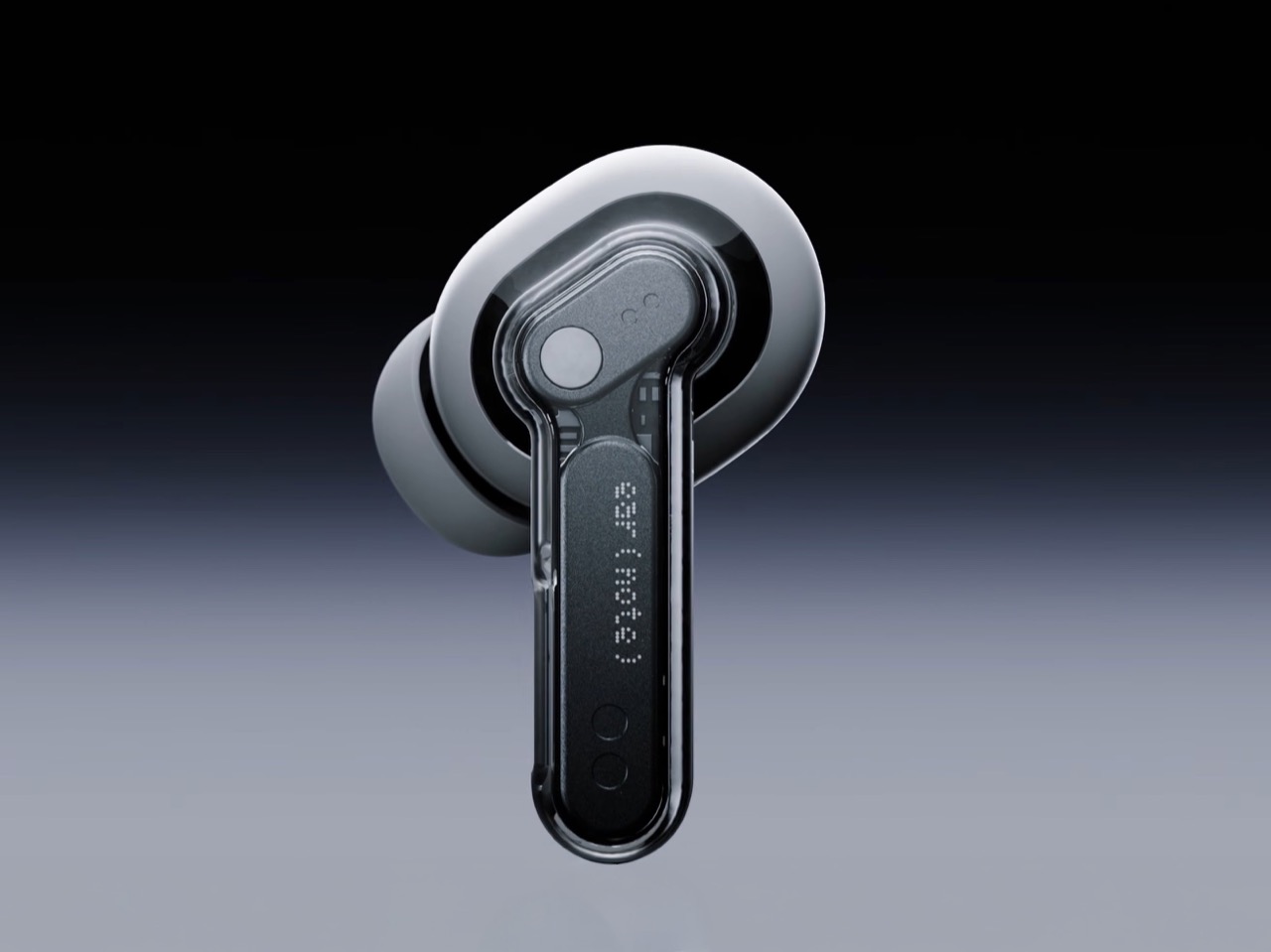

The case has its own microphones, so you can leave it on a table to record an in-person meeting without wearing the buds. The earbuds handle phone calls and online meetings, a trick Nothing first rolled out on the Ear (3a) earlier this year. The app stores, transcribes, and summarizes the recordings. Nothing says the buds will work with a range of third-party AI agents and that its own simpler voice system will handle back-and-forth prompts. The company also promises Hi-Res Audio and says the buds will sound as good as its best in-ear models.
Carl Pei’s bet is that AI is only as useful as what it knows about you. He calls this the first of many products that will build “a hardware context layer for AI.” The TALK key comes from the Ear (3), whose case introduced a mic and a button for voice notes, and Pei says the key could be reprogrammed down the line. A device built to record the room raises obvious privacy questions, and Nothing says it brought in law firms to stress-test its protections. Nothing hasn’t disclosed battery life, storage capacity, supported transcription languages, or whether there’ll be a subscription.
Plaud One got there first, so how does Nothing compare?
Plaud One debuted at IFA in September with much the same setup: AI earbuds paired with a palm-sized aluminum case that can record the room on its own. The case packs four beamforming mics, a speaker, a record button, and a separate button you hold to talk to Plaud’s AI. It also hides an eSIM with 4G LTE, so it can upload recordings and run tasks without your phone nearby. Plaud Agent can draft follow-up emails or build slide decks, with integrations including Gmail, Slack, and Notion. The Plaud One costs $249.99, and the first 2,000 Explorer Edition units are slated to ship this quarter.
Put the two cases side by side and the family resemblance is uncanny: two metal slabs, each with a record button and a second key, both built to sit flat on a desk. Plaud dresses its box in vertical fluting with serious Rimowa luggage energy, while Nothing goes for framed windows and dot-matrix lettering. Plaud wants to own the whole loop with its own connectivity and its own agent. Pei wants Nothing to make the hardware for whichever AI you already use. Plaud has the head start and the 4G; Nothing has the fan base and, to my eye, the better-looking box.