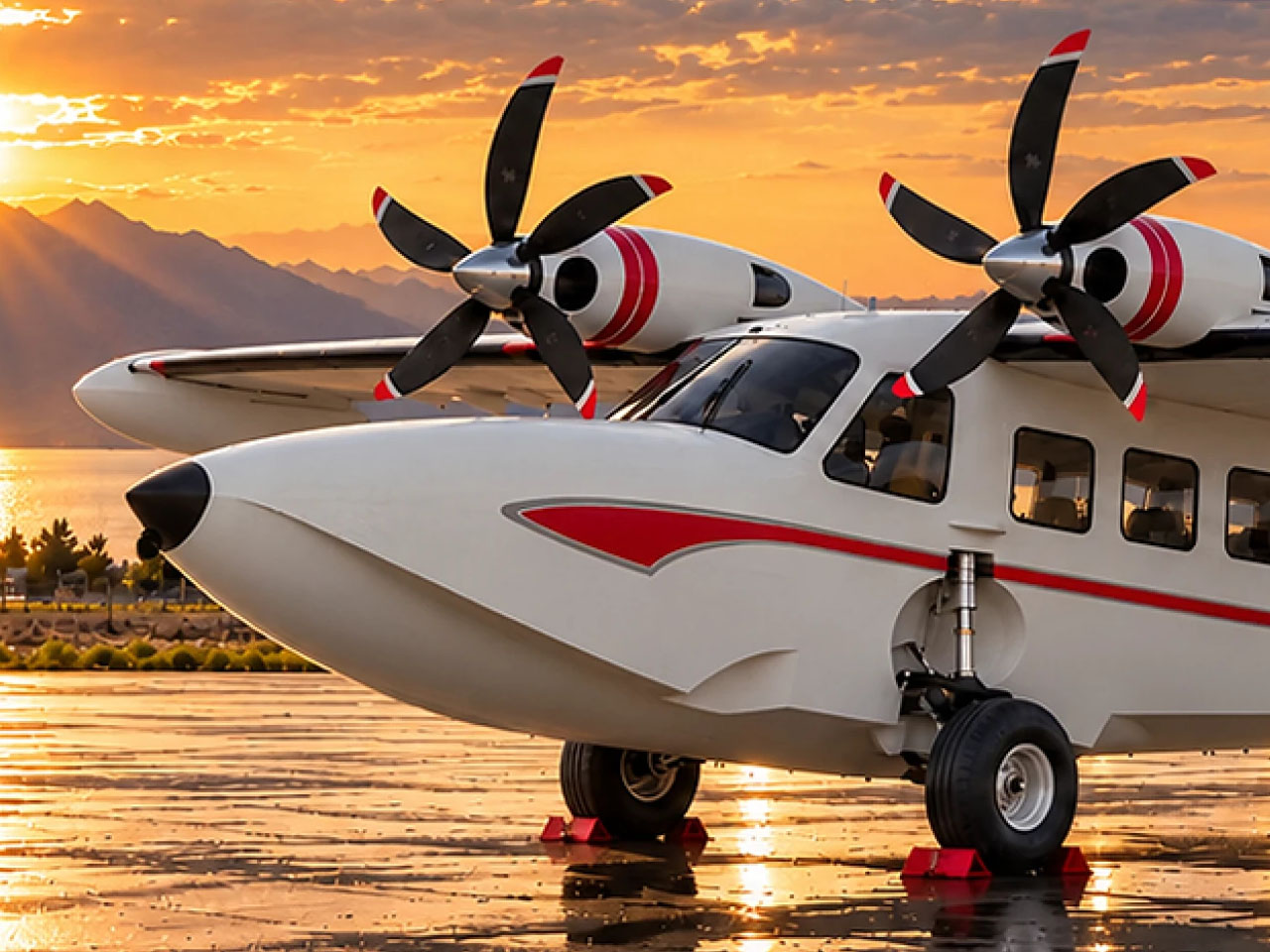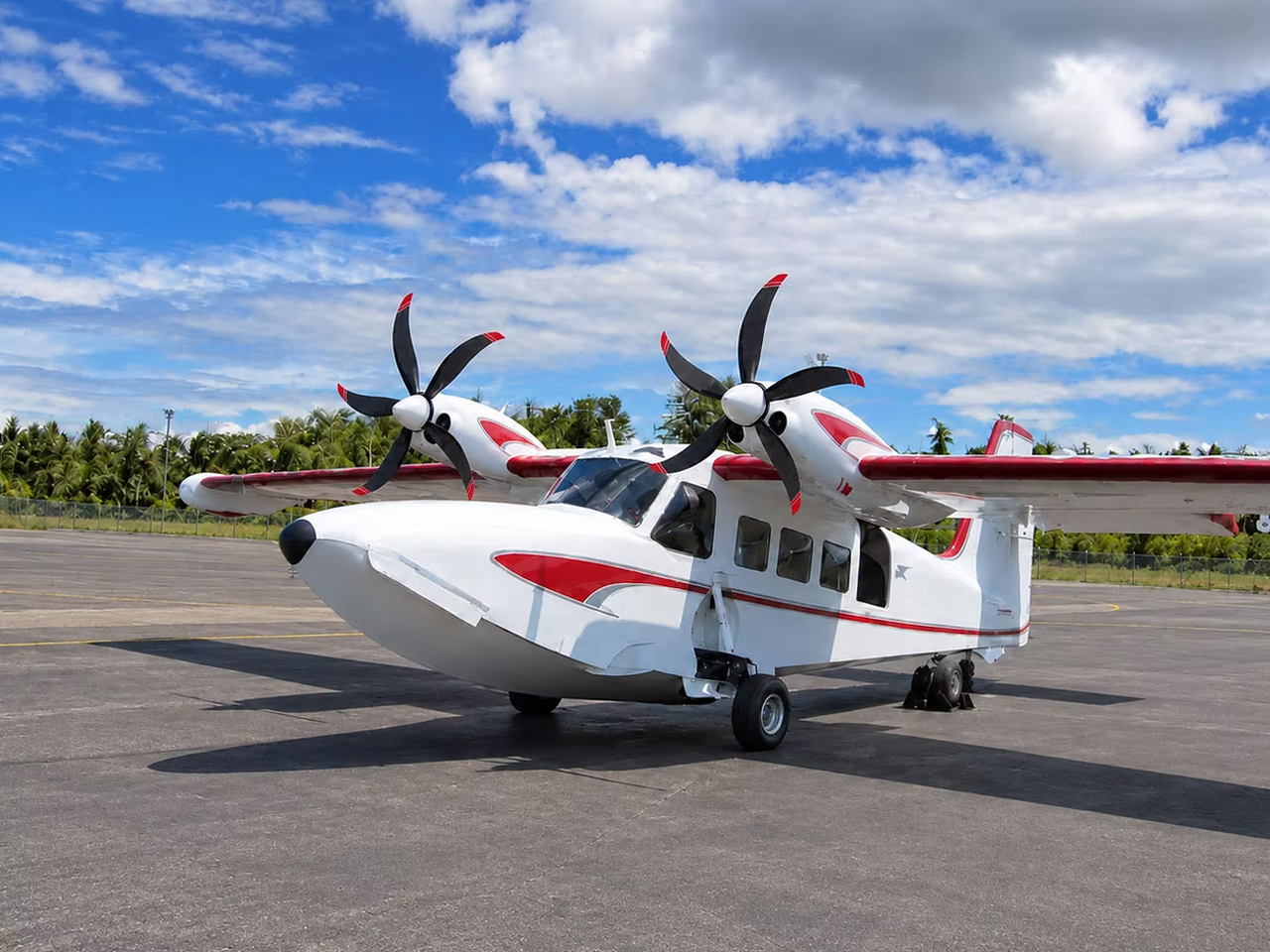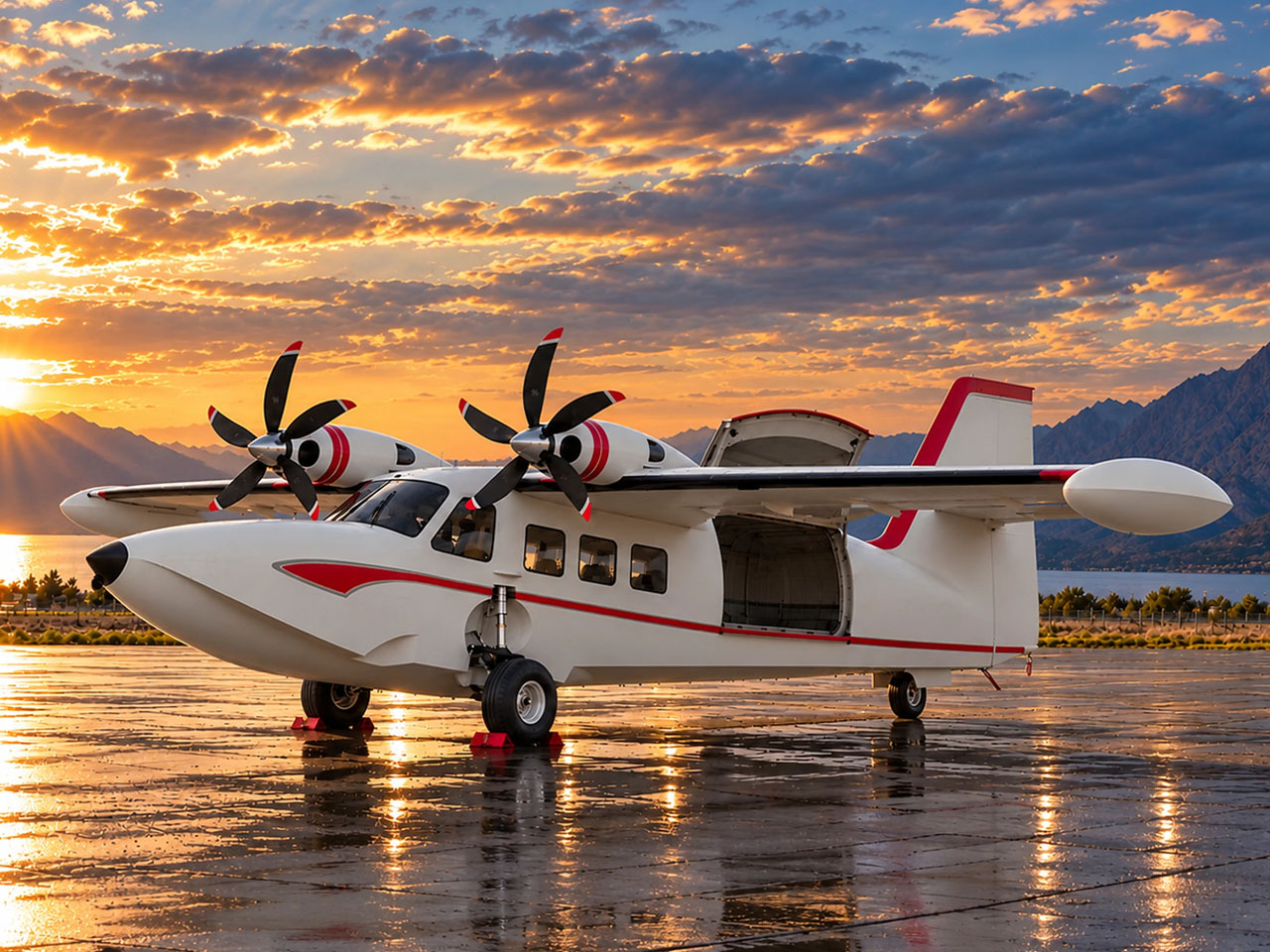

Maxwell Aircraft has unveiled the M1 Hybrid, an amphibious aircraft that combines electric propulsion with conventional fuel-powered engines to address one of aviation’s longstanding compromises – the need for substantial power during takeoff without carrying oversized engines throughout an entire flight. Designed for cargo and passenger transportation, the aircraft aims to deliver long-range performance while retaining the flexibility to operate from both land and water.
The first configuration, called the M1-HC, is being developed primarily for cargo operations. Maxwell claims it will carry a payload of up to 2,000 lb over 1,000 nautical miles on a single flight. A five-foot-wide cargo door is designed to accommodate palletized freight, making loading and unloading more practical for logistics operators.
Designer: Maxwell Aircraft
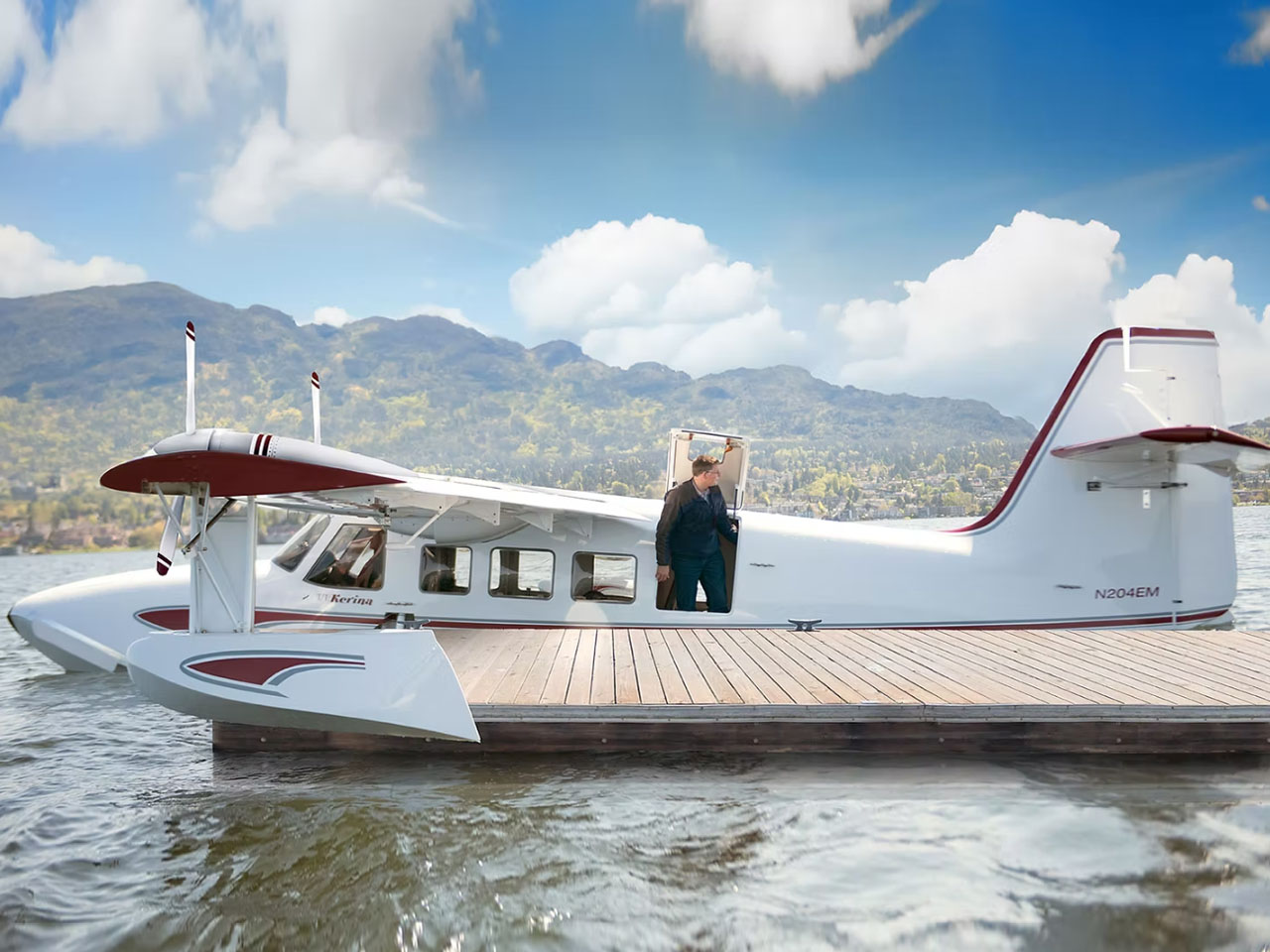
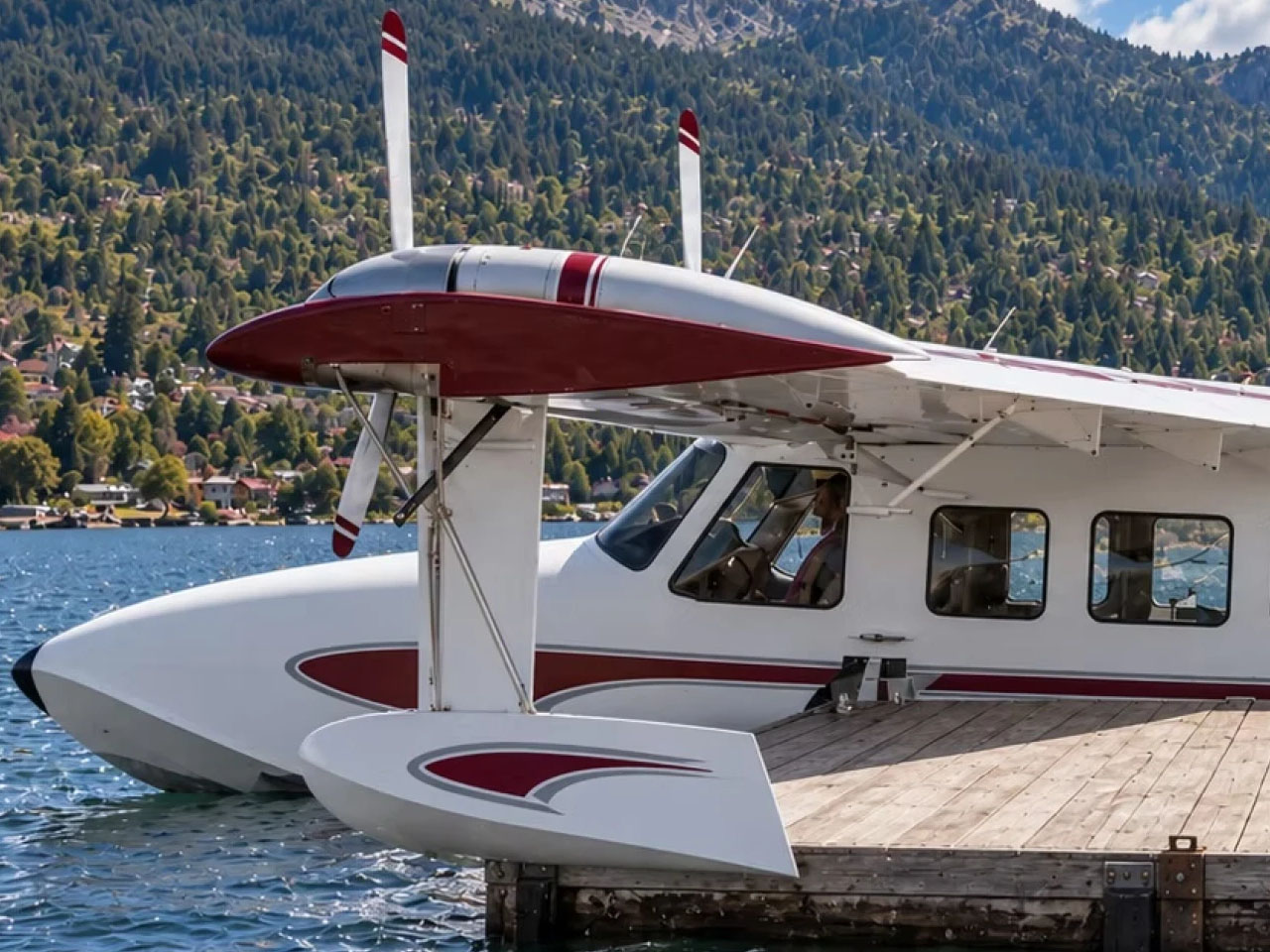
The aircraft’s defining feature is its patent-pending, mechanically coupled hybrid propulsion system. Rather than relying exclusively on electric motors or conventional engines, the arrangement combines powerful electric motors with two compression-ignition engines running on Jet A aviation fuel. Each propulsion system contributes power according to the demands of different flight stages.
During takeoff and initial climb, the electric motors provide additional power, with the combined system targeting up to 1,500 horsepower. Maxwell estimates that this high-power assistance will be needed for approximately six minutes. Once airborne and cruising, the aircraft relies primarily on its fuel-powered engines, requiring approximately 300 horsepower combined, or 150 horsepower per engine. These engines use compound turbocharging and direct fuel injection to support efficient operation.
This approach is intended to reduce the battery capacity required onboard. Since electric assistance is concentrated around the most power-intensive stages of flight, the aircraft does not need to carry a large battery pack for continuous electric propulsion. Keeping battery weight down is particularly important for an aircraft designed to transport substantial cargo over long distances.
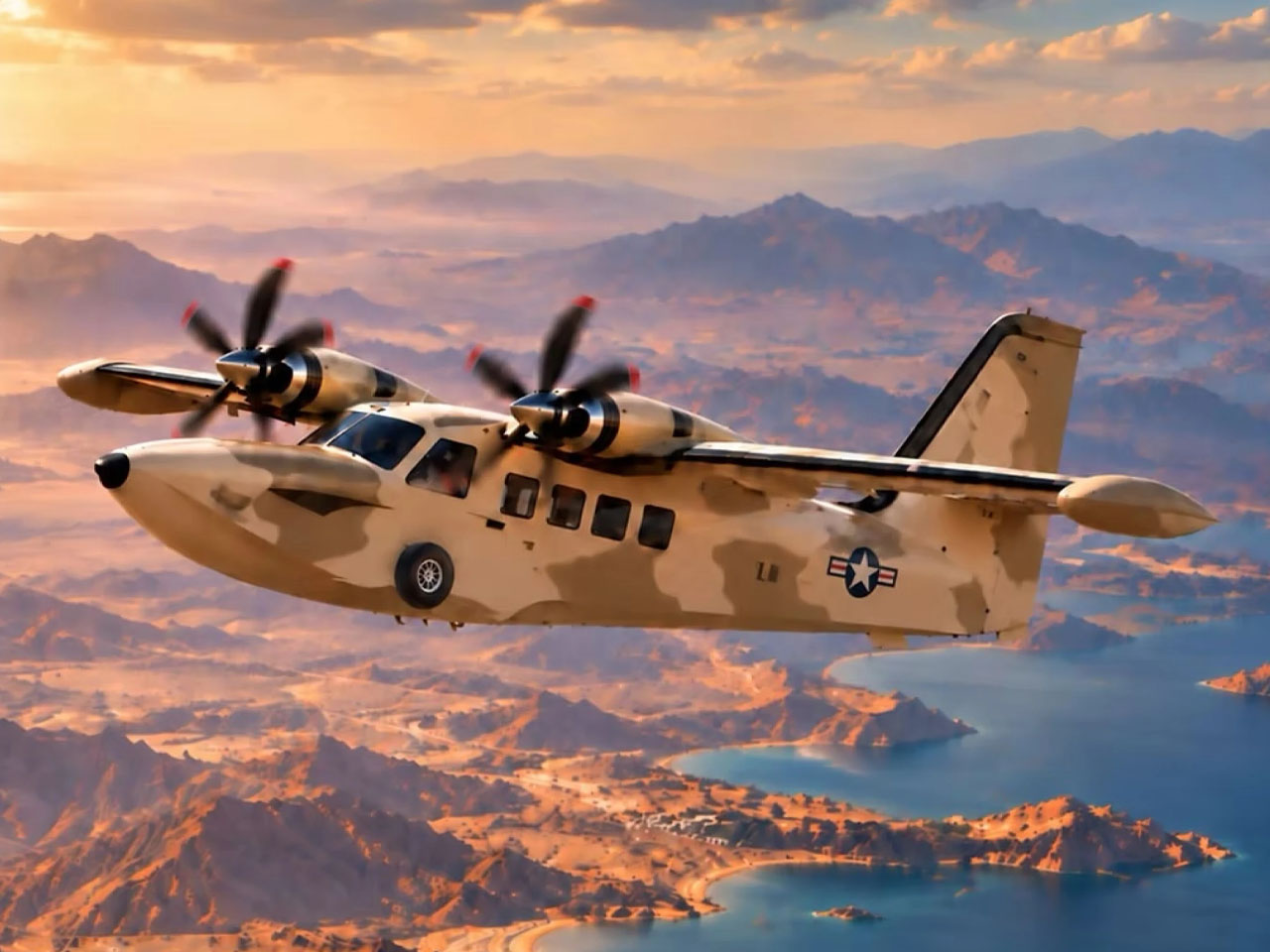
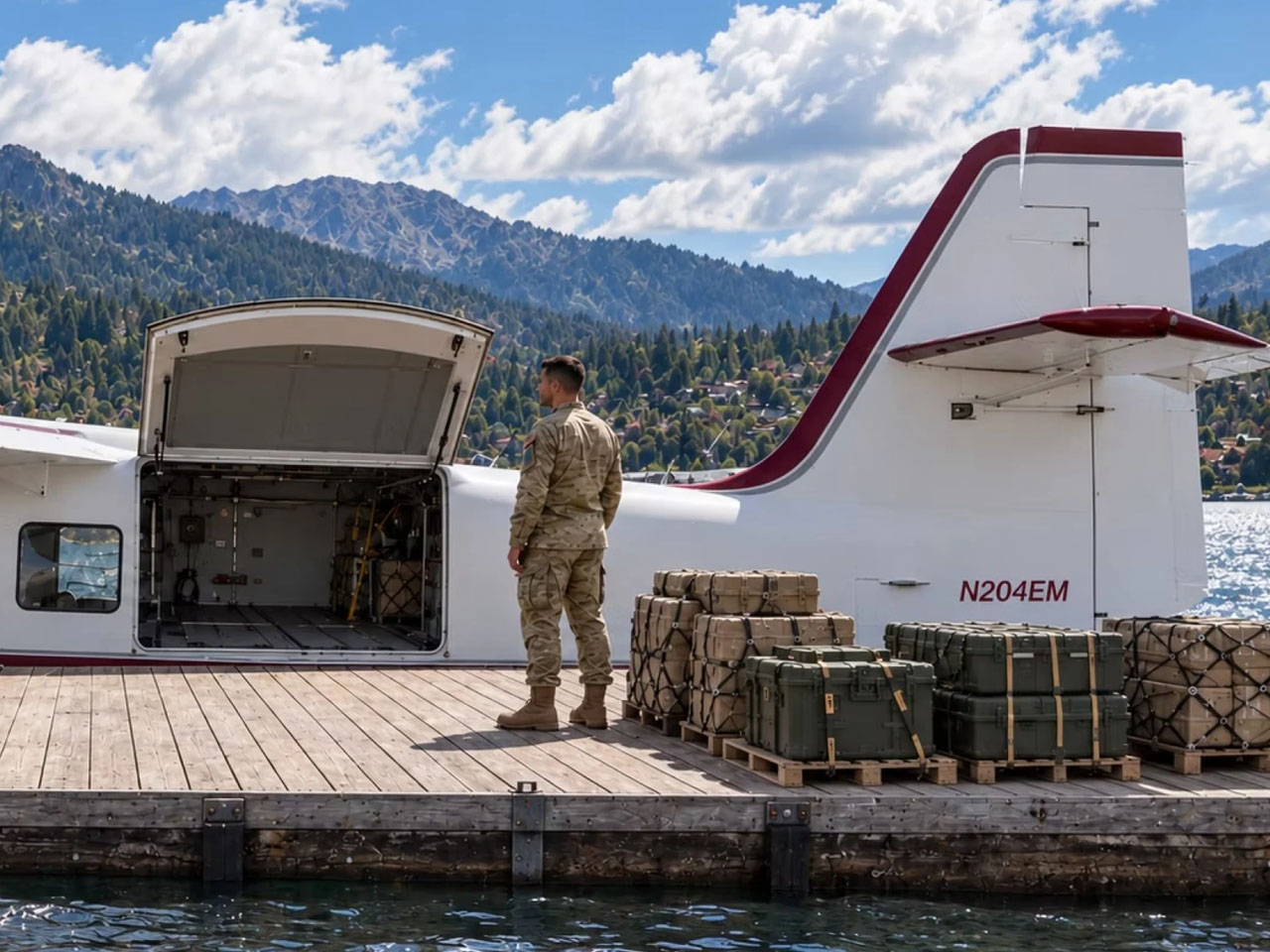
M1’s construction also reflects its intended operating environment, as the airframe uses carbon fiber and Kevlar, drawing on the composite Gweduck amphibious aircraft design, which Maxwell describes as a fifth-generation evolution of the historic Grumman seaplane concept. Beyond reducing structural weight, composite materials address a practical challenge for seaplanes – corrosion caused by prolonged exposure to saltwater.
Its amphibious configuration allows the aircraft to operate from waterways and unimproved runways, potentially opening routes that conventional land-based aircraft cannot easily serve. Maxwell sees applications in remote communities, island transportation, disaster response, cargo logistics, government operations, and defense missions.
The M1 Hybrid Cargo is being offered under experimental aircraft regulations, including commercial use for government purposes. Its announced performance figures remain design targets rather than independently demonstrated operating specifications.
By combining electric assistance for high-power flight phases with fuel-powered cruising, Maxwell is adapting a radical approach to hybrid aviation. The M1-HC’s proposed capabilities could make it a practical option for transporting people and supplies to locations where conventional airport infrastructure is limited.