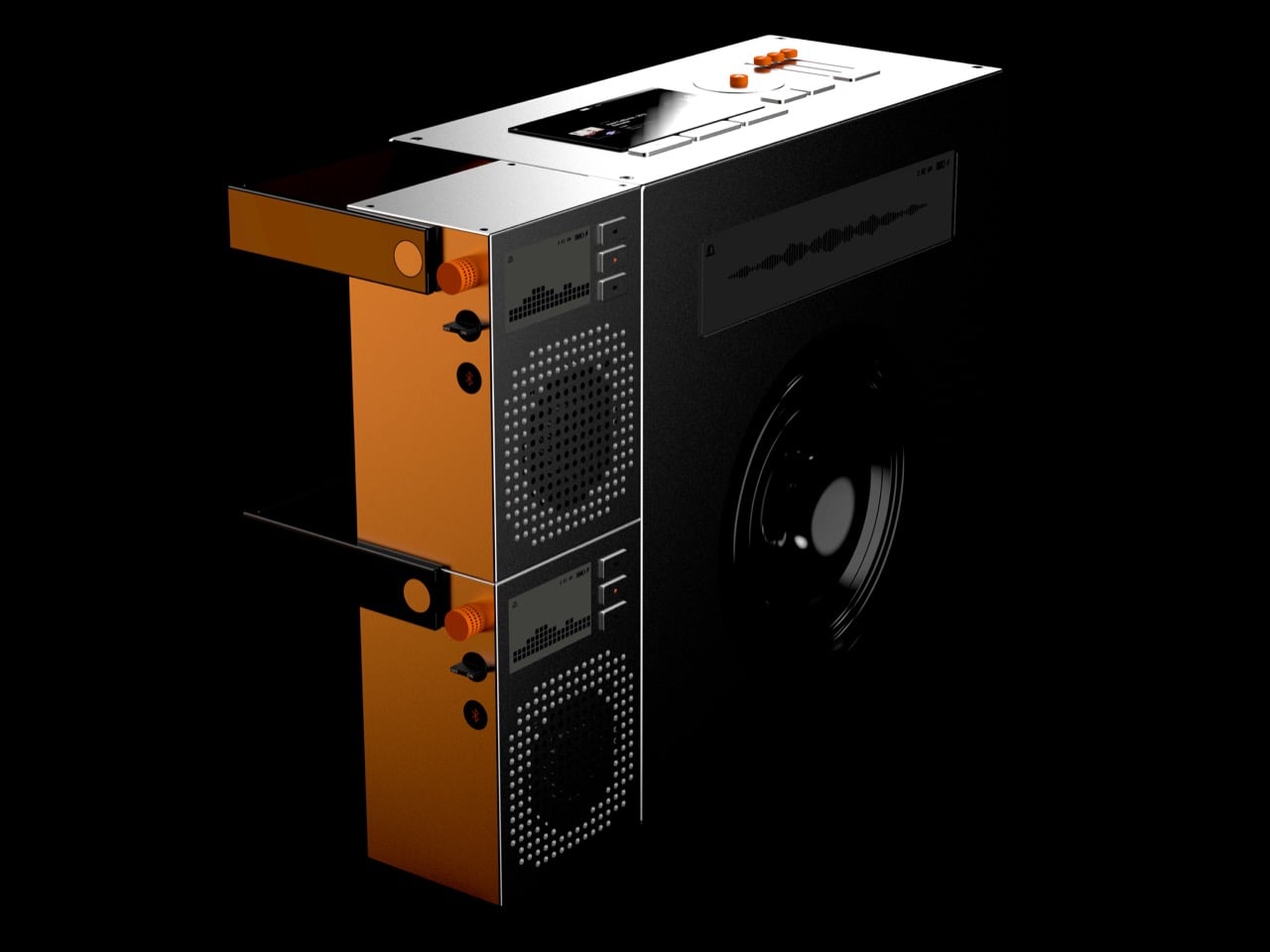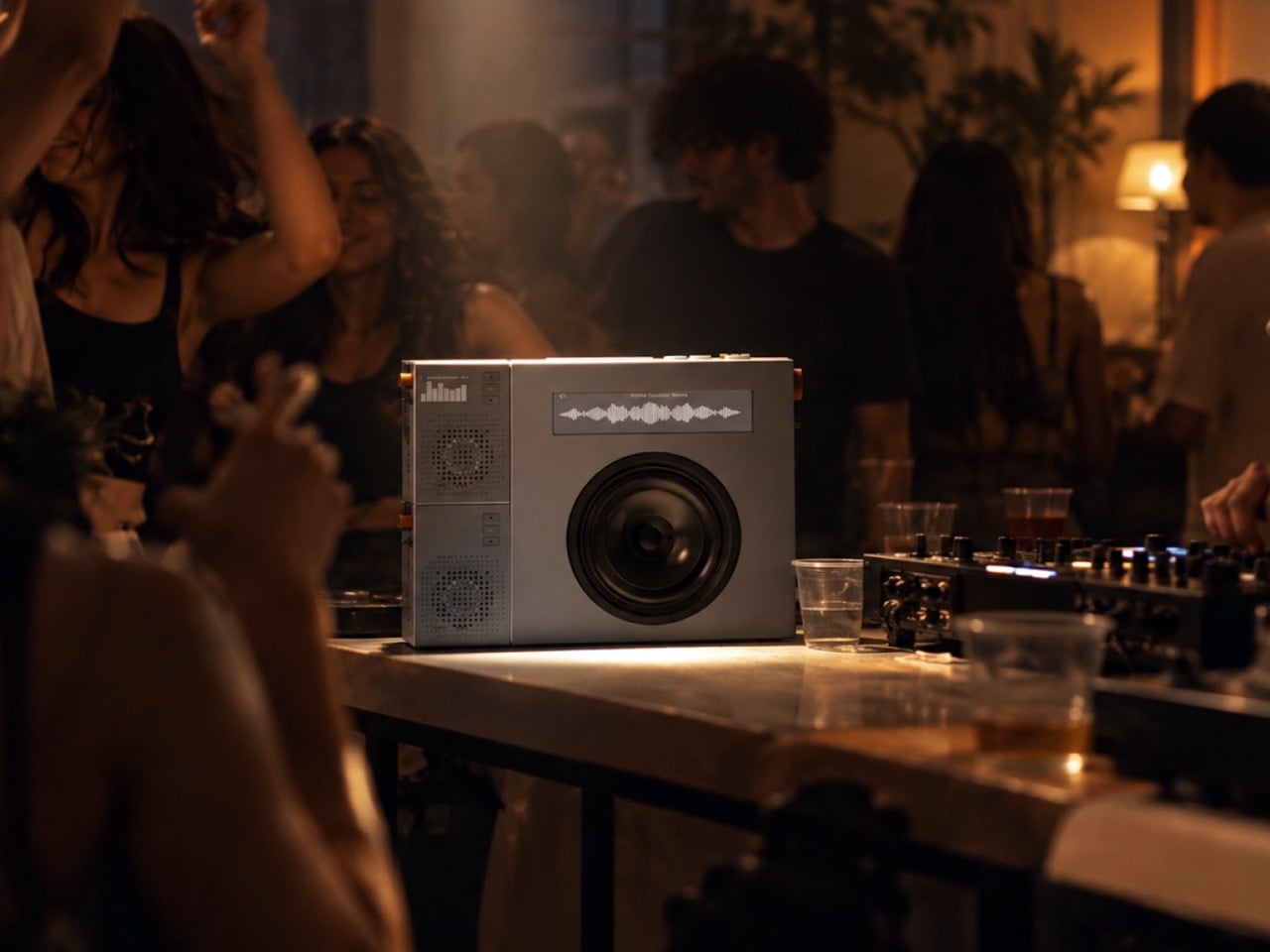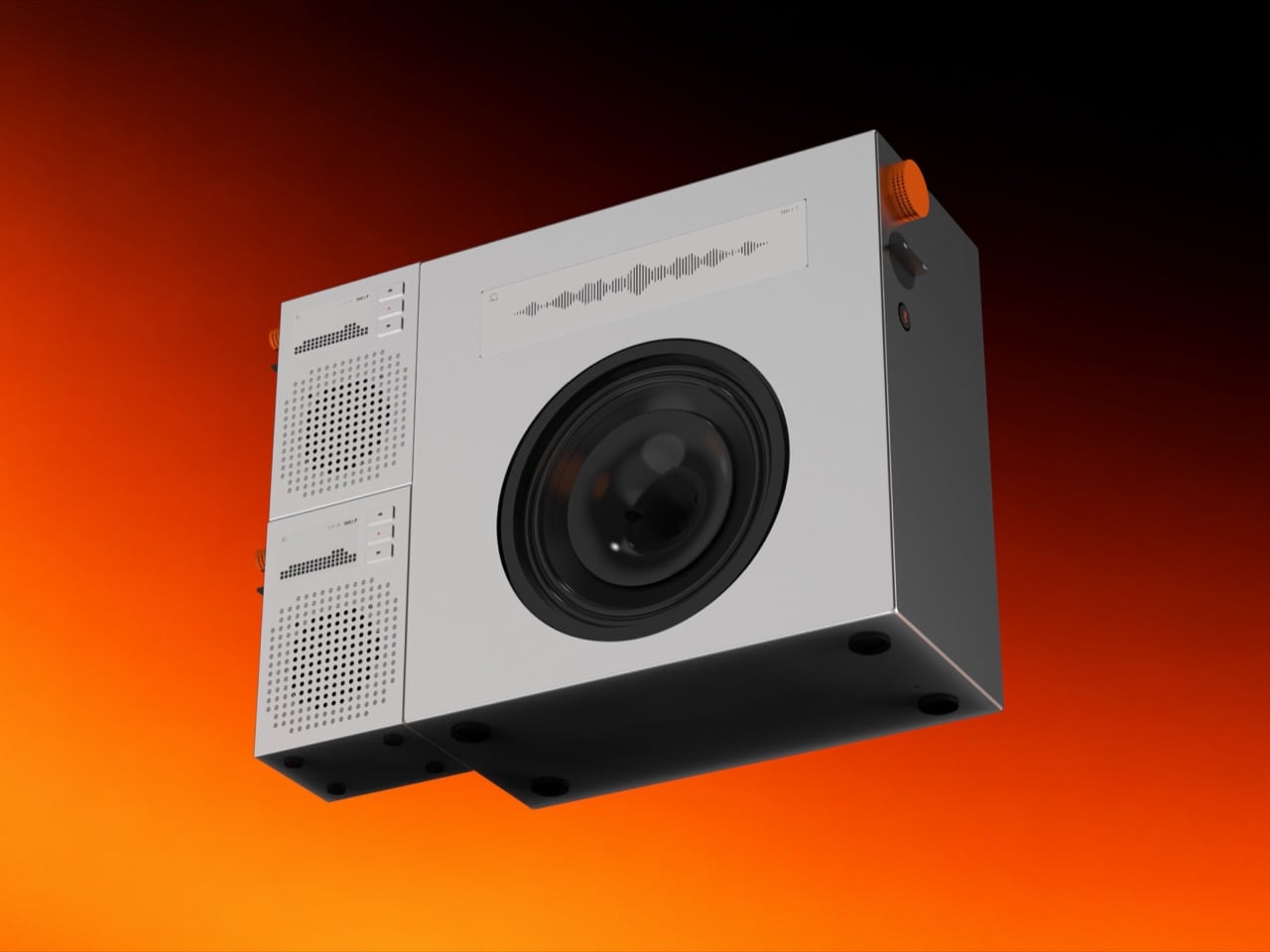

Every friend group has one person who hogs the aux cord and one Bluetooth speaker everybody fights over. The HS-07 tries to fix the second problem by being three speakers at once. It’s a Teenage Engineering-inspired concept by Aarya Kulkarni, Jahnavi Gogoi, Riti Agarwal and Yesha Agrawal, students at MIT Institute of Design (my alma mater), pairing a big silver main unit with two smaller satellites docked on its side. Keep them together for stereo at home. Pull the satellites off and each becomes a portable speaker, handle included.
This being a TE-inspired design, nobody stopped at portable. The main unit gets three chunky orange sliders for bass, mids and treble, a touchscreen with a little spinning-turntable animation, and a playback disc for steering through your music. An audio jack is intended to let you plug in an instrument, making room for your playlist and your questionable guitar solos. The satellites pack pixelated EQ displays and handles that flip into kickstands.
Designers: Aarya Kulkarni, Jahnavi Gogoi, Riti Agarwal & Yesha Agrawal (MIT Institute of Design)
Two satellites that dock for stereo and undock for the road
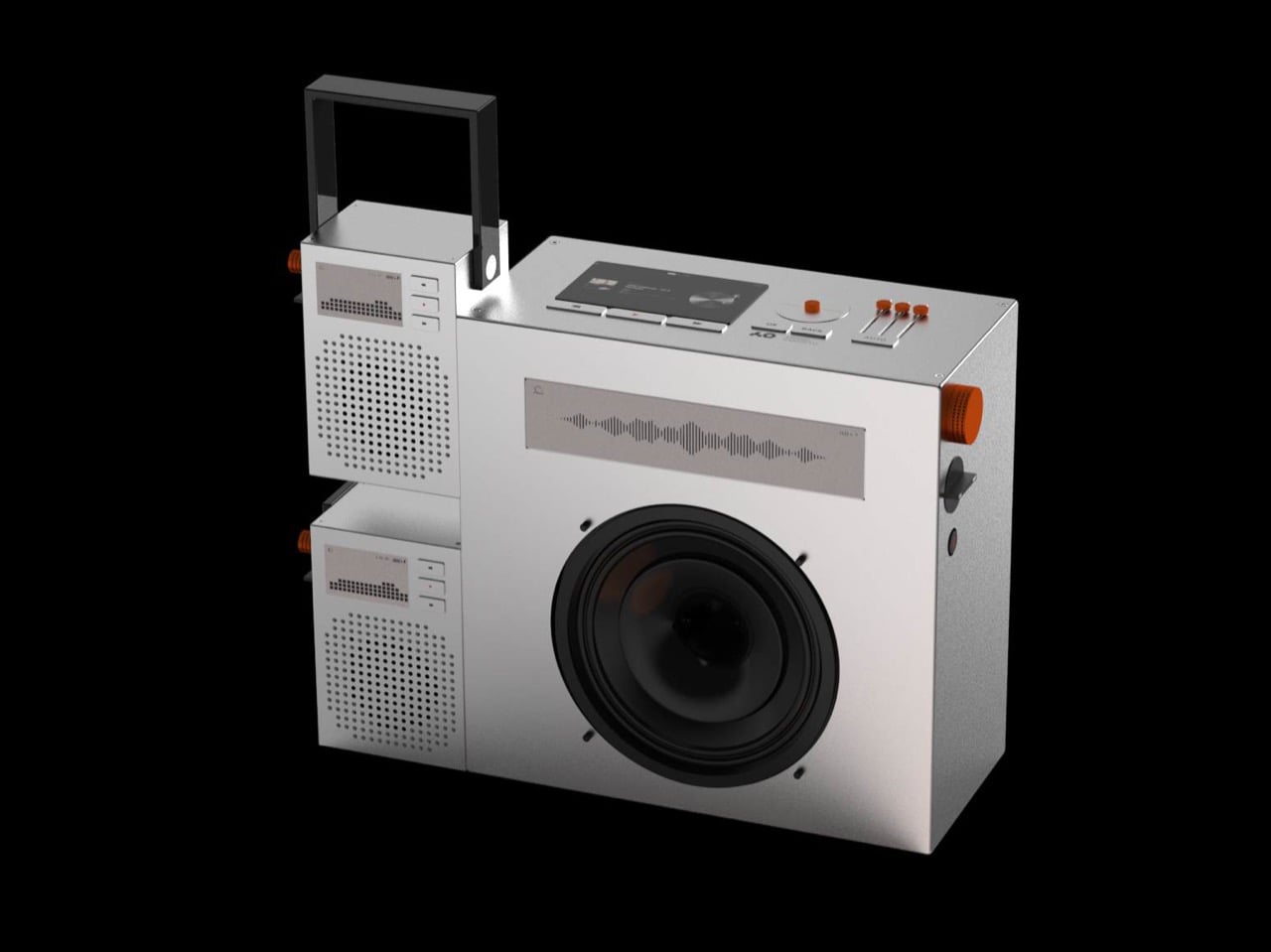

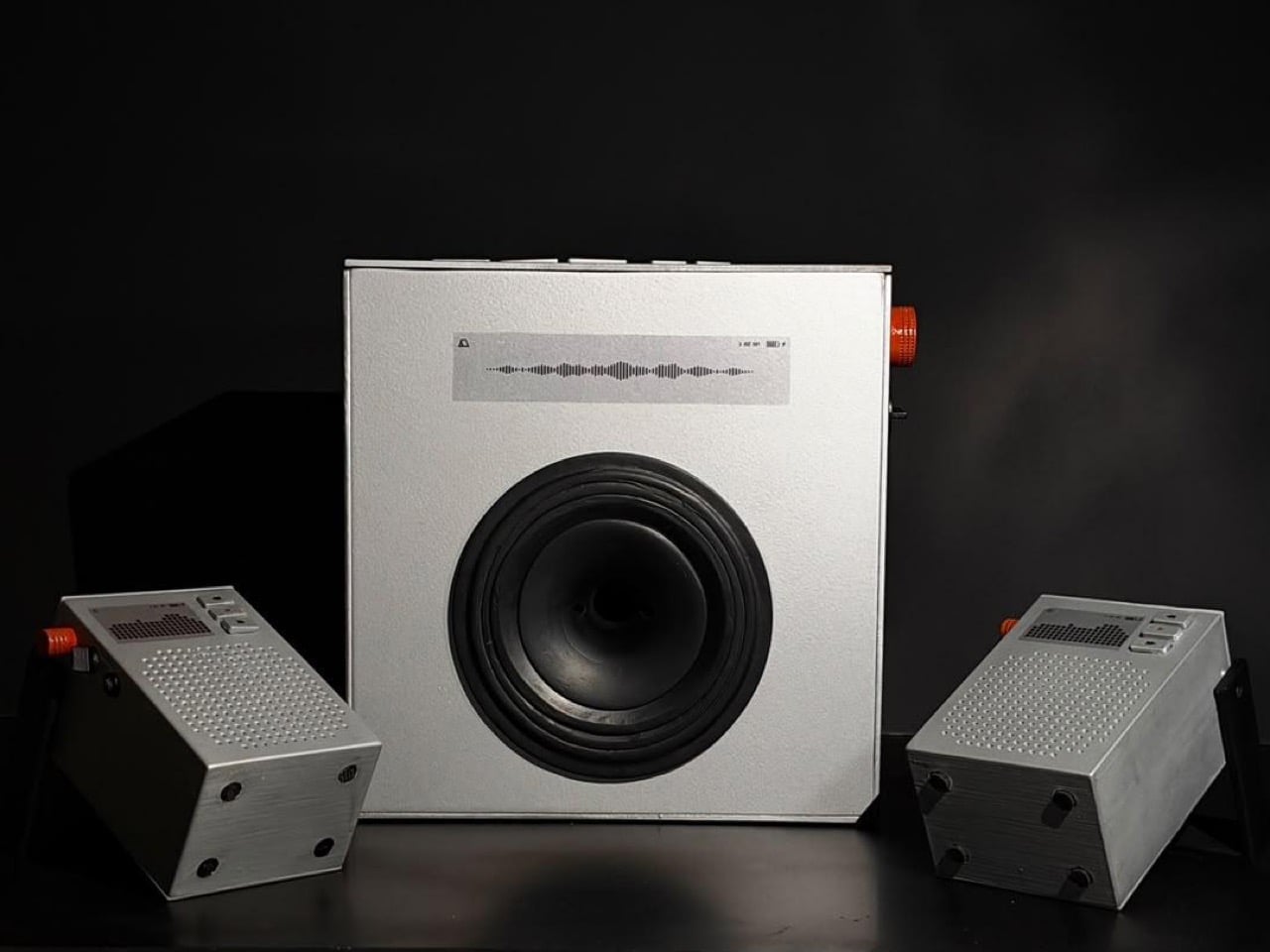
Each satellite is a tall, narrow speaker with a perforated grille, a pixelated EQ display, and three keys for rewind, play and fast-forward. A knurled orange knob sits on its side, along with a switch and a button. A square black loop handle rises from the top for carrying. Flip that handle backward and it becomes a kickstand, propping the speaker up on a desk or picnic blanket. Both satellites stack along the main unit’s left flank, with the docked system designed to play together in stereo.
Teenage Engineering fans will recognize that handle trick. TE’s own OB-4 has a folding handle that doubles as a stand, and the HS-07 gives each satellite its own version. The stackable arrangement also recalls Frekvens, TE’s 2020 collaboration with IKEA, which let you pile speakers and lights into your own little party rig. Here, the satellites are designed to leave the stack and work as portable speakers on their own.
Bass sliders, a spinning disc, and a jack for your guitar
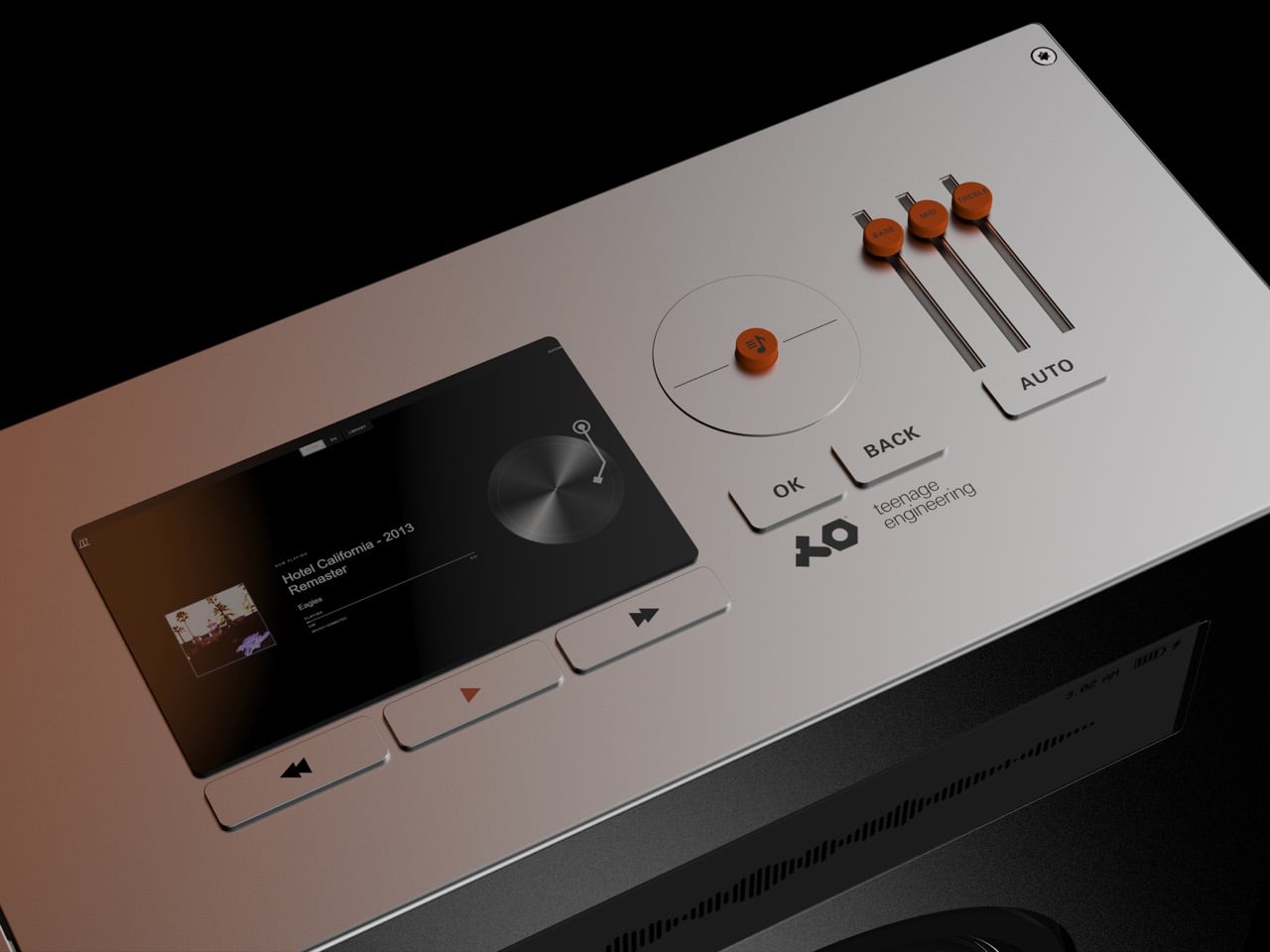
Three vertical sliders with orange caps sit on the main unit’s top plate, handling bass, mids and treble, with an AUTO key beneath them for when you’d rather let the speaker decide. To their left, a landscape touchscreen shows what’s playing alongside a tiny animated turntable, with play, rewind and fast-forward keys underneath. Between the screen and sliders sits the playback disc, a round dial with an orange center puck, flanked by OK and BACK buttons. The students pitch it as a tactile way to control and explore your music. The physical sliders would also let you tweak the EQ mid-song without unlocking your phone.
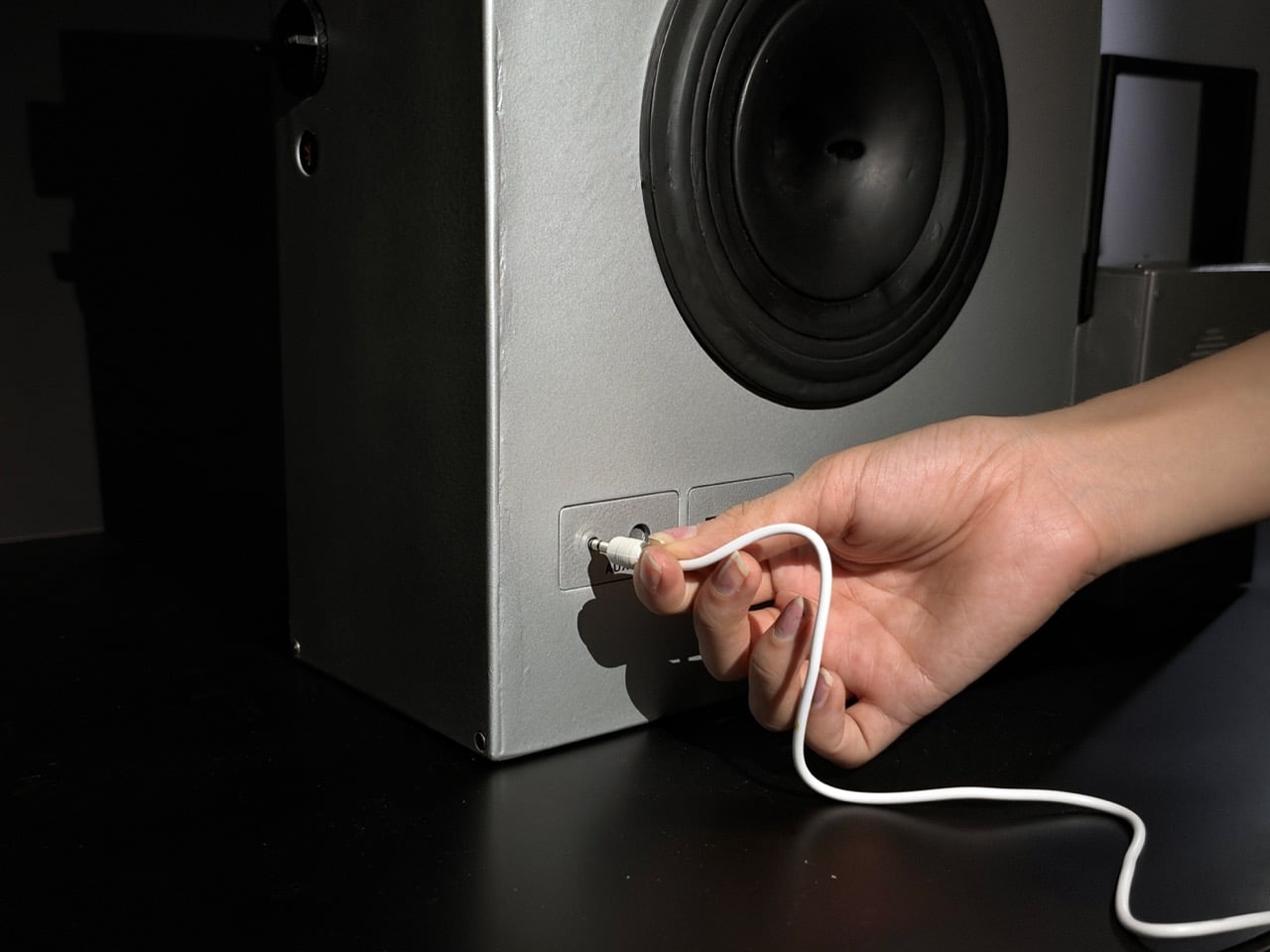
That disc recalls the motorized reel on TE’s TP-7 field recorder, which spins during playback and pauses when you press a finger against it. The HS-07’s disc isn’t described as motorized, but it shares that preference for a physical control over another touchscreen menu. Then there’s the integrated audio jack, intended for plugging in a guitar or keyboard and jamming along with whatever’s streaming. TE’s EP-35, a $399 speaker that doubles as an instrument amp, suggests these students are on the same wavelength as Stockholm.
Braun’s grid, TE’s orange, and a name that fits right in

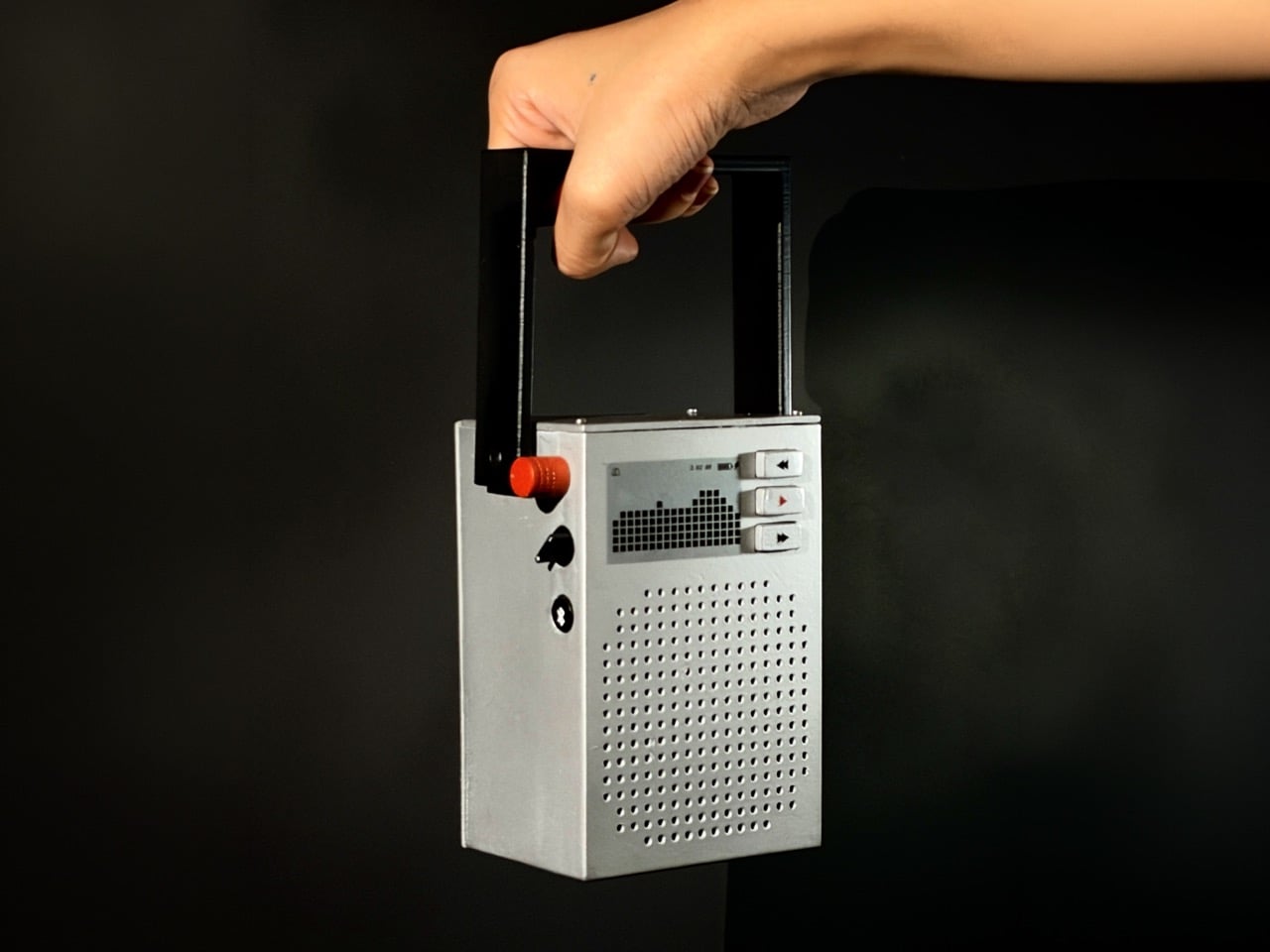
The dotted grid grilles on the satellites recall Dieter Rams’s 1958 Braun T3 pocket radio, whose design later influenced the original iPod. TE has been riffing on Braun for years, and that influence comes through here too. Orange accents show up on the knobs, slider caps and even the exposed screws, a familiar TE flourish. Silver panels keep everything looking like lab equipment you’d happily leave on a coffee table. Even the name fits, following the two-letters-and-a-number pattern TE uses for the OP-1 and OB-4.
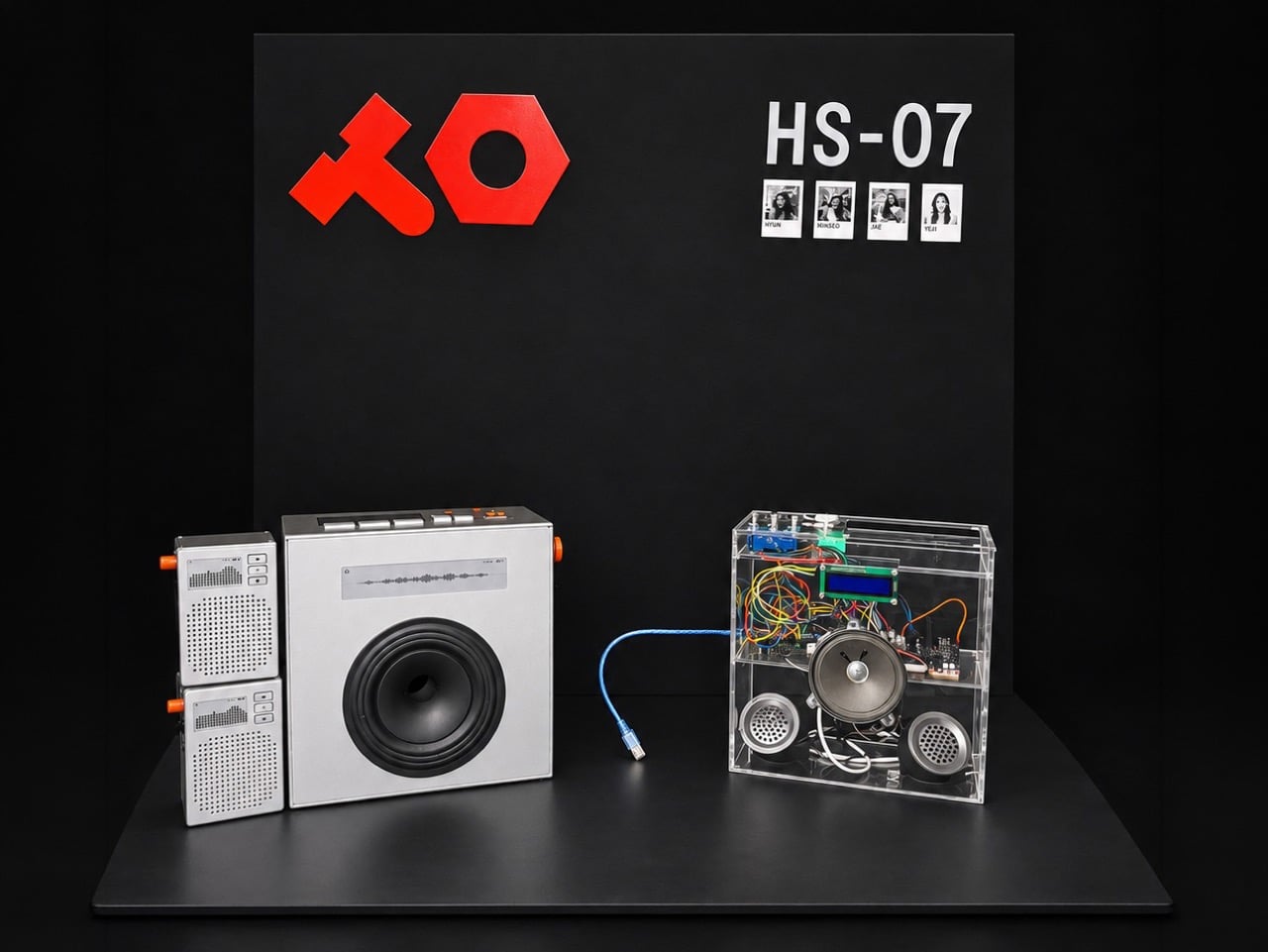
The team also built a physical model, and the satellites look right at home dangling from a hand by their handles. There’s plenty to fiddle with across the system, from the EQ sliders and playback disc to the speakers themselves. If TE ever wants a home stereo that splits up for the weekend, the students in Pune have a proposal ready. I’ll be over here feeling pretty proud of my old school.