
Frank Stephenson, the designer behind the Maserati MC12 and the McLaren P1, once summed up Grand Theft Auto’s car design philosophy as mashing two cars together and praying nobody sues. He’s right, and it’s also the funniest description of a design process I’ve ever heard. Rockstar Games has never licensed real cars for the series, so its artists invent stand-ins instead, and GTA 6 (out November 19) is about to show off the most convincing batch yet. Grotti is basically Ferrari, Pfister is basically Porsche, and Bravado is Dodge with the serial numbers filed off. These fakes have gotten so good that Stephenson himself said one of them looks more cohesive than the car it copies.
That car was the Dinka Jester RR, GTA’s take on the Toyota Supra, and it’s a decent shorthand for how far this whole thing has come. Launching on PS5 and Xbox Series X|S, GTA 6 arrives with fictional carmakers that now have decades of models, generations, and design DNA behind them. A Grotti from 1995 has to look like a Grotti, which is a sentence that should make zero sense and somehow makes complete sense. Rockstar even had West Coast Customs build six of the new game’s cars for real, Leonida plates and all. So let’s pop the hood on the strangest car industry in the world, the one that mostly lives on a hard drive.
Steal the Soul, Skip the Badge

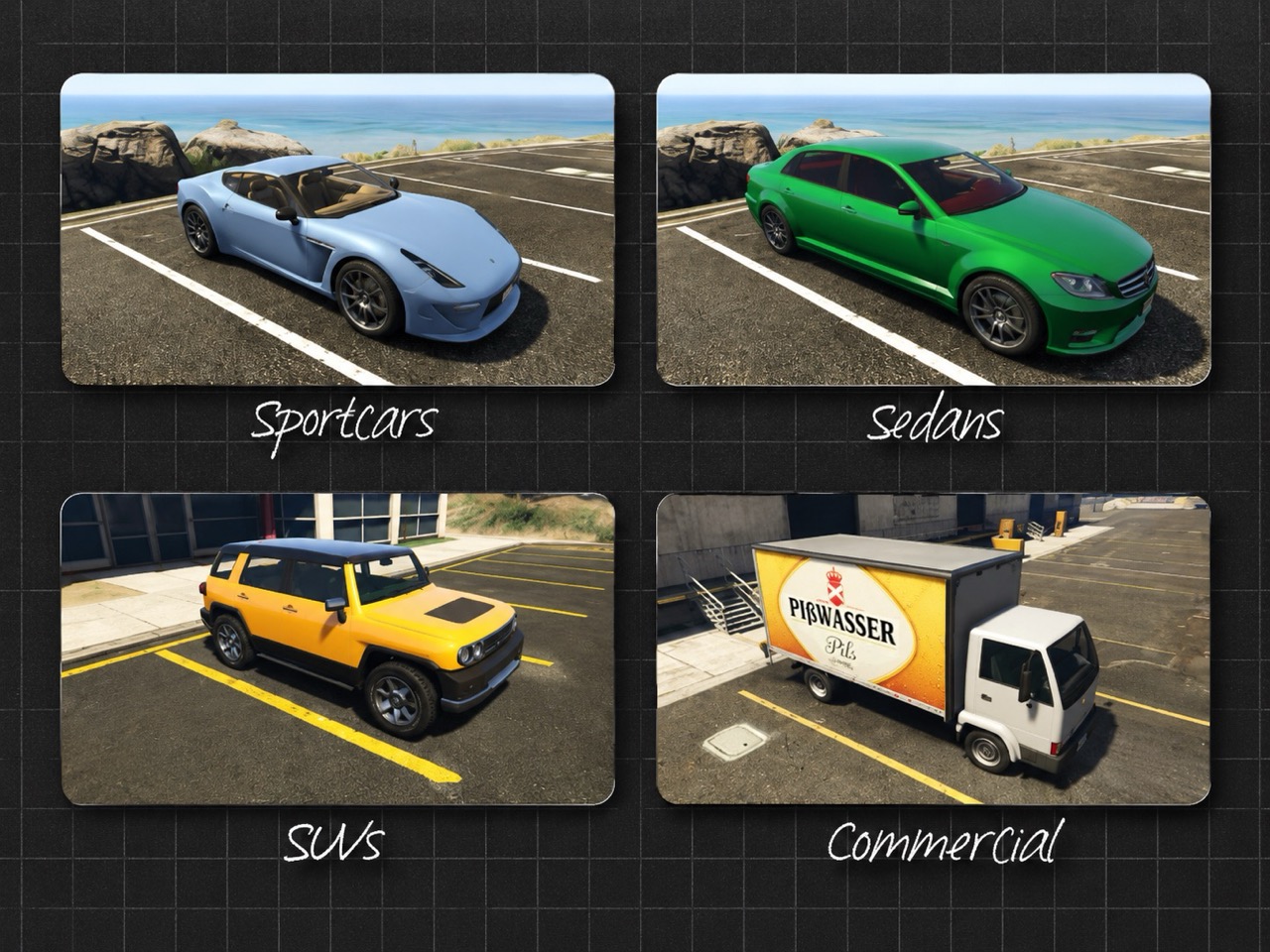
Every Rockstar car starts life as a job opening, with the team first working out what the world needs (sports cars, family sedans, SUVs, delivery vans) before designing anything to fill those roles. That’s the process as described by Aaron Garbut, the art director and co-studio head at Rockstar North. From there, each fictional brand keeps the one trait that makes its real counterpart instantly readable. Pfister protects the Porsche silhouette, Benefactor holds onto Mercedes-Benz proportions, and Pegassi goes all in on Lamborghini’s knife-edge angles. Everything else gets shuffled and remixed until the car feels familiar without ever being a straight copy.
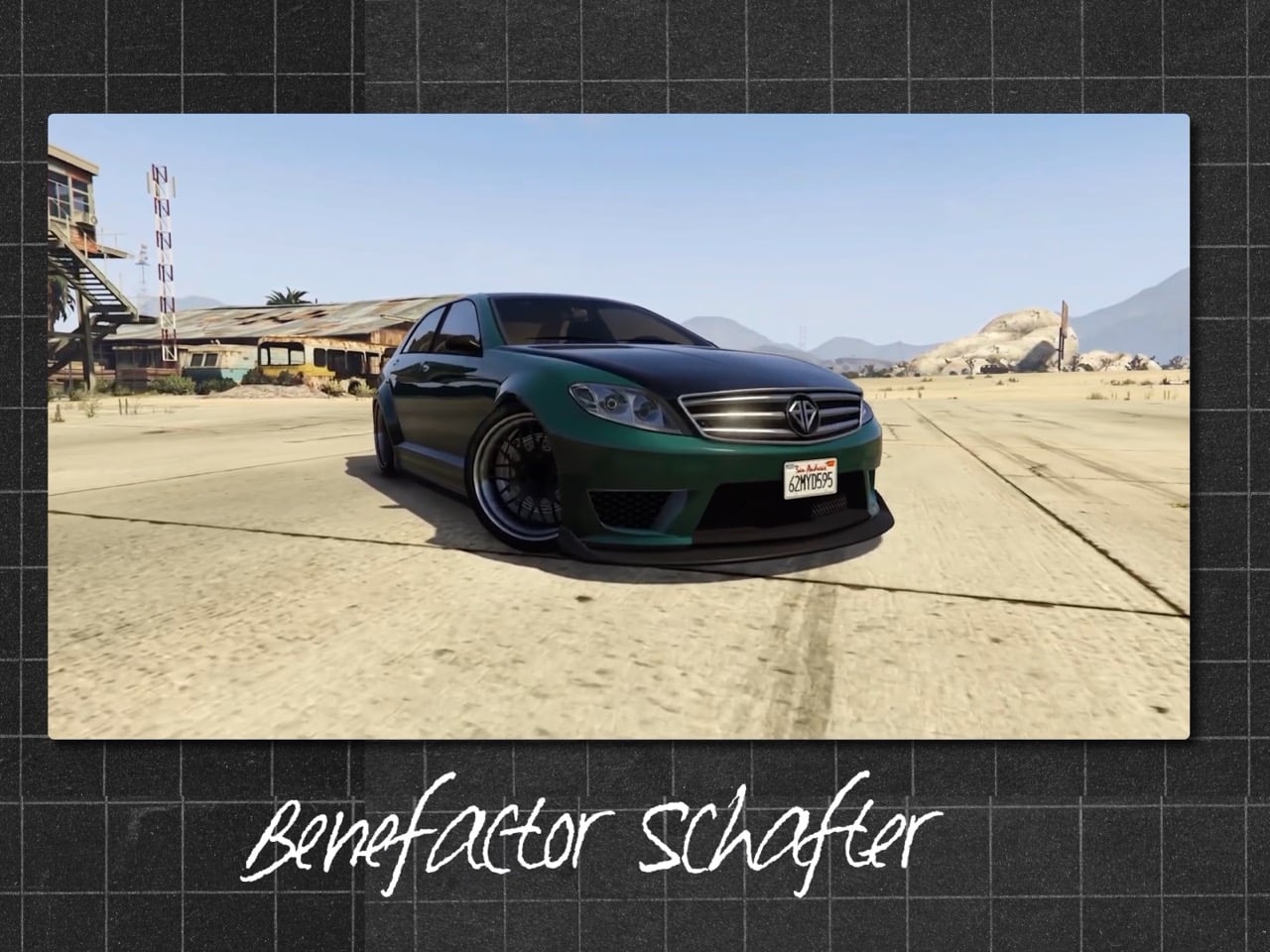
The Benefactor Schafter shows the method in action, blending cues from the W221 S-Class, the W212 E-Class, and the C216 CL-Class into one believable sedan. The Pegassi Zentorno pulls the same trick at supercar volume, pairing Sesto Elemento proportions with Veneno-style aero and a dash of Aventador. I’d happily hand this exercise to design students, because it’s brand DNA work run backward. Real carmakers spend decades deciding which features make a car theirs, and Rockstar’s artists have to reverse-engineer those answers from the outside. Then they prove they got it right by building something new that still reads as a Benz or a Lambo at a glance.
Built for Car Culture, Down to the Rivet
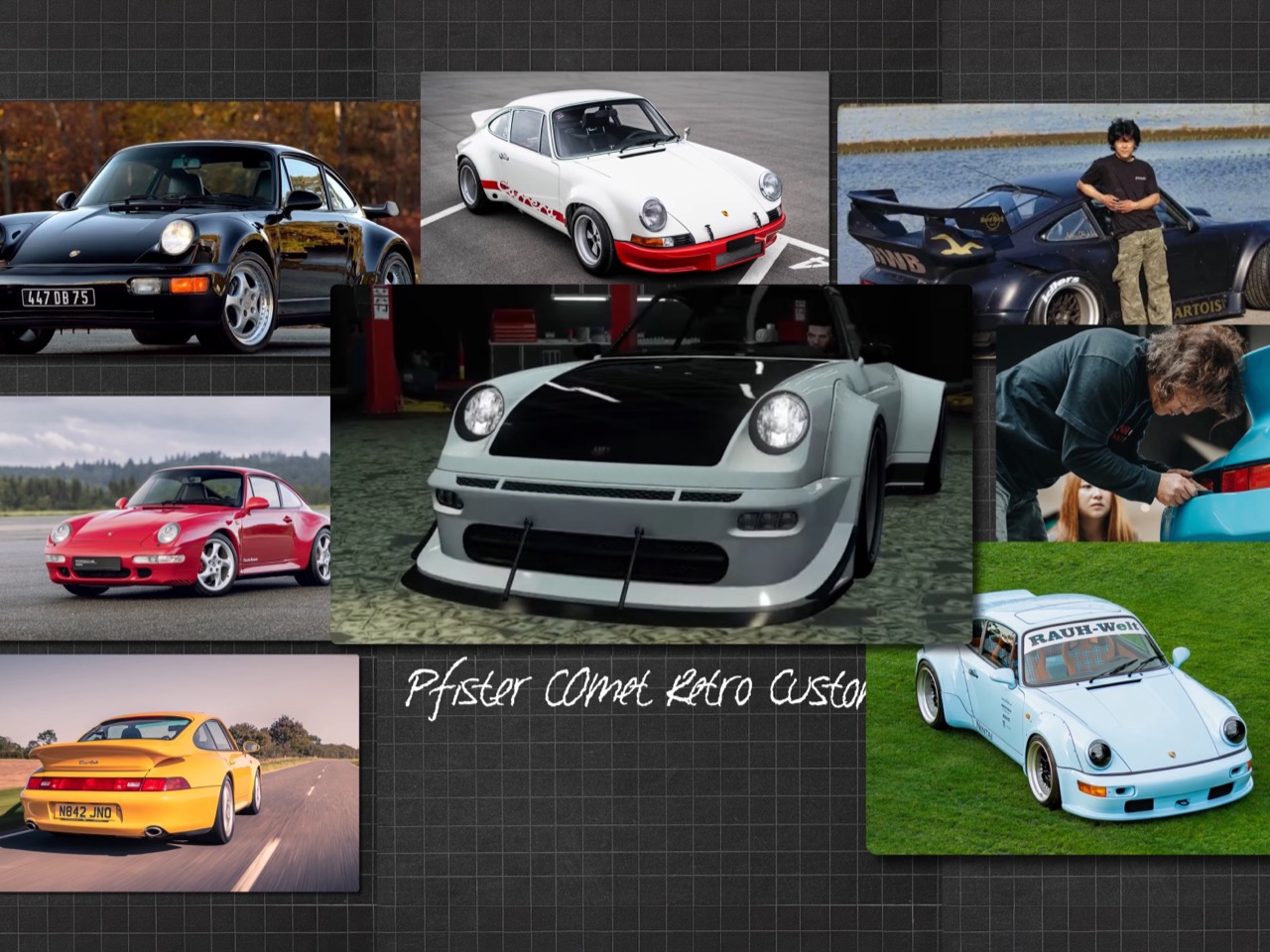
The Pfister Comet Retro Custom is a 964-generation Porsche 911 wearing the riveted fender flares of Akira Nakai’s Rauh-Welt Begriff builds, the Japanese widebody Porsches tuner fans have obsessed over for years. Rockstar layered in cues from the 993 generation and early Carrera RSRs too, so the car reads like one specific build from one specific scene. That’s a deep cut, and the series is full of them. Lowriders, drift cars, restomods, and motorcycles all get the same subculture-literate treatment. Rockstar designs for the people who modify cars just as much as for the factories that build them.
Some of that literacy comes from developers who actually race. Ben Lyons, a technical director at Rockstar North who worked on GTA V’s vehicle handling, bought a used BMW 325i with colleagues, stripped it, caged it, and went endurance racing. Rockstar North props art director Eoin Callan has described the effort as a small team building a racecar in a tent in Scotland. In 2022, that 325i won its class at the Nürburgring 24 Hours by three laps, entered as Rockstar Games by Viken Motorsport & Tomcat. Lyons has said the lessons from setting up a real race car fed straight into GTA Online’s tuning systems, which might be the coolest research trip in gaming.
Fake Brands, Real Family Trees
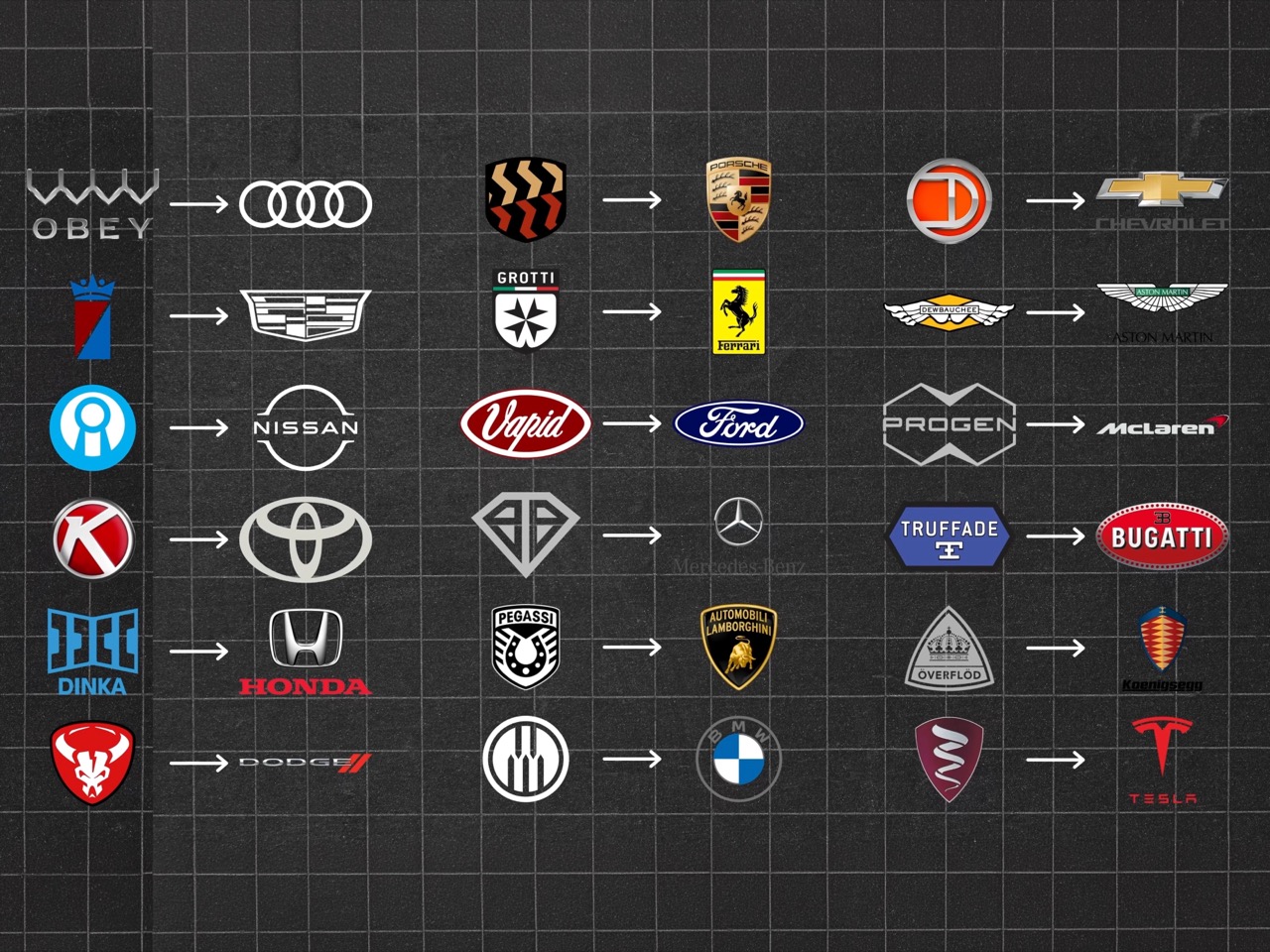
A quarter century of games and more than a decade of GTA Online have turned Rockstar’s carmakers into full brands with back catalogs. Vapid now spans everything from mid-century sedans to modern pickups, and Grotti keeps classic grand tourers parked next to current supercars. Each brand carries performance variants, custom conversions, and multiple generations of the same nameplate. That creates a design problem real automakers wrestle with constantly, since every new model has to look like it belongs in the family. A modern Vapid needs to feel like modern Ford, and a 1950s Vapid has to plausibly come from the same company 70 years earlier.
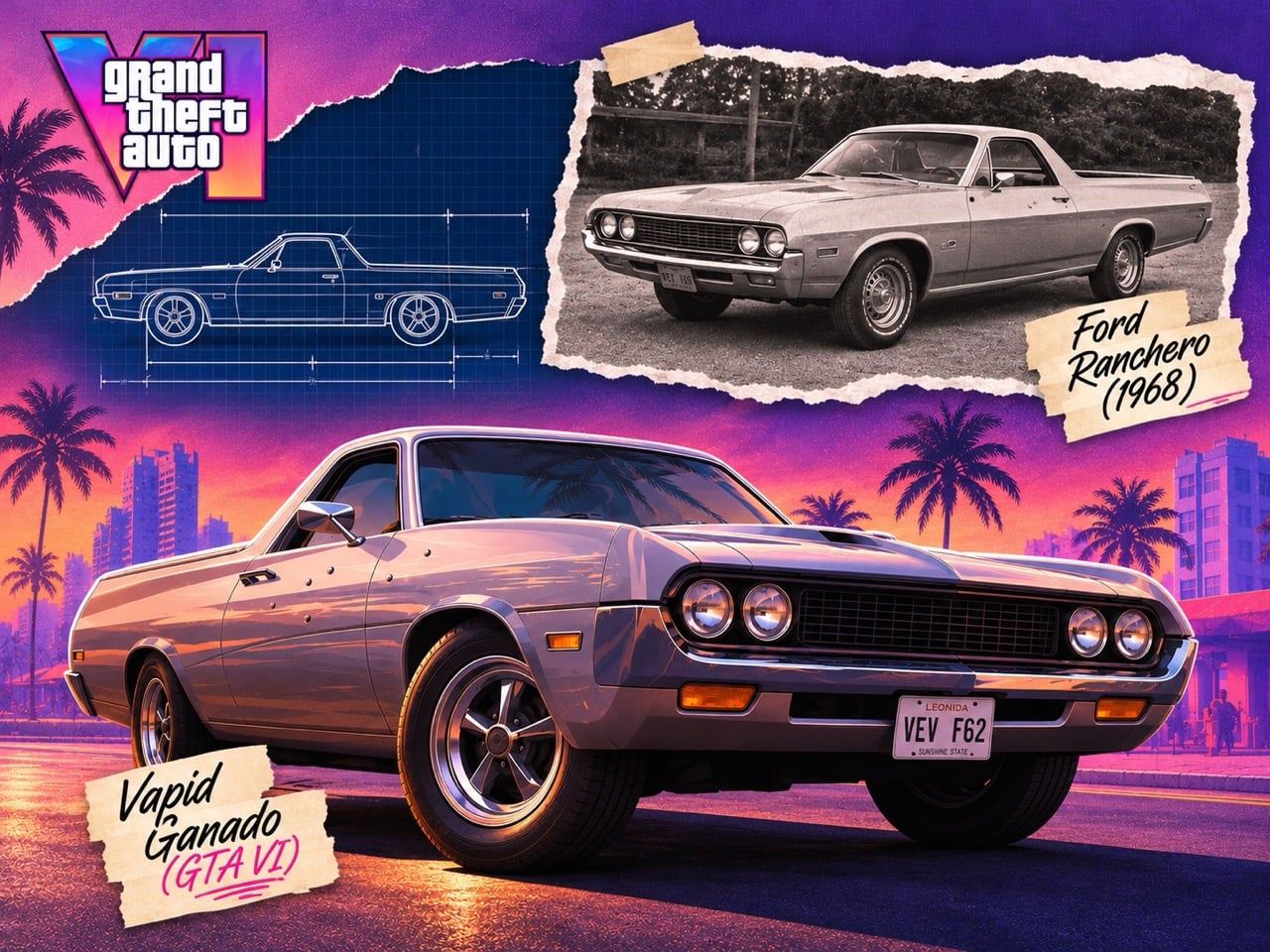
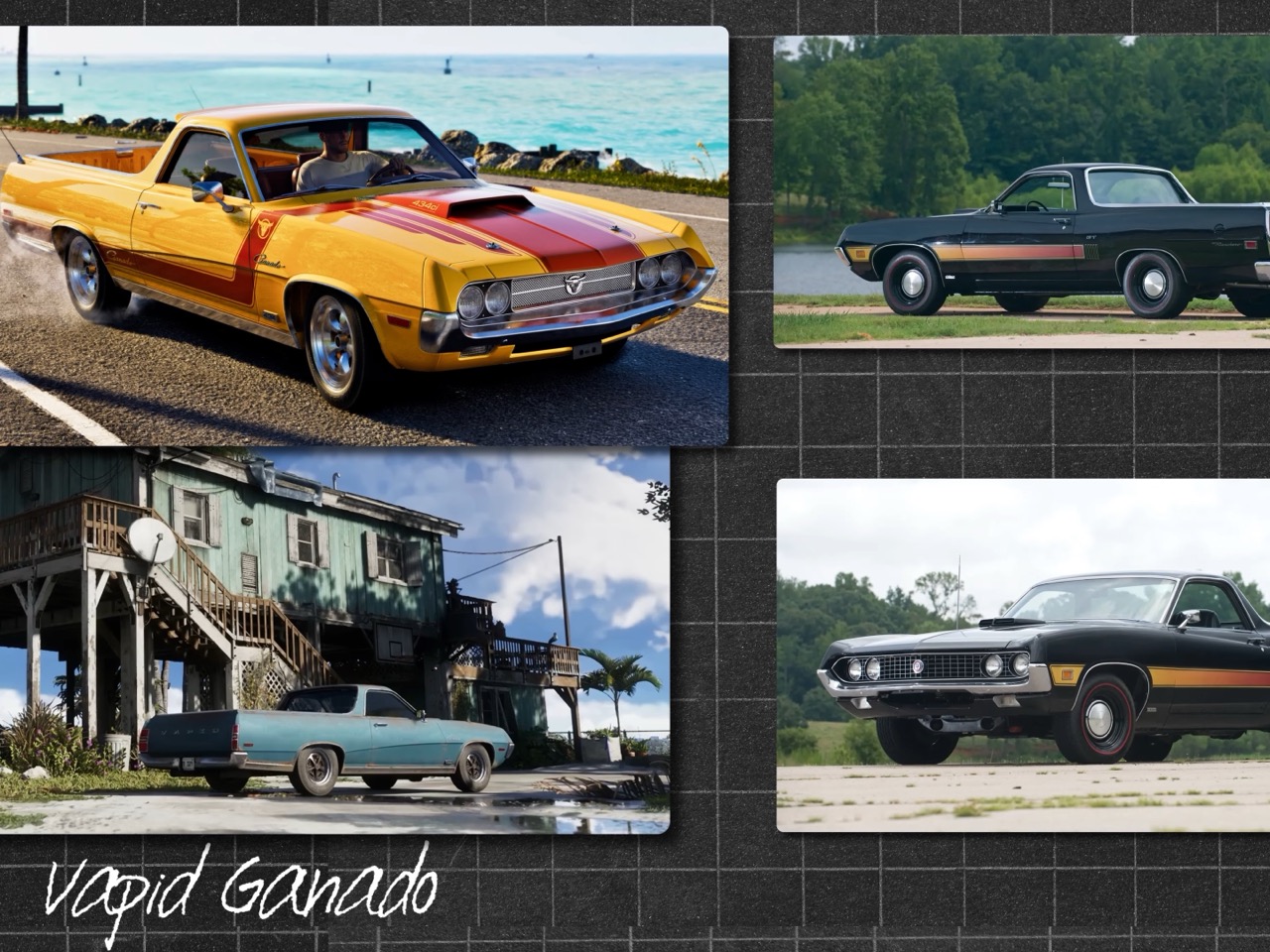
GTA VI’s 1995 Grotti Cheetah wears the Ferrari Testarossa’s wedge and those unmistakable side strakes, while also carrying the memory of the Testarossa-inspired Cheetah players were swiping in Vice City back in 2002. Rockstar now has two archives to raid, Ferrari’s and its own. Elsewhere, the Caracara 4×4 channels the Ford F-150 Raptor, and a Vapid utility truck looks a whole lot like a ’70s Ford Ranchero. The headlight graphics, interiors, and body contours are detailed enough that some of these cars need a second look before you spot the differences. Fictional heritage sounds like an oxymoron until you watch Rockstar pull it off.
An Alternate Reality Built From Scratch
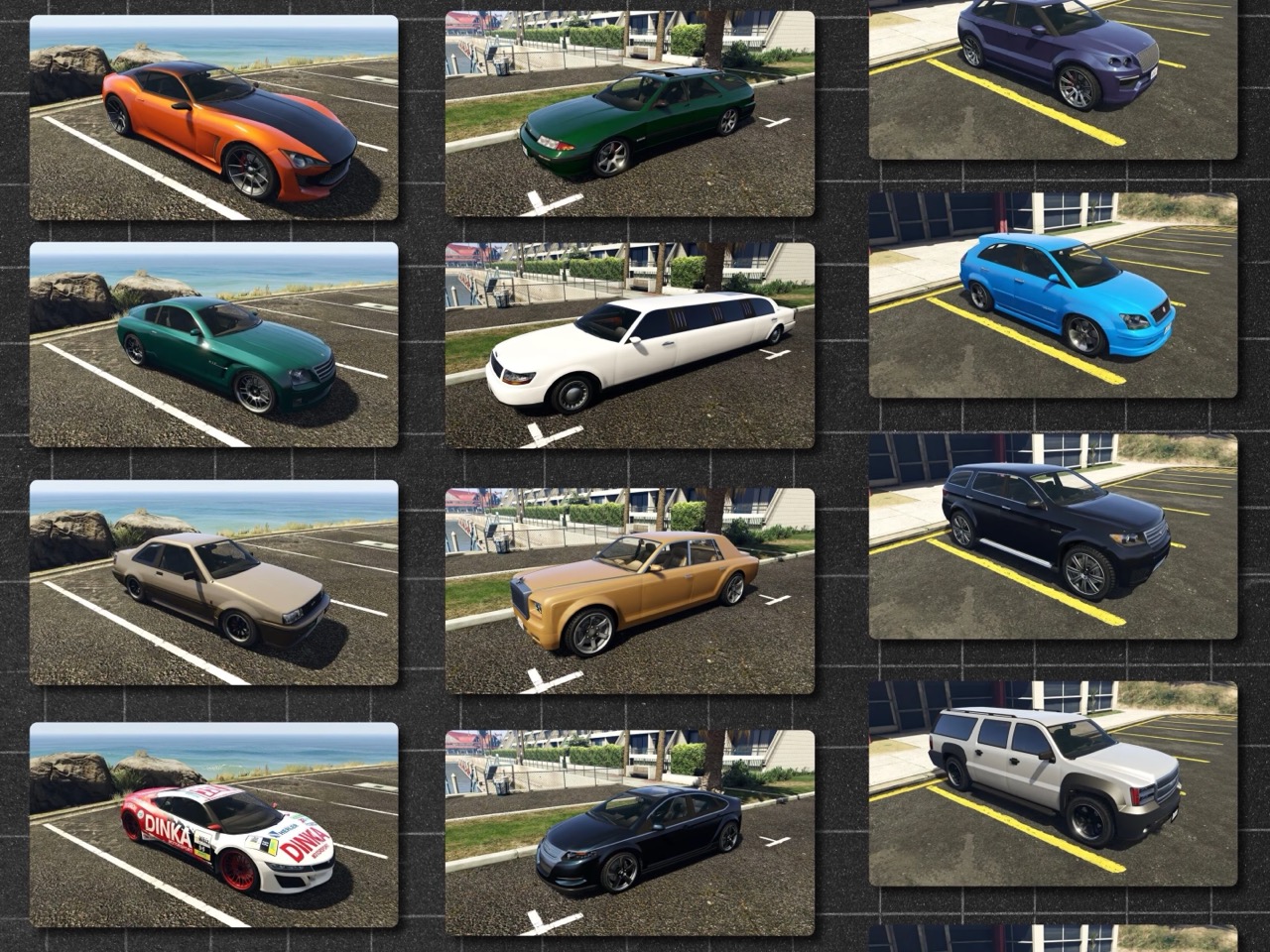
Forza and Gran Turismo license real cars and chase accuracy, recreating interiors, engine notes, and handling as faithfully as possible. Compared to Rockstar, they have it easy. Rockstar has to invent the cars, the companies that build them, and the decades of history that make those companies believable, then keep all of it consistent across games released years apart. Nobody will ever see a Grotti design studio, a Vapid product roadmap, or a Pfister heritage department, yet every new car has to behave like those things exist. That’s a staggering amount of commitment to a world that only exists inside a console.
Rockstar says real racing drivers worked alongside its handling team on GTA VI, and the game adds Gellhorn International Raceway, the series’ first dedicated asphalt road course. Leaked footage even suggested older cars fade their incandescent bulbs out gradually while newer ones snap their LEDs off instantly. Leonida gets the car communities to match, with street racers, off-road builders, classic American cruisers, tuning shops, and donks perched on enormous wheels. It all adds up to a complete automotive ecosystem, with manufacturers, enthusiasts, and history baked in. You just happen to be allowed to steal any part of it.
From Pixels to Sheet Metal
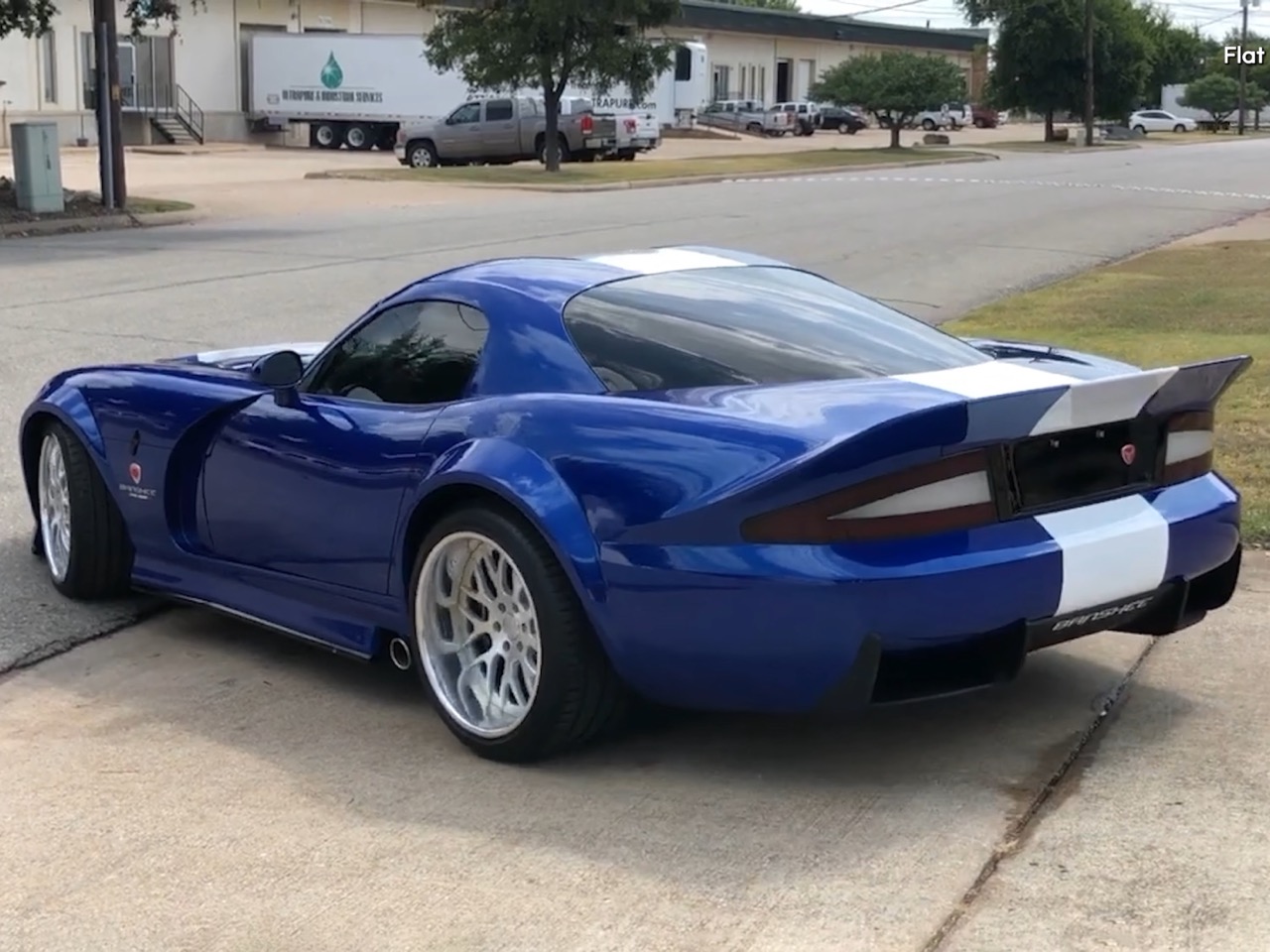
The Bravado Banshee, a series staple since GTA III, crossed over in 2013 when Rockstar had West Coast Customs build a real one to promote GTA V. The shop, best known for Pimp My Ride, reworked a 2006 Dodge Viper SRT-10 into a screen-accurate Banshee, right down to seats embroidered with the car’s name. So Dodge designed a car, Rockstar parodied it, and a custom shop rebuilt the real car to match the parody. The listing claimed roughly $180,000 worth of modifications, yet it sold at Mecum’s Monterey auction in 2018 for just $30,800. It even picked up a background cameo in Better Call Saul.
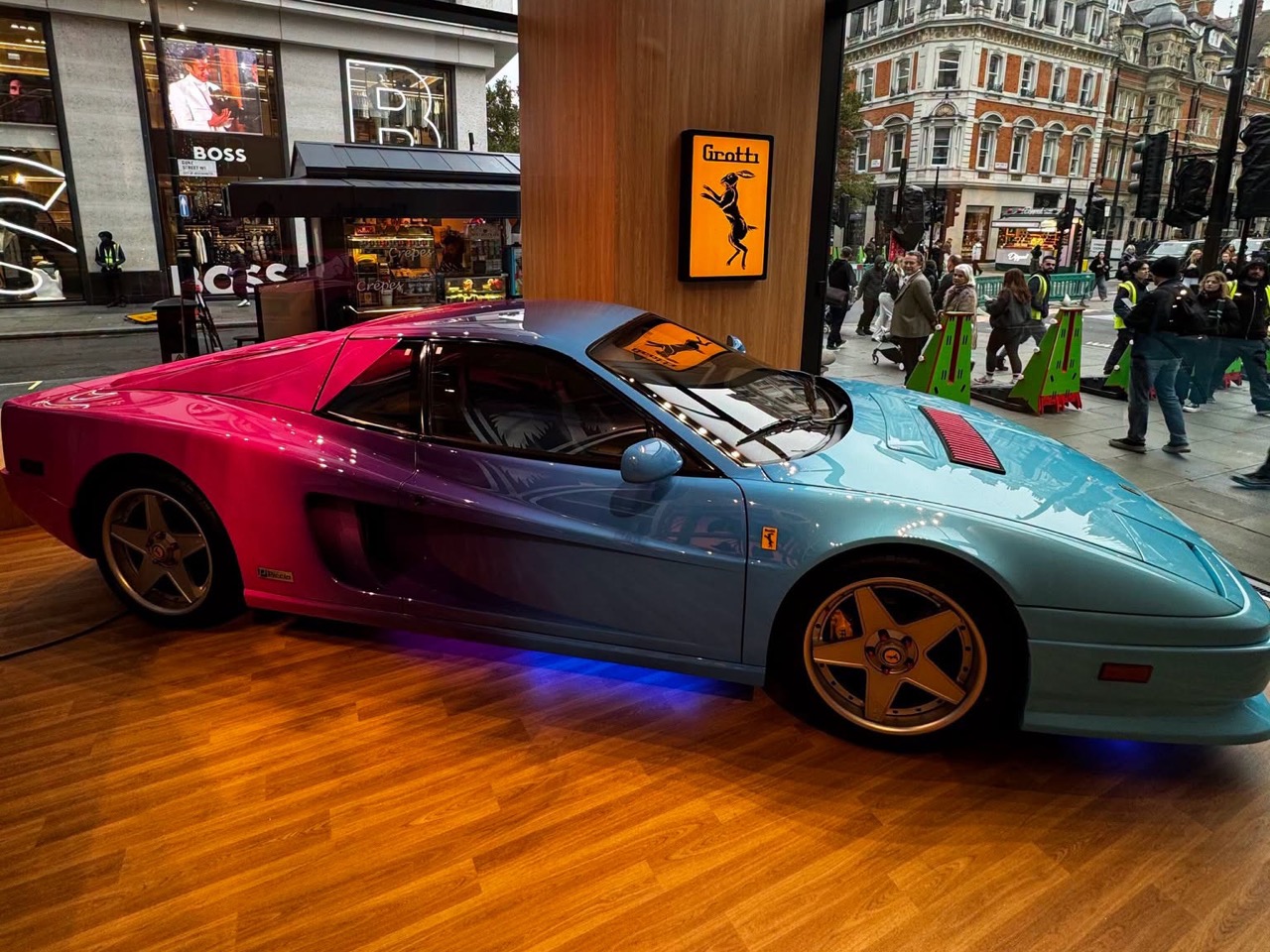
Thirteen years later, Rockstar returned to the same shop for six cars. The Grand Theft Auto VI fleet spans the Grotti Cheetah, a police-liveried Pegassi Tempesta, the Senna-flavored Progen Emerus, a C8-based Invetero Coquette, a lowrider Albany Buccaneer, and a donk-style Albany Manana, built from metalwork, composites, and CNC-machined parts. The Cheetah has since landed at Selfridges London with a £1 million price tag (roughly $1.3 million), wearing a blue-to-pink Vice City fade and a rearing rabbit where Ferrari’s prancing horse would sit. Real carmakers spend a century earning that recognition, and Grotti did it without building a single car. Now the question of what Grotti would have built in 1995 has an answer you can actually buy.