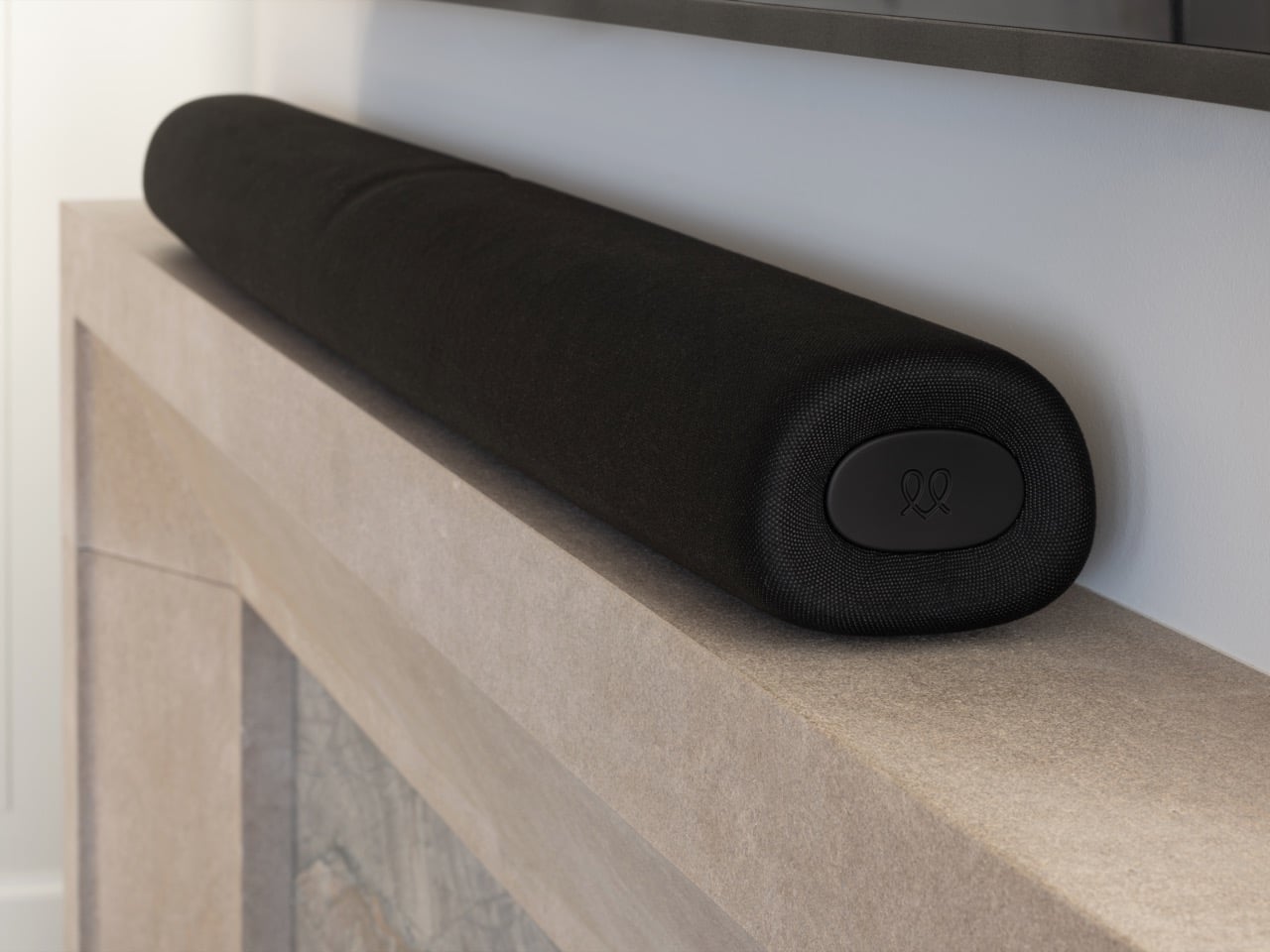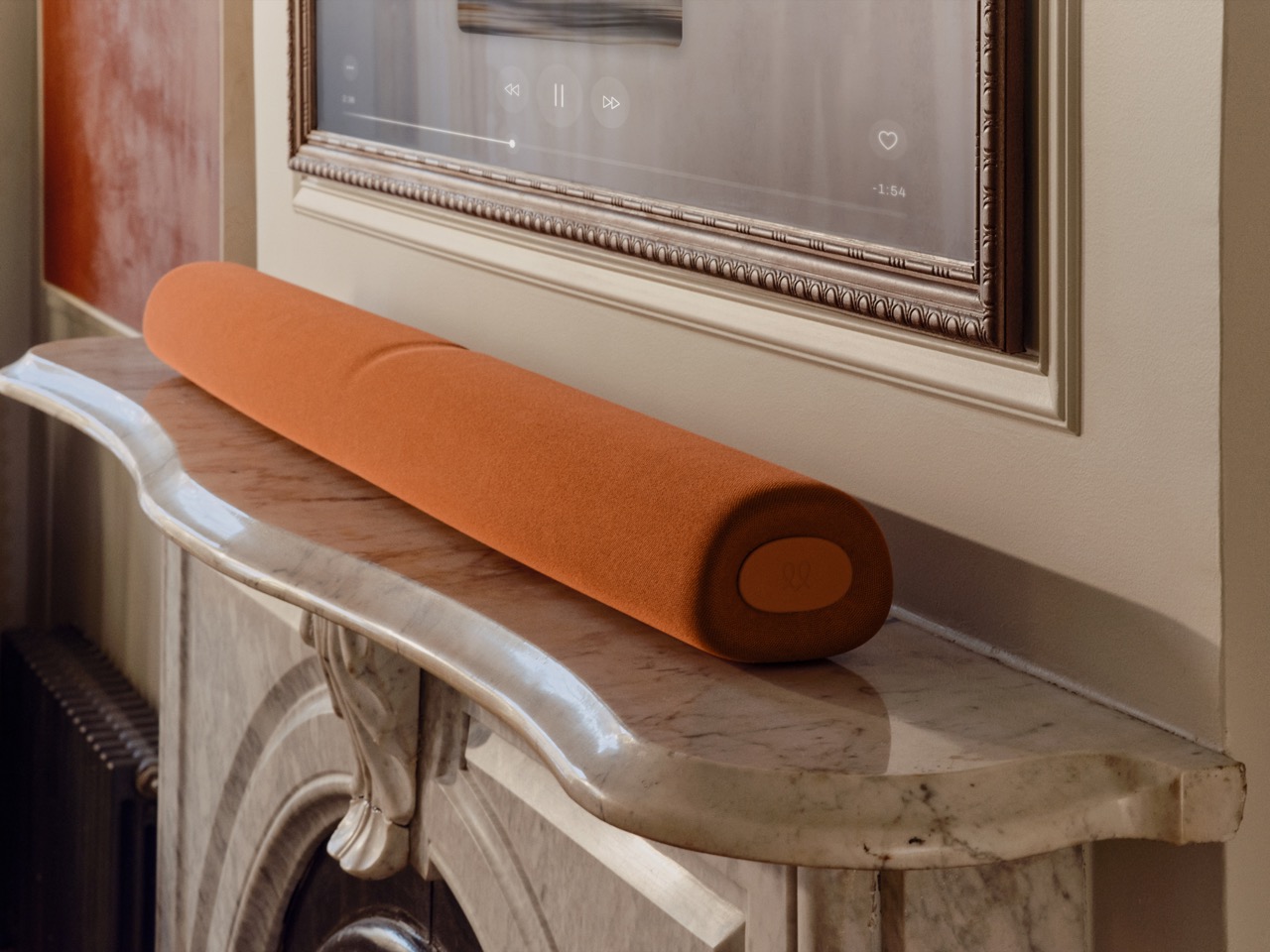

Look under your TV right now. There’s a good chance a black plastic rectangle is sitting there, wearing a fine layer of dust and a logo you never asked for. We spend weeks agonizing over the right credenza and the right rug, then park the least attractive object in the house right in the middle of it all. Knit Sound Company thinks that’s silly, and frankly, so do I. The new Michigan audio brand just launched the Knit Form, a $999 Dolby Atmos soundbar dressed in knitted fabric and offered in five room-friendly colors. It looks like it rolled out of a furniture showroom, which is exactly the plan.
Founder Joel Sietsema has twenty years in audio behind him, most recently at Sound United, home of Denon and Marantz. He spent that time building speakers designed to win on store shelves, only to watch his interior designer wife hide every one of them at home. Form flips the brief by designing for the living room first and the spec sheet second. That approach won over Brand Foundry Ventures, an early backer of Warby Parker, and interior designer Nate Berkus, who both came on as investors and advisors. Form is on sale now in the US, exclusively through Knit’s own website.
Designer: Knit Sound Company
Tech has been slowly getting dressed since the mid-2010s. The Bouroullec brothers turned a Samsung TV into furniture with the Serif in 2015, Google wrapped its Home Mini in fabric in 2017, and Samsung disguised a TV as a picture frame that same year. Soundbars mostly stayed stuck in their black plastic phase. Bang & Olufsen gave its Beosound Theatre a fabric cover, but that bar starts at $6,890, which is decent used car money. More recently, the KEF XIO paired aluminum with a two-tone fabric weave. Knit brings the idea down to $999 and goes all in, covering nearly the entire bar in textile.
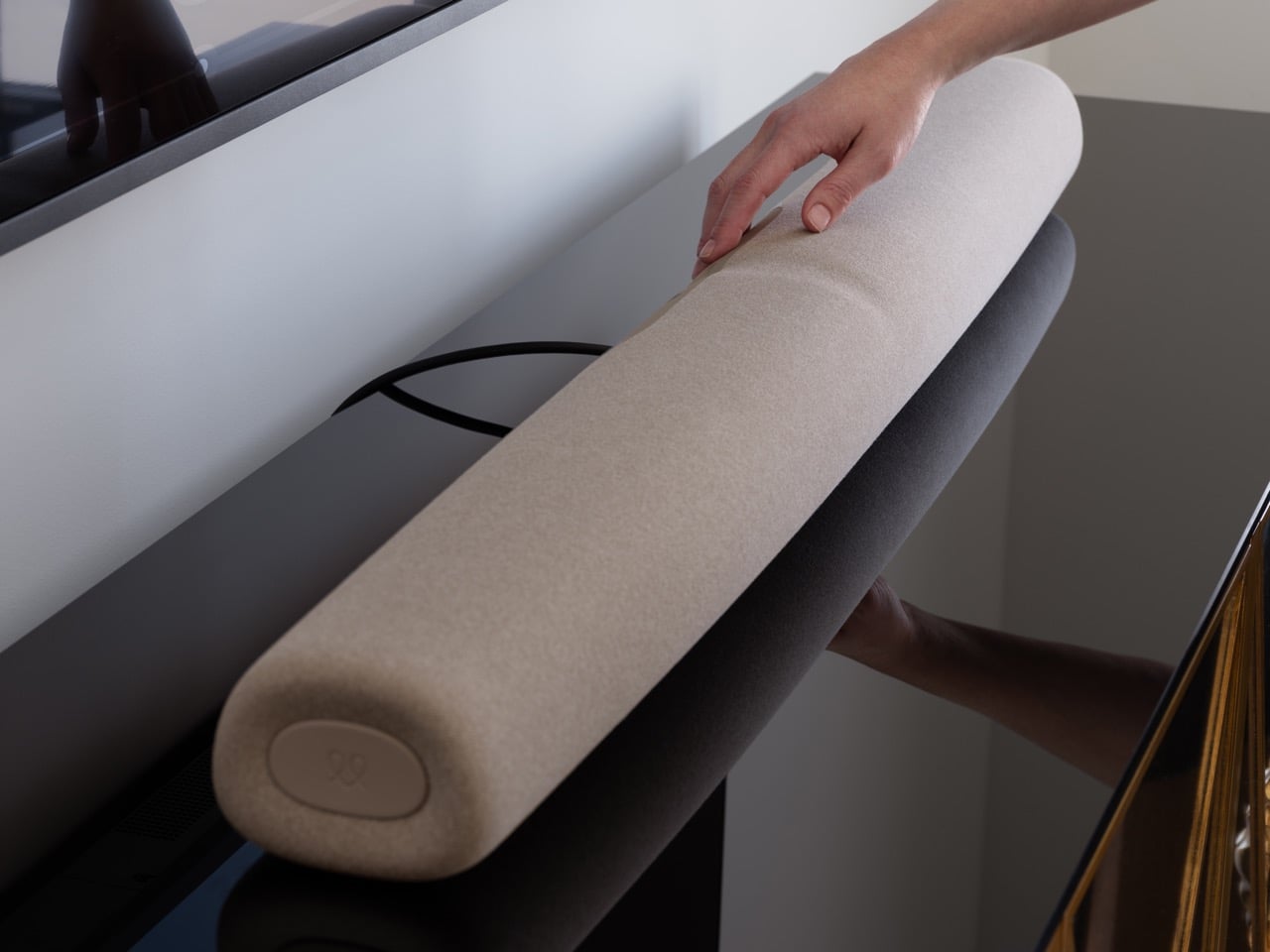
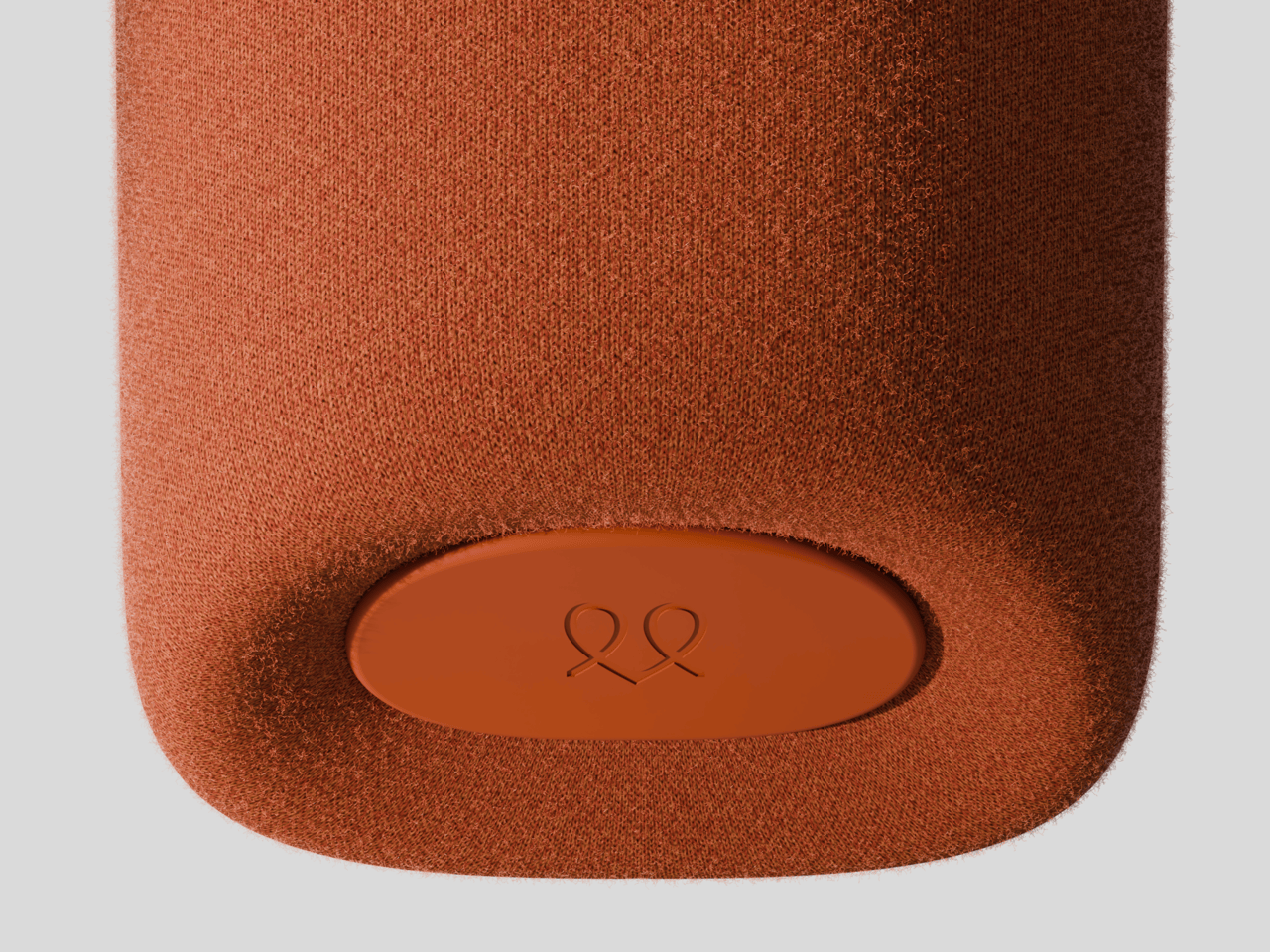
That textile is called Threadform, and Knit refined it over many iterations with a fourth-generation European textile mill. The brief was demanding: deep color, durability, easy cleaning, and enough acoustic transparency that sound passes through without getting muffled. The knit wraps the bar in one seamless 360-degree sleeve, giving it the soft, continuous look of a really well-made sock. Seamless knitting went mainstream when Nike’s Flyknit sneakers arrived in 2012, and Form’s sleeve has that same one-piece appeal. The only branding sits on debossed caps at each end, stamped with Knit’s logo of two looped stitches. You’d have to look at the ends of the bar to even notice it.
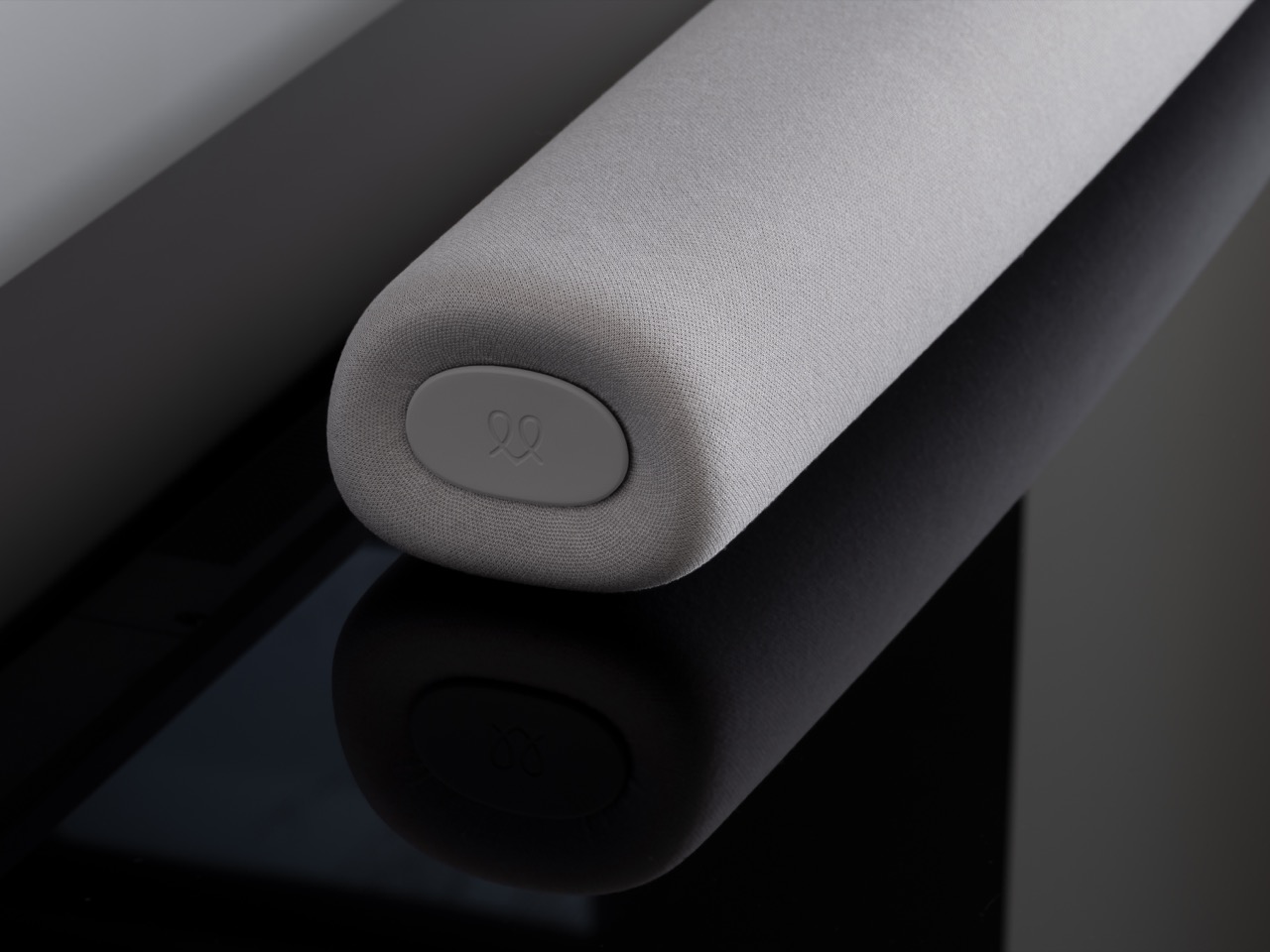
Form’s body is a rounded 46-inch tube, 3.5 inches tall (about 117 by 9 cm), with a gentle dip up top where the controls live. It reads more like a bolster cushion than a speaker, which suits the current craze for plush, curvy furniture. The five colors were chosen like paint swatches, each with a job. Cloud White and Slate Black are the neutrals, Pebble is a cool accent, Sandstone is a warm one, and Ember is a terracotta orange for people who want their soundbar to be seen. I’d go Ember, obviously. It sits on a credenza or mantel, or mounts under the TV with a $79 flush bracket.
Under the knit, Form runs 5.1.2 Dolby Atmos, meaning five main channels, a low-frequency channel, and two height channels that put rain and helicopters above your head. Fourteen channels of Class D amplification drive the speakers, and two built-in subwoofers handle the bass, so there’s no extra sub hogging floor space. A center voice array keeps dialogue clear, and you can tune it in the optional Knit app. That’s great news for anyone tired of cranking the volume for whispered lines, then diving for the remote when the explosions start. The app also adds four sound modes and over-the-air updates. Everything runs through a module Knit calls Ada, named after the company’s Michigan hometown.
Form also skips Wi-Fi entirely, and that’s on purpose. Your TV acts as the hub, so one HDMI eARC cable carries everything, including music cast to the TV through AirPlay, Google Cast, or Spotify Connect, with album art showing on screen. Phones connect directly over Bluetooth 5.3, and Auracast can beam audio to compatible headphones or hearing aids for late-night viewing. Knit’s website even lists what the company refuses to do, including no cameras, no tracking, and no “pointless AI stuff.” The trade-off is no Sonos-style multiroom grouping, which plenty of people will happily live without. Ada also hides a second Bluetooth 5.3 chip for future upgrades, a nice hint that Form was built to stick around.
Knit calls this approach designing for the home first, and Form makes a convincing case for it. Every decision, from the hidden logo to the lights that switch off mid-movie, lets the soundbar settle into the room while still sounding like it belongs in a home theater. It’s a funny turn for someone who spent twenty years making speakers that shout from store shelves. Sietsema’s wife wanted every speaker hidden, so Knit made one she’d happily leave out on the mantel. Somewhere in Ada, Michigan, a soundbar finally passed the spouse test. The rest of us just have to pick a color.