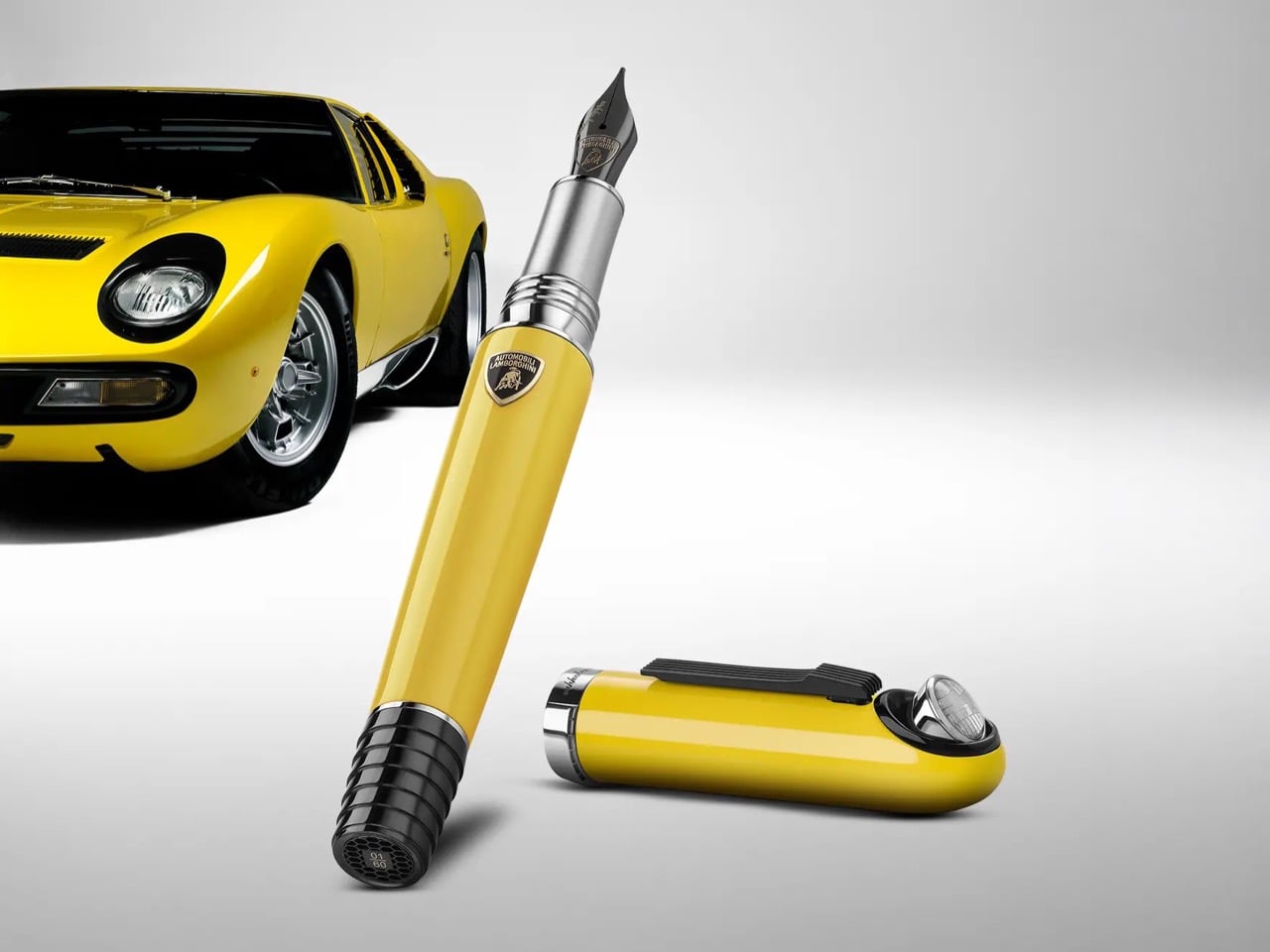

A fountain pen with a moving Lamborghini headlight is an extravagant place to start a stationery collection. It also gets straight to the appeal: the objects we handle every day can deserve more thought than a bulk office order gives them. Sometimes that thought produces a clever mechanism. Sometimes it makes a familiar tool easier to carry, read, or reuse. Sometimes it simply gives you a reason to look twice.
For November 2026, we’ve selected eight stationery and desk designs for their distinctive design choices, from watermark ruling to a pencil case that becomes its own stand. This is an editorial selection, not a ranking based on comparative testing or a list of November launches. Some are practical purchases; others are collectible objects worth examining for how they rethink ordinary tools.
1. Lamborghini Miura Fountain Pen
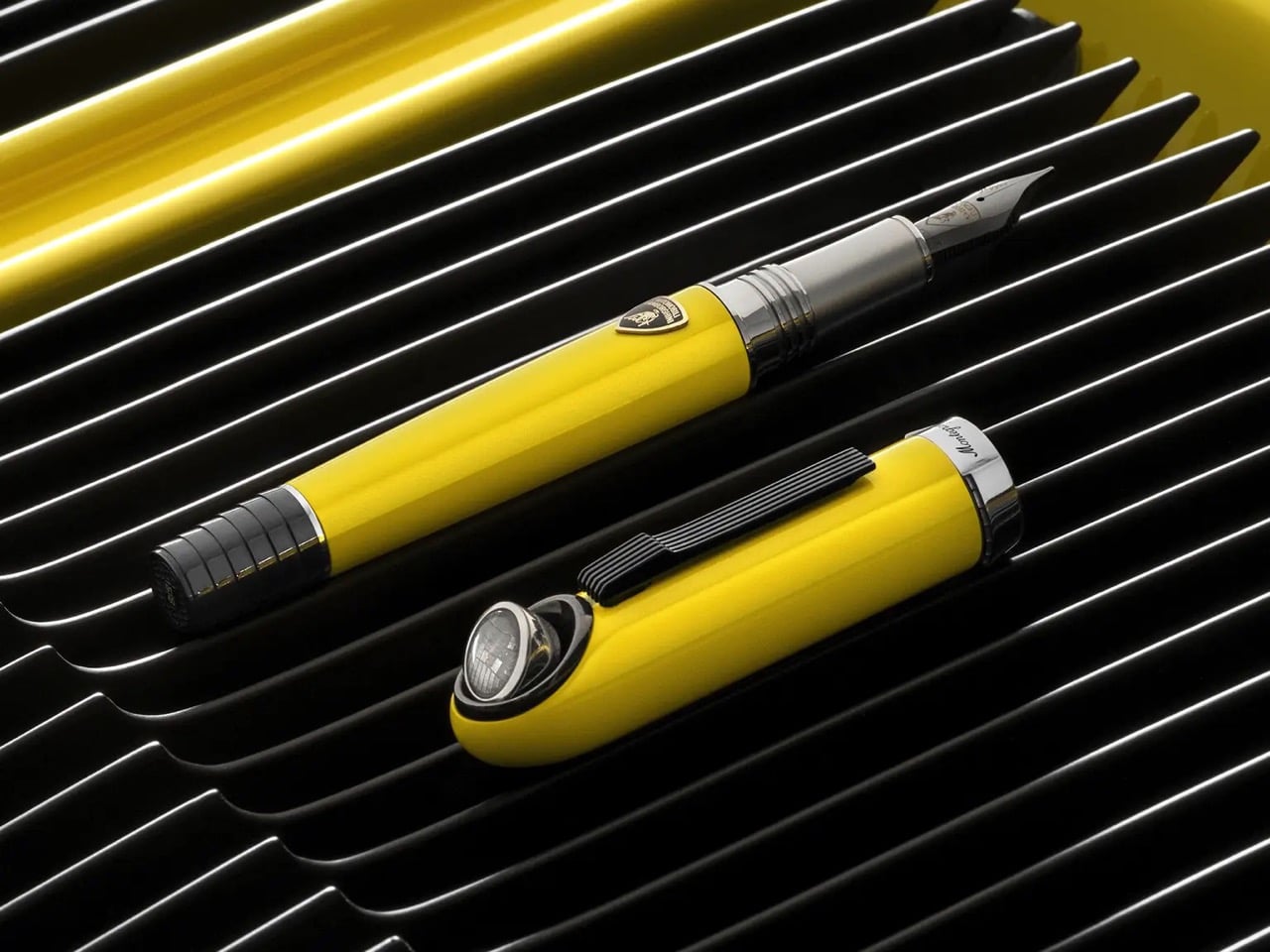
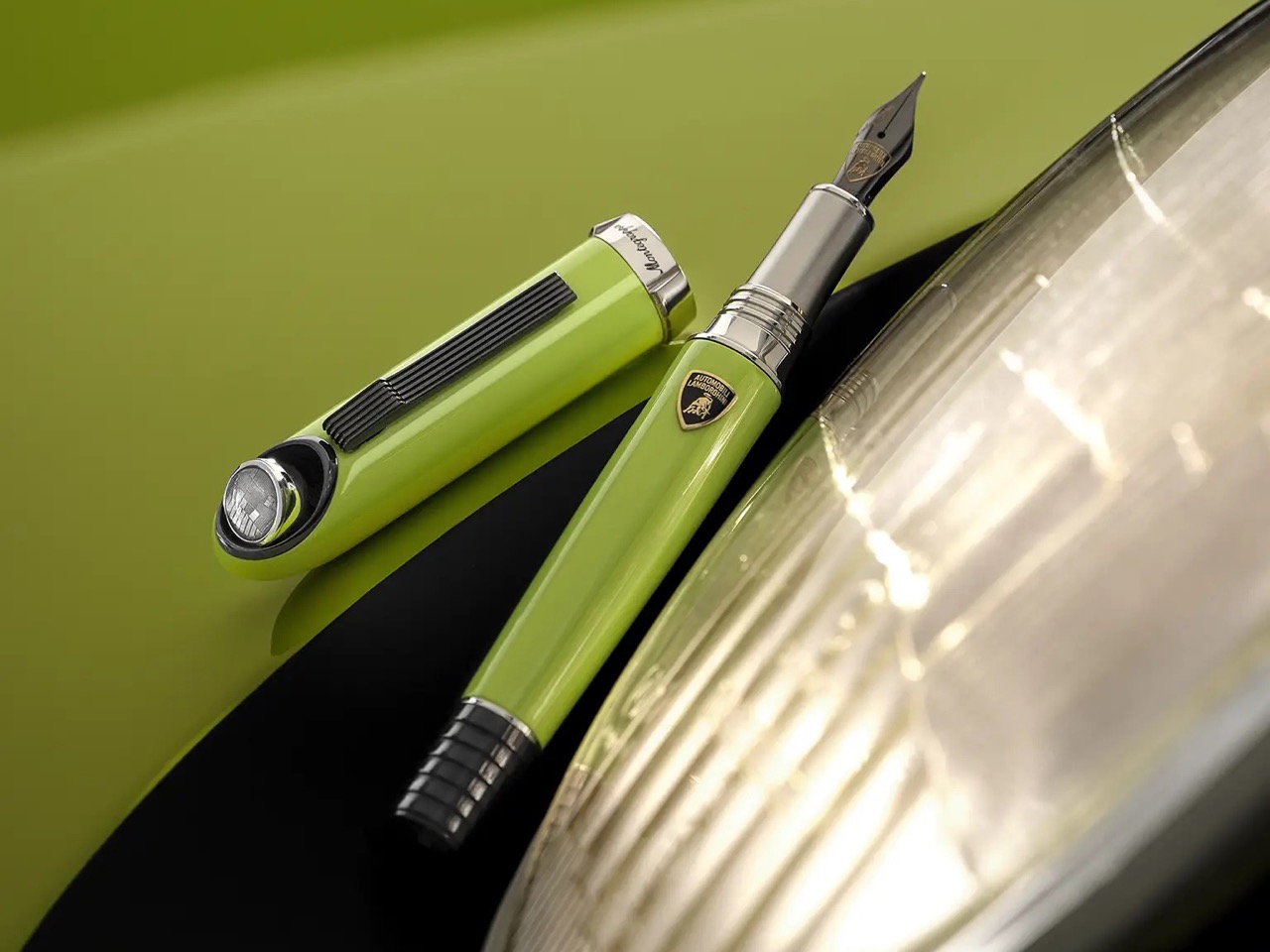
Press a button on Montegrappa’s limited edition Miura pen and a miniature rock crystal headlight rises from the cap. The movement borrows from Lamborghini’s celebrated sports car, but the automotive references continue down the writing instrument. Slatted details recall the car’s ventilation grilles, while the end cap references its louvered engine cover. It’s an unusually literal collaboration, translating recognizable parts of the Miura into details you can operate and examine, rather than settling for a badge on an ordinary barrel.
Underneath the miniature bodywork sits an 18-karat gold nib with ruthenium plating and a cartridge or converter filling system. The headlight doesn’t illuminate the page; its appeal is entirely mechanical. Montegrappa lists the fountain pen at €8,250, with 60 examples in each of three colors. That puts it firmly in collector territory. Still, the design earns its place here because the reference extends beyond appearance: opening that tiny headlight makes the car’s character part of handling the pen itself.
What we like
- The moving headlight translates a specific automotive detail into a physical interaction.
- Grille references across the cap and barrel give the collaboration a coherent design language.
What we dislike
- The €8,250 price makes this a serious collectible rather than an everyday stationery purchase.
- Production is limited to 60 fountain pens per color.
2. MB&F × Caran d’Ache GorillaSharpener
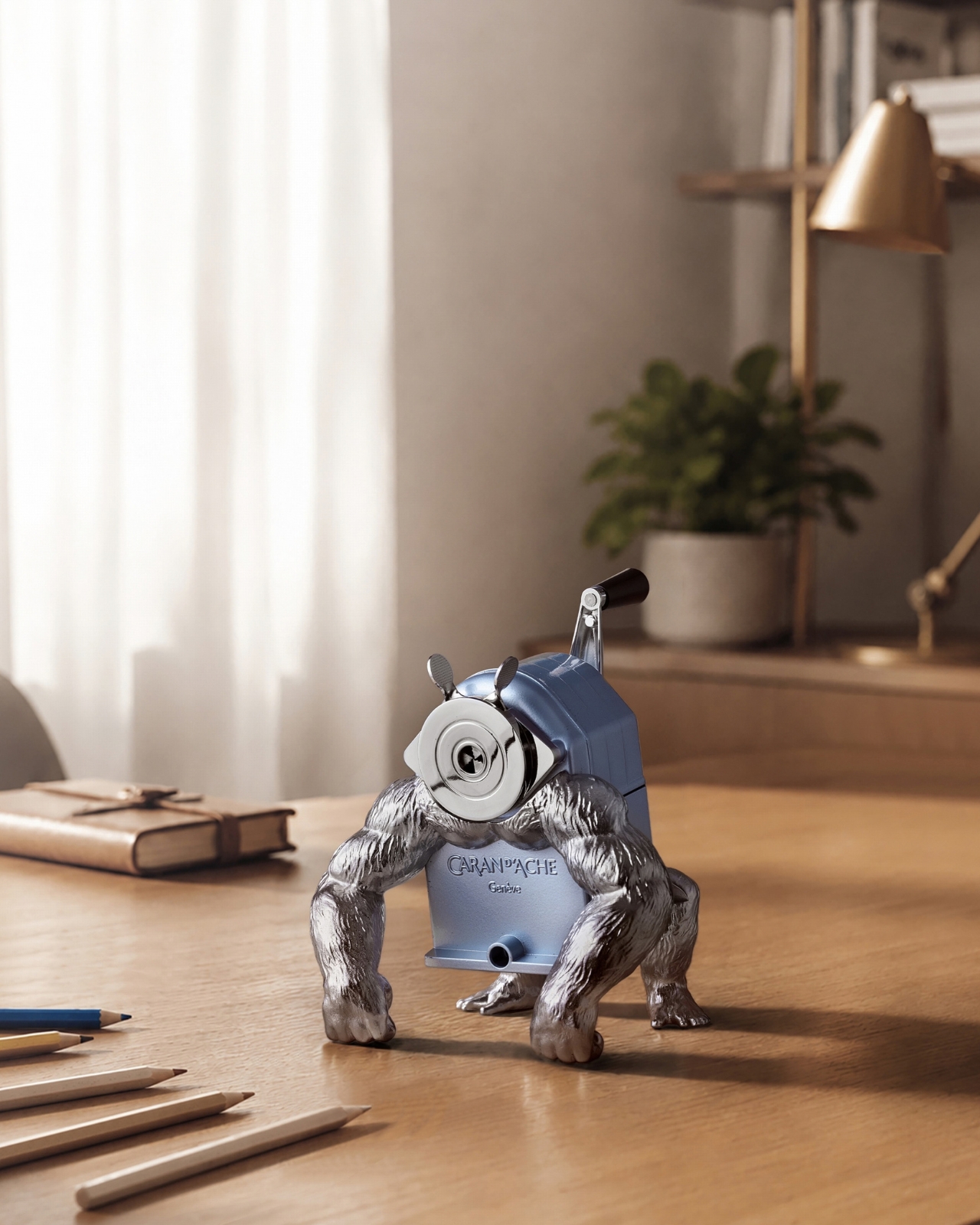

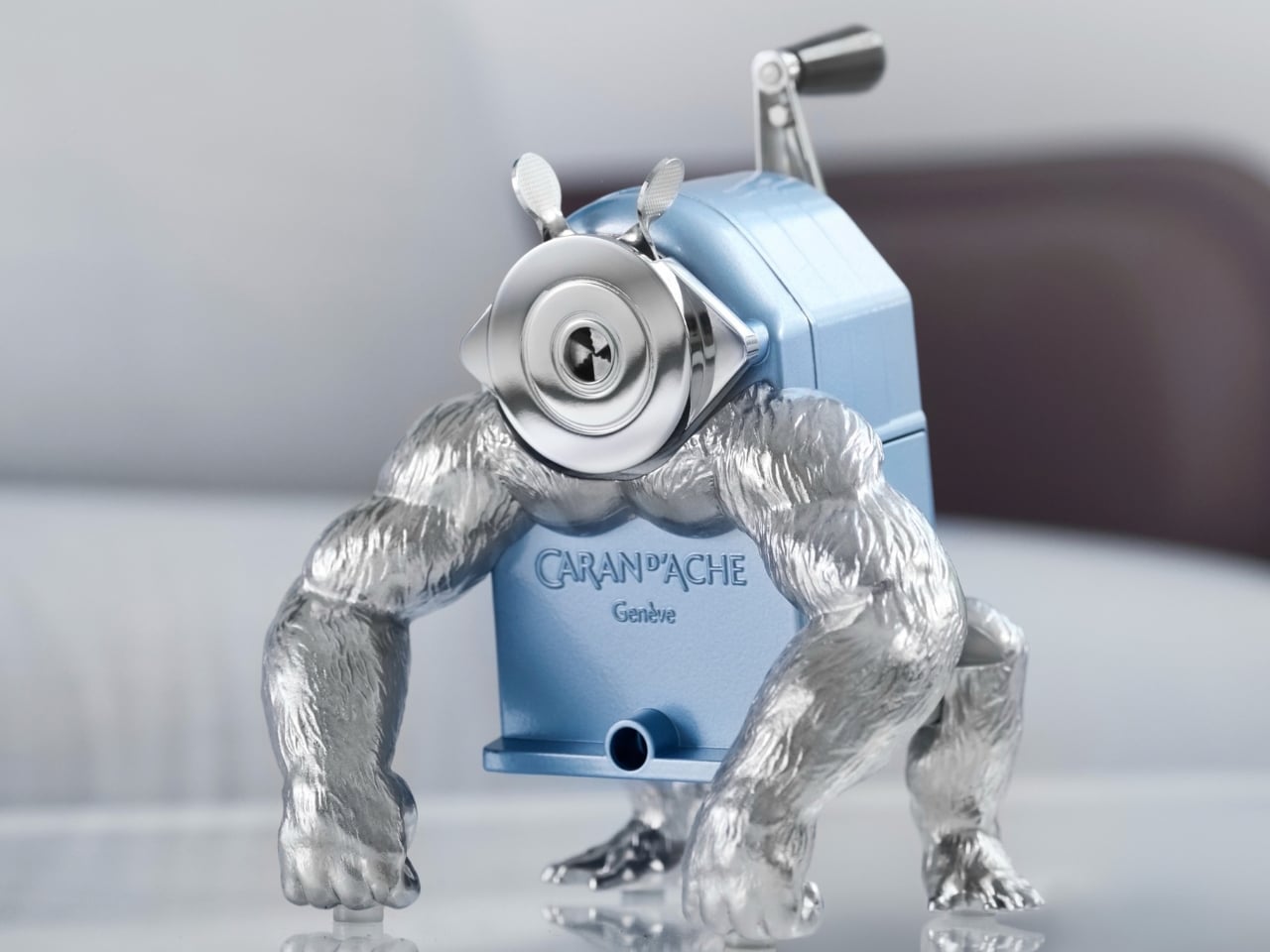
Caran d’Ache’s familiar sharpening machine gains a surprisingly convincing animal stance in the GorillaSharpener. MB&F designer Maximilian Maertens places the mechanism on muscular metal limbs, pitching its body forward like a gorilla resting on its knuckles. The Alpine Frost blue finish keeps the composition from becoming too visually heavy. What makes it interesting is the restraint within the joke: the original sharpener remains recognizable, with the added anatomy changing how it occupies the desk rather than disguising what it does.
This remains a working tool, accepting round or hexagonal pencils between 4 and 10 millimeters in diameter. Its cutter is replaceable, and an included clamp secures it to a desk for sharpening. Those details matter when an object looks destined for display. Production is limited to 300 pieces, and the assembled base measures roughly 150 by 130 millimeters. You’ll need to give it space, but that footprint buys a functional sculpture rather than a decorative animal with an unrelated job.
What we like
- The replaceable cutter and included clamp preserve the sharpener’s practical purpose.
- Maertens gives an existing mechanism a new identity without hiding its workings.
What we dislike
- The gorilla limbs occupy considerably more space than a pocket sharpener.
- The 300-piece edition limits access to an otherwise familiar desk tool.
3. Sonic Kakusta Portable Pen Stand
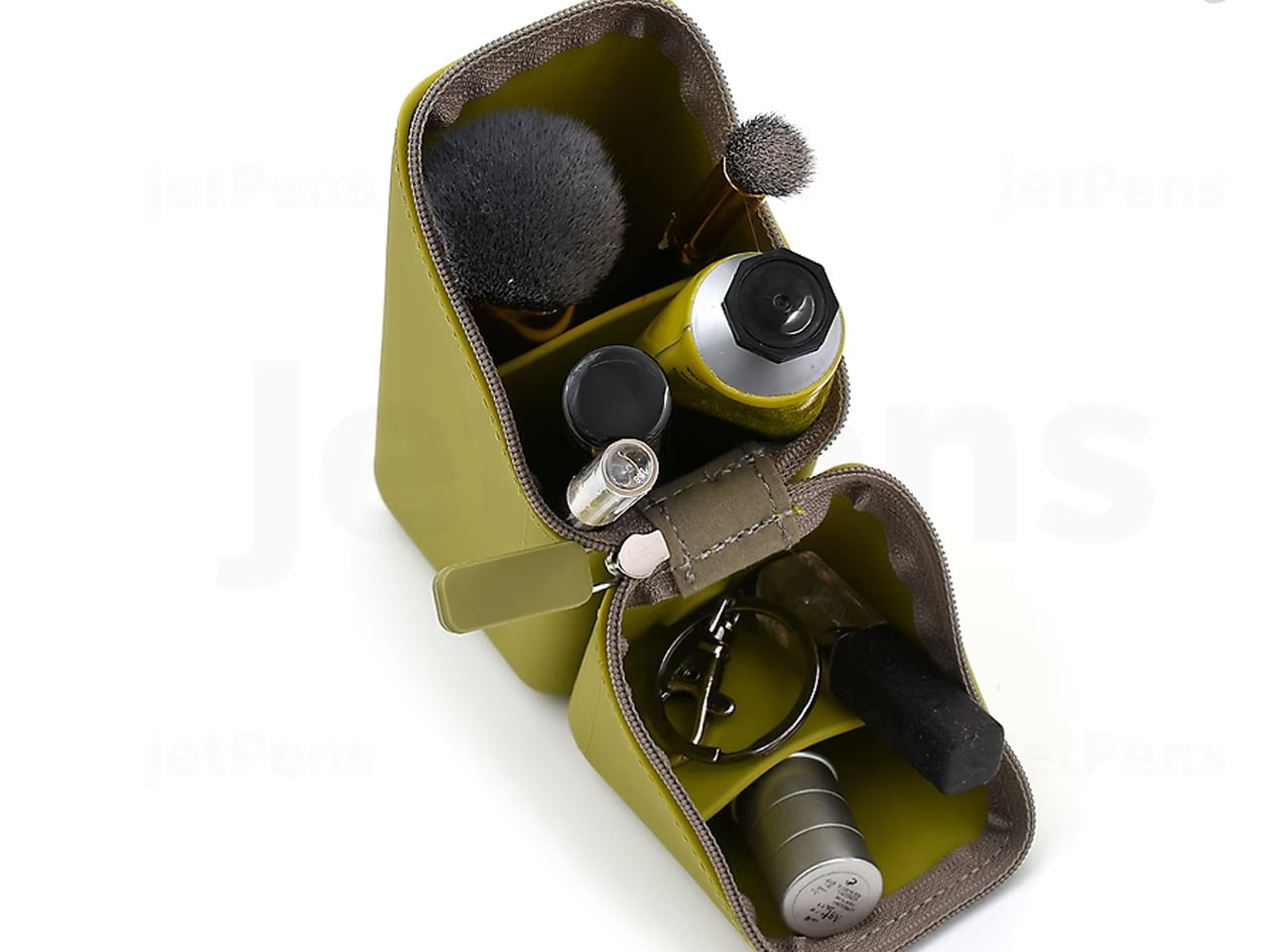
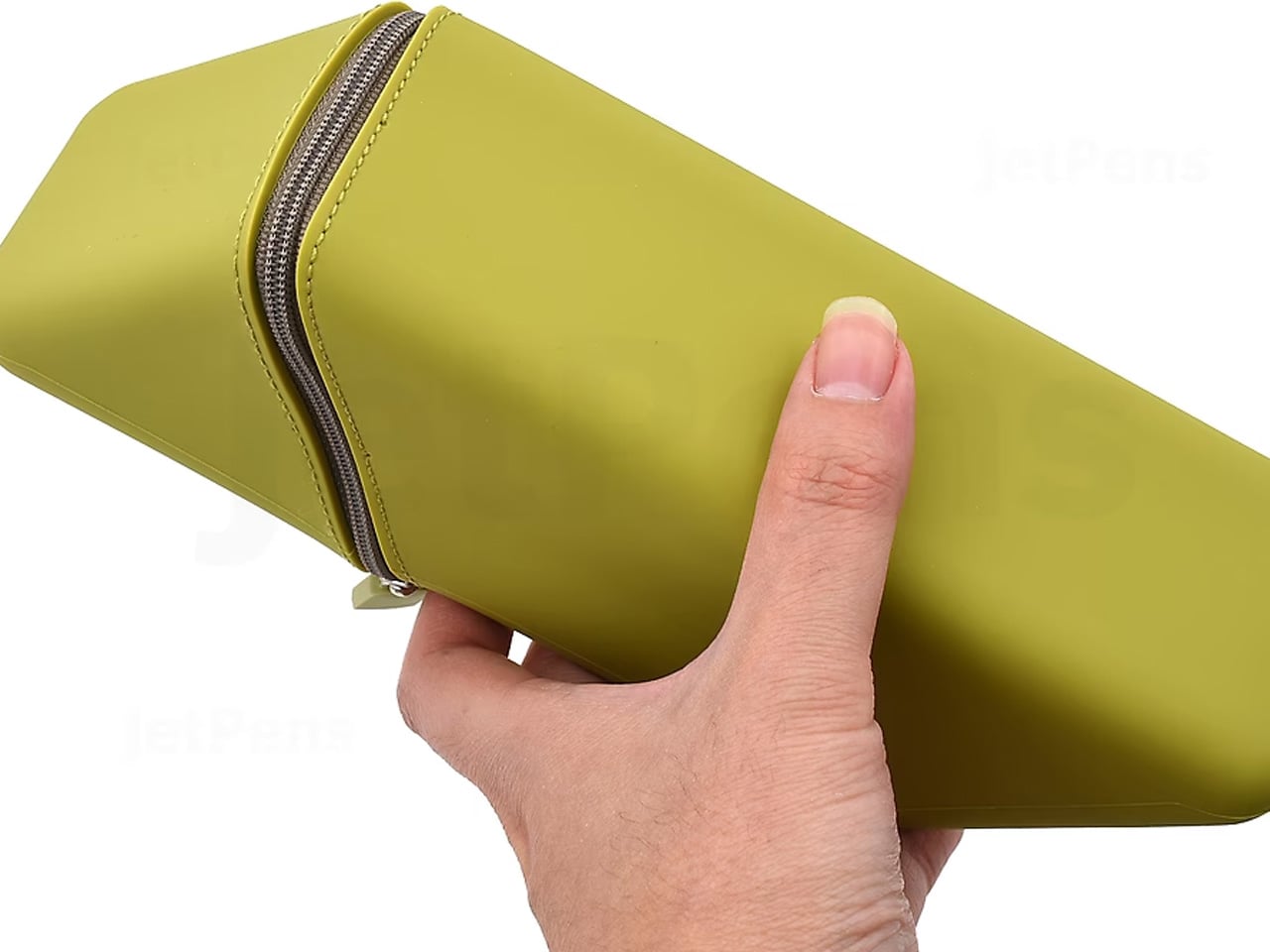
Most pencil cases become clutter the moment you unzip them. Sonic’s Kakusta becomes an organizer. Open the silicone case, fold its sections back, and built-in magnets help hold its standing configuration together—inside, angled dividers separate writing instruments instead of leaving them piled in a single compartment. Sonic specifies a 60-degree divider arrangement, giving the contents a stepped presentation. The transformation makes sense for anyone moving between desks who would otherwise carry a case and use another holder.
The useful detail is the separation between longer tools, shorter items, and small accessories such as erasers. You can leave those categories organized when packing up, rather than emptying everything into a desk cup each morning. Fit deserves attention before buying: Sonic specifies different length limits for its internal pockets, including 16 centimeters for the longer compartment. This is a compact stationery kit, not unrestricted storage for every brush and ruler you own. Its convenience depends on whether it matches your tools.
What we like
- One object handles carrying and desktop organization.
- Separate compartments make small accessories easier to distinguish from pens.
What we dislike
- Pocket length limits rule out some longer pencils and tools.
- The divided interior is less flexible than an open pouch for oversized supplies.
4. iA Vanishing Line Notebook
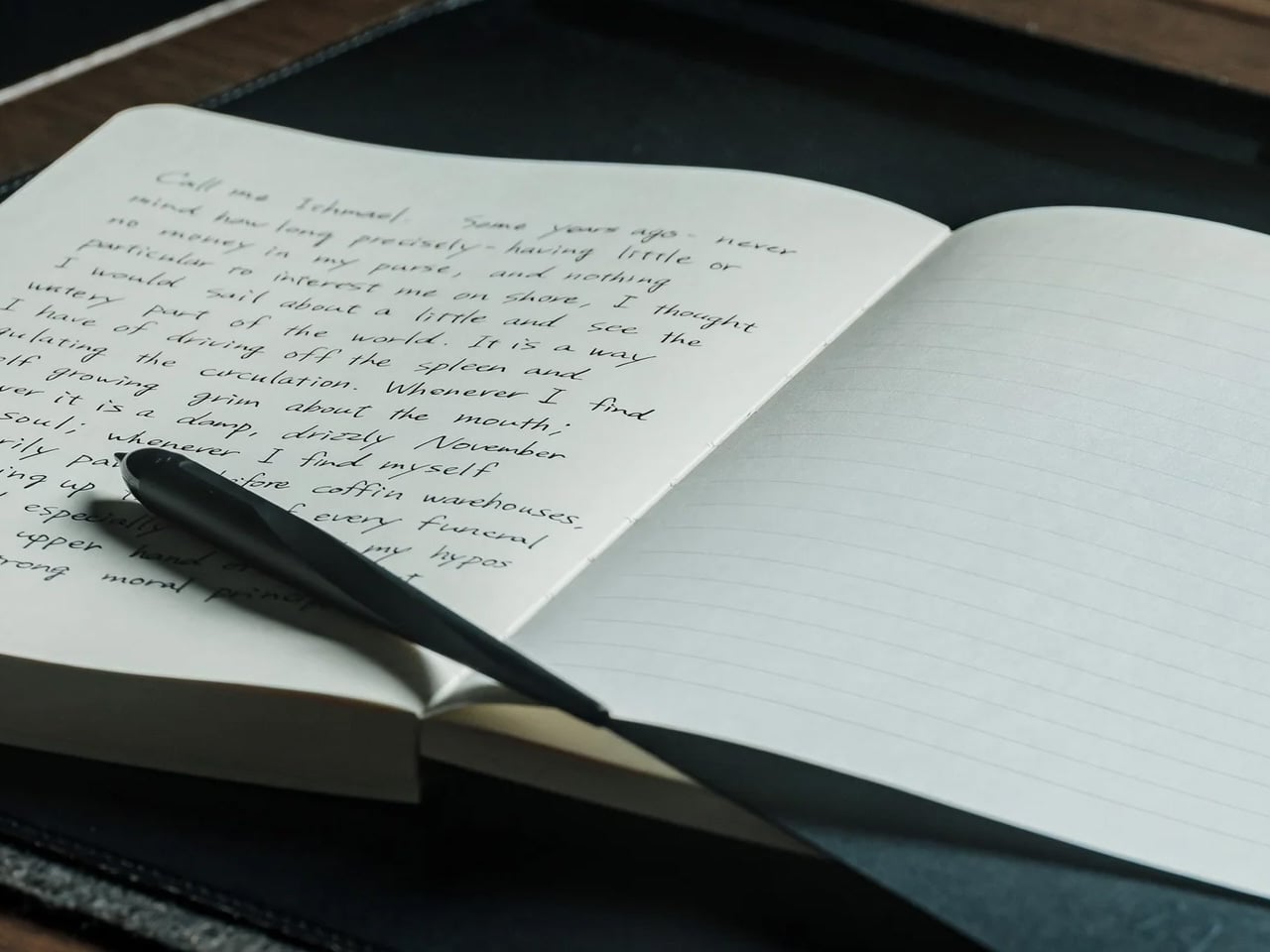
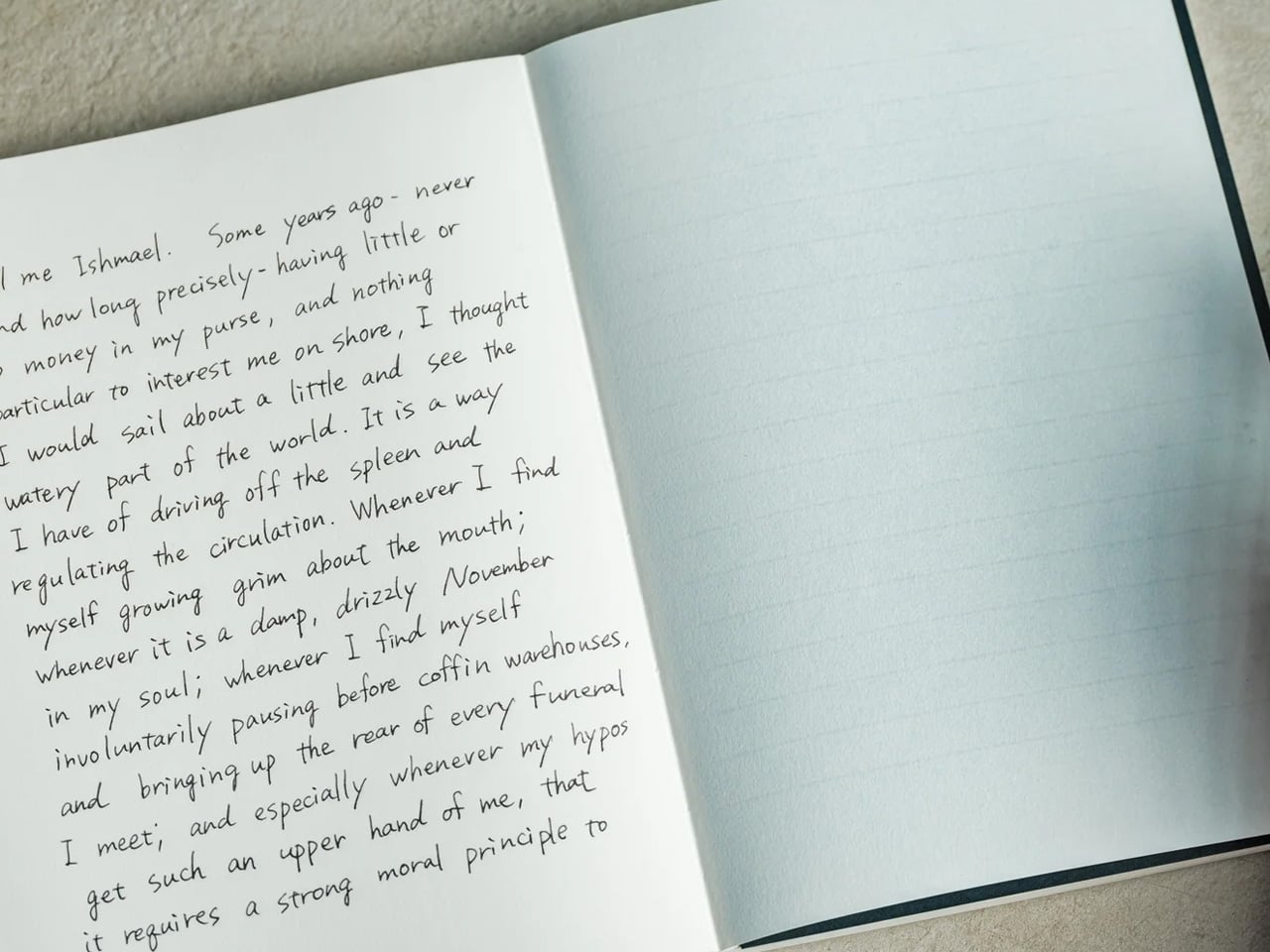
The iA Vanishing Line Notebook addresses a familiar compromise: ruled pages help keep handwriting straight, but their lines remain behind everything you’ve written. Information Architects replaces printed ruling with watermarks. On an empty page, the pale guides provide structure; as darker handwriting fills the sheet, they become less prominent through optical contrast. Nothing chemically disappears, and there’s no special ink to activate. The design changes the visual relationship between the ruling and your words, allowing the writing to take priority.
The construction supports that quiet intervention. Made in Japan, the A5 hardcover contains 288 pages of 81 gsm Araveal White paper, with sewn binding that allows it to lie flat. Its 10-millimeter ruling gives handwriting generous space, though compact writers may prefer tighter lines. It’s a deliberate purchase rather than a disposable notebook. The appeal is having guidance without the visual insistence of conventional ruling, especially when returning to pages you want to reread.
What we like
- Watermark ruling offers structure without the same visual weight as printed lines.
- Sewn binding lets the notebook lie flat while you write.
What we dislike
- The $80 price is substantial for a notebook.
- The fixed 10-millimeter spacing won’t suit everyone’s handwriting.
5. WAY Ruler
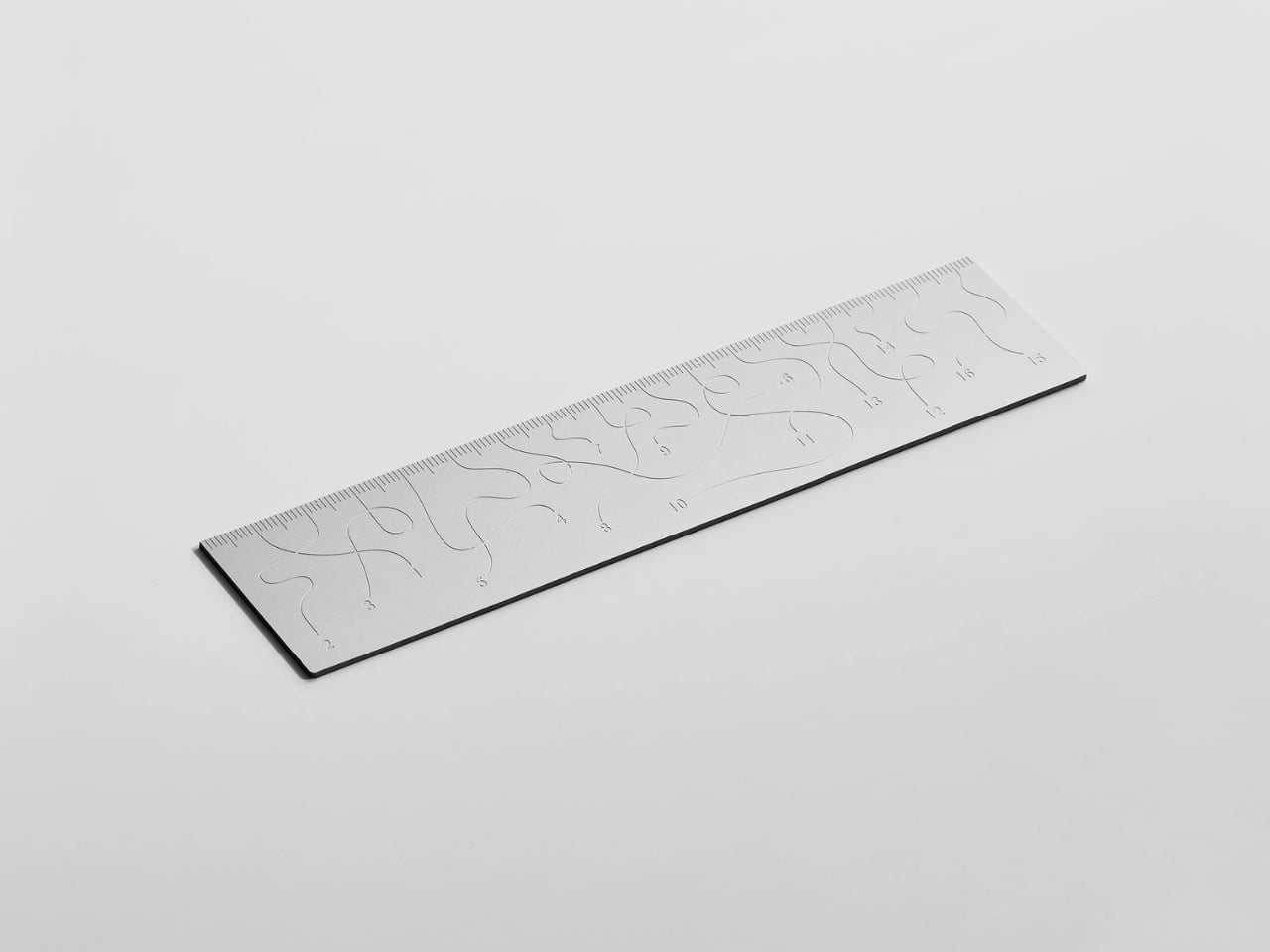
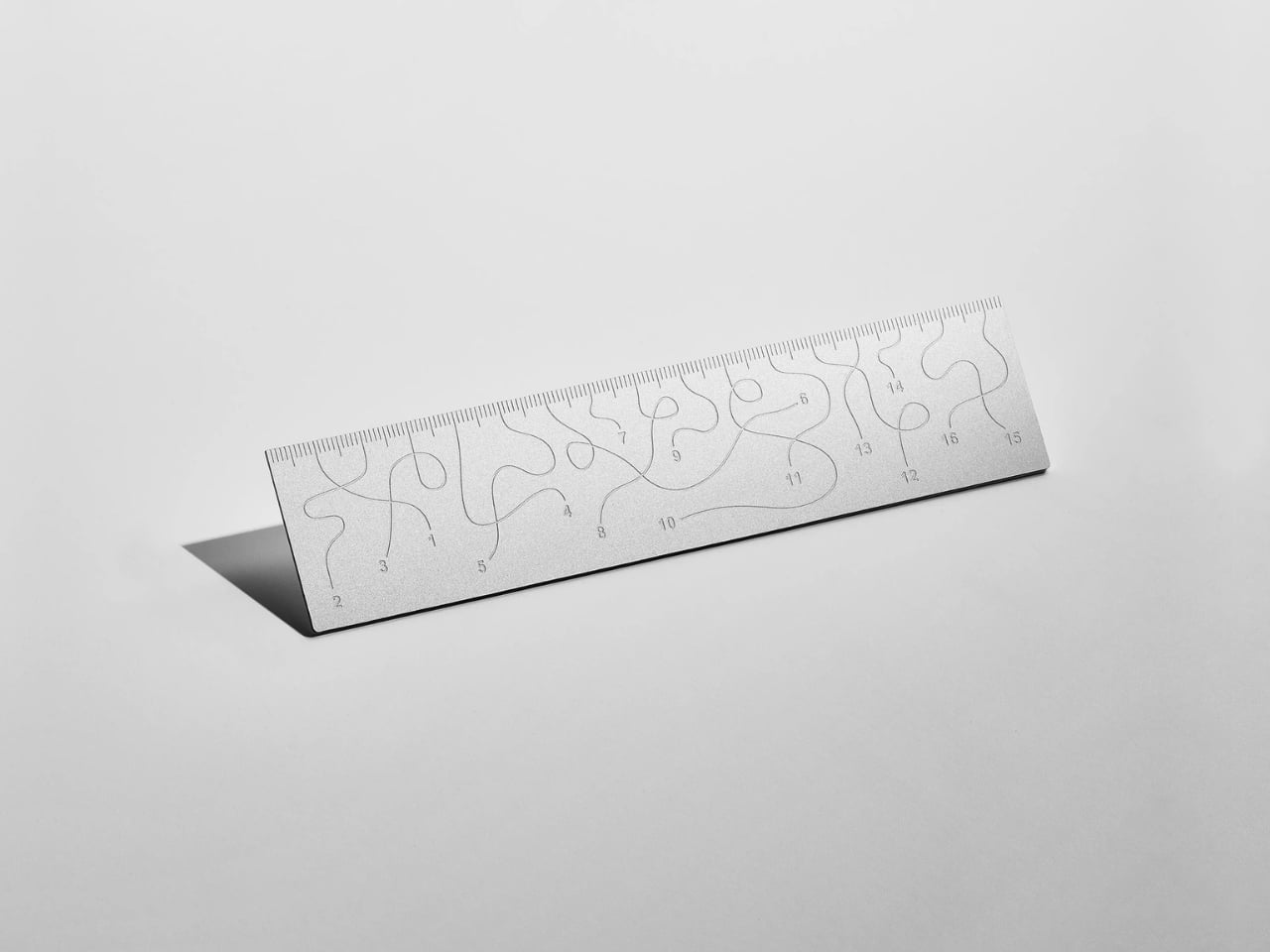
Tomas Kral takes the most orderly object in a pencil case and gives its graphics permission to wander. WAY is a small anodized aluminum ruler whose engraved inscriptions follow winding paths across the surface. The reference is deliberate: Kral describes a project inspired by travel, discovery, and small meandering routes. Against the straight-edged tool, that wandering arrangement becomes the entire point. A ruler normally asks you to notice the measurement and ignore the object; this one reverses that hierarchy.
That makes WAY the most debatable selection here, which is part of its interest. The unusual layout asks for closer reading than conventional ruler graphics, trading immediate clarity for visual character. Digital engraving places the inscriptions directly into the aluminum rather than adding a printed layer.
What we like
- The winding inscriptions create a clear relationship between material, graphics, and concept.
- Direct engraving makes the markings part of the aluminum surface.
What we dislike
- The unconventional layout compromises the immediate readability expected of a ruler.
- Current purchasing availability needs confirmation with the studio.
6. Rolling World Clock


Checking another city’s time usually means reaching for a screen. Masafumi Ishikawa’s Rolling World Clock gives the task a physical control: turn the entire object. Its twelve-sided case carries city names around the perimeter, and rolling it to a different position changes the time you read from its single hand. There’s no menu to navigate. The geometry of the housing becomes the interface, making a normally hidden relationship between time zones something you can explore by moving the clock.
Made in Japan, the clock measures about 3.2 inches across and comes in black or white. Its preset locations include New York, London, Tokyo, and Sydney, giving people with regular international contacts a compact reference beside their notebook. The limitation is equally clear: twelve positions cannot represent every global offset, and a single hand offers less detail than a conventional display. It belongs here as a considered desk companion, particularly if you appreciate a useful object that invites occasional handling.
What we like
- Rolling the case provides a direct, understandable way to change the displayed location.
- The compact format gives international timekeeping a permanent place on the desk.
What we dislike
- The twelve preset locations leave out many time zones.
- The single hand provides less reading detail than separate hour and minute hands.
7. Shachihata Connecting Stamp English Calendar Set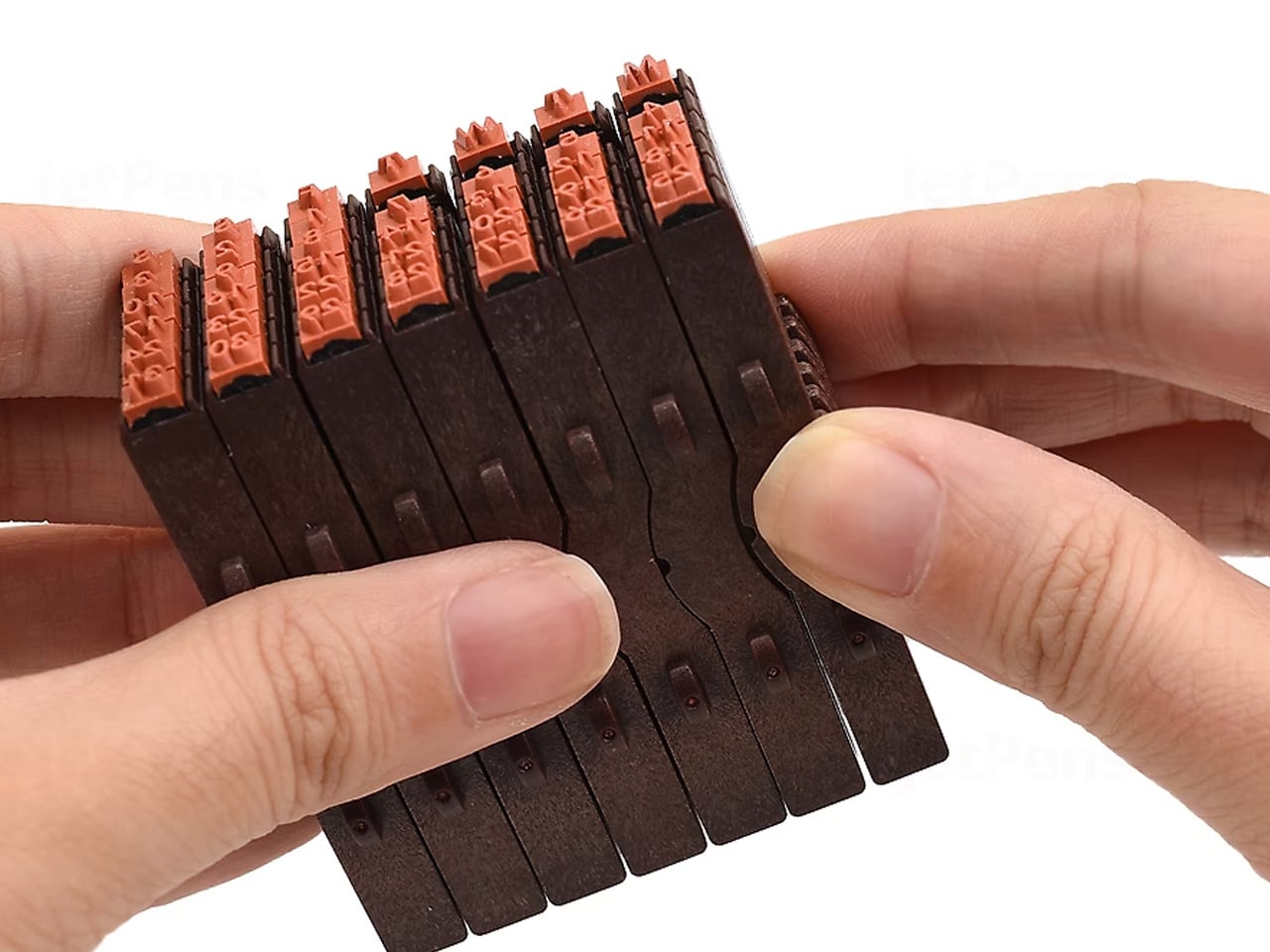
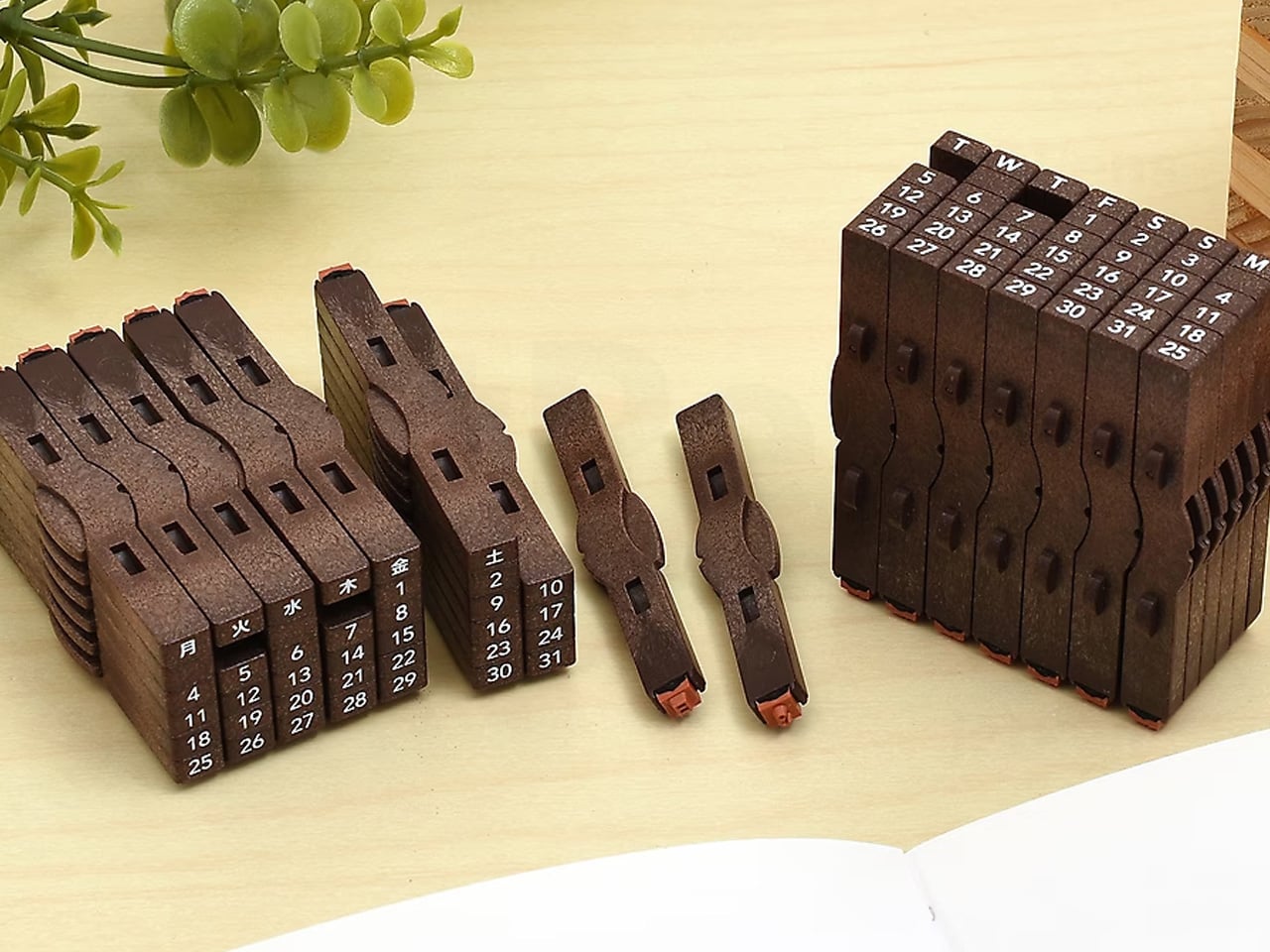
A printed planner decides the calendar layout before you open it. Shachihata hands that decision back through a set of connecting rubber stamps. Seven weekday pieces and 31 date pieces join vertically or horizontally, letting you assemble a monthly grid or arrange a different sequence. Two blank pieces help with spacing, and individual components can also be reversed to leave gaps. The appeal is practical modularity: the same collection of small parts can follow your preferred layout instead of prescribing one.
For a journal you build yourself, this avoids repeatedly drawing a calendar while preserving control over its placement. Shachihata gives the impression size of a five-week arrangement as approximately 24 by 47 millimeters, so the result is compact rather than a full-page planner. You’ll need a separate ink pad, which isn’t included. That extra component also lets you choose your ink color. The tradeoff is setup: arranging small pieces is a ritual for occasional planning, not instant date stamping.
What we like
- Connecting pieces allow layouts to change without replacing the entire stamp.
- A compact calendar impression can fit within a larger journal composition.
What we dislike
- An ink pad is required and sold separately.
- Rearranging individual dates takes more preparation than using a fixed calendar stamp.
8. Personal Whiteboard
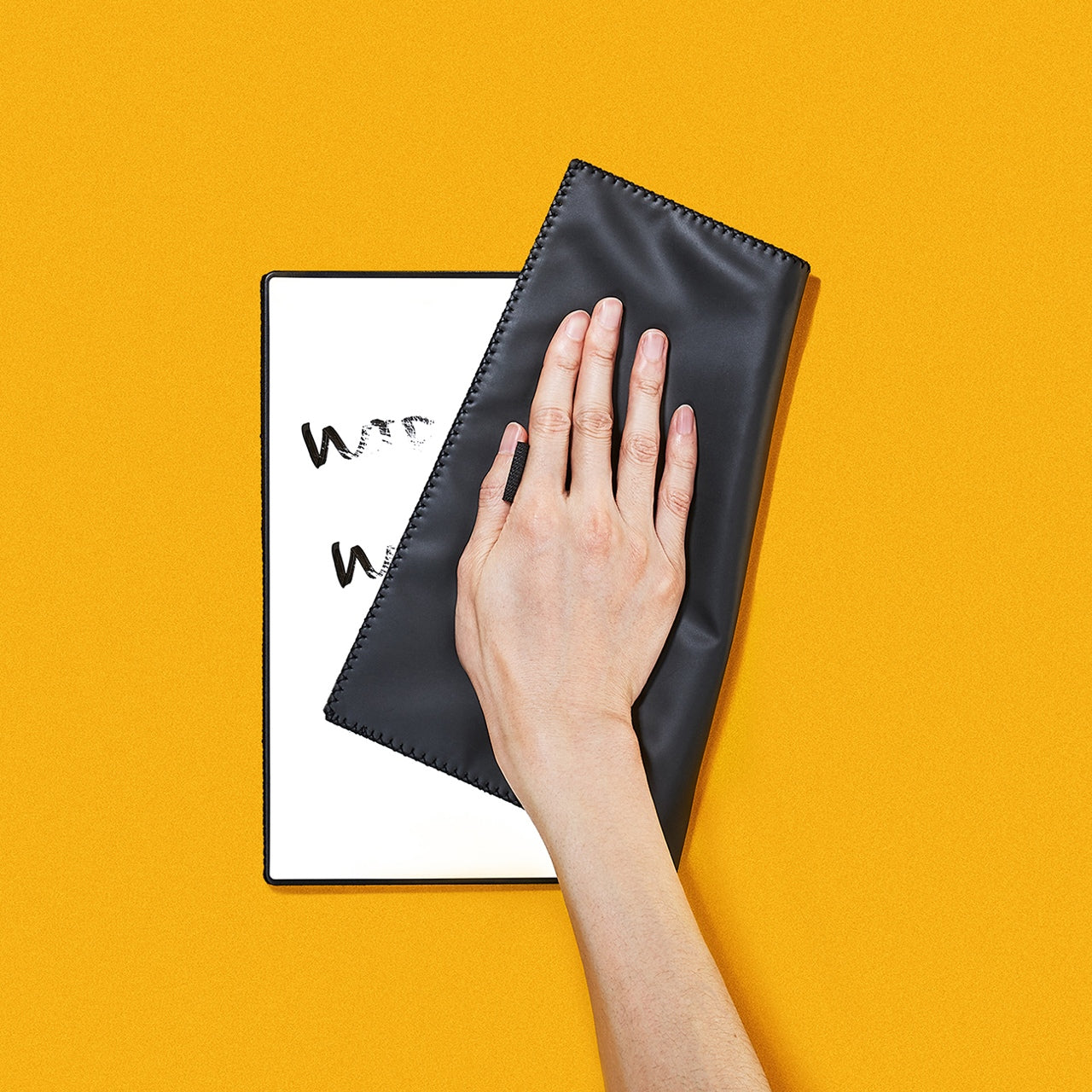

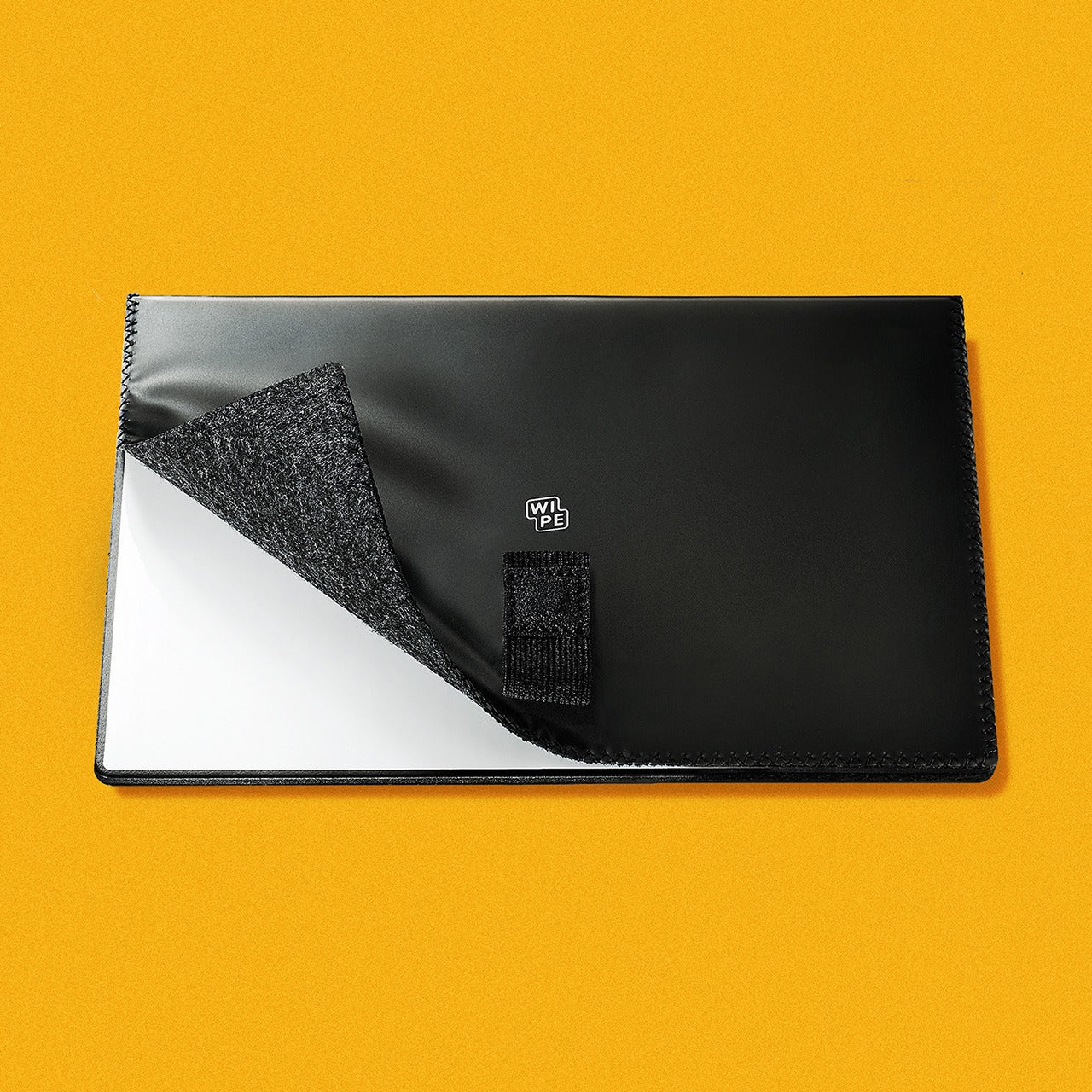
Some notes need a place to exist for an hour, not a notebook that will keep them for years. The Personal Whiteboard by 9FEET Design gives those temporary thoughts a reusable surface in a portable format. Its cover serves as an eraser, stand, and pocket, while the magnetic Mag Force arrangement functions as a handle and pen holder. Those combined roles are the useful part: carrying the board doesn’t require assembling a separate collection of supports and cleaning accessories first.
At roughly 10.5 by 7 inches, it offers room for a daily task list, a rough diagram, or the calculation that doesn’t belong on another loose sheet. It works with regular whiteboard markers. There’s no automatic archive here: photograph anything worth keeping before wiping the surface. That makes the board a poor substitute for extensive meeting notes, but a sensible companion to a permanent notebook when you need space to work something out.
What we like
- The cover combines erasing, storage, and standing functions.
- A reusable surface suits temporary lists and working sketches.
What we dislike
- A single writing surface limits how much information you can retain at once.
- Keeping a record requires photographing the board before erasing it.
Choose the Tool You’ll Actually Use
Before buying another desk accessory, notice the small task you keep working around. Maybe your pens disappear into a bag, your rough notes crowd a stack of paper, or your journal needs a calendar you can arrange yourself. That is a better starting point than matching every object on the desk. Choose one design that addresses that habit, and leave enough room around it to actually put it to work.
The Miura pen belongs to a different sort of decision: collecting an object because its detail keeps rewarding your attention. There’s room for that pleasure, too, provided the distinction stays clear. A playful mechanism does not need to make you more productive to justify its existence. It does need to be something you genuinely want to live with, rather than another expensive object waiting for a turn in the drawer.