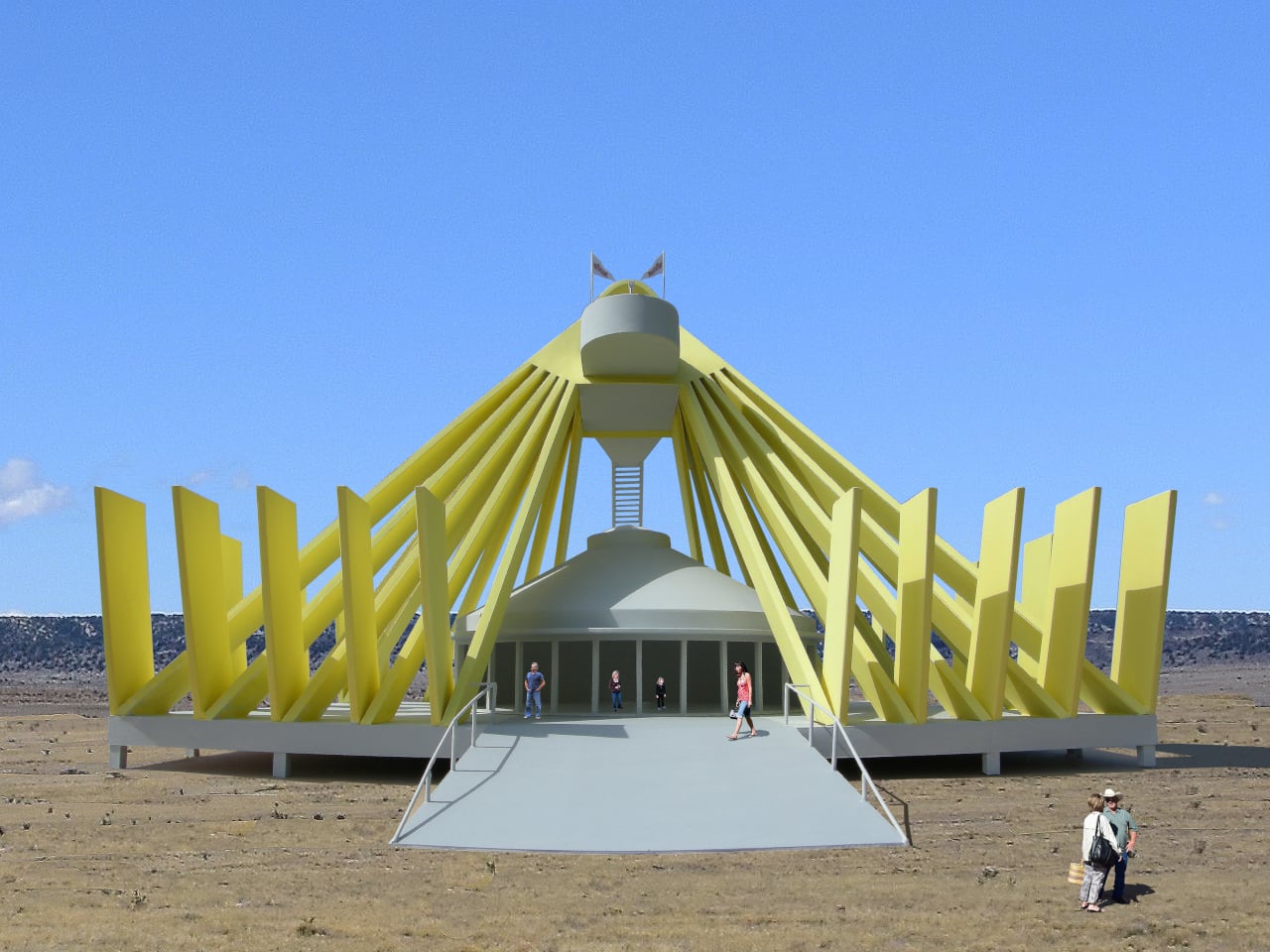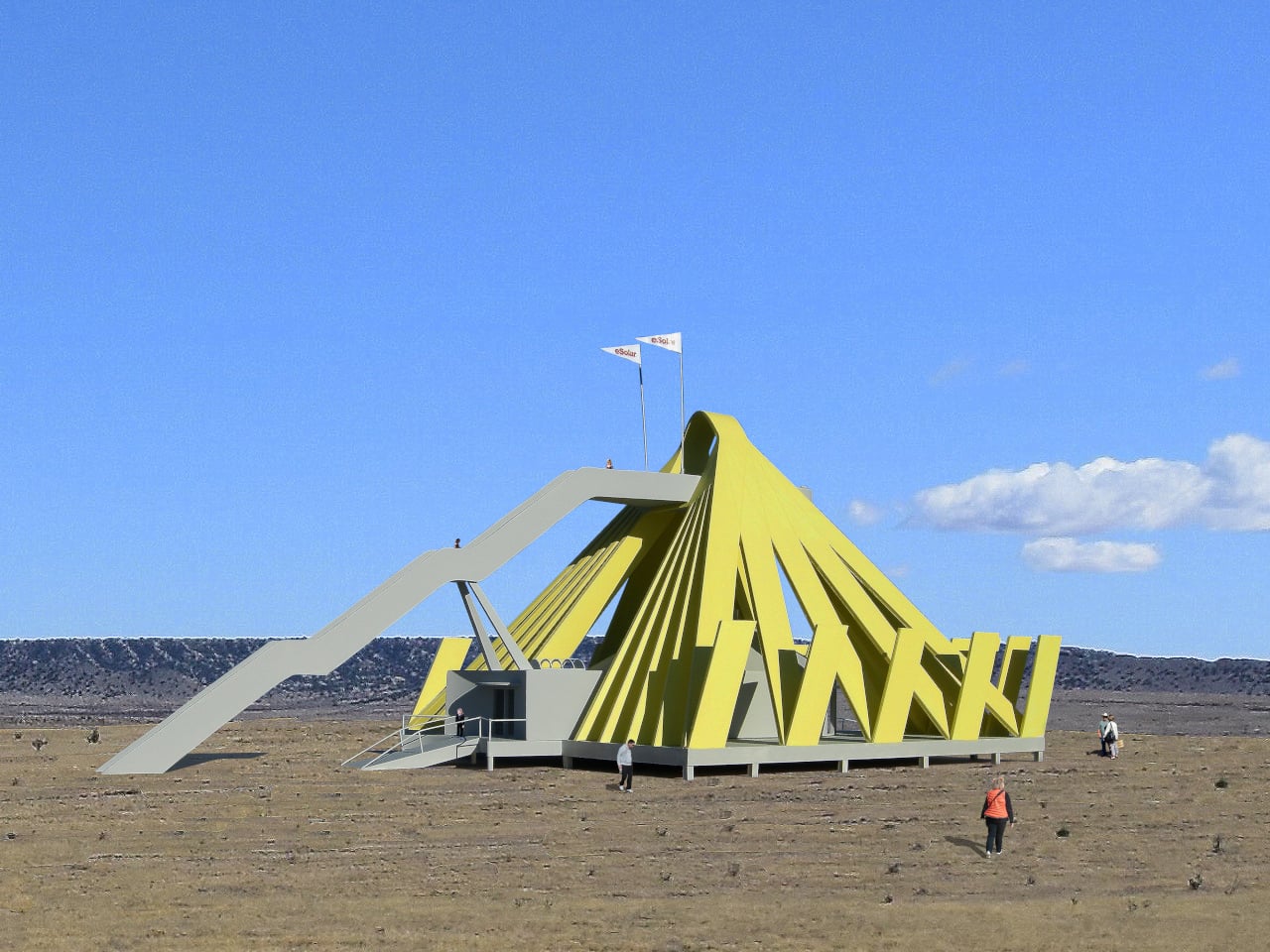

Solar power plants aren’t usually designed around the people who might stop by to understand them. The Solar Electric Visitors Pavilion concept gives those visitors a more inviting place to start, wrapping an exhibition space in yellow structures inspired by reflected sunlight. Intended for a Southern California desert, the unbuilt proposal combines shade, outdoor gathering space, and an elevated view of the plant.
The shape comes from the power plant’s proposed operating principle, which doesn’t involve the familiar rows of rooftop solar panels. Instead, hundreds of mirrors would direct sunlight toward a receiving tower, using the resulting heat to produce steam and generate electricity. The pavilion translates those converging paths into broad yellow bands, making an abstract energy diagram something you could actually walk beneath.
Designer: Michael Jantzen
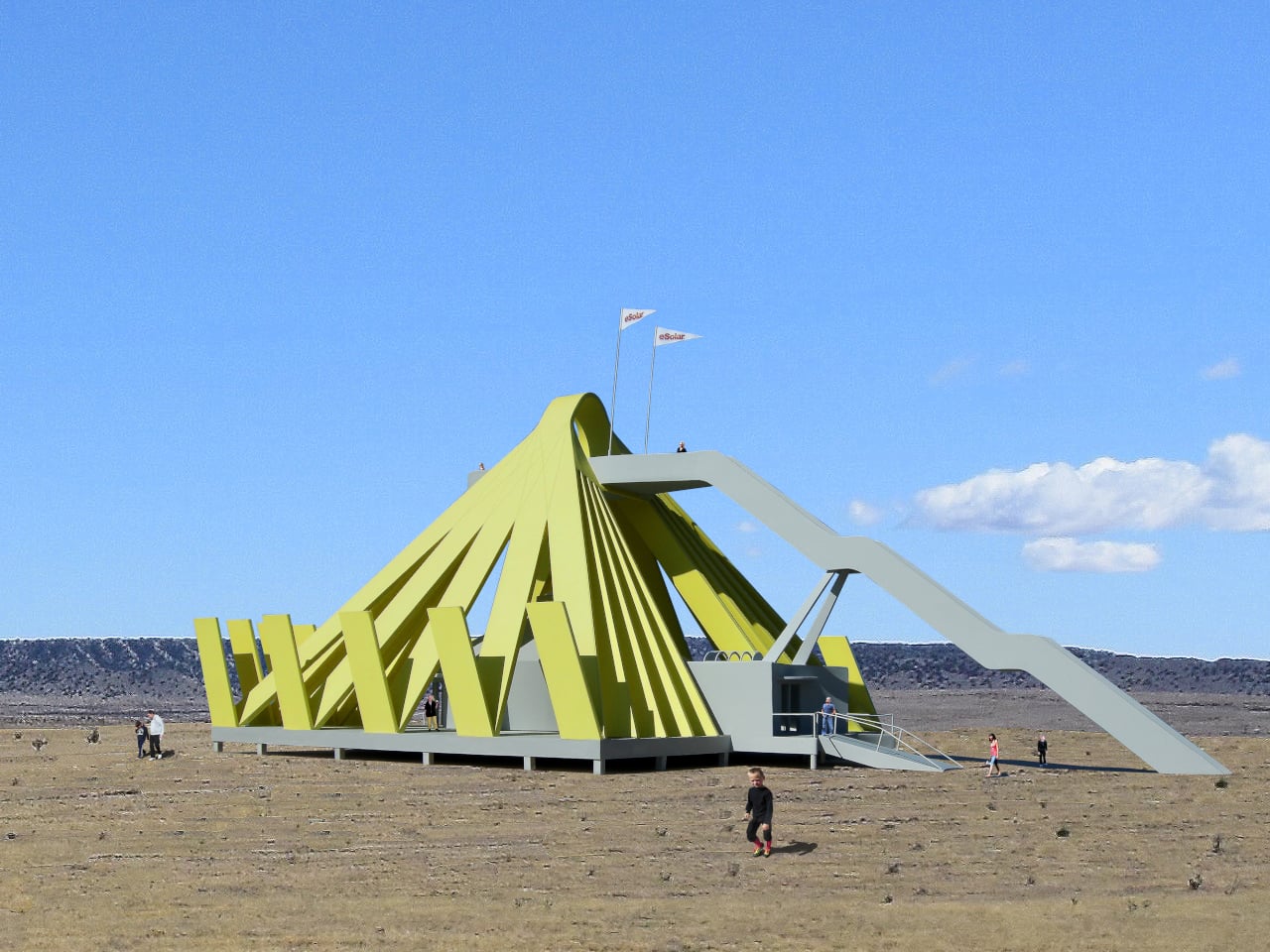
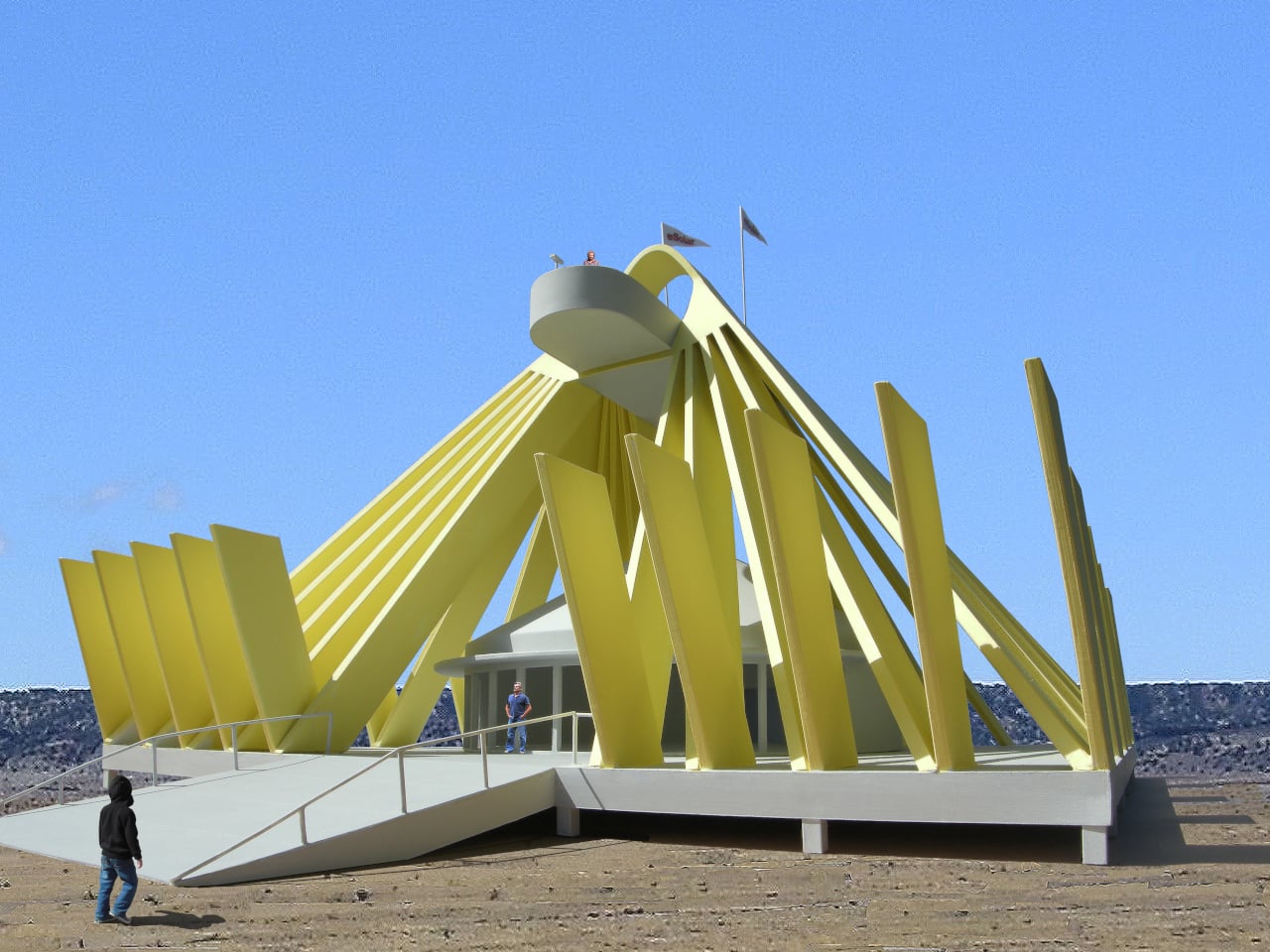
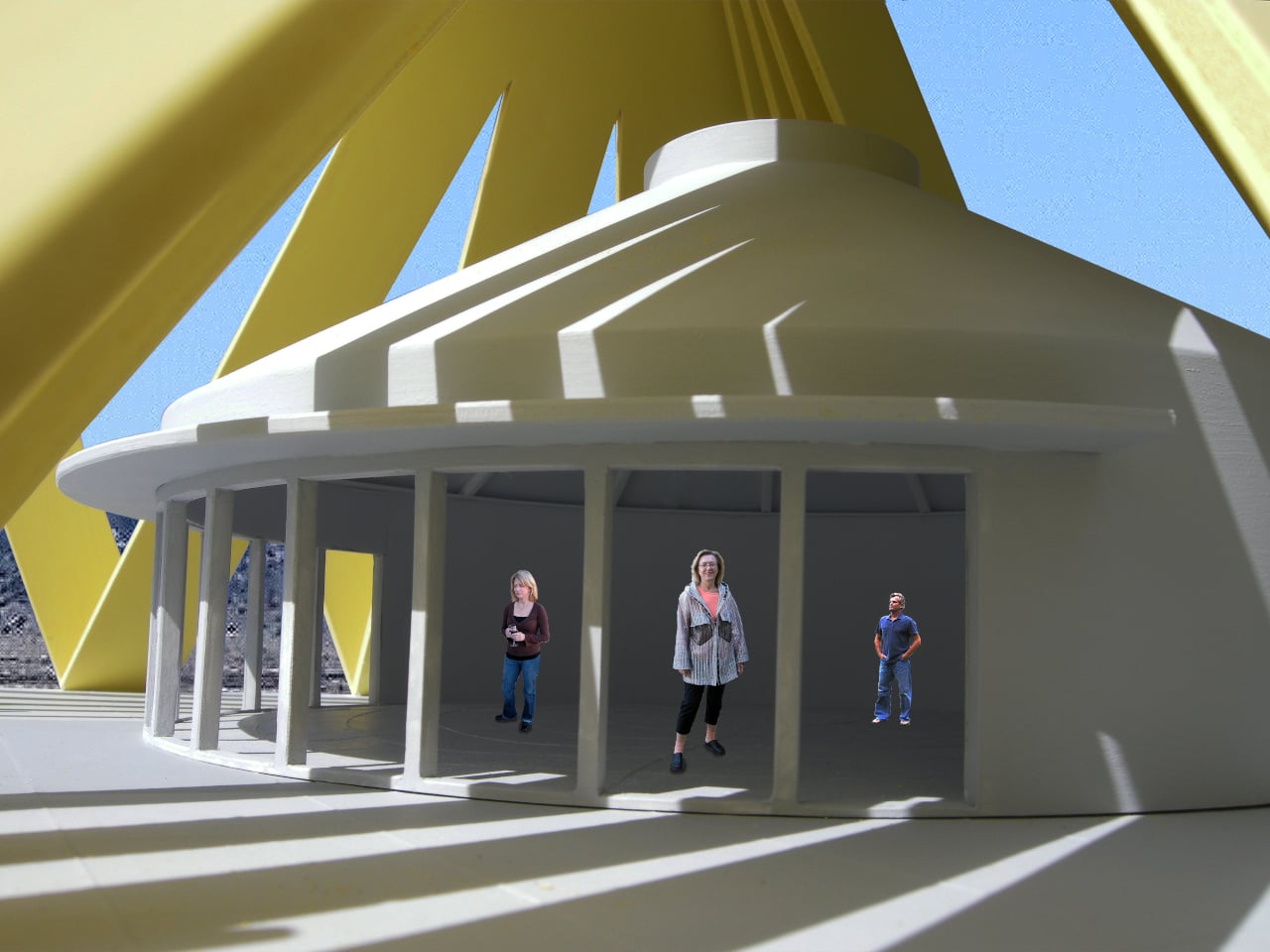
Those bands rise from the perimeter toward a shared high point, their lower ends bending upward like oversized ribbons. They aren’t intended to be decorative screens alone. The yellow structure would support the viewing platform while casting shade across the enclosed center and its surroundings. Gaps between the bands keep that outer layer open, rather than turning it into another enclosed room.
Tucked underneath is a low, rounded exhibition building where visitors could learn about the plant before heading upstairs. Large windows would face the facility, connecting the displays to the machinery outside. A shaded central skylight would bring in daylight from above, while both the windows and skylight are intended to provide natural ventilation. That doesn’t establish comfortable indoor temperatures on a desert afternoon.
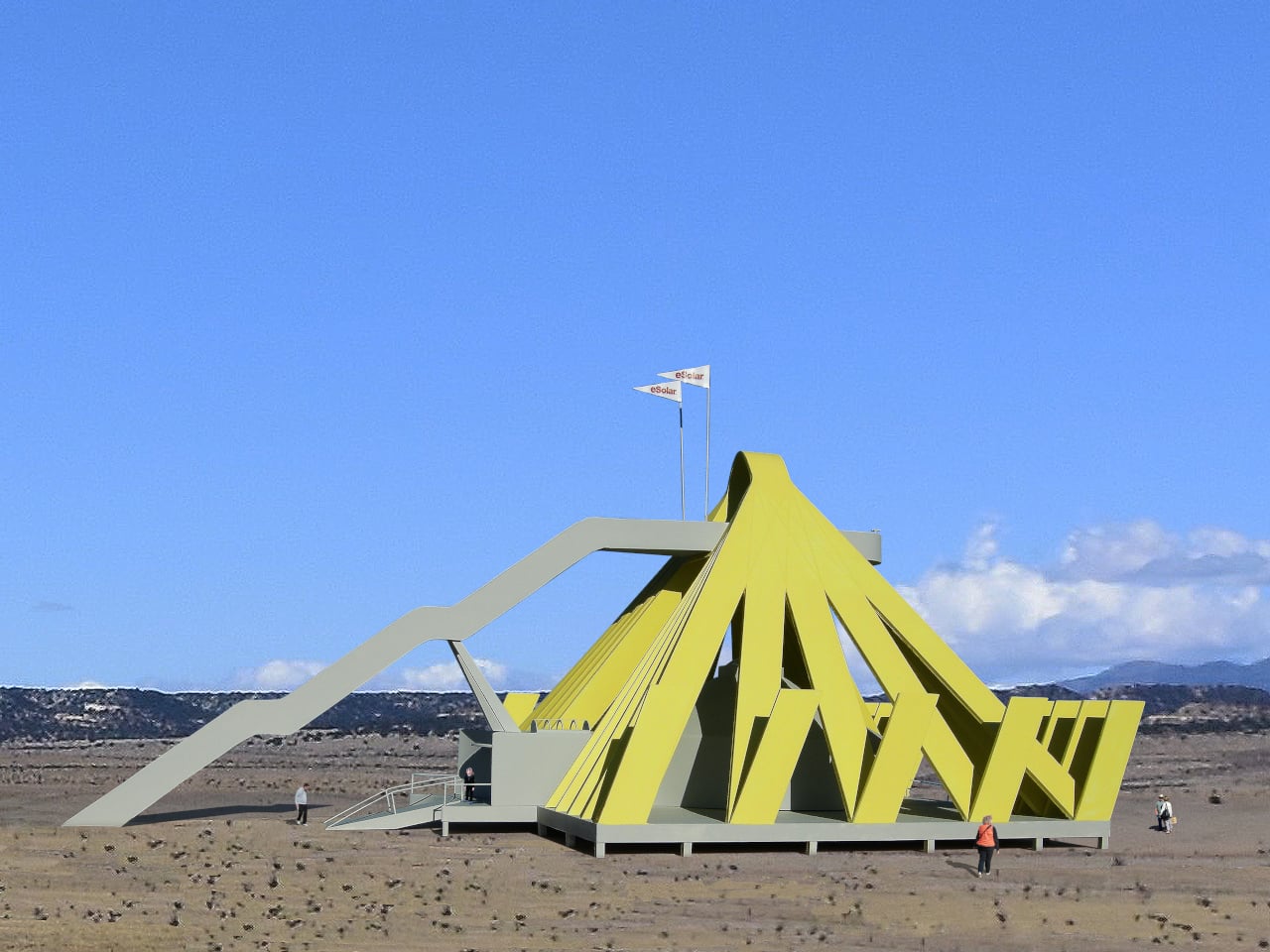
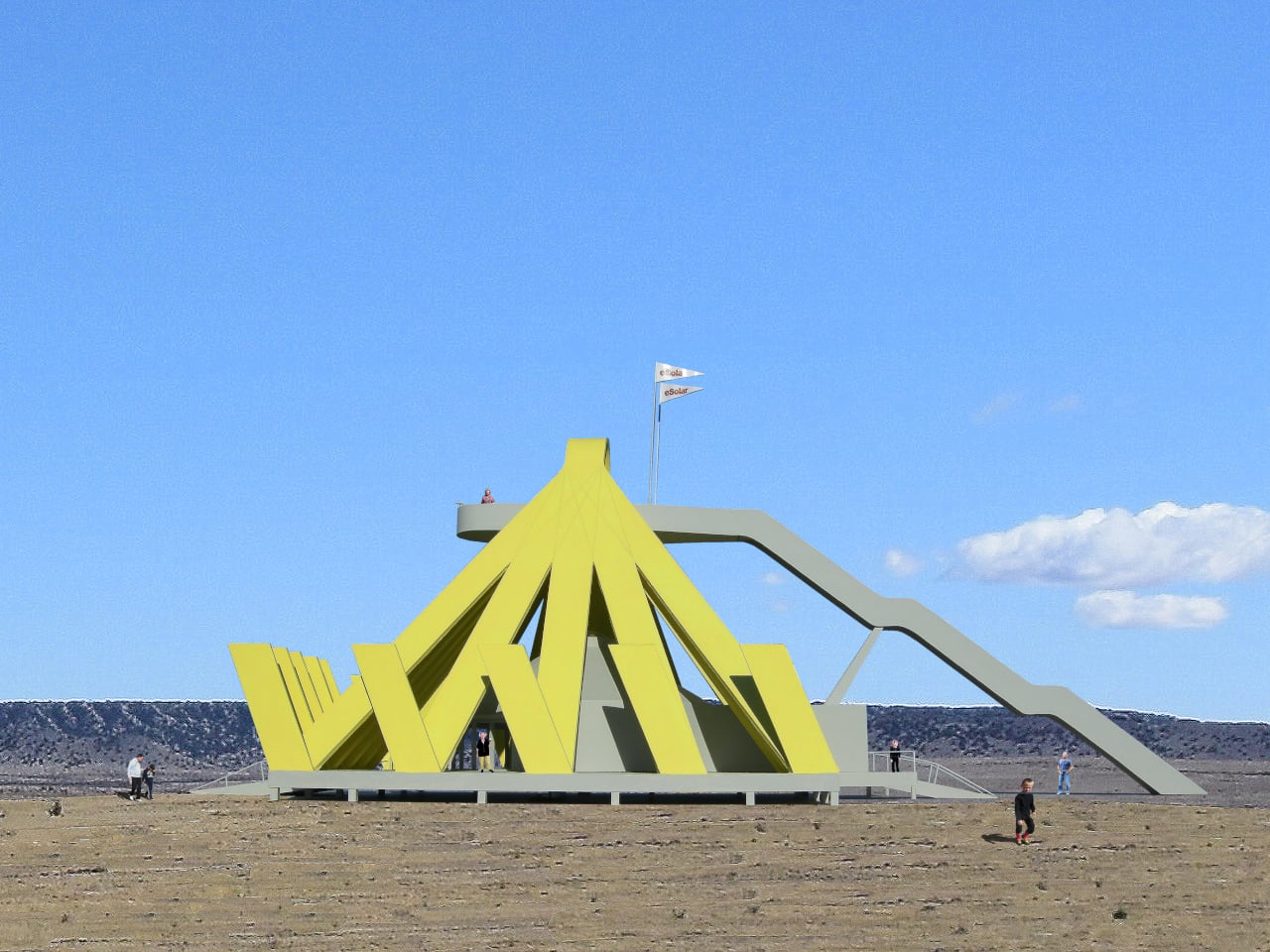
The space around that enclosure has a different job, giving special events somewhere to spread out beneath the yellow framework. A visiting school group could gather there before entering the exhibits, for example, rather than crowding inside immediately. It also creates an intermediate space between the open desert and the enclosed center, although the separated bands wouldn’t provide a continuous overhead covering.
An exterior staircase would take visitors upward, separating the climb from the exhibition room below. At the top, a projecting viewing platform would let visitors look across the power plant from above. After learning how the mirrors concentrate sunlight, you could step outside and follow their arrangement across the landscape. The change in viewpoint gives the visit a clear destination beyond the displays.
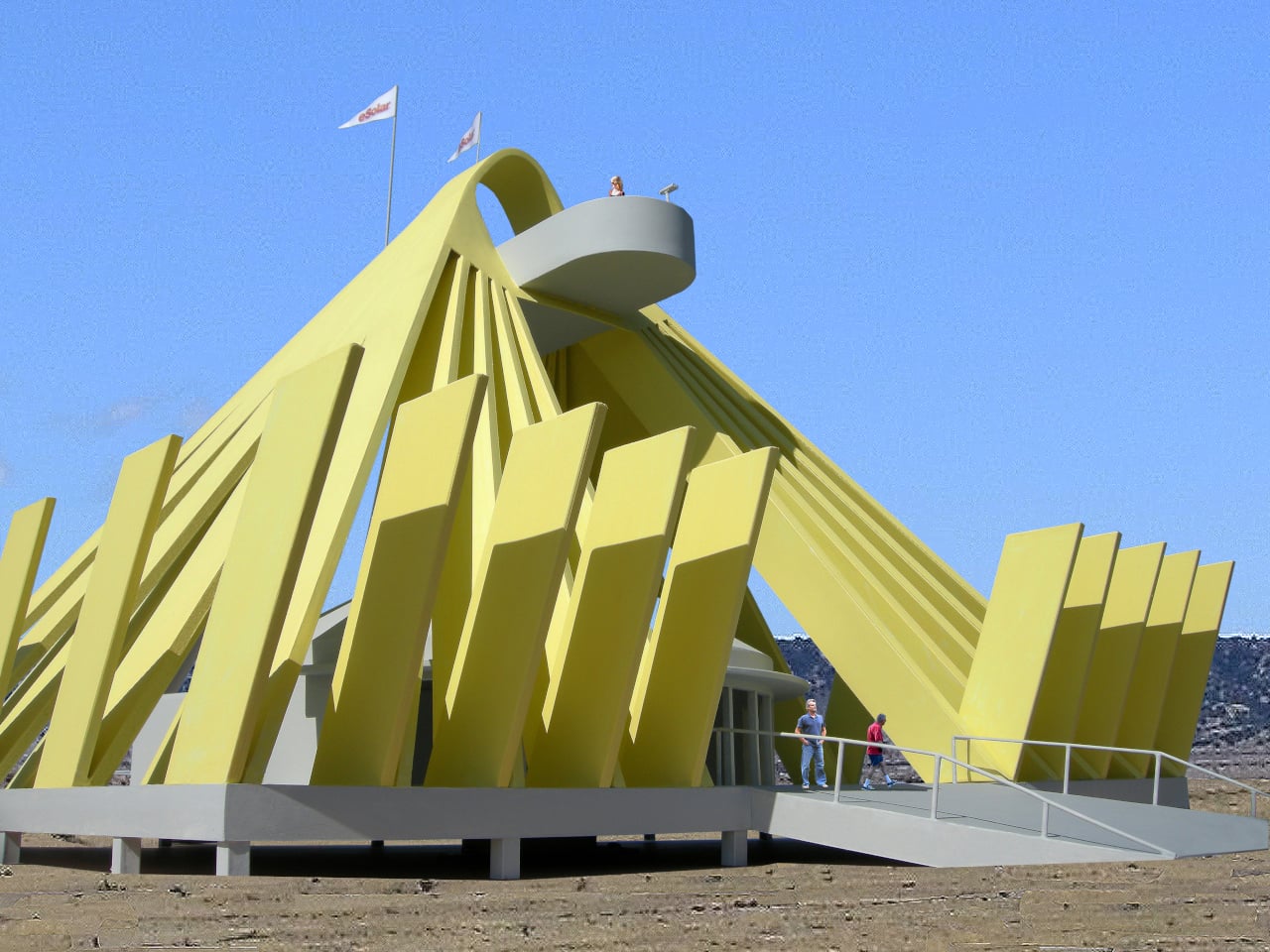
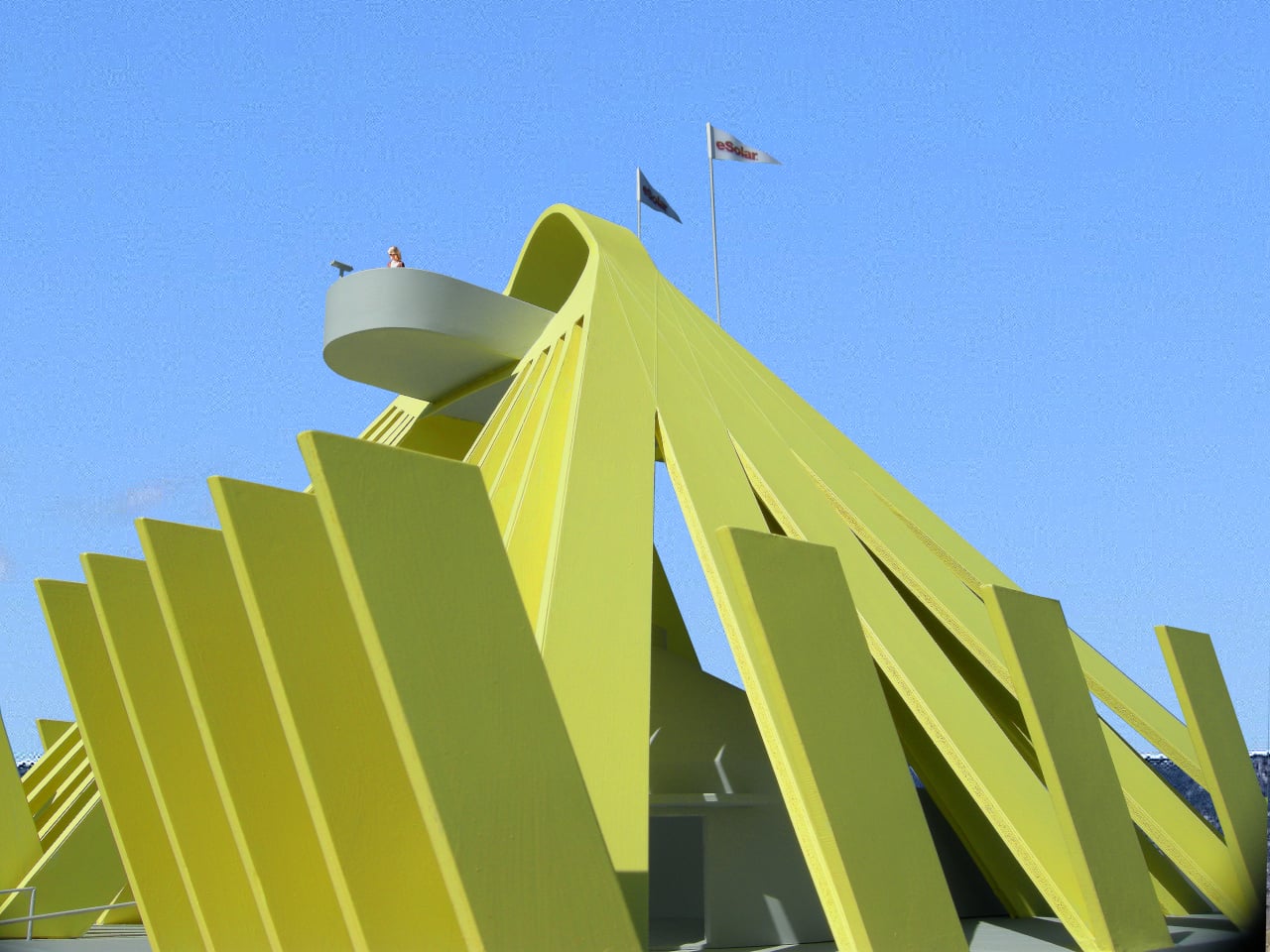
Most of the structure is proposed in steel and concrete composite materials, rather than the lightweight fabric its ribbonlike outline might suggest. Electricity would come from the associated power plant, not from the yellow bands themselves. That distinction keeps the architecture’s role clear: it interprets the energy system and accommodates its visitors, while the actual generating equipment remains elsewhere on the site.
There are still practical questions behind the dramatic silhouette, including how everyone would reach that elevated platform. The published proposal identifies stairs but doesn’t explain an accessible route to the upper level. Resolving that would matter for a public visitor center, especially one built around a shared view. The lesson about solar energy shouldn’t depend on being physically able to make the climb.