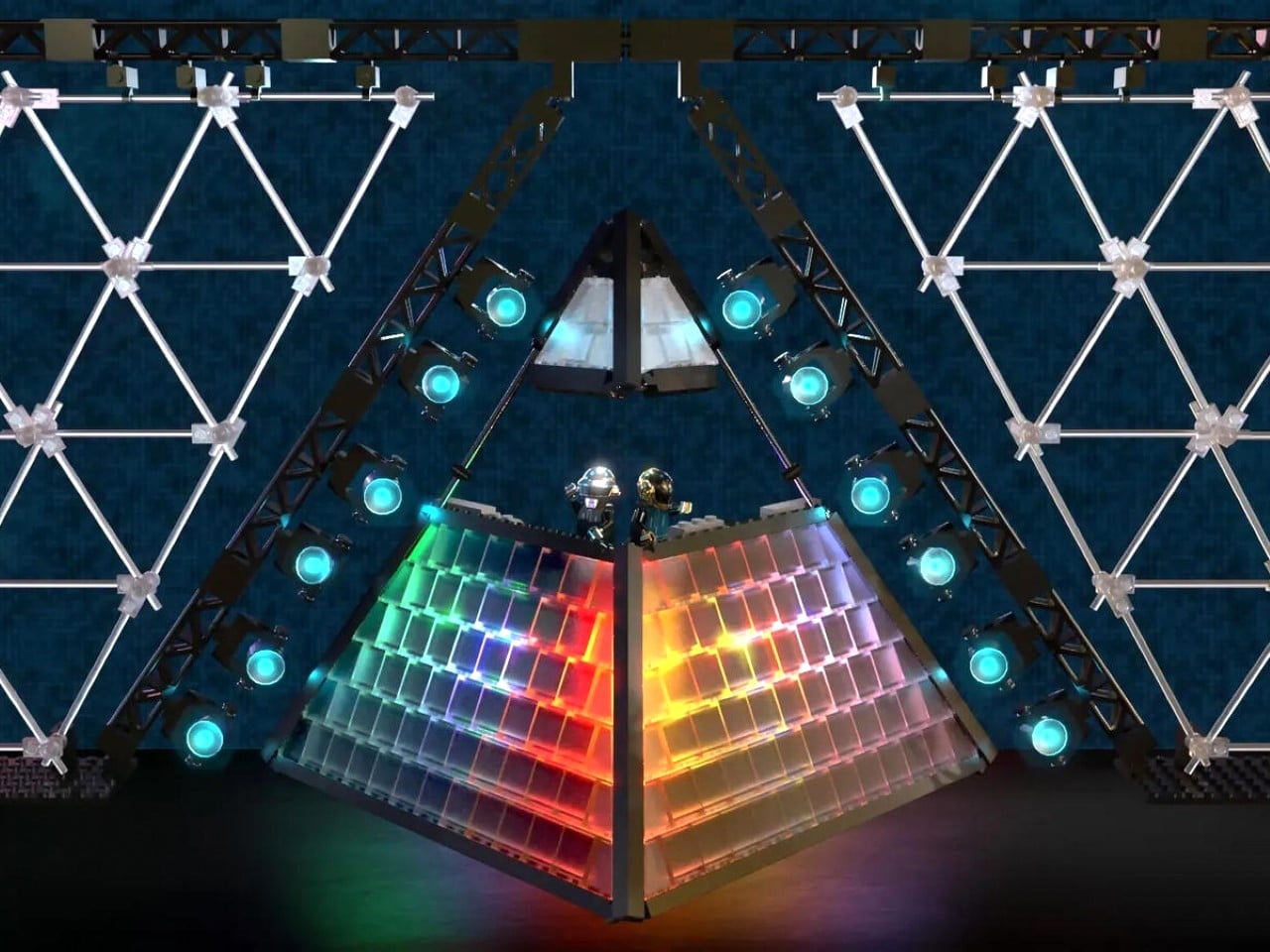

Daft Punk’s debut album Homework turns 30 on January 20, 2027, and the robots have picked a pretty good year to show up in LEGO form. That record gave us “Da Funk,” “Revolution 909,” and “Around the World,” a song that repeats its own title 144 times and somehow never gets old. Building something out of one element over and over is pretty much LEGO’s whole thing, so the match was always sitting there. On October 22, LEGO and Daft Punk finally made it official with a brand new partnership. Its first product is a set based on the pyramid stage that glowed over the duo’s Alive tour, arriving in 2027.
The set traces back to Patrick Harboun, a Luxembourgish builder who grew up playing Homework on his Walkman. In 2020, he and his then 8-year-old son built a brick version of the pyramid during lockdown, and it won the Grand Prize in LEGO Ideas’ Music to Our Ears challenge. A box set didn’t follow, so they resubmitted it in 2024, hit 10,000 supporters in 2025, and spent about a year in LEGO’s review Parking Lot. That wait ended this week, and LEGO’s designers are now reworking the fan build into a retail set. I’ve been rooting for this box since I first saw the MOC in 2024, so forgive me for feeling a little smug.
Designers: Patrick Harboun (Robotrock) & LEGO Design Team
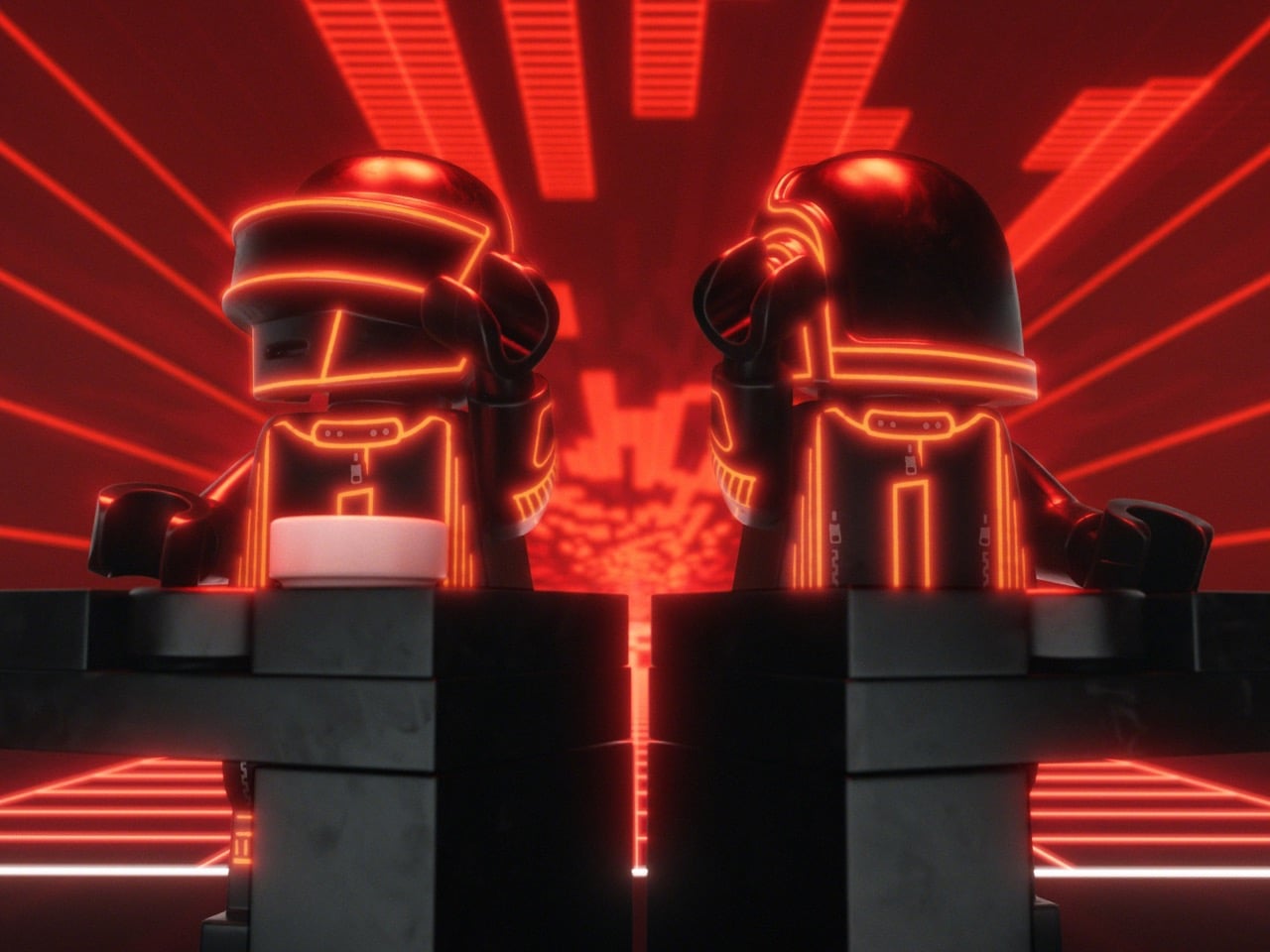
The real pyramid debuted on April 29, 2006, inside Coachella’s Sahara Tent, a space built for 10,000 people that roughly 40,000 tried to squeeze into. Martin Phillips of the LA production company Bionic League designed it, taking cues from the “Technologic” music video he had also worked on. The funny part is that Phillips used no bespoke technology at all, building the towering structure from off-the-shelf Barco OLite LED panels. Standard parts, clever assembly, legendary result, which honestly sounds like a LEGO tagline. The pyramid then toured the world as Alive 2006/2007, and the Grammy-winning Alive 2007 album was recorded under it at Paris-Bercy in June 2007.
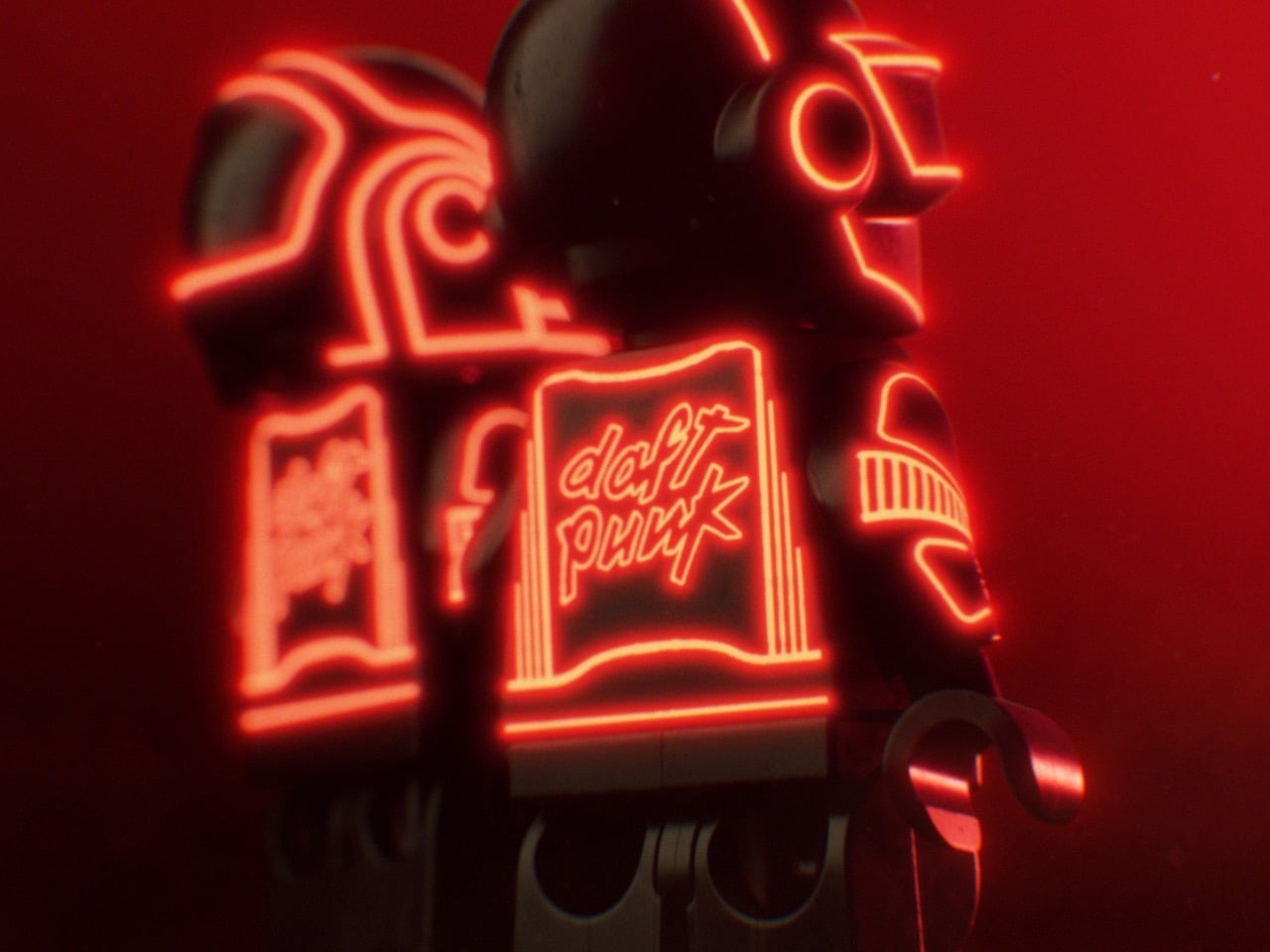
Harboun’s original Daft Punk Concert MOC (My Own Creation, in LEGO-speak) recreates that stage in roughly 2,000 pieces, with Thomas Bangalter and Guy-Manuel de Homem-Christo perched at their console in custom robot helmets. Triangles are famously awkward for a system built on right angles, and Harboun admitted that making all those angles click took some creative problem-solving. His son built the first prototype from bricks lying around the house, and Harboun expanded it digitally from there. The helmets were a gray area at the time, since LEGO had never sold official Daft Punk minifigures. The duo had only appeared in brick form in Pharrell’s LEGO-animated biopic Piece by Piece, which Harboun happily pointed to as a loophole.
My favorite detail, though, is the motorized core, where a spinning box of transparent bricks and a set of dangling lights fake the shifting LED patterns of the real pyramid. That one trick does two jobs. It stands in for the stage’s entire video rig, and it delivers on Harboun’s original goal of simulating what he called LEGO’s upcoming Night Mode. LEGO has said the retail set will differ from the fan submission, so the final details are still anyone’s guess. I’m crossing my fingers that the spinning core survives the trip from MOC to box.
This will be the first physical LEGO Daft Punk set, following the duo’s digital debut as minifigures and a music-reactive pyramid kit in LEGO Fortnite in 2025. LEGO’s Julia Goldin called the partnership “just the beginning of a bigger journey,” with more content and brand experiences promised alongside the set. Price, set number, piece count, minifigures, and regional availability, including the US, are all still unannounced. Daft Punk’s creative director Cédric Hervet described the pyramid as “one of the most recognizable expressions of Daft Punk’s visual world,” so at least everyone agrees on the centerpiece. Thirty years after Homework, the robots finally have some building homework of their own.

