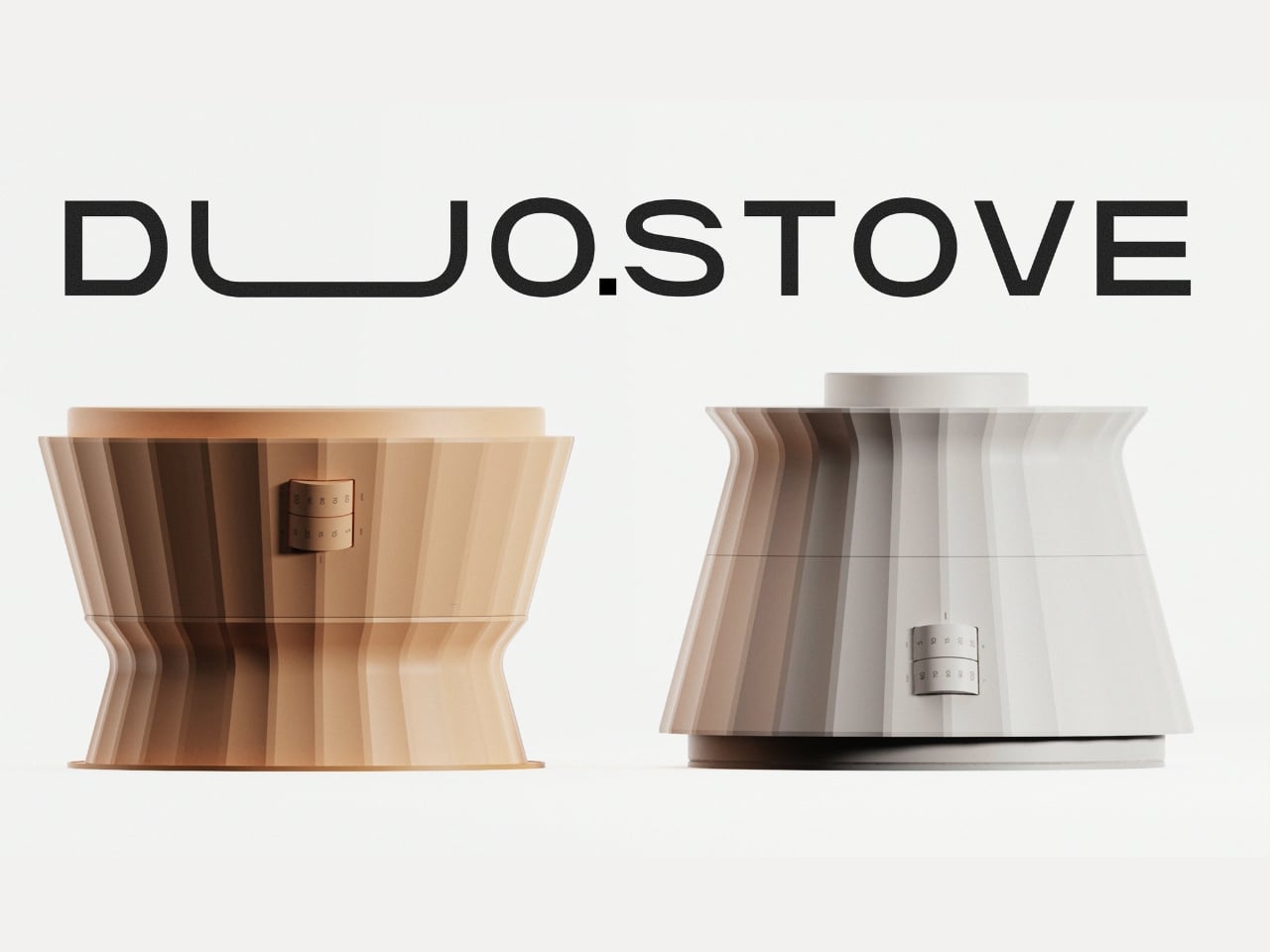
Dinner can be a one-pot meal and still leave a small collection of appliance parts in the sink. Add a separate steamer or countertop cooker, and the equipment starts taking up as much attention as the food. DUO STOVE, a concept by designer Eunseo Yun, tackles both kinds of clutter by rethinking where an appliance’s heating unit belongs.
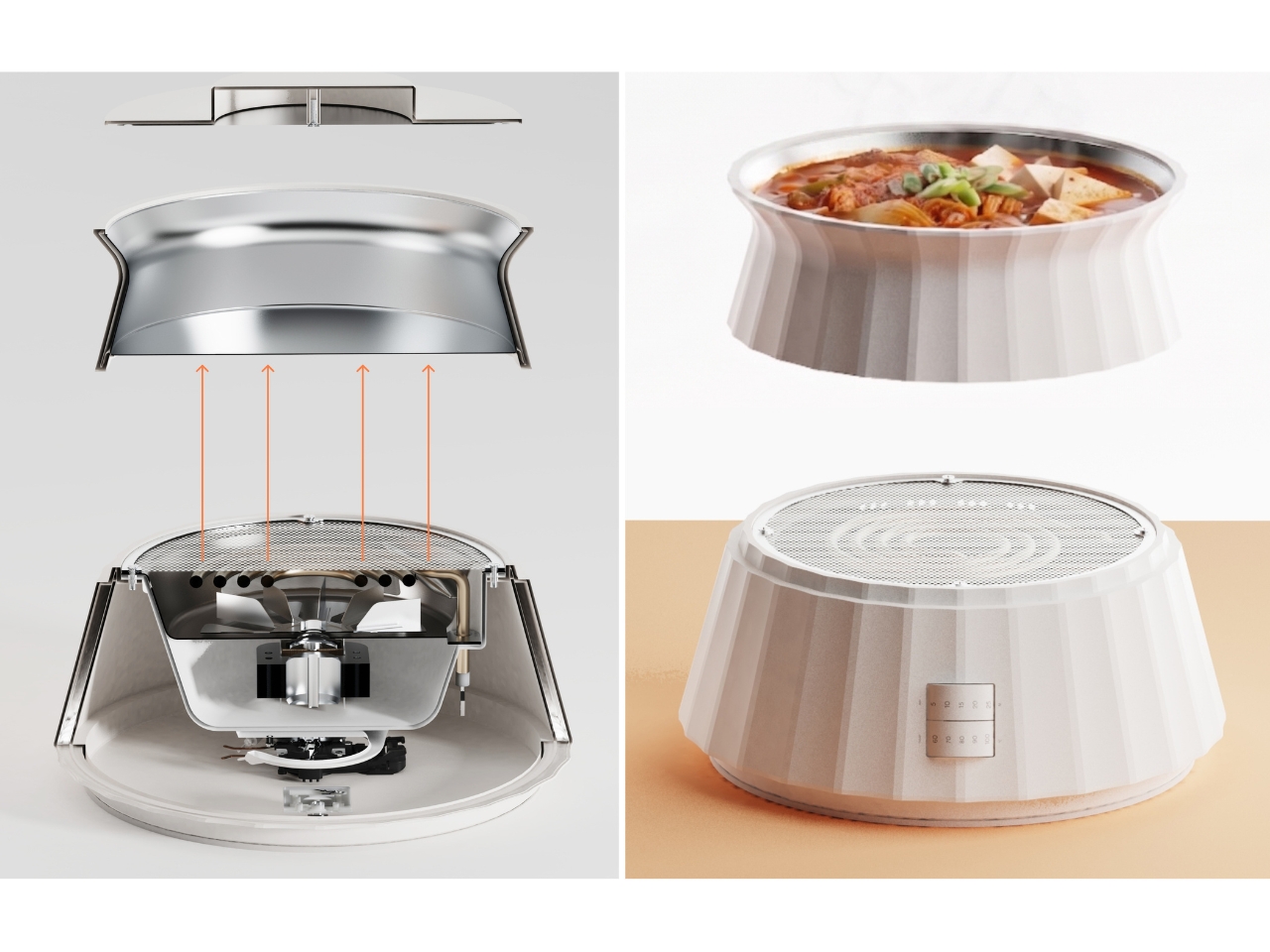
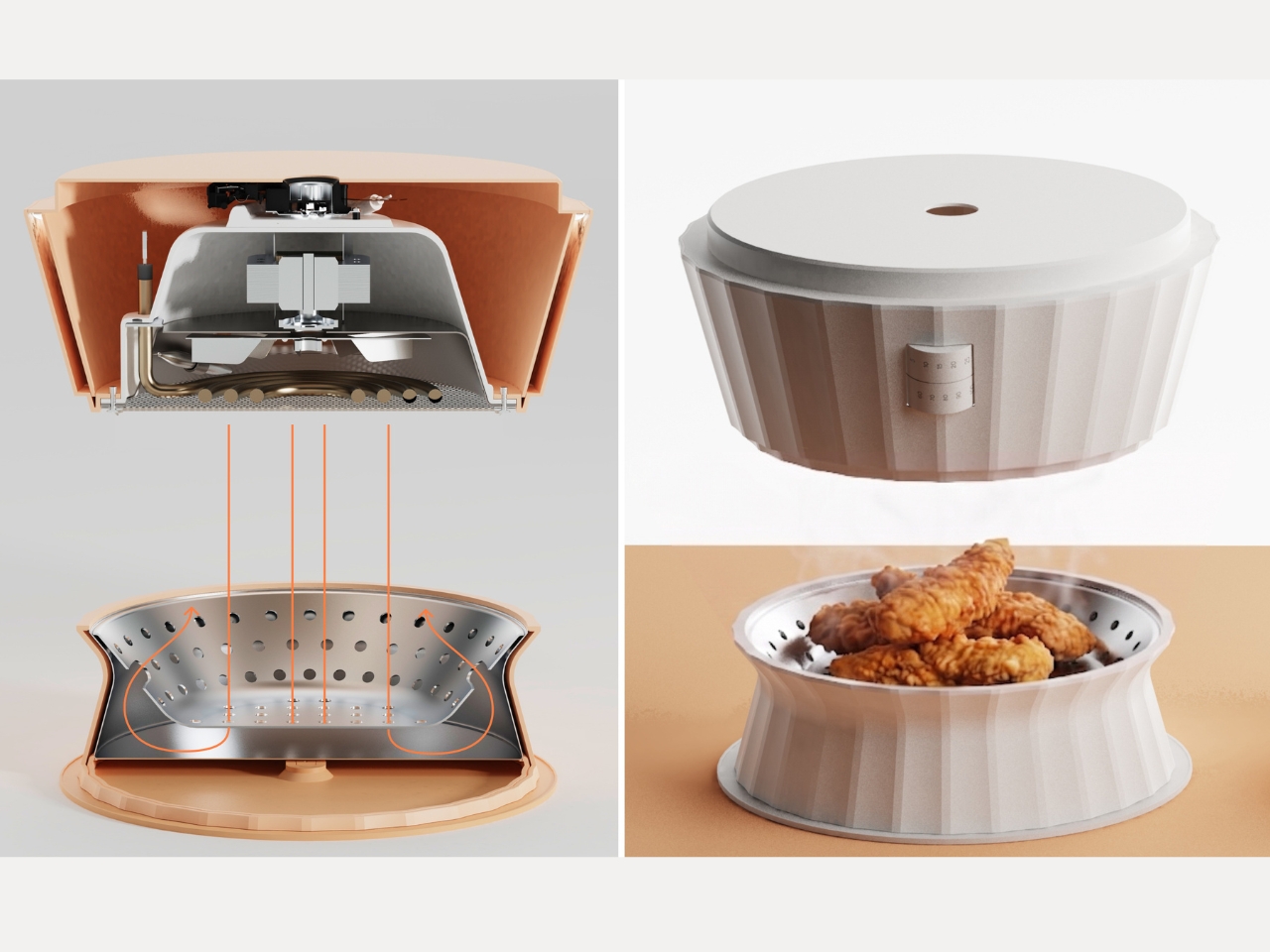
The central move is a reversible heating module. It sits beneath the cooking vessel in multicooker mode. In air fryer mode, it flips over and moves above it, directing heat down into the food chamber. Yun’s presentation treats the appliance as two essential parts: something that holds food and something that heats it. Rearranging those parts offers two cooking setups without asking you to find room for two separate machines.
Designer: Eunseo Yun
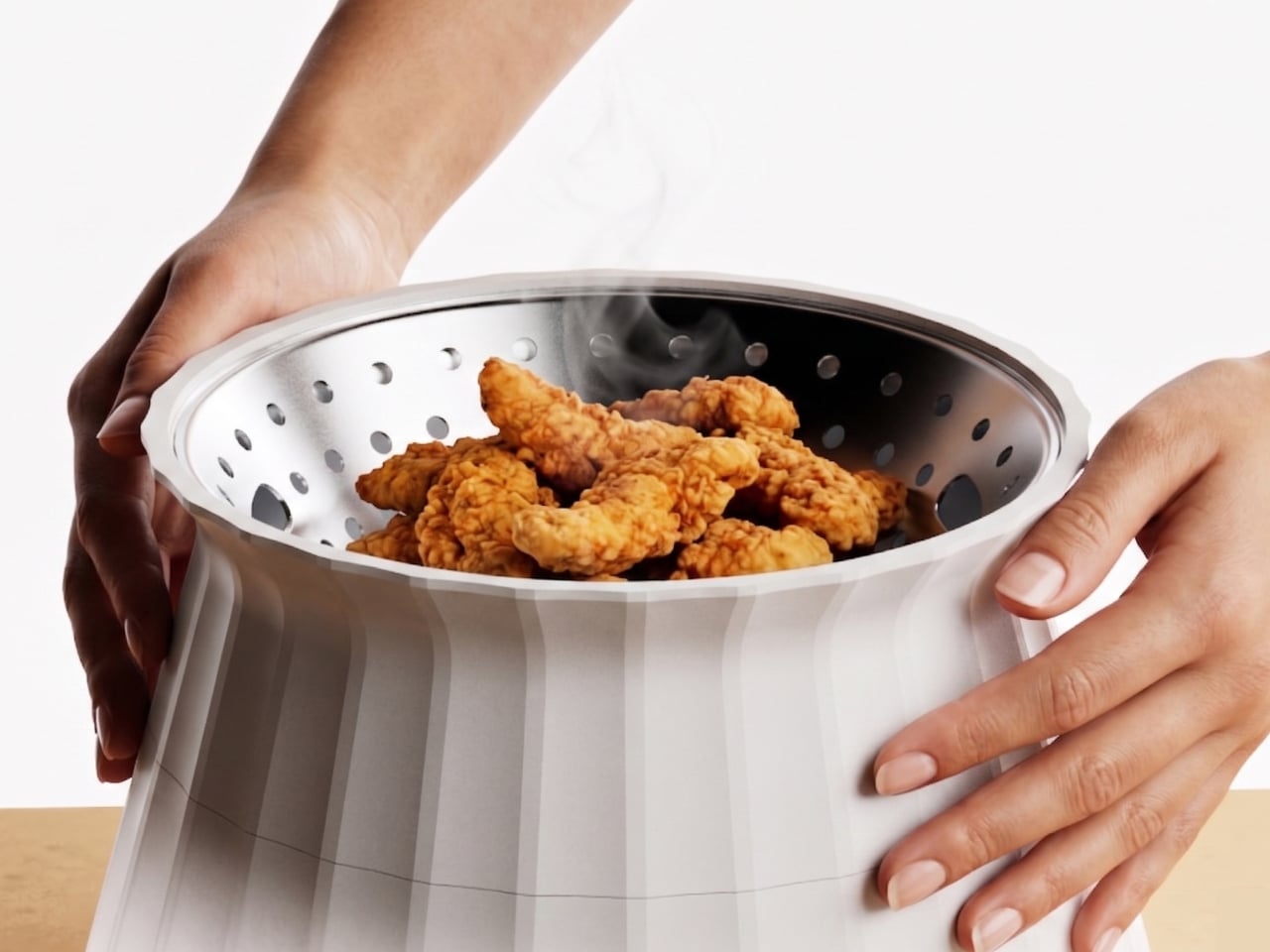
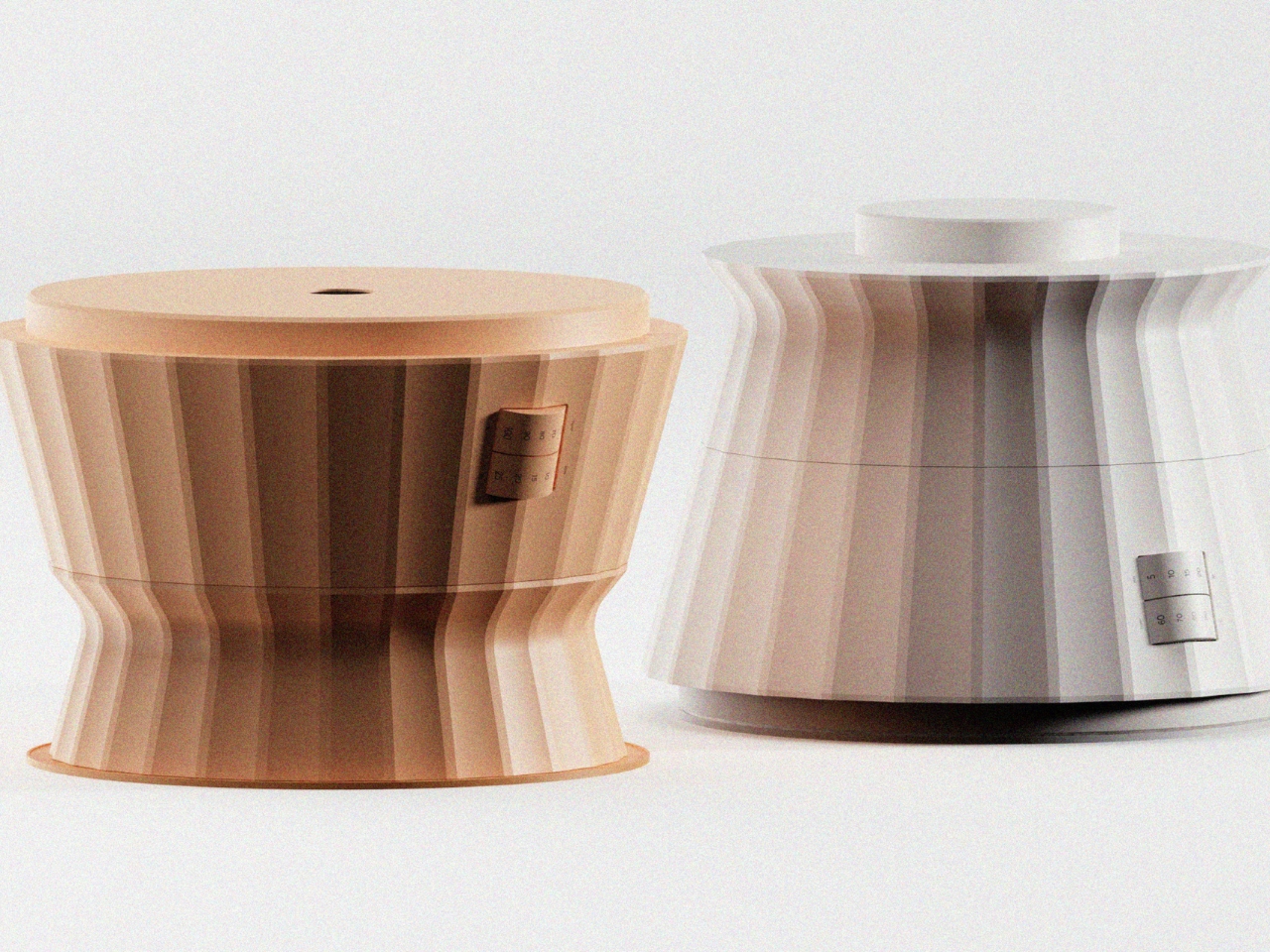
The exterior makes that reversal look intentional. Its fluted sides pinch inward around the middle, giving the body a sculptural silhouette that works in either orientation. The pale and amber-toned versions shown in the presentation look closer to serving vessels than the usual black countertop box. I like that restraint. A device meant to sit beside dinner should look comfortable there, even when nobody is admiring its specifications.
In multicooker mode, a wire insert turns the vessel into a steamer. Remove it, and the proposal supports other methods, including boiling; a lower temperature setting is intended to keep food warm while you eat. That last use feels especially relevant to the dining-table placement. A pot of soup could remain part of the meal instead of becoming another trip back to the kitchen.
The air fryer arrangement brings the cleanup argument into focus. Yun proposes using the lower inner pot as a bowl after cooking, reducing the need to transfer food into separate serving ware. The presentation shows a perforated insert holding chicken pieces inside the outer vessel. The useful detail is the continuity between cooking and eating, with the appliance’s lower half doing a job beyond containing a basket.
That doesn’t mean washing disappears. Food-contact parts still need cleaning, and a perforated insert still has holes to deal with. I’d read the concept’s cleanup pitch as an attempt to shorten the sequence, rather than a promise of a magically empty sink. Serving from the cooking vessel is a modest improvement, but modest improvements are often the ones that make sense on a busy weeknight.
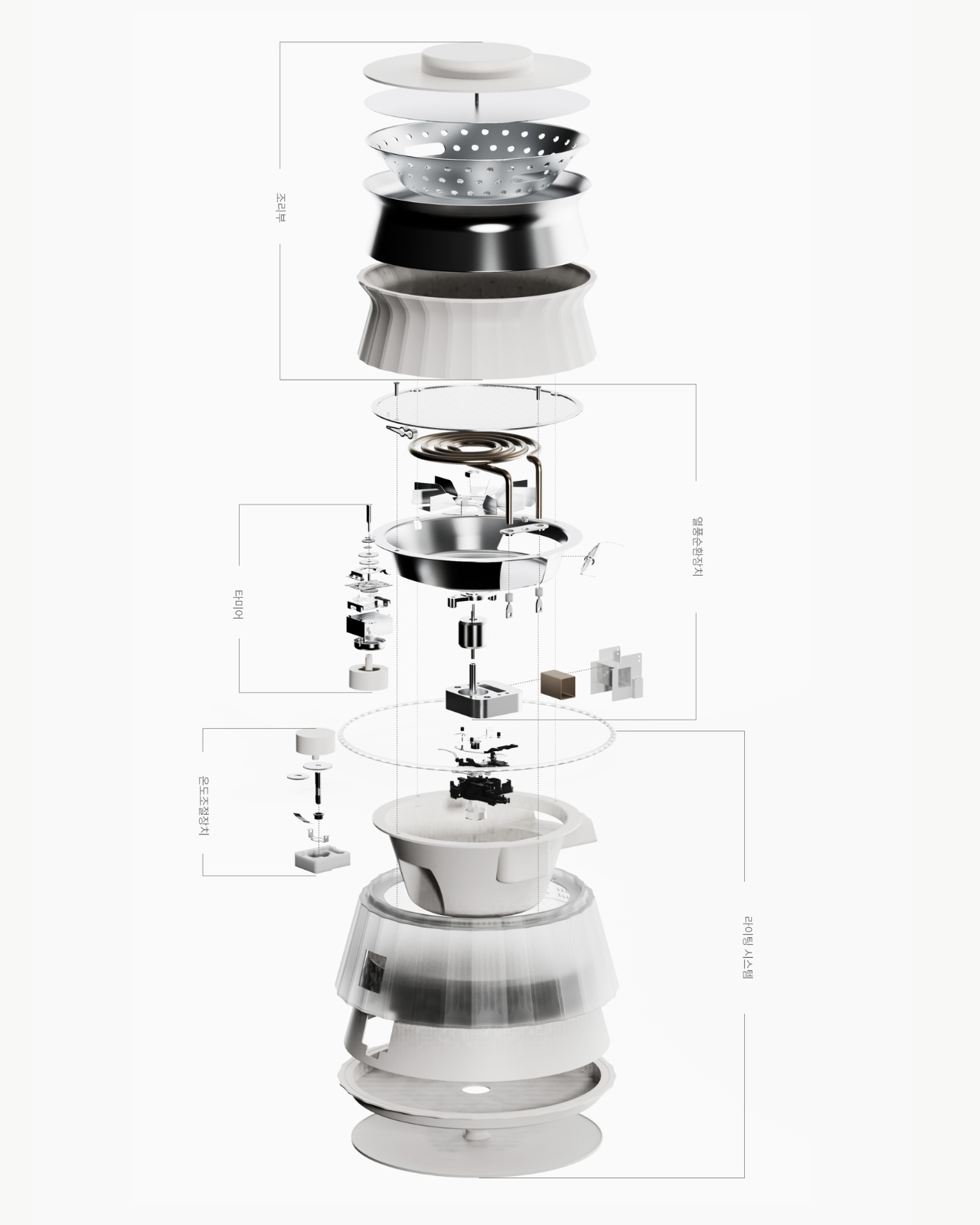
The controls follow the same pared-back thinking. Two dials handle time and temperature, with an interface intended to remain readable when the heating module is flipped. There’s no menu of food presets to navigate in the proposed system. I’d take that trade, provided the markings were clear. Choosing a temperature yourself can feel less fussy than deciding which tiny food icon most closely resembles tonight’s leftovers.
Yun also gives the timer a visual presence beyond the controls. Light shines through a translucent lower housing, with its intensity changing in proportion to the remaining cooking time. The illustrated sequence moves from a brighter glow toward darkness. It’s conceived as both an ambient progress indicator and a nod to a campfire at the table. That’s an appealing role for lighting, although it wouldn’t replace a precise time reading.
The questions are practical ones. How safely could you handle and reposition the heating module? Where would the cord go in each arrangement? Would the cooking capacity justify the space it occupies? The supplied presentation establishes the design proposal, not answers backed by cooking tests. Before treating DUO STOVE as a genuine replacement for two appliances, I’d want to know how well it performs both jobs.
Still, the premise is worth exploring because it addresses more than appliance count. It considers the route from preparing food to serving it, then clearing the table. Combining functions only helps if the transitions don’t become chores of their own. DUO STOVE’s strongest idea is giving those transitions some attention, with a bowl you can keep using and a heating unit that changes position instead of demanding another permanent spot on the counter.