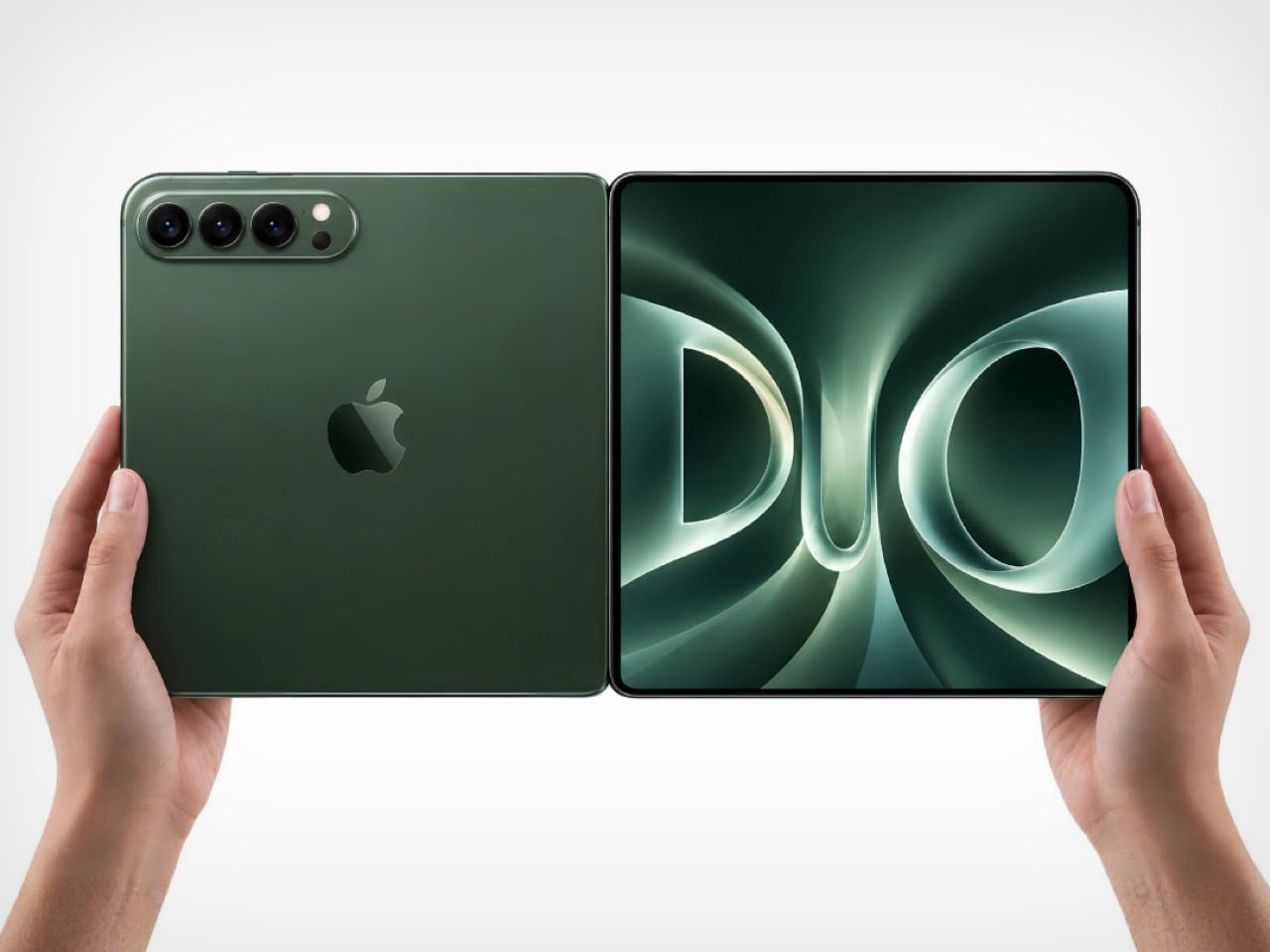

Exactly a month and 2 days ago, John Ternus unveiled Apple’s first foldable phone. It’s been a decade in the making, Apple’s done a whole bunch in the interim, hit $1 trillion in 2018, and subsequently grown to a $3 trillion brand, shifted from a hardware company to a hardware AND services company, launched a spatial computing headset, pretty much worked on and shelved their Apple Car. Rumors are tracking a few more devices that Apple’s been secretly working on. A smart ring that does the same job as a watch, or alternatively a screen-less Watch Air that competes with the likes of Whoop and Fitbit, and even a foldable single-screen laptop modeled on the same design of the iPhone Duo.
I’m not entirely sure whether Apple’s truly working on a larger folding device, but scaling the iPhone Duo up to a larger hardware unit isn’t a good idea for a bunch of reasons. Aside from the fact that it would cannibalize a whole slew of existing products, it would also create a bit of a UX nightmare for the iPadOS developer community. An iPad Duo (let’s just call it that) is nothing but a MacBook Neo with extra screens. The MacBook Neo ITSELF is designed to be compact and handle compact tasks, giving it a foldable design with maybe iPad Pro-level power achieves nothing. Here are a few reasons why the foldable iPad Duo isn’t the best idea.
1. The foldable Android tablet doesn’t exist for a reason


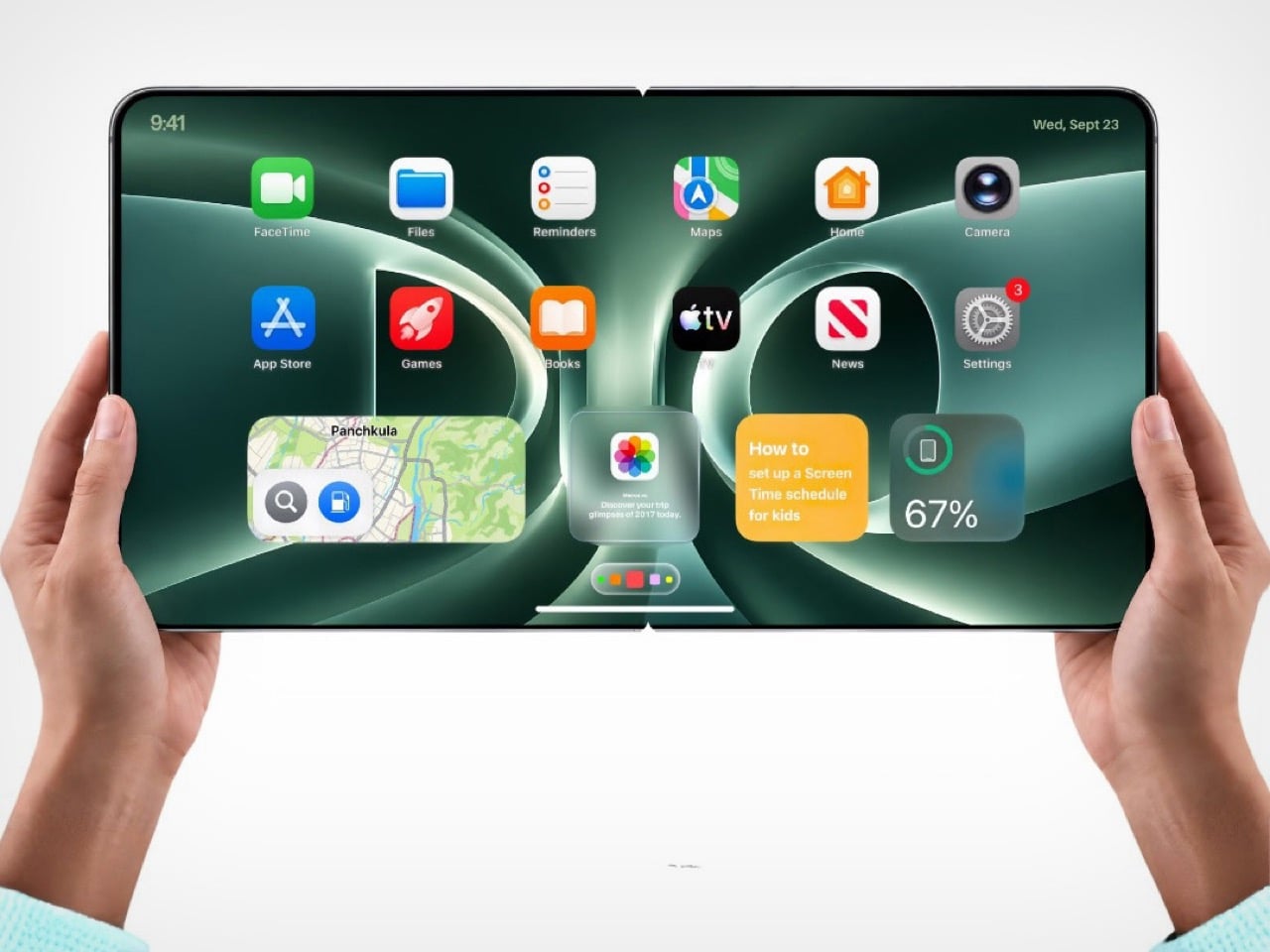
Samsung, Xiaomi, Huawei, Google, Motorola, and a bunch of other makers have folding phones on their roster – yet nobody’s tried to push a folding tablet beyond maybe just 1 iteration. Huawei unveiled the MateBook Fold last year and hasn’t done much to work on a v2.0. It cost around $3,300 when it launched and occupied headlines for precisely a month before becoming yesterday’s news (partially because of its China-only distribution platform). The point I’m making is that companies haven’t explored the foldable tablet space because there’s little merit to it. Lenovo’s worked on a ThinkPad X1 Fold too, but here’s the hilarious bit – they’re marketing it more as a laptop than as a traditional tablet.
Tablets aren’t designed to be carried in pockets, therefore a smaller tablet that turns into a bigger one isn’t really a pressing need. Even if they were, the size of a pocket confines you to a very limited bounding box, giving you a folding phone template rather than a folding tablet one. Tablets themselves aren’t as popular as phones are, and folding phones are already a niche to begin with – making folding tablets mainstream would cost more money than it’s worth.
2. The aspect ratio nightmare
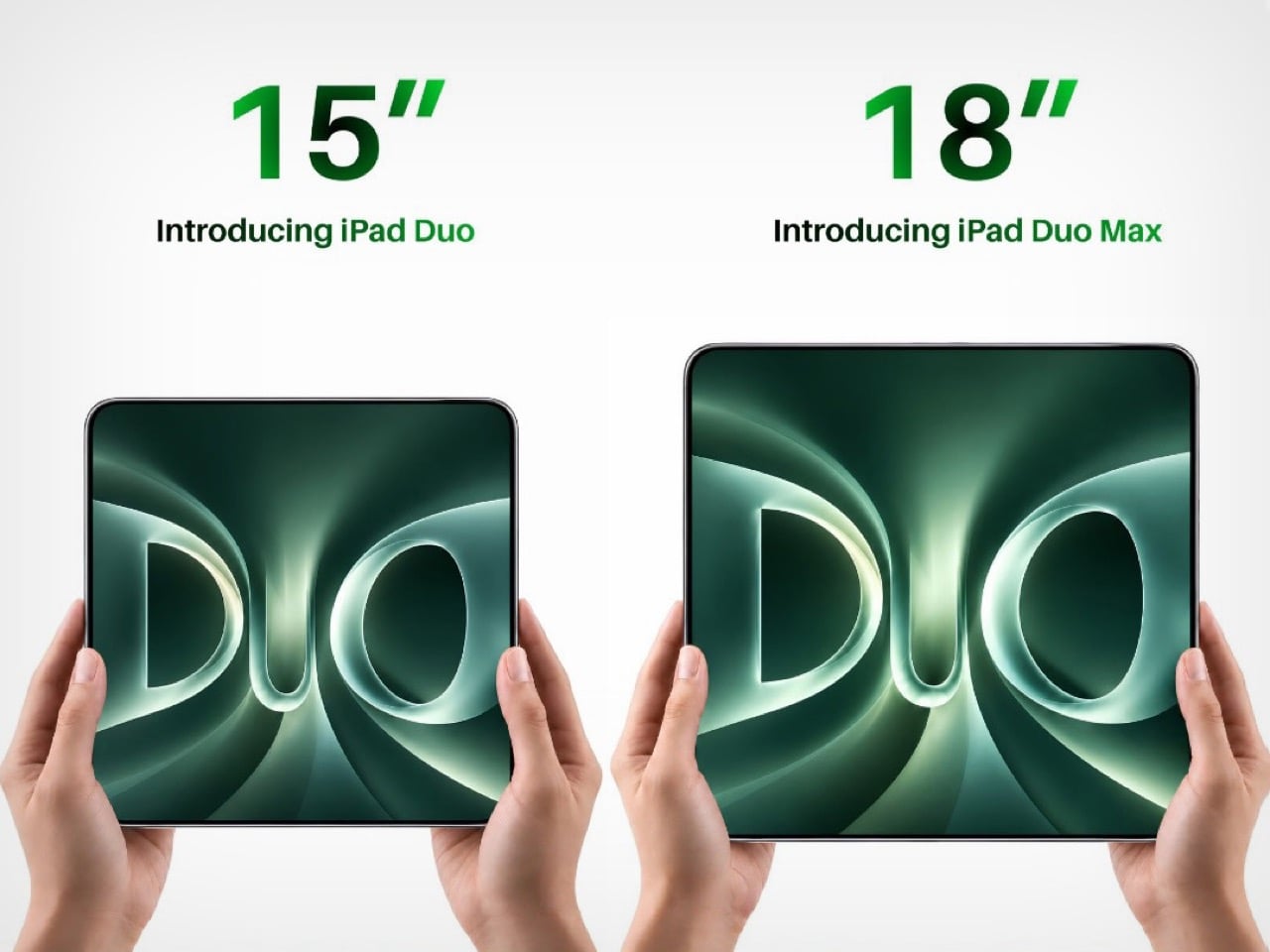

Of all the companies that have worked in the foldable space, there’s always been one question they’ve struggled to answer. What aspect ratio do we make? Because a foldable device exists in two states – a shut state and an open state. With phones, there are broadly 3 templates – the flip style foldable, which offers a square aspect ratio that turns into a vertical screen when opened. The second is the long book ratio that turns squarish when opened sideways. The third one, which Apple’s popularizing, is the middle ground – a book-shaped design that’s short and stout and has a repeating aspect ratio like the A4 and A3 paper so that the OS can scale meaningfully.
At least in this concept, we’re looking at what I believe is one of the most bizarre aspect ratios ever. This concept by Krishnavi Anand Krishnavi opts for an almost 1:1 ratio when shut, opening to reveal what feels like a widescreen 16:9 device. Both versions have their caveats – a 1:1 tablet doesn’t exist and it shouldn’t. Nobody works on a square screen, content isn’t optimized for it, heck even physical notebooks are vertical (who writes on square paper). Open it and you have a socially acceptable 16:9 device, but tablets are usually one of two things – they’re either big and 4:3 or they’re small and 16:9. Nobody makes a large 16:9 tablet because carrying it is a nuisance – you might as well just buy a laptop with a convertible design. A large 4:3 foldable tablet would fold down to a small 3:2 device, which still feels palpable, but continue reading and you’ll realize why the odds are stacked against a foldable tablet.
3. Building a massive hinge + flexible screen is cost-prohibitive
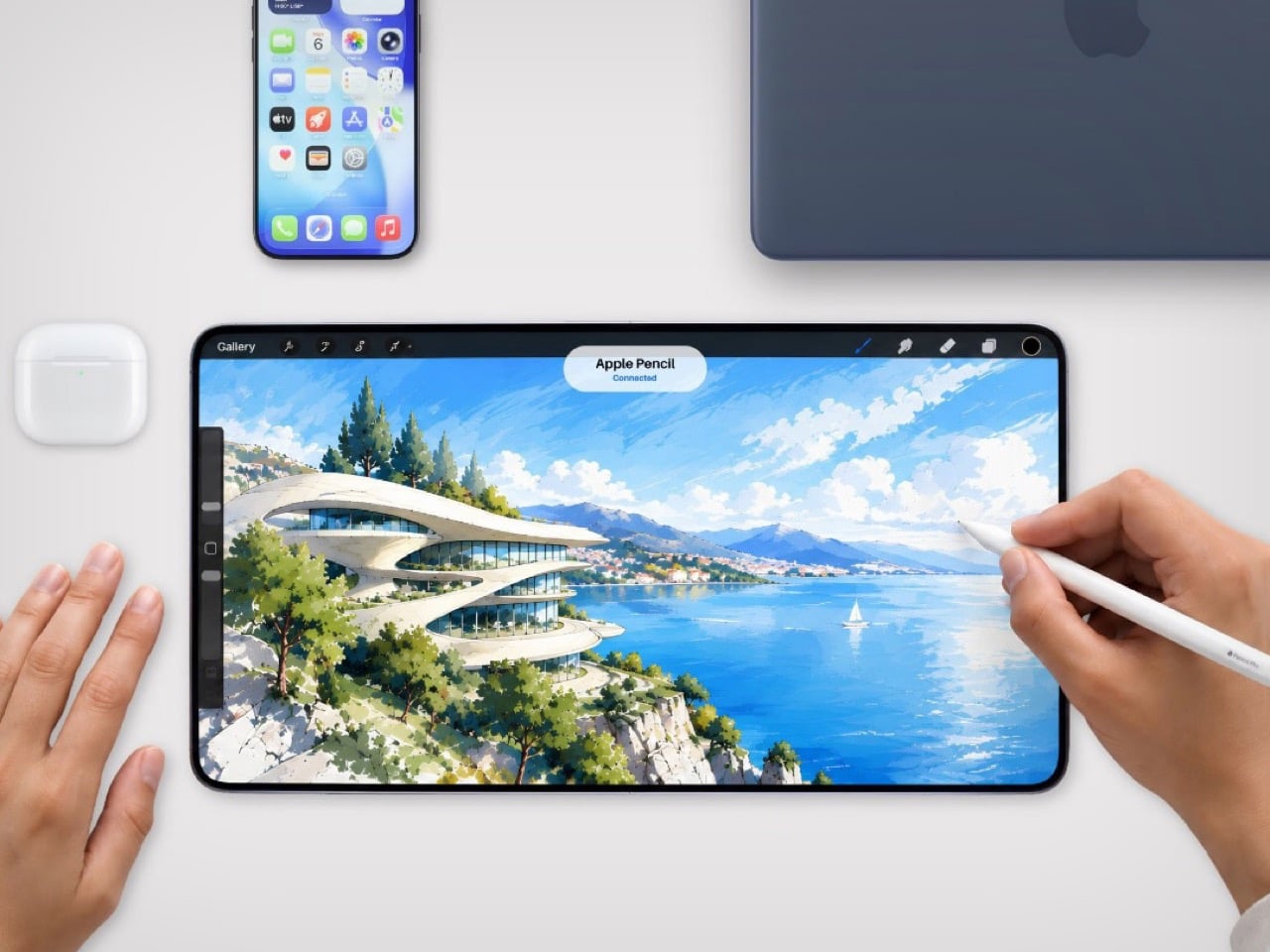
Apple’s poured hundreds of millions, if not billions into R&D for its titanium hinge. Every company has its own workaround for a hinge, ensuring durability, reliability, and the ability to conceal/remove the crease. It works well in flip phones, it’s tricky with book style foldables but companies have still come a long way in all these years. Scale that up to a device that needs a 7-8-inch long hinge and the engineering problems compound significantly. The hinge needs to uniformly open from one end to the other. Any discrepancy and the screen could stretch/tear. Any damage and the device could get stuck in a closed or open position for life. Laptops have suffered from hinge problems for years now, they’re the first mechanical part to fail on a laptop), so you can only imagine how much more work a tablet has to do – while still ensuring you can open/close it 10-20 times a day.
Not only is the hinge a problem, the screen is too. The screen used on a foldable phone is very different from the one used on you 15.6″ laptop. Companies work with suppliers to find the right kind of OLED that can take daily bending without the pixels suffering failure. The crease has to vanish when open and allow the screen to meaningfully bend when shut. A laptop display also doesn’t get touched hundreds of times a day the way a tablet or phone does. So it’s easier for a company to commission hundreds of thousands of small 6″ or larger OLED displays. Scale that up to a 12-15″ OLED display and you aren’t doubling the price, you’re quadrupling it (hold your phone to your laptop and see, four of its 6″ screens will fit in your 13″ laptop). A 4x pricier display eats up all your profits on a folding tablet.
4. The iPad Duo doesn’t have a target audience
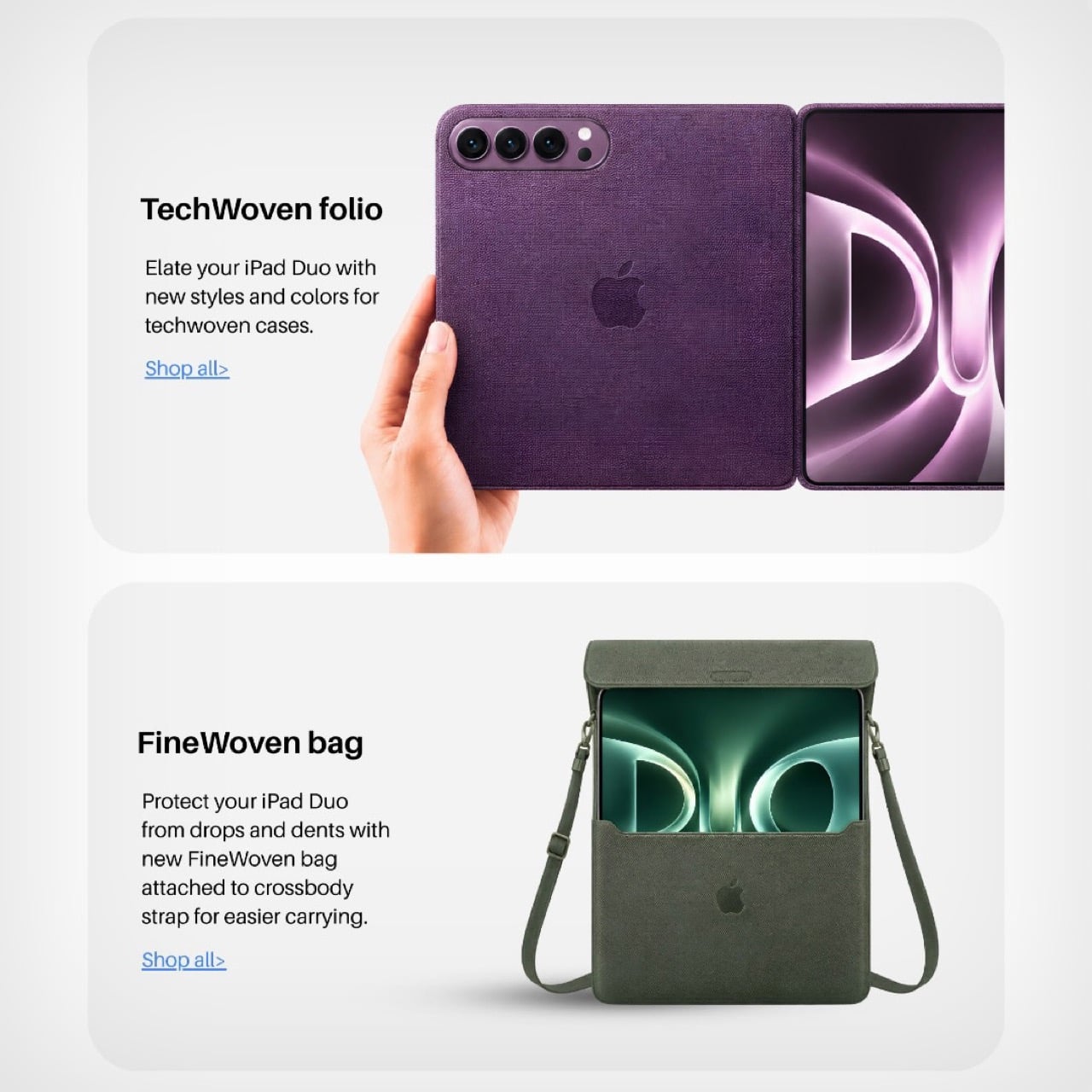

This might be the biggest problem yet. We’re still struggling to find a mainstream audience for folding phones – so you can imagine how difficult it’ll be to find someone willing to shell out upwards of $3k on a folding tablet. The audience doesn’t exist because the use-case doesn’t exist and neither does the appetite (more on the appetite later). What would you do on an iPad Duo that you can’t already do on a laptop or a tablet? Phones need to be compact for a reason so the idea of folding your phone for easy carrying still holds up logically – folding a tablet makes absolutely no sense when it isn’t fitting into a constrained space like your pants pocket.
People buy their pants regardless of the phone they carry so the phone has to work backwards to fit into pants. With tablets and laptops, it’s the other way around – you buy a sleeve or a backpack based on the size of device you have. A larger laptop demands a larger bag, a sleeker, smaller tablet works great with a sling. Nobody buys the sling before they own the tablet. But I digress – the foldable tablet doesn’t exist because the market doesn’t. In over 10 years of working for Yanko Design, I’ve seen dozens of folding phone concepts, but even concept designers don’t work on foldable tablet concepts because there’s honestly nothing to desire there!
5. People want affordable computing, not foldable computing

This year, when Apple launched the MacBook Neo, we wrote about how it proved Apple wrong in one fundamental way. Apple’s always priced their products at a premium, thinking that they get to choose their audience – it worked when the economy was in a steadier state, when diesel wasn’t more than $6 a gallon. When Apple launched the MacBook Neo, the laptop literally flew off shelves, proving that there was a VERY strong demand for affordable computing. Especially when RAM and storage prices are already so high thanks to this AI boom that nobody asked for.
The MacBook Neo’s success with the Vision Pro’s silent failure proved that it’s time for tech to be democratic again. To focus less on shareholder value and more on actual consumer value. The iPhone Duo already costs upwards of most people’s salaries (globally speaking), so building an iPad Duo that would probably touch $3.5-4k in price makes no sense for a product that’s supposed to be for consumers, not enterprises. The iPad Duo doesn’t exist, and from the rumor mill, it probably won’t for the aforementioned reasons. John Ternus has proved to be an astute consumer-centric design lead, realizing what products fill the current gaps in Apple’s offerings. Speaking of which, I’m still waiting on that smarter Siri 2.0…