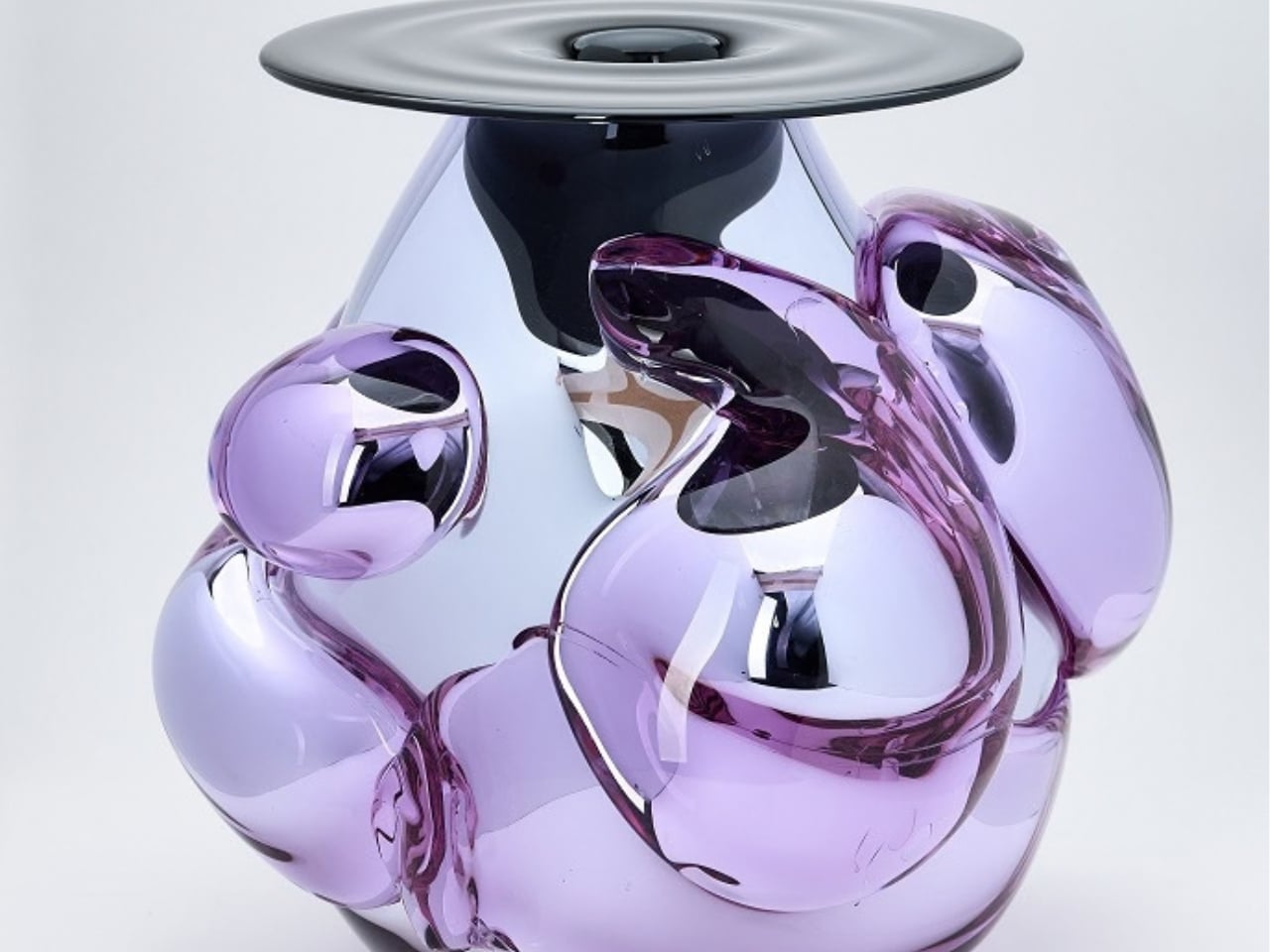

A vase usually gets its moment when the flowers arrive. Once the bouquet is gone, even an expensive one can become background scenery. That is the small, familiar problem Maxim Velčovský takes on in Photosynthesis, his new exhibition of glass vases. These pieces don’t wait for a florist to give them a reason to exist. Their rounded forms, pools of color, and shifting reflections turn the empty vase into the main event.
I think that’s a more interesting proposition than another object described as a “statement piece.” Most of us already own things we liked enough to bring home and then somehow stopped noticing. Velčovský’s vases rely on something a room can’t hold still: light. As it moves across their surfaces, different curves emerge, colors deepen, and reflections interrupt the glass. Looking at the photographs, I can imagine finding a new detail each time I walk past one.
Designer: Maxim Velčovský
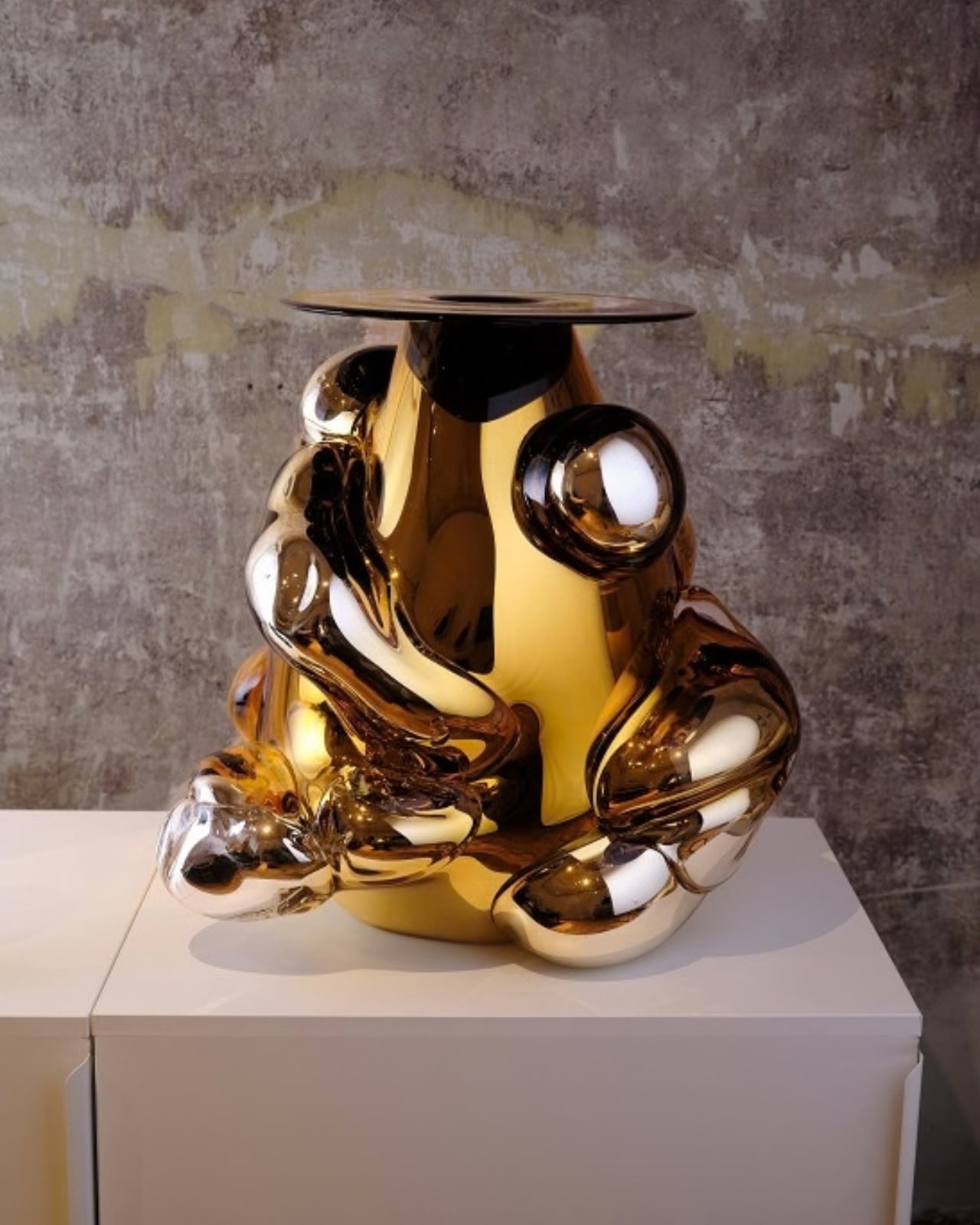

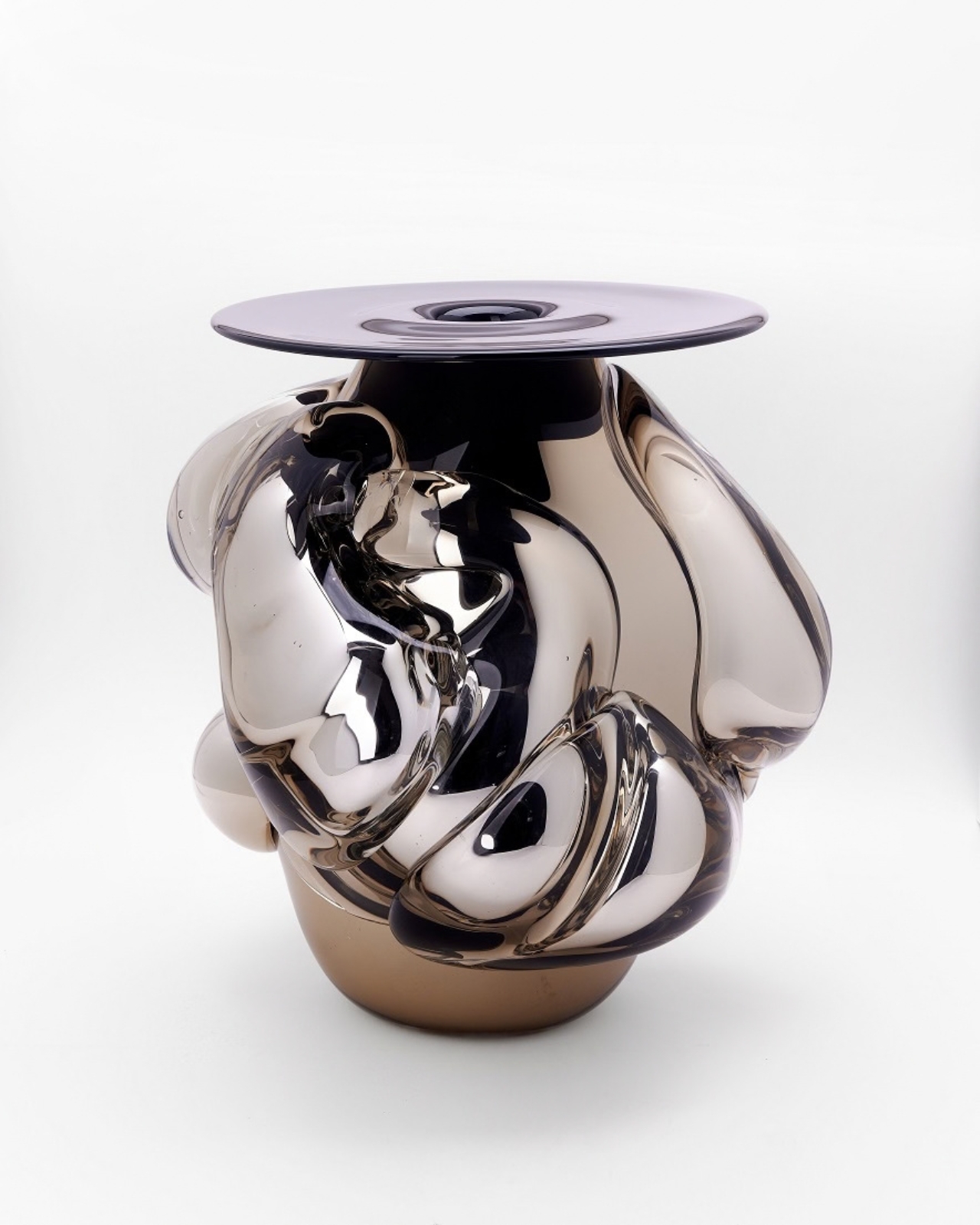
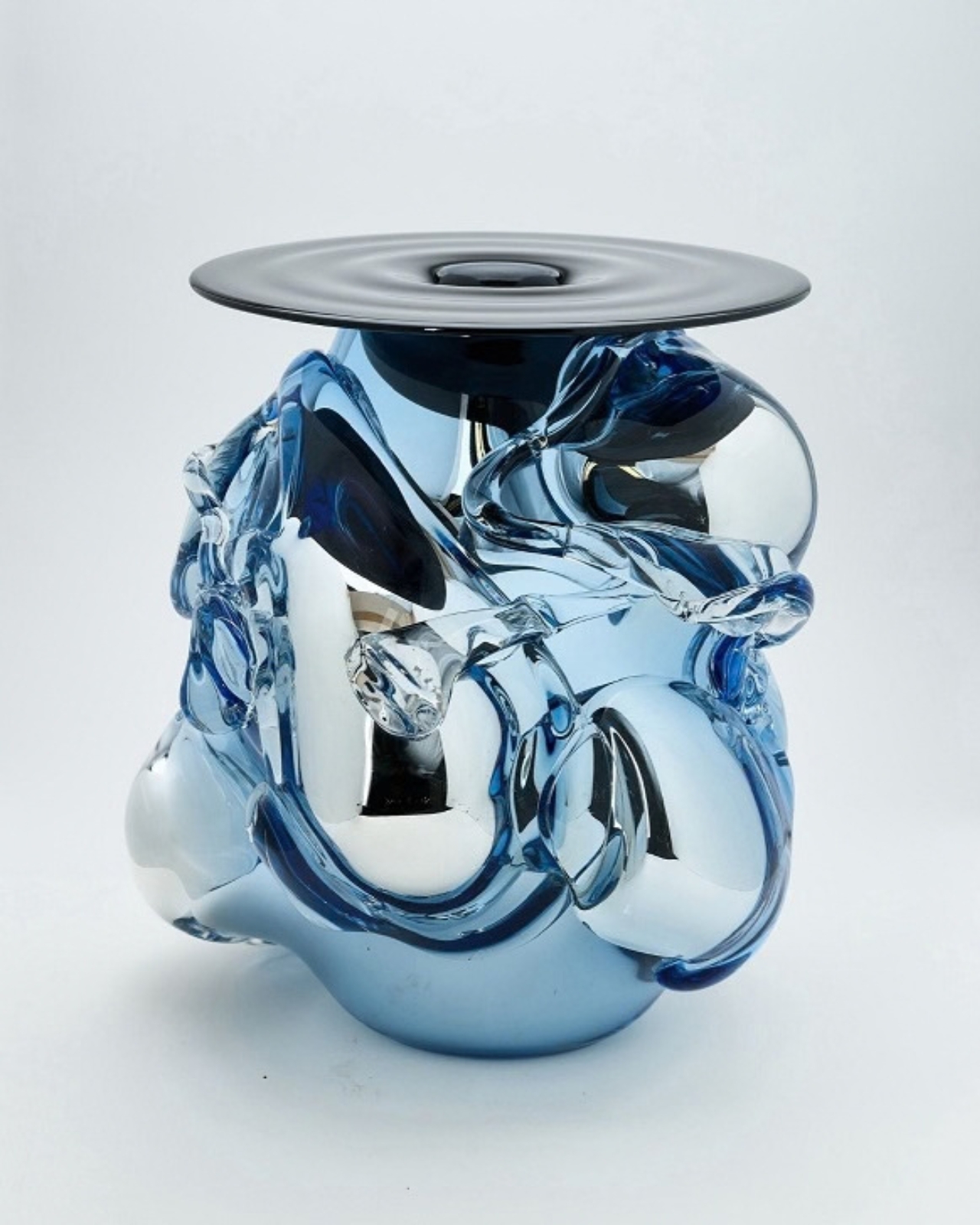
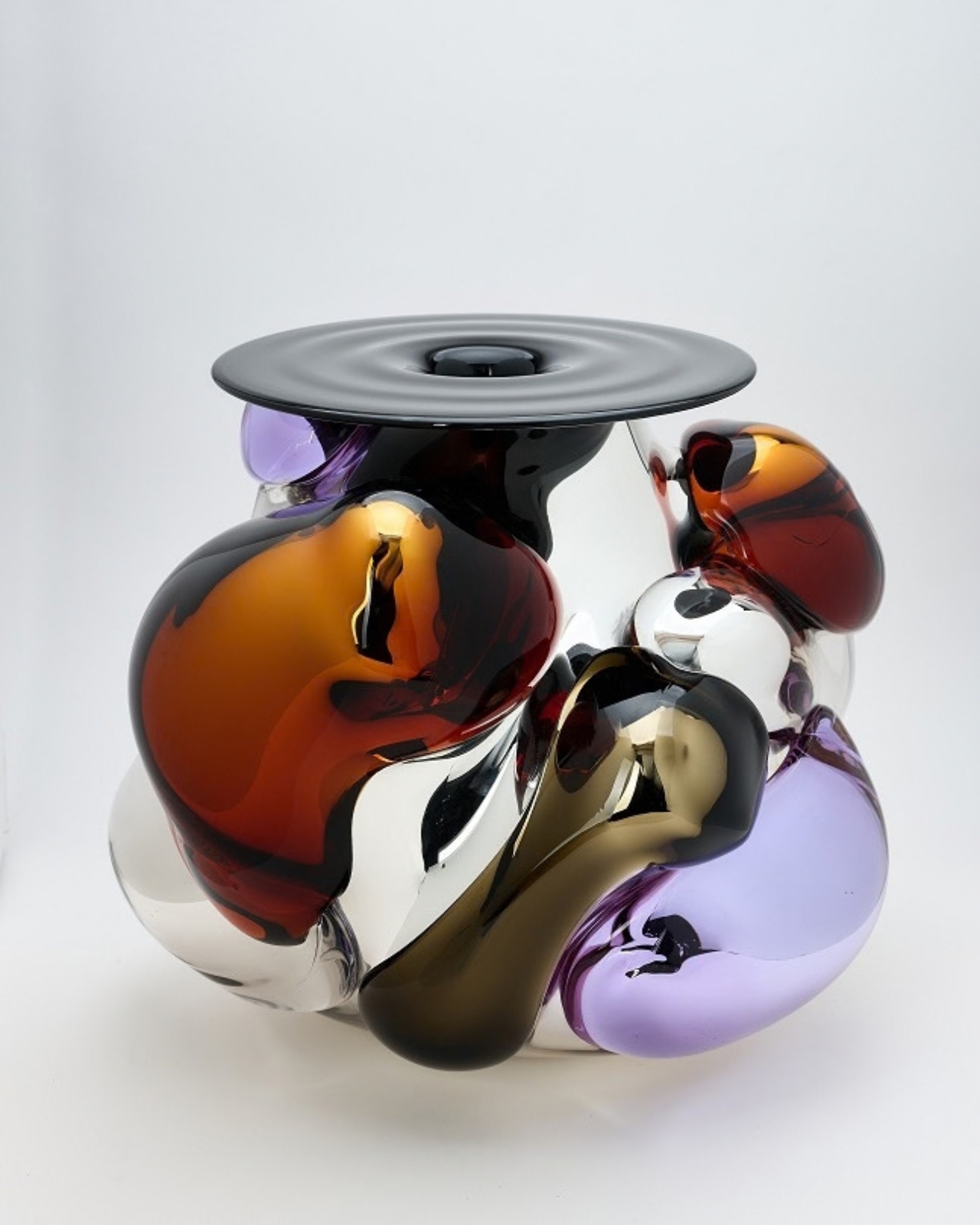
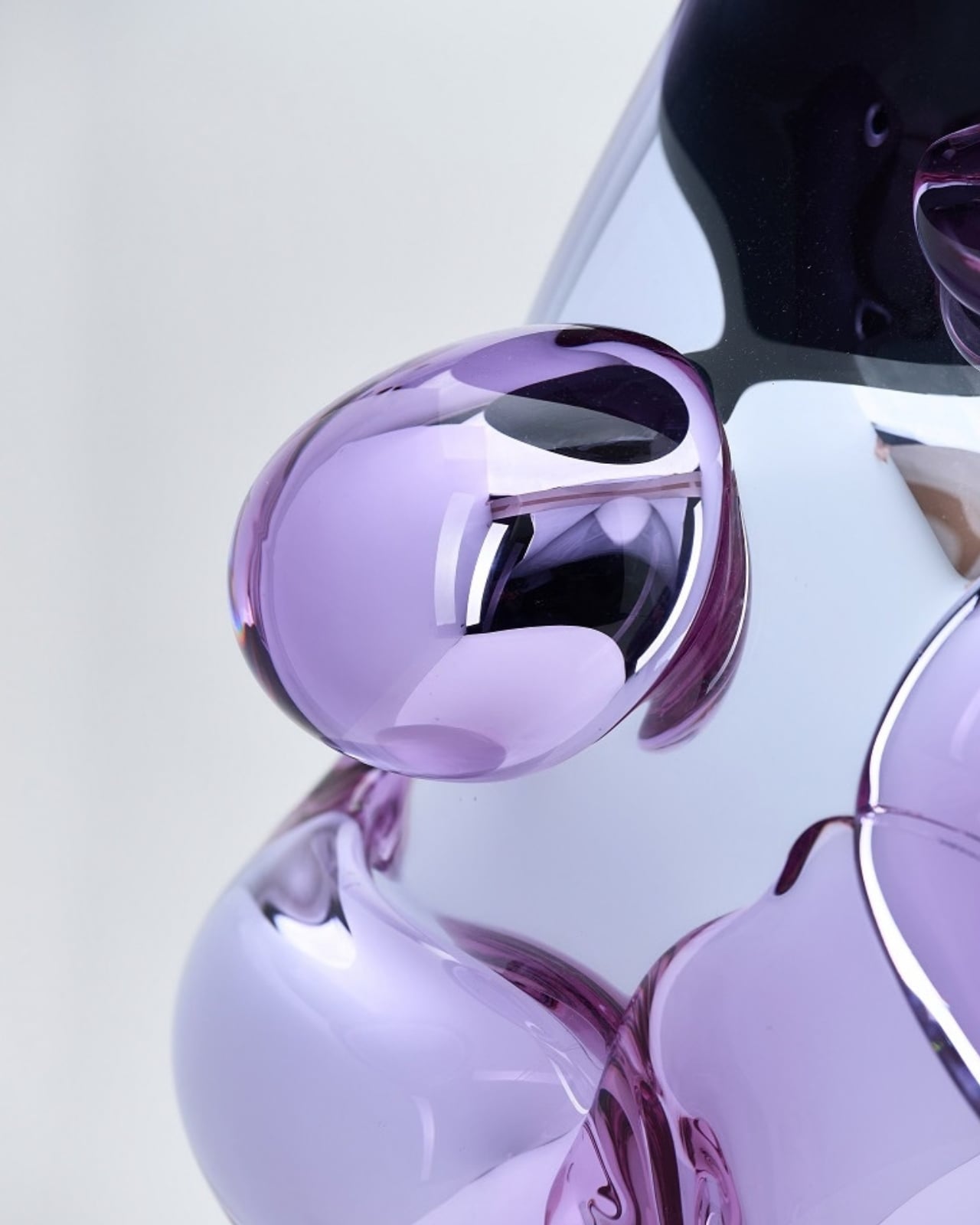
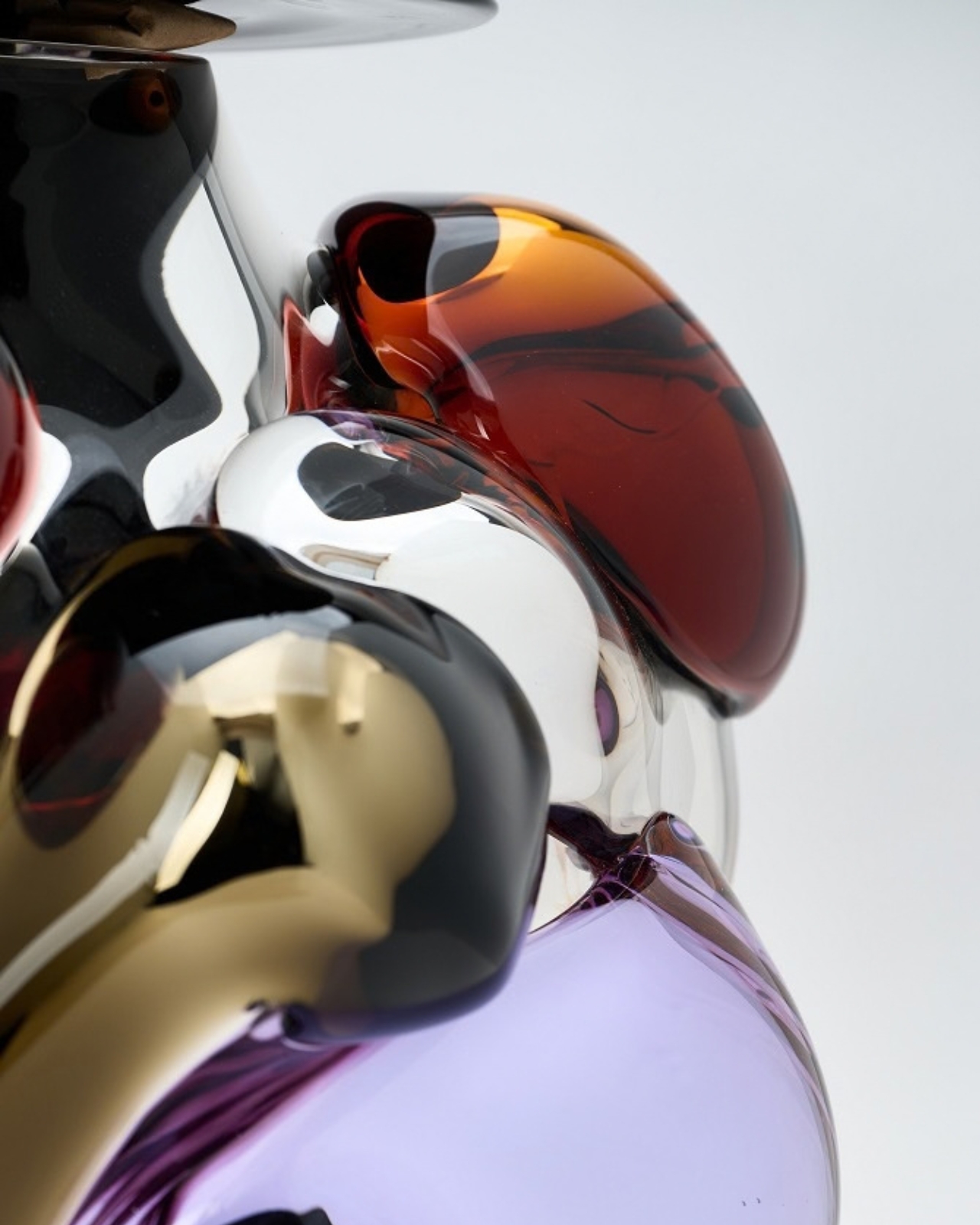
The silhouettes are strange in the best way. Bulbous shapes cluster around a central vessel, swelling outward like droplets caught just before they fall. Several are topped with a broad, nearly flat rim that gives all that restless volume an unexpectedly calm finish. In one piece, translucent lavender folds around dark, mirrored surfaces. In another, amber, purple, and smoky tones appear to press against one another, as if they are still deciding where to settle.
Then there’s the gold-toned vase, which looks almost liquid despite its solid form. Its polished surface pulls in the room around it, while the rounded glass protrusions make its outline difficult to pin down. The blue pieces have a cooler, more aquatic character, with curves that resemble a wave folding into itself. None of these objects needs an elaborate setting to make an impression. They seem more likely to change the mood of a space than to match it.
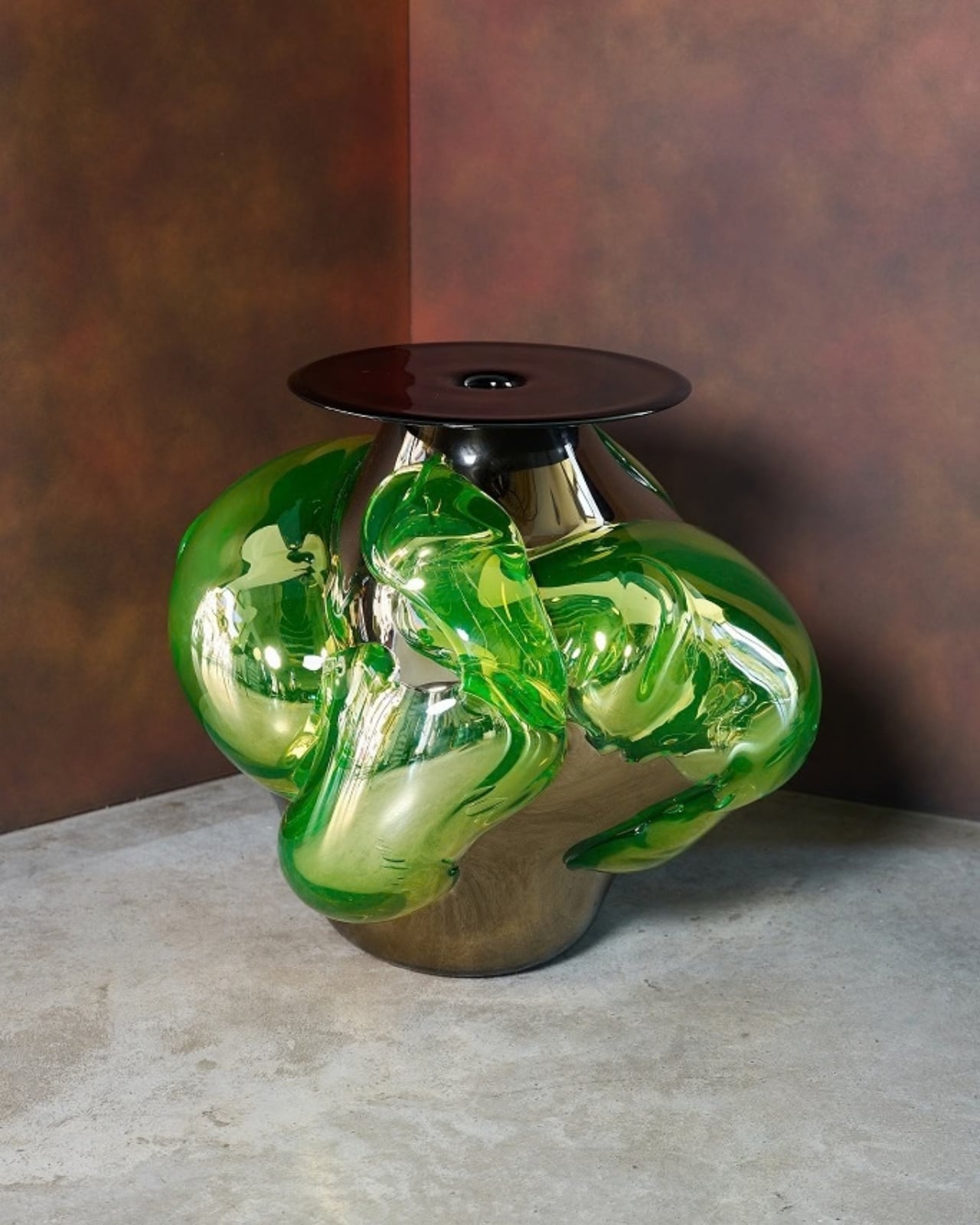
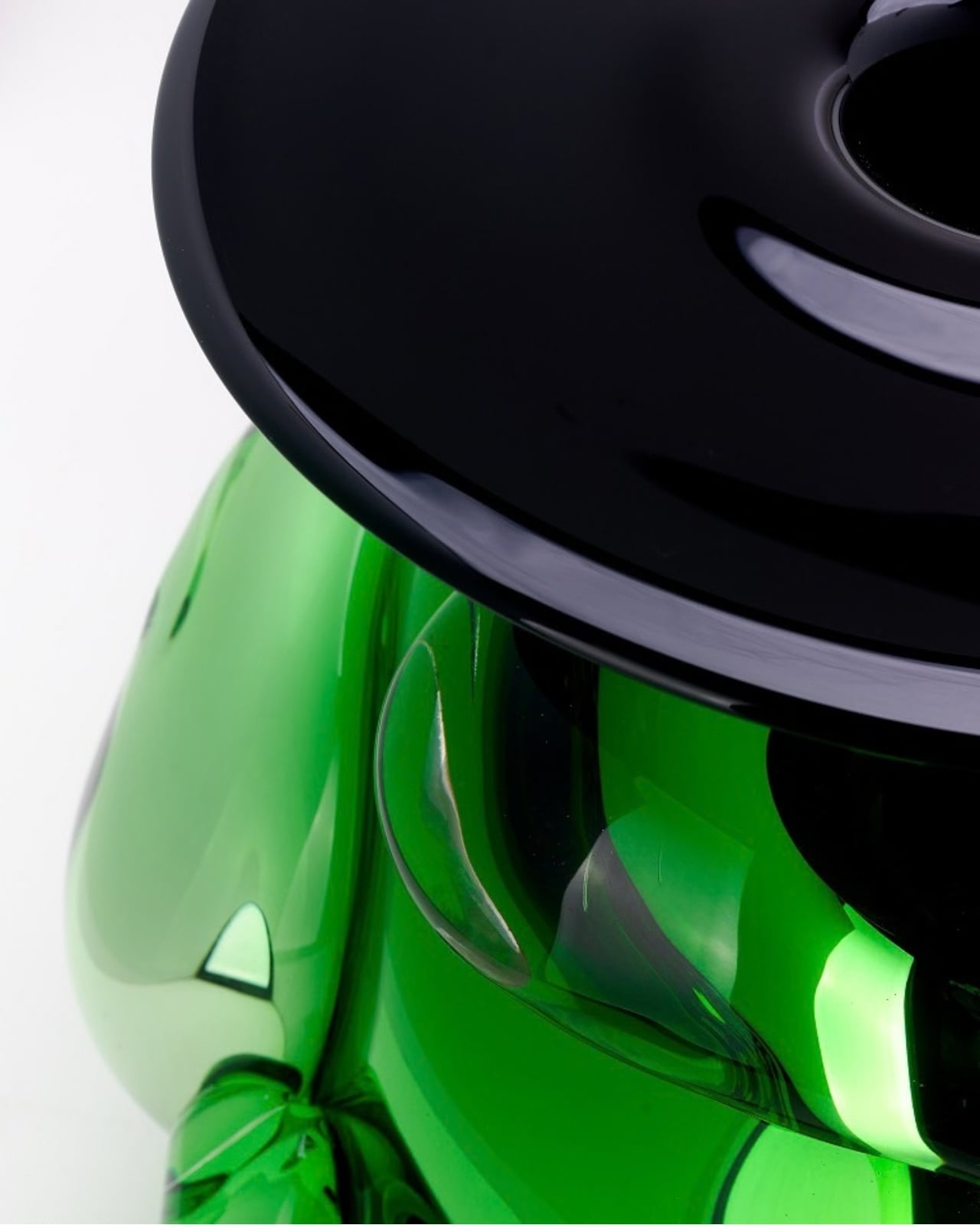
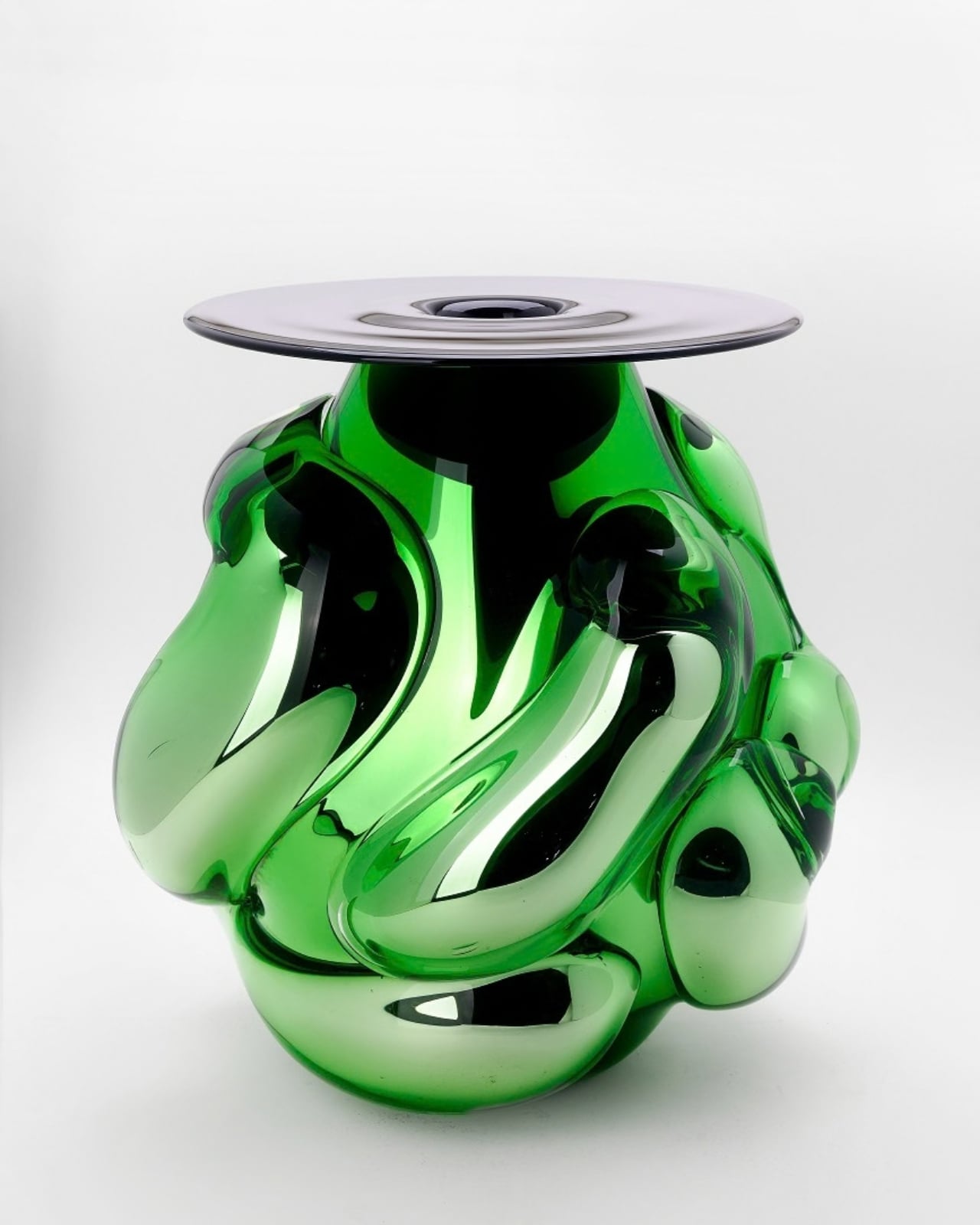
The exhibition’s title gives those visual effects a larger idea to orbit. Photosynthesis turns light, water, and carbon dioxide into the material that sustains plant life. Velčovský’s glass doesn’t perform that process, of course. Instead, it makes light feel active. It passes through clear areas, catches on colored ones, and returns from reflective surfaces looking altered. The vase becomes less of a container for something living and more of a way to watch transformation happen.
The exhibition text takes that idea further, describing the vases as bodies at the edge of creation. Art and design theorist Dr. Stephan Hamel reads a kind of gender-neutral sensuality in their forms. That language may be more intense than most people expect from a vase, and you don’t have to share the interpretation to enjoy the work. Still, it gets at why these shapes are so compelling. They swell, overlap, and cling to one another rather than sitting politely in perfect symmetry.
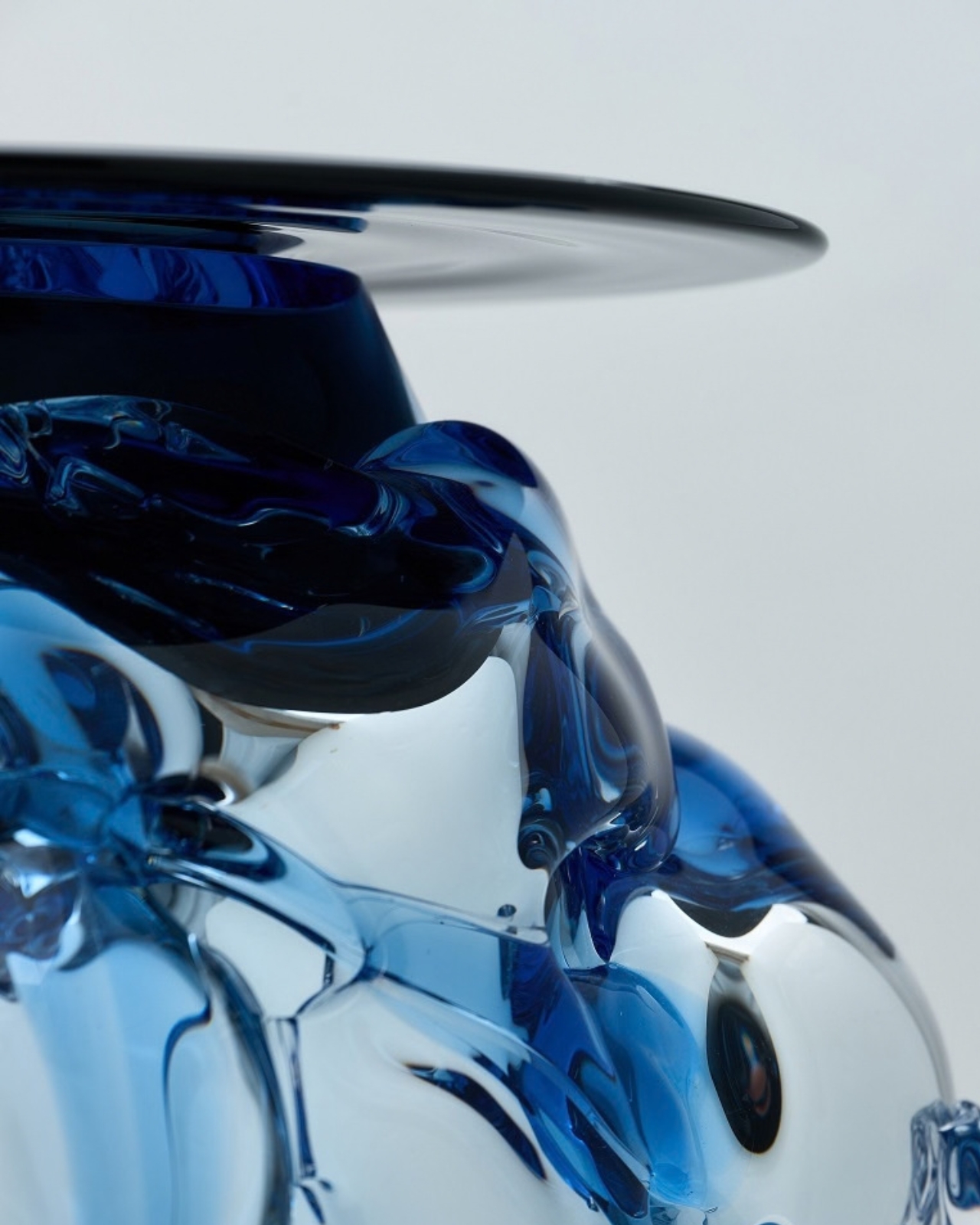
Up close, at least in the images, some of the forms look almost digitally impossible. That makes their material origin especially appealing. The pieces were made at the AJETO glassworks and the new Edo Studio glassworks in Svojkov, grounding those otherworldly shapes in glassmaking rather than a render. Velčovský has long worked across design and conceptual art, and he is also the artistic director of Lasvit. Here, the craft and the idea seem to need each other.
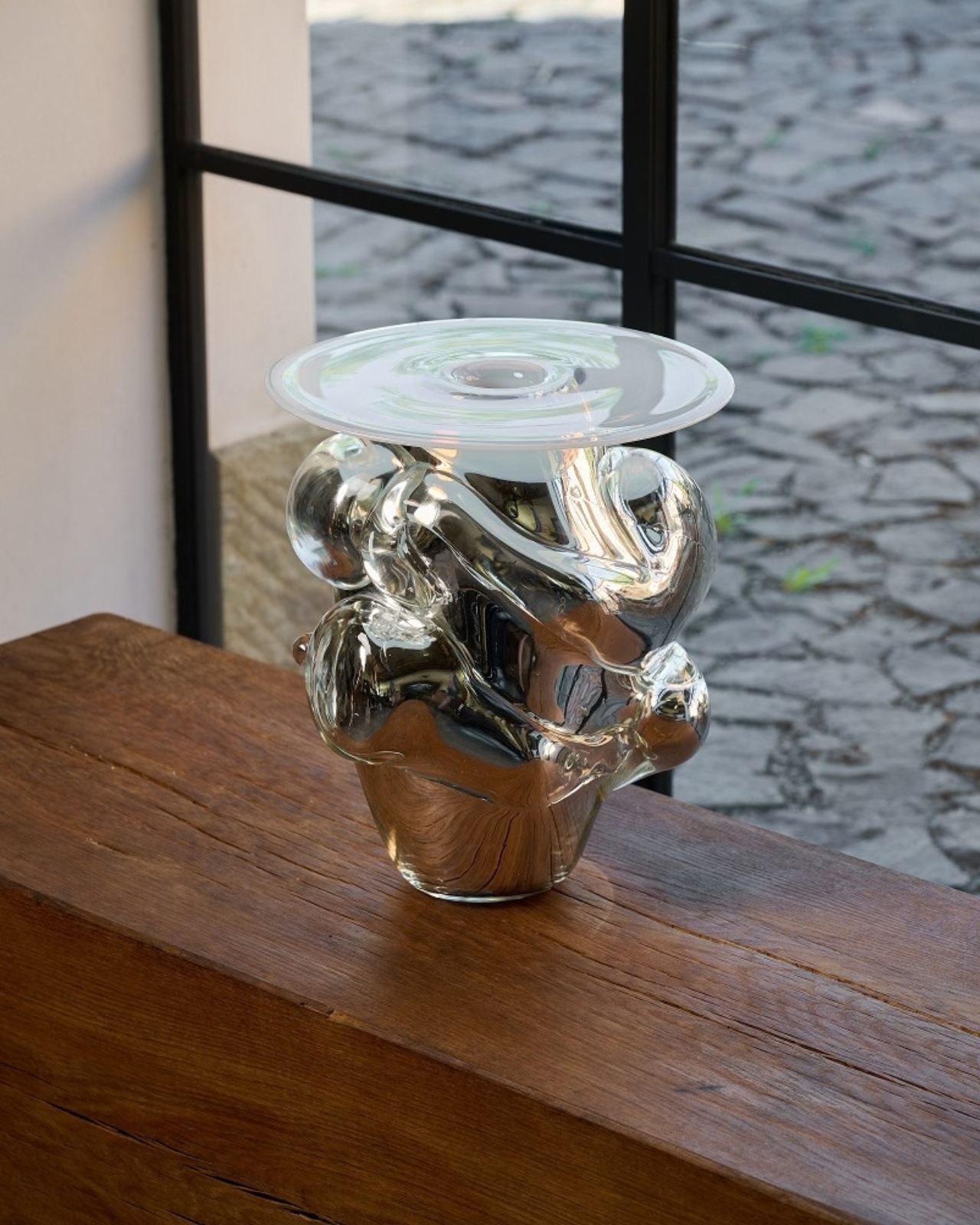
Photosynthesis will be on view October 7 through 11 at the Riding Hall of Prague Castle as part of Designblok 2026. It’s a grand setting for objects that reward a closer look, though the photographs suggest they could be just as absorbing beside an ordinary window. That contrast is part of their appeal to me. They’re ambitious enough to carry an exhibition concept, yet familiar enough to make me reconsider the vase sitting on my own shelf.
I don’t need a vase to explain the origins of life every time I look at it. I do like one that reminds me how much can happen between an object and the light falling on it. Velčovský’s vases make a convincing case that decorative objects can ask for attention without demanding a special occasion. Flowers would look lovely in them, I’m sure. But for once, I’d be tempted to leave the vase empty.