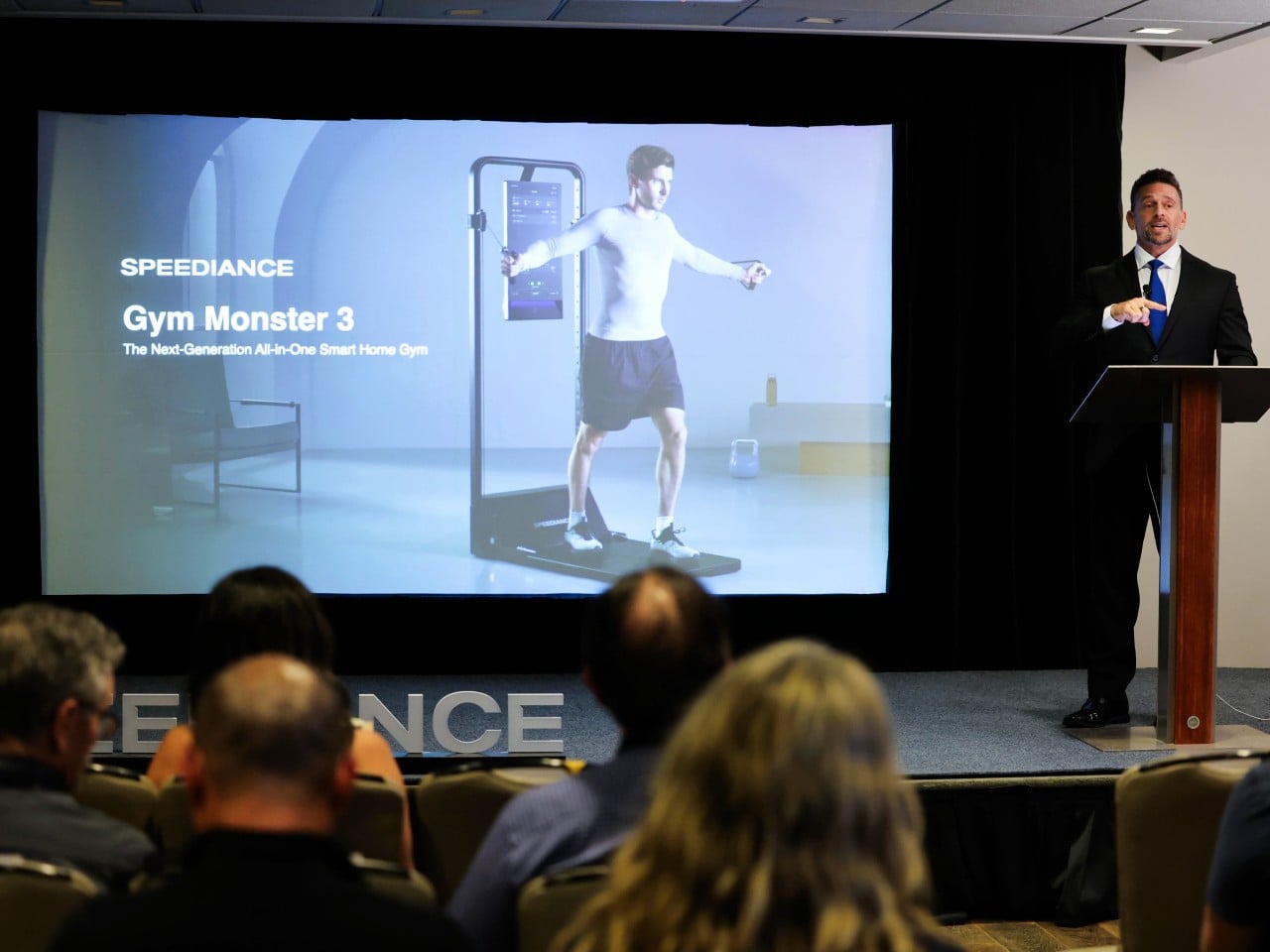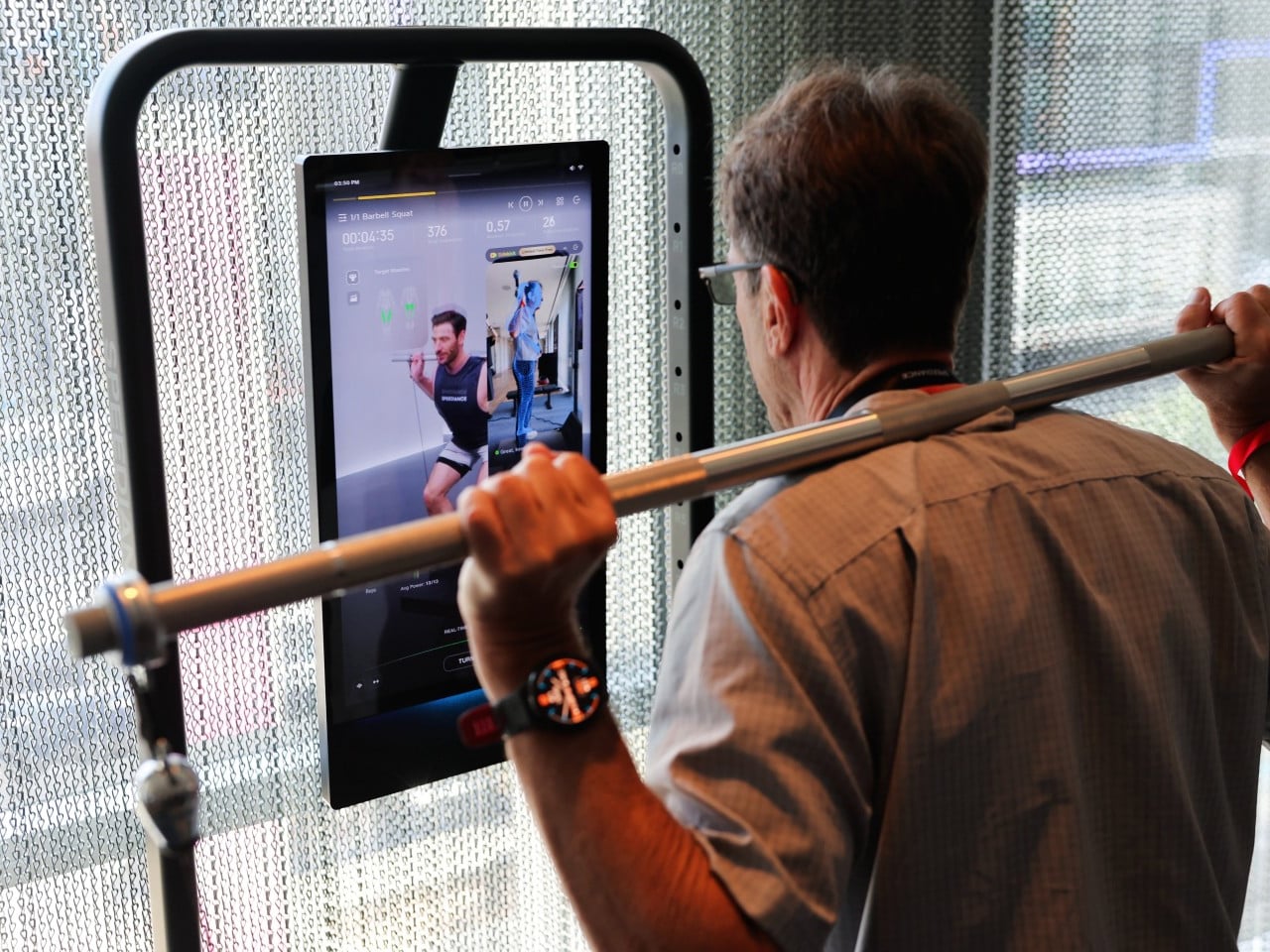

Speediance built its name on a simple idea: swap the bulky machines of a typical gym for real digital resistance packed into one freestanding unit. That idea hasn’t changed, but the ambition behind it has grown. The company now wires its hardware lineup, Gym Monster 3, Gym Nano, and the Speediance Strap, into one learning system that notices more than the workout in front of it.
Gym Monster 3 anchors that system, and the first thing worth noticing about it has nothing to do with resistance numbers. It’s freestanding, meaning it doesn’t need a wall mount, bolted brackets, or a dedicated room. Once it’s set up, it delivers up to 220 lbs of digital resistance across 19 cable positions, enough range to cover a full strength session without swapping equipment.
Designer: Speediance
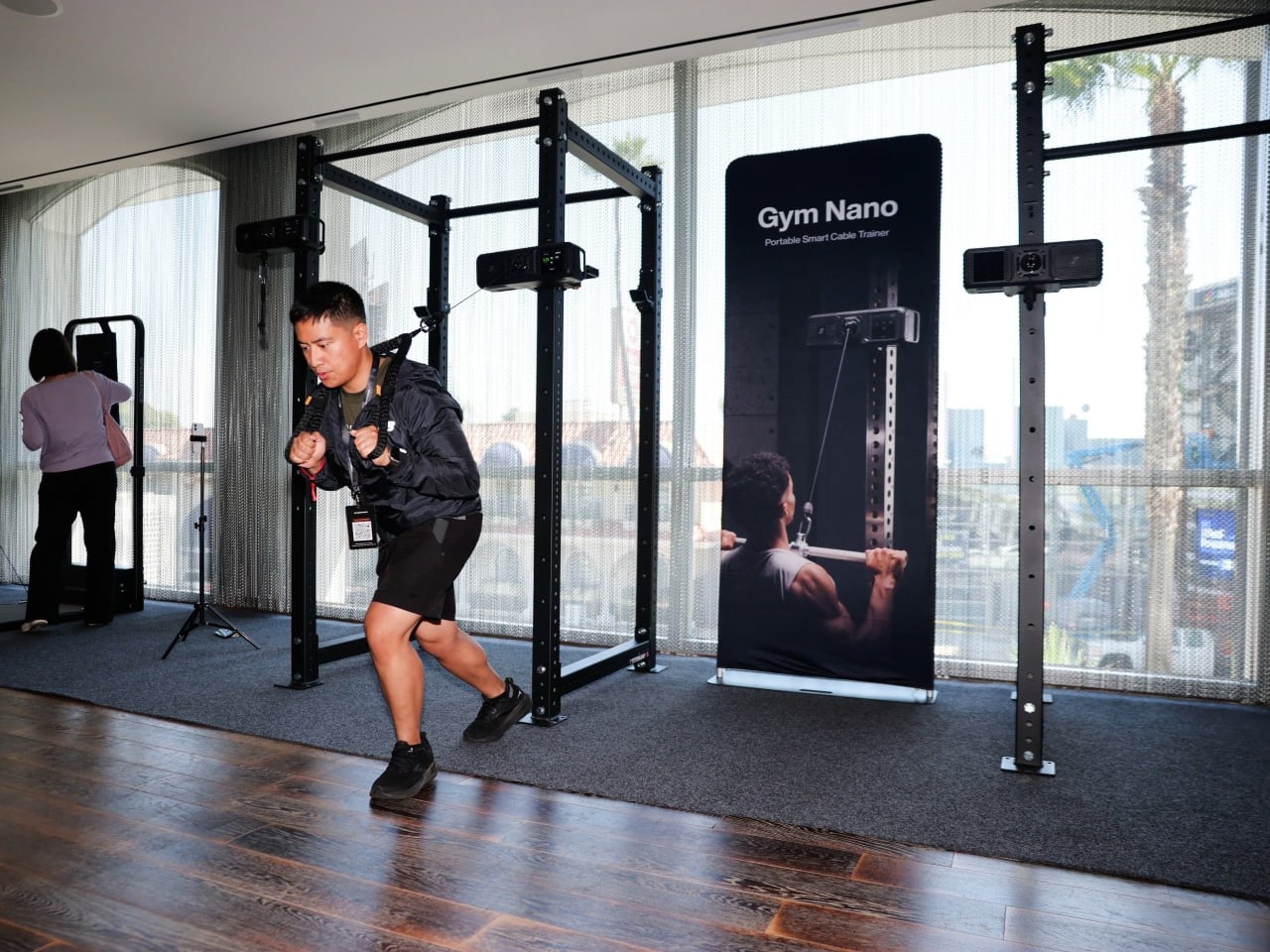
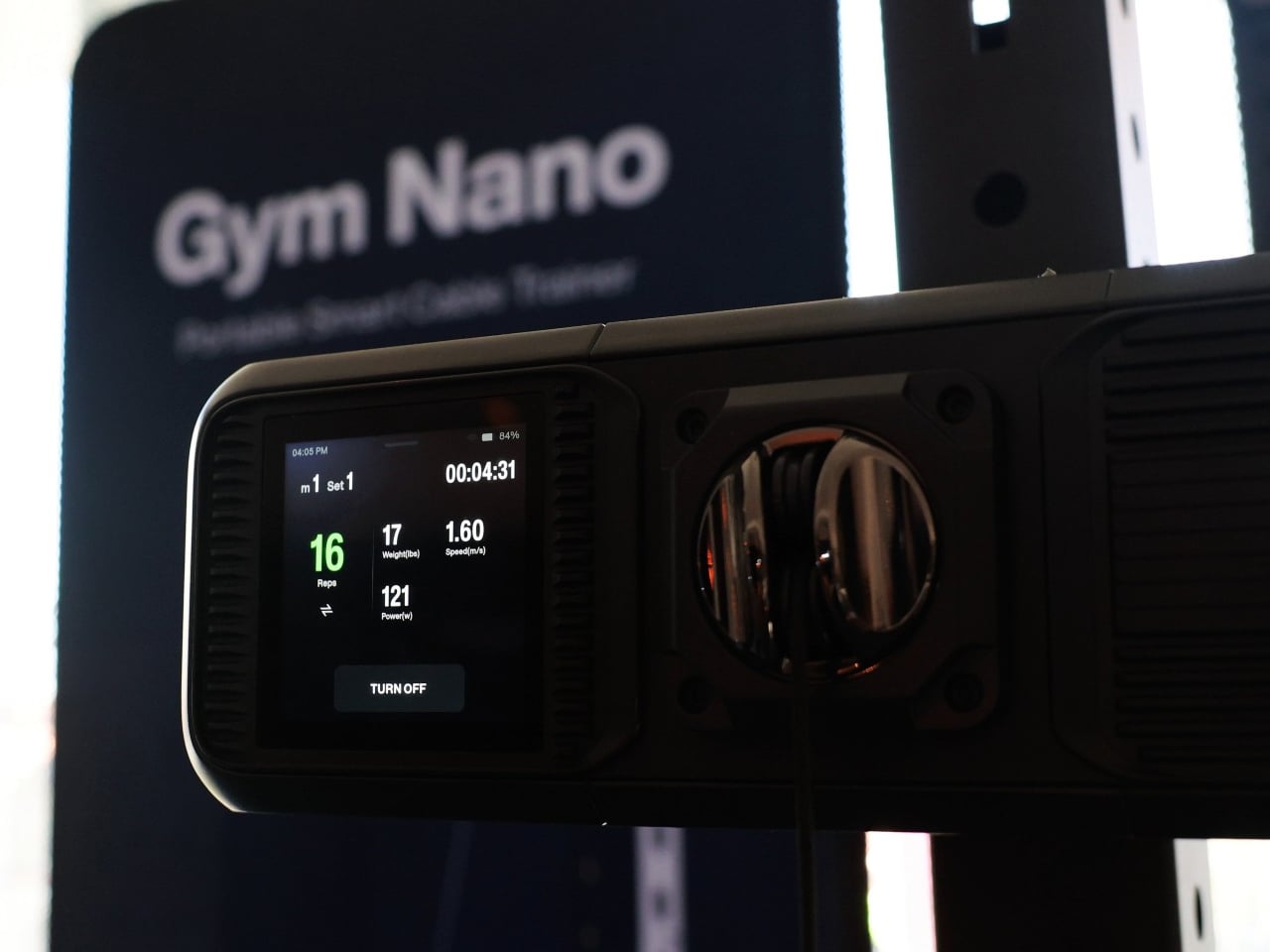
Gym Nano takes that same resistance technology and shrinks it into something you can carry. At 8.2 kg (about 18 lbs), it still produces up to 220 lbs of digital resistance, along with real-time velocity and power readings. It even measures peak force, rate of force development, and left-right asymmetry, precision that once needed a sports science lab to capture.
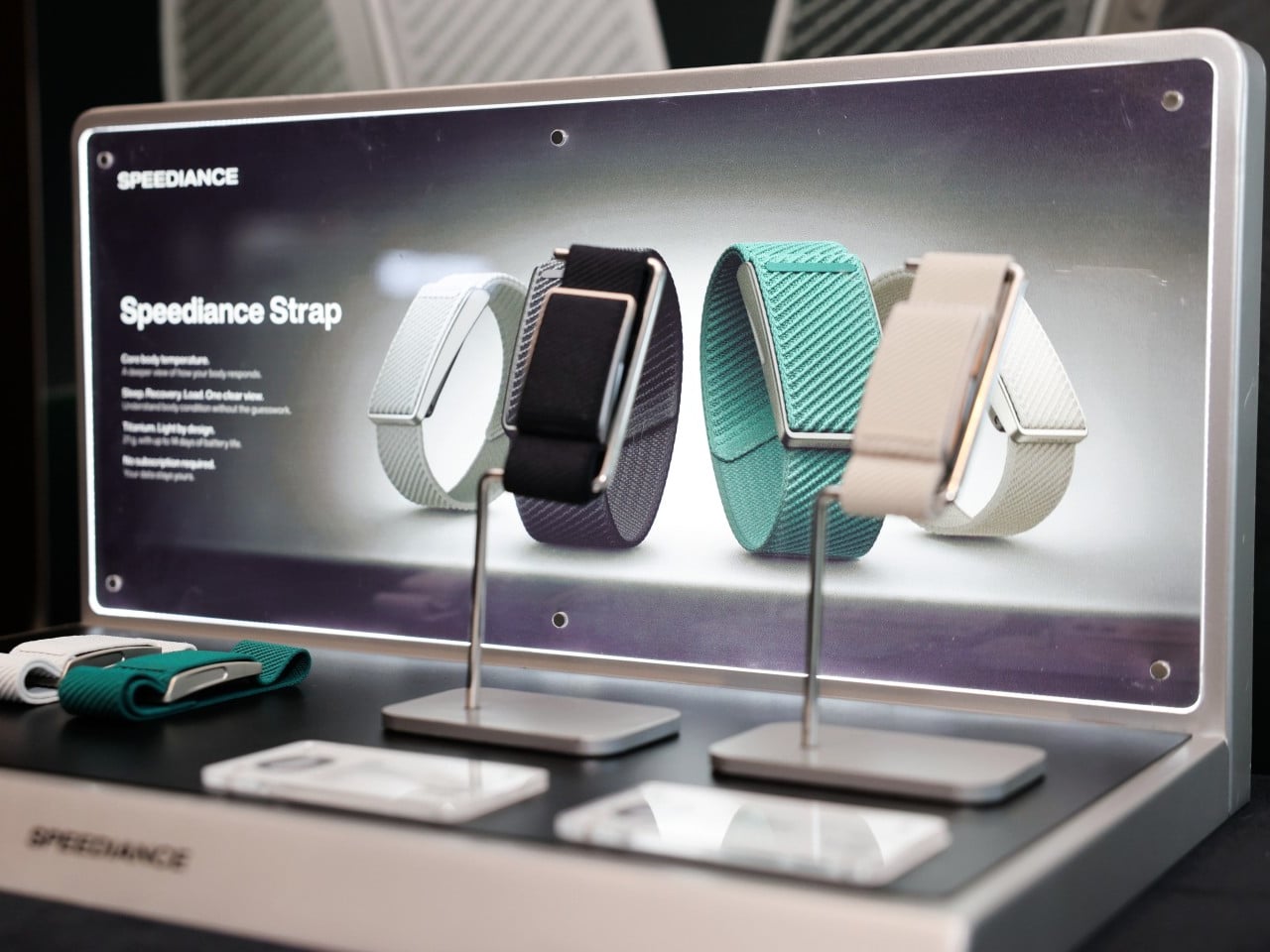
The Speediance Strap works quietly in the background, and that’s the point. There’s no screen, no notifications, nothing demanding attention between sets. Using greenteg Calera technology, it reads subtle shifts in wrist temperature over time, building a picture of how the body handles training, sleep, and heat across days, not one session. That signal is what gives the system something to work with.
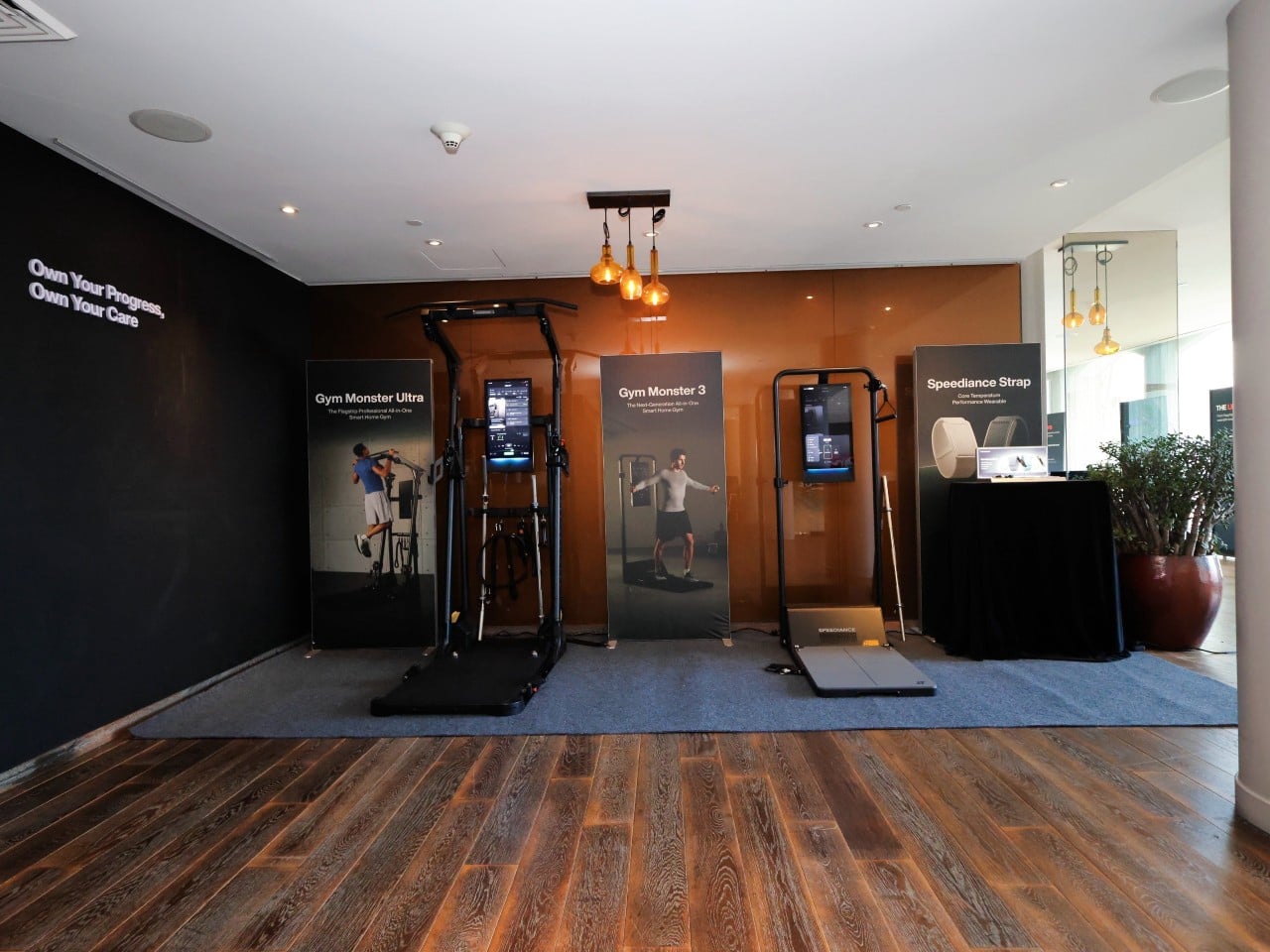
Gym Monster Ultra rounds out the lineup for anyone chasing a full home rig. It pushes digital resistance up to 260 lbs across 33 cable positions, adding a vertical high-lat pulldown, a multi-grip pull-up bar, and an adjustable thigh restraint. Between these four products, Speediance now has a compact all-in-one, a portable tool, a passive sensor, and a full training station, all connected.
What ties four separate products together is AEVIS, an AI layer built to carry context from one day into the next. Rather than answering a question and forgetting it, AEVIS holds onto training history, recovery signals, sleep, and schedule changes, then lets that shape what comes next. In one demo, a user mentioned a six-hour drive ahead, and the system quietly lowered the planned load, leaning toward recovery.
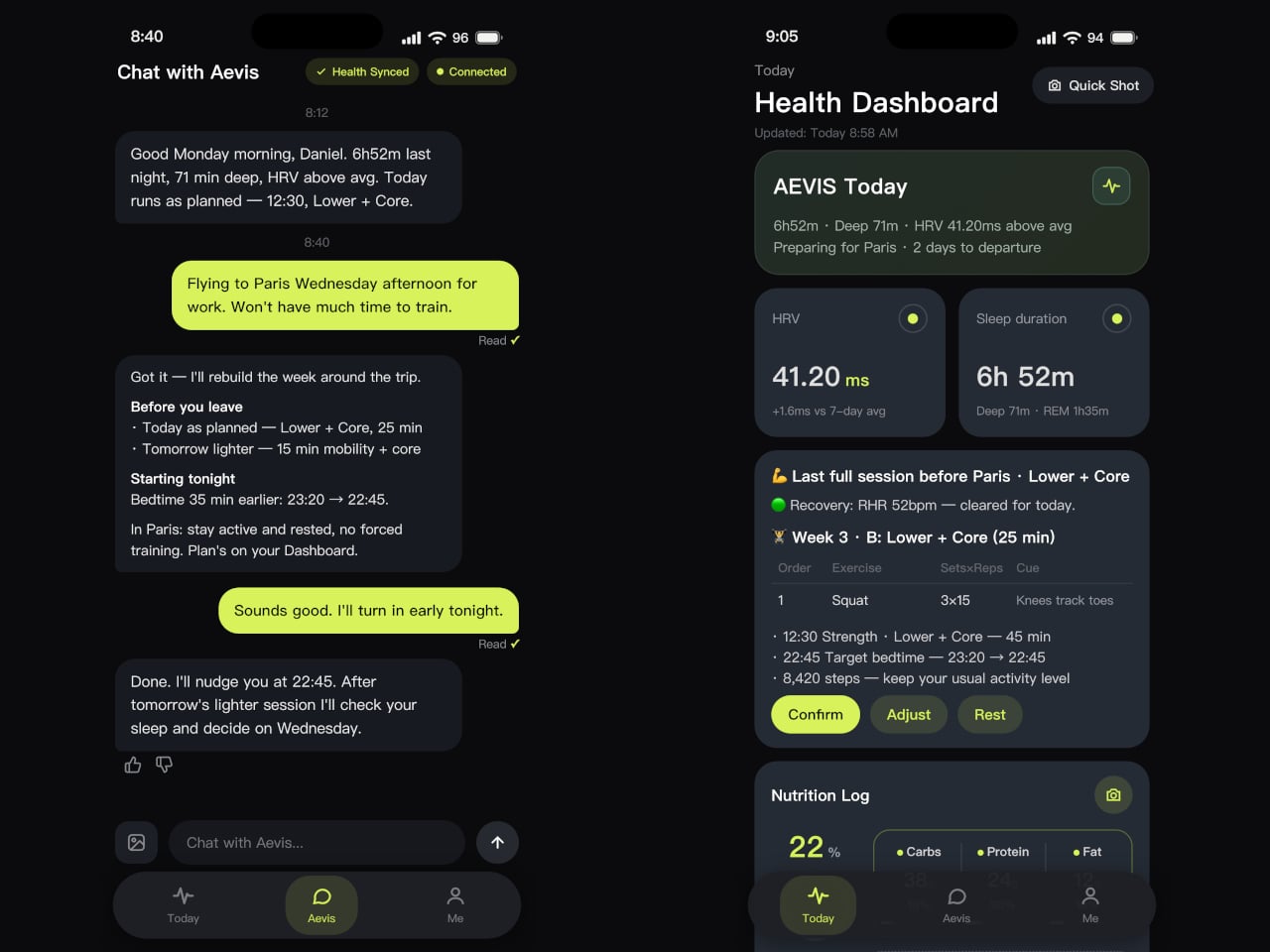
AEVIS Pre-Trip
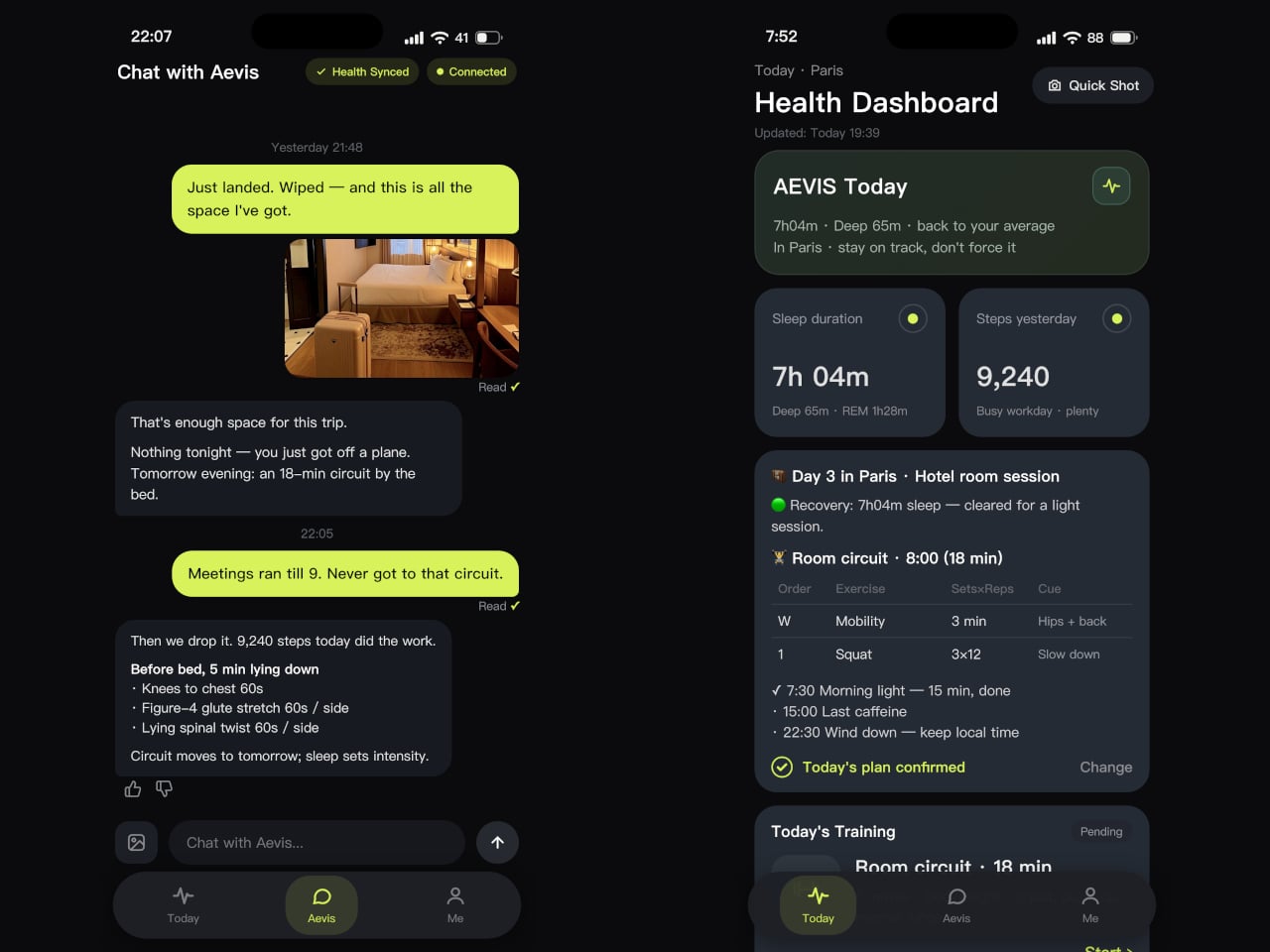
AEVIS During Trip
Votus is the part of the system that actually watches you train. Point a single phone camera at yourself, and it builds a 3D read of your motion, tracking rep speed and form while the set happens. That kind of analysis once needed a lab full of sensors, now running through a camera most people already carry. Speediance runs this inside its own ecosystem, not as separate software.
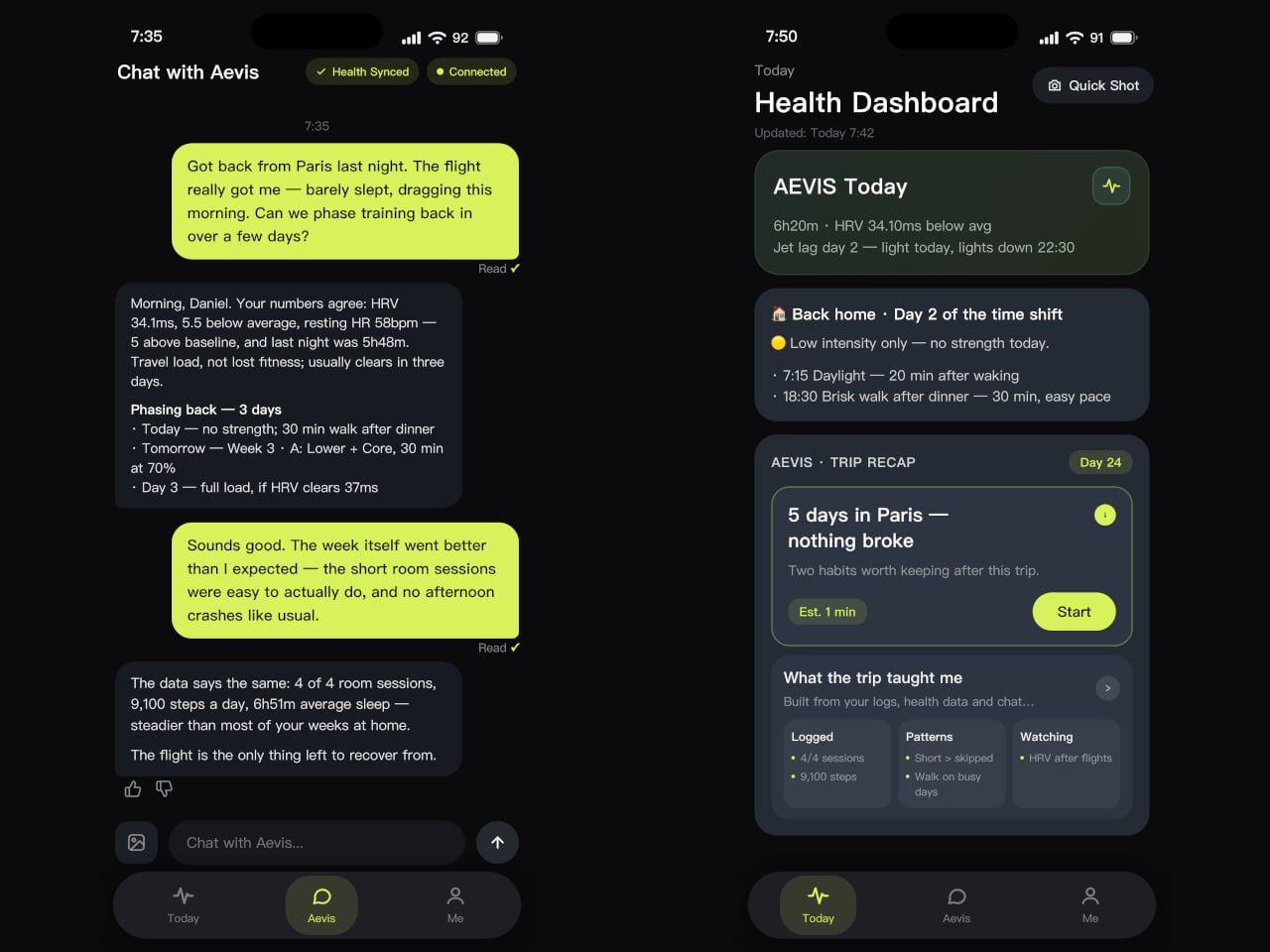
AEVIS Post-Trip
While Votus handles the moment, Oryn thinks about what should happen next. It’s focused on exercise, nutrition, and sleep, and it doesn’t treat each workout like it exists in a vacuum. If the Strap picks up signs of poor recovery, or the calendar shows a demanding week, Oryn can shift the plan toward a lighter load, a different focus, or recovery instead of strength.
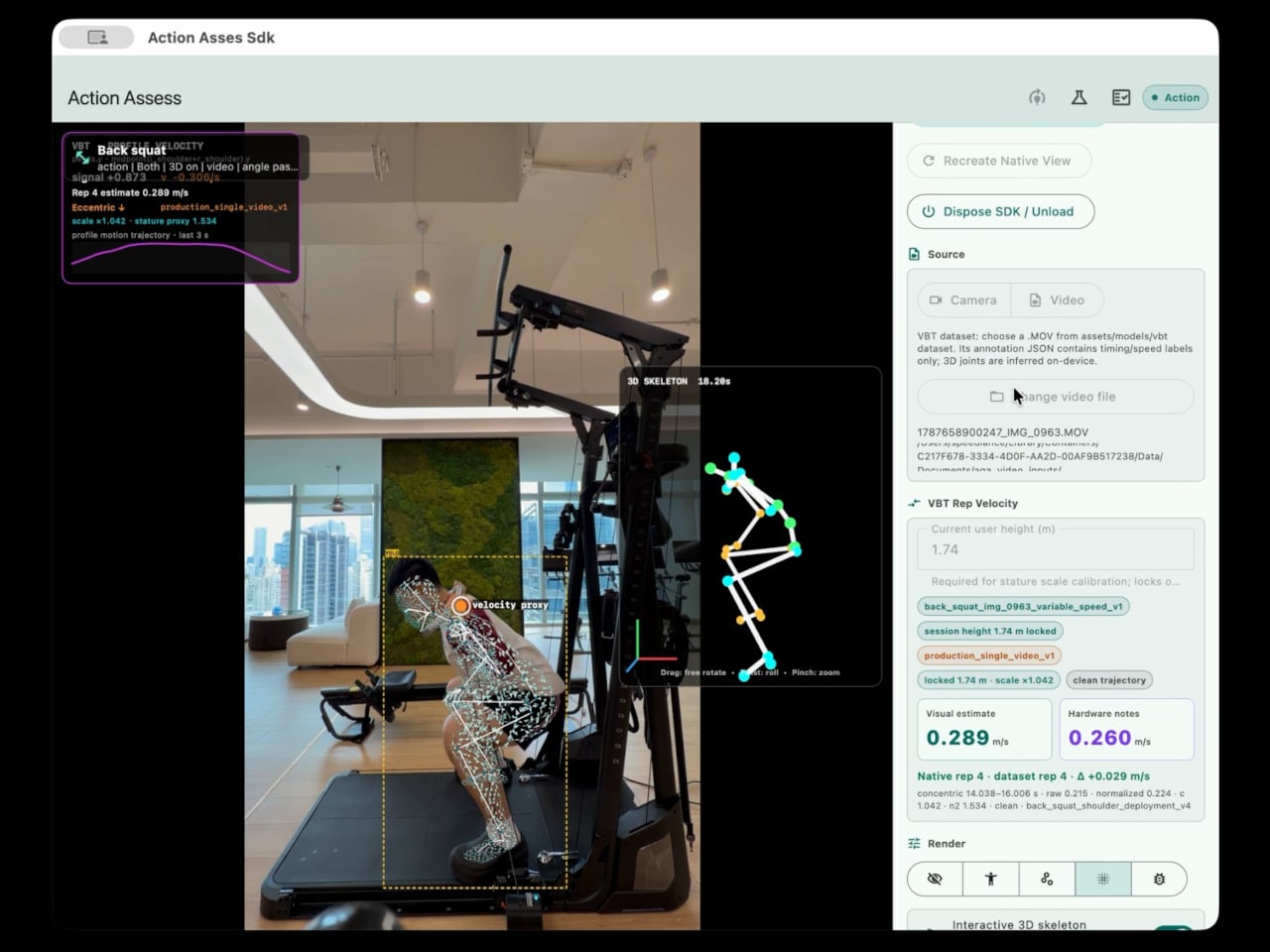
Votus
Somni takes this further, modeling how today’s choices might affect tomorrow’s fatigue, sleep, appetite, and capacity to train, without committing to one guaranteed outcome. Speediance calls it a technology preview, not a medical tool, and that same honesty applies elsewhere. AEVIS doesn’t currently adjust Gym Monster’s resistance on its own. That deeper link between AI decisions and the machine’s behavior is still ahead.
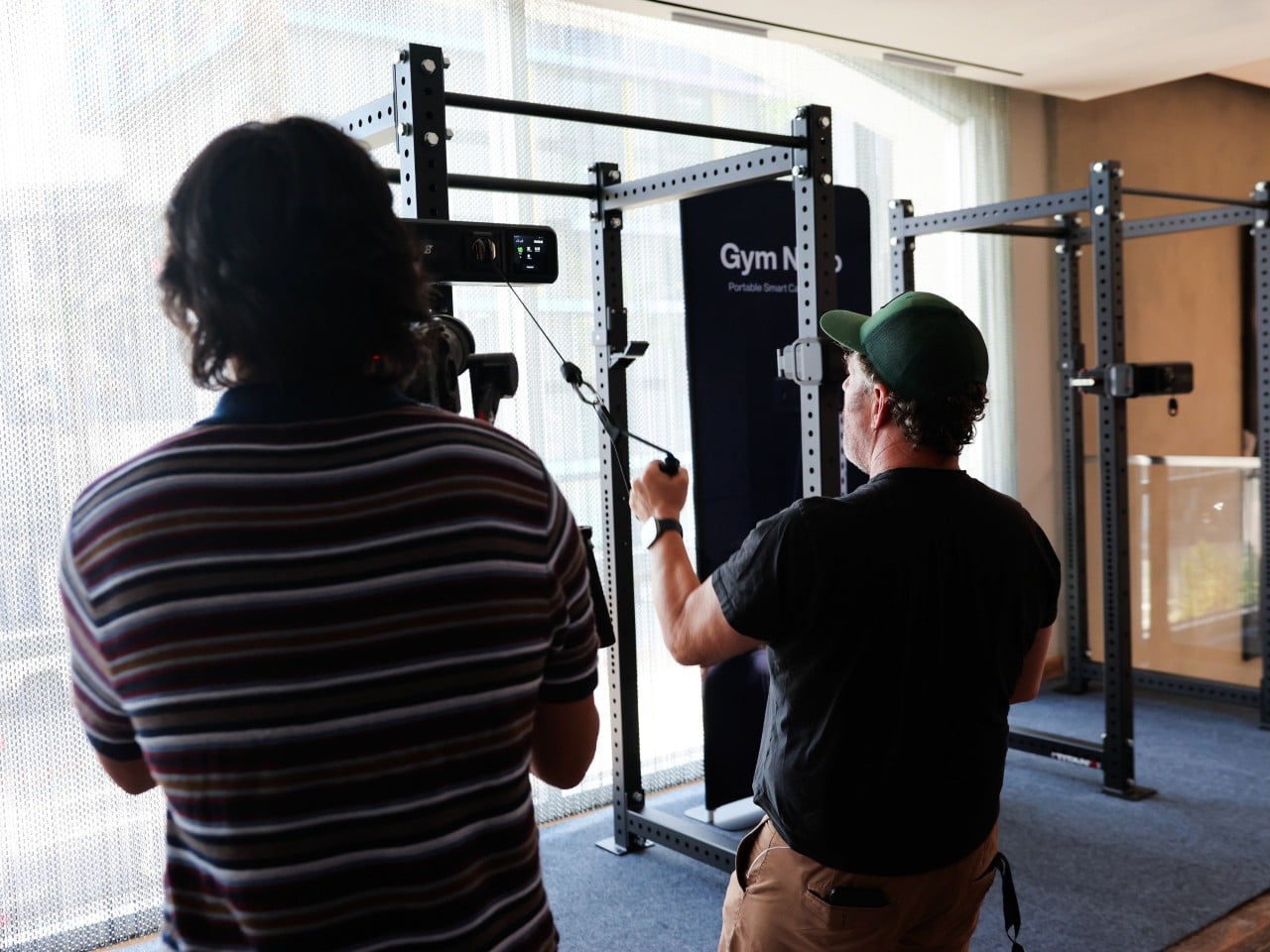
Speediance started in 2020 with one connected machine, and now spans training hardware, portable tools, passive sensing, movement analysis, and AI-driven decisions. The company sums up its approach in four words: Sense, Decide, Act, Learn. Each product holds a spot in that loop, and the work now is making those spots communicate more fluently over time. It keeps paying closer attention with every session.